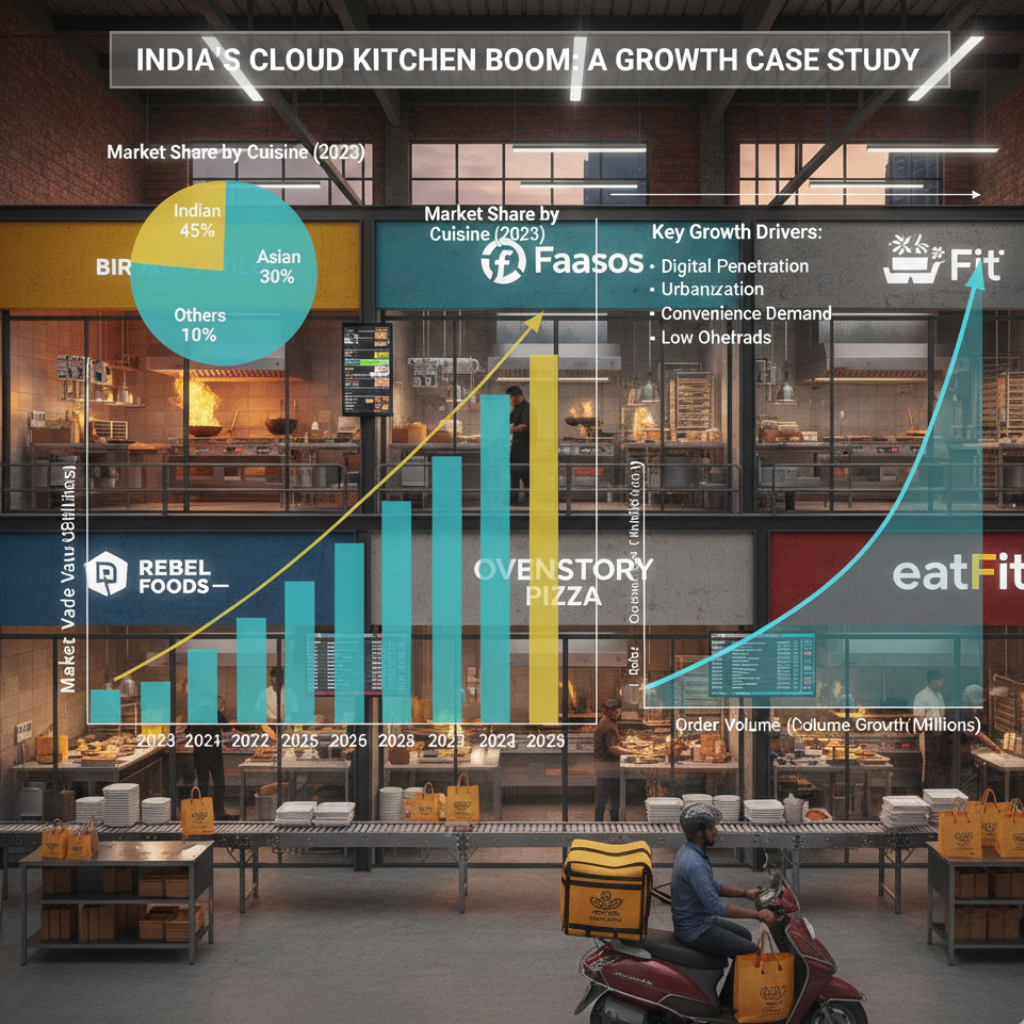
The cloud kitchen industry in India has grown rapidly over the last few years. With increasing online food delivery adoption, lower setup costs, and technology-driven operations, cloud kitchens have emerged as a powerful alternative to traditional restaurants. Cloud Kitchen as a Service (CKaaS)
However, while many cloud kitchens start strong, only a few manage sustainable growth. This detailed cloud kitchen growth case study breaks down how a small, single-kitchen operation grew step by step into a profitable and scalable food business.
Cloud Kitchen Growth Case Study-Business Overview
This cloud kitchen growth case study is based on a delivery-only food business launched in a Tier-1 Indian city. The founders were first-time entrepreneurs with limited capital and no prior restaurant ownership experience.
- Business Model: Single-brand cloud kitchen
- City: Tier-1 Metro (India)
- Cuisine Focus: Indian & Indo-Chinese
- Launch Year: 2022
- Initial Investment: ₹8.8 lakhs
- Sales Channels: Swiggy & Zomato
The brand positioned itself as an affordable, value-for-money option for daily meals, office lunches, and family dinners.
Cloud Kitchen Growth Case Study-Early Stage (0–3 Months)
In the first three months, the cloud kitchen focused on operational stability rather than aggressive growth.
- Limited menu with 18 items
- 2 cooks + 1 helper
- Founder-managed operations
- No heavy discounts
Average daily orders during this phase ranged between 15–25 orders. Monthly revenue remained modest at ₹1.8–2.5 lakhs, but food quality consistency helped build early ratings.
Cloud Kitchen Growth Case Study – Setup Cost Breakdown
One key reason this cloud kitchen scaled successfully was strict control over initial setup costs.
| Expense Head | Cost (₹) |
|---|---|
| Kitchen Rent & Deposit | 2,10,000 |
| Equipment & Utensils | 3,00,000 |
| Licenses & Registrations | 40,000 |
| Branding & Packaging | 70,000 |
| Initial Raw Material | 80,000 |
| Working Capital Buffer | 1,60,000 |
Total investment stayed below ₹9 lakhs, keeping financial risk manageable during early growth.
Cloud Kitchen Growth Case Study – Growth Phase (4–9 Months)
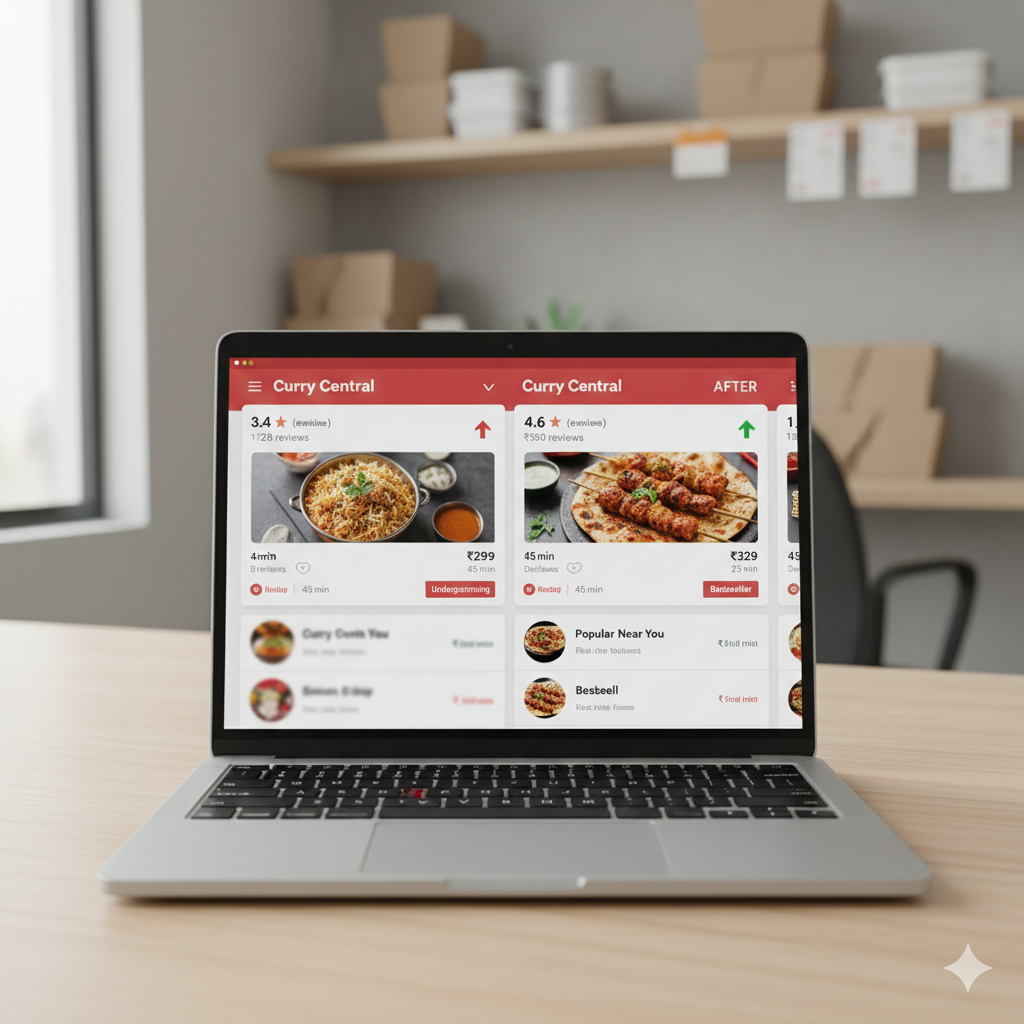
Once ratings stabilized above 4.2 on aggregator platforms, the kitchen entered its growth phase.
- Expanded menu to 30 SKUs
- Improved packaging quality
- Introduced combo meals
- Optimized pricing based on demand data
Daily orders increased to 45–60 orders, and monthly revenue crossed ₹5 lakhs consistently. Importantly, growth was organic and not discount-led.
Cloud Kitchen Growth Case Study – Revenue Growth Timeline
- Month 1–3: ₹1.8–2.5 lakhs
- Month 4–6: ₹3.5–4.5 lakhs
- Month 7–9: ₹5–6 lakhs
- Month 10–12: ₹6.5–7.5 lakhs
Revenue growth was supported by increasing repeat customer orders rather than aggressive marketing spends.
Cloud Kitchen Growth Case Study – Unit Economics
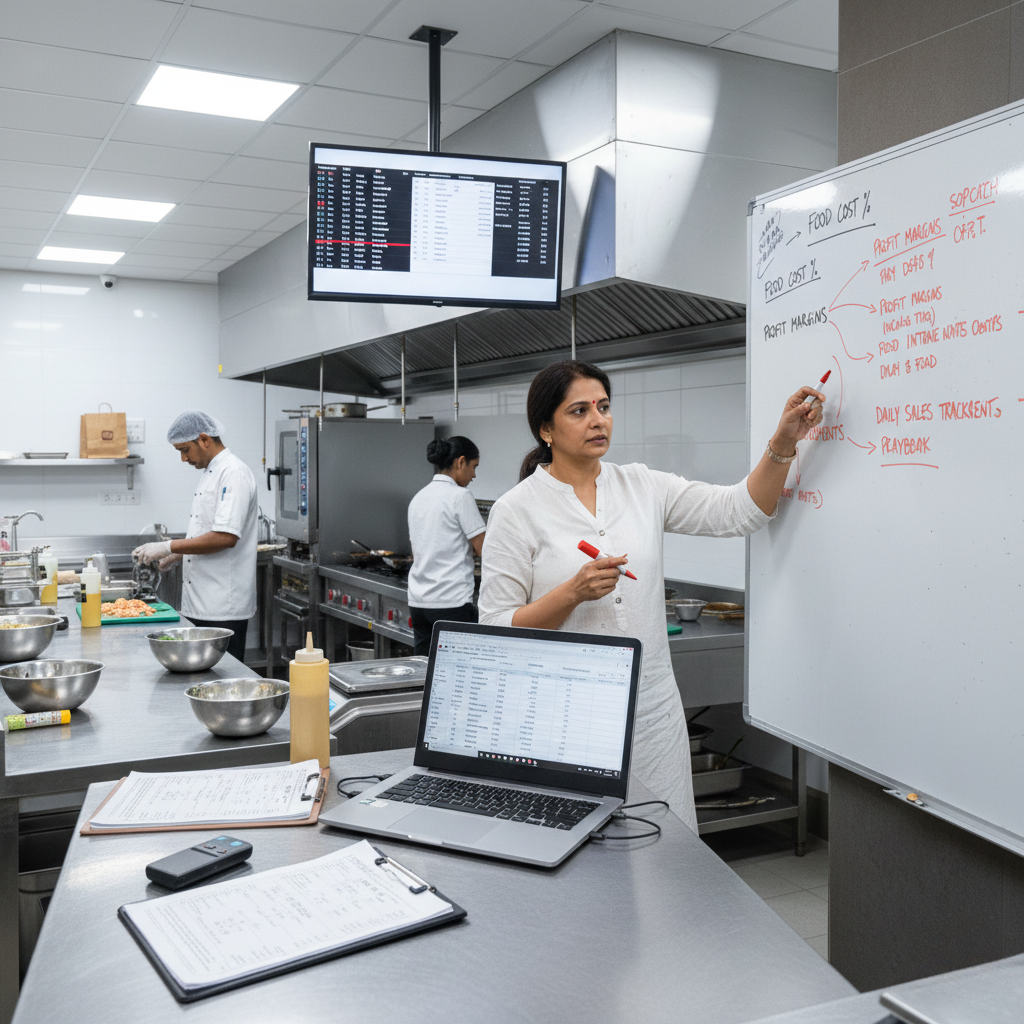
The founders tracked contribution margin per order closely.
- Average Order Value (AOV): ₹270
- Food Cost: 31–33%
- Aggregator Commission & Fees: 23–26%
- Packaging Cost: 5–6%
- Staff & Overheads: 13–15%
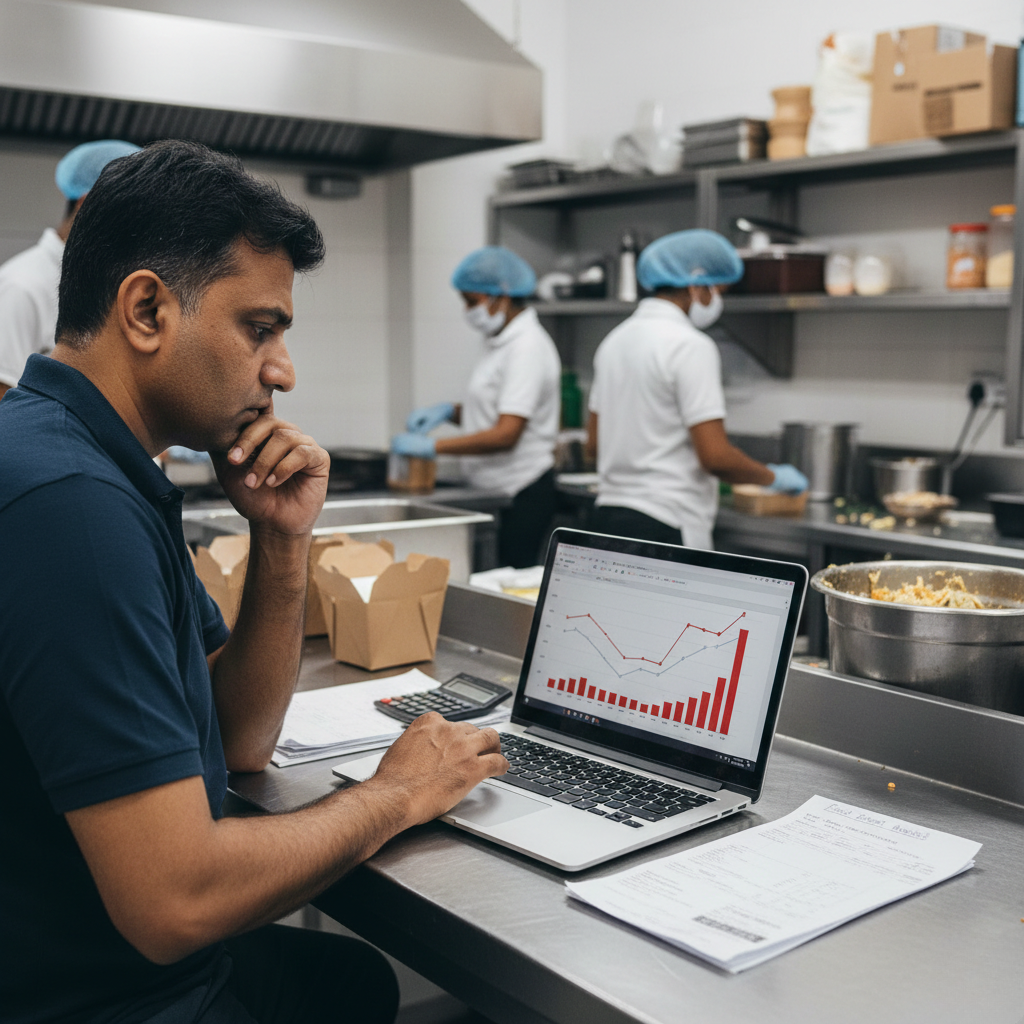
Net margins stabilized at 11–14% by month nine, allowing the kitchen to operate profitably while continuing to grow.
Cloud Kitchen Growth Case Study – Scaling Strategy
Instead of opening multiple locations, the founders scaled intelligently:
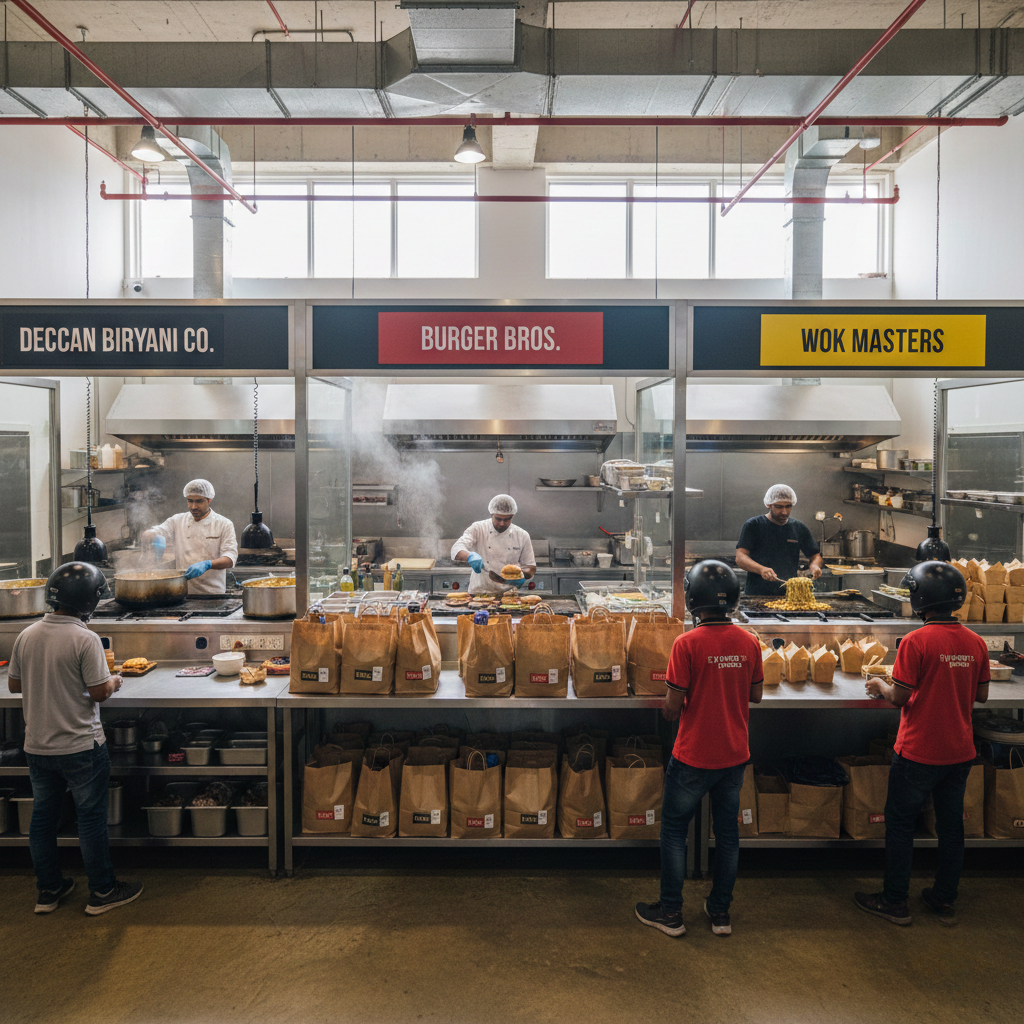
- Launched a second cuisine brand from the same kitchen
- Introduced WhatsApp direct ordering
- Offered loyalty benefits to repeat customers
By the end of year one, direct orders contributed almost 20% of total revenue, improving margins significantly.
Cloud Kitchen Growth Case Study – Challenges Faced
- High Swiggy & Zomato commissions
- Rising ingredient prices
- Maintaining consistency during peak hours
- Staff training and retention
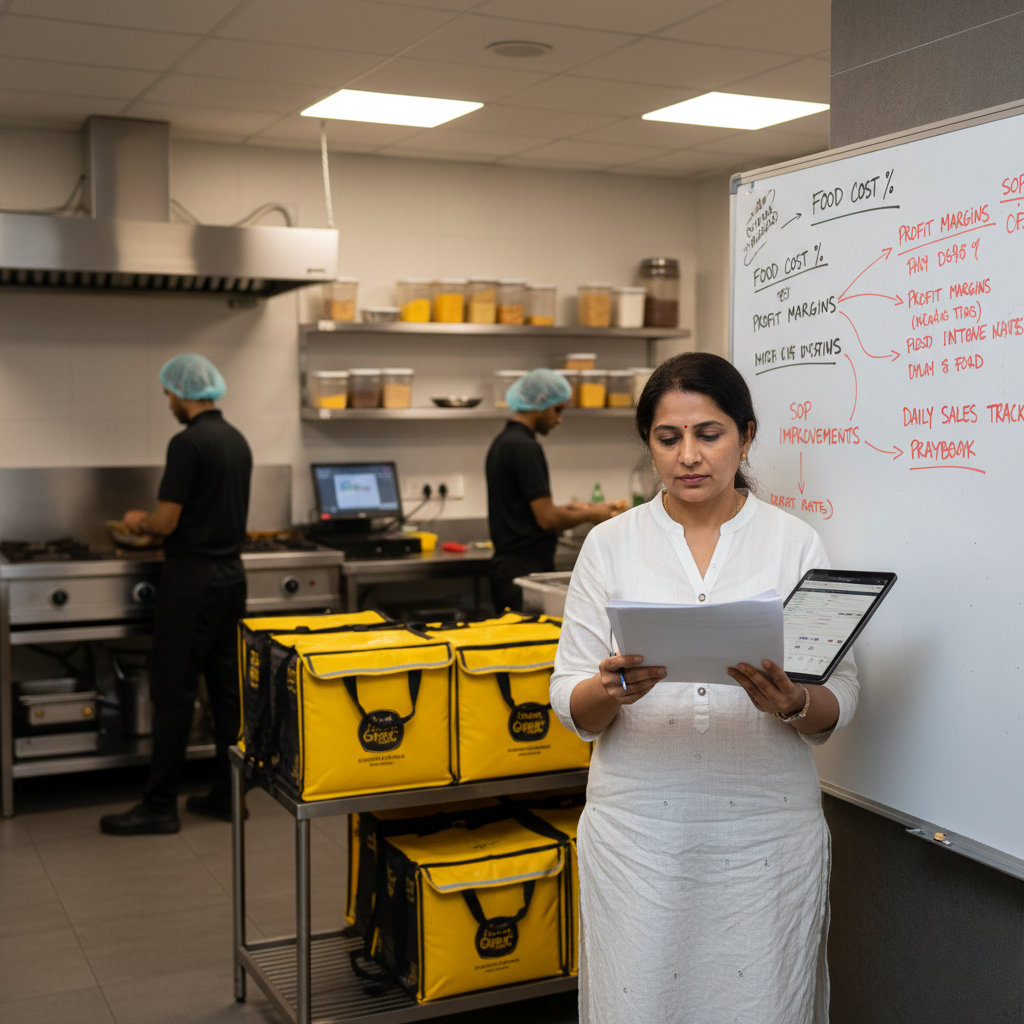
These challenges were addressed through supplier negotiations, menu engineering, and operational SOPs.
Industry Context
India’s cloud kitchen and online food delivery market continues to expand rapidly. Increasing urbanization and convenience-driven consumption will fuel further growth.
For industry-level insights, refer to the IBEF Indian Food Industry Report .
Key Lessons from This Cloud Kitchen Growth Case Study
- Growth without margins is dangerous
- Operational discipline drives scalability
- Repeat customers are critical for profit
- Direct ordering reduces platform dependency
- Scaling should follow stable unit economics
Frequently Asked Questions (FAQs)
Is this cloud kitchen growth case study realistic?
Yes. It reflects a typical small-to-mid-scale Indian cloud kitchen journey.
How long did it take to reach profitability?
The kitchen achieved consistent profitability within 8–9 months.
Can beginners replicate this growth model?
Yes, with proper cost control and operational discipline.
Is scaling faster always better?
No. Scaling without stable margins usually increases losses.
People Also Read
- Cloud Kitchen Business Case Study India
- Cloud Kitchen Business in India
- Cloud Kitchen Mistakes to Avoid
- Is Cloud Kitchen Profitable in India?