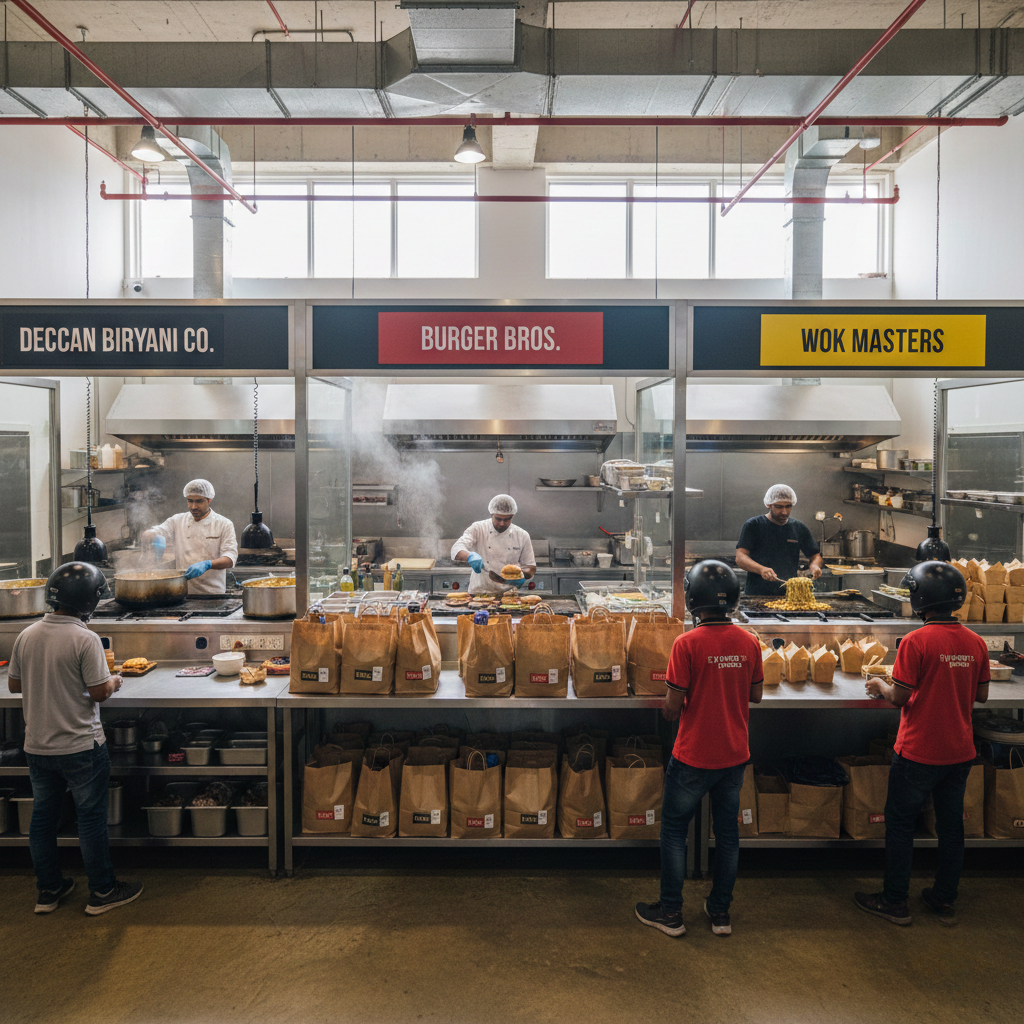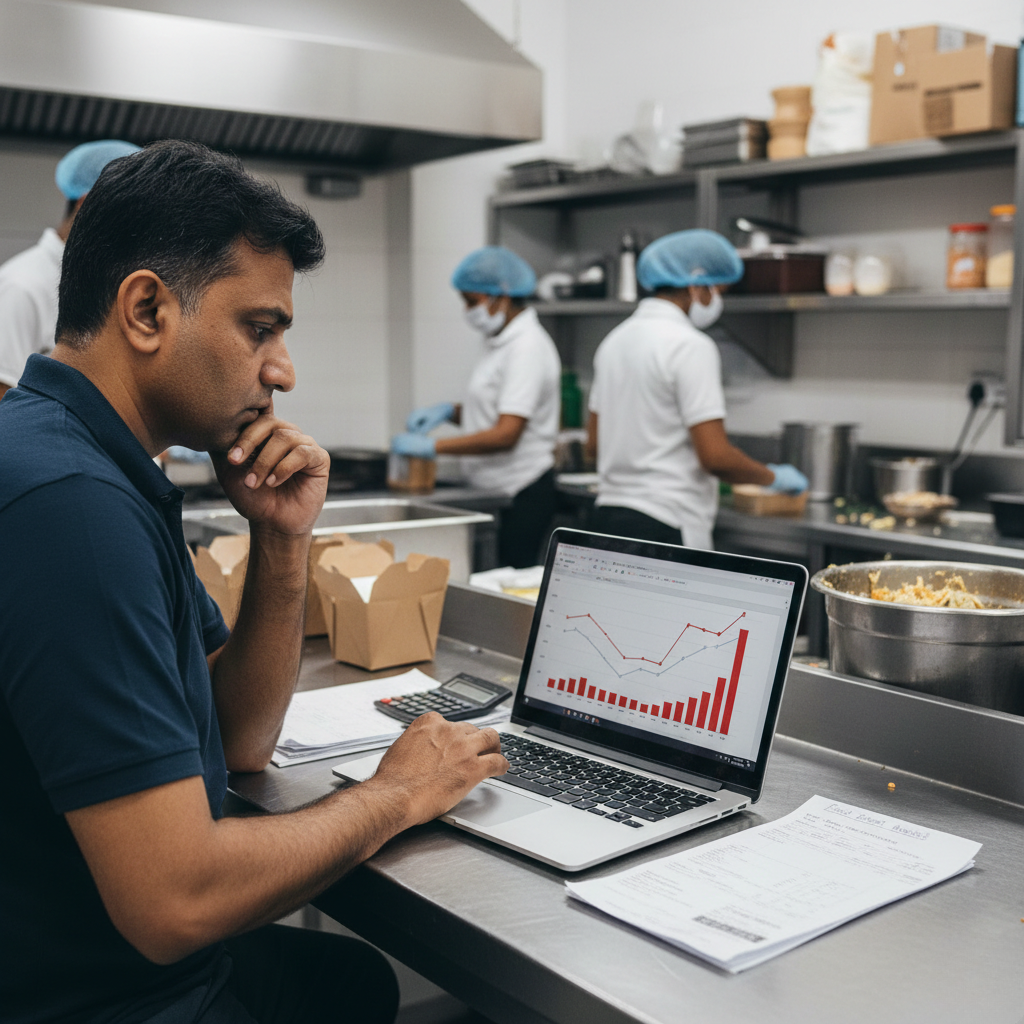
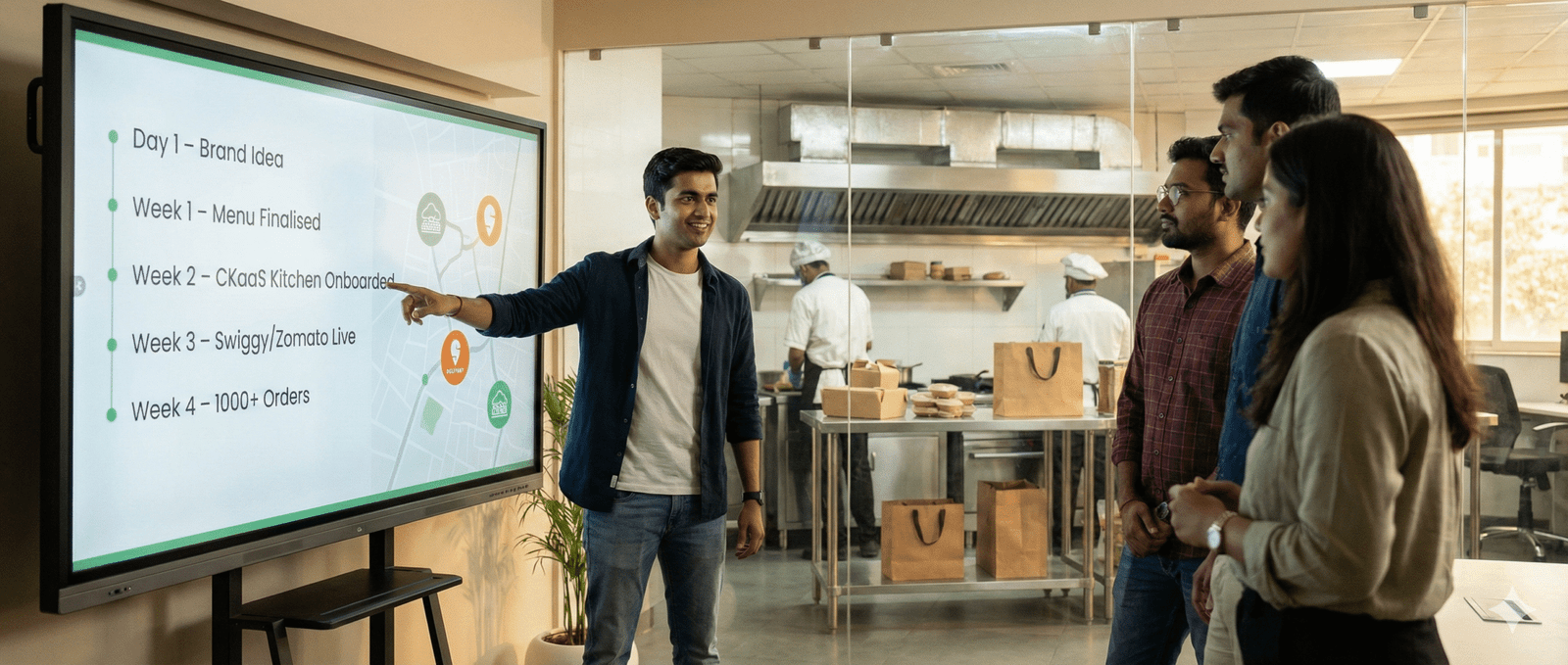
Many restaurant owners in India face a painful paradox: order volumes are high, kitchens are busy, but profits are missing. Despite hundreds of daily orders on Swiggy and Zomato, bank balances do not grow-and in some cases, losses quietly accumulate. Cloud Kitchen Business In India
In 2025, restaurant failures are rarely due to lack of demand. Instead, they are driven by structural cost leaks, aggressive discounting, and poor understanding of platform economics. This guide explains why restaurants lose money on Swiggy and Zomato despite high orders-and how to fix it.
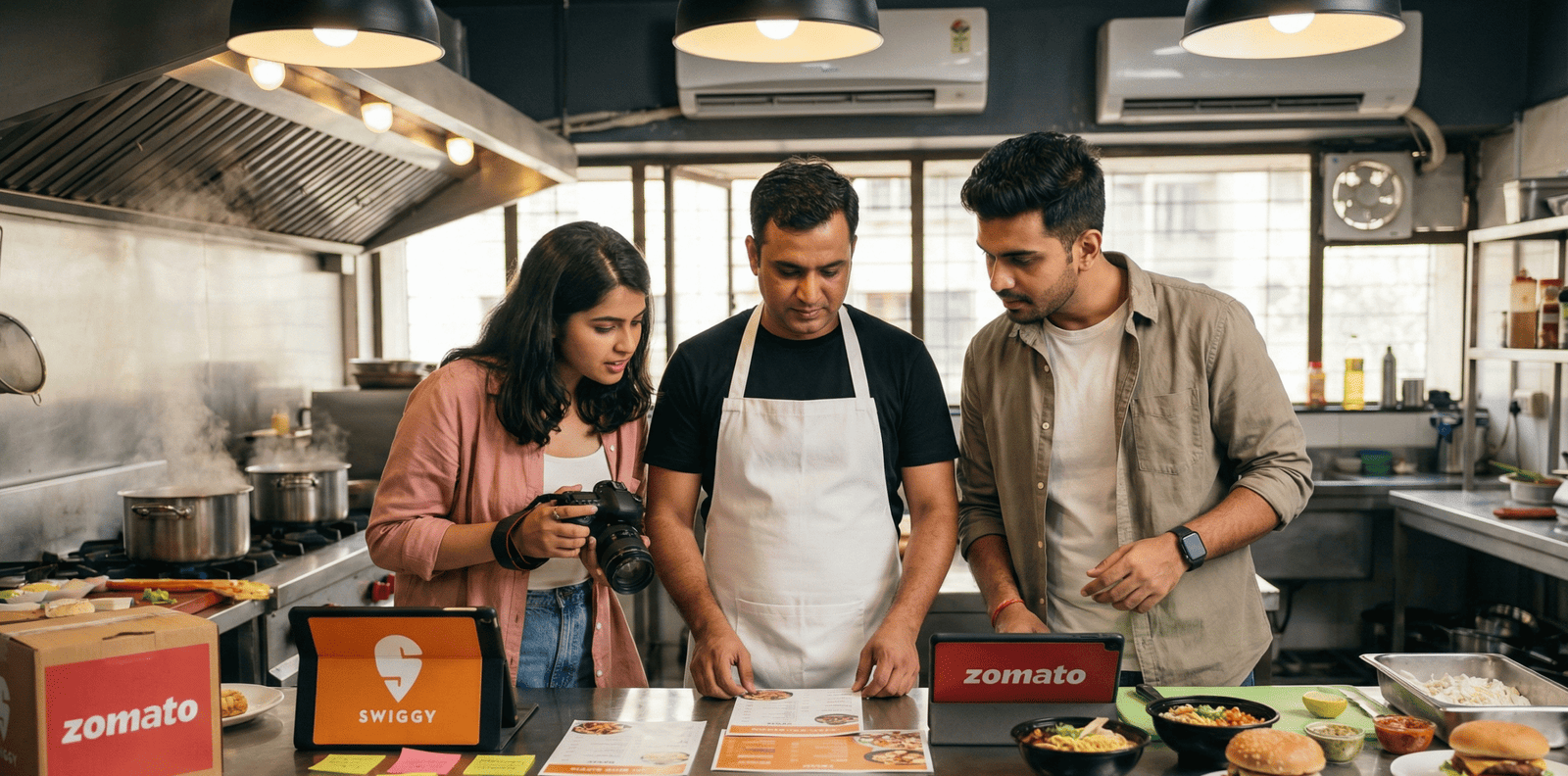
High Orders Do Not Mean High Profits
The biggest misconception among restaurant owners is equating sales volume with profitability. On aggregator platforms, what matters is contribution margin per order, not order count.
If a restaurant loses ₹20–₹40 on each order after commissions, discounts, and overheads, higher order volume only increases losses.
Swiggy & Zomato Commission Structure
In 2025, Swiggy and Zomato typically charge:
- 18%–30% commission on order value
- GST on commission
- Optional but often necessary marketing fees
- Delivery and packaging-related charges
When combined, total deductions can cross 35%–40% of gross order value. Many restaurants fail to price menus accordingly.
The Discount & Offer Trap
Platforms push restaurants to run discounts to gain visibility. While discounts increase order volume, they often destroy margins.
Customers become conditioned to ordering only during offers, forcing restaurants into a continuous discount cycle. High sales numbers hide poor profitability.
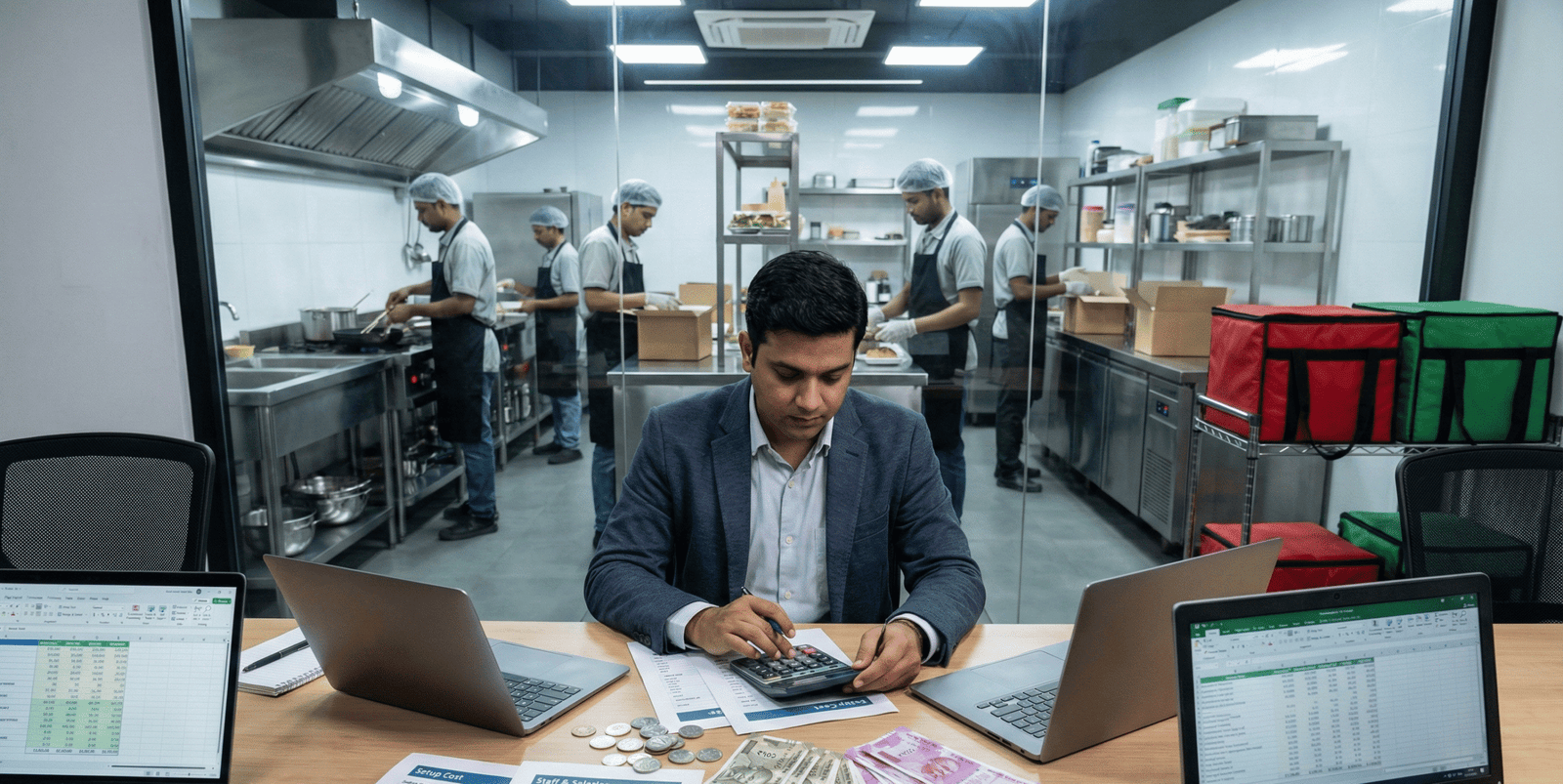
Incorrect Menu Pricing for Delivery
Many restaurants use the same pricing for dine-in and delivery. This is a costly mistake.
Delivery orders involve additional costs such as:
- Aggregator commissions
- Extra packaging
- Higher wastage
- Refunds and cancellations
Without delivery-specific pricing, restaurants unknowingly sell at a loss.
Poor Food Cost & Portion Control
Food cost mismanagement is another major reason restaurants lose money on Swiggy and Zomato.
Common issues include:
- Inconsistent portion sizes
- Untracked ingredient wastage
- Rising raw material prices
- Lack of standardized recipes
Even a 3–4% increase in food cost can wipe out already thin delivery margins.
High Fixed Costs & Operational Inefficiencies
Restaurants have fixed expenses regardless of order volume:
- Rent and maintenance
- Staff salaries
- Electricity, gas, and water
- Licenses and software tools
When delivery margins are weak, these fixed costs quickly push the business into losses.
Ratings, Refunds & Visibility Loss
Delayed orders, spillage, cold food, or wrong items lead to:
- Low ratings
- Refunds and penalties
- Reduced platform visibility
Lower visibility means fewer organic orders, forcing restaurants to rely even more on discounts.
Over-Dependency on Aggregator Platforms
Restaurants that rely 100% on Swiggy and Zomato surrender pricing power and customer ownership.
Every repeat customer still attracts commission, making long-term profitability difficult.
How Restaurants Can Reduce Swiggy & Zomato Losses
- Track contribution margin per order
- Create delivery-specific menu pricing
- Limit discounts to strategic campaigns
- Improve portion and food cost control
- Build direct ordering via website or WhatsApp
- Encourage repeat customers outside aggregators
For broader food service industry insights, refer to the IBEF Indian Food Industry Report .
Final Thoughts
Swiggy and Zomato are powerful growth platforms, but they are not designed to guarantee restaurant profitability.
In 2025, profitable restaurants treat aggregators as customer acquisition channels, not the foundation of their business. Understanding unit economics is the difference between high sales and real profits.
Frequently Asked Questions (FAQs)
Why do restaurants lose money on Swiggy and Zomato?
High commissions, discounts, and poor pricing often make delivery orders unprofitable.
Is it possible to be profitable on Swiggy and Zomato?
Yes, but only with correct menu pricing, strict cost control, and limited discounting.
What is a safe commission-adjusted margin?
Restaurants should aim for at least 60% gross margin before platform deductions.
Should restaurants stop using Swiggy and Zomato?
No. Instead, they should reduce dependency and build direct customer channels.
People Also Read
- Cloud Kitchen Loss Reasons
- Cloud Kitchen Aggregator Dependency
- Swiggy & Zomato vs Own Website Sales
- Is Cloud Kitchen Profitable in India?
Also Refer To
- Grow Kitchen – Cloud Kitchen Systems & Consulting
- Green Salad Official Website
- Fruut – Healthy Food Brand
- Rahul Tendulkar on LinkedIn
- Grow Kitchen – Cloud Kitchen Systems & Consulting
- Grow Kitchen on LinkedIn
- Grow Kitchen on Facebook
- Rahul Tendulkar on LinkedIn
- Grow Kitchen on X
- Green Salad Official Website
- Fruut – Healthy Food Brand
- Grow Kitchen on LinkedIn
- Grow Kitchen on Facebook