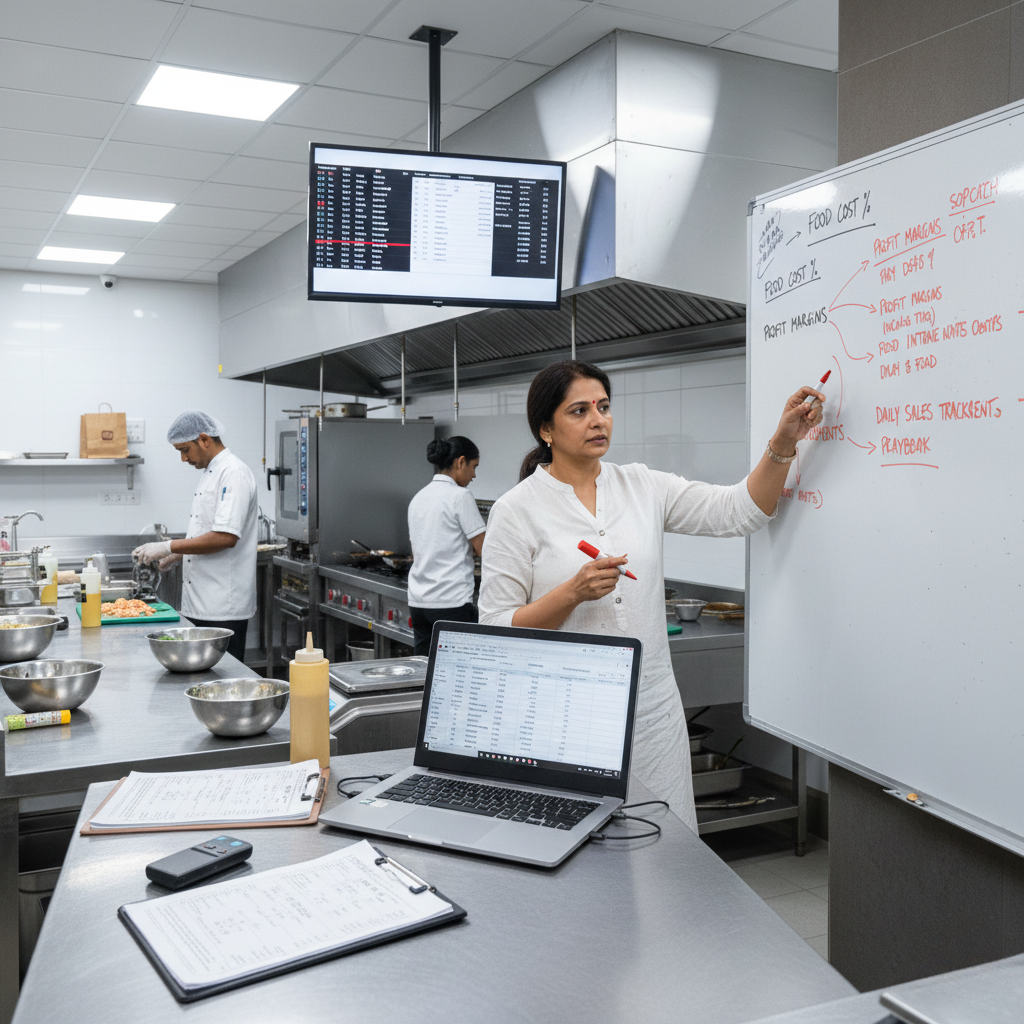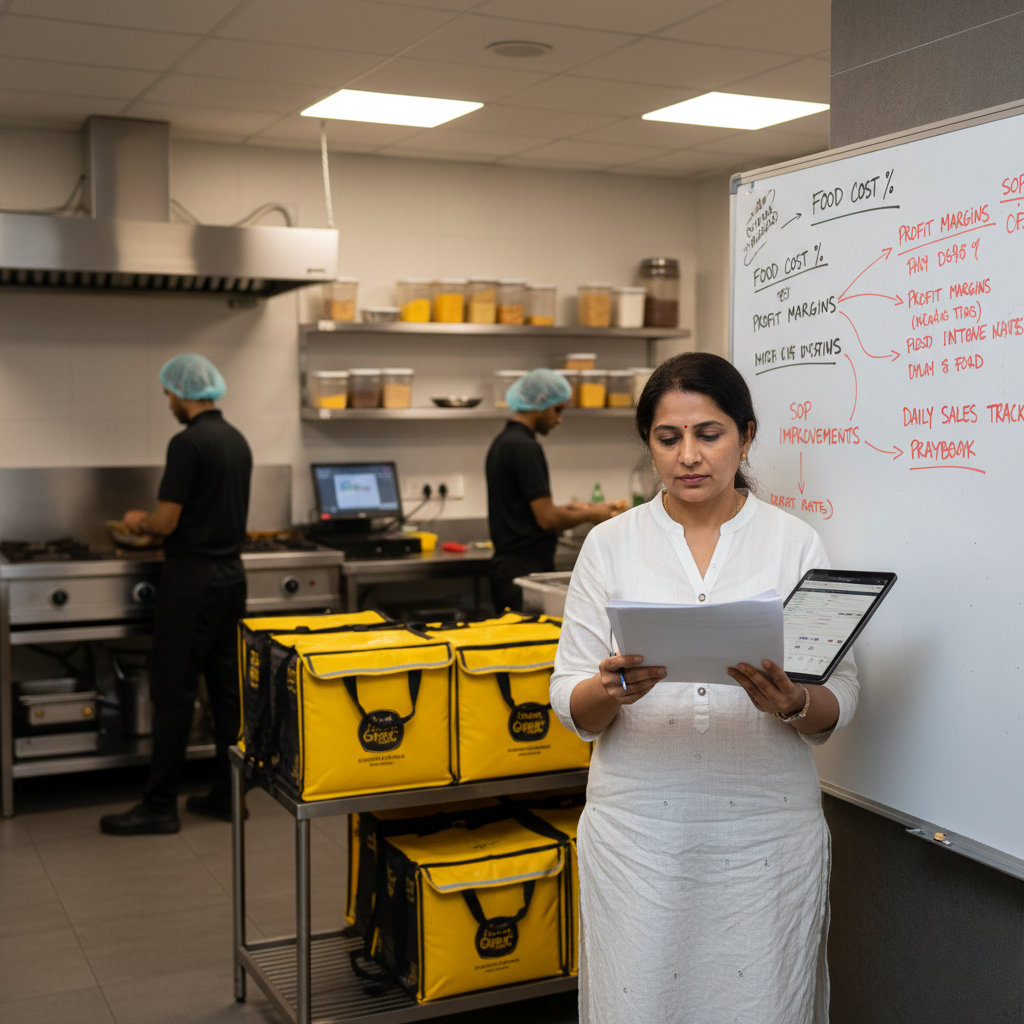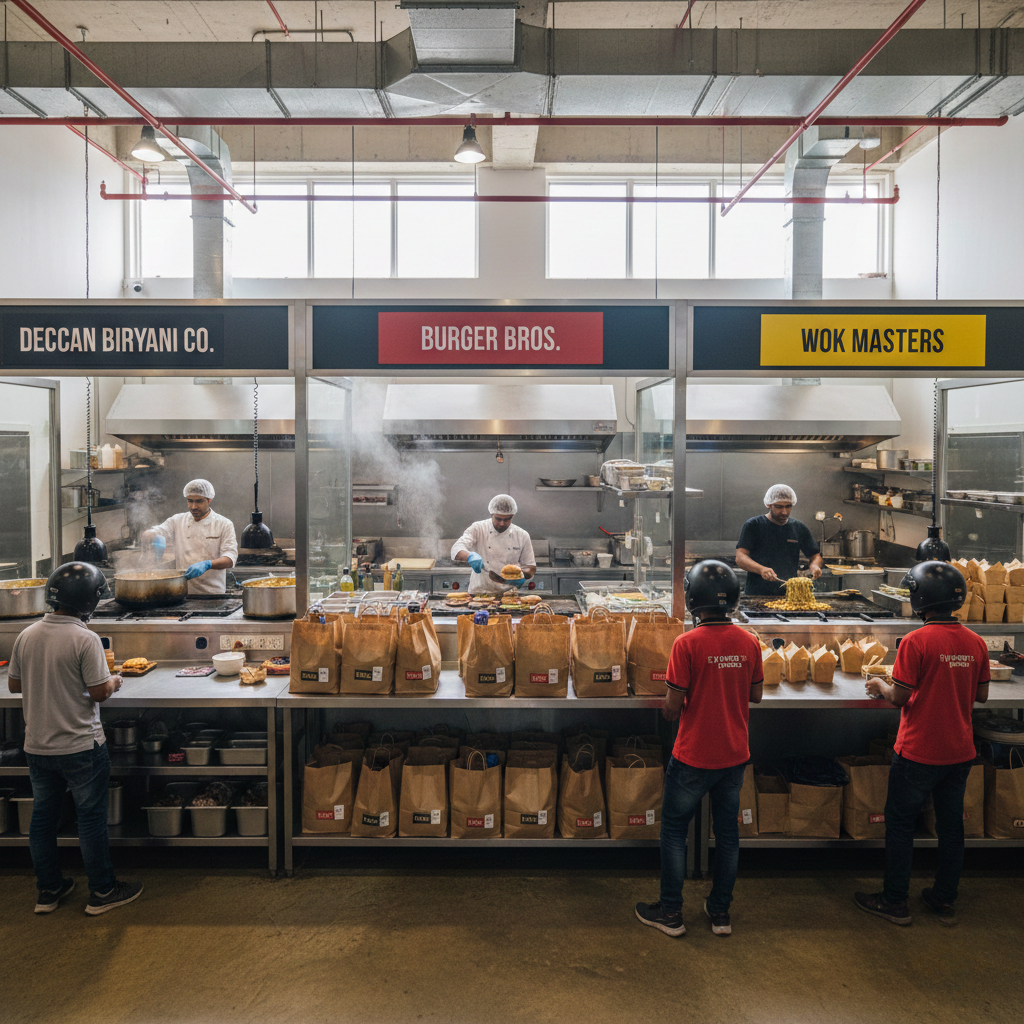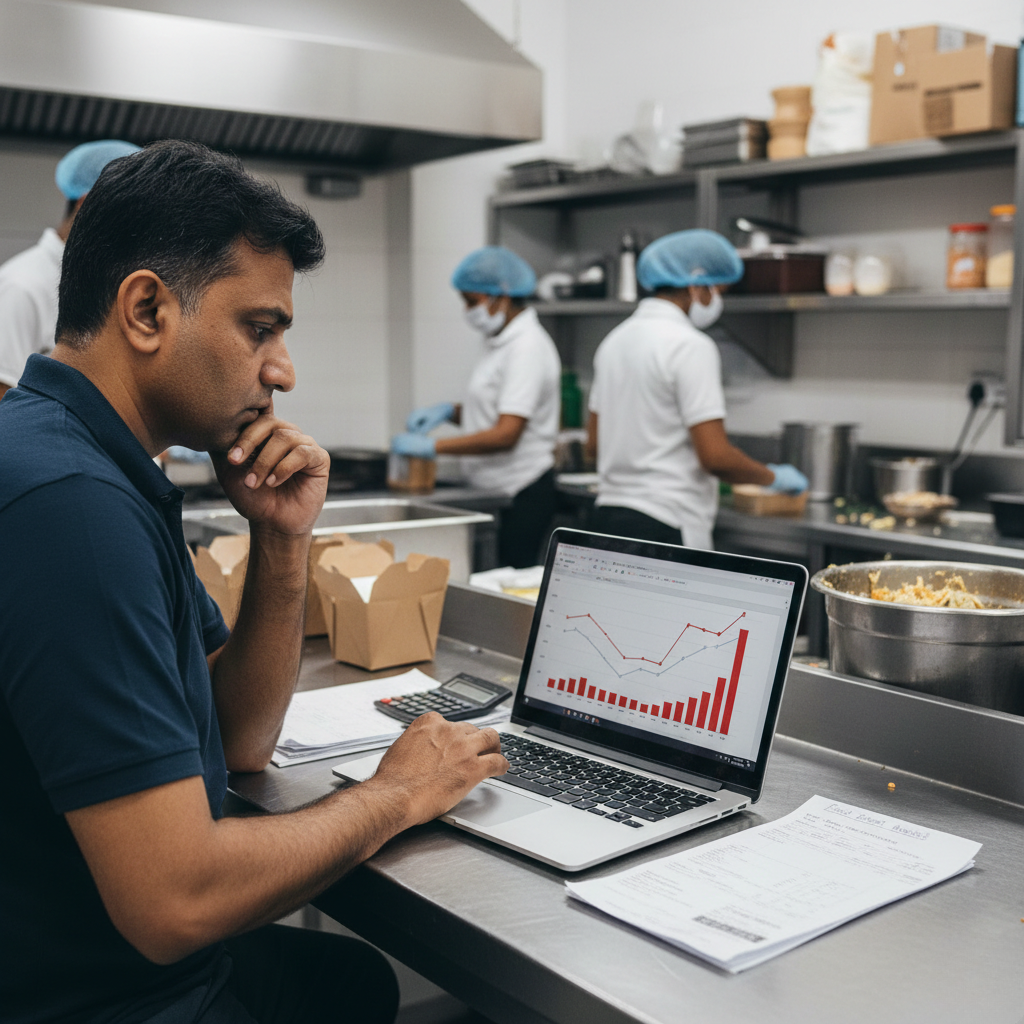
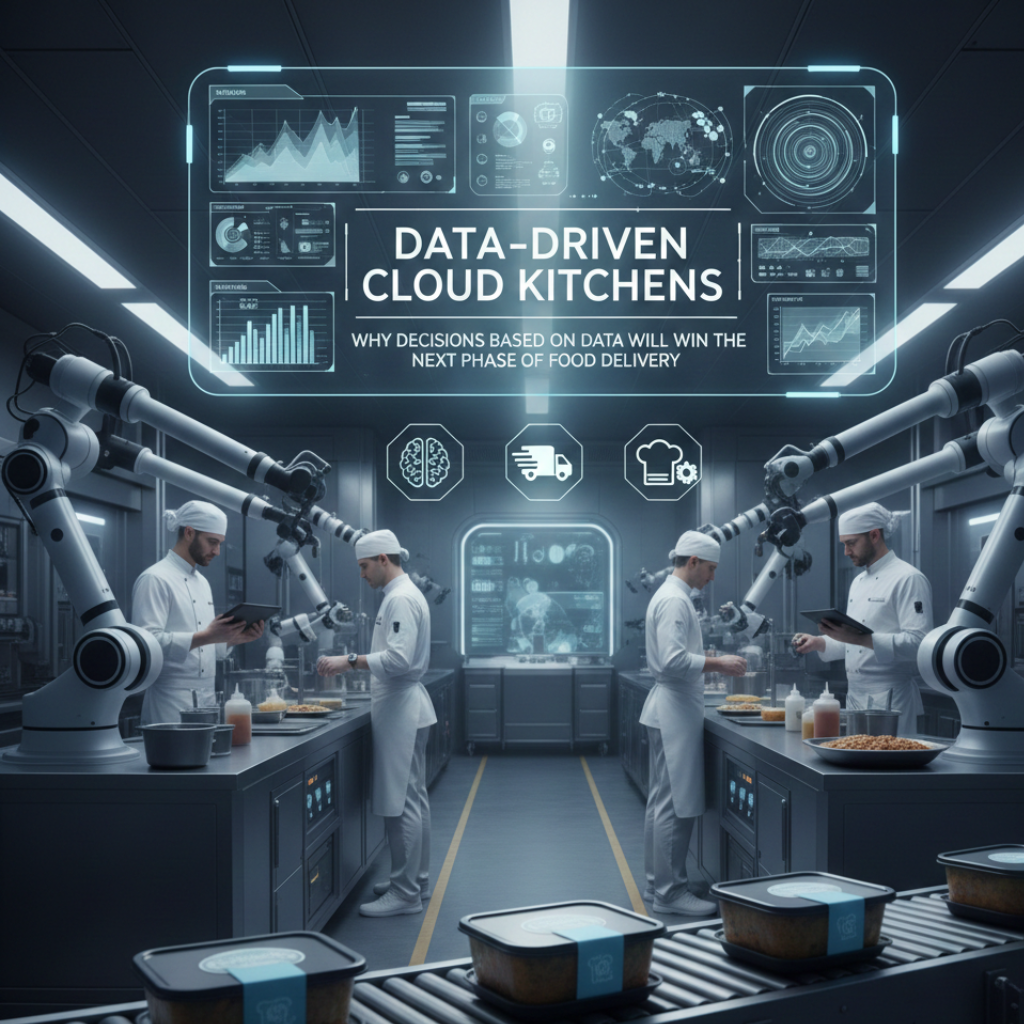
The cloud kitchen industry in India is entering a new and decisive phase. The early years were driven by speed, experimentation, and intuition. Today, as competition intensifies and profit margins shrink, instinct-based decision-making is no longer enough. Cloud Kitchen Business in India
The next winners in food delivery will be data-driven cloud kitchens-brands that use numbers, analytics, and real-time insights to guide every decision. From menu design and pricing to inventory planning and marketing, data is becoming the most valuable ingredient in a cloud kitchen’s success.
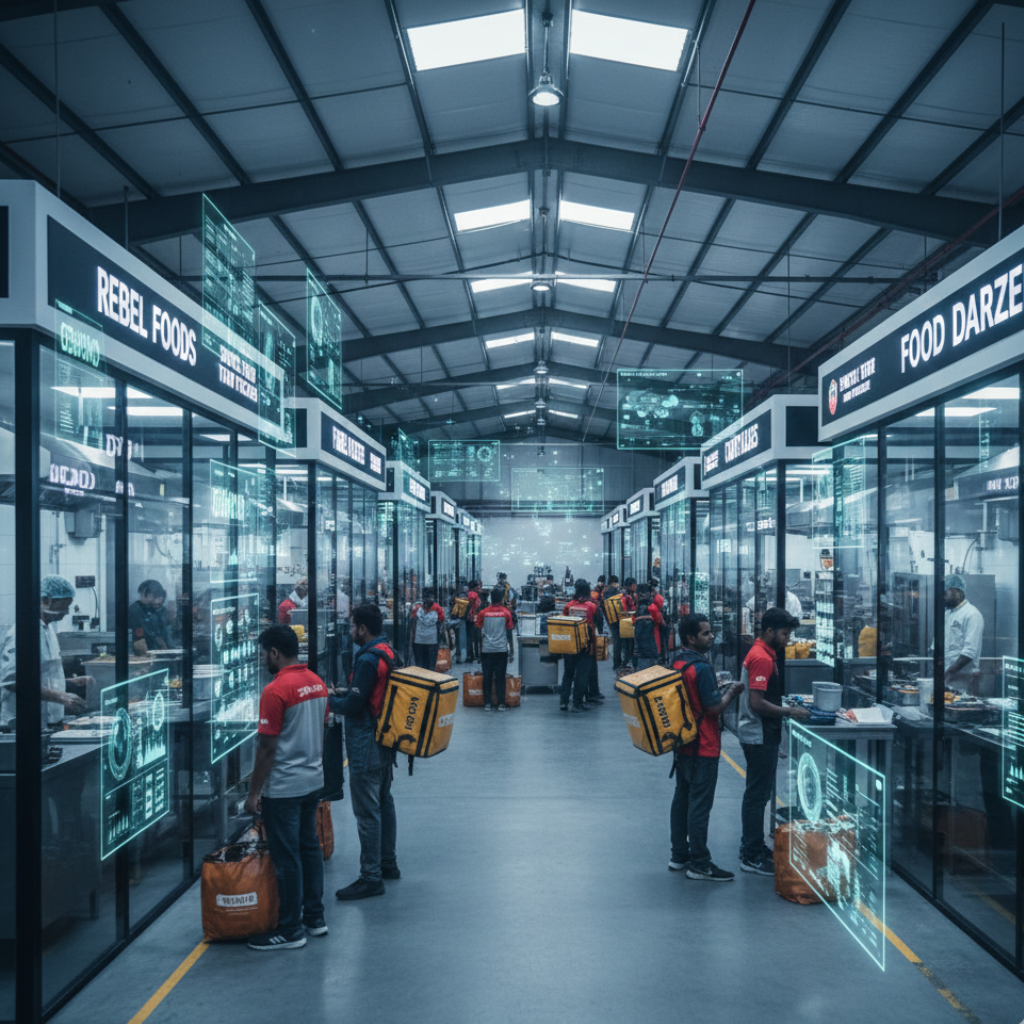
1. The Shift from Intuition to Data in Cloud Kitchens
In the early stages of cloud kitchens, most decisions were based on gut feeling. Founders relied on personal experience, competitor observation, or trial and error.
While this approach worked in a less crowded market, today’s environment demands precision. Rising costs, aggregator commissions, and customer expectations mean that even small mistakes can lead to losses.
Data-driven cloud kitchens replace assumptions with facts-allowing operators to act with confidence rather than guesswork.
2. What Does “Data-Driven” Mean in Cloud Kitchens?
A data-driven cloud kitchen uses structured data to guide operational, financial, and strategic decisions.
Key data sources include:
- Order history and trends
- Customer behavior and preferences
- Food cost and inventory consumption
- Delivery time and cancellation data
- Marketing performance metrics
Instead of reacting to problems after they occur, data-driven kitchens anticipate issues and optimize outcomes in advance.
3. Using Data to Build a Profitable Menu
Menu engineering is one of the most powerful applications of data in cloud kitchens.
3.1 Identifying High-Performing Dishes
Data helps identify:
- Top-selling items
- High-margin dishes
- Slow-moving or loss-making products
This allows kitchens to focus on items that drive profit rather than popularity alone.
3.2 Eliminating Guesswork
Instead of keeping items “just in case,” data-driven kitchens remove underperforming dishes quickly, reducing complexity and wastage.
4. Demand Forecasting & Sales Prediction
Accurate demand forecasting is critical for controlling costs.
By analyzing historical data, kitchens can predict:
- Daily and hourly order volumes
- Weekend vs weekday demand
- Festival and seasonal spikes
Better forecasts lead to:
- Lower food wastage
- Improved staff scheduling
- Faster order fulfillment
According to industry data published by Statista, food delivery demand in India follows strong, predictable patterns that data-driven businesses can exploit.
5. Inventory Optimization Through Data
Inventory mismanagement is one of the biggest profit killers in cloud kitchens.
5.1 Tracking Consumption Patterns
Data-driven kitchens track ingredient usage per dish, per day, and per location.
This enables:
- Accurate purchasing
- Reduced overstocking
- Lower spoilage
5.2 Linking Inventory to Sales Data
When inventory data is linked with sales data, kitchens can immediately see how changes in demand impact stock levels.
6. Data-Driven Pricing & Discount Strategy
Pricing decisions directly affect profitability, yet many cloud kitchens rely on competitor pricing or trial-and-error discounts.
Data-driven pricing considers:
- Cost per order
- Customer willingness to pay
- Peak-hour demand
- Discount impact on margins
This allows kitchens to use discounts strategically rather than destructively.
7. Improving Operations with Real-Time Data
Operational efficiency improves significantly when decisions are guided by live data.
Real-time dashboards help track:
- Order preparation time
- Kitchen bottlenecks
- Staff productivity
Managers can intervene instantly instead of discovering problems at the end of the day.
Operational data use in cloud kitchens is widely discussed by Restaurant India.
8. Delivery Performance & Customer Satisfaction
Delivery performance has a direct impact on ratings, repeat orders, and visibility on food delivery platforms.
Data helps kitchens monitor:
- Average delivery time
- Order cancellations
- Customer complaints
By identifying problem zones or peak-time delays, kitchens can adjust operations proactively.
9. Smarter Marketing Through Data
Marketing spend without measurement is one of the fastest ways to lose money.
Data-driven cloud kitchens track:
- Return on ad spend
- Repeat customer rate
- Campaign-level performance
This allows founders to stop ineffective promotions and double down on high-performing channels.
10. How Data Improves Profitability
When data guides decisions, profitability improves across multiple areas:
- Reduced food wastage
- Lower manpower inefficiencies
- Better pricing control
- Higher customer retention
Data-driven cloud kitchens often outperform intuition-led competitors by significant margin percentages.
11. Data as a Foundation for Scaling
Scaling without data leads to chaos.
Data-driven kitchens can:
- Replicate successful menus across locations
- Standardize operations
- Monitor performance centrally
This makes multi-location expansion more predictable and less risky.
12. Challenges of Becoming Data-Driven
Despite its benefits, data adoption has challenges:
- Poor data quality
- Lack of analytical skills
- Over-reliance on tools without interpretation
However, these challenges can be solved with the right systems and training.
13. The Future of Data-Driven Cloud Kitchens in India

The future of cloud kitchens in India will be defined by data maturity.
Upcoming trends include:
- AI-driven predictive analytics
- Automated decision-making systems
- Real-time profitability dashboards
- Hyper-personalized customer experiences
Data will shift from being a support function to the core of decision-making.
14. Final Thoughts: Data Is the New Competitive Advantage
In the next phase of food delivery, success will not come from intuition, discounts, or rapid expansion alone. It will come from clarity-clarity that only data can provide.
Data-driven cloud kitchens will make fewer mistakes, adapt faster, and scale more sustainably. For food brands in India, embracing data is no longer optional-it is essential.
Frequently Asked Questions (FAQs)
Q1. What is a data-driven cloud kitchen?
A data-driven cloud kitchen uses analytics and metrics to guide decisions related to menu, pricing, inventory, marketing, and operations.
Q2. How does data help cloud kitchen profitability?
Data reduces wastage, improves pricing accuracy, optimizes staffing, and increases repeat orders, leading to higher margins.
Q3. Do small cloud kitchens need data analytics?
Yes, even small kitchens benefit from basic data tracking to avoid losses and improve efficiency.
Q4. What tools are used in data-driven cloud kitchens?
Common tools include POS systems, inventory software, analytics dashboards, and integrated aggregator reports.
People Also Read
- Automation in Cloud Kitchens
- AI in Cloud Kitchen Operations
- Cloud Kitchen Trends 2025
- Cloud Kitchen Profitability Case Study