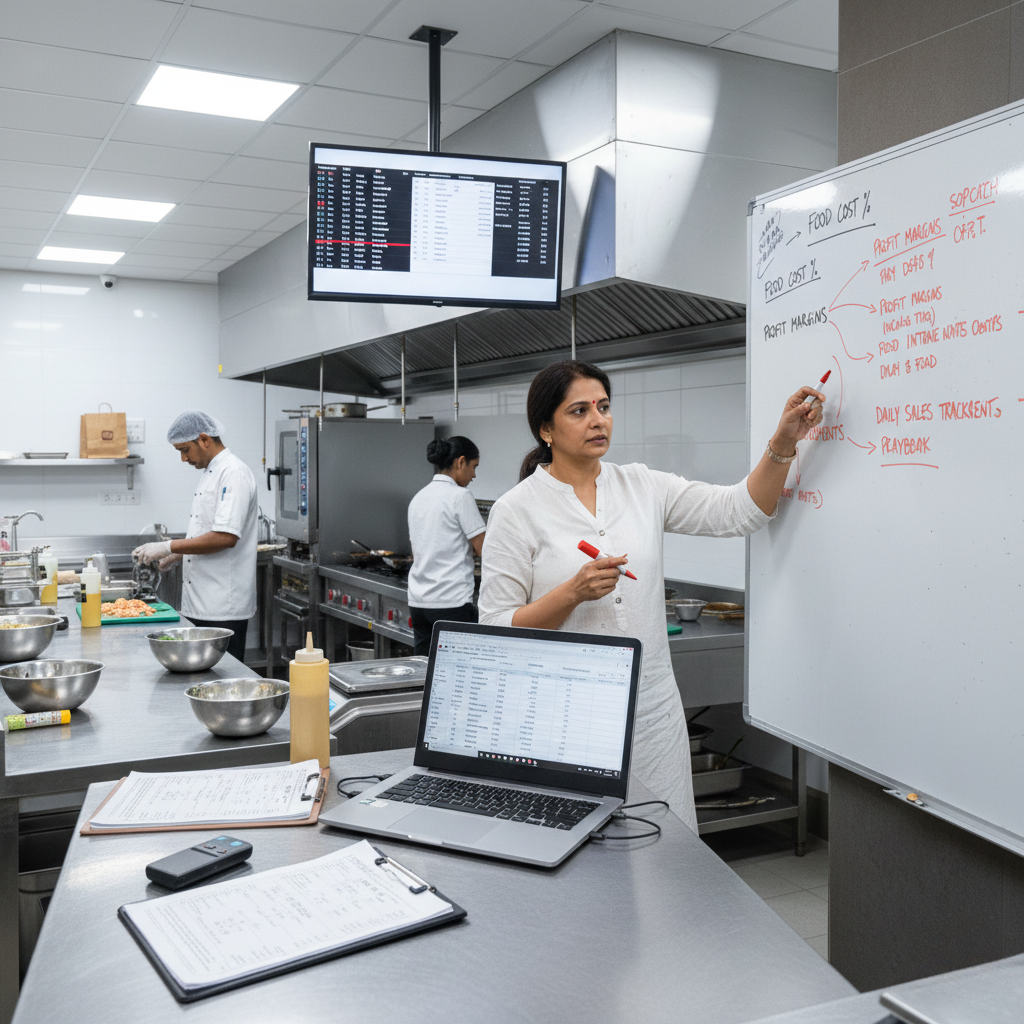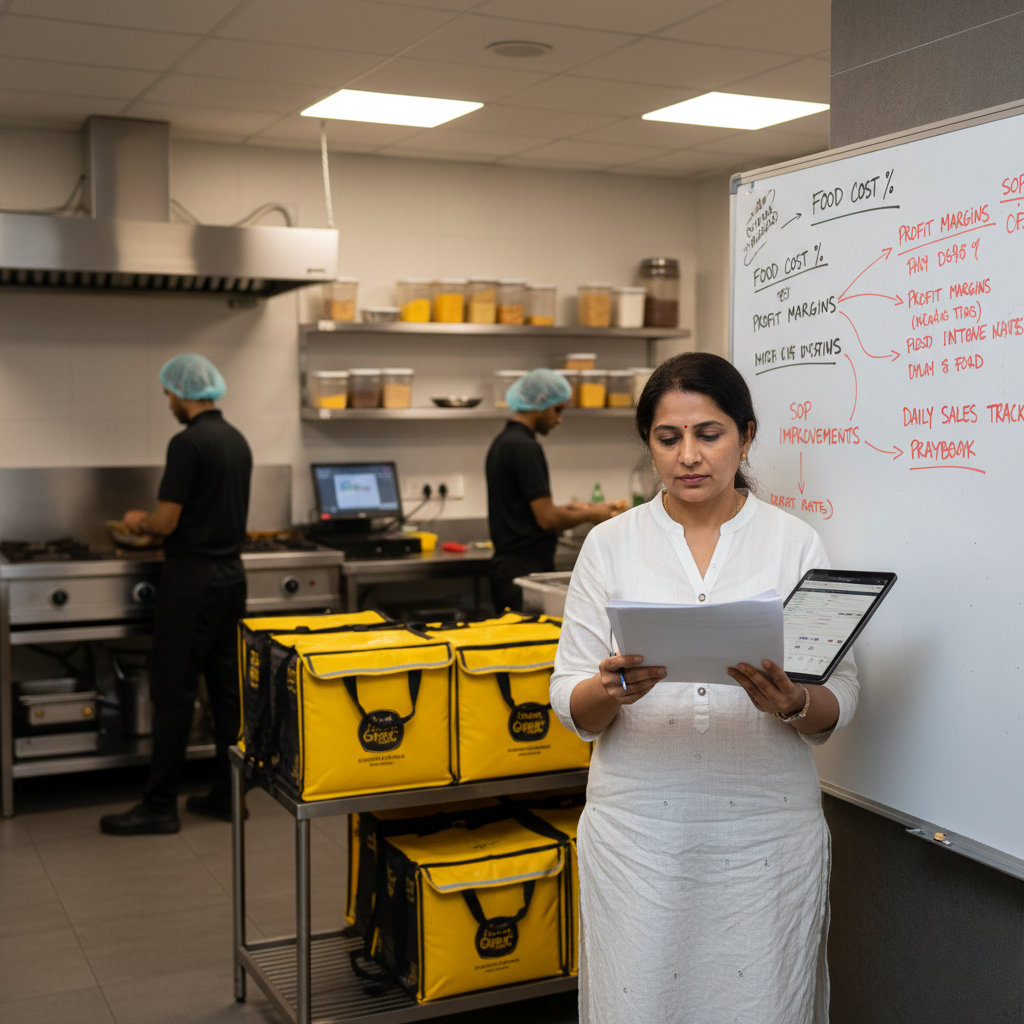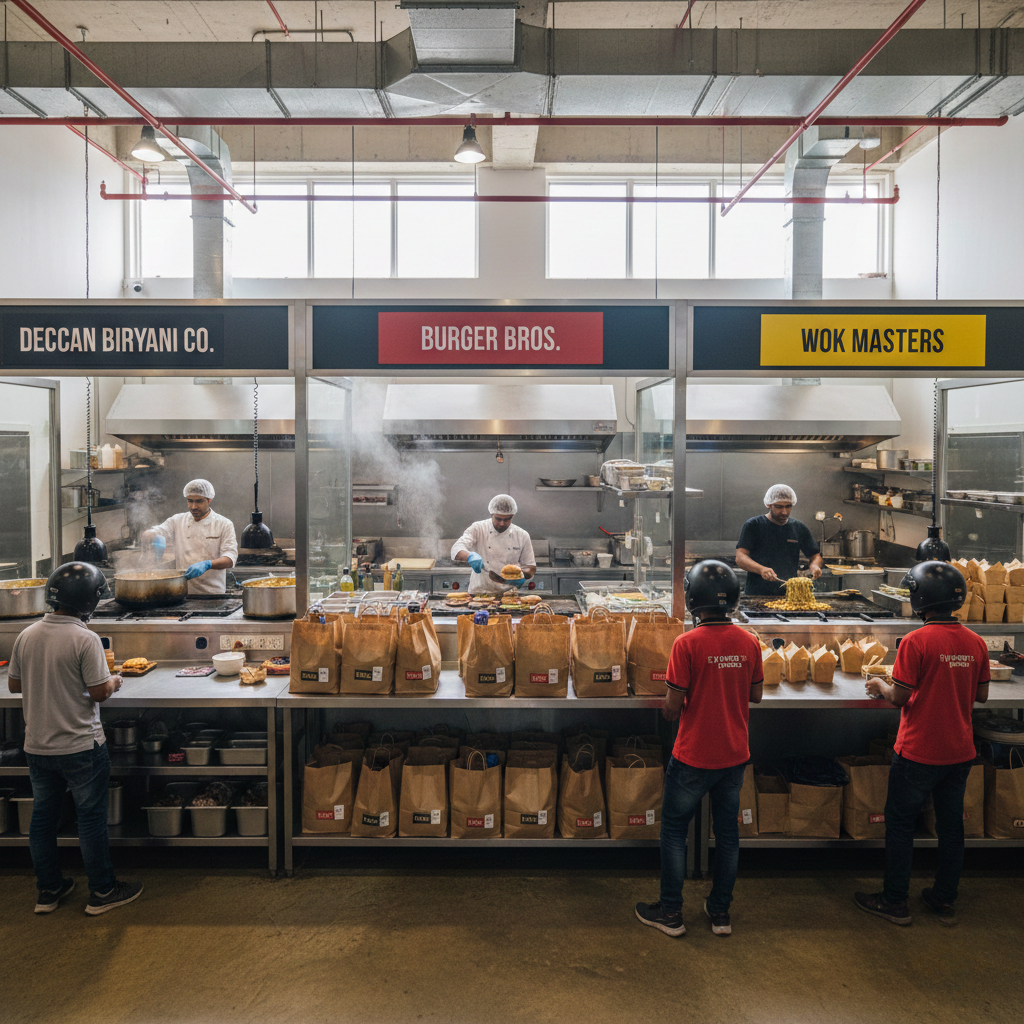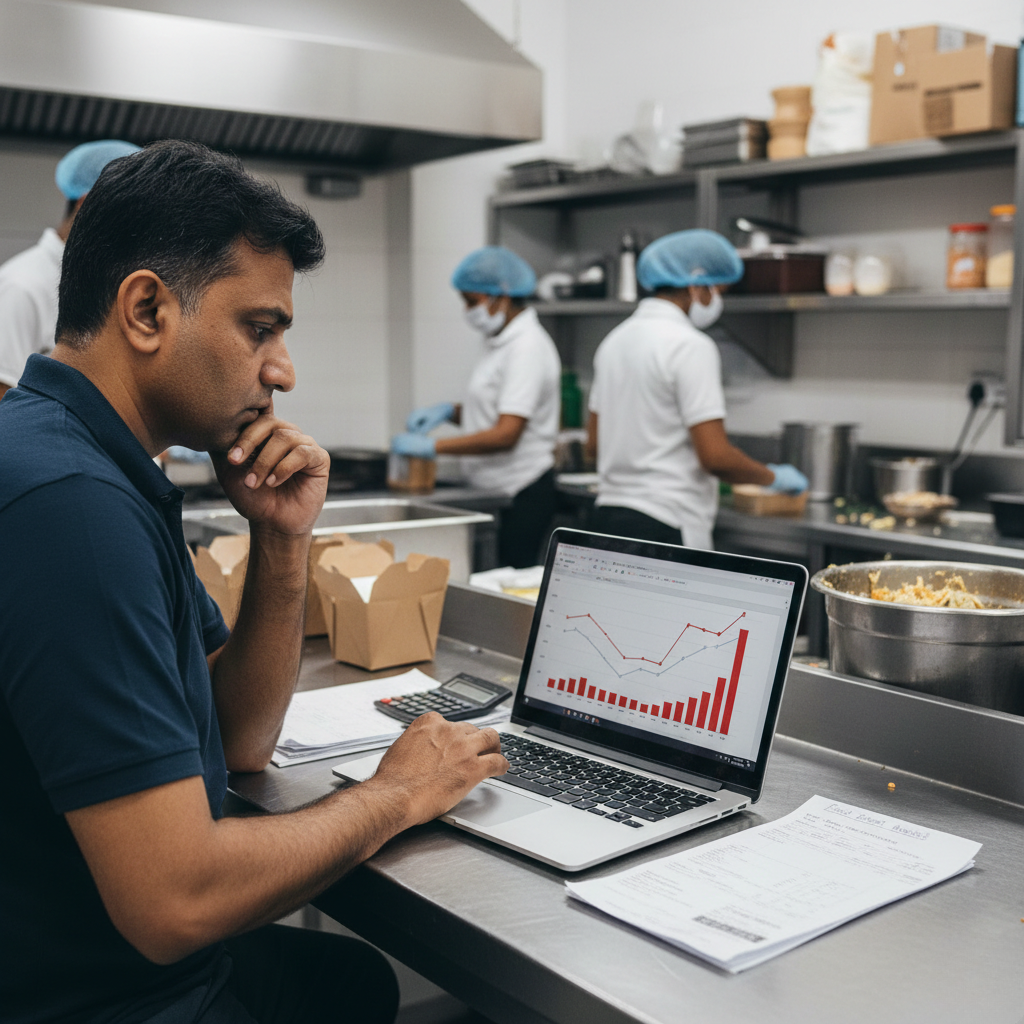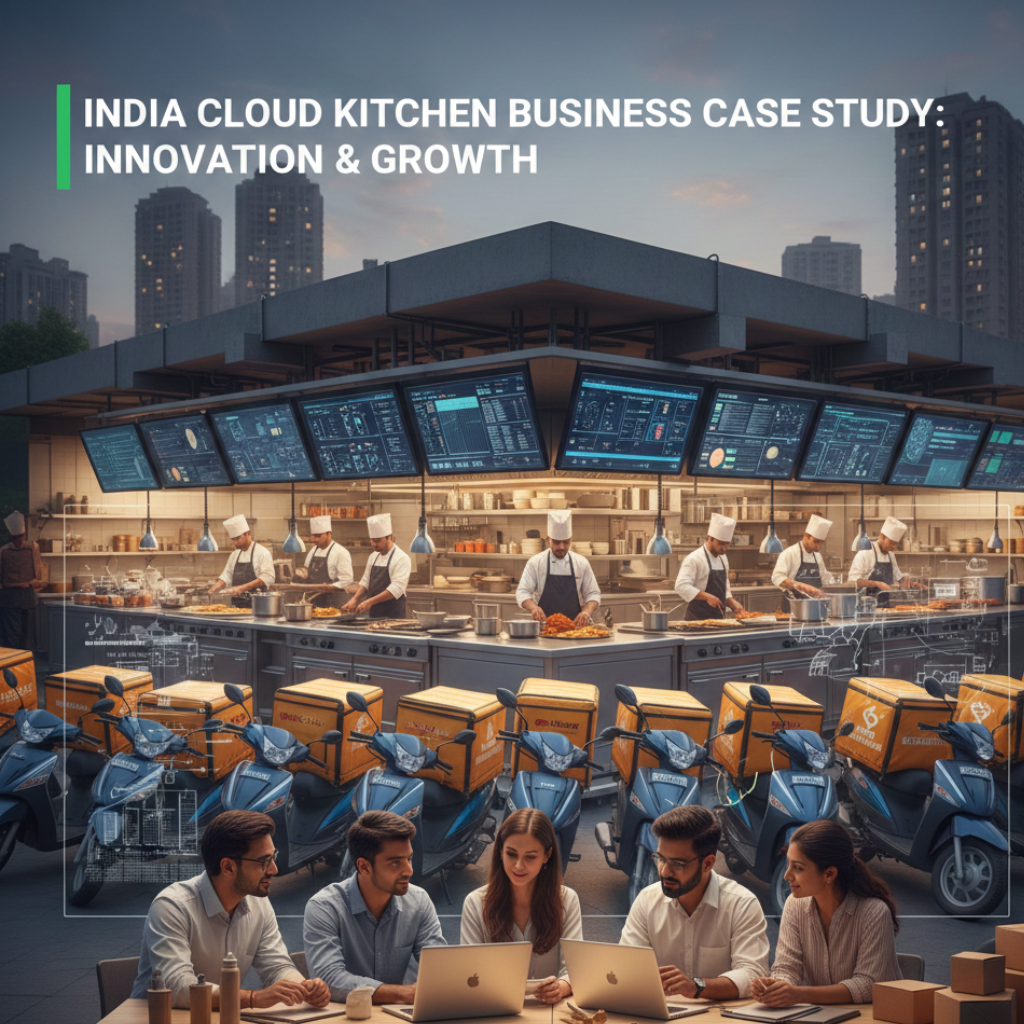
Cloud kitchen business case study in india-The cloud kitchen business model has become one of the fastest-growing segments in India’s food service industry. Low entry barriers, increasing online food delivery, and changing consumer behavior have made cloud kitchens an attractive option for first-time entrepreneurs.
However, while many cloud kitchens generate strong order volumes, only a few achieve sustainable profitability. This detailed cloud kitchen business case study India explains how one Indian cloud kitchen was launched, stabilized, and grown profitably-along with lessons most founders miss.
Cloud Kitchen Business Case Study India-Overview
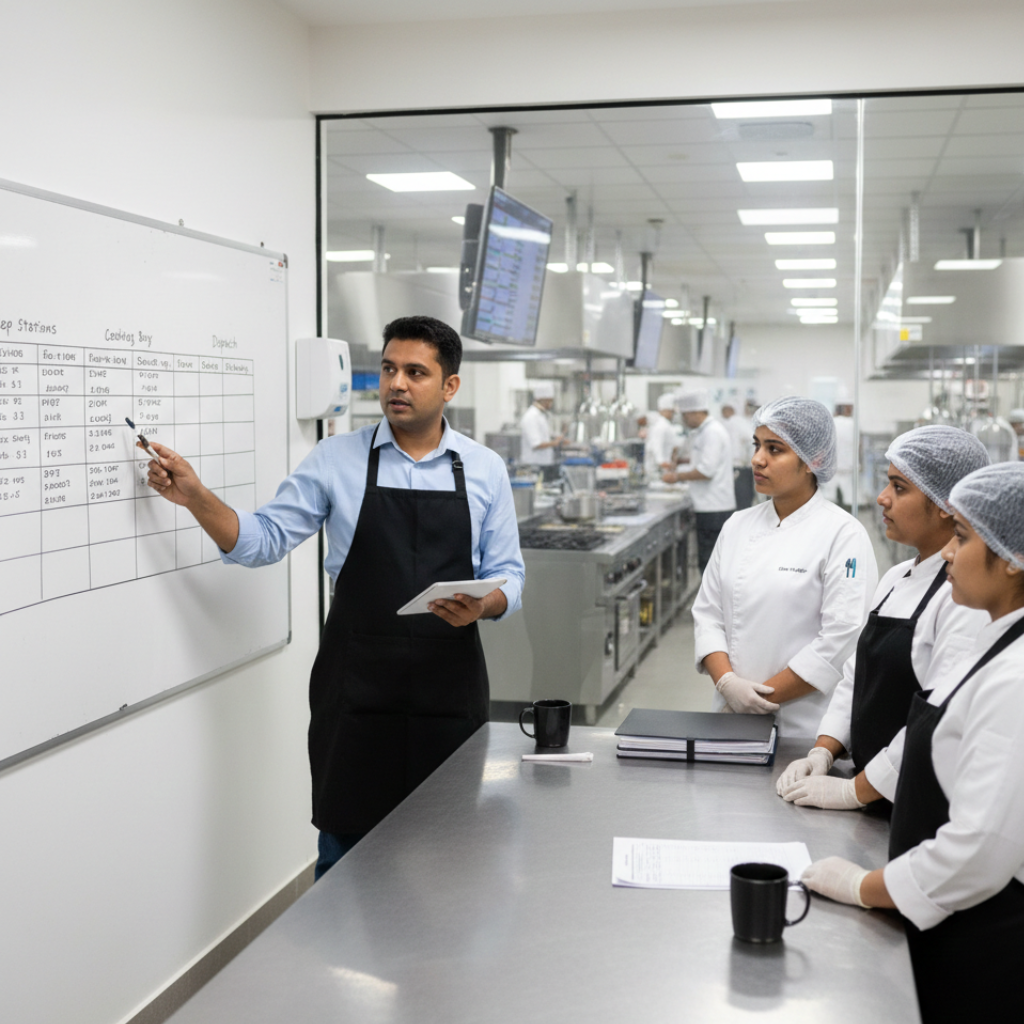
This cloud kitchen business case study India is based on a single-brand, delivery-only kitchen launched in a Tier-1 Indian city. The founders were first-time food entrepreneurs with limited capital and no prior restaurant background.
- Business Model: Single-brand cloud kitchen
- City: Tier-1 Metro (India)
- Cuisine: Indian & Indo-Chinese
- Launch Year: 2023
- Initial Investment: ₹9.5 lakhs
- Primary Sales Channels: Swiggy & Zomato
The brand focused on affordable meals priced between ₹180–₹350, targeting working professionals, students, and families ordering dinner.
Cloud Kitchen Business Case Study India-Market Research
Before launch, the founders conducted basic but effective market research:
- Checked top-selling cuisines on Swiggy & Zomato
- Analyzed competitor pricing and ratings
- Studied peak order timings
- Identified gaps in portion size and packaging quality
Instead of copying premium brands, they positioned themselves as a value-for-money cloud kitchen, which helped attract repeat customers early.
Cloud Kitchen Business Case Study India-Setup Cost Breakdown
One of the strongest aspects of this cloud kitchen business case study India was strict control over setup expenses.
| Expense Head | Cost (₹) |
|---|---|
| Kitchen Rent & Deposit | 2,20,000 |
| Equipment & Utensils | 3,10,000 |
| Licenses (FSSAI, GST, Local) | 45,000 |
| Branding & Packaging | 75,000 |
| Initial Raw Material | 80,000 |
| Working Capital Buffer | 1,70,000 |
Total Investment: ~₹9.5 lakhs This low initial investment reduced financial pressure during the early months.
Cloud Kitchen Business Case Study India-Daily Operations
The kitchen followed a lean operational structure:
- 2 trained cooks
- 1 helper
- Founder managed procurement, pricing, and platform dashboards
Daily operations focused on:
- Standardized recipes
- Strict portion control
- Fast order acceptance
- Packaging designed for delivery

Cloud Kitchen Business Case Study India – Order Volume Growth
Order growth was gradual but consistent:
- Month 1: 18–22 orders/day
- Month 3: 30–40 orders/day
- Month 6: 55–65 orders/day
- Month 12: 80–95 orders/day
The founders avoided fake discounts and focused on ratings, which helped organic visibility on aggregators.
Cloud Kitchen Business Case Study India-Revenue Growth
Monthly revenue growth looked like this:
- Month 1–3: ₹2.5–3 lakhs
- Month 4–6: ₹4–5 lakhs
- Month 7–9: ₹5.5–6.5 lakhs
- Month 10–12: ₹7–8 lakhs
Importantly, revenue growth was backed by improving unit economics, not discount-led volume.
Cloud Kitchen Business Case Study India-Profitability & Margins
Unlike many cloud kitchens, this business tracked contribution margin per order.
- Average Order Value (AOV): ₹280
- Food Cost: 30–33%
- Aggregator Commission & Fees: 22–26%
- Packaging: 5–6%
- Staff & Overheads: 12–14%
Net profit margins stabilized at 12–15% after month 8.
Break-even was achieved in approximately 9–10 months, which is considered healthy for Indian cloud kitchens.
Cloud Kitchen Business Case Study India-Challenges Faced
- High Swiggy & Zomato commissions
- Rising raw material prices
- Staff training & attrition
- Maintaining ratings during peak hours
- Cash flow pressure in early months
Most challenges were solved through menu engineering, supplier negotiation, and operational discipline.
Cloud Kitchen Business Case Study India-Scaling Strategy
Instead of opening new locations quickly, the founders scaled smartly:
- Launched a second brand using the same kitchen
- Introduced WhatsApp direct ordering
- Offered loyalty discounts for repeat customers
By 2025, direct orders contributed nearly 25% of total sales, significantly improving margins.
Industry Context
India’s food service and cloud kitchen market continues to expand rapidly. According to industry reports, online food delivery penetration and demand for convenience will keep rising.
For authoritative insights, refer to: IBEF Indian Food Industry Report .
Key Lessons from This Cloud Kitchen Business Case Study India
- Sales without margins are dangerous
- Cost control matters more than fast scaling
- Aggregator dependency must be reduced gradually
- Repeat customers drive real profitability
- Standardization is essential for scaling
Frequently Asked Questions (FAQs)
Is the cloud kitchen business profitable in India?
Yes, if unit economics, food cost, and commissions are managed properly.
How much investment is needed to start a cloud kitchen?
A basic cloud kitchen can be started between ₹7–15 lakhs depending on city and scale.
How long does a cloud kitchen take to break even?
Most well-managed cloud kitchens break even within 8–12 months.
Is this cloud kitchen business case study India realistic?
Yes. It reflects a typical small-to-mid-scale Indian cloud kitchen.
People Also Read
- Cloud Kitchen Business in India
- Cloud Kitchen Setup Cost in India
- Cloud Kitchen Mistakes to Avoid
- Is Cloud Kitchen Profitable in India?