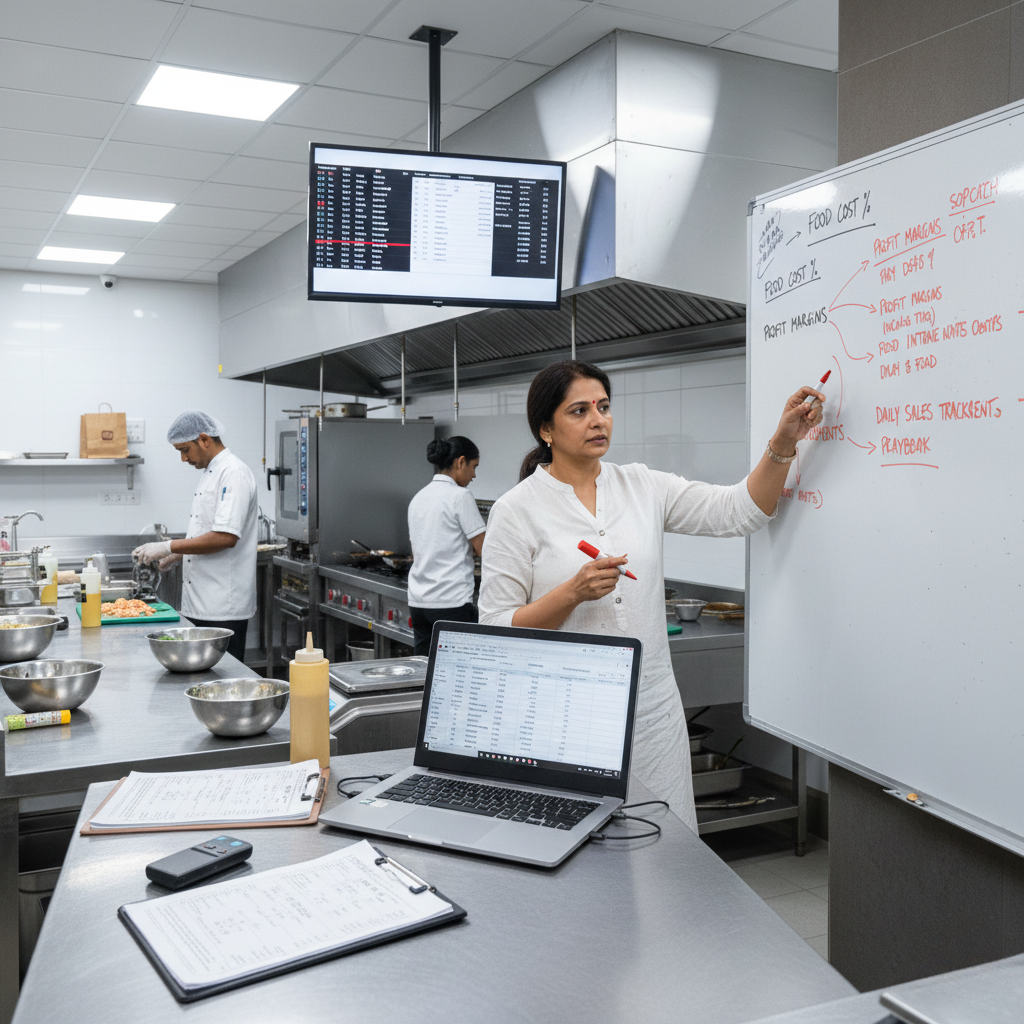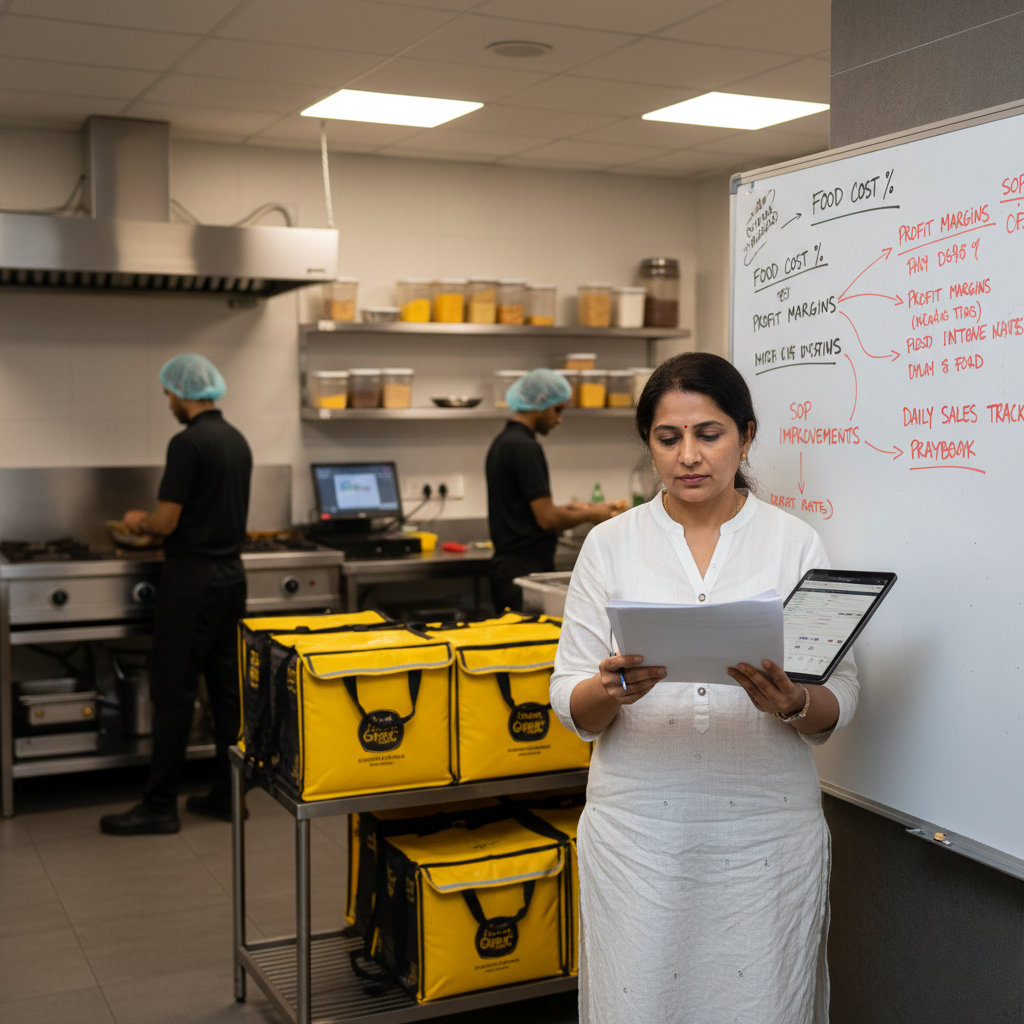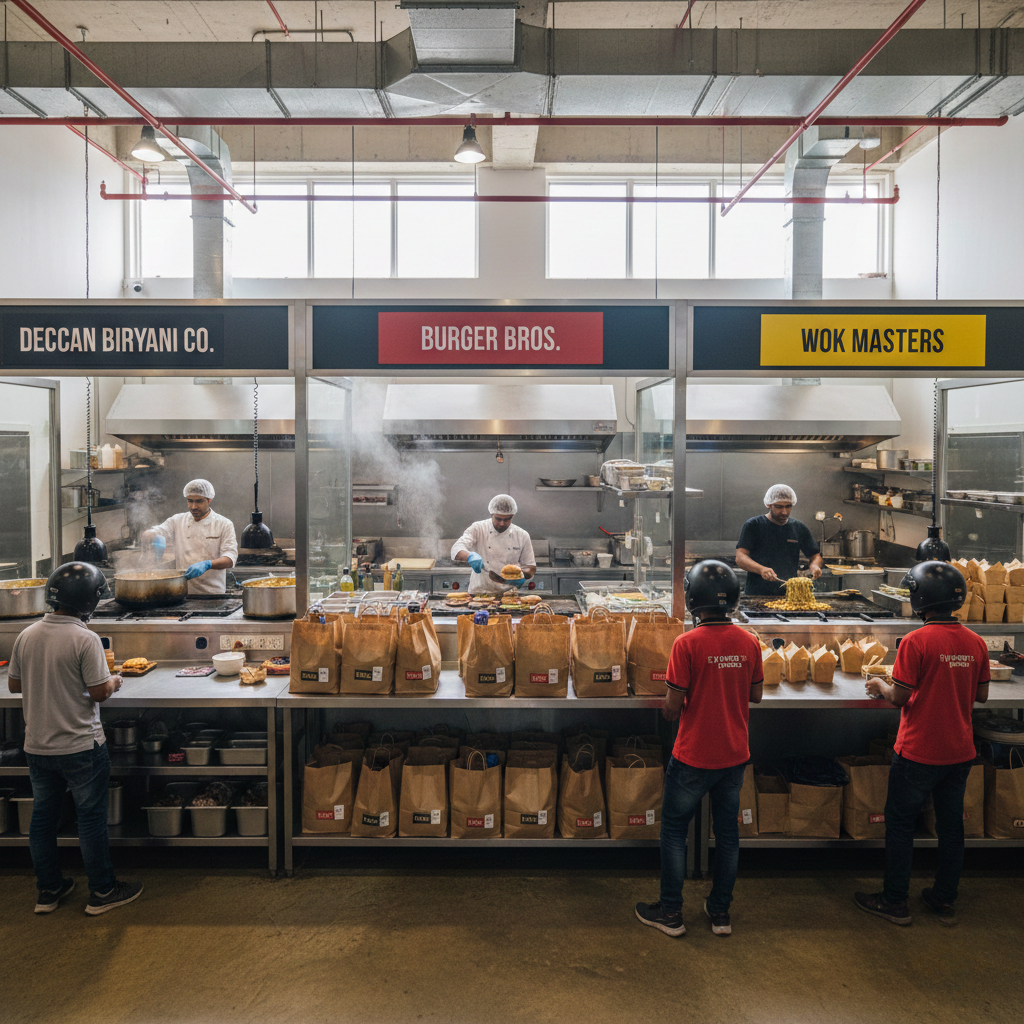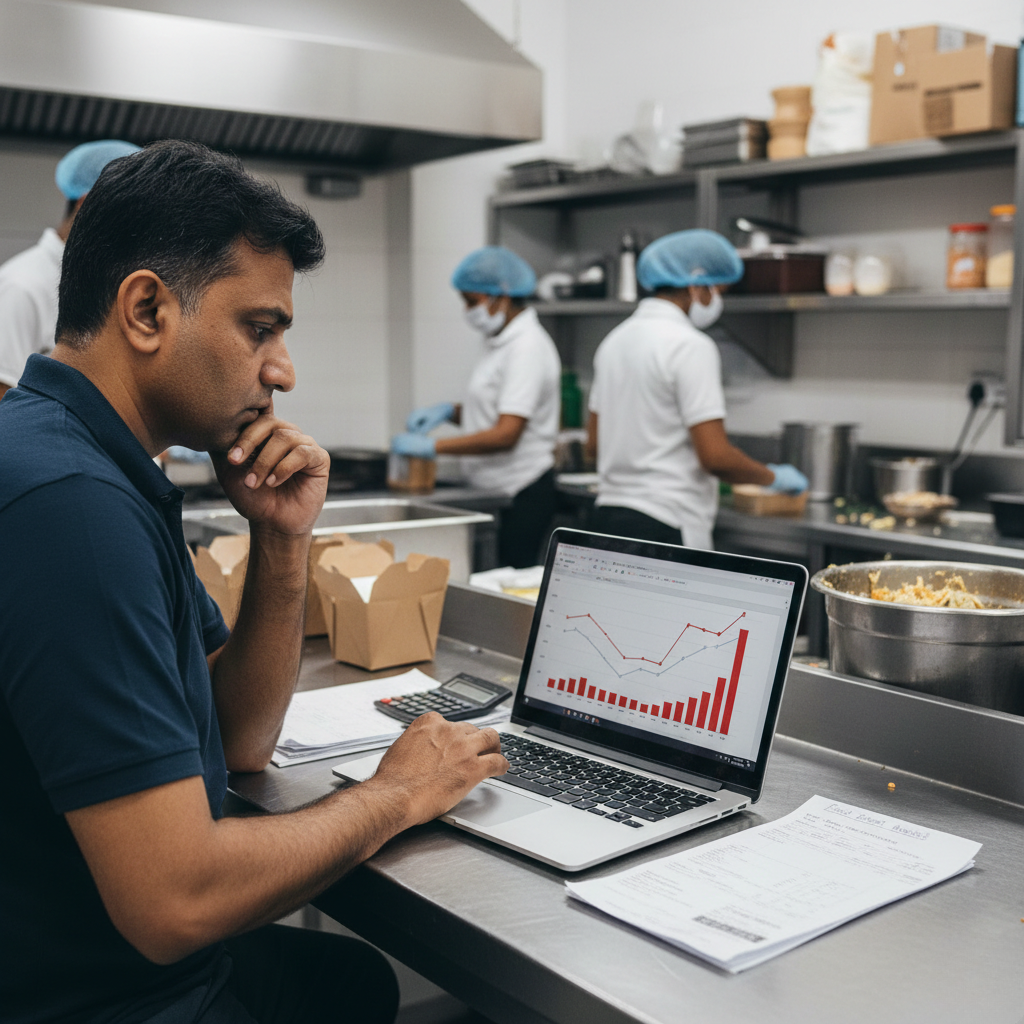
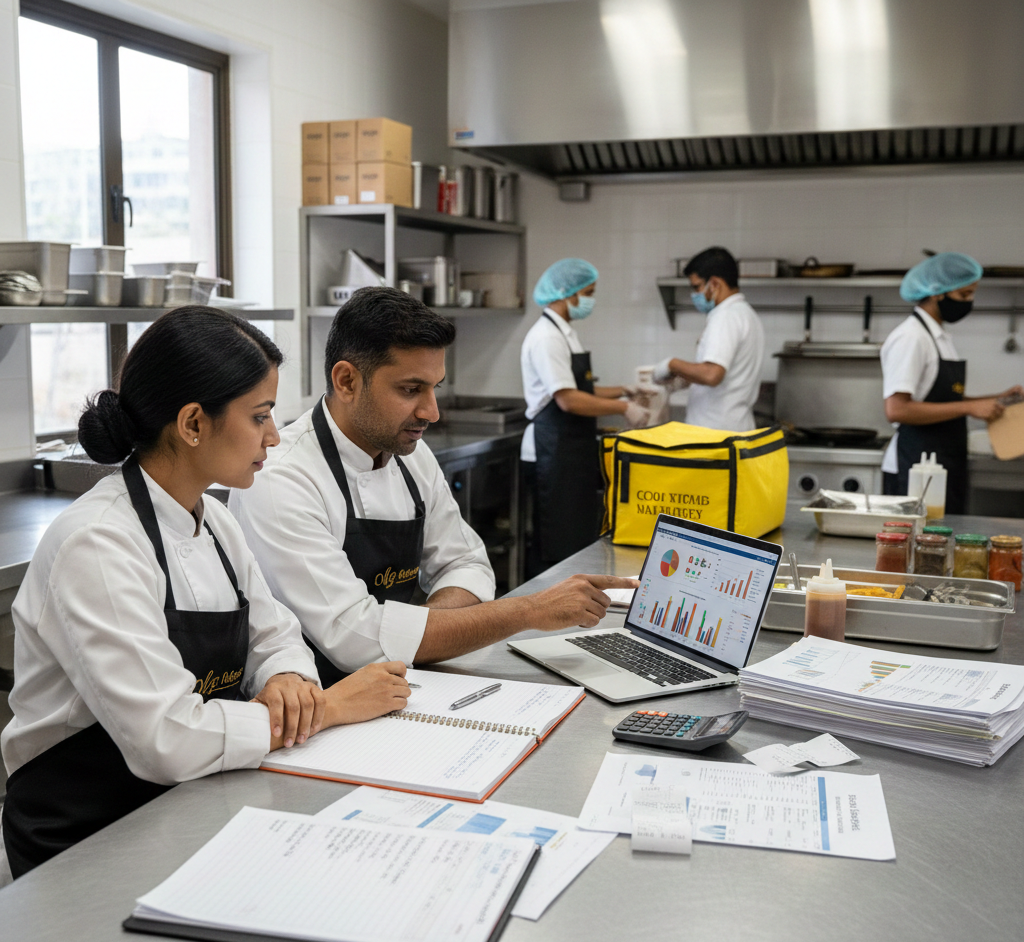
Building Profitable Cloud Kitchen Data-Backed Roadmap requires more than strong branding or high order volume. Many kitchens generate impressive daily sales numbers yet struggle to convert revenue into stable margins. A profitable cloud kitchen is not built through activity alone. It is built through structured financial visibility, disciplined execution, and smarter operating decisions.
A data-backed roadmap provides clarity on where profits are created, where margins are leaking, and how operational systems must evolve to support sustainable growth. This guide explains what a profitable cloud kitchen roadmap truly requires from a financial and operational perspective.
Why a Profitable Cloud Kitchen Roadmap Must Be Designed, Not Assumed
Revenue often creates excitement, but revenue without contribution analysis creates volatility. A profitable kitchen does not happen automatically just because order count rises or aggregator visibility improves.
As discussed in Cloud Kitchen Profitability Data-Driven Approach and why cloud kitchen profits decline despite good sales , growth without margin discipline can amplify operational inefficiencies rather than solve them.
That is why Building Profitable Cloud Kitchen Data-Backed Roadmap must be intentionally structured through visibility, cost control, and repeatable execution systems.
Understanding Contribution Margin in a Data-Backed Profitability Roadmap
Contribution margin represents the true earning power of each order. It shows how much revenue remains after covering all variable costs and is one of the most important layers in any profitability roadmap.
Contribution Margin = Selling Price − Variable Costs
Variable costs include ingredient consumption, packaging materials, aggregator commissions, promotional discounts, and paid marketing expenses. Without SKU-level contribution tracking, low-margin items may scale unnoticed and weaken the business over time.
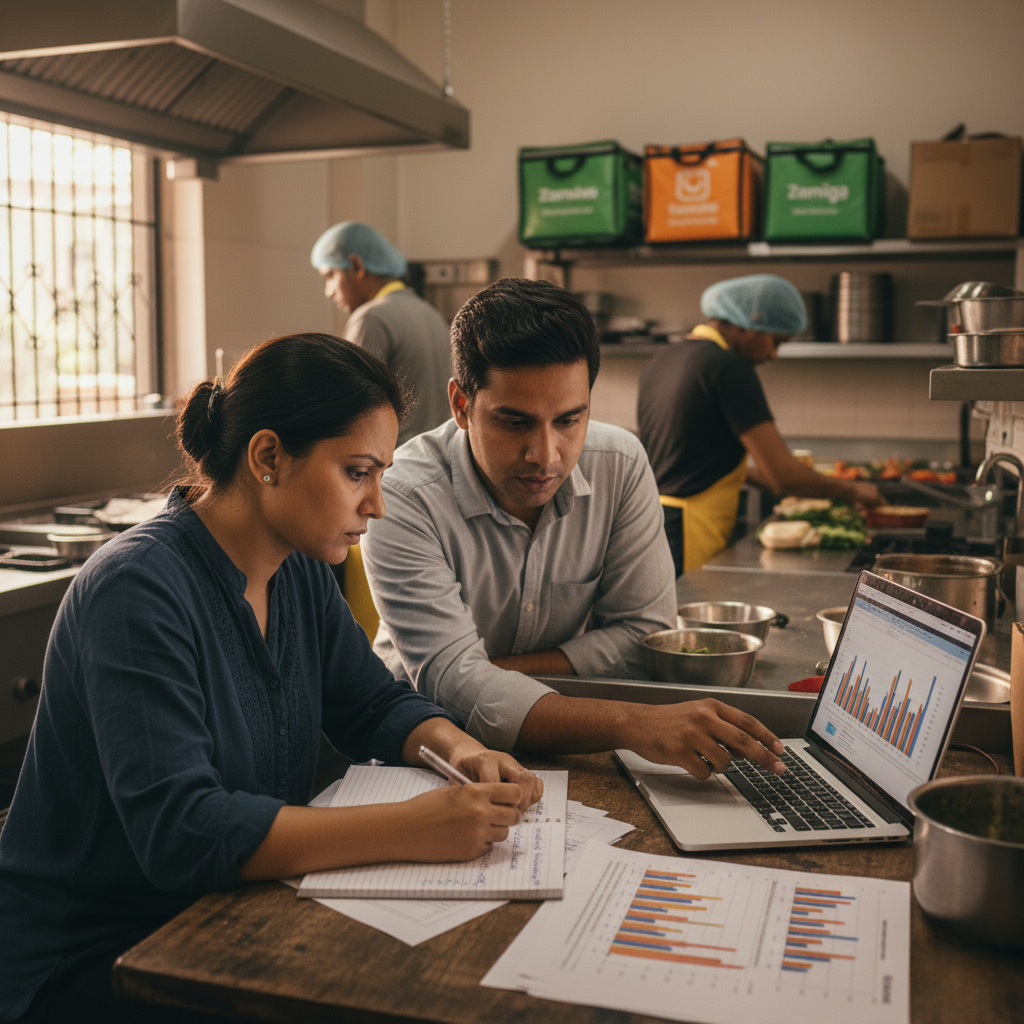
A profitable roadmap begins with identifying which menu categories consistently generate healthy contribution and aligning growth decisions around those strengths.
Food Cost Control and Margin Protection
Food cost percentage is one of the most sensitive drivers of profitability. Even small deviations in portion size, recipe execution, or procurement efficiency can gradually erode margins.
Food Cost % = (Total Ingredient Cost / Total Sales) × 100
Without measured control, food cost inflation often becomes visible only at month-end reviews, which delays corrective action. This is why Building Profitable Cloud Kitchen Data-Backed Roadmap requires standardized gram-based recipes, yield tracking, and variance monitoring.

Labor Alignment and Demand-Based Staffing
Labor efficiency is often overlooked during expansion phases. Many kitchens increase staffing reactively, without matching labor deployment to actual demand patterns.
Labor Cost % = (Total Staff Cost / Total Revenue) × 100
Demand-based scheduling strengthens margins without compromising service quality. A strong roadmap uses labor planning to improve productivity, reduce idle payroll, and protect net profit.
Pricing and Discount Discipline
Pricing decisions directly influence contribution margin. A kitchen may look busy because of promotions, but discount-led sales can still weaken profitability if post-discount contribution is poor.
That is why Building Profitable Cloud Kitchen Data-Backed Roadmap also requires discount discipline. Analyzing discount-to-sales ratio and post-discount contribution helps founders understand whether promotions are building healthy growth or simply creating temporary order spikes.
Operational warning signs related to margin compression are explored in Cloud Kitchen Profitability Dashboard .
Inventory Discipline and Cash Flow Control
Inventory management directly affects both food cost and cash flow. Weak inventory discipline increases spoilage, over-ordering, and working capital pressure.
A strong profitability roadmap requires monitoring inventory turnover and consumption patterns carefully. Capital efficiency becomes a structural advantage when inventory movement is continuously optimized.
Daily Monitoring and Early Intervention
Profitability gaps rarely emerge suddenly. They accumulate gradually through small inefficiencies in production, pricing, labor, and inventory.
That is why Building Profitable Cloud Kitchen Data-Backed Roadmap requires daily monitoring rather than monthly reaction. Daily visibility into contribution, food cost movement, labor alignment, and discount impact allows founders to intervene early before losses compound.
Turning Data into Operational Decisions
A roadmap is only useful when it changes behavior. Tracking data without taking action creates reports, not profitability.
The purpose of a data-backed system is to influence menu design, pricing strategy, procurement choices, staffing discipline, and promotional planning. When data shapes execution, the kitchen becomes more stable, scalable, and financially predictable.
Final Thoughts on Building Profitable Cloud Kitchen Data-Backed Roadmap
Building Profitable Cloud Kitchen Data-Backed Roadmap is the result of intentional design, not accidental growth. It requires founders to look beyond revenue and understand the systems that actually shape margin quality.
When metrics guide decisions and systems reinforce discipline, cloud kitchens transition from unpredictable performance to structured, sustainable profitability. That is how a data-backed roadmap becomes a real growth asset rather than just a reporting exercise.
Still Have Questions?
For operational and profitability guidance, read the Grow Kitchen FAQs .
You may also explore:
- Data-Driven Cloud Kitchen Consulting Services
- Cloud Kitchen Profitability Audit
- Maximize Cloud Kitchen Profit with Data-Driven Approach
- Increase Cloud Kitchen Profitability
- Scaling Your Cloud Kitchen for Profit