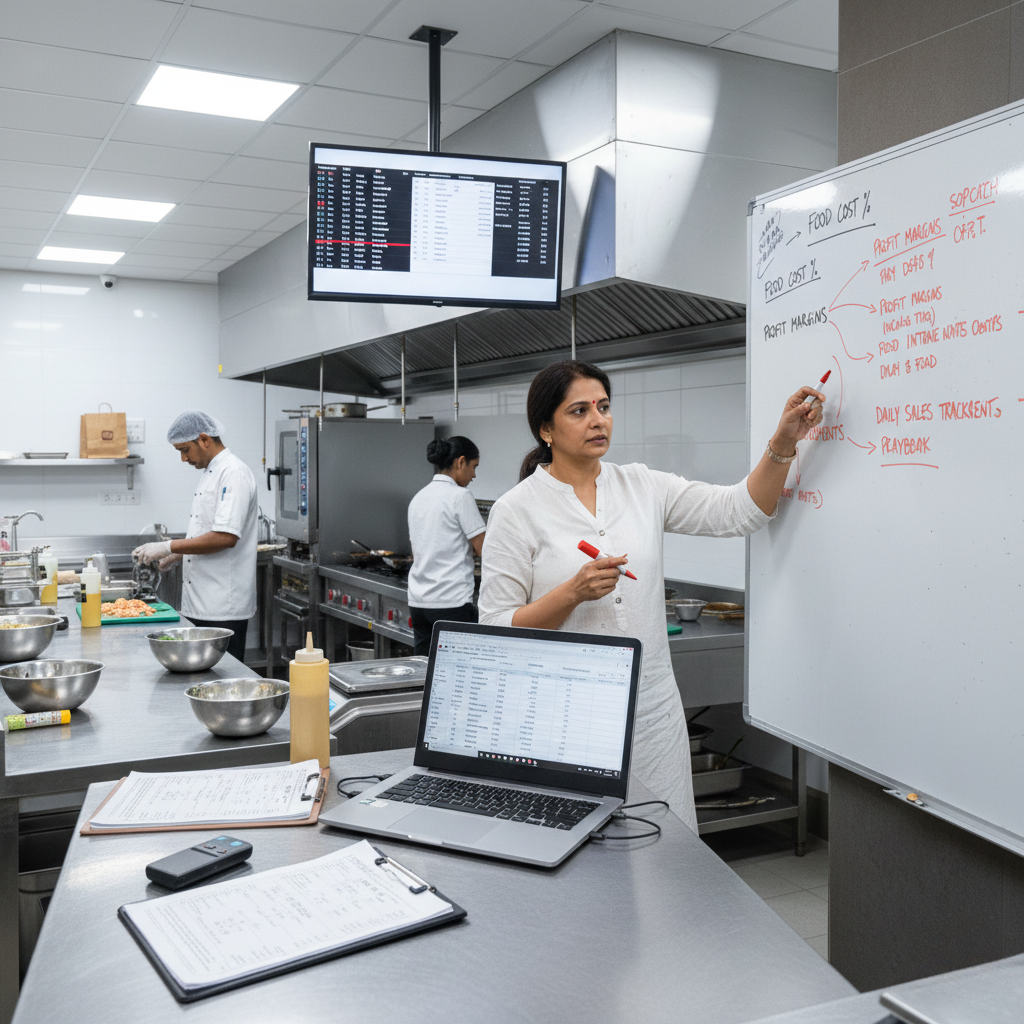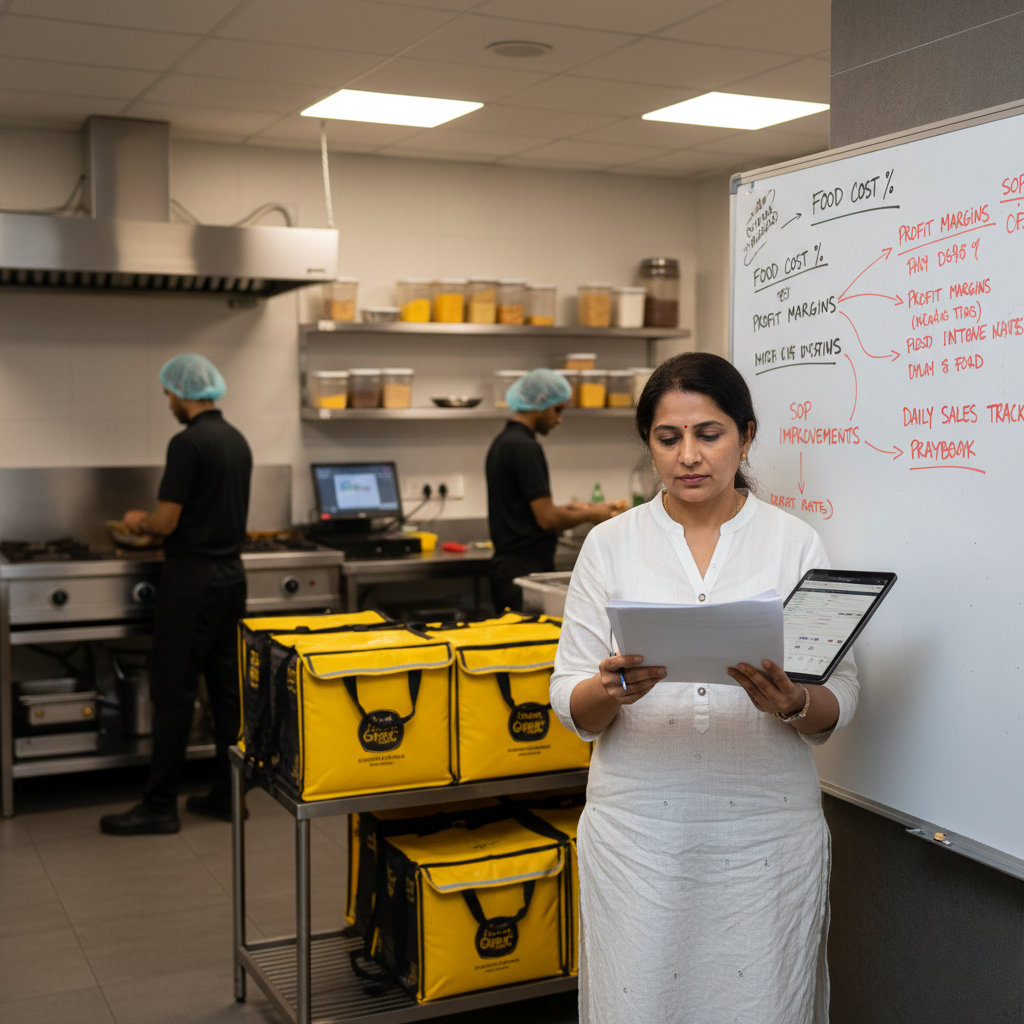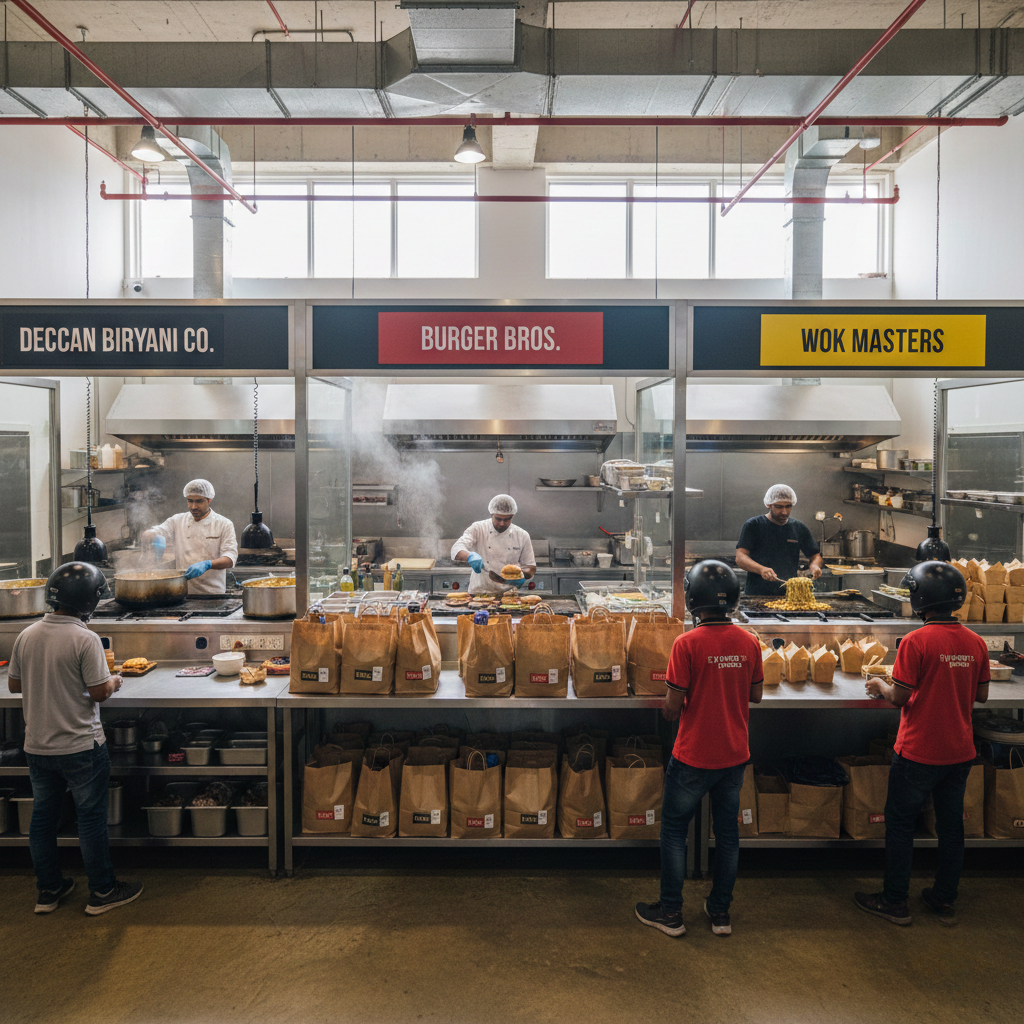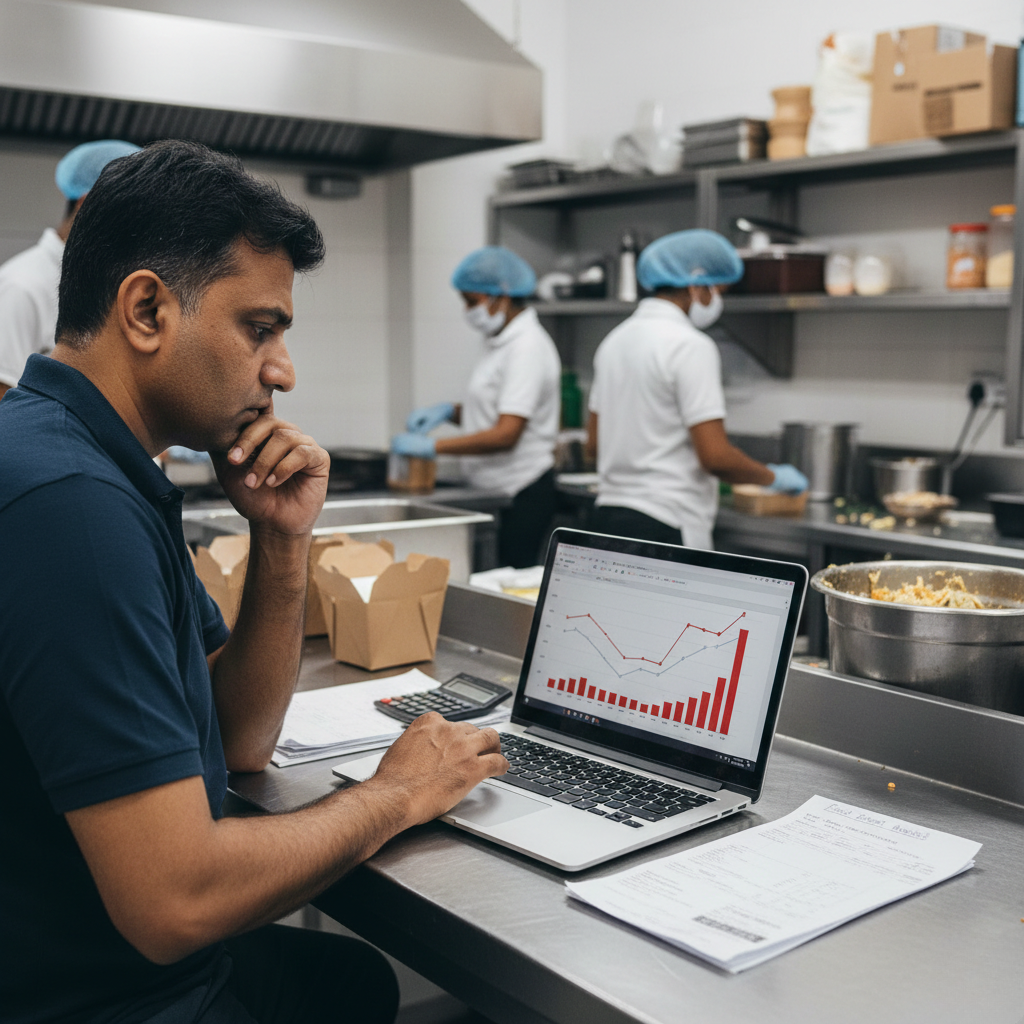
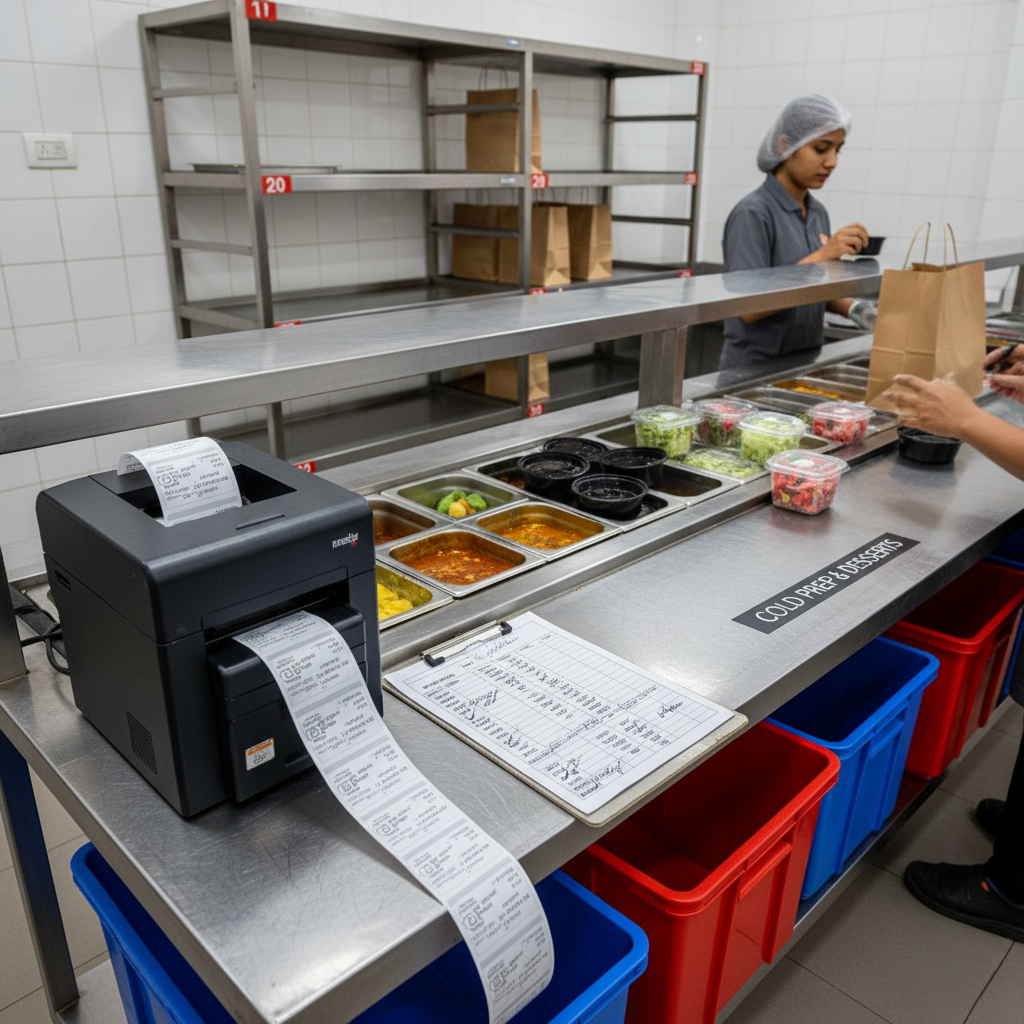
Why Data Tracking Is Key to Profitable Kitchens is not about dashboards or fancy tools. It is about visibility. Most cloud kitchens don’t lose money because food is bad or demand is low. They lose money because founders are operating blind. Orders happen. Staff works. Money moves. But without structured data tracking, founders cannot see where profit leaks, why margins fluctuate, or which decisions actually improve outcomes. This guide explains how data tracking transforms running kitchens into predictable, profitable businesses.
Why Data Tracking Is the Missing Link in Cloud Kitchen Profitability
Many cloud kitchen founders rely on intuition. They look at daily orders, ratings, and bank balance to judge performance. This creates a dangerous illusion of control.
Profitability problems rarely appear suddenly. They develop slowly through small daily inefficiencies: rising food cost, higher refunds, longer prep times, staff inefficiency, and inconsistent dispatch. Without data tracking, these signals stay invisible until losses become unavoidable.
To understand profitability fundamentals, start with Cloud Kitchen Profitability Consultant in India and identify early-stage blind spots via Common Operational Mistakes in Cloud Kitchens.
What Data Tracking Really Means in a Cloud Kitchen
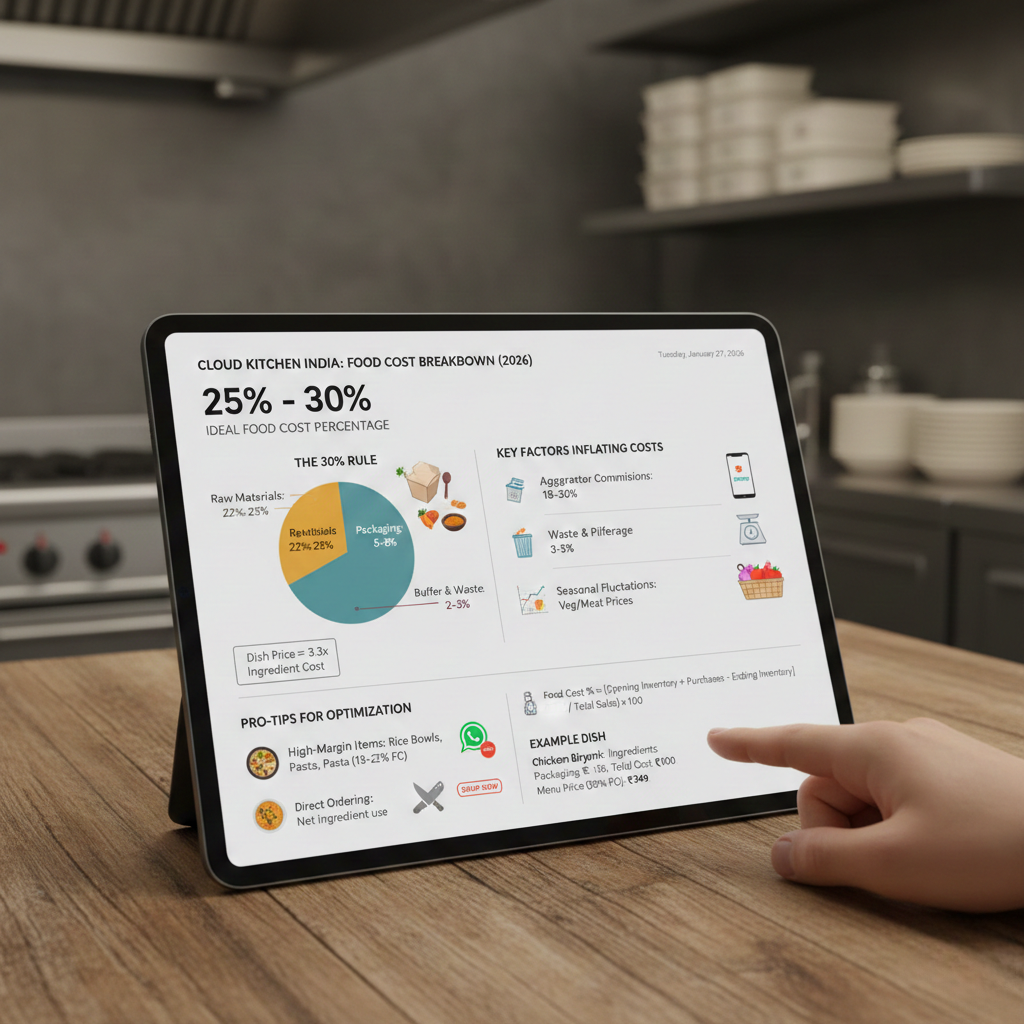
Data tracking does not mean complex BI tools. It means consistently capturing the right operational numbers and reviewing them daily and weekly. In cloud kitchens, data is the only reliable source of truth.
Emotions lie. Assumptions mislead. Data reveals reality.
Profitable kitchens track a small set of critical metrics with discipline. Loss-making kitchens track everything randomly or nothing at all.
How Data Tracking Protects Your Cloud Kitchen Cost Structure
Cloud kitchens have thin margins. A 3–5% cost variation can decide whether the month ends in profit or loss. Data tracking highlights where this variation originates.
Key cost-related data points include: daily food cost percentage, per-dish raw material consumption, wastage quantity, re-cook count, refunds per 100 orders, and packaging usage.
Without tracking, founders only see the final P&L. With tracking, founders see cost drift in real time and can intervene before damage compounds.
Why Food Cost Tracking Is the Foundation of Profitability
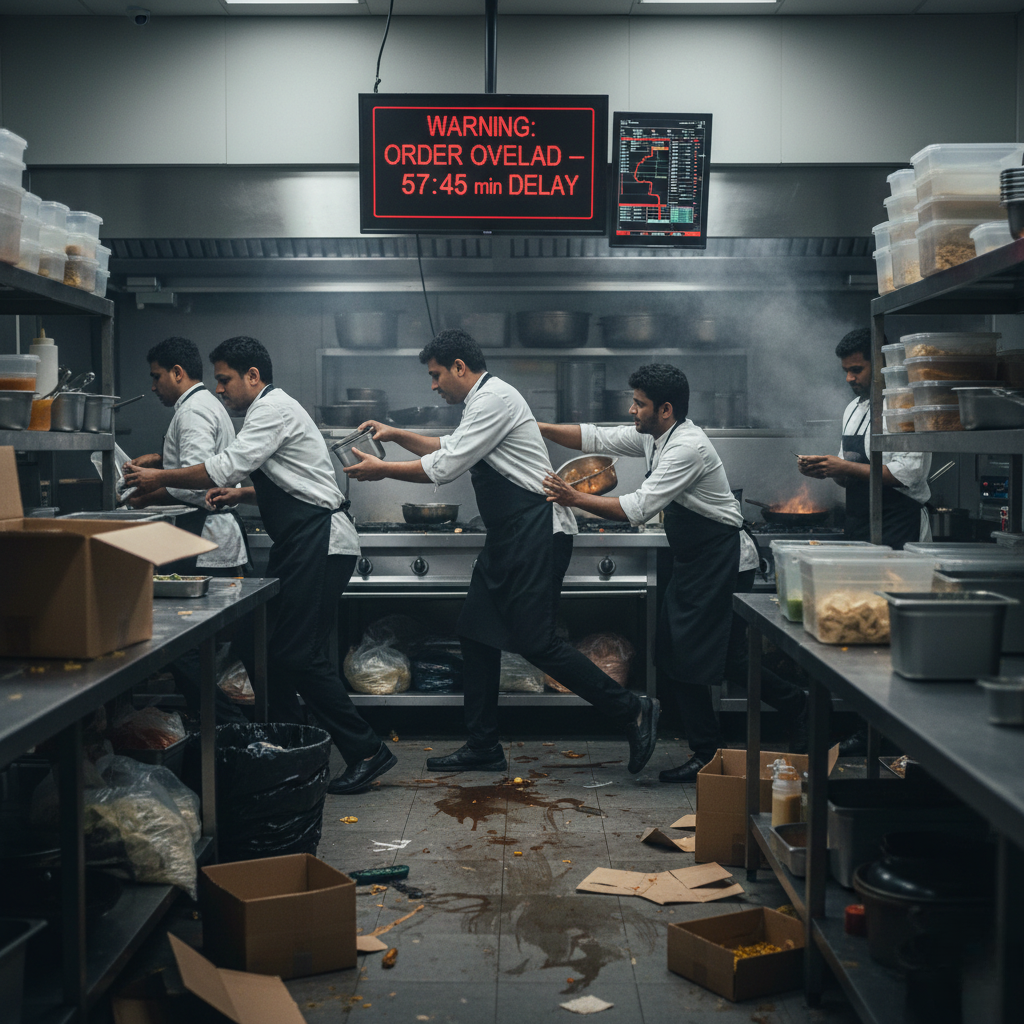
Food cost is the single largest variable expense in a cloud kitchen. Even small inaccuracies lead to significant monthly losses.
Profitable kitchens track: opening stock, purchases, daily consumption, wastage, and closing stock. This allows founders to calculate actual food cost per day, not estimated food cost per menu.
When food cost is tracked daily, founders can quickly identify: portion drift, over-prep, theft, or vendor inconsistencies.
SOPs and data tracking work together. SOPs define how food should be prepared. Data tracking verifies whether SOPs are followed. Learn how SOPs reduce food cost in How SOPs Reduce Food Cost & Complaints.
Staff Productivity Improves Only When It Is Measured
Most founders believe staff productivity is subjective. It is not. Productivity becomes measurable when output is tracked.
Useful staff metrics include: orders handled per shift, prep time per batch, cooking time per ticket, packing time per order, and error rate per staff member.
Data tracking exposes inefficiencies that are otherwise blamed on “rush” or “bad days.” It also helps reward high-performing staff and train low performers objectively.
When productivity data is combined with SOPs, execution becomes predictable. Understand structured execution through Role-Based Kitchen Operations Explained.
Why Tracking Aggregator Metrics Protects Your Payout
Aggregator dashboards provide surface-level data. Profitable kitchens go deeper. They track: acceptance rate, cancellation reasons, delivery delay frequency, refund percentage, and rating movement over time.
This data helps founders identify whether losses come from: kitchen delays, packaging failures, menu issues, or staffing gaps.
When these metrics are reviewed weekly, corrective action becomes targeted, not guesswork.
To understand how platforms affect margins, read Aggregator Commission Impact in India.
External reference links: Swiggy Refund Policy, Zomato Ordering Terms.
Dispatch Data Reveals Hidden Profit Leaks
Dispatch failures rarely show in sales reports. They show in refunds, negative ratings, and repeat-order drop.
Tracking dispatch data such as: average dispatch time, delayed orders, wrong-item frequency, and rider wait time helps founders identify bottlenecks.
When dispatch data improves, ratings stabilize and repeat orders increase. Learn how to systemize dispatch via Cloud Kitchen Dispatch SOP.
Why Scaling Without Data Tracking Destroys Profit
Many founders believe growth will solve losses. Growth only magnifies what already exists. If inefficiencies are untracked, they multiply with volume.
Data tracking allows founders to scale safely by ensuring that: food cost stays within range, staff productivity scales proportionally, and dispatch performance remains stable.
Without data, expansion decisions become risky bets. Learn why growth hurts weak kitchens in When Growth Is Hurting Your Cloud Kitchen Operations.

How to Start Data Tracking in a Running Cloud Kitchen
Data tracking does not require expensive software. It requires discipline. Start simple and expand gradually.
Step 1: Track daily sales, refunds, food cost, and wastage.
Step 2: Add staff productivity and dispatch metrics weekly.
Step 3: Review data every week without emotion. Numbers are signals, not judgments.
Step 4: Align SOPs with data findings. SOPs without data are assumptions. Data without SOPs is observation without correction.
External best-practice references: FSSAI Hygiene Standards, ISO 22000 Overview.
Final Takeaway: Data Turns Effort Into Profit
Cloud kitchens fail not because founders don’t work hard, but because they lack visibility. Data tracking turns daily chaos into structured insight.
When numbers are tracked consistently, decisions become rational, systems improve faster, and profitability stabilizes.
Profitable kitchens are not lucky. They are informed.
Operational frameworks from GrowKitchen, and partner brands like Fruut and GreenSalad demonstrate how data-led kitchens outperform intuition-led kitchens.
FAQs: Why Data Tracking Is Key to Profitable Kitchens
Do small cloud kitchens really need data tracking?
Yes. Smaller kitchens benefit the most because margins are tighter and mistakes are costlier.
What is the most important metric to track?
Daily food cost percentage combined with refunds per 100 orders.
Can data tracking replace SOPs?
No. Data highlights problems. SOPs fix them. Both are required.
How often should data be reviewed?
Daily for key metrics and weekly for trend analysis.