Why CAC for Delivery Brands is one of the most ignored truths in the cloud kitchen ecosystem. Many delivery-first founders believe Customer Acquisition Cost only applies to D2C brands, apps, or SaaS companies. Orders are flowing. Aggregator dashboards look active. Discounts seem to work. Yet profitability never stabilizes. This guide explains what CAC actually means for delivery brands, why ignoring it silently kills margins, and how disciplined operators design growth where customer acquisition strengthens the business instead of draining it.
Why Most Delivery Brands Believe CAC Doesn’t Apply to Them
Many cloud kitchen founders believe aggregators “handle customers”. The logic sounds simple: list on Swiggy or Zomato, get visibility, get orders.
Because CAC is not shown clearly on aggregator dashboards, it feels invisible. But invisible does not mean nonexistent.
To understand the full picture, start with Cloud Kitchen Business in India, Cloud Kitchen Unit Economics Explained, and Understanding Contribution Margin in Cloud Kitchens.
What CAC Actually Means for Delivery Brands
Customer Acquisition Cost (CAC) is the total cost required to acquire one paying customer. In delivery brands, CAC includes: aggregator commissions, discounts, ads, offers, platform boosts, and even hidden costs like rating recovery campaigns.
If a customer places one order and never returns, CAC decides whether that order created value or loss.
The Biggest Myth: “Aggregators Take Care of CAC”
Aggregators do provide traffic. But traffic is not free. Visibility is paid through: commissions, discounts, sponsored listings, and ads.
Every time a brand runs a discount-led campaign, CAC quietly increases. Ignoring this leads to false growth narratives.

What Goes Into CAC for Delivery Brands
CAC for delivery brands is not a single line item. It is a combination of: aggregator commission, platform-funded or brand-funded discounts, paid ads, listing boosts, coupon redemptions, and retention recovery costs.
When these are not tracked together, CAC appears artificially low.
Discounts: The Most Misunderstood CAC Driver
Discounts feel like marketing. In reality, they are acquisition costs. Every discounted order increases CAC.
If discounts do not lead to repeat customers, CAC compounds with no return.
Aggregator Commissions as Hidden CAC
Commissions are often treated as a cost of doing business. But they also function as acquisition cost. Without the aggregator, the customer would not exist.
This is why CAC must be evaluated alongside contribution margin, not separately.
This approach aligns with Harvard Business Review’s view on sustainable growth metrics , which emphasizes acquisition efficiency over vanity growth.
CAC vs LTV: The Equation Delivery Brands Ignore
CAC only makes sense when viewed against Lifetime Value (LTV). A high CAC is acceptable only if customers return.
Many cloud kitchens operate with single-order customers. In such cases, CAC must be recovered within the first order itself.
Why Contribution Margin Determines CAC Viability
Contribution margin is the money left after variable costs. CAC must fit inside this margin.
If CAC exceeds contribution margin, every new customer increases losses.
Learn more in Understanding Contribution Margin in Cloud Kitchens.
Retention Is the Only Real CAC Reduction Strategy
You cannot endlessly lower CAC through discounts. The only sustainable lever is retention.
Repeat customers amortize acquisition cost. One loyal customer can make a high CAC acceptable.
How SOPs Indirectly Reduce CAC
SOPs improve consistency. Consistency improves ratings. Ratings improve organic visibility.
This reduces dependence on paid acquisition and lowers CAC structurally.
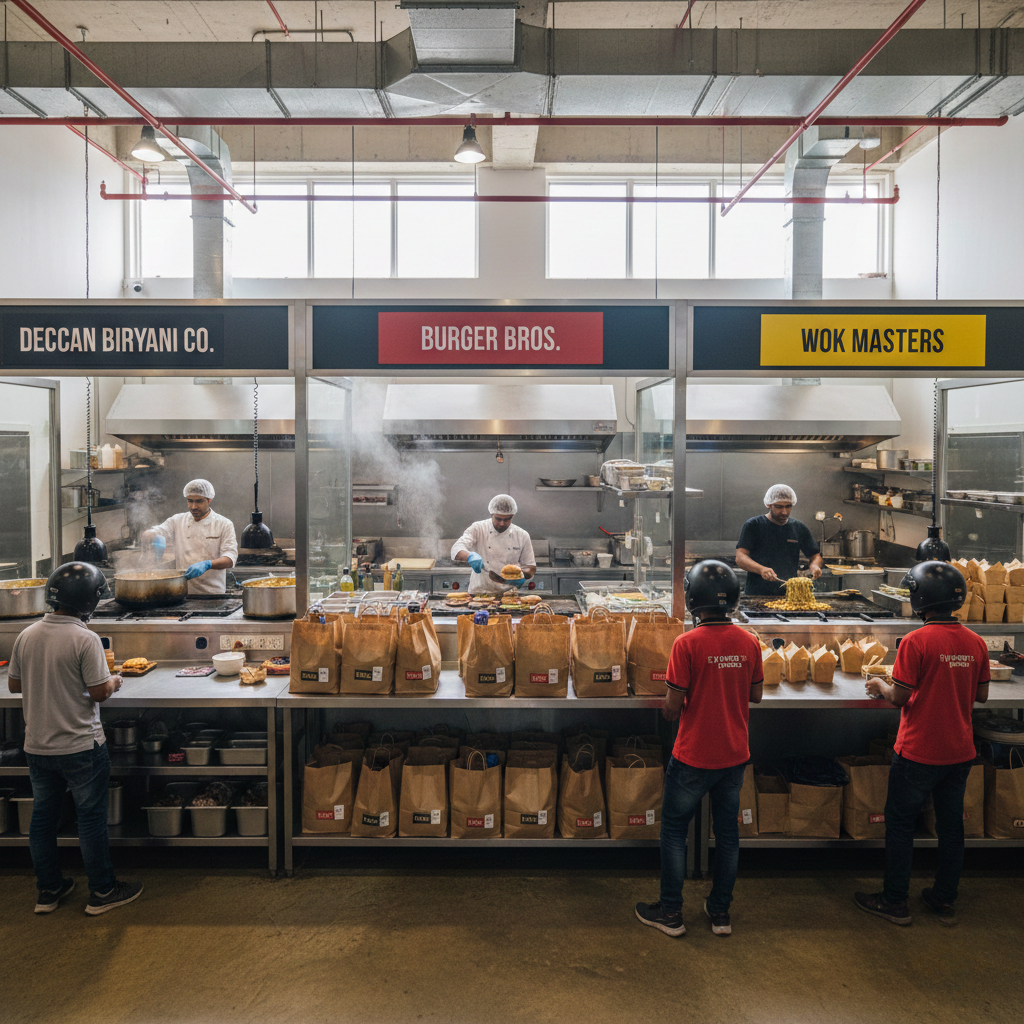
Multi-Brand Kitchens and CAC Confusion
Multi-brand kitchens often duplicate CAC unknowingly. Separate discounts, ads, and offers inflate acquisition cost.
Unified systems allow CAC to be shared across brands intelligently.
Learn system design in How to Build SOPs for Multi-Brand Cloud Kitchens.
Why CAC Must Be Controlled Before Scaling
Scaling multiplies CAC. High CAC at low volume becomes catastrophic at scale. Many kitchens grow revenue while destroying long-term viability.
Sustainable scaling requires CAC discipline first.
This principle connects to Cloud Kitchen Scaling Strategy.
Why CAC Matters Even for Delivery Brands: Final Clarity
CAC is not a startup-only metric. It is a survival metric. Delivery brands that ignore CAC confuse activity with progress.
Kitchens that understand CAC price better, discount smarter, retain customers, and scale safely. GrowKitchen helps founders design systems where growth compounds value instead of eroding it.
FAQs: CAC for Delivery Brands
Does CAC apply to Swiggy and Zomato brands?
Yes. Commissions and discounts function as CAC.
Is high CAC always bad?
Only if it is not recovered through repeat orders.
Should CAC be calculated per order or per customer?
Ideally per customer, but many kitchens must recover CAC per order.
How often should CAC be reviewed?
Monthly at minimum, weekly for scaling brands.