Understanding Contribution Margin in Cloud Kitchens is one of the most critical yet misunderstood concepts in food delivery businesses. Many founders focus on revenue, food cost percentages, or net profit without understanding the layer that actually decides survival. Orders increase. Dashboards look healthy. But cash keeps disappearing. This guide explains what contribution margin really means for cloud kitchens, why most founders misread it, and how profitable operators use contribution margin as the primary control lever for stability and scale.
Why Contribution Margin Is Often Overlooked
Contribution margin does not appear clearly on aggregator dashboards. It sits between revenue and net profit. Because it is not obvious, many founders skip it entirely.
This is dangerous. Contribution margin determines whether growth helps or hurts. Without contribution margin clarity, kitchens chase volume blindly.
To understand the ecosystem, start with Cloud Kitchen Business in India, Cloud Kitchen Unit Economics Explained, and Cloud Kitchen Break-Even Explained Simply.
What Contribution Margin Actually Means
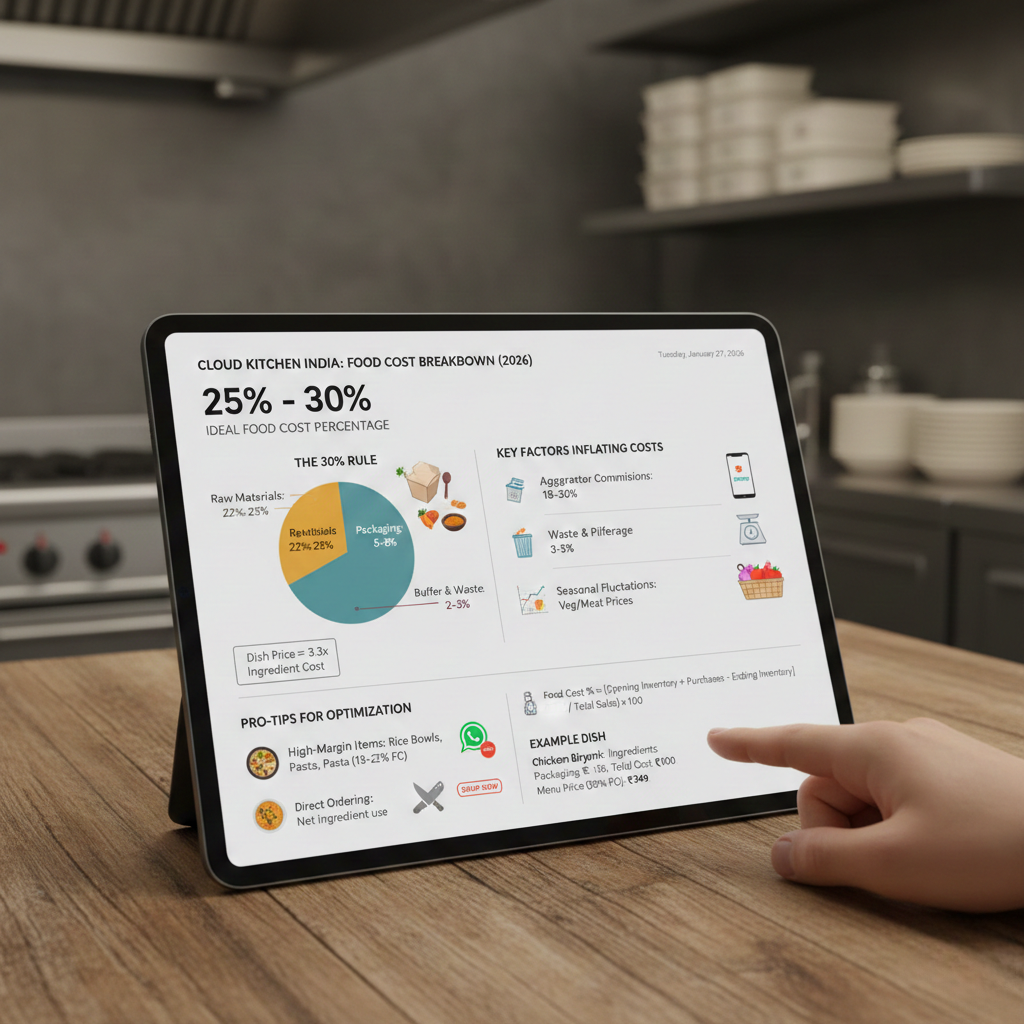
Contribution margin is the money left after all variable costs are paid. It is calculated as: revenue per order minus all variable costs per order.
This remaining amount is what pays fixed costs and eventually generates profit.
The Biggest Myth: “Profit Is What Matters, Not Contribution Margin”
Many founders jump directly to net profit thinking. But net profit comes last. Contribution margin comes first.
A business with positive contribution margin can fix fixed costs. A business with negative contribution margin is structurally broken.
What Goes Into Contribution Margin in a Cloud Kitchen
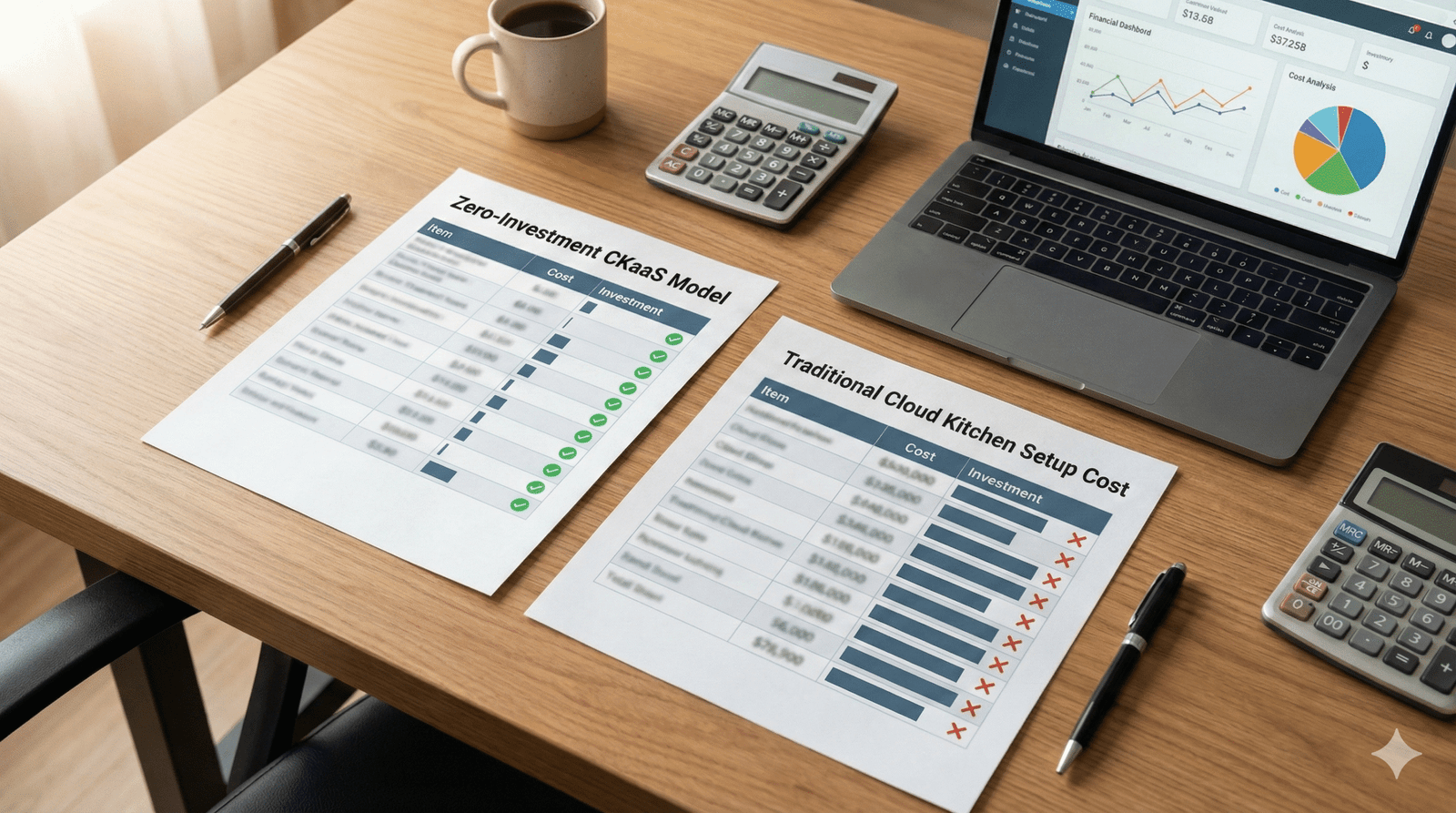
Contribution margin includes every cost that increases with each order. This typically includes: food cost, packaging cost, aggregator commissions, payment gateway charges, discounts, refunds, and per-order operational inefficiencies.
Ignoring even one component creates a false sense of profitability.
Food Cost and Its Impact on Contribution Margin
Food cost is the largest controllable variable cost. But food cost alone does not define contribution margin. A kitchen with slightly higher food cost can still have stronger contribution if pricing and AOV are healthy.
Learn benchmarks in Ideal Food Cost Percentage for Cloud Kitchens.
Packaging Cost: The Silent Contribution Killer
Packaging cost often feels small. But at scale, it quietly eats into contribution margin. Over-packaging, premium boxes, and uncontrolled cutlery inclusion reduce per-order contribution.
Learn more in Packaging Cost: The Silent Profit Killer.
Aggregator Commissions and Contribution Margin Pressure
Aggregator commissions are unavoidable for most kitchens. They directly reduce contribution margin. Kitchens that discount heavily on top of commissions often operate at negative contribution.
Contribution margin must be calculated after commissions, not before.
This thinking aligns with Harvard Business Review’s perspective on contribution margin , which emphasizes sustainability over topline or gross metrics.
How Staffing Efficiency Affects Contribution Margin
Staffing is often treated as fixed. In reality, inefficient staffing increases per-order cost. Overtime, extra shifts, and burnout-related errors all dilute contribution margin.
Learn staffing logic in How Many Staff Does a Cloud Kitchen Need.
Why SOPs Protect Contribution Margin
SOPs reduce variability. Variability increases cost. Every uncontrolled portion, delayed order, or packing mistake leaks contribution margin.
SOP-driven kitchens convert effort into predictable contribution.
Inventory Leakage and Contribution Margin Erosion
Spoilage, overproduction, and FIFO failures increase food cost silently. This reduces contribution margin without appearing in daily dashboards.
Learn inventory discipline in Cloud Kitchen Inventory Management in India.
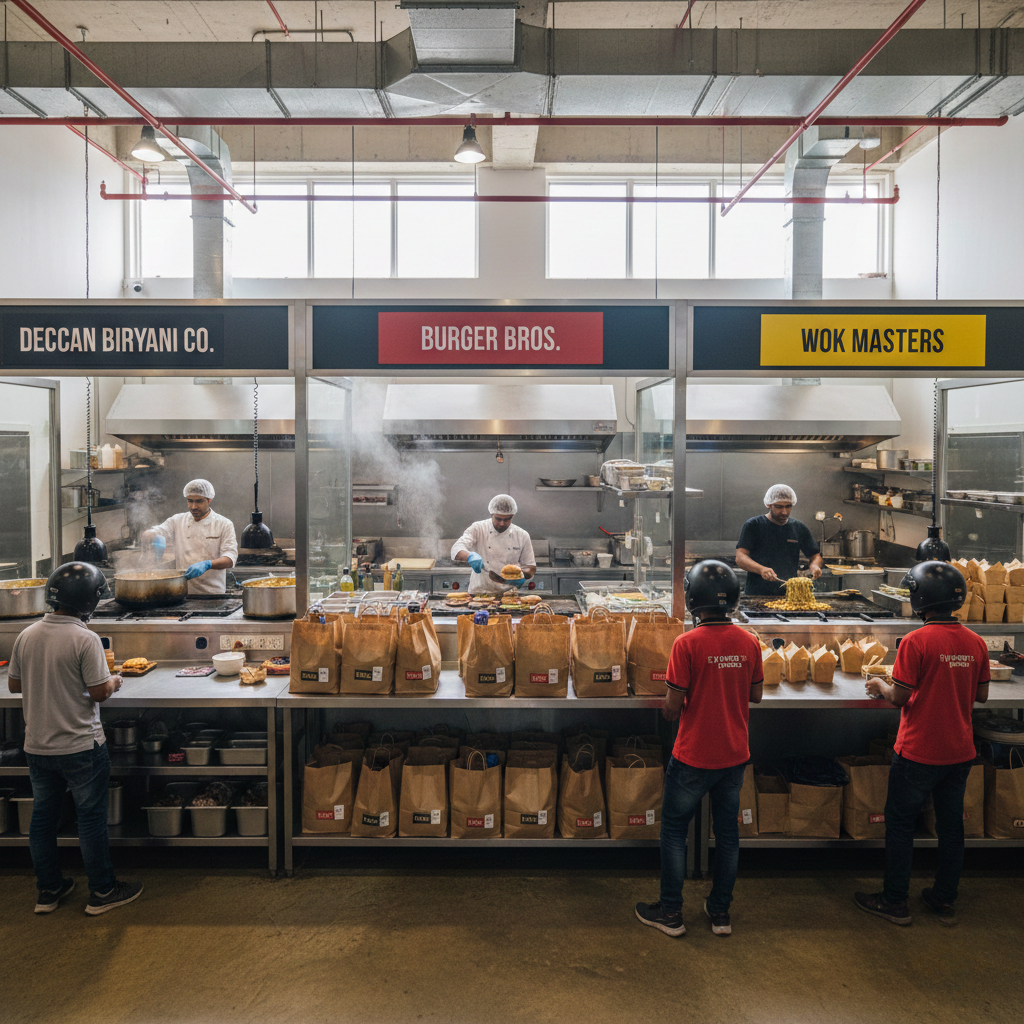
Multi-Brand Kitchens and Contribution Margin Confusion
Multi-brand kitchens often assume shared costs improve margins. In reality, complexity increases variable cost unless SOPs are unified.
Contribution margin improves only when systems scale, not chaos.
Learn structured design in How to Build SOPs for Multi-Brand Cloud Kitchens.
Why Contribution Margin Must Be Fixed Before Scaling
Scaling multiplies contribution margin. Positive contribution creates profit. Negative contribution creates faster losses. Kitchens that scale without contribution clarity lock in structural problems.
This principle underpins Cloud Kitchen Scaling Strategy.
Understanding Contribution Margin in Cloud Kitchens: Final Clarity
Contribution margin is the operating truth of a cloud kitchen. It sits between hope and reality. Kitchens that understand contribution margin price correctly, control costs, and scale safely. GrowKitchen helps founders design systems where every order contributes positively to long-term profitability.
FAQs: Contribution Margin in Cloud Kitchens
Is contribution margin more important than net profit?
Yes. Contribution margin determines whether profit is possible.
Can a kitchen survive with low contribution margin?
Only temporarily. Scaling becomes impossible.
Should discounts be included in contribution margin?
Yes. Discounts directly reduce per-order contribution.
How often should contribution margin be reviewed?
Weekly for active kitchens, daily for scaling ones.