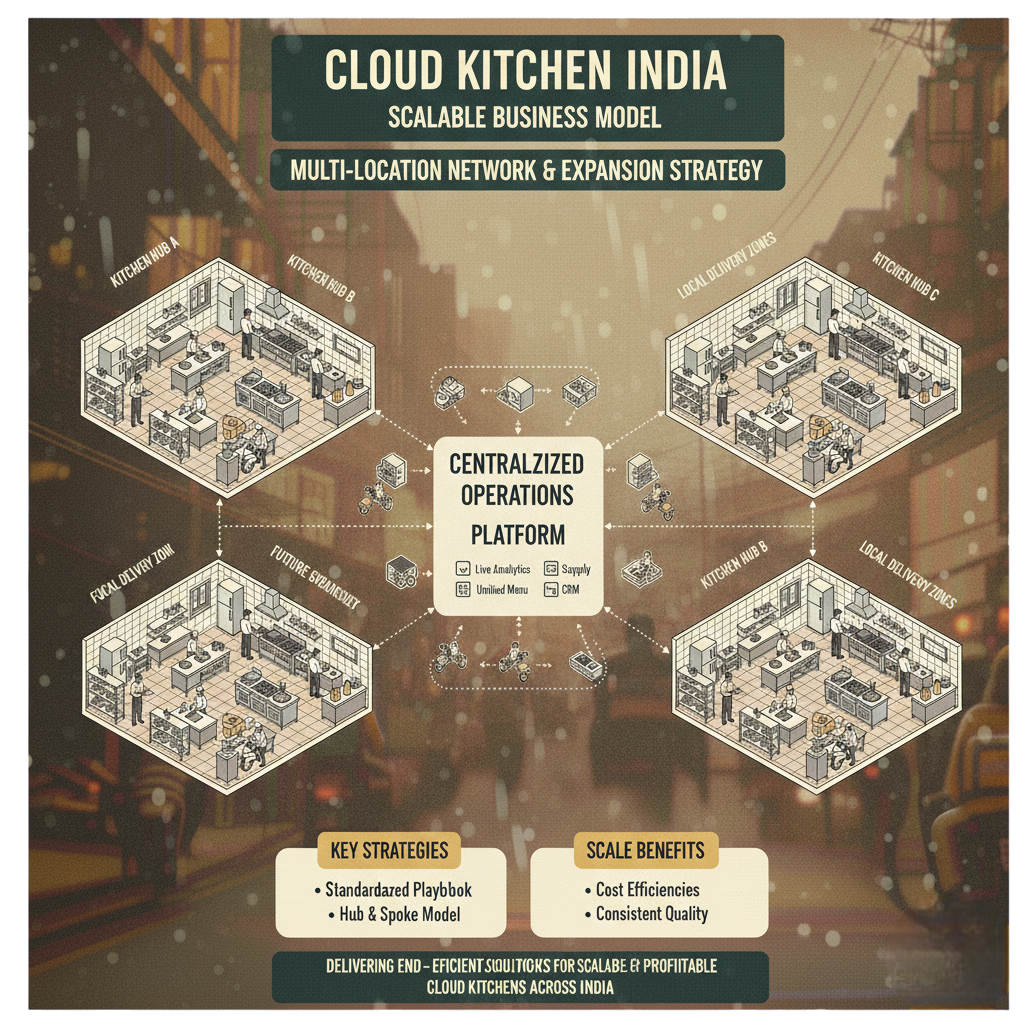
A scalable cloud kitchen business model in India is not “open one kitchen and replicate.” Real scalability comes from repeatable unit economics, SOP-driven operations, commission-aware pricing, and a kitchen network strategy that protects delivery speed without breaking quality. This guide explains what a scalable cloud kitchen model looks like in India, the systems you must standardise, how to structure multi-brand kitchens, and how founders scale from 1 location to 10+ without losing control.
Start Here Before Building a Scalable Cloud Kitchen Model
This article is part of GrowKitchen’s scaling and unit economics series. If you’re new to the delivery-first model, begin with: Cloud Kitchen as a Service and then: Cloud Kitchen Business in India.
A scalable model also requires compliance and clean documentation. At minimum, align your kitchen with FSSAI, register under GST, and consider MSME via Udyam where applicable.
What Is a Scalable Cloud Kitchen Business Model in India?
A scalable cloud kitchen business model is a system where each new kitchen can be launched with predictable cost, consistent food quality, stable margins, and controlled operations-without the founder doing daily firefighting. In India, cloud kitchens scale faster than dine-in restaurants because they avoid high street rents and dining infrastructure, but scaling becomes difficult when kitchens expand without standardisation.
Scalability is not “more kitchens.” Scalability is the ability to replicate the same customer experience, cost structure, and dispatch discipline across locations-so growth increases profit, not chaos.

The 5 Pillars of a Scalable Cloud Kitchen Model
Most cloud kitchens fail to scale because they treat operations like a one-time setup. In reality, scaling needs five pillars that stay strong as order volume grows.
- Repeatable unit economics: contribution margin per order must stay positive even with commissions.
- Menu engineered for speed: fewer SKUs, shared bases, controlled prep complexity.
- SOP-driven production: taste and portion consistency across staff and shifts.
- Kitchen network strategy: expansion based on delivery radius, demand density, and dispatch timing.
- Central visibility: daily tracking for sales, food cost, wastage, and ratings.
If any one pillar is weak, the model becomes founder-dependent. That kills scale.
Unit Economics: The Real Foundation of Scale
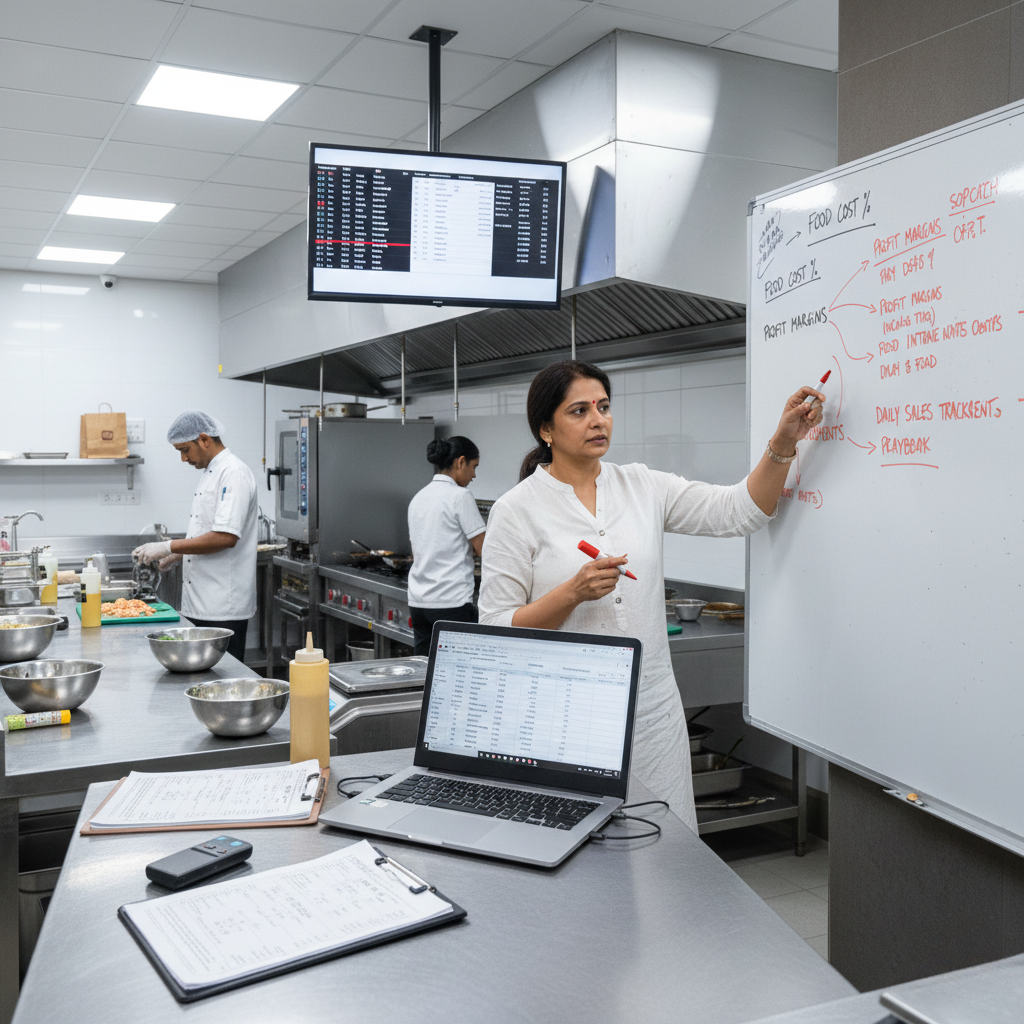
A scalable cloud kitchen Business Model in India must be built on contribution margin, not revenue. Many kitchens grow order volume using discounts and ads, but margins quietly collapse due to aggregator commissions, packaging cost, and wastage. That makes expansion look successful on the surface while cash flow deteriorates underneath.
Before you add a new location, lock these benchmarks: food cost target, packaging ceiling, ad spend rule, and minimum margin per order. If you need help with cost structure, see: Cloud Kitchen Profit Margin in India.
Kitchen Network Strategy: Scale by Radius, Not Ego
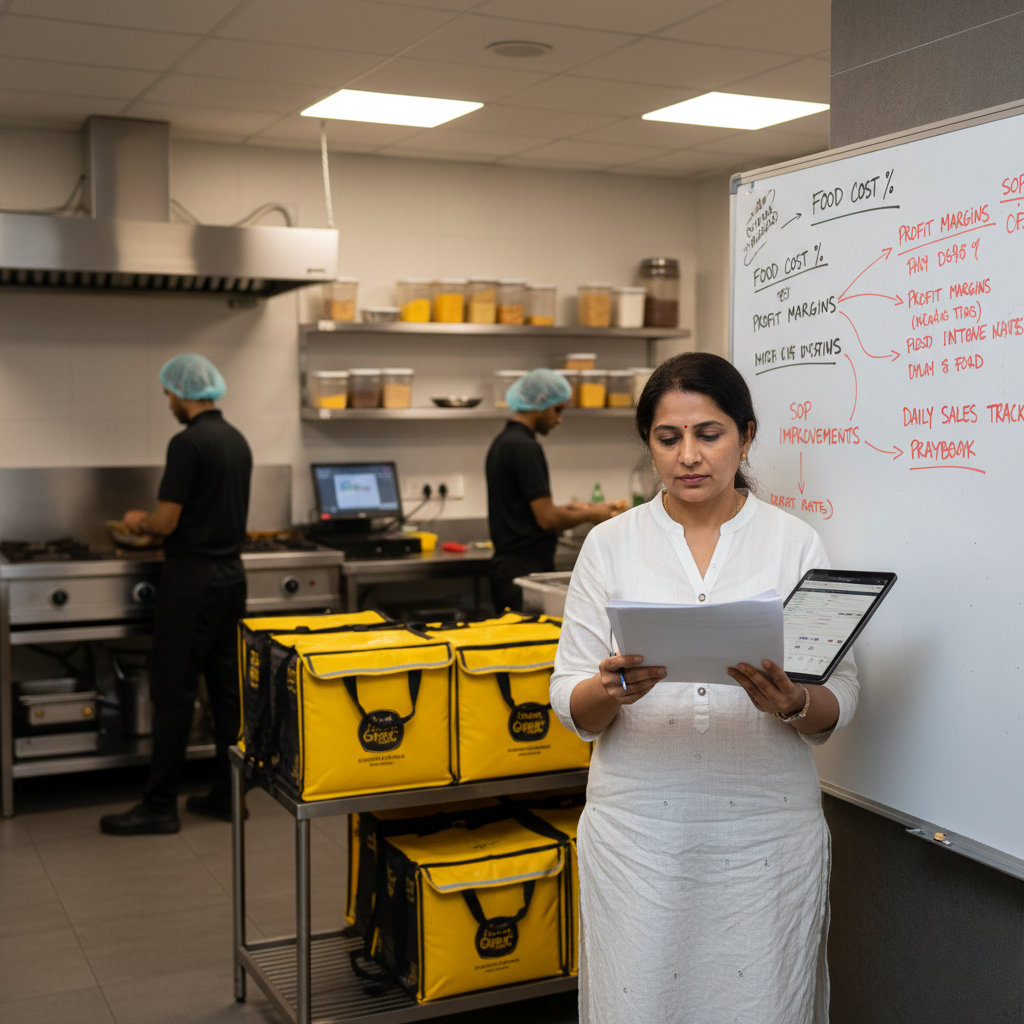
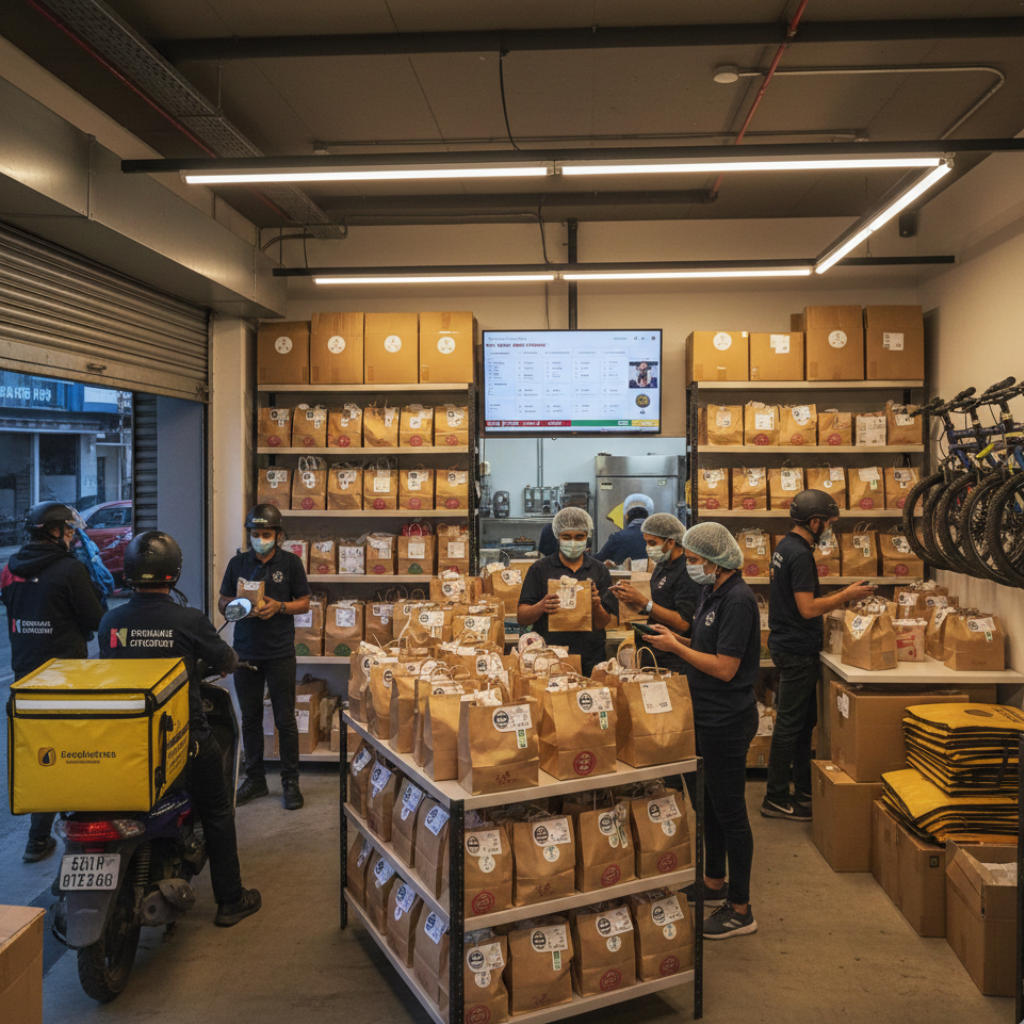
In Indian cities, delivery speed heavily impacts ratings, repeat orders, and conversion. A scalable cloud kitchen Business model expands by building a kitchen network that protects delivery radius and dispatch speed.
The best expansion logic is hyperlocal: add kitchens near demand clusters so each kitchen stays inside a reliable delivery zone. This reduces refunds, improves food quality at arrival, and keeps delivery time competitive.
Expansion should be based on proof: stable ratings, stable margins, and predictable peak-hour throughput. If you scale before stability, you’re essentially scaling defects.
Single Brand vs Multi-Brand: What Scales Better?
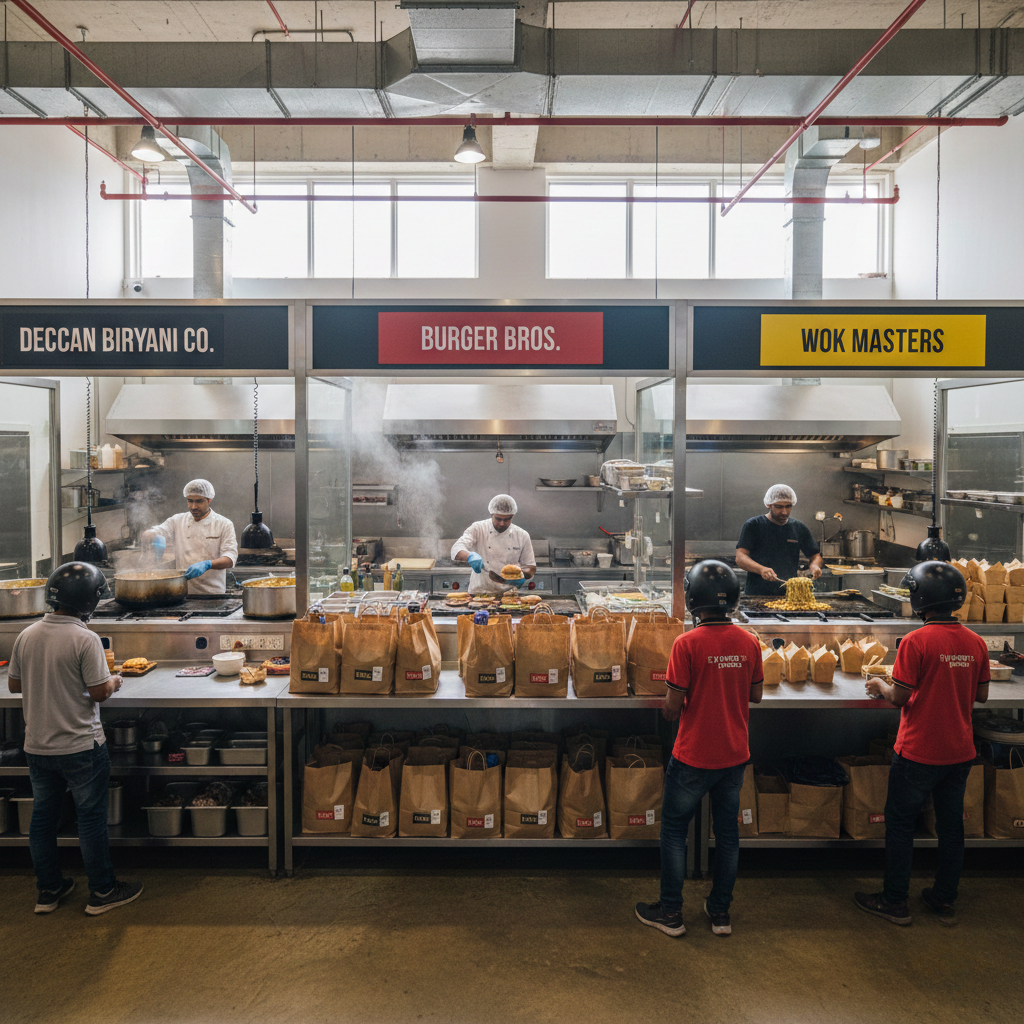
Both can scale, but the rules change: Single-brand scaling is simpler operationally but requires stronger brand demand. Multi-brand scaling can spread fixed costs but increases complexity dramatically.
Multi-brand is scalable only when brands share infrastructure: shared prep stations, shared ingredients, shared staff roles, and shared dispatch workflow. If every brand is unique, your kitchen becomes a mini food court-slow, expensive, and inconsistent.
SOPs + Training: The Only Way to Replicate Consistency
The biggest scaling bottleneck is people. New kitchens mean new staff, new supervisors, and new shift variations. Without SOPs, quality becomes dependent on individual experience, and your brand becomes inconsistent across locations.
SOPs must cover: prep batches, portion sizes, packaging checks, dispatch sequencing, and peak-hour workflow. Your “best kitchen” should become your training blueprint.
If you want to avoid common execution traps, read: Why Cloud Kitchens Fail in India.
Tech Stack for Scalable Cloud Kitchen Operations
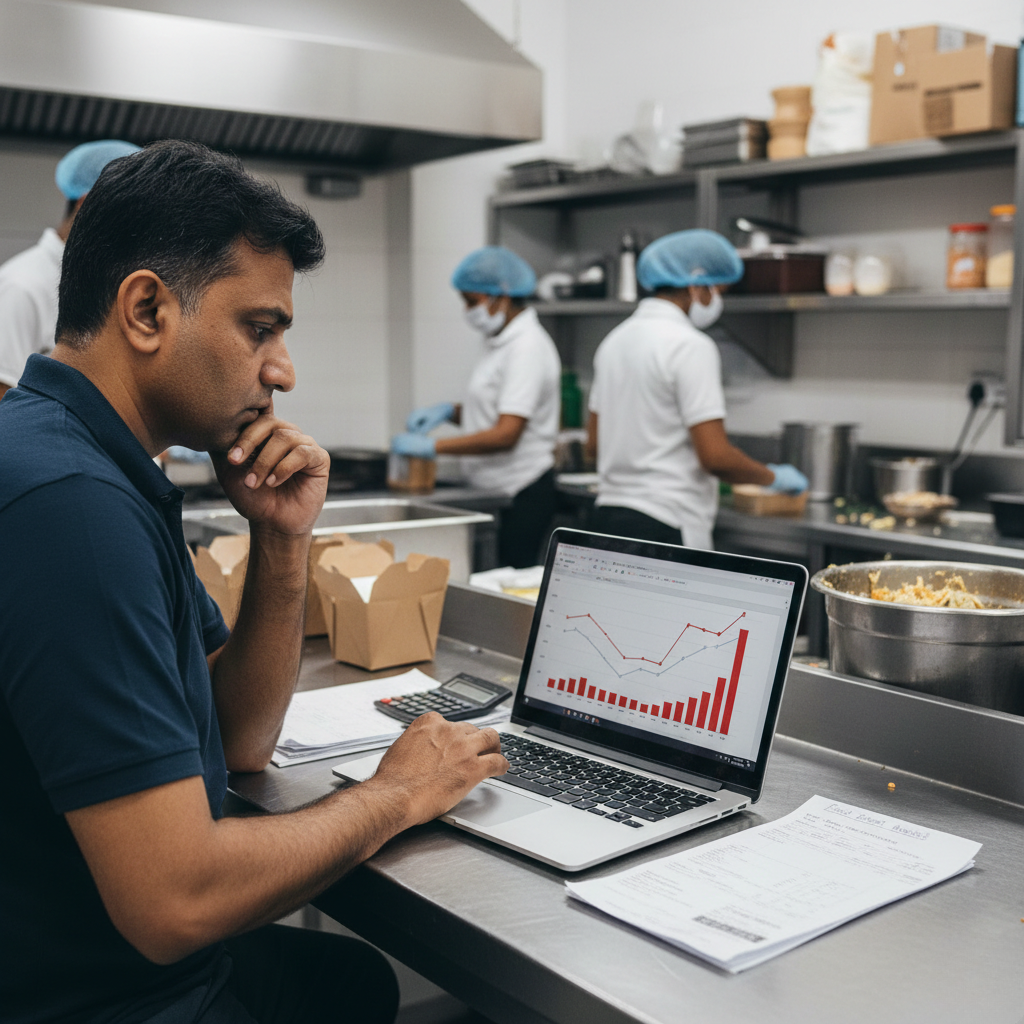
Scaling without visibility is gambling. You need basic systems to track performance daily: order volume by hour, cancellation reasons, food cost drift, SKU profitability, and rating drops.
Your stack does not need to be expensive, but it must be consistent: POS/order dashboard, inventory tracking, recipe/portion control documents, and a daily closing report. Your goal is to spot problems before they become permanent.
Demand Engine: Scale Only When Repeat Orders Exist
A scalable cloud kitchen Business model needs repeat demand. If your growth comes only from discounts, scaling will increase ad spend dependency and reduce ROI. Strong kitchens scale when they have: stable ratings, repeat buyers, and a clear product-market fit.
Aggregators help discovery, but you still need brand retention systems: better packaging experience, consistent taste, and smart menu pricing that avoids margin leaks. To understand setup economics before scaling, use: Cloud Kitchen Setup Cost in India.
A Practical 3-Phase Scaling Framework for India
Use this simple structure to scale without breaking operations:
- Phase 1: Stability (Kitchen 1)-lock SOPs, margins, throughput, and ratings.
- Phase 2: Replication (Kitchens 2-3)-copy the blueprint, fix training gaps, standardise vendors.
- Phase 3: Network (Kitchens 4+)-build a cluster strategy, central reporting, and regional leadership.
If you’re measuring returns while scaling, combine this with: Cloud Kitchen ROI in India.
Common Mistakes That Kill Scalability
Most founders don’t fail because they lack ambition. They fail because they scale with weak systems. Here are the most common scalability killers in India:
- Expanding before contribution margin is stable
- Too many SKUs, too many ingredients, too much wastage
- Discount-first growth that creates fake demand
- No SOP enforcement, leading to inconsistent taste and ratings
- No daily reporting and no early-warning system
- Copying competitors instead of building a replicable blueprint
A scalable cloud kitchen Business model is boring by design-because boring systems produce predictable results.
Final Thoughts: Scalable Cloud Kitchen Business Model in India
Cloud kitchens can scale faster than restaurants in India, but only when founders build repeatable systems. If you want a business that expands without chaos, treat your kitchen like a product: standardise it, measure it, and replicate it with discipline.
The winners are not the loudest brands. The winners are the most consistent operators-with stable unit economics, controlled menus, and SOP-first execution.
FAQs: Scalable Cloud Kitchen Business Model in India
What makes a cloud kitchen model scalable?
Stable unit economics, SOP-driven operations, menu simplicity, and a kitchen network strategy that protects delivery speed and quality.
Is multi-brand cloud kitchen better for scaling?
It can be, but only when brands share ingredients and workflows. Otherwise, complexity increases and quality drops.
When should I open my second kitchen?
When Kitchen 1 has stable ratings, stable margins, predictable peak-hour throughput, and SOPs that new staff can follow consistently.
What is the biggest risk while scaling?
Scaling before stability-especially using discounts and ad-driven growth that hides weak margins.
- Cloud Kitchen Business in India
- How to Start a Cloud Kitchen
- Cloud Kitchen SOP Checklist
- Cloud Kitchen Profit Margin in India