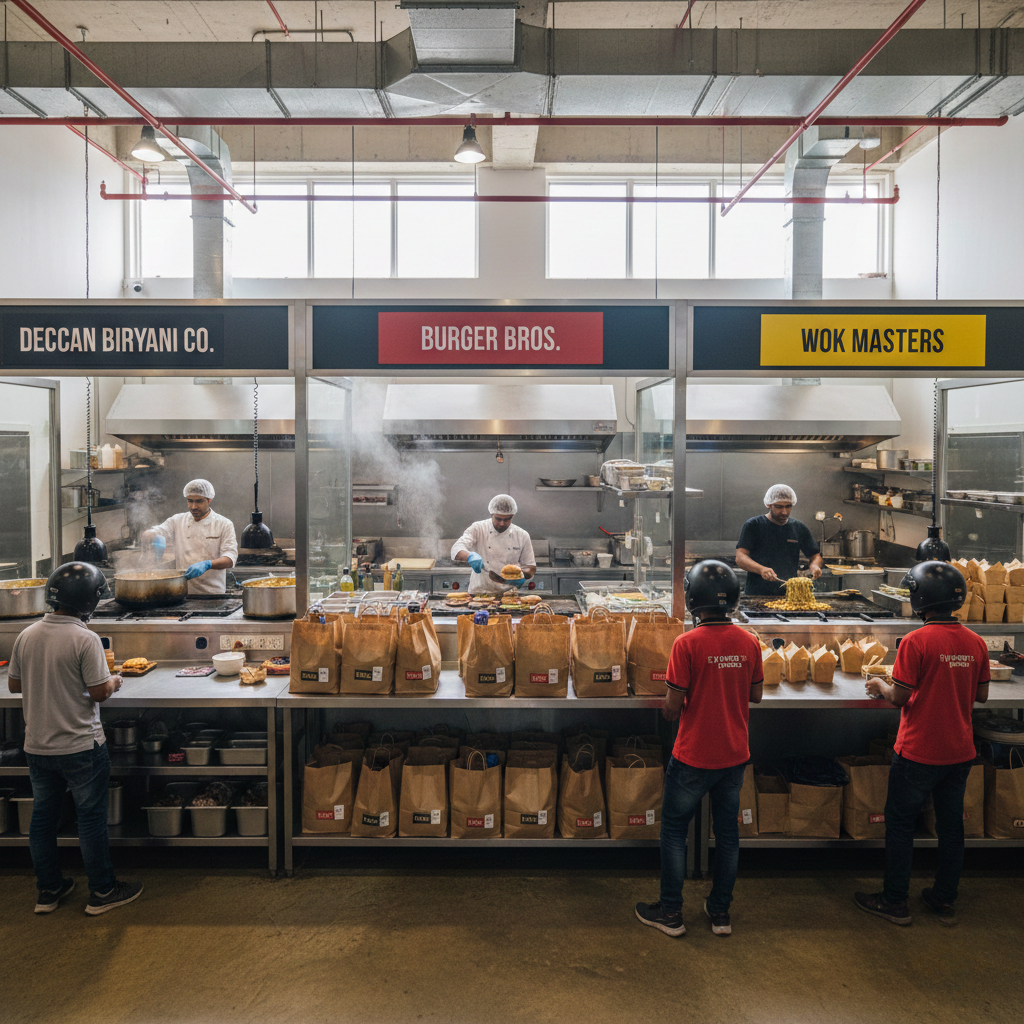

One of the biggest advantages of cloud kitchens is flexibility. Unlike traditional restaurants, cloud kitchens are not limited to a single brand or cuisine. This has led to the rapid rise of the multi-brand cloud kitchen model in India, where multiple virtual food brands operate from the same kitchen.
When executed correctly, this model allows founders to maximize revenue from one kitchen without proportionally increasing costs. In this article, we explain how the multi-brand model works, why it’s powerful, and how to implement it without losing control. Cloud Kitchen Business in India
What Is a Multi-Brand Cloud Kitchen Model?
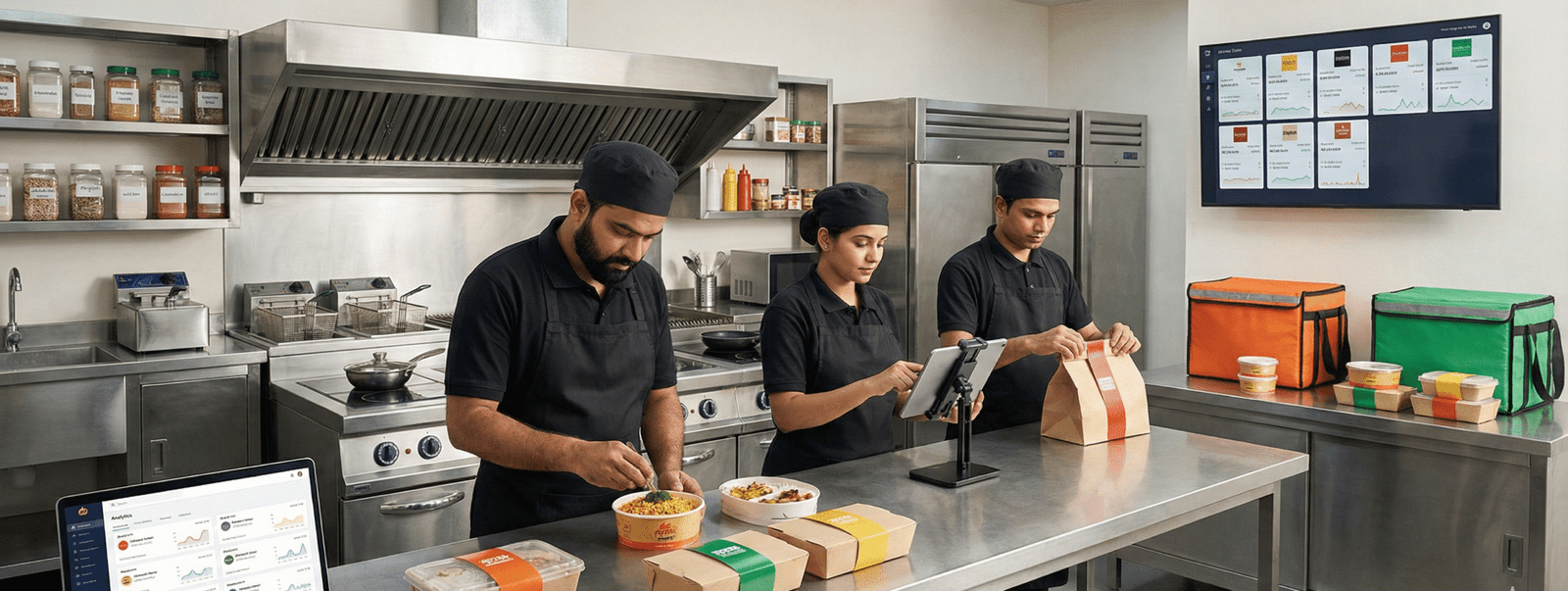
A multi-brand cloud kitchen model means running two or more food brands from the same physical kitchen. Each brand has its own:
- Name and positioning
- Menu and pricing
- Listing on Swiggy and Zomato
Operationally, these brands share:
- Kitchen space
- Staff
- Equipment
- Inventory
This allows a single kitchen to capture demand from multiple customer segments.
Why the Multi-Brand Model Works So Well in India
Indian food delivery customers are cuisine-driven. A single brand often captures only a small slice of total demand.
The multi-brand model works because it:
- Targets multiple cuisines and use cases
- Improves kitchen utilization
- Spreads fixed costs across higher revenue
- Reduces dependency on one brand
This model is a core pillar of the scalable cloud kitchen model in India .
How the Multi-Brand Cloud Kitchen Model Works
Step 1: Core Kitchen Setup
A single well-equipped kitchen is designed to handle multiple cuisines with overlapping ingredients and processes.
Step 2: Brand & Menu Creation
Each brand is positioned for a specific customer need-for example:
- Biryani-focused brand
- Burger & wraps brand
- Healthy bowls brand
Step 3: Shared Operations
The same staff prepares food for all brands using standardized recipes, reducing manpower cost.
Step 4: Independent Aggregator Listings
Each brand appears separately on Swiggy and Zomato, increasing visibility and order volume.
Revenue Impact: Single Brand vs Multi-Brand Kitchen
A comparison of revenue potential:
- Single-brand kitchen: ₹3–6 lakhs/month
- Multi-brand kitchen (2–4 brands): ₹8–15 lakhs/month
Most additional revenue comes with only a marginal increase in cost. Monthly revenue benchmarks are explained in cloud kitchen monthly revenue in India .
Cost & Margin Advantages
Multi-brand kitchens improve profitability by:
- Sharing rent and utilities
- Optimizing staff productivity
- Using common ingredients across menus
This directly improves unit economics and net margins. See real numbers in cloud kitchen profit margin in India .
Menu Engineering Is Critical for Multi-Brand Success
Poor menu planning is the biggest reason multi-brand kitchens fail. Menus must be:
- Operationally compatible
- Low overlap in preparation complexity
- High-margin and standardized
Detailed strategies are explained in cloud kitchen menu engineering in India .
Common Mistakes in Multi-Brand Cloud Kitchens
- Launching too many brands at once
- Overlapping menus causing confusion
- No clear brand positioning
- Poor inventory planning
These mistakes often lead to higher wastage and lower ratings. Many are discussed in why cloud kitchens fail in India .
How Many Brands Should One Kitchen Run?
The ideal number depends on kitchen size and complexity:
- Small kitchen: 2 brands
- Mid-size kitchen: 3–4 brands
- Large kitchen with SOPs: 5+ brands
Beyond this, quality and speed may suffer.
Investment Required for Multi-Brand Kitchens
Compared to single-brand kitchens, multi-brand setups require:
- Slightly higher equipment investment
- More planning and SOP development
However, the incremental investment is far lower than opening separate kitchens. Investment planning is explained in cloud kitchen investment cost in India .
Scaling Multi-Brand Kitchens Across Locations
Multi-brand kitchens scale best when combined with:
- Standardized SOPs
- Centralized procurement
- Strong quality control
Scaling frameworks are detailed in cloud kitchen scaling framework in India .
Industry Perspective
According to Restaurant India , multi-brand and virtual restaurant models have become the preferred strategy for cloud kitchen operators aiming for faster growth and better margins.
Conclusion
The multi-brand cloud kitchen model in India is one of the smartest ways to maximize revenue from a single kitchen.
When executed with strong menu engineering, disciplined operations, and clear brand positioning, this model delivers higher revenue, better margins, and faster scalability-without a proportional rise in cost.
Frequently Asked Questions (FAQs)
What is a multi-brand cloud kitchen?
It is a model where multiple food brands operate from the same kitchen infrastructure.
Is the multi-brand model profitable?
Yes. When managed properly, it significantly improves revenue and margins.
How many brands can one kitchen handle?
Most kitchens can efficiently manage 2–4 brands without quality issues.
Is multi-brand better than opening multiple kitchens?
Yes. It requires far less capital and improves unit economics.
What is the biggest risk in multi-brand kitchens?
Poor menu planning and operational complexity.
People Also Read
- Scalable Cloud Kitchen Model in India
- Cloud Kitchen Profit Margin in India
- Cloud Kitchen Monthly Revenue in India
- Centralized Kitchen Model in India
- Why Cloud Kitchens Fail in India