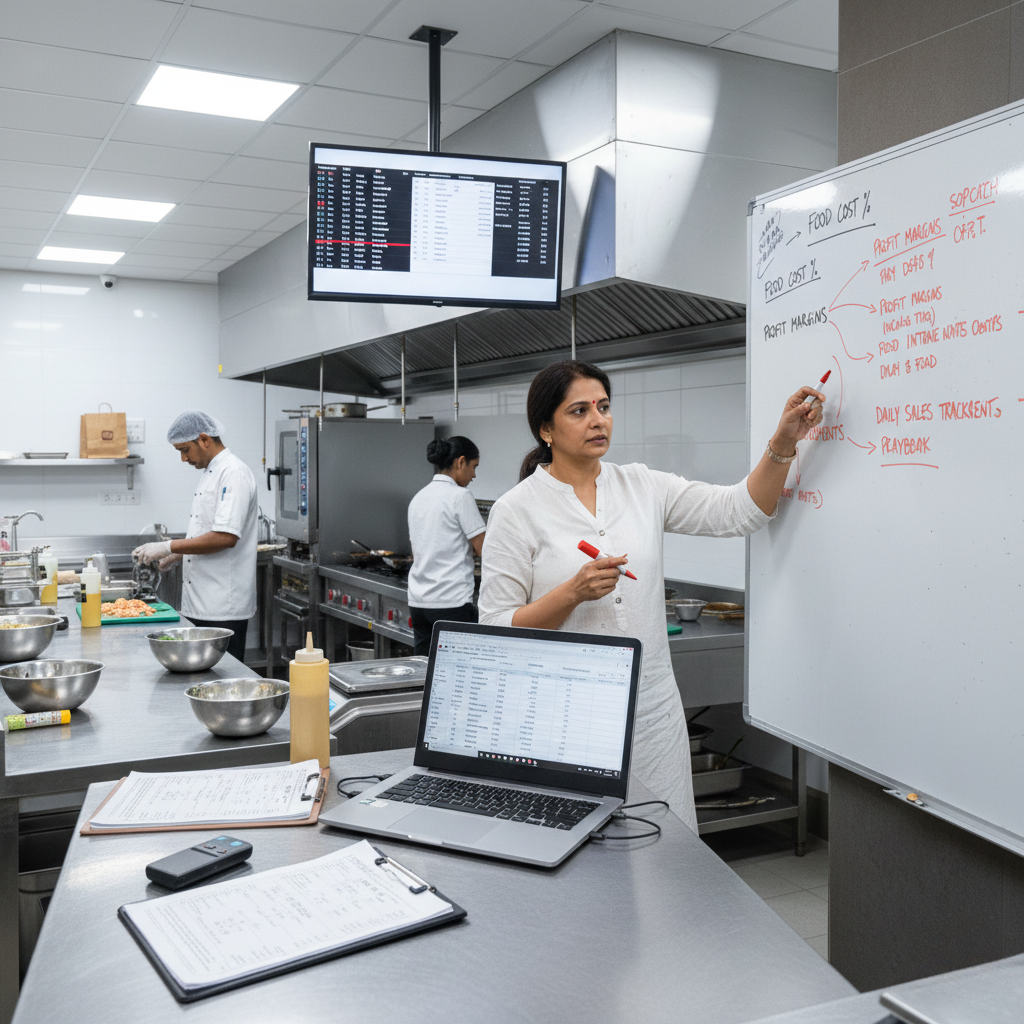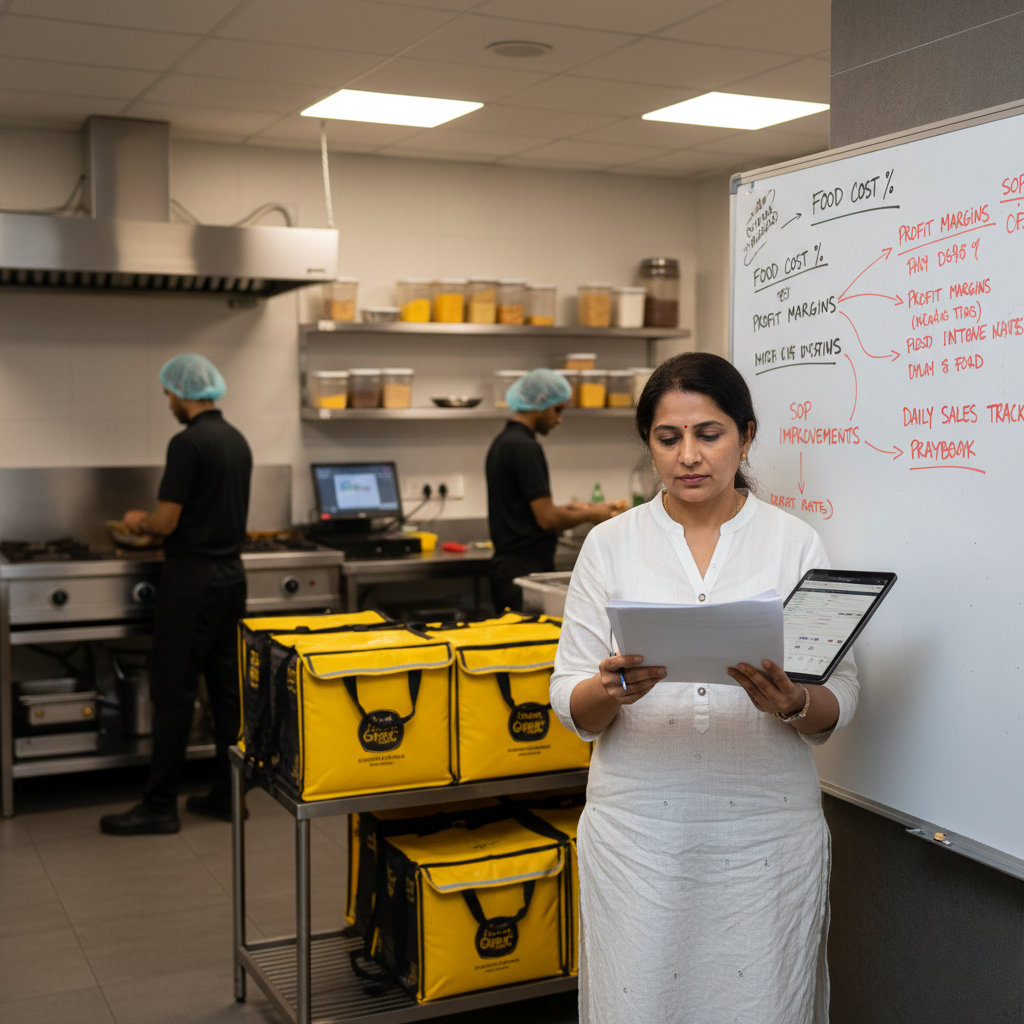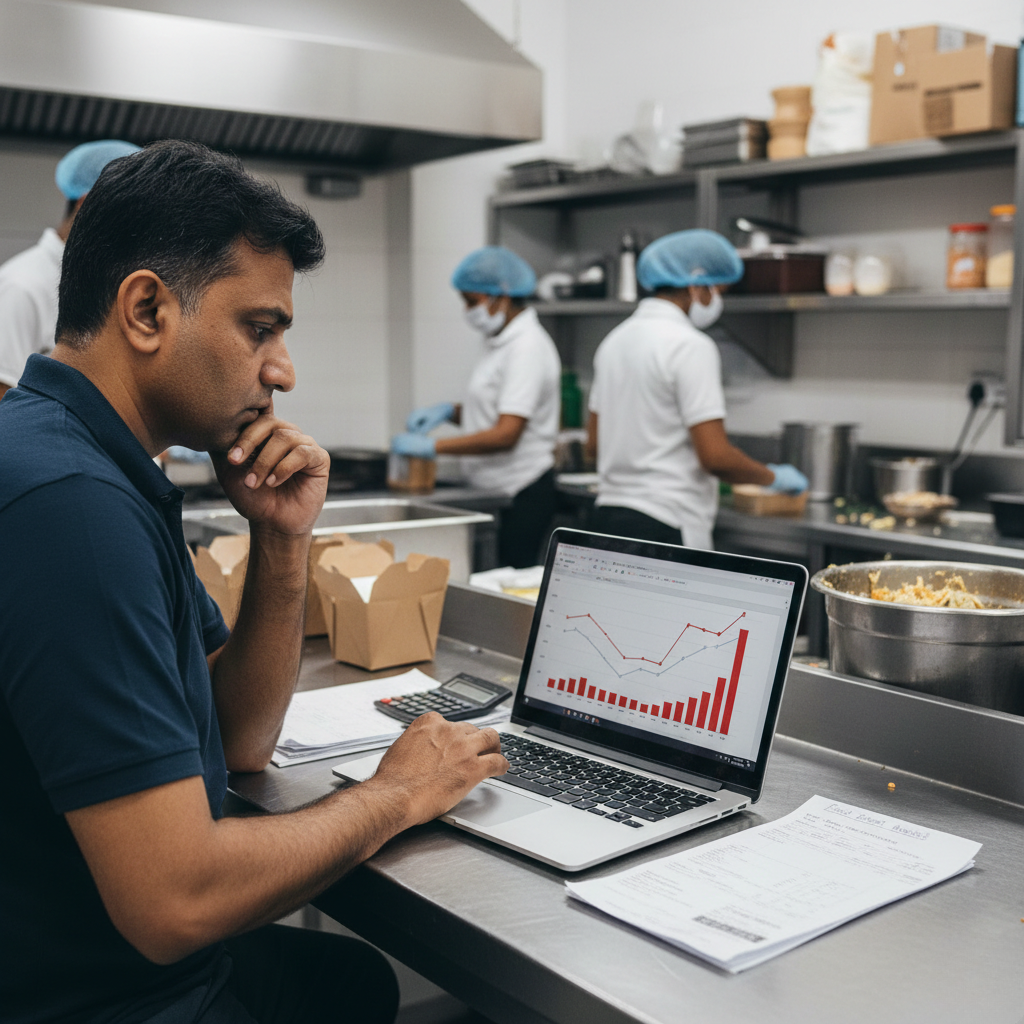

Multi Brand Cloud Kitchen Case Study-This case study documents how a fast-growing multi-brand cloud kitchen was stabilised using CKaaS after facing operational volatility across brands. While topline numbers looked healthy, internal execution issues were silently eroding profitability-an issue many founders face, as discussed in Why My Cloud Kitchen Profits Are Declining.
Over a ninety-day intervention period, the kitchen moved from daily firefighting to predictable operations across all brands. No menus were changed, no pricing revisions were made, and no discounting was introduced. Stability came entirely from operational discipline and systemisation, similar to approaches used when Fixing Cloud Kitchen Delays, Refunds, and Complaints.
Case Background
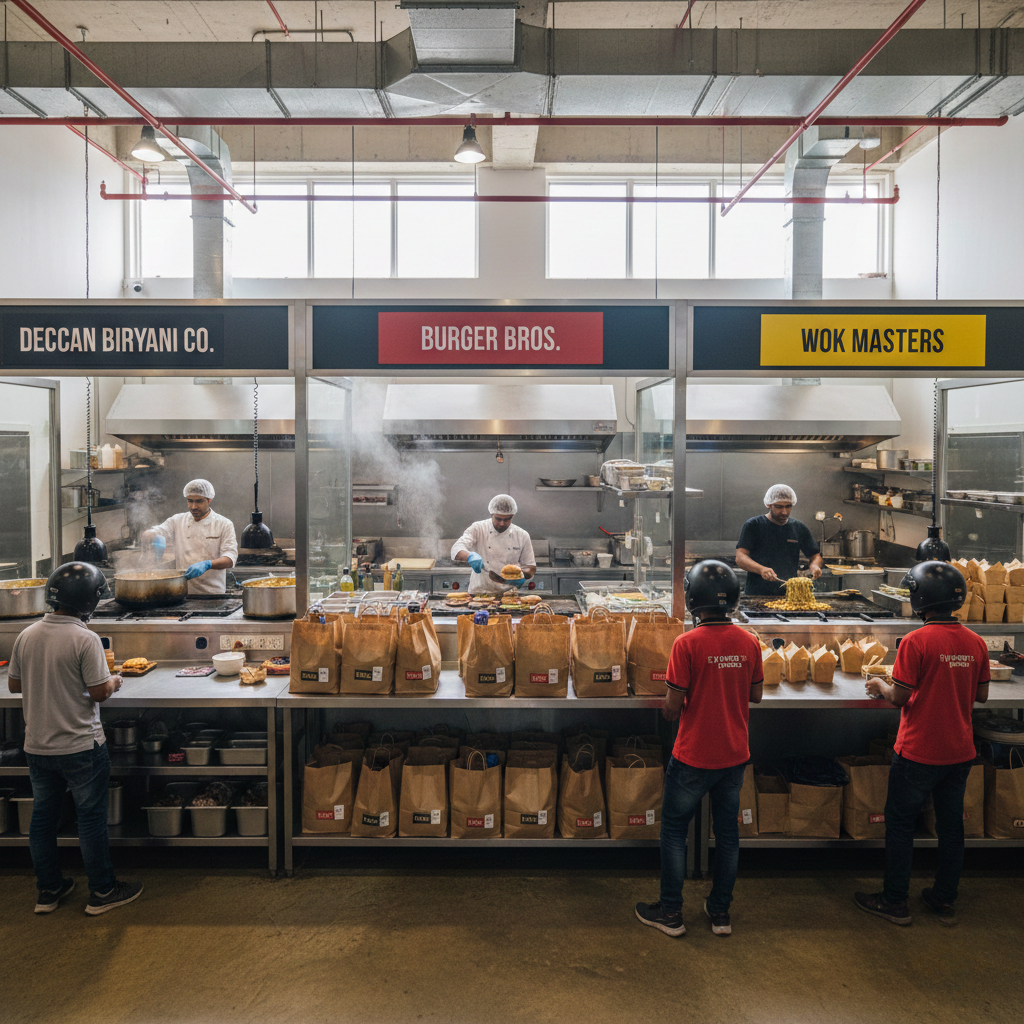
The kitchen operated four delivery-only brands from a single location, with combined daily order volumes fluctuating between two hundred and two hundred sixty orders. Customer ratings were acceptable but inconsistent, ranging from 4.0 to 4.4 across brands.
Despite decent ratings, operational pressure was mounting. Staff confusion between brands, inconsistent prep methods, and overlapping responsibilities created instability. This situation is common in multi-brand setups that scale without systems, as explained in How to Stabilise Profits Before Scaling.
Each brand was operationally profitable in isolation, but together they created complexity that the kitchen was not equipped to handle. These symptoms mirrored issues outlined in Cloud Kitchen Without SOPs vs After SOP Implementation.
The Core Problem
The founder initially believed the issue was brand overload and considered shutting down one or two brands to regain control.
Further analysis revealed that the real issue was not the number of brands, but the absence of a unifying operational system. This realisation mirrors what many founders experience when growth starts damaging execution, as described in When Growth Is Hurting Your Cloud Kitchen Operations.
Intervention: Brand-Level Operational Audit
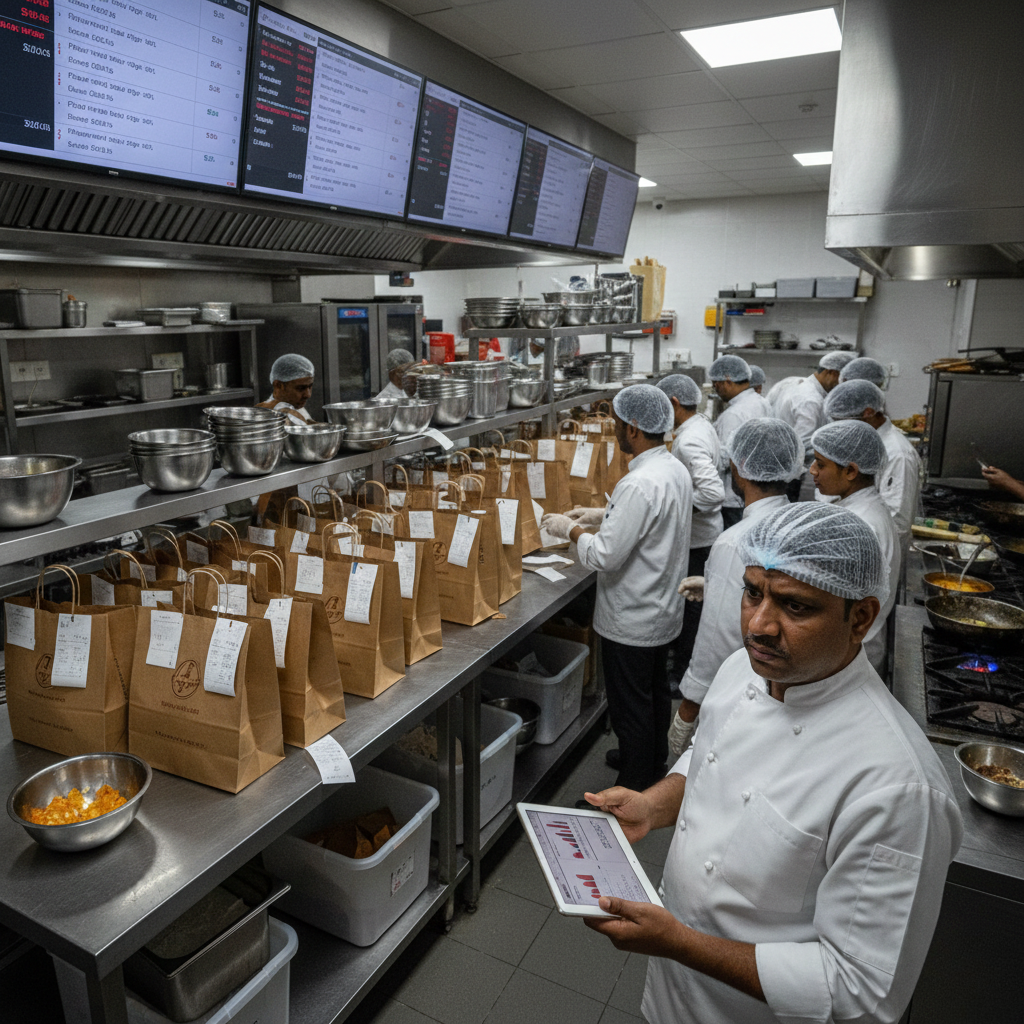
The first intervention involved auditing each brand independently-tracking prep processes, cooking workflows, packing standards, and error patterns.
Instead of relying on surface-level metrics, the audit focused on execution consistency and cross-brand interference. This diagnostic approach is commonly used when analysing contribution margins in cloud kitchens.
The audit revealed that instability was being caused by brand overlap, unclear role ownership, and SOP conflicts rather than demand or food quality.
Intervention: Identifying Multi-Brand Failure Points
A full order journey mapping exercise was conducted for each brand-from order acceptance to rider handoff-across multiple shifts.
The study revealed shared packing stations without brand-specific rules, prep staff switching brands mid-shift, and no accountability once orders crossed brand boundaries. These are common patterns in founder-dependent multi-brand kitchens, as explained in Founder-Dependent Kitchen Converted Into System-Driven Operations.
Intervention: CKaaS Brand Segmentation Systems
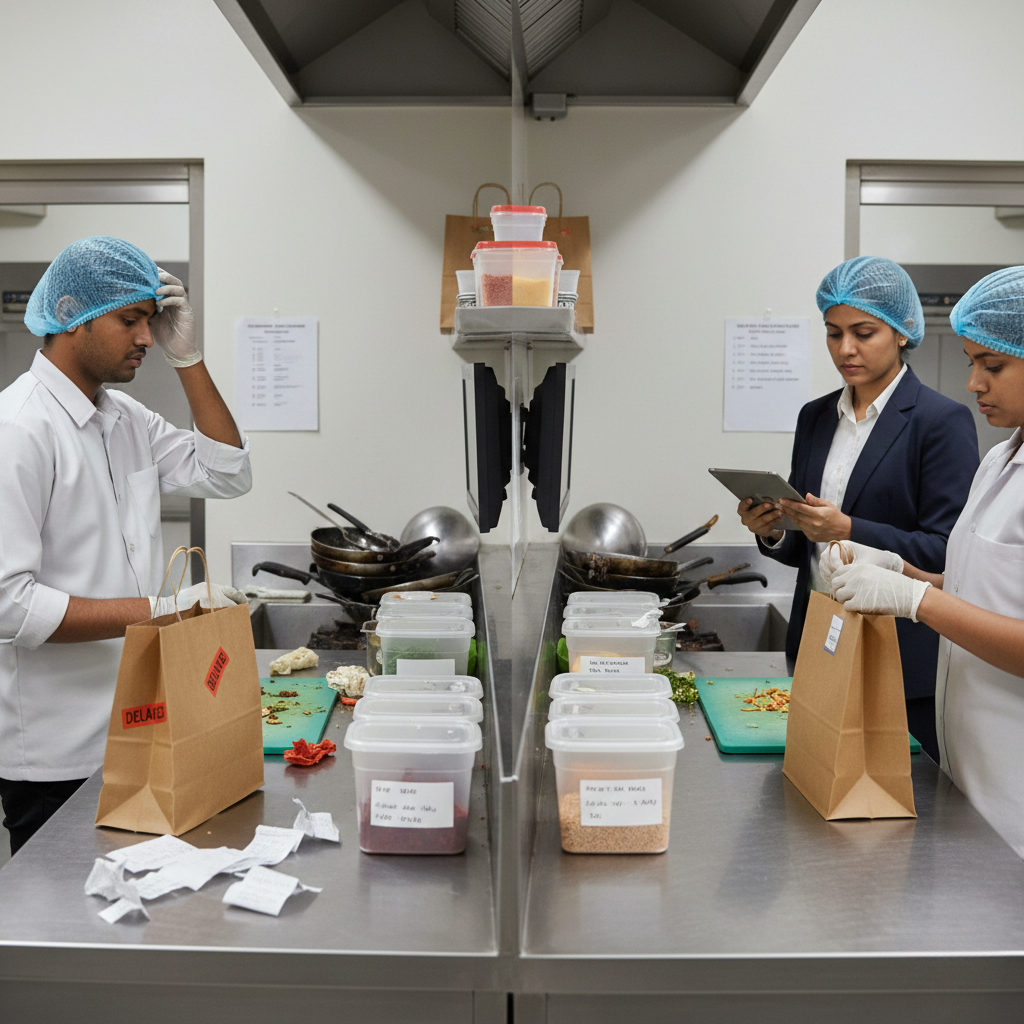
CKaaS introduced brand-wise SOPs that clearly separated prep, cooking, and packing responsibilities for each brand-even within the same kitchen.
Visual SOPs, colour-coded identifiers, and role clarity reduced cross-brand confusion. These systems reinforced principles outlined in How SOPs Improve Cloud Kitchen Profitability.
Accountability was introduced at the brand level, ensuring every order had a clear owner from start to finish.
Intervention: Shift-Level Discipline Across Brands
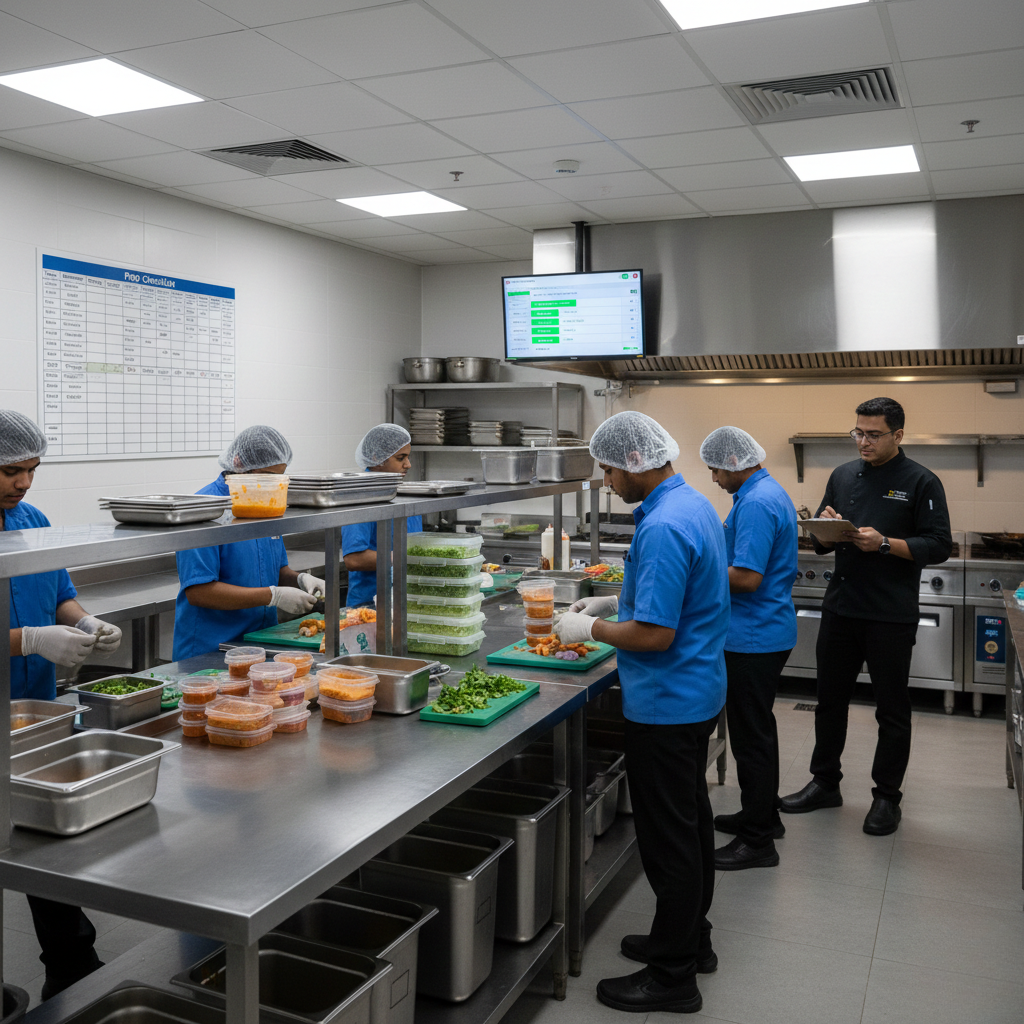
Daily shift-level briefings were introduced, focusing on one brand-specific SOP or execution error per shift. This aligned closely with frameworks discussed in Daily Shift Planning for Cloud Kitchens.
Over time, staff developed clarity and confidence in handling multiple brands without confusion or burnout.
Outcome and Results
Within ninety days, execution stability improved across all brands. Order errors reduced, staff efficiency increased, and brand ratings became more consistent.
Most importantly, the kitchen achieved operational calm without shutting down any brand-proving that multi-brand complexity can be managed with the right systems.
Key Case Study Takeaways
This case study demonstrates that multi-brand cloud kitchens do not fail because of brand count-they fail due to lack of system separation. CKaaS converts brand chaos into structured execution without sacrificing growth.
Related Case Studies and Reads
Readers exploring multi-brand stabilisation also read
Have Questions?
If you want deeper clarity on managing multi-brand cloud kitchens using CKaaS systems, detailed answers are available in the Grow Kitchen FAQs.
External References
To explore more insights on cloud kitchen systems and execution, visit