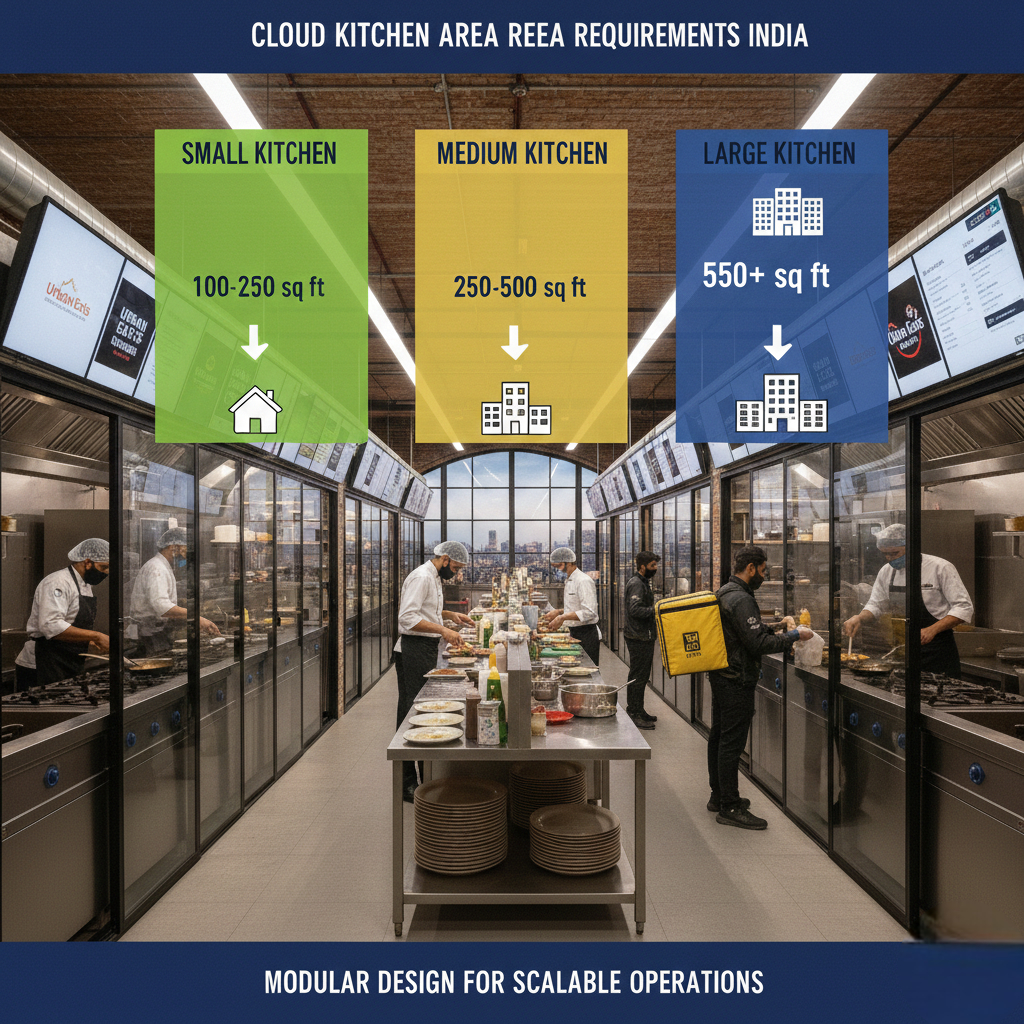
How much area required for cloud kitchen in India? There is no one-size-fits-all number. The ideal cloud kitchen area depends on your menu complexity, order volume, number of brands, equipment layout, and whether you are operating a single-brand or multi-brand setup. Many cloud kitchens fail not due to food or demand, but because the kitchen size is either too small to handle peak orders or too large to justify the rent. This guide explains the minimum area required for a cloud kitchen, space-wise breakup, area requirements for small, medium, and multi-brand kitchens, and how to optimize space for profitability and scalability.
Start Here Before Finalizing Cloud Kitchen Space
This article is part of GrowKitchen’s setup and operations series. If you’re still understanding the model, begin with: Cloud kitchen as a service
Kitchen size must align with your business model. Asset-light and managed kitchens follow different space logic: Asset-Light Cloud Kitchen Model in India. You may also explore operational insights via our LinkedIn page.
How Much Area Required for Cloud Kitchen?
A cloud kitchen in India typically requires anywhere between 200 sq ft to 1,000+ sq ft, depending on scale and operational design. There is no legal minimum area requirement, but there is a functional minimum.
Kitchens that are too small struggle with movement, hygiene, and peak load. Kitchens that are too large waste rent and utility costs.
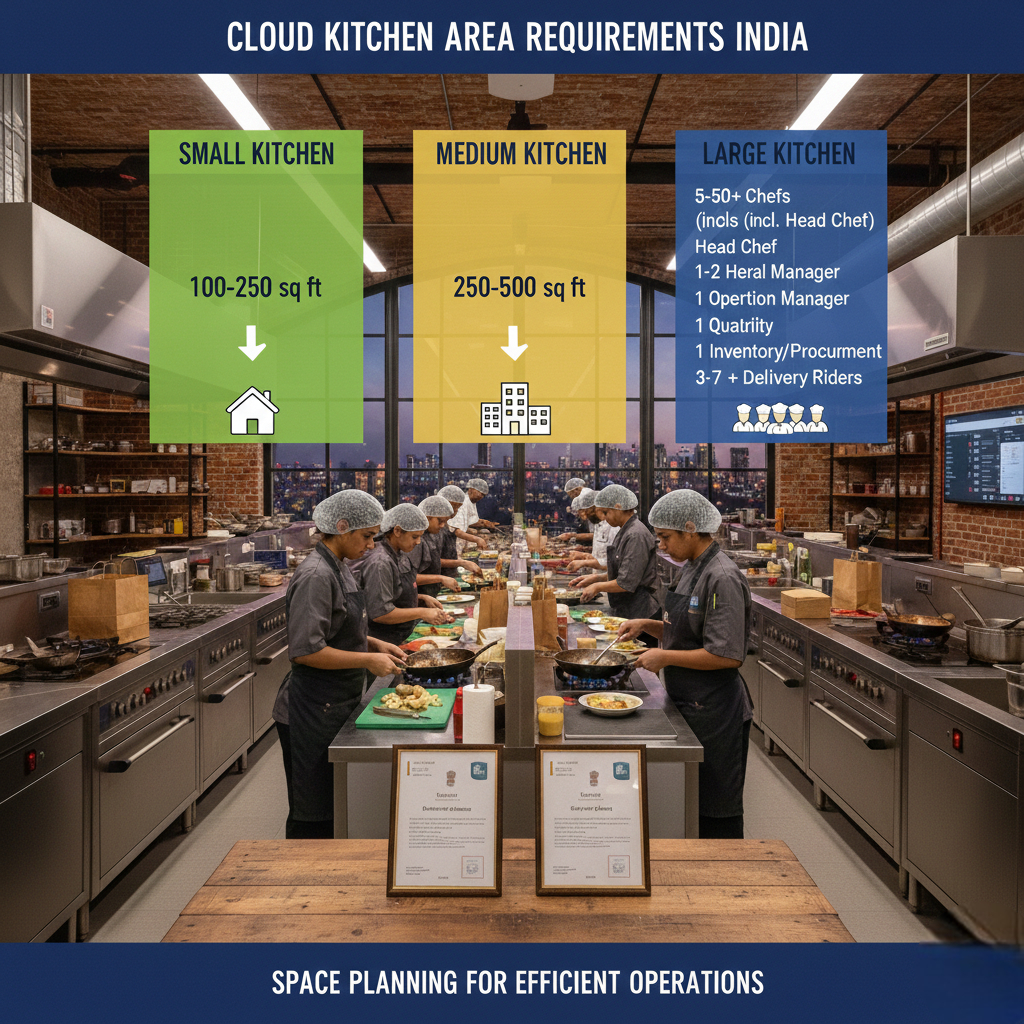
Key Space Components in a Cloud Kitchen
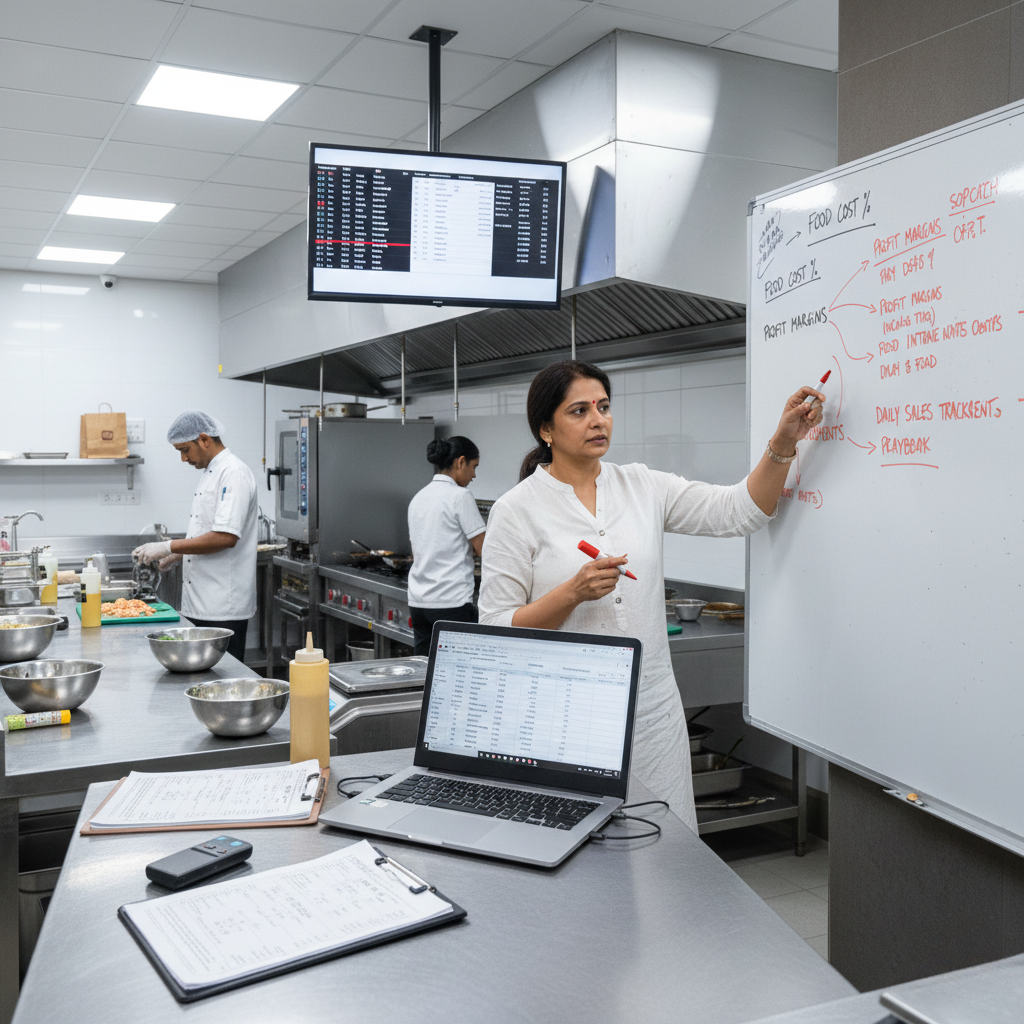
Before calculating total area, understand how space is divided. Every cloud kitchen consists of the following functional zones:
- Cooking Area: stoves, fryers, induction, exhaust
- Preparation Area: chopping, marination, assembly
- Packing Area: order assembly and sealing
- Storage: dry store, cold storage, freezer
- Washing Area: utensils and hygiene sink
- Movement Space: staff movement and safety
Poor zoning leads to congestion, hygiene issues, and audit failures.
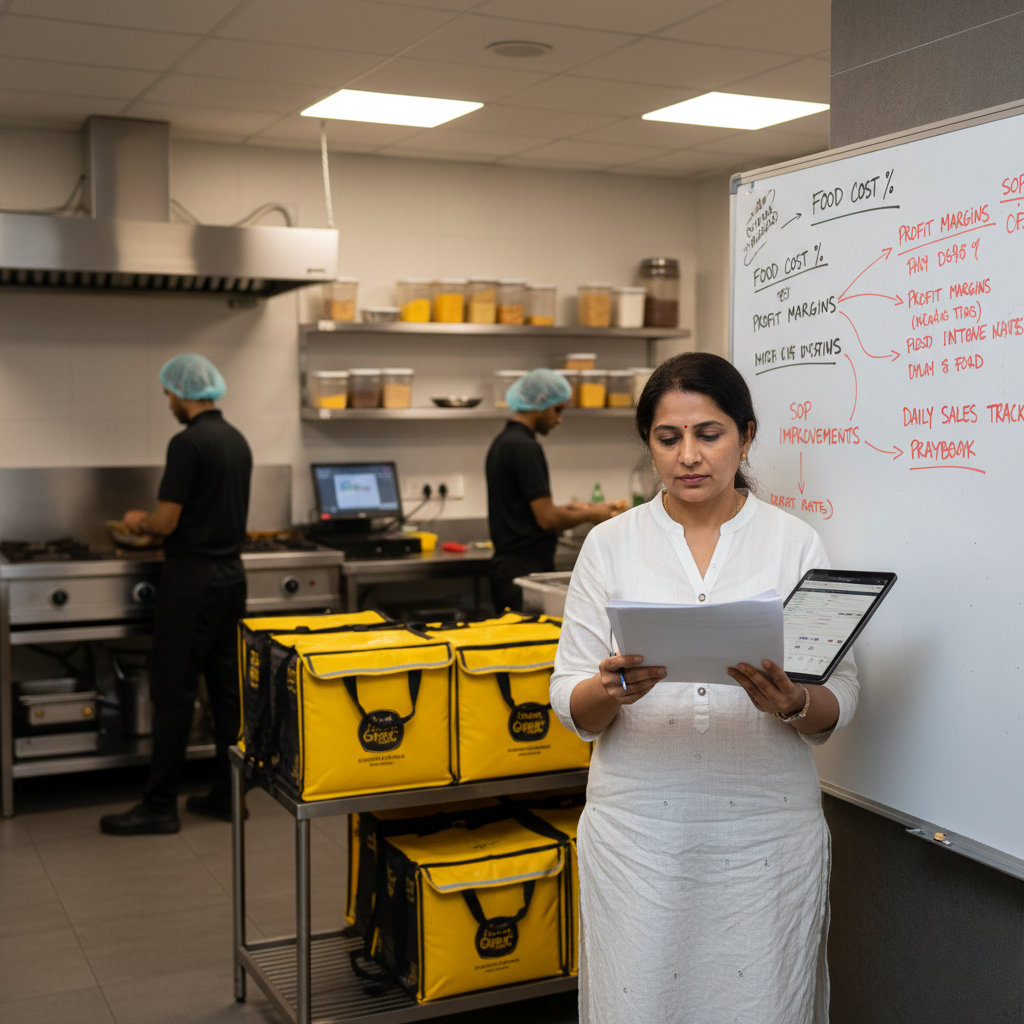
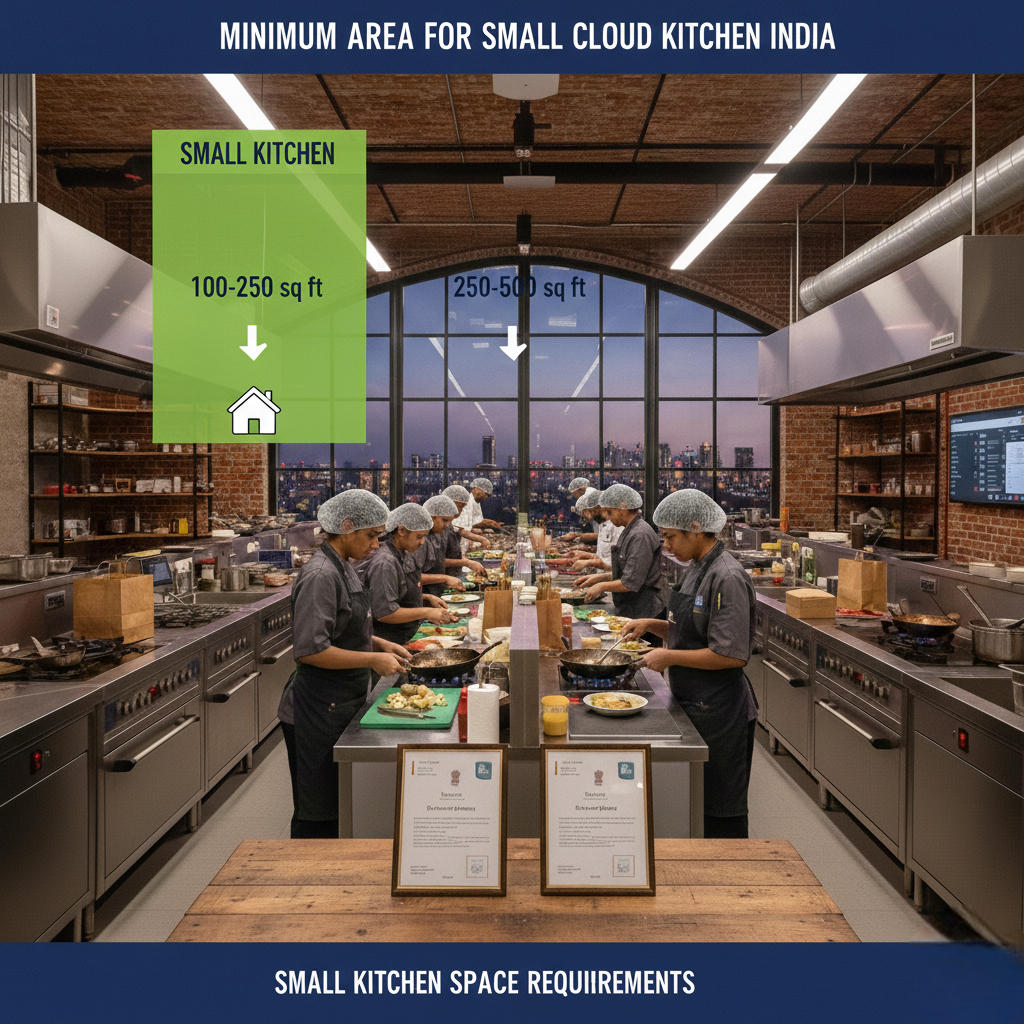
Area Required for a Small Cloud Kitchen (200–300 sq ft)
A small cloud kitchen operating a single brand with a limited menu can function within 200–300 sq ft.
This size is suitable for:
- 20–50 orders per day
- Low to medium menu complexity
- Minimal frying or heavy equipment
Such kitchens require strict SOPs to avoid chaos: Cloud Kitchen SOP Checklist.
Area Required for a Medium Cloud Kitchen (300–600 sq ft)
Medium cloud kitchens typically operate one or two brands and handle lunch and dinner peaks. They require 300–600 sq ft.
- Dedicated prep and cooking zones
- Separate packing counter
- Improved staff movement
- Better hygiene compliance
This is the most common size range for profitable cloud kitchens in metros.
Area Required for Multi-Brand Cloud Kitchens
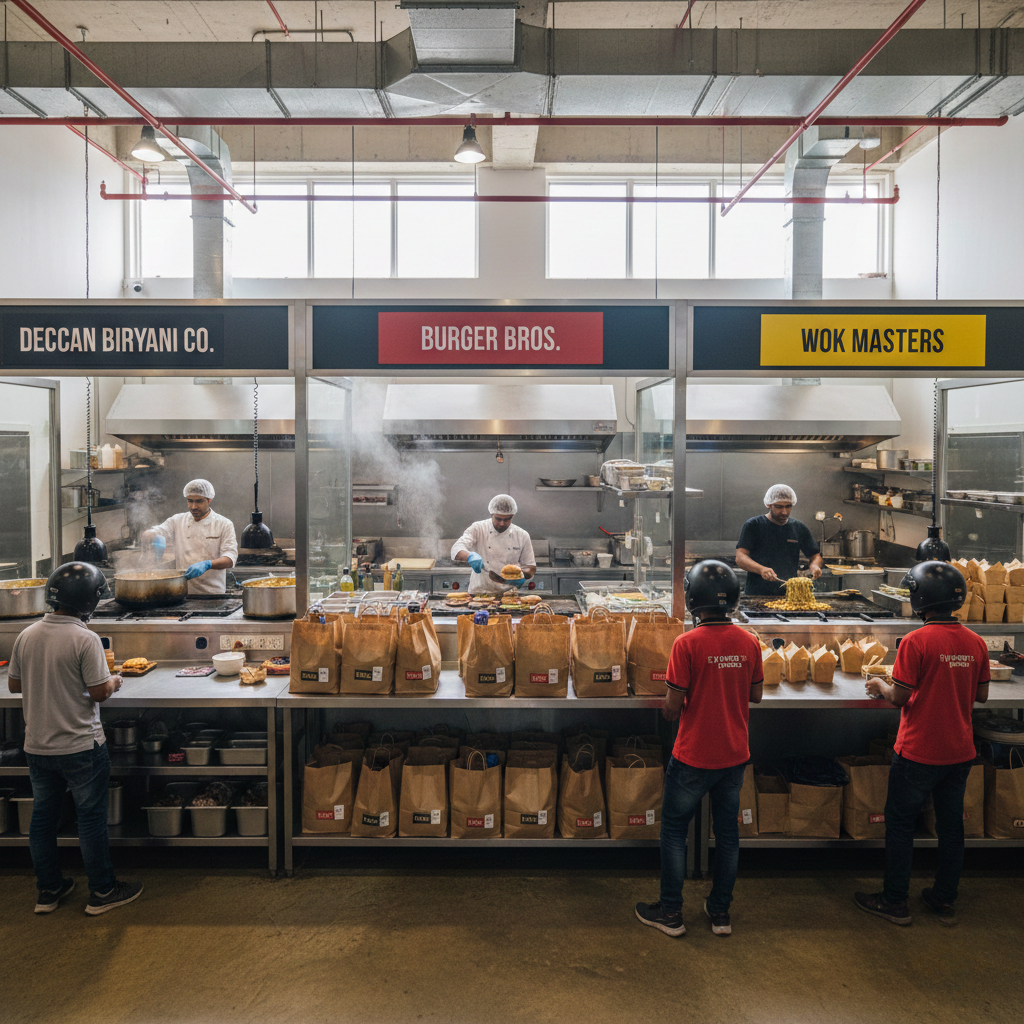
Multi-brand cloud kitchens do not require separate kitchens for each brand. They require smart layout planning.
Typical area range:
- 500–800 sq ft for 3–4 brands
- 800–1,200 sq ft for high-volume multi-brand setups
Brands share cooking stations, prep tables, and storage, while differentiation happens via SOPs and packaging.
This model works best under managed kitchen structures: CKaaS Model in India.
How Equipment Impacts Area Requirement
Equipment selection directly affects kitchen size. Heavy frying menus require more ventilation and spacing.
- Deep fryers increase exhaust and clearance needs
- Grills and tandoors require heat buffers
- Multiple freezers increase storage footprint
Menu engineering can reduce area requirements significantly: Cloud Kitchen Menu Engineering.
Minimum Area from a Compliance Perspective
While FSSAI does not specify exact square footage, it mandates:
- Cleanable surfaces
- Separate washing and cooking zones
- Adequate ventilation
- No cross-contamination
Reference compliance guidelines: FSSAI Official Website.
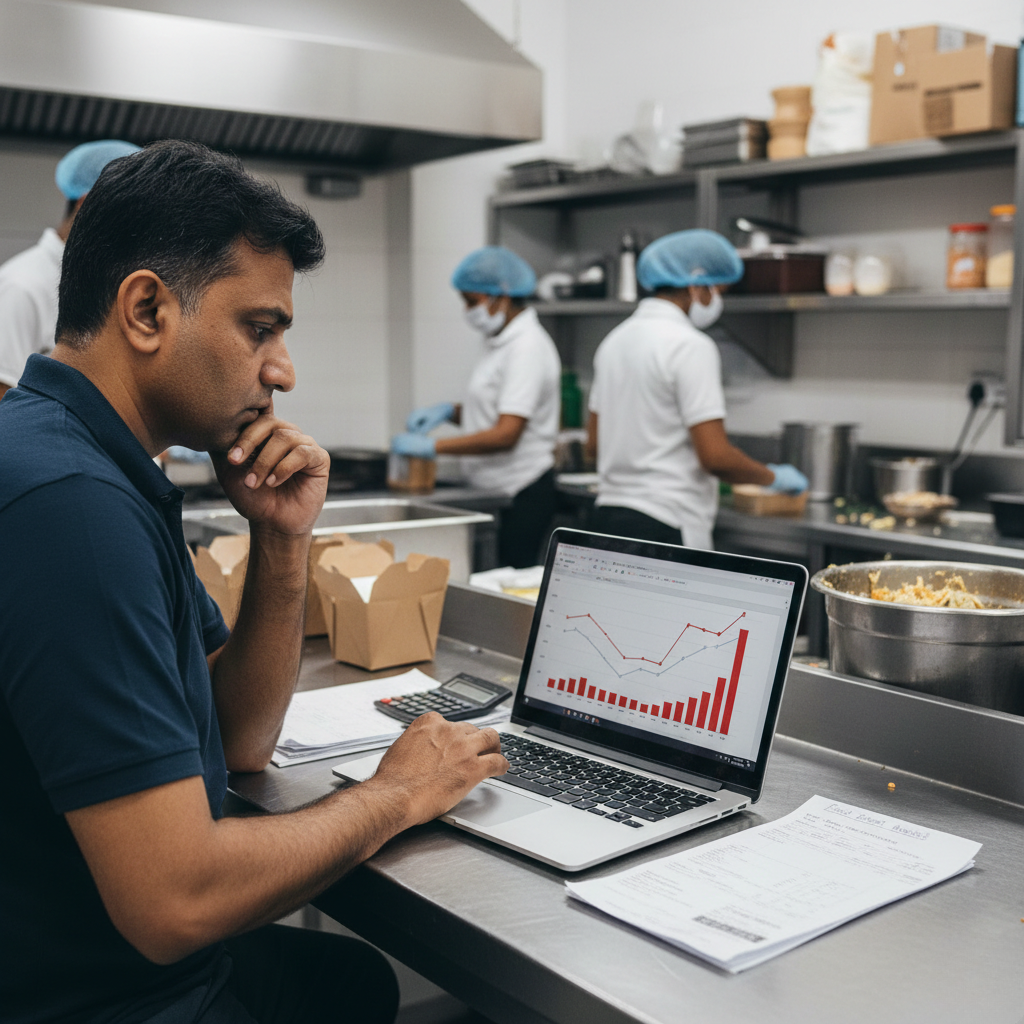
Balancing Area with Rent and Profitability
The biggest mistake founders make is taking oversized kitchens. Rent must stay within 6–10% of net revenue.
Larger kitchens increase:
- Rent
- Electricity and maintenance
- Staff inefficiency
Profit-focused operators optimize space before scaling: Cloud Kitchen Profit Margin in India.
How Area Planning Changes While Scaling
When scaling to multiple locations, consistency matters more than size.
- Replicate the same optimal layout
- Avoid custom kitchens every time
- Standardize equipment footprint
Scaling guide: How to Scale Cloud Kitchens.
Common Space Planning Mistakes in Cloud Kitchens
- Overestimating future demand
- No packing or dispatch area
- Poor exhaust planning
- Ignoring staff movement
These mistakes often lead to operational failure: Why Cloud Kitchens Fail in India.
Final Answer: How Much Area Required for Cloud Kitchen?
A successful cloud kitchen does not need massive space. It needs efficiently planned space.
Start with the smallest functional area, validate demand, and scale locations not square footage. In cloud kitchens, space discipline is cost discipline.
FAQs: Cloud Kitchen Area Requirement
What is the minimum area required for a cloud kitchen?
A minimum of 200 sq ft can work for a small, single-brand cloud kitchen.
Can I run a cloud kitchen in 300 sq ft?
Yes, with proper layout, SOPs, and menu planning.
Does a multi-brand kitchen need more space?
Yes, but brands share stations space grows slower than brand count.
Does FSSAI mandate a minimum area?
No fixed area, but hygiene and zoning are mandatory.
- Cloud Kitchen Business in India
- Cloud Kitchen Setup Cost in India
- Cloud Kitchen Profit Margin
- How to Scale Cloud Kitchens