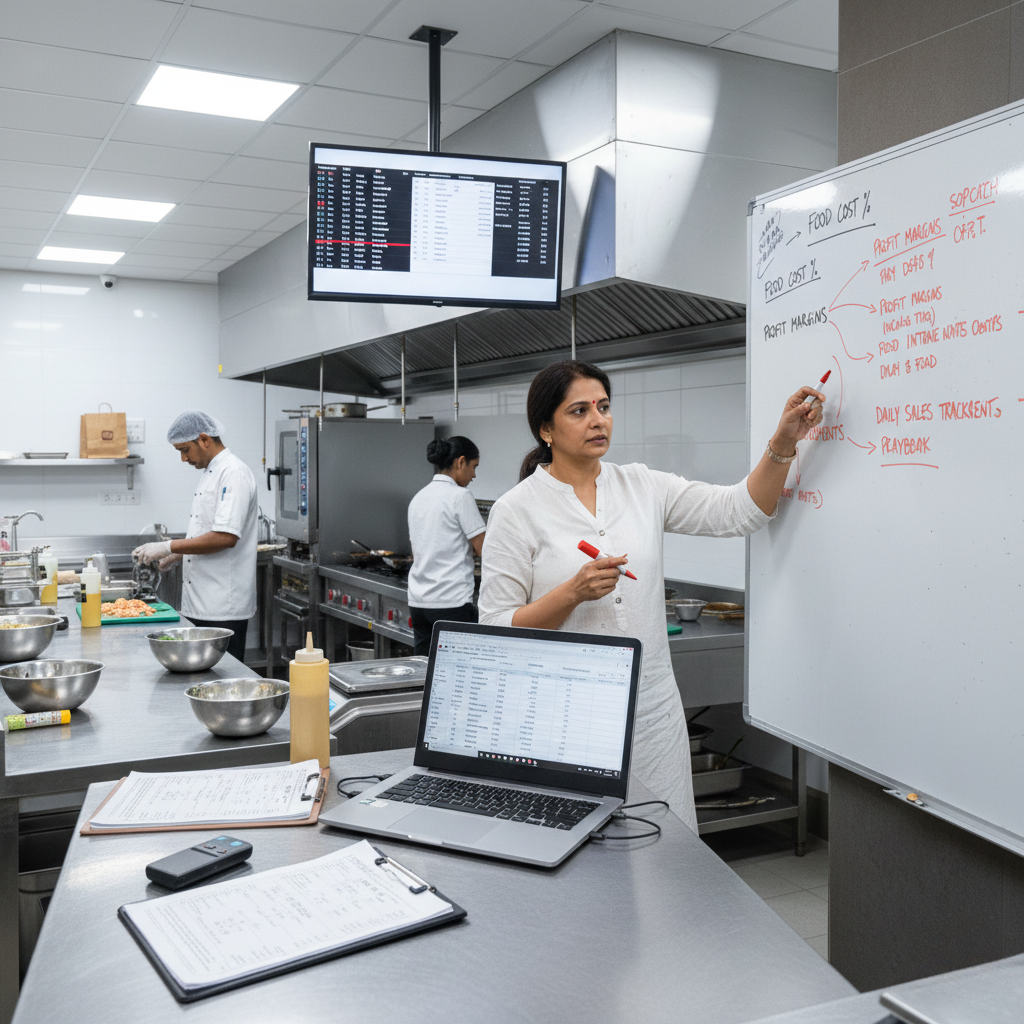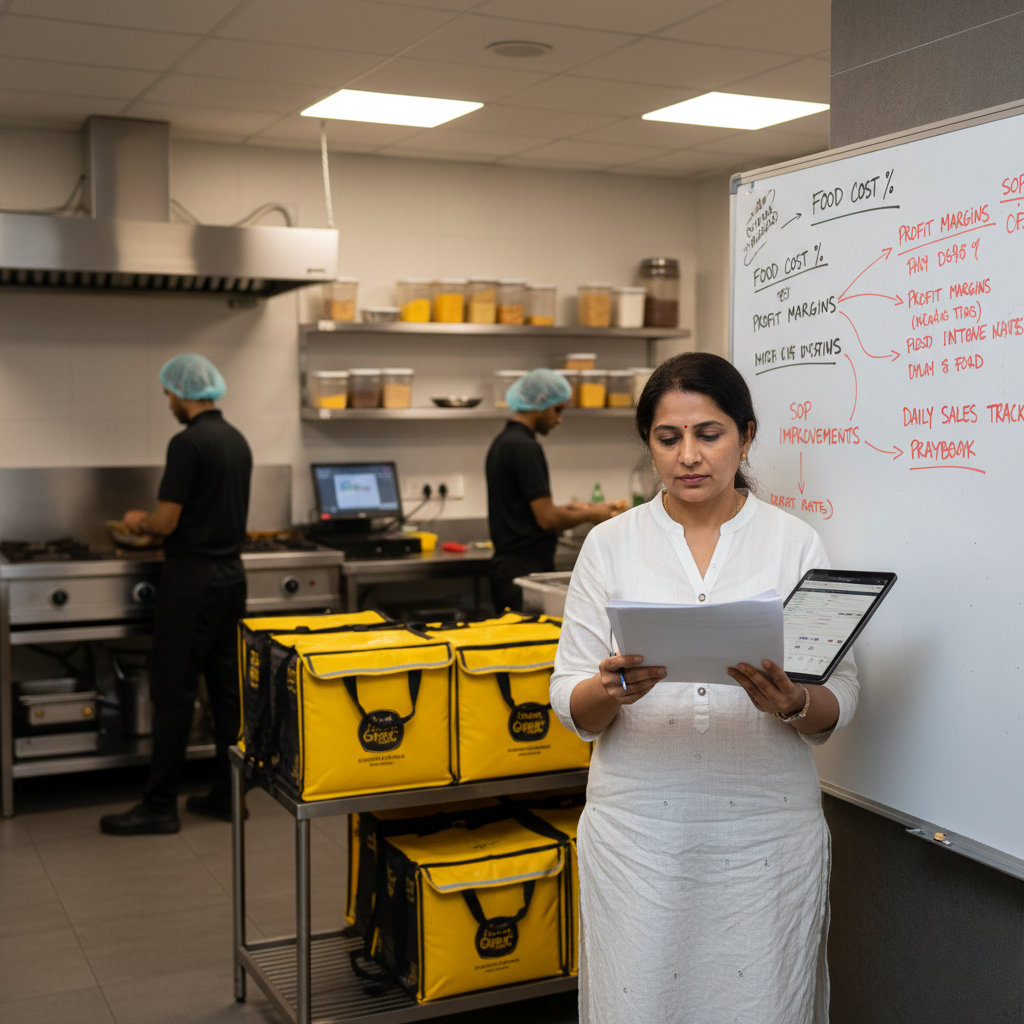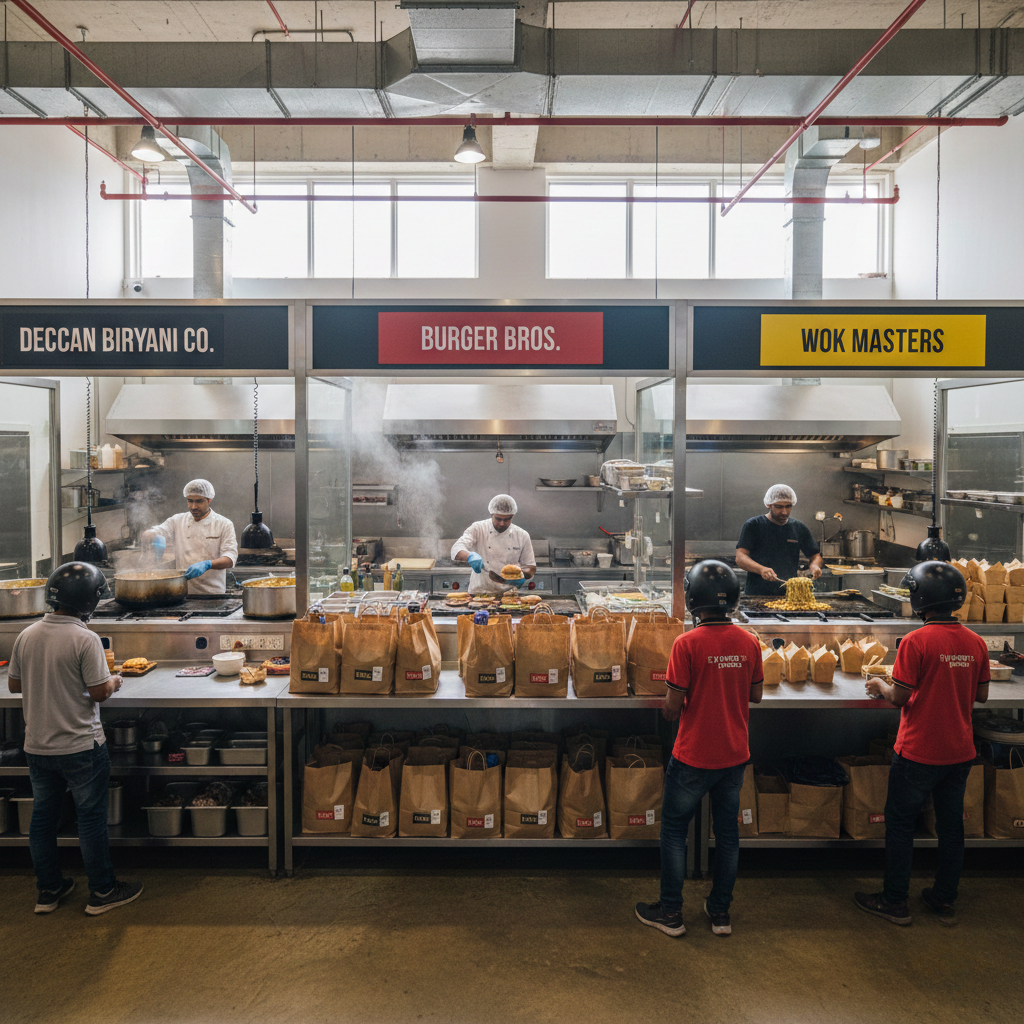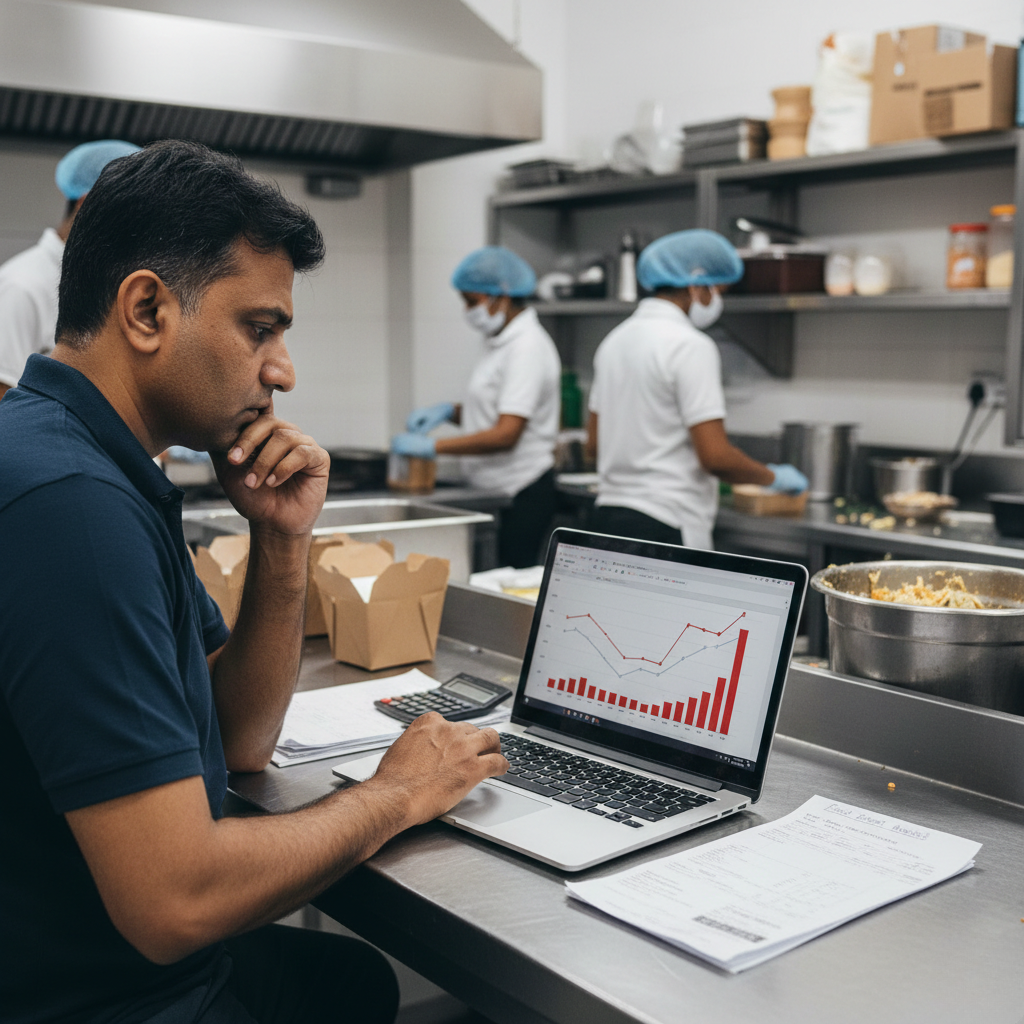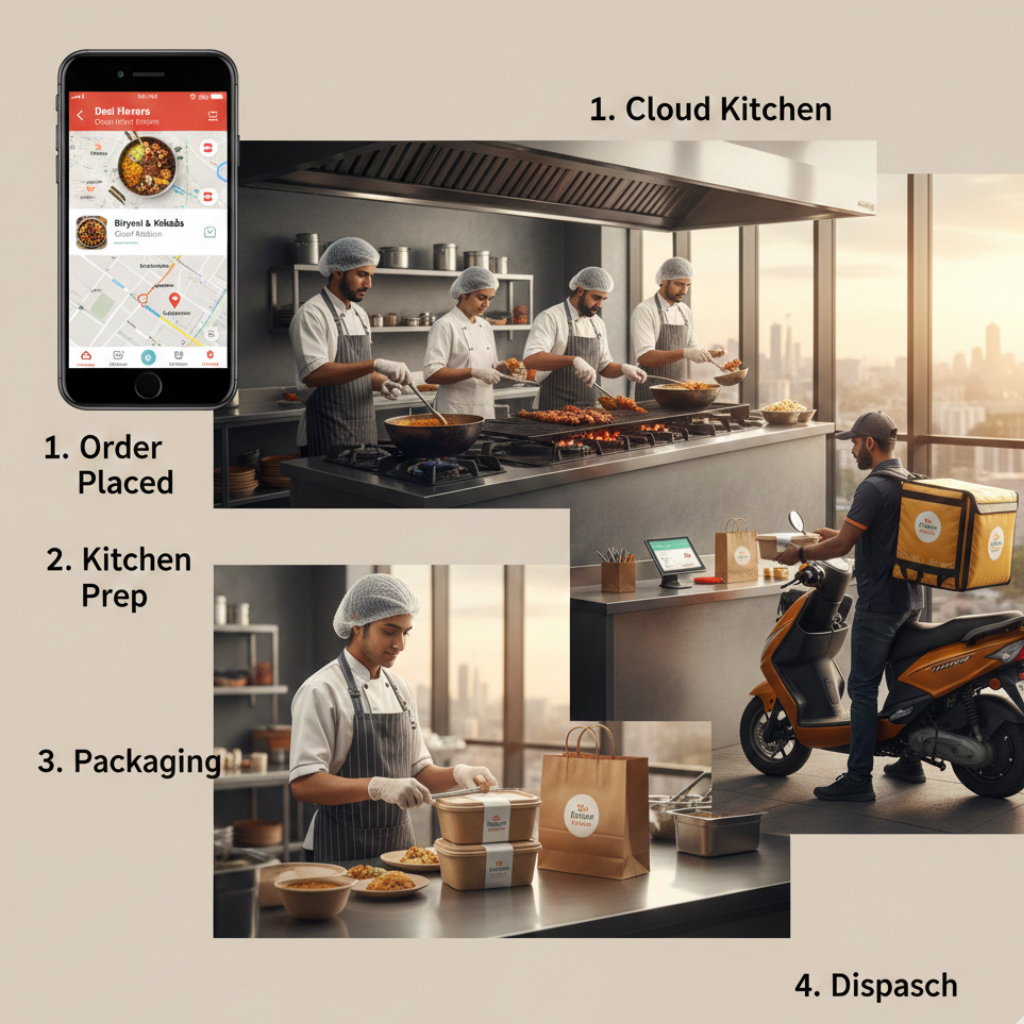
How Cloud Kitchen Business Works In India: customers order online and food gets delivered. But inside the kitchen, the business runs on tight systems-SOPs, prep planning, packaging, dispatch speed, ratings, and repeat orders. This guide explains exactly how a cloud kitchen business works in India, step-by-step, so you can build it like a real operation-not a gamble.
Start Here If You’re New to Cloud Kitchens
This page is part of GrowKitchen’s core learning series. If you want the full big-picture guide (models, setup cost, unit economics, SOPs, scaling), read: Cloud Kitchen As A Service (CKaaS).
For official compliance references, check: FSSAI, GST Portal, and Udyam (MSME).
What Does “Cloud Kitchen” Mean in India?
A cloud kitchen is a delivery-first food business with no dine-in area. Customers order through Swiggy/Zomato or direct channels like WhatsApp and website ordering. The kitchen focuses on production, packing, and dispatch-optimised for speed, consistency, and ratings.
How Cloud Kitchen Business Works in India: Step-by-Step Flow
Step 1: Customer Places an Order (Discovery + Conversion)
Most new orders come from aggregators because they provide discovery. Your listing performance depends on photos, pricing, delivery time, cuisine demand, and ratings. This is why early-stage brands often start aggregator-first and slowly build direct repeat.
If you want to reduce commission dependency over time, build retention systems: WhatsApp for Cloud Kitchen Growth.
Step 2: Order Lands on POS/Order Screen (Operations Starts)
Once the order arrives, the kitchen begins execution. A good cloud kitchen is structured like an assembly line: prep-ready components + fast assembly + consistent packing.
The biggest mistake founders make is running a “chef-style kitchen” instead of a “system-style kitchen”. Use a daily ops checklist to reduce errors: Cloud Kitchen SOP Checklist.
Step 3: Prep, Assembly, and Portion Control (Margin Protection)
Most cloud kitchens in India win or lose on portioning. If every cook serves differently, your food cost becomes random-and margins disappear quietly.
Strong kitchens run with: standard recipes, ladle rules, weighed proteins, fixed garnish portions, and batch-prep schedules. This is also why multi-brand kitchens can work well-shared prep reduces waste.
Step 4: Packaging and Labelling (Ratings Protection)
Packaging is part of the product in delivery. Spillage, sogginess, and temperature loss directly impacts ratings and refunds. Your packaging must match cuisine behaviour (steam, oil, crunch, gravy separation).
To improve contribution margin without losing ratings, see: How to Optimise Cloud Kitchen Profit Margins.
Step 5: Dispatch and Delivery (Speed + SLA)
Dispatch time affects platform ranking and customer satisfaction. Kitchens need a clear dispatch zone, order tagging, rider handover SOP, and “peak-time staffing plan” to avoid delays.
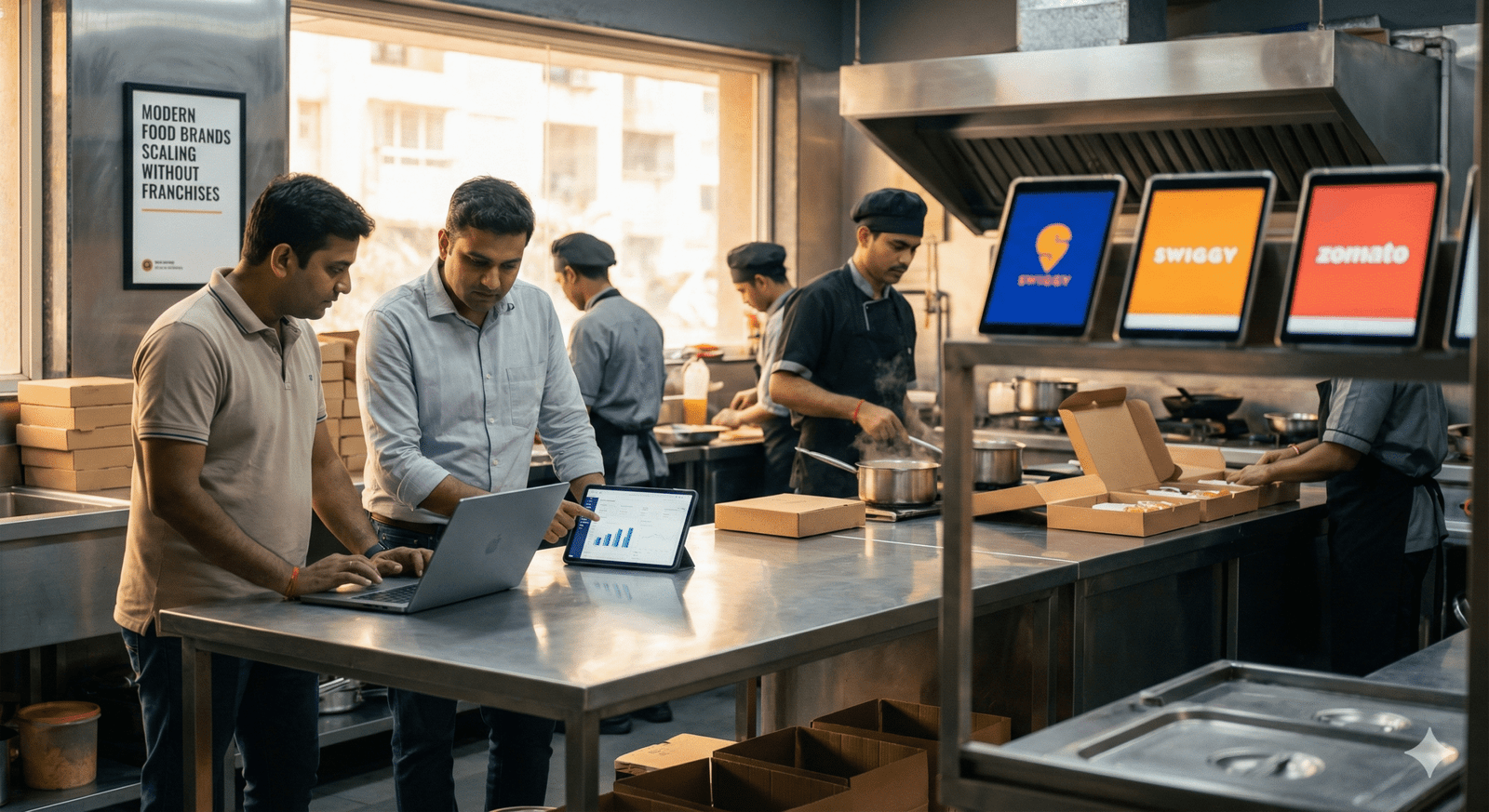
How Cloud Kitchens Make Money: Unit Economics (India Reality)
A cloud kitchen’s profitability depends on contribution margin after food cost, packaging, platform commission, discounts, and manpower. Volume helps only when systems are stable.
- Food cost control: recipe + portioning + waste tracking
- Commission control: better ratings, smarter offers, direct repeat
- Manpower control: role clarity (prep / assembly / packing / dispatch)
- Refund control: packaging + QC + dispatch discipline
How Scaling Works: From 1 Kitchen to Multiple Locations
Scaling in India is not “open more kitchens.” It’s “replicate the same output.” Expansion fails when the first kitchen is founder-dependent and undocumented.
The correct approach is: standard menu + documented SOPs + vendor mapping + training playbook + weekly KPI tracking (ratings, prep variance, food cost, refund rate).
If you’re planning multi-location expansion, read: How to Scale Cloud Kitchens to Multiple Locations and understand the failure patterns here: Why Cloud Kitchens Fail in India.
Conclusion: Cloud Kitchen Works When the System Works
In India, a cloud kitchen business works like a production company: repeatable prep, fast assembly, disciplined packaging, and dispatch speed-backed by SOPs and weekly costing control.
If you build it like a system, you can scale faster than a restaurant. If you build it like a “small kitchen with online orders,” ratings and margins will punish you.
- Cloud Kitchen Business in India (Pillar Guide)
- How to Start a Cloud Kitchen in India
- Cloud Kitchen SOP Checklist
- How to Optimise Cloud Kitchen Profit Margins
- How to Scale Cloud Kitchens
Also Refer To
Want a System-Built Cloud Kitchen (Not Guesswork)?
GrowKitchen helps founders set up SOP-driven cloud kitchens, tighten unit economics, and scale across micro-markets with repeatable systems.