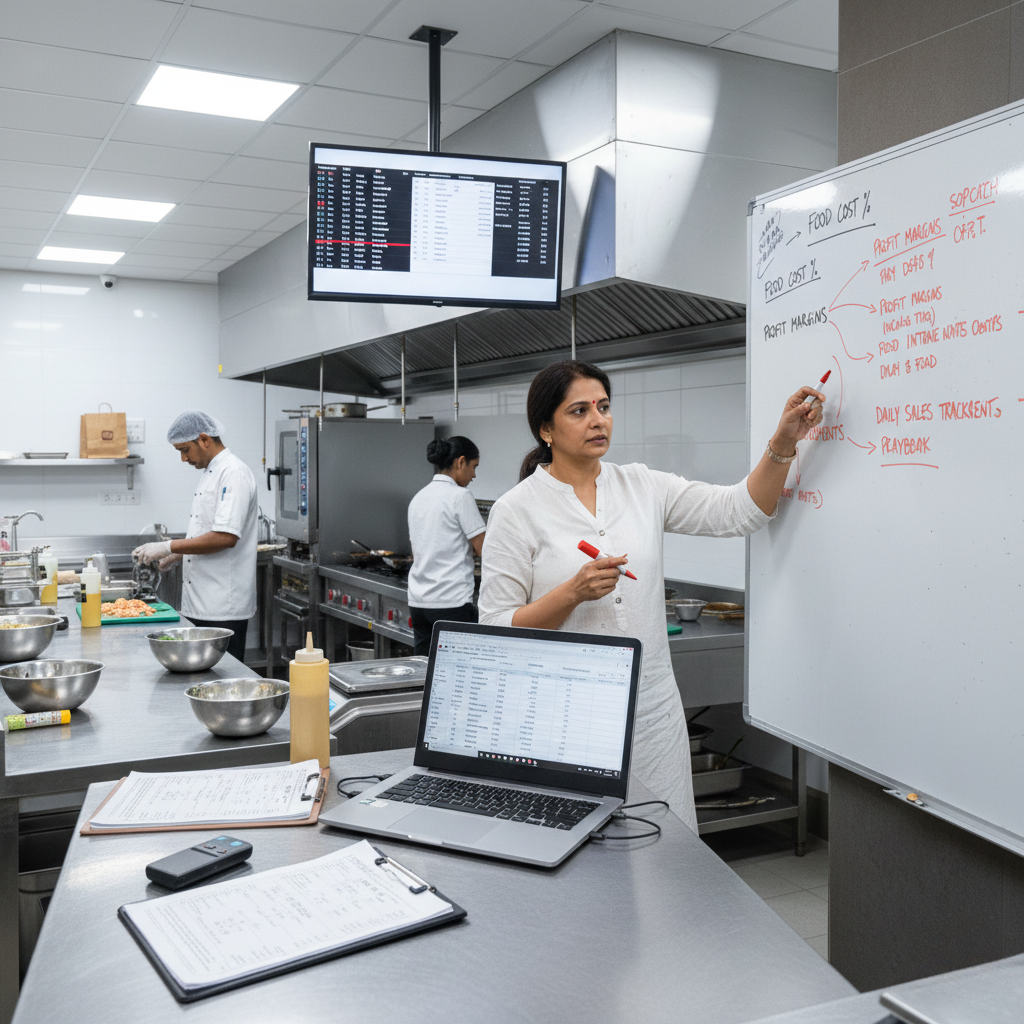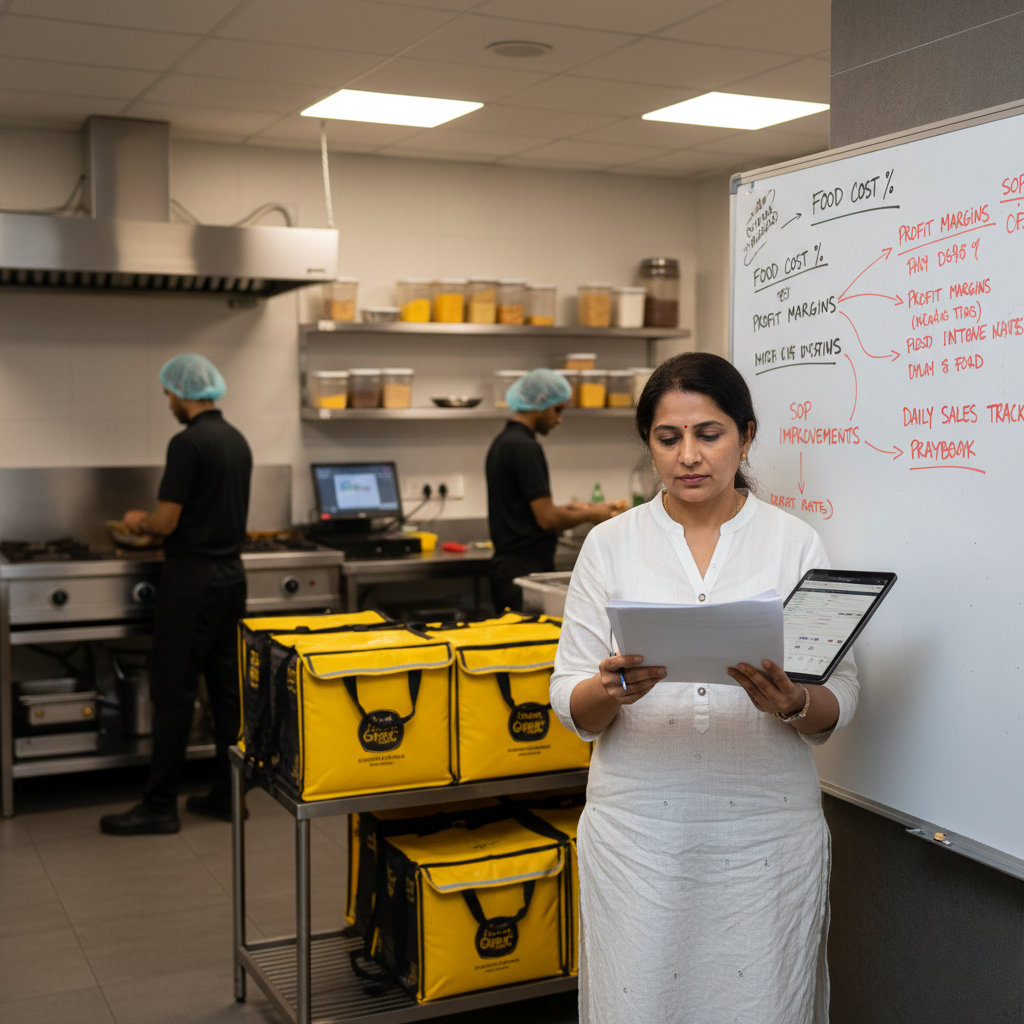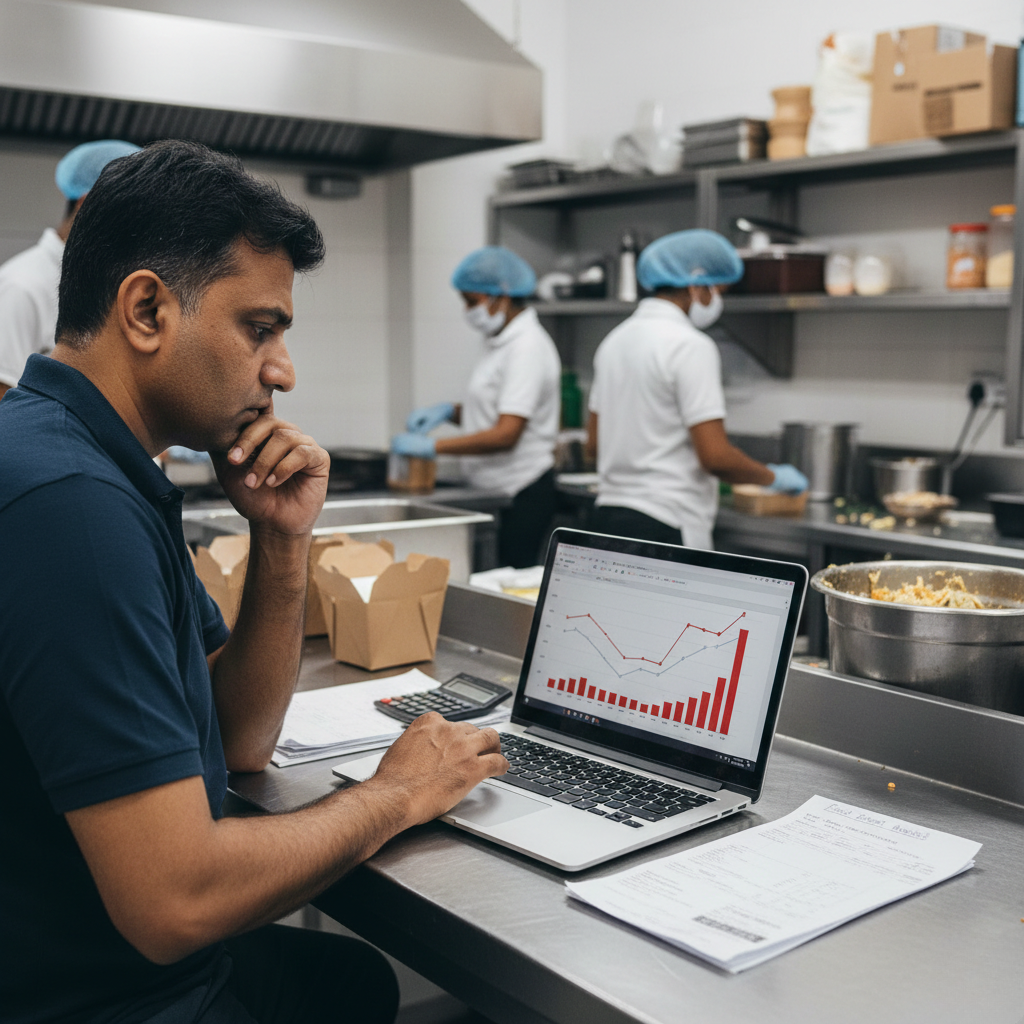
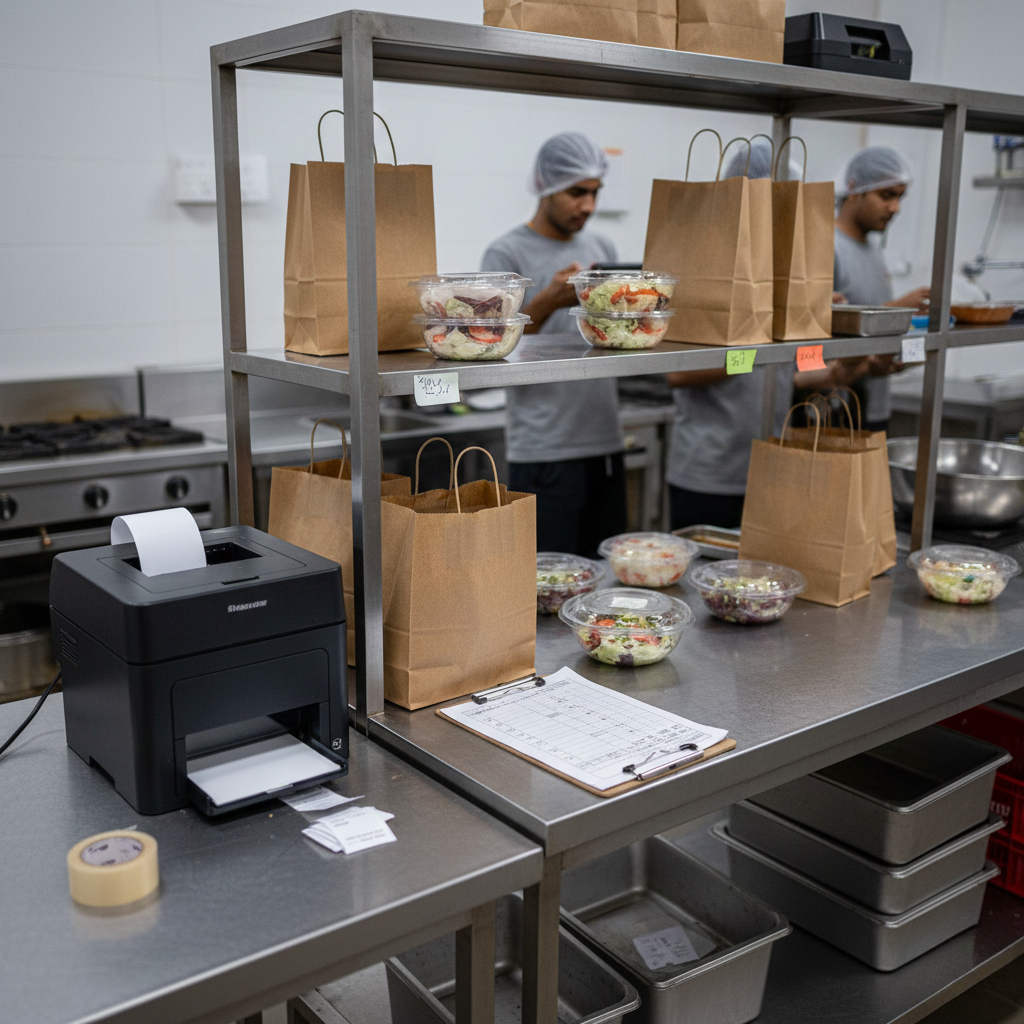
Hidden Costs Cloud Kitchen Owners Ignore rarely show up as obvious expenses. They don’t appear as large bills. They don’t trigger panic. They quietly accumulate. Through portion drift, wastage, packaging inefficiencies, unpaid founder labor, platform penalties, discount dependency, staff inefficiency, and poor systems. Orders keep flowing. Revenue looks stable. Yet profitability never settles. This guide exposes the hidden cost layers that silently destroy cloud kitchen margins and explains how disciplined operators bring them under control.
Why Hidden Costs Are More Dangerous Than Visible Expenses
Most cloud kitchen founders track visible costs: rent, salaries, raw materials, and platform commissions.
Hidden costs operate differently. They don’t demand attention. They quietly compound.
To understand how profitability really works, start with Cloud Kitchen Unit Economics Explained, Understanding Contribution Margin in Cloud Kitchens, and Cloud Kitchen Break-Even Explained Simply.
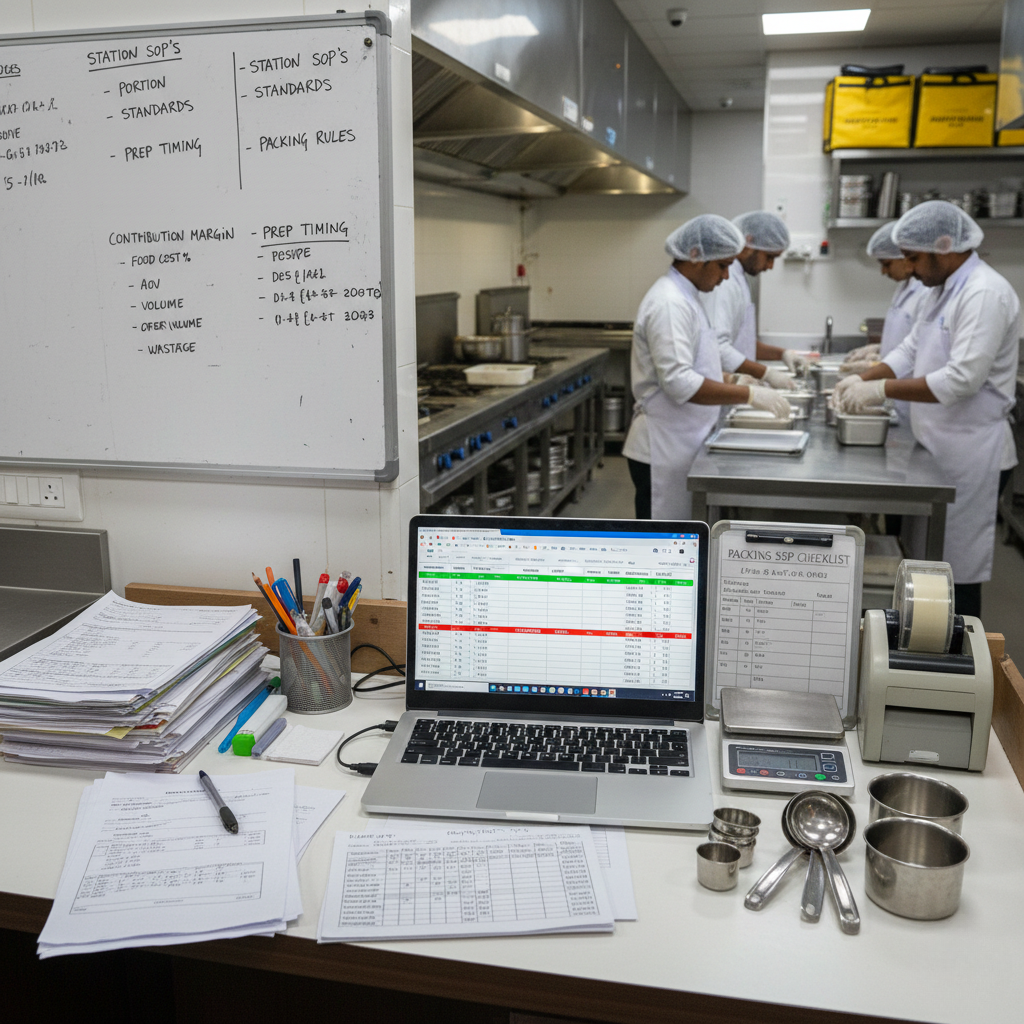
Hidden Costs Don’t Look Like Losses
Hidden costs rarely feel dangerous.
They show up as convenience, speed, flexibility, or “temporary adjustments.”
Hidden Cost #1: Portion Drift That Nobody Tracks
A little extra gravy. A slightly heavier protein scoop. A staff member eyeballing portions.
Portion drift increases food cost without changing menu prices, making margins shrink invisibly.
Portion benchmarks are explained in Ideal Food Cost Percentage for Cloud Kitchens.

Hidden Cost #2: Unlogged Wastage and Spoilage
Spoiled prep, expired raw material, excess batch cooking, and incorrect forecasting lead to daily wastage.
Because wastage is rarely logged properly, founders underestimate its financial impact.
Inventory discipline is detailed in Cloud Kitchen Inventory Management in India.
Hidden Cost #3: Inefficient Packaging Choices
Extra containers. Over-layered packaging. Premium boxes for low-margin items.
Packaging cost often grows faster than food cost but receives far less scrutiny.
Learn packaging economics in Packaging Cost: The Silent Profit Killer.
Hidden Cost #4: Refunds Treated as “Platform Issues”
Refunds are often dismissed as unavoidable aggregator behavior.
In reality, each refund represents full cost with zero contribution.
Learn the real impact in How Refunds & Cancellations Affect Profitability.
Hidden Cost #5: Unpaid Founder Labor
Founders often perform: purchasing, vendor follow-ups, menu updates, customer escalations, and staff supervision.
When founder time is not costed, profitability appears higher than reality.
This aligns with Harvard Business Review’s explanation of opportunity cost , where unpaid time still carries economic value.
Hidden Cost #6: Poor Staff Utilization
Idle staff during non-peak hours and overstressed staff during rush both increase costs.
Payroll leakage occurs even when headcount feels reasonable.
Staffing models are explained in How Many Staff Does a Cloud Kitchen Need.
Hidden Cost #7: Discount Dependency
Discounts create order volume but often destroy contribution margin.
Many kitchens subsidize customers without tracking long-term profitability.
Learn how discounts affect CAC in Why CAC Matters Even for Delivery Brands.
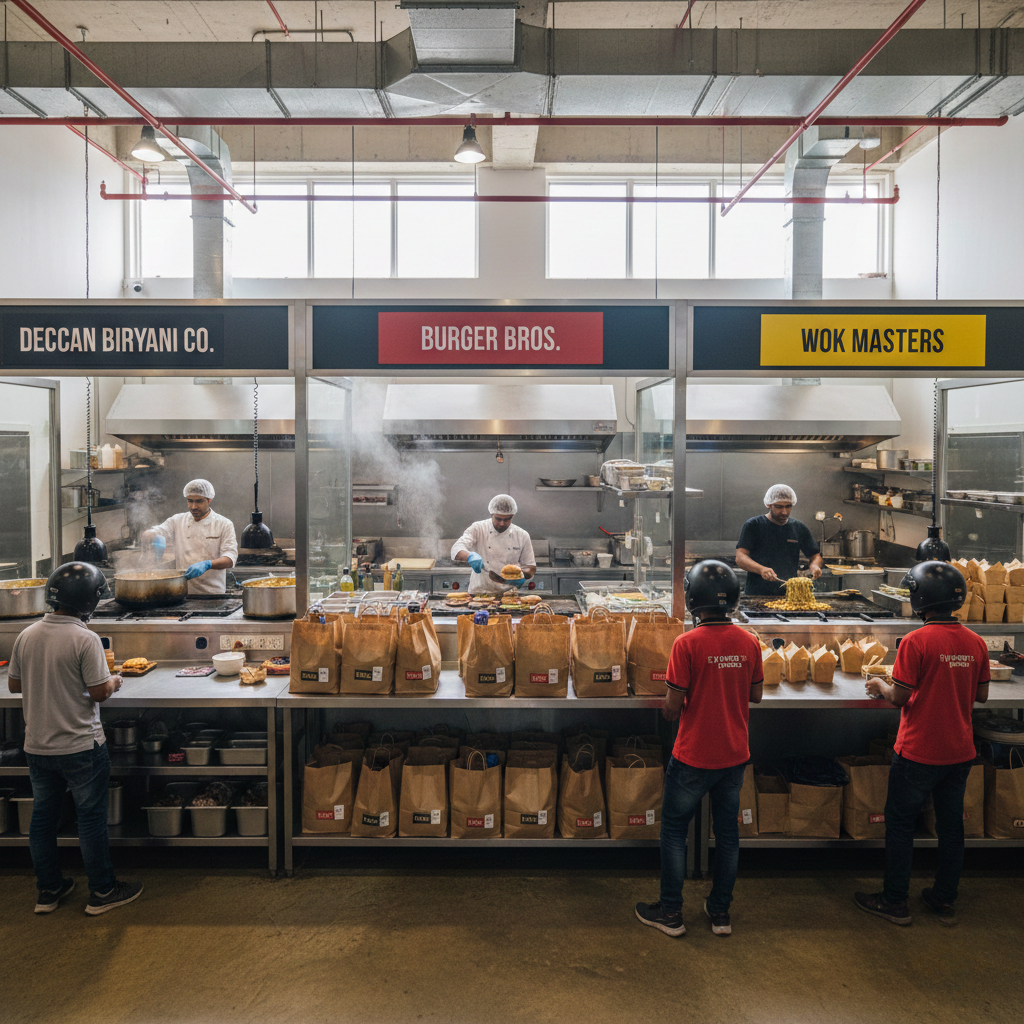
Hidden Cost #8: Multi-Brand Complexity
Multiple brands sharing one kitchen increase complexity.
Without unified SOPs, errors multiply, wastage rises, and accountability drops.
Hidden Cost #9: Utility Misuse and Leakage
Gas wastage, unnecessary refrigeration, idle exhausts, and poor maintenance quietly inflate monthly bills.
Utilities feel fixed, but misuse makes them variable.
Hidden Cost #10: Not Measuring the Right Metrics
Kitchens track orders and revenue but ignore: per-SKU margins, wastage percentages, refund reasons, and prep variance.
What is not measured cannot be controlled.
Why Hidden Costs Explode During Scaling
A small daily inefficiency seems harmless at low volume.
At scale, it becomes a structural loss.
This is why professional operators eliminate hidden costs before expansion.
Hidden Costs Cloud Kitchen Owners Ignore: Final Clarity
Cloud kitchens don’t fail because food is bad.
They fail because hidden costs compound unchecked.
GrowKitchen helps founders expose, measure, and eliminate hidden costs so profitability becomes predictable not accidental.
FAQs: Hidden Costs in Cloud Kitchens
Why don’t hidden costs appear in P&L statements?
Because they are embedded inside operations, not booked as separate expenses.
What is the most common hidden cost?
Portion drift combined with wastage.
How often should hidden costs be reviewed?
Daily at the kitchen level, weekly at the management level.