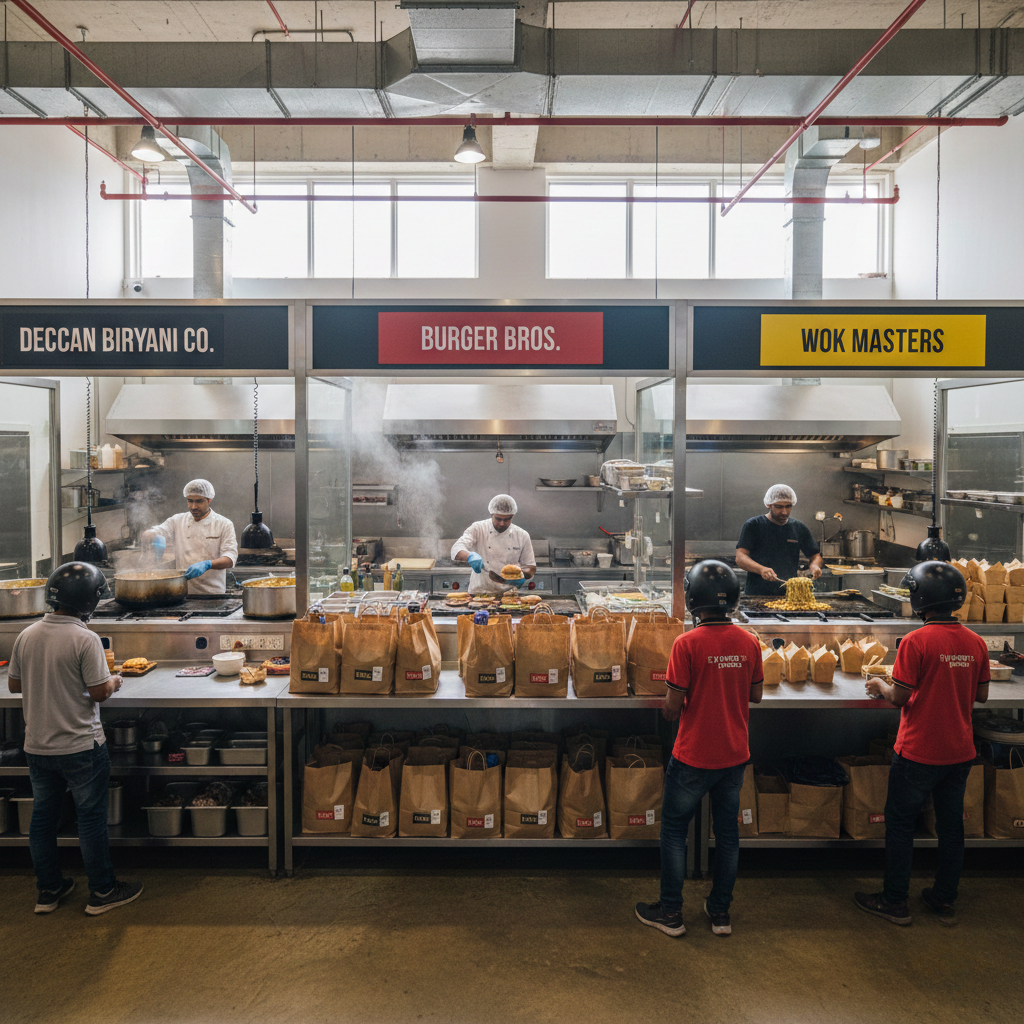
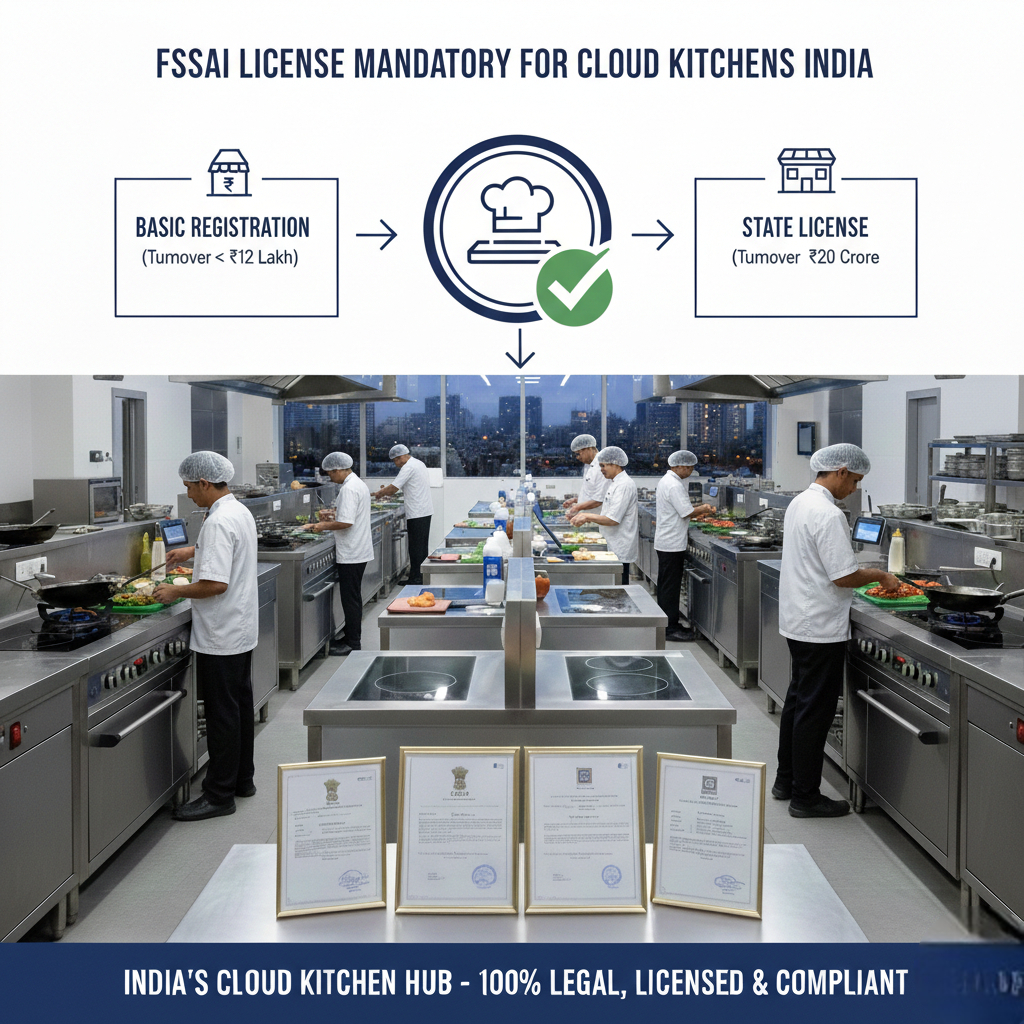
Do cloud kitchens need FSSAI license in India? Absolutely without exception. Whether you operate from home, a shared kitchen, or a large commercial setup, FSSAI registration or licensing is legally mandatory for every cloud kitchen. This guide explains why FSSAI is required, which type of FSSAI license you need, how licensing differs for home kitchens vs commercial kitchens, common compliance mistakes founders make, and how to stay audit-ready while scaling across cities.
Start Here Before Applying for an FSSAI License
This article is part of GrowKitchen’s legal and compliance education series. If you’re still understanding the cloud kitchen concept, start with: Cloud Kitchen as a Service (CKaaS).
Food safety compliance in India is governed by the Food Safety and Standards Authority of India (FSSAI). Any food business operator (FBO) including cloud kitchens must be registered or licensed before selling food, whether online or offline.
Do Cloud Kitchens Need FSSAI License in India?
Yes. Every cloud kitchen in India is legally required to have an FSSAI registration or license before accepting orders. This applies regardless of whether the kitchen operates from a home, a co-kitchen, a managed kitchen, or a dedicated commercial facility.
Cloud kitchens are classified as Food Business Operators (FBOs) under the Food Safety and Standards Act, 2006. Selling food without FSSAI approval is illegal and can result in penalties, shutdown notices, and aggregator delisting.
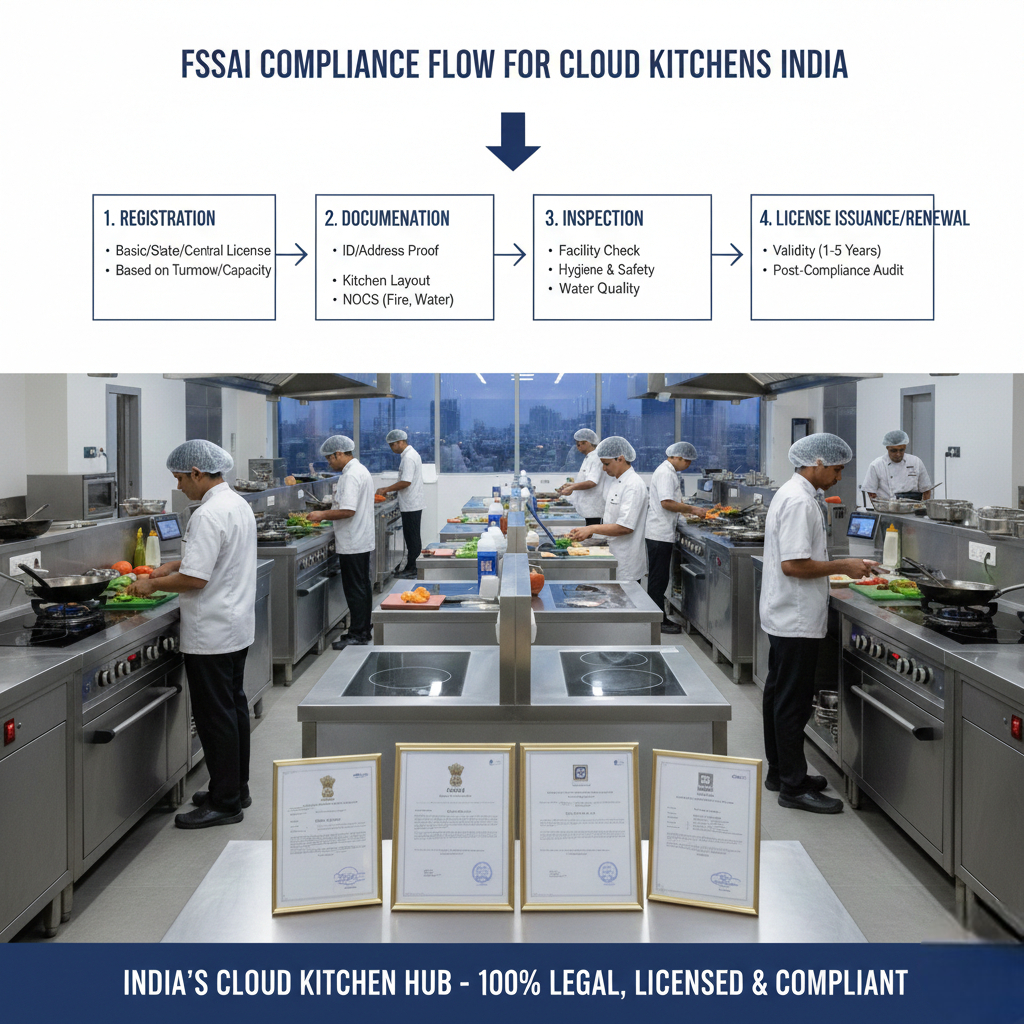
Why FSSAI License Is Mandatory for Cloud Kitchens
FSSAI exists to protect consumers by ensuring food safety, hygiene, and standardized practices. Cloud kitchens may not have dine-in visibility, but they still handle food production and delivery at scale.
FSSAI ensures:
- Safe food handling and storage practices
- Hygienic kitchen infrastructure
- Traceability of food sources
- Accountability during food safety complaints
Aggregators like Swiggy and Zomato are legally required to onboard only FSSAI-compliant kitchens.
Types of FSSAI License for Cloud Kitchens
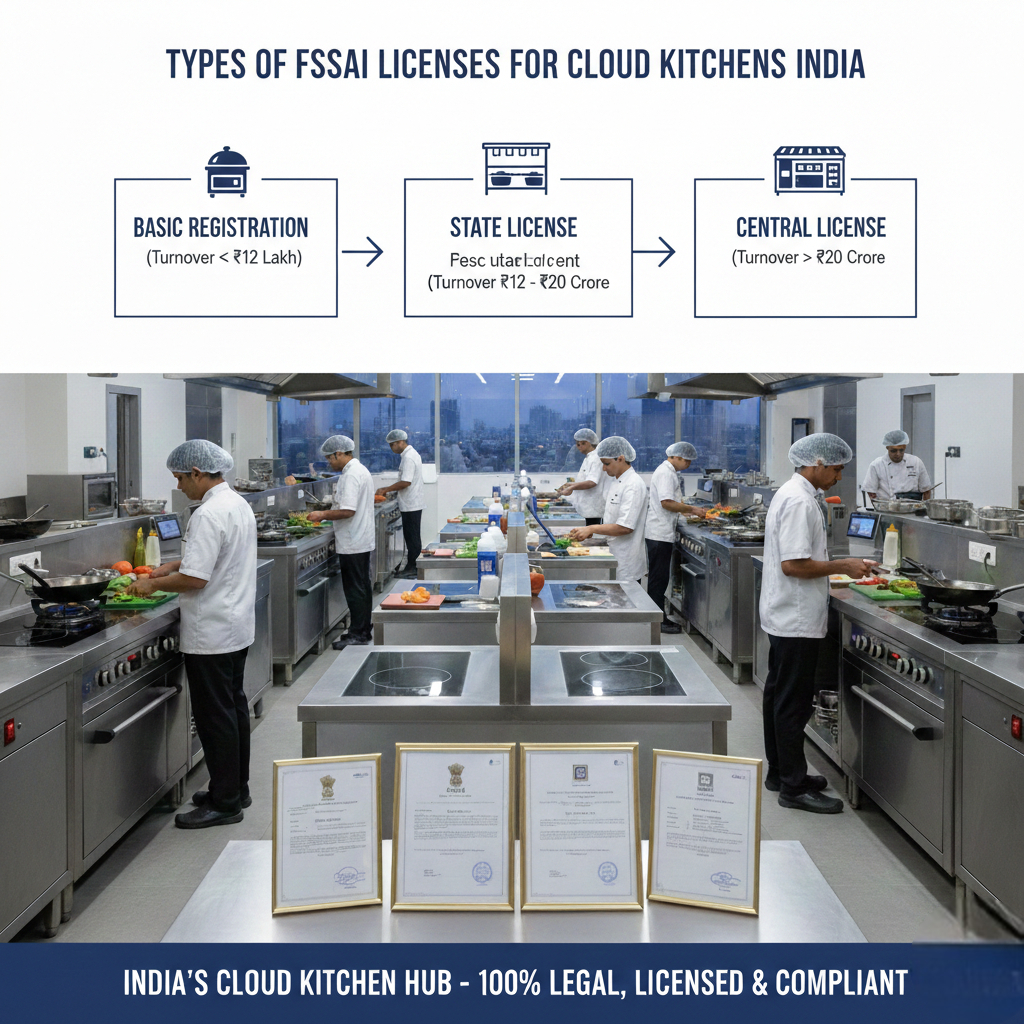
FSSAI offers three types of approvals depending on scale, turnover, and operational footprint:
- FSSAI Basic Registration: For small kitchens with annual turnover below ₹12 lakh. Common for home-based cloud kitchens.
- FSSAI State License: For kitchens operating within one state with higher turnover or commercial setups.
- FSSAI Central License: Mandatory for multi-state operations, large production units, or brands operating across India.
Applications are submitted via the official FSSAI portal: FoSCoS – Food Safety Compliance System.
Do Home-Based Cloud Kitchens Need FSSAI?
Yes. Home-based cloud kitchens also require FSSAI registration. Operating from home does not exempt you from food safety laws.
However, home kitchens usually qualify for Basic FSSAI Registration, provided turnover remains under ₹12 lakh per year.
Keep in mind:
- Housing societies may restrict commercial cooking
- Heavy frying or bulk production may be disallowed
- Municipal inspections can still occur
One Kitchen, Multiple Brands: How FSSAI Applies
A common mistake founders make is running multiple brands under one FSSAI license incorrectly. FSSAI rules require:
- All brands to be declared under the same kitchen address, or
- Separate licenses if kitchens operate from different locations
If you plan to scale brands or cities, align your FSSAI structure early. This becomes critical in asset-light or managed kitchen models: Asset-Light Cloud Kitchen Model in India.
FSSAI Requirement for Swiggy & Zomato
Aggregators will not activate your cloud kitchen listing without a valid FSSAI license. They regularly conduct compliance checks and audits.
Non-compliance can lead to:
- Immediate delisting
- Suspension of payouts
- Permanent account termination
To understand aggregator onboarding risks, read: Why Cloud Kitchens Fail in India.
FSSAI Renewal, Display & Audit Readiness
FSSAI licenses are not lifetime approvals. They must be renewed before expiry.
Compliance best practices:
- Display FSSAI number on aggregator listings
- Print FSSAI number on packaging where required
- Maintain hygiene logs and temperature records
- Train staff via FoSTaC programs
Staff training reference: FoSTaC Training Program.
Penalties for Operating Without FSSAI
Operating a cloud kitchen without FSSAI approval is a punishable offense. Penalties may include:
- Fines up to ₹5 lakh
- Forced shutdown of operations
- Aggregator blacklisting
- Legal action in severe food safety cases
Final Answer: Do Cloud Kitchens Need FSSAI License?
Yes without exception. Every cloud kitchen in India must have an FSSAI registration or license before selling food online or offline.
Treat FSSAI not as paperwork, but as a foundation for safe scaling. Compliance builds trust with customers, aggregators, and partners and protects your business from shutdown risks.
FAQs: FSSAI License for Cloud Kitchens
Is FSSAI mandatory for cloud kitchens?
Yes. FSSAI registration or license is mandatory for all cloud kitchens, including home-based setups.
Which FSSAI license is required for a cloud kitchen?
It depends on turnover and scale Basic Registration, State License, or Central License.
Can I operate on Swiggy or Zomato without FSSAI?
No. Aggregators require valid FSSAI documentation for onboarding and continued operations.
Is FSSAI required for multiple brands?
Yes. All brands must be declared under the kitchen’s FSSAI license or licensed separately if operating from different locations.
- Cloud Kitchen Business in India
- Cloud Kitchen Setup Cost in India
- Asset-Light Cloud Kitchen Model
- Why Cloud Kitchens Fail in India