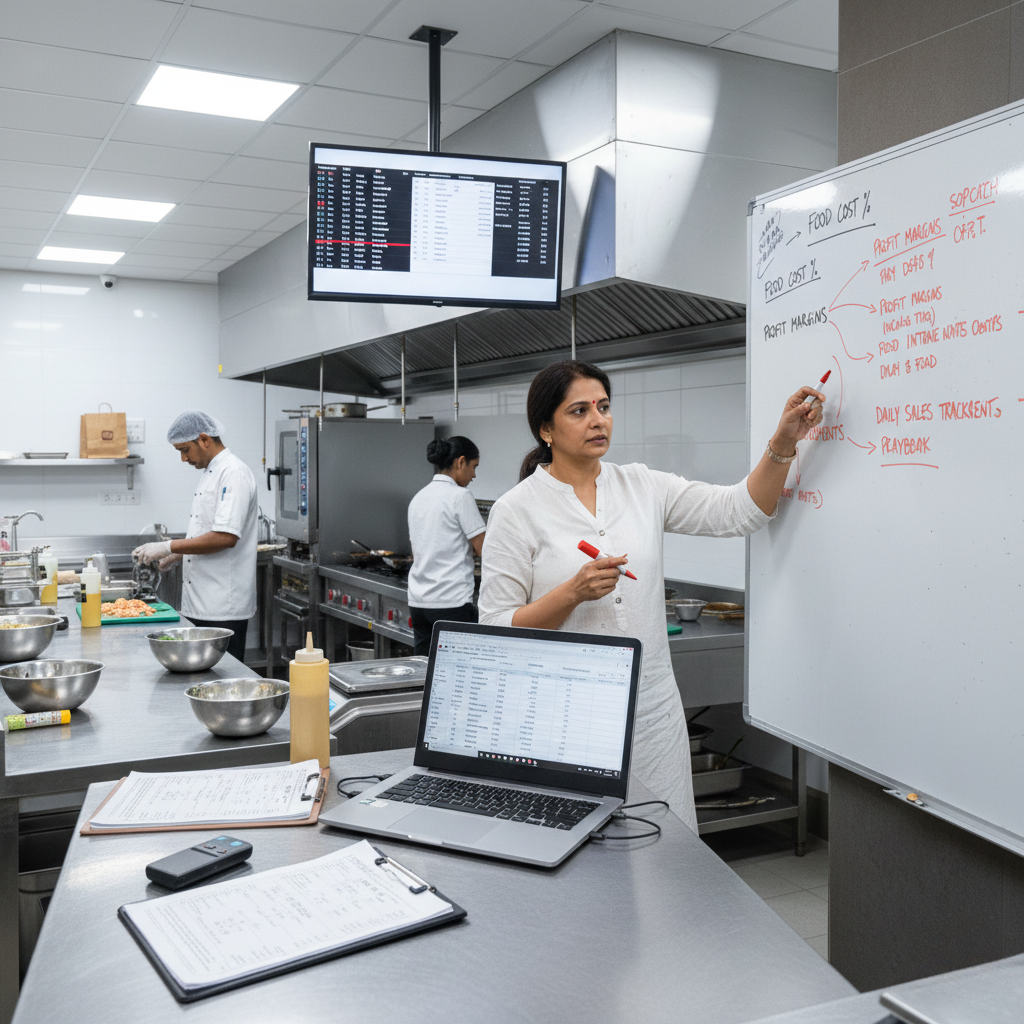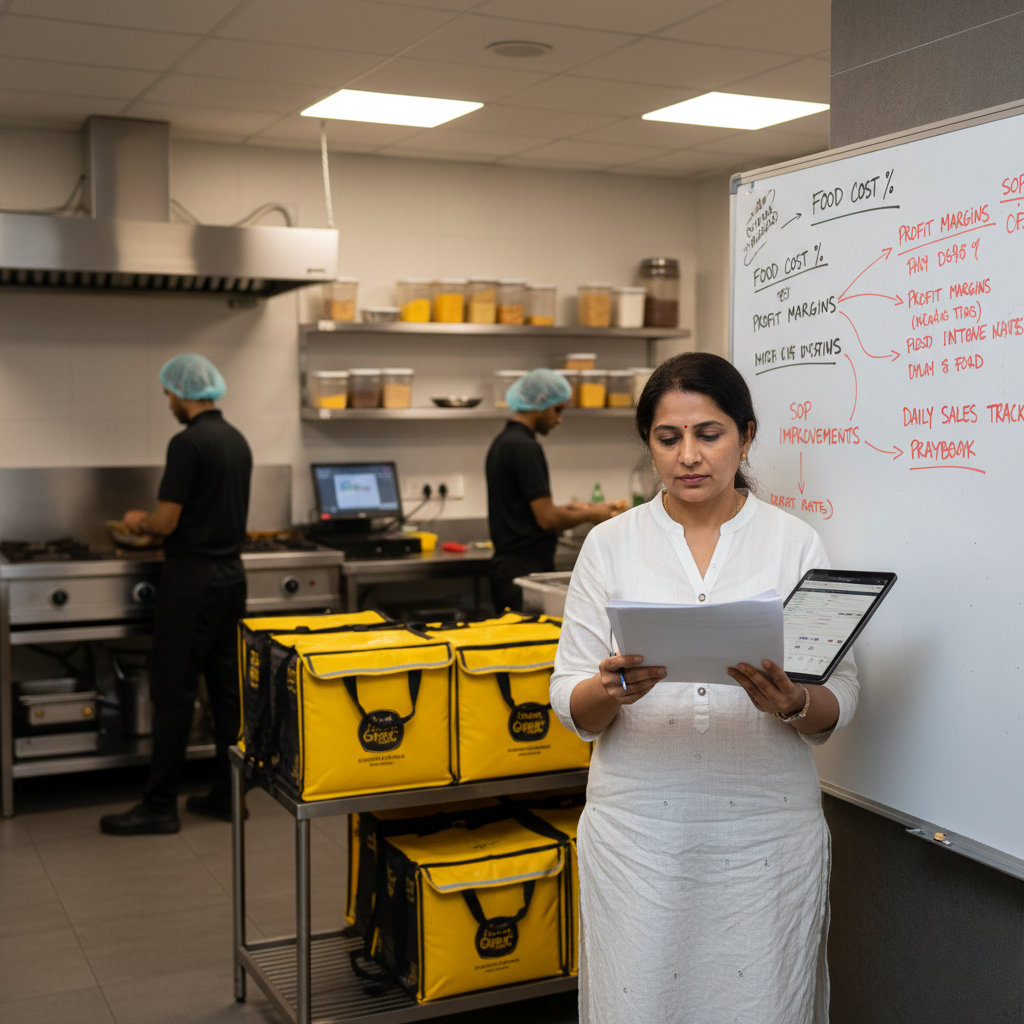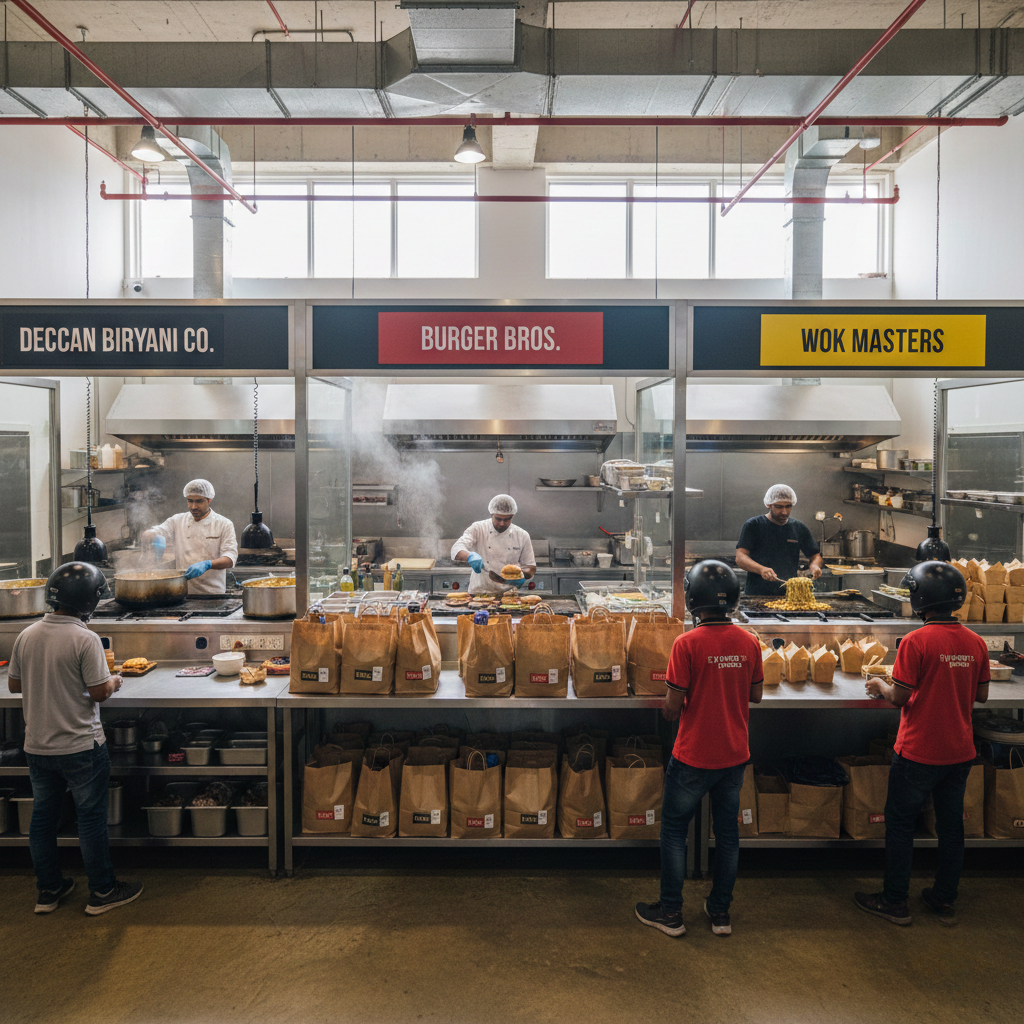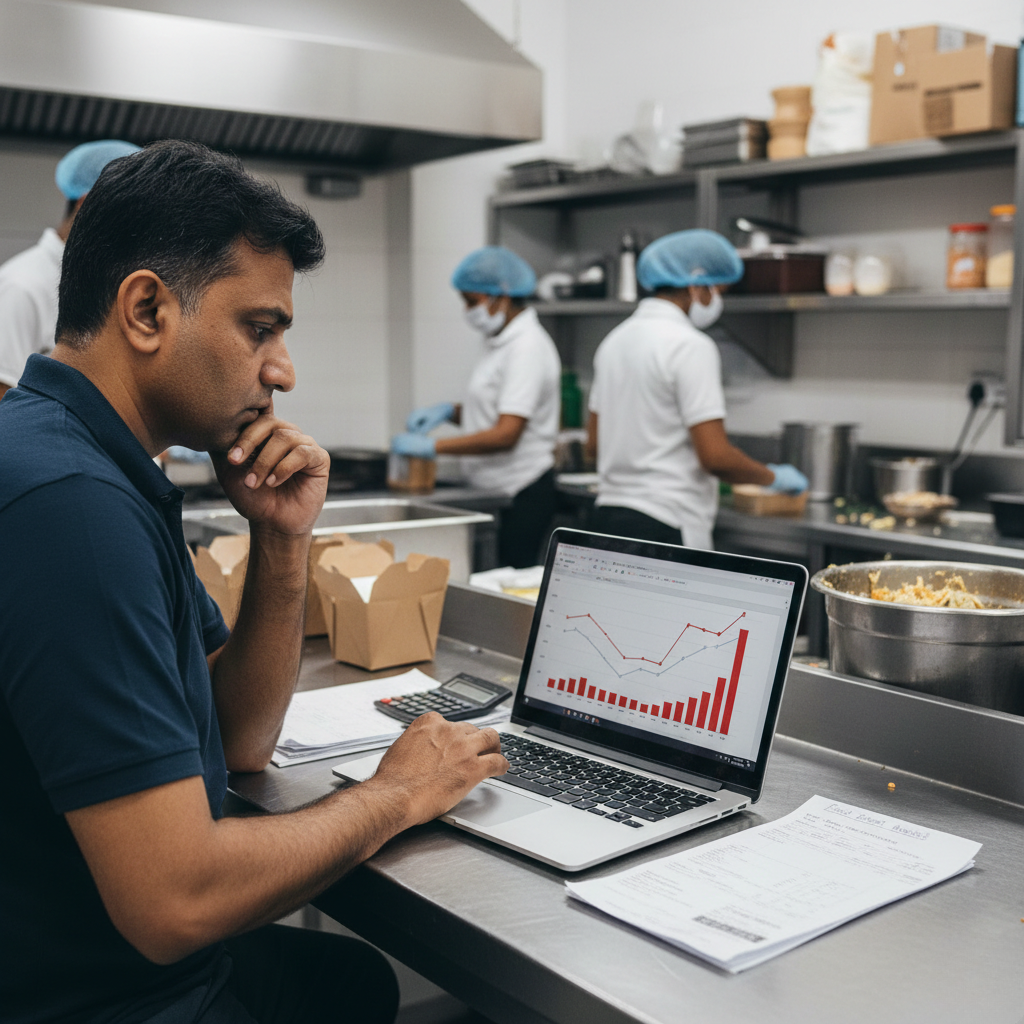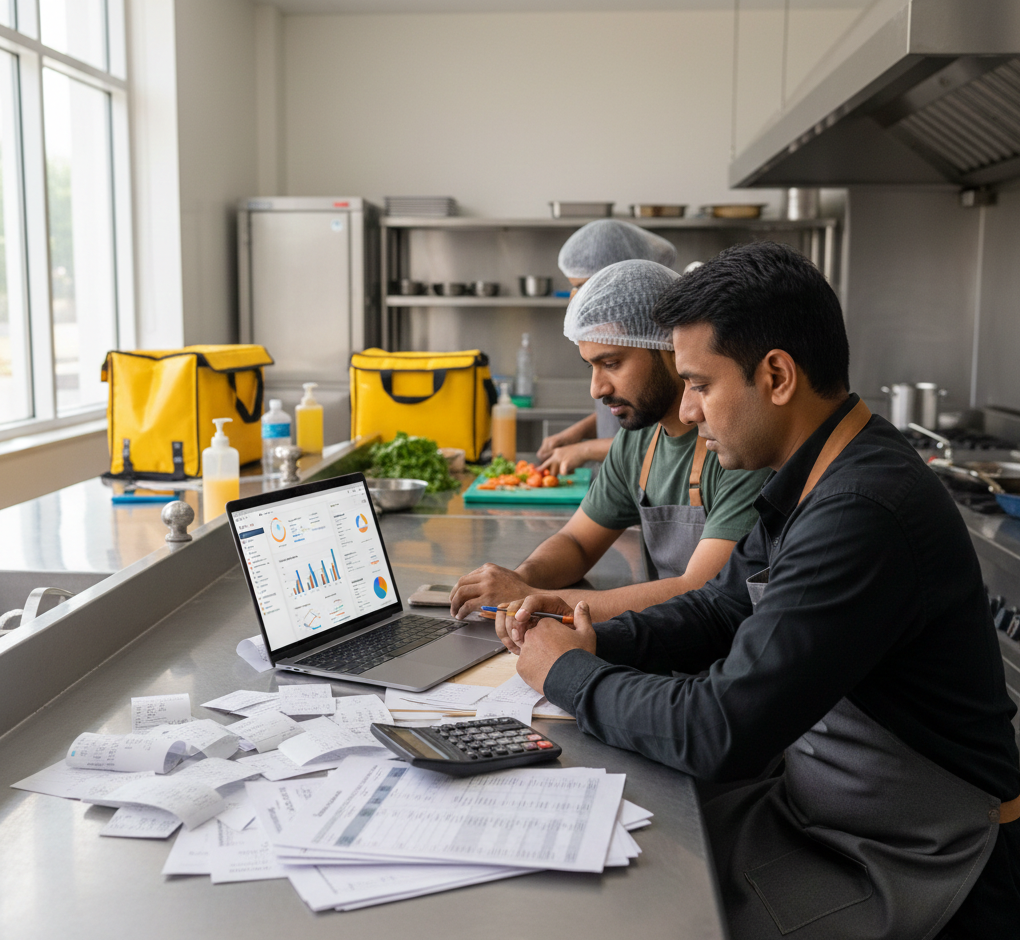
Data-Driven Decisions for Cloud Kitchen Profitability are no longer optional in today’s competitive delivery ecosystem. Many cloud kitchens operate with strong visibility on aggregators, consistent daily orders, and expanding menus-yet struggle with unstable or declining margins. The gap between revenue growth and actual profitability is rarely accidental. It is usually the result of operating without structured Data-Driven Decisions for Cloud Kitchen Profitability.
Understanding what to measure, how to interpret it, and how to align operations accordingly is what separates sustainable kitchens from those constantly reacting to financial pressure. This guide explains what you need to know about implementing Data-Driven Decisions for Cloud Kitchen Profitability to build predictable and scalable margins.
Why Data Matters More Than Revenue in Cloud Kitchens
Revenue indicates activity. Data reveals efficiency. Without structured Data-Driven Decisions for Cloud Kitchen Profitability, founders often assume that increasing order volume will automatically improve profits. However, as discussed in Cloud Kitchen Profitability Data-Driven Approach and why cloud kitchen profits decline despite good sales , growth without margin control can amplify operational weaknesses.
Shifting toward Data-Driven Decisions for Cloud Kitchen Profitability changes the focus from “How many orders did we get?” to “How profitable were those orders?” This shift forms the foundation of long-term financial stability.
Understanding Contribution Through Data Visibility
Contribution margin is the clearest indicator within Data-Driven Decisions for Cloud Kitchen Profitability. It reflects how much money remains after covering variable costs associated with each order.
Contribution Margin = Selling Price − Variable Costs
Variable costs include ingredients, packaging, aggregator commissions, discounts, and advertising expenses. Without SKU-level contribution tracking, operators may unknowingly scale low-margin or negative-margin items, weakening overall cloud kitchen profitability.
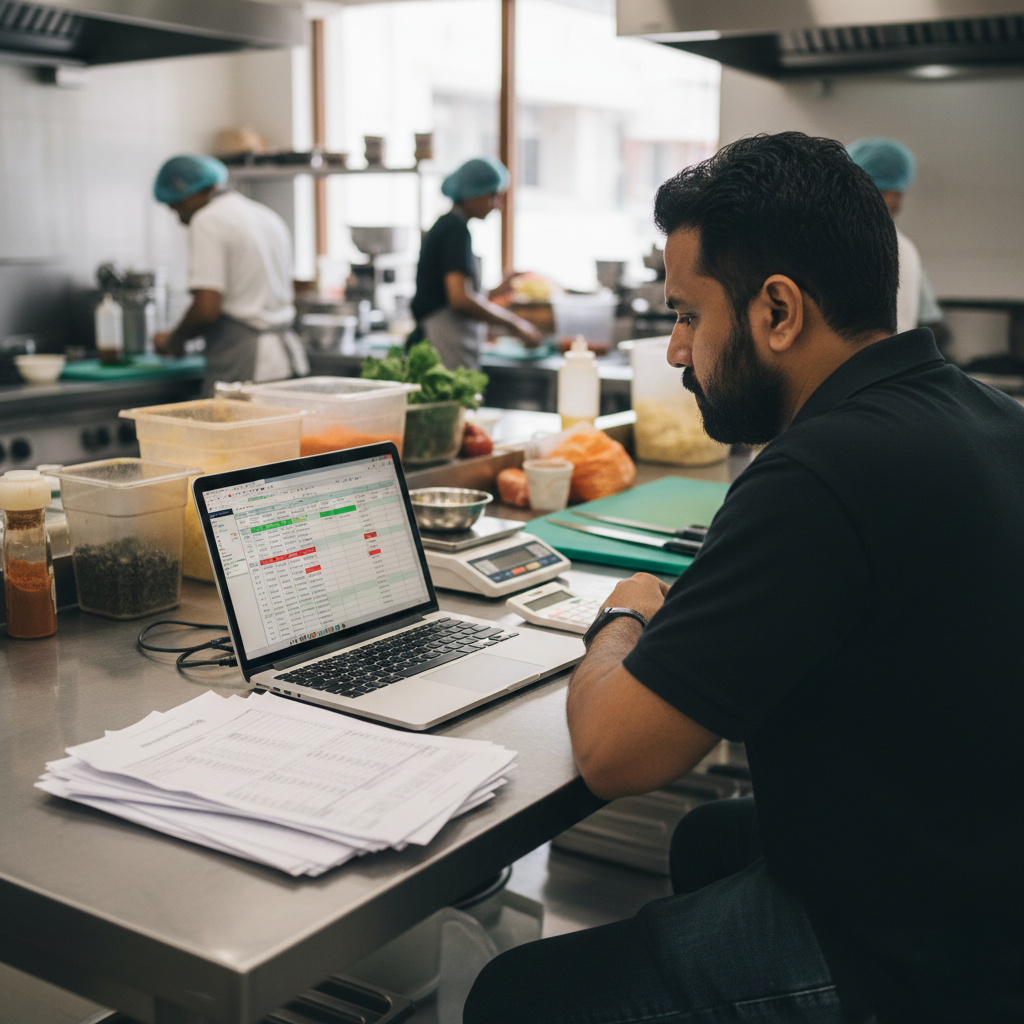
Consistent contribution tracking is one of the strongest pillars of effective Data-Driven Decisions for Cloud Kitchen Profitability.
Food Cost Stability Through Measured Control
Food cost percentage directly influences the outcome of Data-Driven Decisions for Cloud Kitchen Profitability. Even minor portion deviations can inflate monthly ingredient expenses significantly.
Food Cost % = (Total Ingredient Cost / Total Sales) × 100
Without measured recipe standardization and yield monitoring, food cost drifts gradually and often goes unnoticed until month-end financial reviews.

Disciplined food cost tracking strengthens Data-Driven Decisions for Cloud Kitchen Profitability by preventing invisible margin erosion.
Labor Efficiency and Demand Alignment
Labor cost becomes problematic when staffing decisions are based on habit rather than demand patterns. Integrating labor analytics into Data-Driven Decisions for Cloud Kitchen Profitability provides clarity on peak hours, slow periods, and output per staff member.
Labor Cost % = (Total Staff Cost / Total Revenue) × 100
When operators align staffing levels with real-time order flow data, idle payroll reduces and productivity improves. This alignment strengthens contribution and supports sustainable cloud kitchen profitability.
The Impact of Discount Strategy on Real Profit
Discounting is often used to stimulate order volume, but without structured Data-Driven Decisions for Cloud Kitchen Profitability, it compresses margins. Tracking discount-to-sales ratio and post-discount contribution margin reveals whether promotions create sustainable growth or temporary revenue spikes.
Detailed operational warning signs related to margin erosion are explained in Building a Profitable Cloud Kitchen: A Data-Backed Roadmap .
When guided by Data-Driven Decisions for Cloud Kitchen Profitability, discounting becomes a strategic tool rather than a reactionary tactic.
Inventory Movement and Capital Efficiency
Inventory is one of the most overlooked drivers of Data-Driven Decisions for Cloud Kitchen Profitability. Slow-moving stock locks capital, while over-ordering increases spoilage and food cost inflation.
Monitoring inventory turnover ensures purchasing decisions align with demand forecasts rather than assumption-based planning.
Accurate tracking strengthens capital efficiency and reinforces structured cloud kitchen profitability management.
Daily Monitoring Versus Monthly Reaction
Most profitability problems do not appear overnight. They accumulate gradually. Consistent Data-Driven Decisions for Cloud Kitchen Profitability require daily review, not just month-end analysis.
Daily contribution reports, food cost movement, labor efficiency summaries, and discount impact analysis allow operators to intervene early before small drifts compound into major financial gaps.
Consistency in review is the engine behind sustainable cloud kitchen profitability.
The Psychological Shift Toward Structured Decisions
When Data-Driven Decisions for Cloud Kitchen Profitability become central to decision-making, emotional reactions decrease. Instead of asking why profits declined at the end of the month, operators identify which metric shifted and adjust processes immediately.
Structure replaces guesswork. Visibility replaces stress. Systems reinforce profitability discipline.
How Operational Systems Strengthen Data Utilization
Data alone does not improve profitability. Systems convert insights into action. Recipe standardization, role clarity in execution, demand-aligned staffing, and contribution dashboards ensure that Data-Driven Decisions for Cloud Kitchen Profitability translate into operational discipline.
Without structured implementation, data remains observation rather than transformation.
Long-Term Stability Through Data Discipline
Cloud kitchen profitability is not driven by revenue spikes. It is driven by disciplined interpretation of metrics through Data-Driven Decisions for Cloud Kitchen Profitability.
Contribution visibility protects margins. Food cost stability controls leakage. Labor alignment improves efficiency. Inventory tracking protects capital. When these areas are continuously monitored, growth strengthens the business rather than destabilizing it.
Final Thoughts on Data-Driven Decisions for Cloud Kitchen Profitability
Data-Driven Decisions for Cloud Kitchen Profitability create clarity in an otherwise volatile delivery environment. Revenue growth without metric discipline creates pressure. Revenue growth with structured analysis creates stability.
Profit is not accidental. It is engineered through visibility, interpretation, and consistent execution.
Still Have Questions?
For operational and profitability guidance, read the Grow Kitchen FAQs .
You may also explore:
- Cloud Kitchen Profitability Dashboard
- Data Driven Cloud Kitchen Consulting Services
- Cloud Kitchen Profitability Audit
- Maximize Cloud Kitchen Profit with Data-Driven Approach
- Increase Cloud Kitchen Profitability