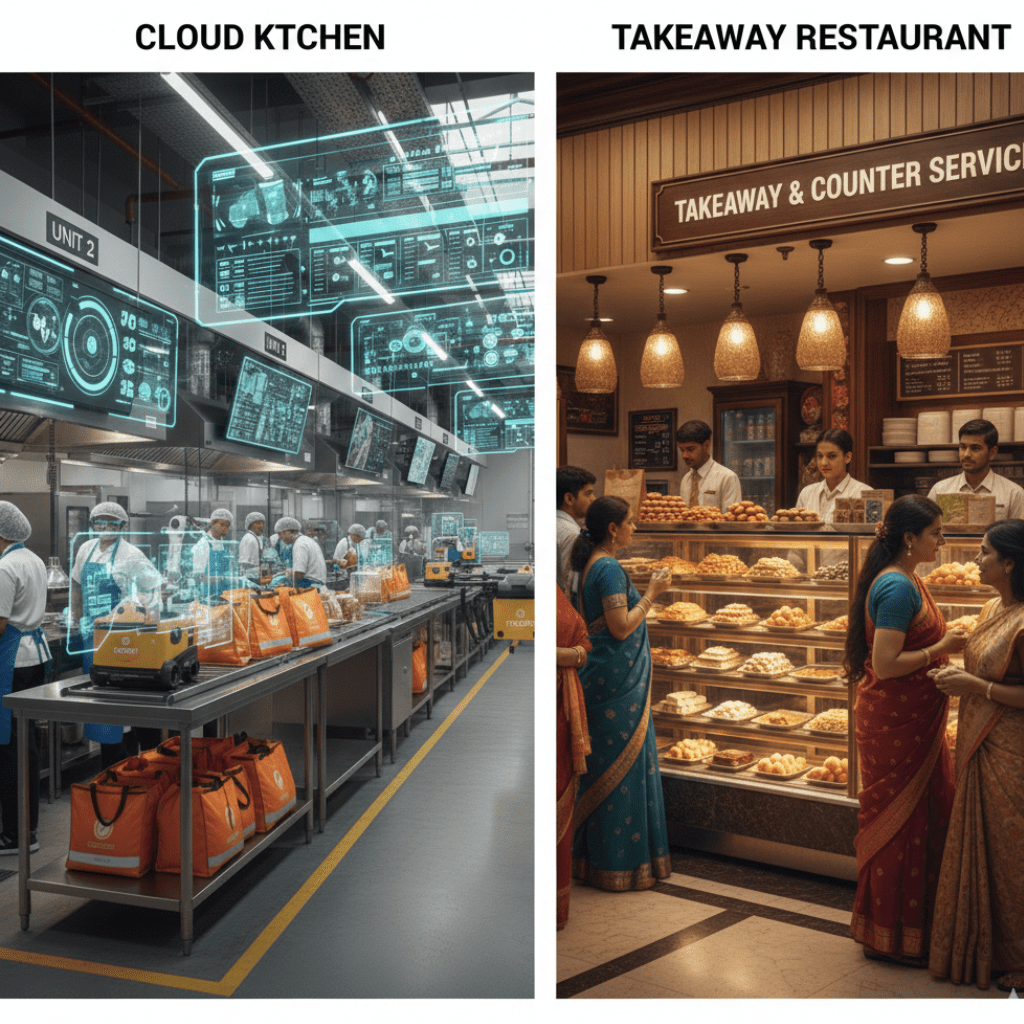
The comparison of cloud kitchen vs takeaway restaurant in India is becoming increasingly important as food entrepreneurs look for low-risk, scalable business models. While both formats operate without dine-in seating, their cost structure, operations, scalability, and long-term potential are very different. This guide compares cloud kitchens vs takeaway restaurants in India across cost, operations, scalability, risk, and profitability.
Start Here Before Choosing Cloud Kitchen or Takeaway Model
This article is part of GrowKitchen’s cloud kitchen comparison series. To understand delivery-first food businesses in depth, start with our pillar guide: Cloud Kitchen as a Service and Cloud Kitchen Business in India.
For licensing and compliance requirements applicable to both formats, always verify details on FSSAI, GST Portal, and Udyam MSME.
Cloud Kitchen vs Takeaway Restaurant: Core Difference
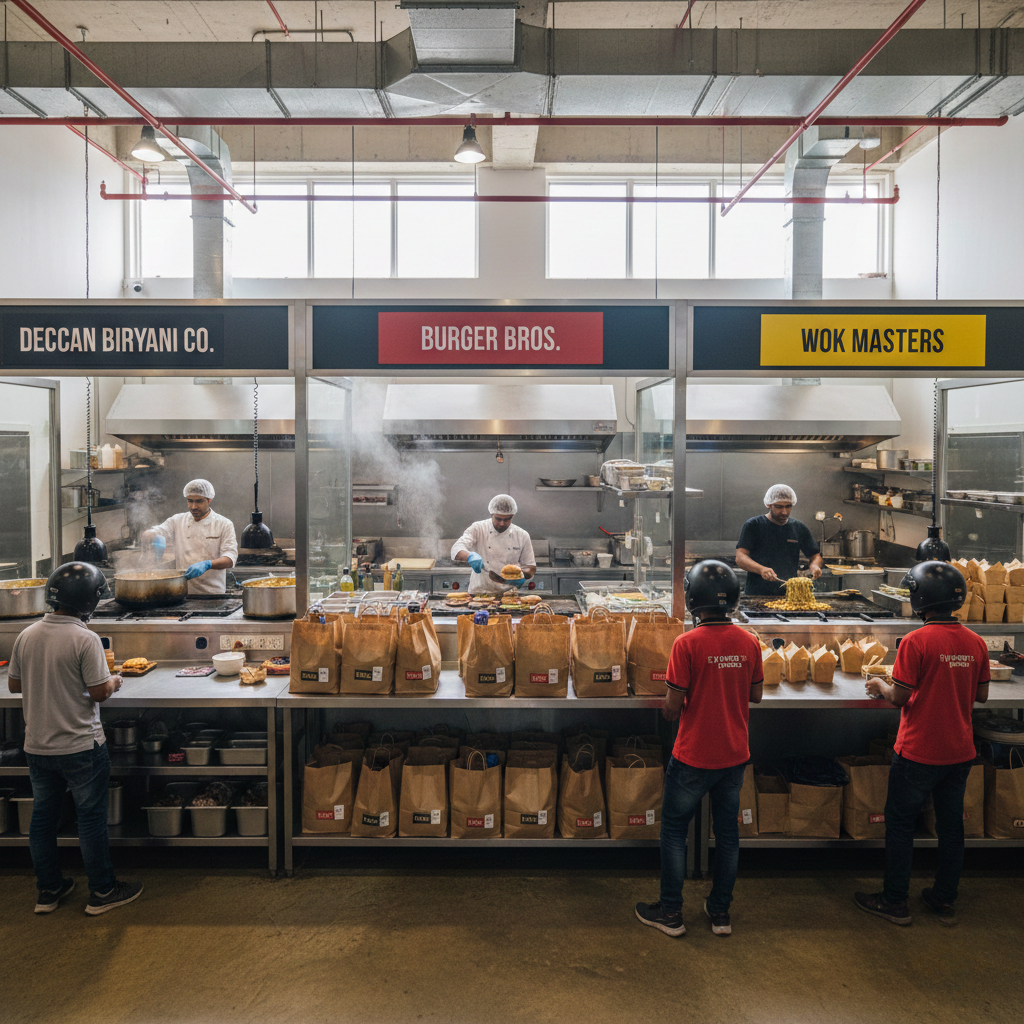
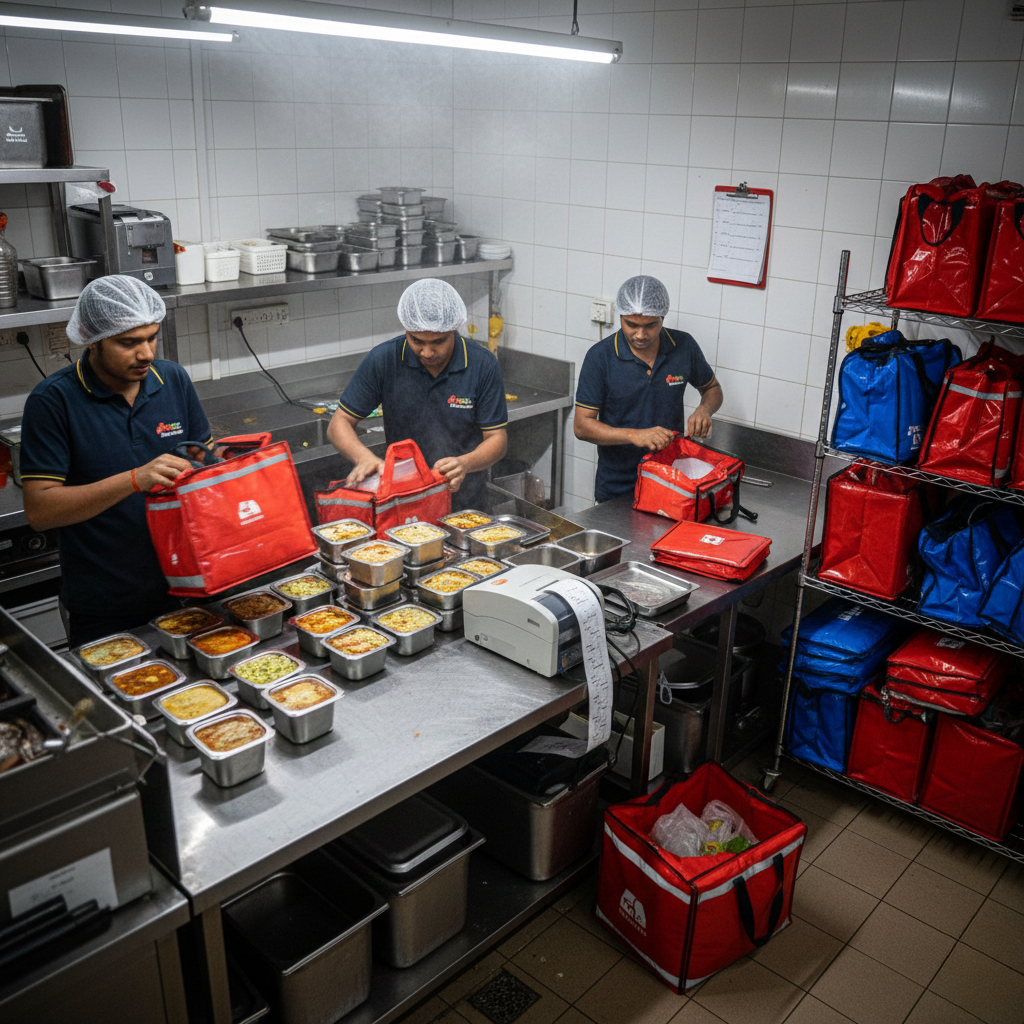
A cloud kitchen is a delivery-only food business that does not allow customer walk-ins. All orders are fulfilled through delivery platforms, websites, or direct ordering channels.
A takeaway restaurant, while also lacking dine-in seating, allows customers to walk in, place orders, and pick up food directly. This creates a hybrid model between a full-service restaurant and a pure cloud kitchen.
Startup Cost: Cloud Kitchen vs Takeaway Restaurant
Startup cost is a major deciding factor when comparing cloud kitchens and takeaway restaurants in India.
Cloud kitchens generally require lower investment because they can operate from non-prime locations and do not need customer-facing infrastructure.
Takeaway restaurants require slightly higher investment due to storefront visibility, signage, basic interiors, and counter staff.
Operations: System-Driven vs Walk-In Driven
Cloud kitchen operations are highly system-led. SOPs define every step from prep to packing to dispatch. Ratings and delivery speed directly affect visibility.
Takeaway restaurants add operational complexity due to walk-in order handling, queue management, and in-person service.
For cloud kitchens, SOP discipline is critical: Cloud Kitchen SOP Checklist.
Scalability: Cloud Kitchen vs Takeaway Restaurant
Cloud kitchens are easier to scale because they rely on repeatable systems rather than physical footfall. A successful model can be replicated across locations with minimal changes.
Takeaway restaurants scale slower because success depends on local walk-in demand, visibility, and neighbourhood dynamics.
Business Risk and Failure Factors
Cloud kitchens carry lower fixed-cost risk but face platform dependency and intense competition.
Takeaway restaurants carry higher location risk. Poor footfall or visibility can severely impact sales.
Many cloud kitchens fail due to weak systems: Why Cloud Kitchens Fail in India.
Profitability Comparison
Cloud kitchen profitability depends on contribution margins, delivery efficiency, and repeat orders. Well-run kitchens can achieve faster break-even.
Takeaway restaurants benefit from zero commission on walk-in orders but may struggle with inconsistent footfall.
Who Should Choose Cloud Kitchen vs Takeaway Restaurant?
The right choice depends on founder goals, capital, and operating style.
- Cloud kitchen suits: delivery-first brands, multi-brand operators, system-focused founders
- Takeaway suits: local brands, neighbourhood-focused food concepts, walk-in driven menus
Future Outlook: Cloud Kitchen vs Takeaway Restaurant
Cloud kitchens will continue to dominate high-density delivery markets, while takeaway restaurants will remain relevant in strong neighbourhood clusters.
Hybrid formats combining takeaway counters with delivery-first kitchens may become more common.
Final Verdict: Cloud Kitchen vs Takeaway Restaurant
There is no one-size-fits-all answer in the cloud kitchen vs takeaway restaurant comparison.
Cloud kitchens offer scalability and system efficiency, while takeaway restaurants offer local presence and commission-free walk-in sales. The right model depends on execution strength and long-term vision.
FAQs: Cloud Kitchen vs Takeaway Restaurant in India
Is a cloud kitchen better than a takeaway restaurant?
Cloud kitchens suit delivery-first businesses, while takeaway restaurants suit walk-in driven locations.
Which model has lower startup cost?
Cloud kitchens generally require lower startup investment.
Can a takeaway restaurant run delivery brands?
Yes. Many takeaway outlets also operate cloud kitchen brands.
Which model is easier to scale?
Cloud kitchens are easier to scale due to system-led replication.
- Cloud Kitchen Business in India
- How to Start a Cloud Kitchen
- Cloud Kitchen SOP Checklist
- Why Cloud Kitchens Fail