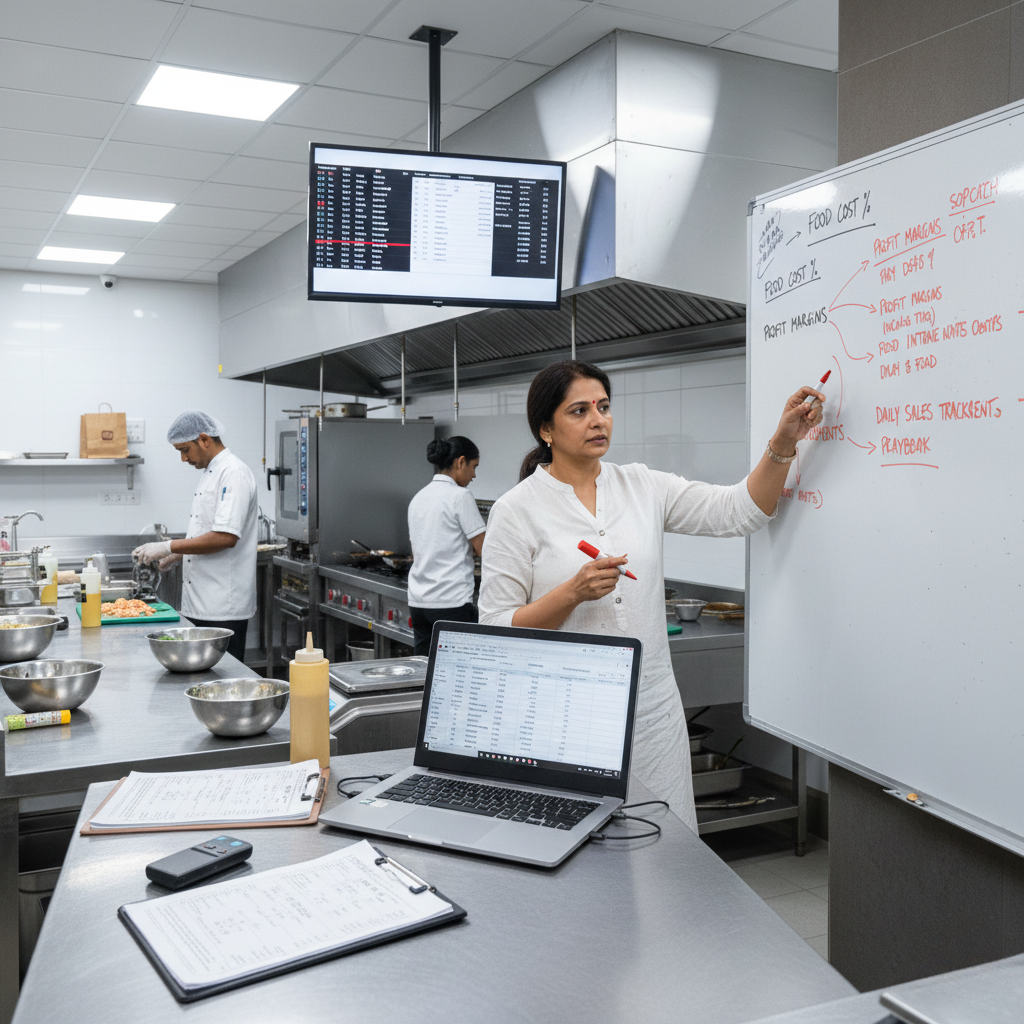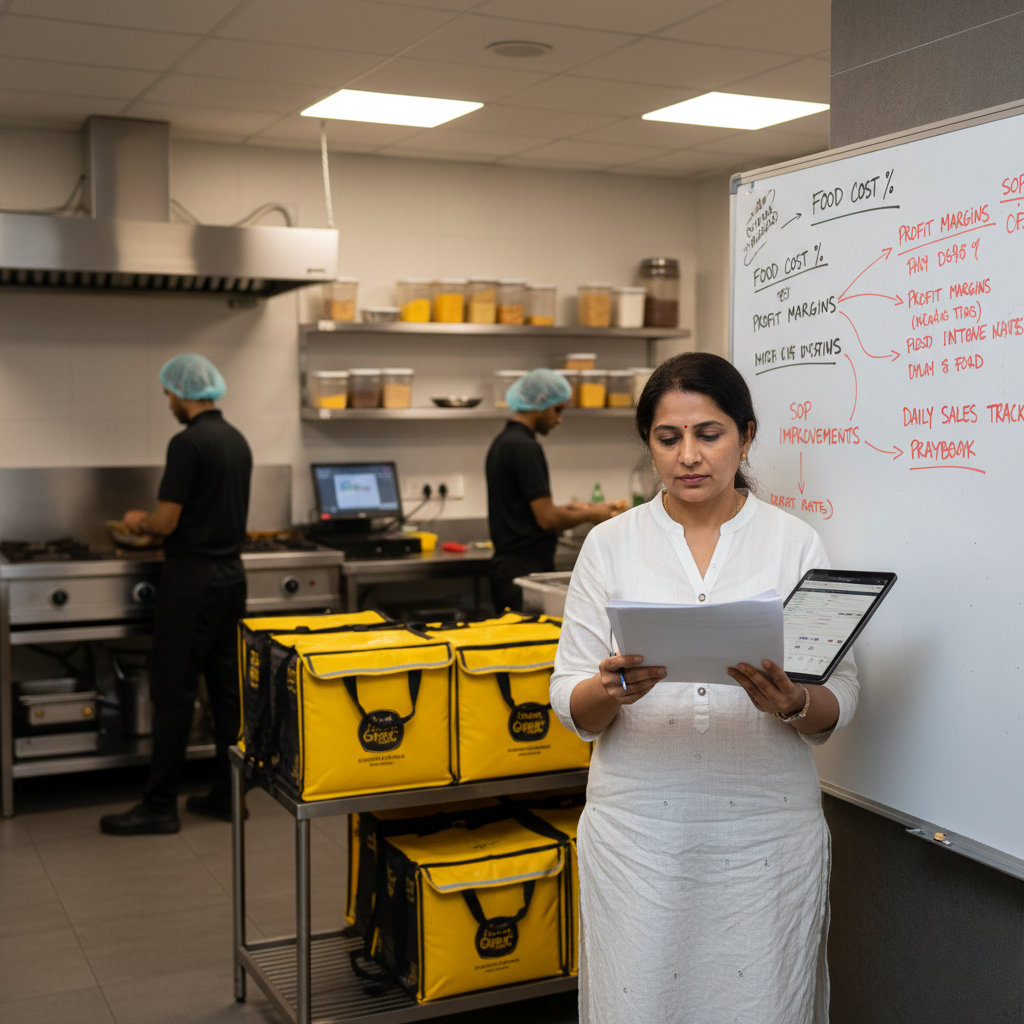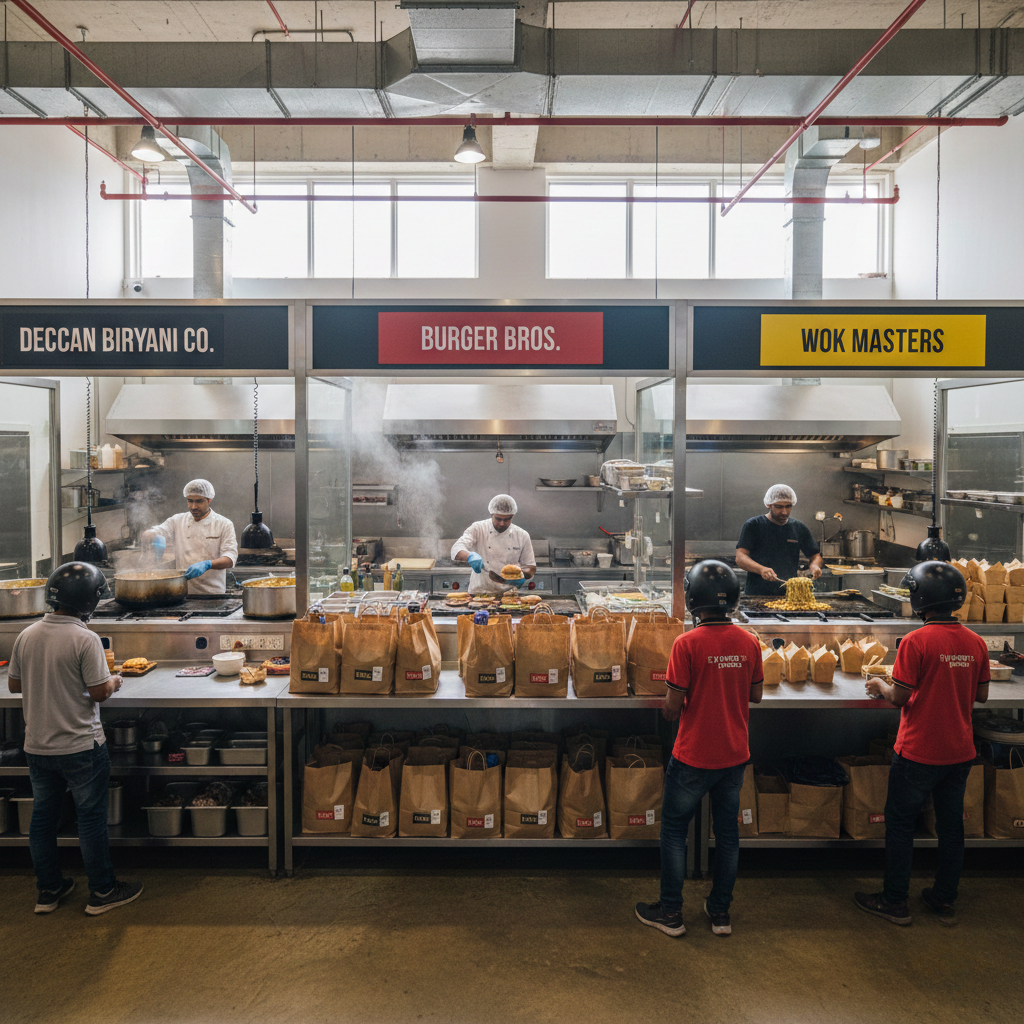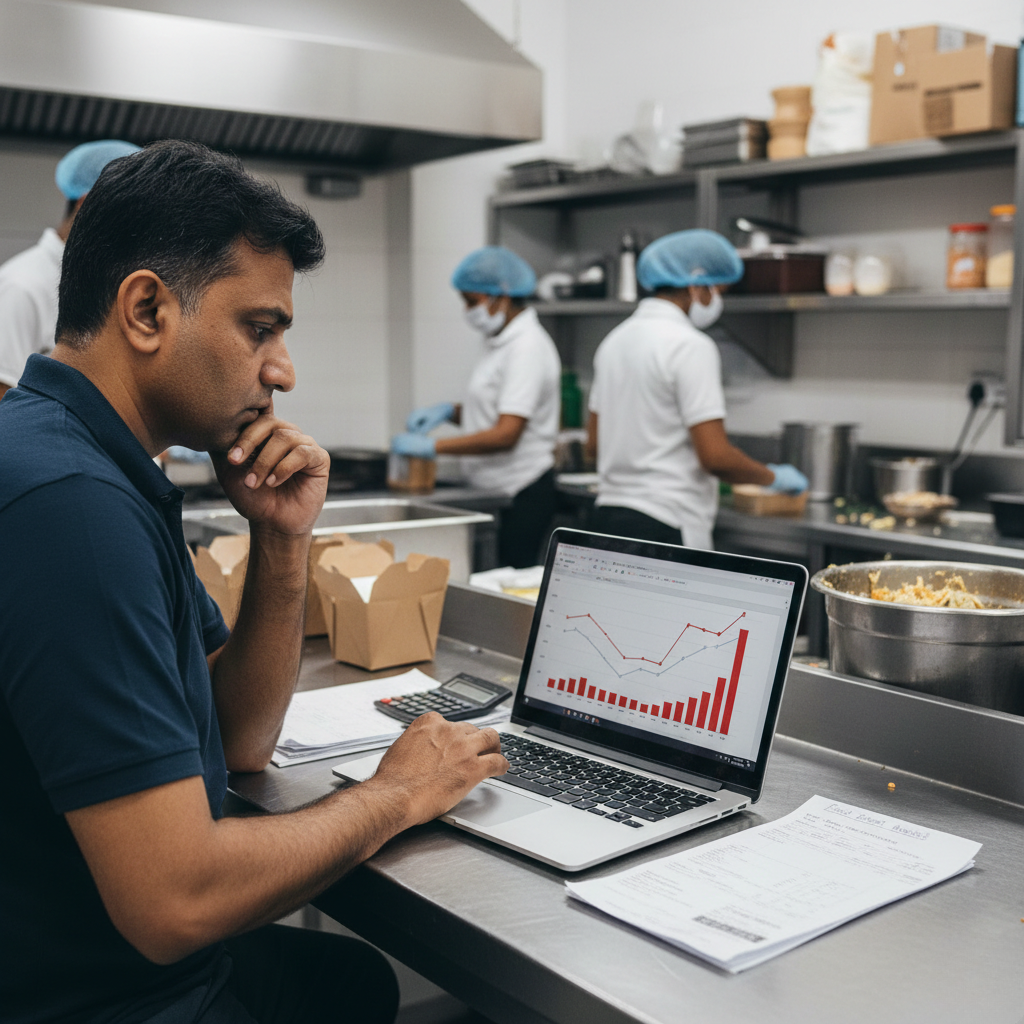
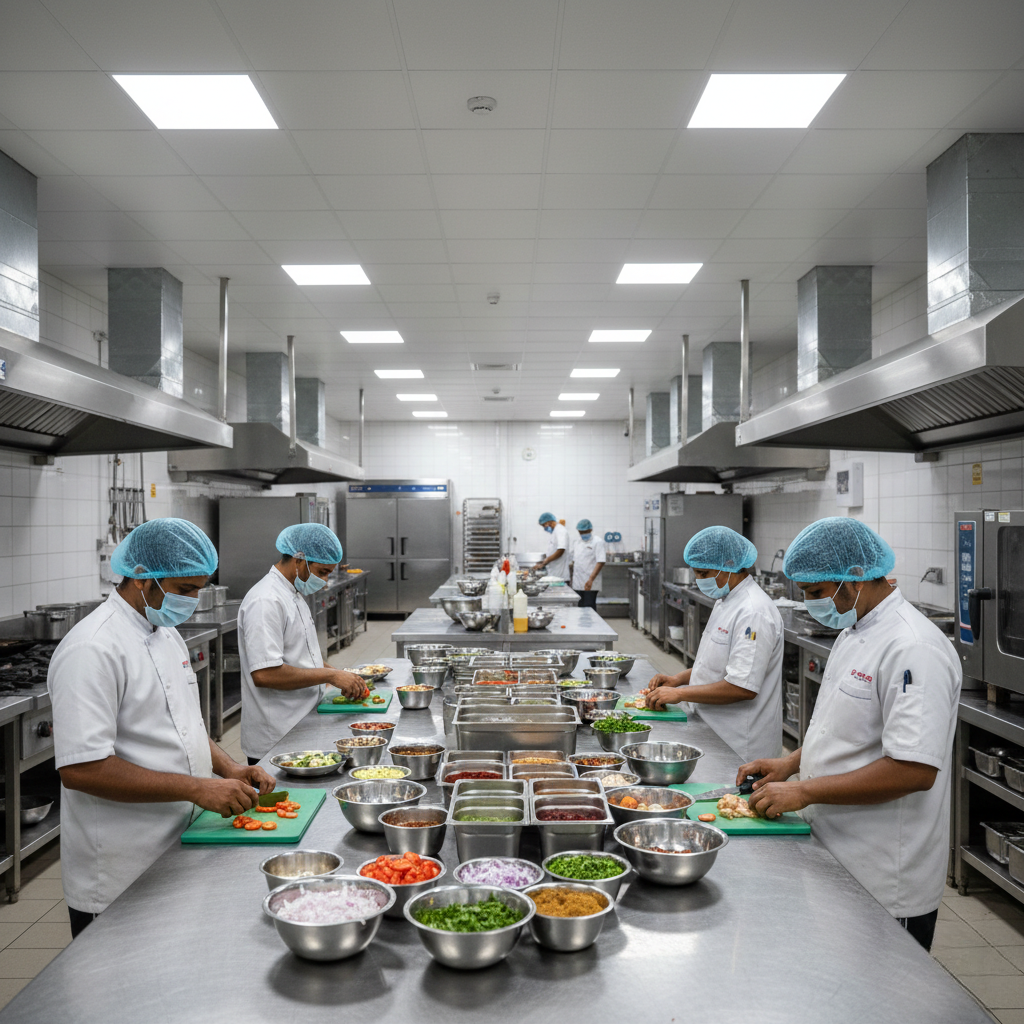
Cloud Kitchen Unit Economics Explained Through CKaaS is not a “more orders = more profit” idea or a “marketing will fix margins” belief. It is a contribution margin + leakage control + repeatability problem. Most cloud kitchens don’t lose money because demand is absent. They lose money because every order carries silent costs: commissions, packaging, food cost drift, discount burn, refunds, cancellations, late dispatch penalties, and wasted labor minutes. CKaaS becomes powerful when it converts unit economics from guesswork into a controlled system: measurable portions, engineered menu structure, purchasing discipline, dispatch gates, and weekly feedback loops. This guide explains cloud kitchen unit economics in India through the CKaaS lens so founders can see profit clearly, stop leakage, and scale with control using systems, not hope.
Cloud Kitchen Unit Economics Explained: Why “Revenue” Is a Loud Metric and “Profit” Is a Quiet One
Most cloud kitchen founders track revenue daily. “We did ₹9,800 today.” “We hit ₹2.4L this month.” “Orders are up.”
But revenue is not the truth. Revenue is the headline. Unit economics is the balance sheet behind the headline. A kitchen can grow revenue and still bleed cash if contribution margin is weak.
The reason profit stays unclear is simple: cloud kitchens have too many silent leaks. A ₹200 refund here. A missing add-on there. A stock-out cancellation. A late dispatch penalty. A portion drift that raises food cost by 3–6%. These are not dramatic bills. They are quiet margin killers.
CKaaS matters because it can turn these leaks into measurable controls. If you want the profitability lens first, start with Cloud Kitchen Profitability Consultant in India and map recurring leaks using Common Operational Mistakes in Cloud Kitchens.
What Unit Economics Actually Means in a Cloud Kitchen (And Why It Matters More Than Monthly P&L)
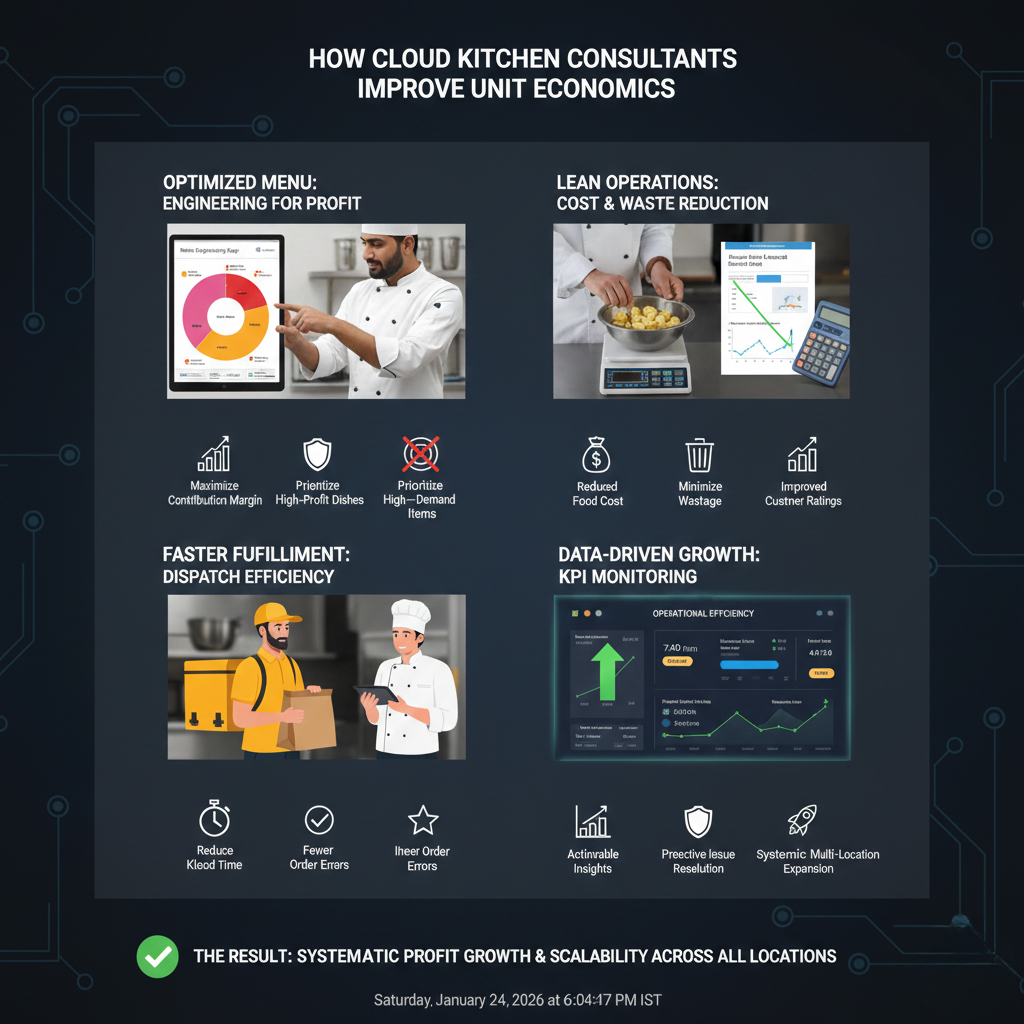
Unit economics is the profit logic of a single unit. In cloud kitchens, the “unit” is a single order. If you can’t win at the order level, you can’t win at the month level.
A month can look profitable because payouts come in batches. But unit economics reveals the truth immediately: every order either adds profit or adds stress.
The most important metric is not revenue. It is contribution margin per order. Contribution margin is what remains after variable costs. It tells you whether more orders help you or hurt you.
CKaaS helps when it stabilizes the variables that distort contribution margin: food cost drift, waste, refunds, late dispatch, and staff inefficiency. But CKaaS also adds a fee or revenue share. That means your unit economics must be strong enough to carry it.
The Core Cloud Kitchen Unit Economics Formula (CKaaS Lens)
Here is the simplest truth of cloud kitchen profitability: profit is decided per order. Whether you operate independently or via CKaaS, the equation stays the same.
Order Value
minus Aggregator commission & charges
minus CKaaS fee / revenue share
minus Packaging cost
minus Food cost (COGS)
minus Discount burn
minus Refund/penalty leakage
equals Contribution Margin.
Most founders treat this as theory. But in reality, every term is a lever. CKaaS is suitable when it improves your ability to control these levers, not when it only “runs the kitchen.”
If you want the platform cost layer in depth, read Aggregator Commission Impact in India. For margin destruction via refunds and cancellations, use Refunds and Cancellations Impact on Cloud Kitchen Profitability.
The 12 Unit Economics Levers CKaaS Can Improve (If the System Is Real)
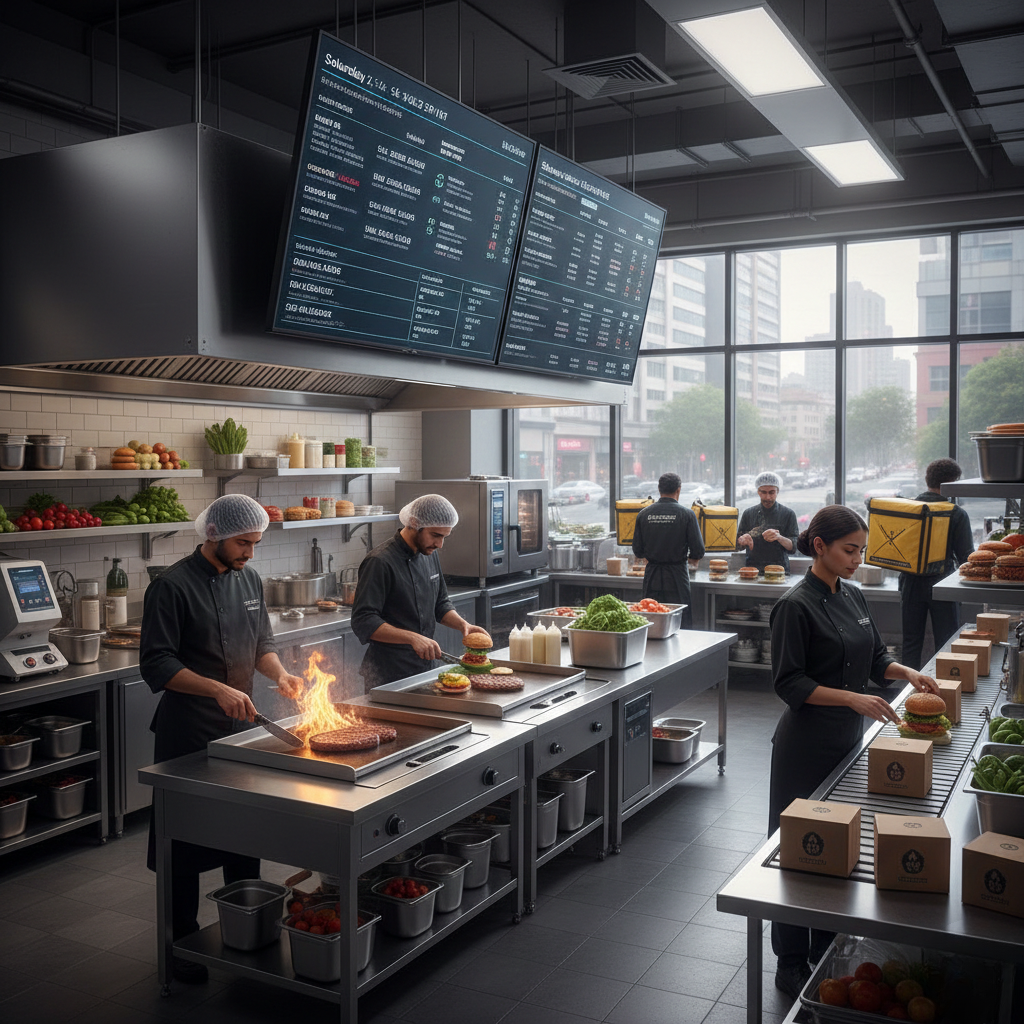
CKaaS is not magic. It is a framework that can tighten execution. When execution tightens, unit economics improves. Below are the unit economics levers CKaaS can improve when implemented correctly.
1) Portion control (direct impact on food cost). Portion drift is the most common silent leak. A 10g extra protein portion across 1,000 orders becomes a major monthly loss. CKaaS must enforce measurable portion tools and recipe cards.
2) Standardized prep (reduces waste). Without prep planning, you over-prep or under-prep. Over-prep creates waste. Under-prep creates cancellations and late orders.
3) Batch yields (reduces hidden COGS). Many kitchens measure ingredients but ignore yield loss. Example: cutting loss, cooking shrinkage, gravy reduction. System kitchens track yields so costing stays real.
4) Packaging optimization (controls delivery loss). Packaging is not “just a cost.” It is a protection system. Bad packaging increases refunds, ratings drops, and reorder loss.
5) Dispatch gates (reduces wrong items and add-on leakage). Missing add-ons are paid leakage. Wrong items are refunds plus remakes. Implement a dispatch gate using Cloud Kitchen Dispatch SOP.
6) Inventory discipline (reduces shrinkage and emergency buying). Emergency buying is expensive. Shrinkage is invisible. CKaaS must build routines for daily inventory and reorder timing.
7) Vendor standardization (stabilizes cost and quality). Inconsistent vendor rates create unpredictable margins. System kitchens define RM specs and approved brands.
8) Menu architecture (reduces complexity cost). Too many SKUs increases error probability and labor minutes per order. CKaaS should push best-seller focus and execution simplicity.
9) Labor minutes per order (hidden cost). Founders track salaries monthly, not minutes. But every extra minute per order is a cost. System kitchens reduce unnecessary steps.
10) Refund and cancellation control (protects distribution and margin). Refunds don’t only cost money. They reduce visibility. Lower visibility forces discounting. Use Refunds and Cancellations Impact to map how leakage multiplies.
11) Discount discipline (protects contribution margin). Discounts must be planned at the SKU level. Not random “15% off to get orders.” If you are discounting to survive, map spend logic via Marketing Spend vs ROI in Cloud Kitchens.
12) Weekly feedback loops (prevents repeat leakage). Refund reasons, rating comments, late dispatch counts are operational data. CKaaS must convert data into SOP upgrades weekly. This discipline is explained in How Process Discipline Improves EBITDA.
For the wider leak map, reference Common Operational Mistakes in Cloud Kitchens.
Swiggy/Zomato Reality: Unit Economics Breaks First Through Reliability Signals
Unit economics doesn’t collapse only from food cost. It collapses from reliability signals that force discounting. Late dispatch, cancellations, and refunds reduce visibility. Reduced visibility reduces orders. Lower orders increase fixed cost burden. Then founders discount. Discounts destroy contribution margin.
This is why platforms are not neutral. They punish operational instability. That makes unit economics an execution problem, not a finance problem.
External policy context: Swiggy Refund Policy and Zomato Online Ordering Terms.
The takeaway: stabilize operations to stabilize distribution. Stabilize distribution to stabilize pricing. Stabilize pricing to stabilize contribution margin.
The Fastest Unit Economics Fix: Prep Planning + Packing Discipline + Dispatch Gates
If your unit economics is weak, do not start by changing ads. Start by fixing execution. The fastest margin wins come from reducing avoidable leakage: wrong items, missing add-ons, late dispatch, and stock-out cancellations.
These are operational failures, not market failures. Install dispatch predictability using Cloud Kitchen Dispatch SOP and reduce repeat failures by mapping station-wise errors using Common Operational Mistakes in Cloud Kitchens.
Every avoided refund is margin saved. Every avoided cancellation is distribution protected. Every avoided delay is rating protected. Ratings protection is pricing power.
Why Unit Economics Needs Role-Based Operations (Not “More Helpers”)
Most founders try to improve profitability by “hustling harder.” That often increases output but not control. Control comes from role ownership and gates.
Here is how role-based operations protect unit economics:
Prep role:
protects stock availability and prevents last-minute chaos.
Cook role:
protects portion control and prevents food cost drift.
Pack role:
protects accuracy, add-ons, and presentation quality.
Dispatch role:
protects late dispatch counts and rider handover speed.
Manager role:
protects the feedback loop: refunds, cancellations, ratings, and SOP upgrades.
Learn the framework via Role-Based Kitchen Operations Explained.
How to Audit Your Unit Economics Before Choosing CKaaS (A Practical 7 to 30 Day Sequence)
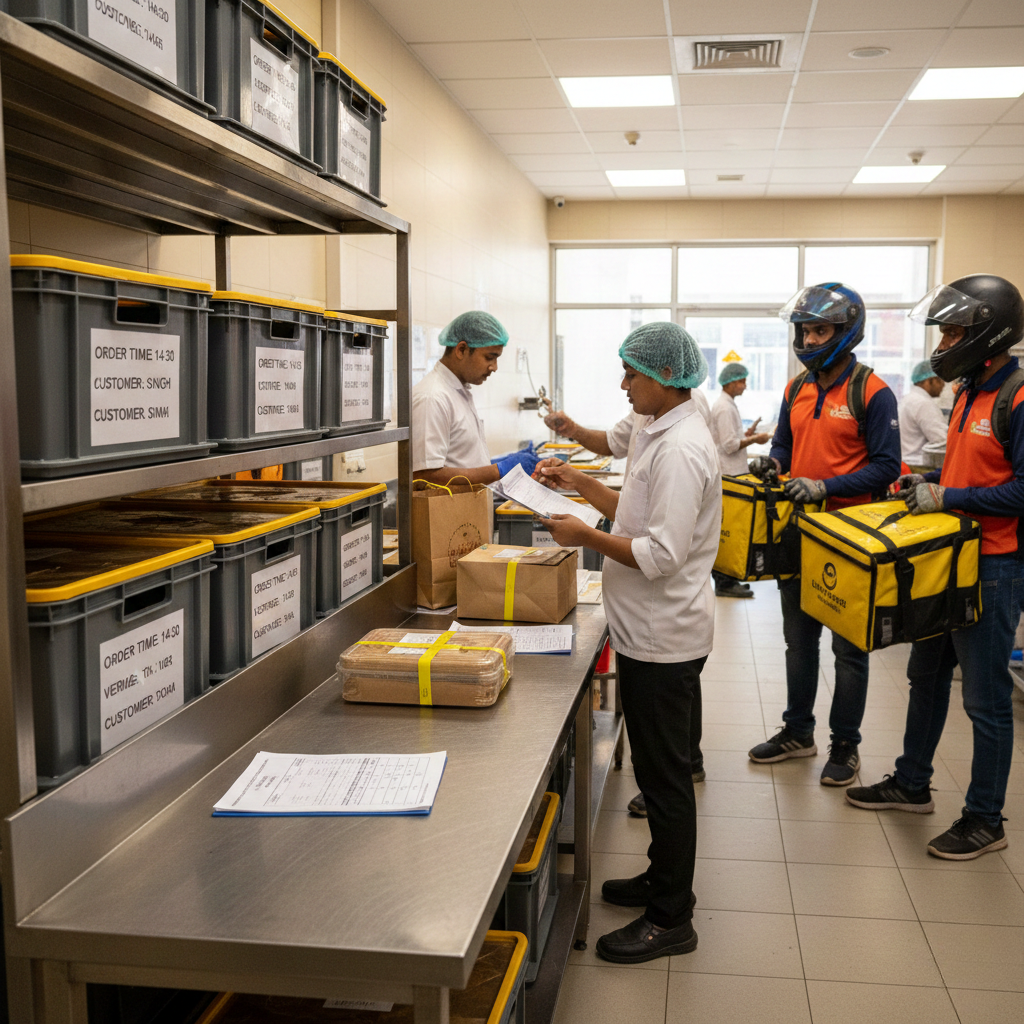
If you are considering CKaaS for unit economics improvement, do not start with “monthly fee negotiation.” Start with a unit economics audit that tells you whether the model can work.
Step 1 (Day 1–2): Calculate contribution margin for top 10 SKUs. If you can’t see SKU-level margin, you can’t make pricing decisions.
Step 2 (Day 1–3): Track refunds, cancellations, and discount burn SKU-wise. Identify the items that create most leakage.
Step 3 (Day 2–5): Install packing checklist + dispatch scan. This reduces wrong items and missing add-ons immediately. Implement via Cloud Kitchen Dispatch SOP.
Step 4 (Day 3–7): Freeze menu complexity. Kill near-duplicates. Focus on bestsellers. Complexity inflates labor minutes and error probability.
Step 5 (Week 2): Standardize portions with measurable tools. Portion control is the biggest direct lever on food cost.
Step 6 (Week 2): Stabilize procurement and RM specs. Stop reactive buying and lock approved vendors.
Step 7 (Week 3–4): Run weekly review loops and SOP upgrades. Use data: refunds, cancellations, ratings, late dispatch. Update SOPs. Retrain.
If you want the discipline lens, use How Process Discipline Improves EBITDA.
External process references (useful for standardisation thinking): Standardized Work (Lean lexicon), ISO 22000 overview, and FSSAI Hygiene Requirements (Schedule 4 reference).
Final Takeaway: Unit Economics Becomes Clear When Execution Becomes Controlled
Cloud kitchen profitability is not hidden. It is simply unmeasured. Unit economics becomes visible when you track contribution margin and control leakage.
CKaaS can accelerate this by installing: measurable portions, engineered menu architecture, procurement routines, packing checklists, dispatch gates, and weekly feedback loops. But only if the system is real.
Operating frameworks from GrowKitchen, and operating partner brands like Fruut and GreenSalad are built to convert “busy kitchens” into “profitable kitchen systems.”
FAQs: Cloud Kitchen Unit Economics Explained Through CKaaS
What is the most important unit economics metric for cloud kitchens?
Contribution margin per order. It tells you if more orders help you or hurt you.
Does CKaaS automatically improve unit economics?
No. CKaaS improves unit economics only when it reduces leakage like portion drift, refunds, cancellations, and late dispatch.
Why do many kitchens feel profitable on revenue but lose money?
Because silent costs (commissions, packaging, discounts, refunds, waste) destroy contribution margin quietly.
What is the fastest unit economics improvement action?
Packing checklist + dispatch gate + bestsellers portion SOPs. These reduce refund leakage quickly.
- Cloud Kitchen Profitability Consultant in India
- Common Operational Mistakes in Cloud Kitchens
- Cloud Kitchen Dispatch SOP
- Role-Based Kitchen Operations Explained
- Refunds and Cancellations Impact on Cloud Kitchen Profitability
- Aggregator Commission Impact in India
- Marketing Spend vs ROI in Cloud Kitchens
- How Process Discipline Improves EBITDA
- Grow Kitchen on Twitter