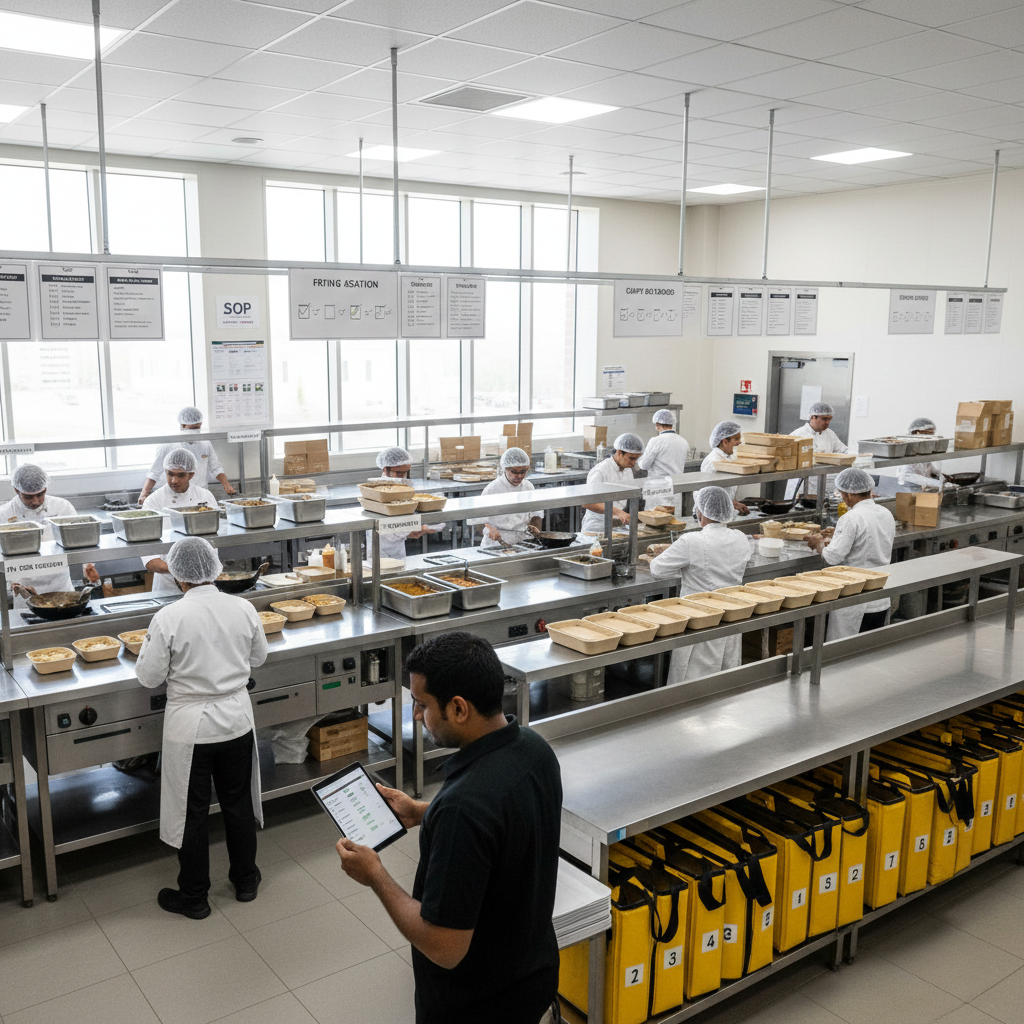
Cloud Kitchen System-Led Growth Case Study-Led Stability Case Study-This case study documents how a cloud kitchen that relied heavily on paid ads for growth transitioned into a stable, predictable operation by fixing internal systems instead of increasing marketing spend. Despite strong order inflow, profits were volatile, a common issue discussed in Why My Cloud Kitchen Profits Are Declining.
Over a ninety-day period, the kitchen reduced promotional dependency while maintaining order volume by improving execution, cost control, and operational discipline. No pricing changes were made, no new dishes were introduced, and discounts were reduced organically-similar to recoveries seen when Fixing Cloud Kitchen Delays, Refunds, and Complaints.
Case Background
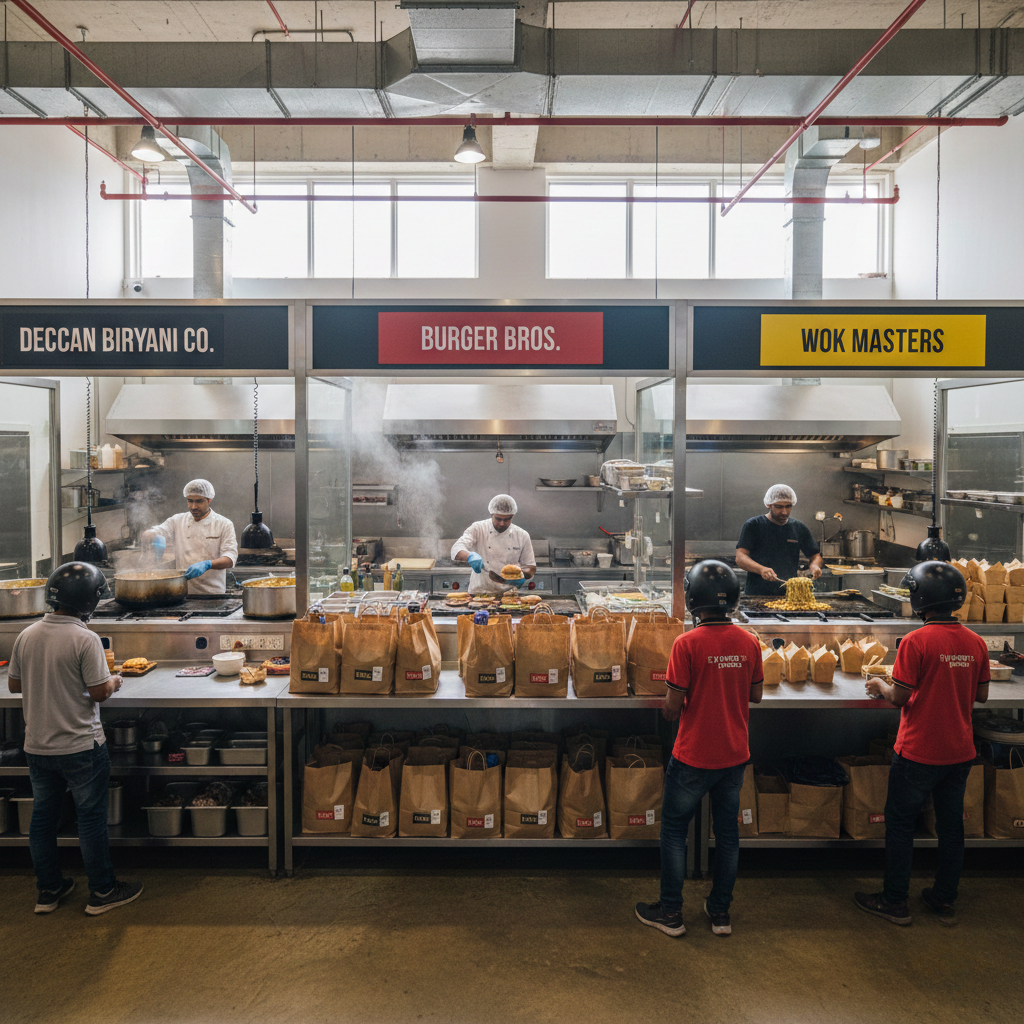
The kitchen operated two delivery-only brands from a single facility. Daily order volume averaged between two hundred and two hundred fifty orders, with a significant portion driven by platform ads.
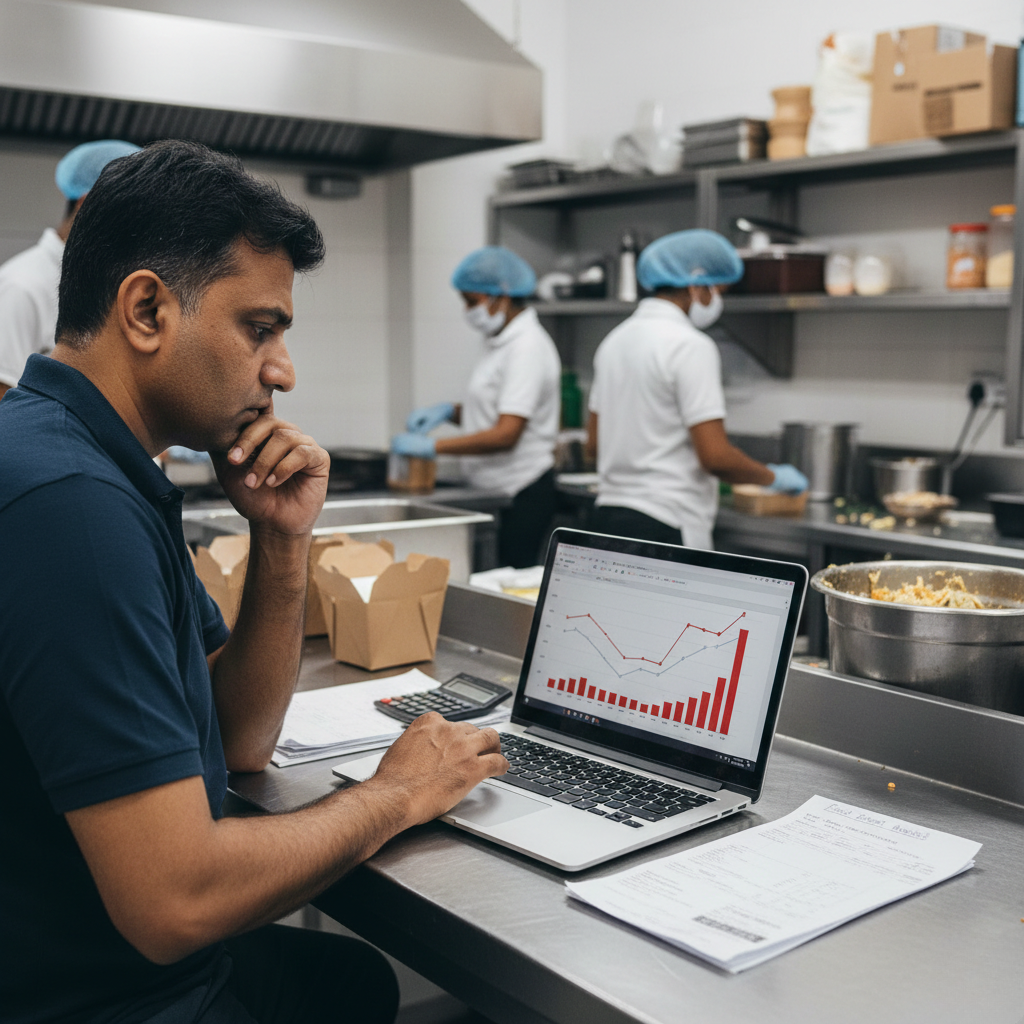
While sales numbers appeared healthy, profitability fluctuated sharply depending on ad spend. This pattern is commonly seen in kitchens that grow faster than their internal systems, as explained in How to Stabilise Profits Before Scaling.
Execution errors, refunds, food cost drift, and staff dependency worsened during high-ad periods-indicating structural weaknesses rather than demand issues, similar to scenarios described in Cloud Kitchen Without SOPs vs After SOP Implementation.
The Core Problem
The founder believed growth required continuous ad spending. When ads were paused, orders dropped; when ads increased, profits disappeared.
This cycle mirrored challenges faced when growth outpaces operations, as detailed in When Growth Is Hurting Your Cloud Kitchen Operations.
Intervention: Operational Reality Audit
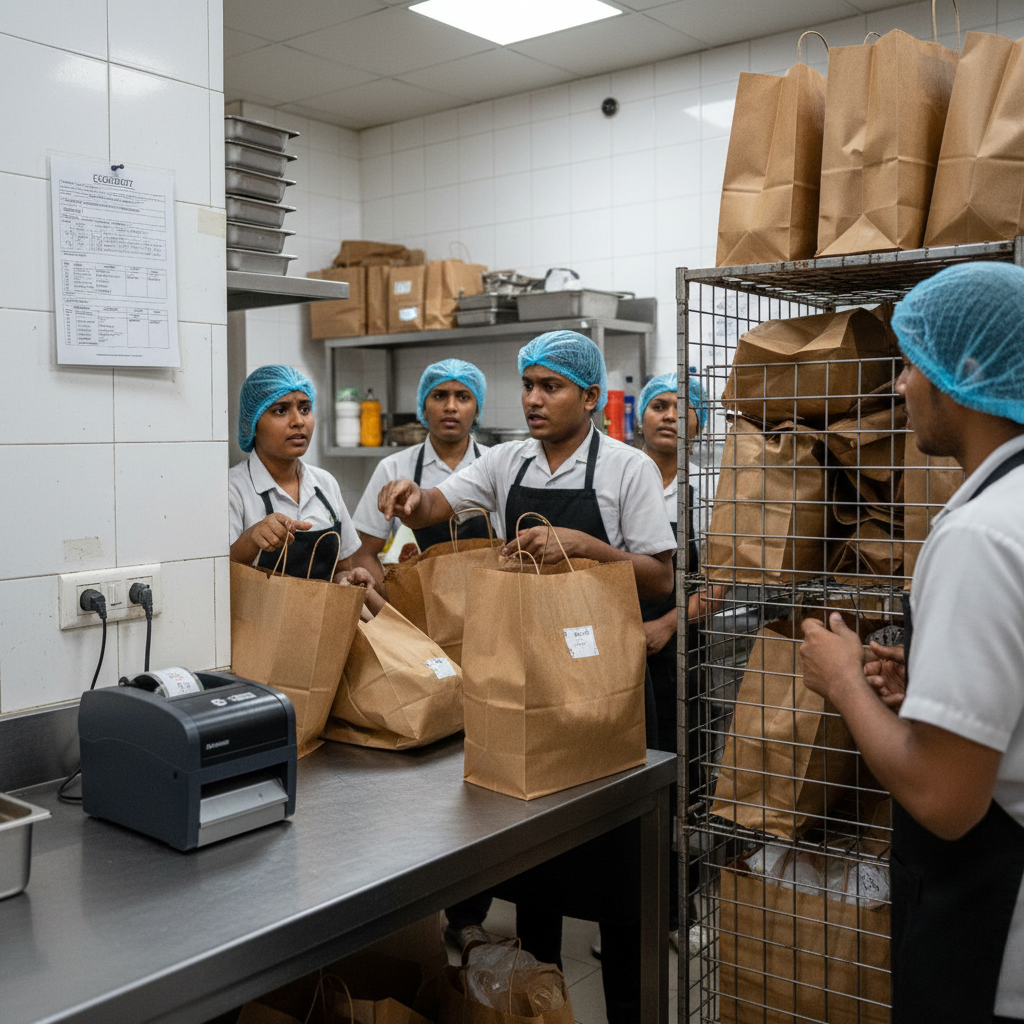
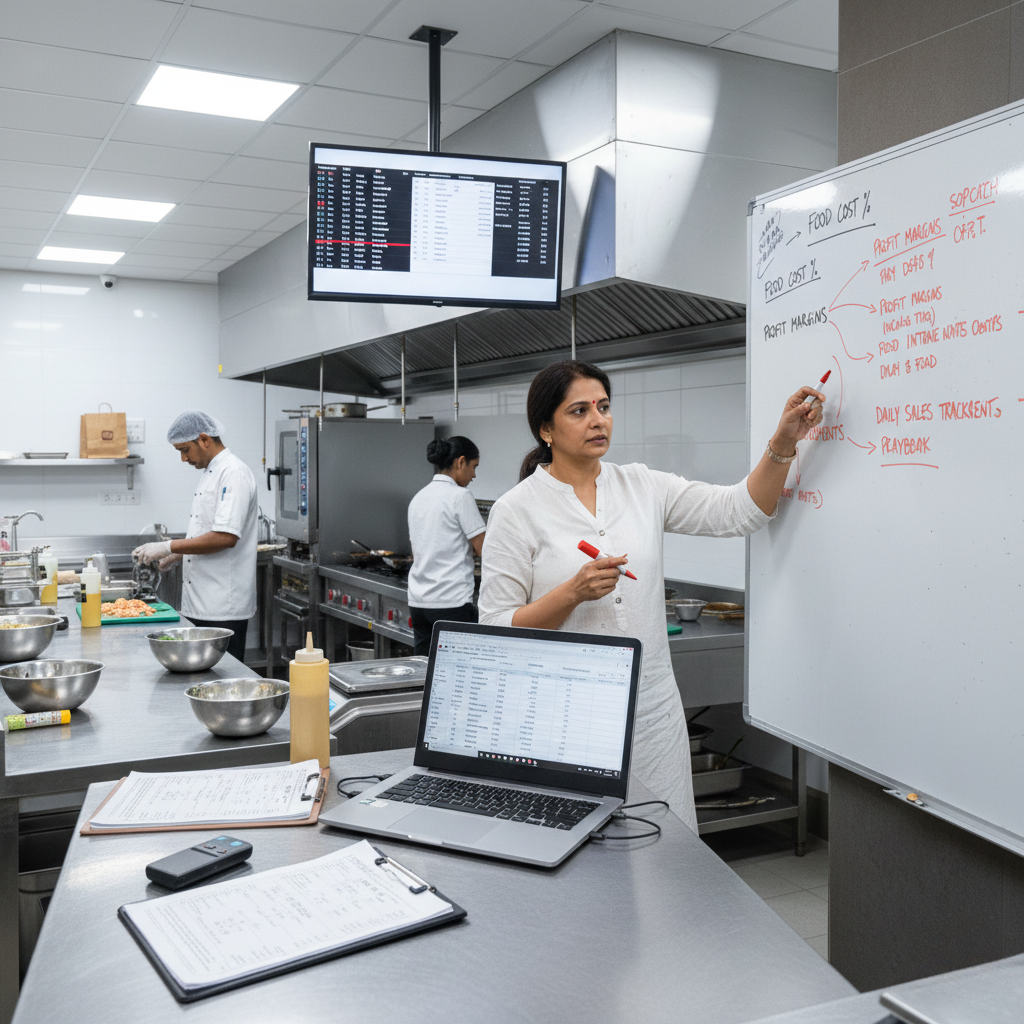
A detailed audit was conducted focusing on execution efficiency rather than marketing metrics. Each order was traced from acceptance to dispatch to identify internal loss points.
This diagnostic approach followed methods used when analysing contribution margins in cloud kitchens, revealing that ad-driven growth was amplifying inefficiencies.
The findings showed that higher volume increased wastage, refunds, and staff errors-neutralising the benefits of paid traffic.
Intervention: Identifying System Gaps
Packing inconsistencies, portion variation, inventory leakage, and shift-level confusion were found to be the main profit killers.
These issues reflected patterns seen in founder- and ad-dependent kitchens before systems are implemented, as explained in Founder-Dependent Kitchen Converted Into System-Driven Operations.
Intervention: CKaaS-Led System Build
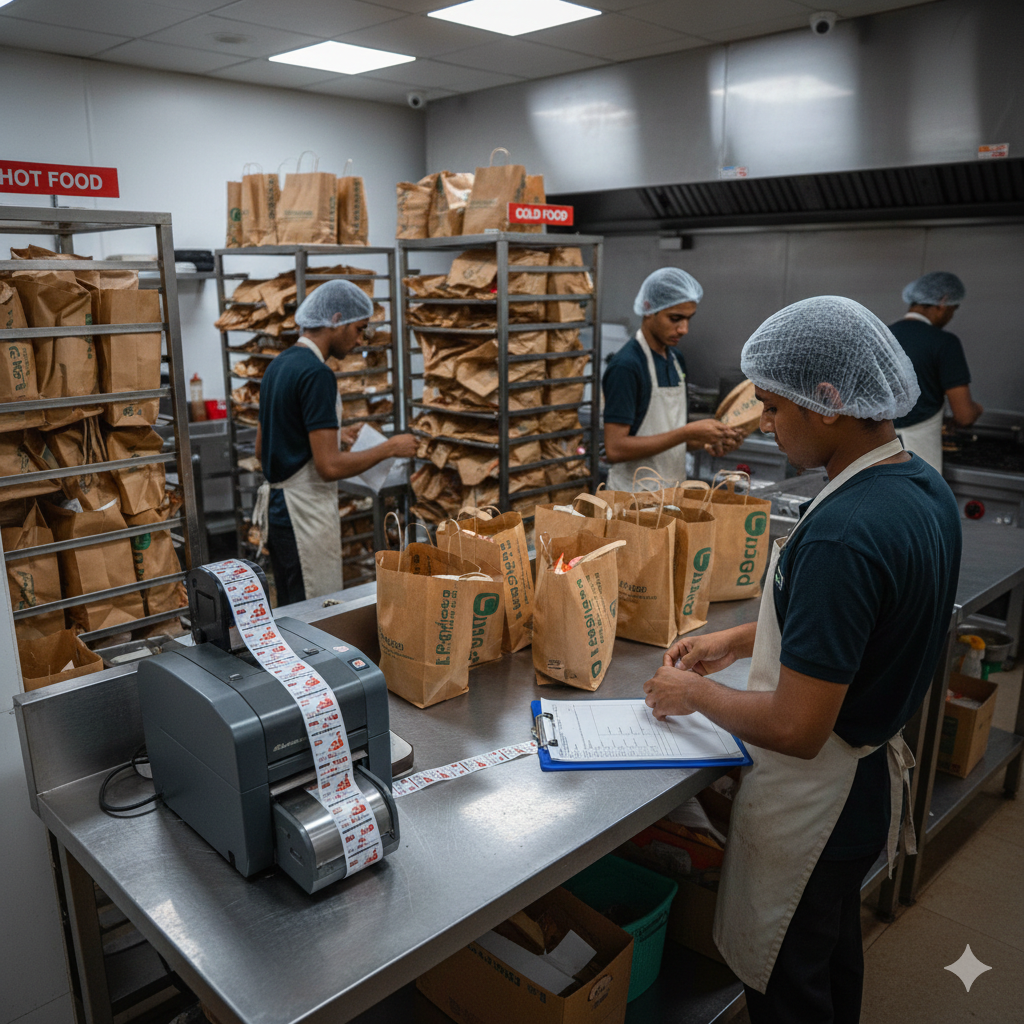
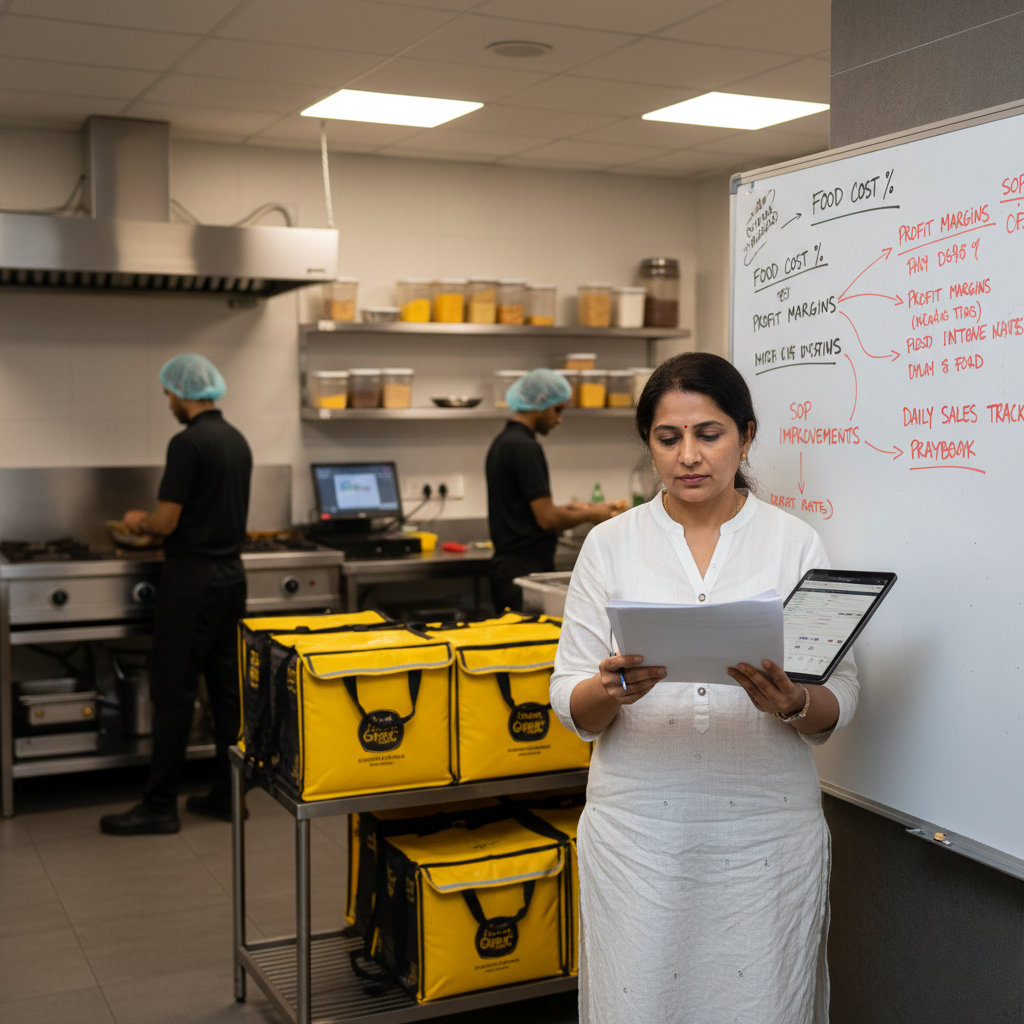
CKaaS was implemented to stabilise execution before further growth. SOPs were standardised for prep, packing, inventory control, and shift handovers.
Visual SOPs and accountability markers were introduced to reduce dependence on individual staff performance, reinforcing concepts discussed in How SOPs Improve Cloud Kitchen Profitability.
The focus shifted from “more orders” to “cleaner execution per order.”
Intervention: Shift-Level Discipline
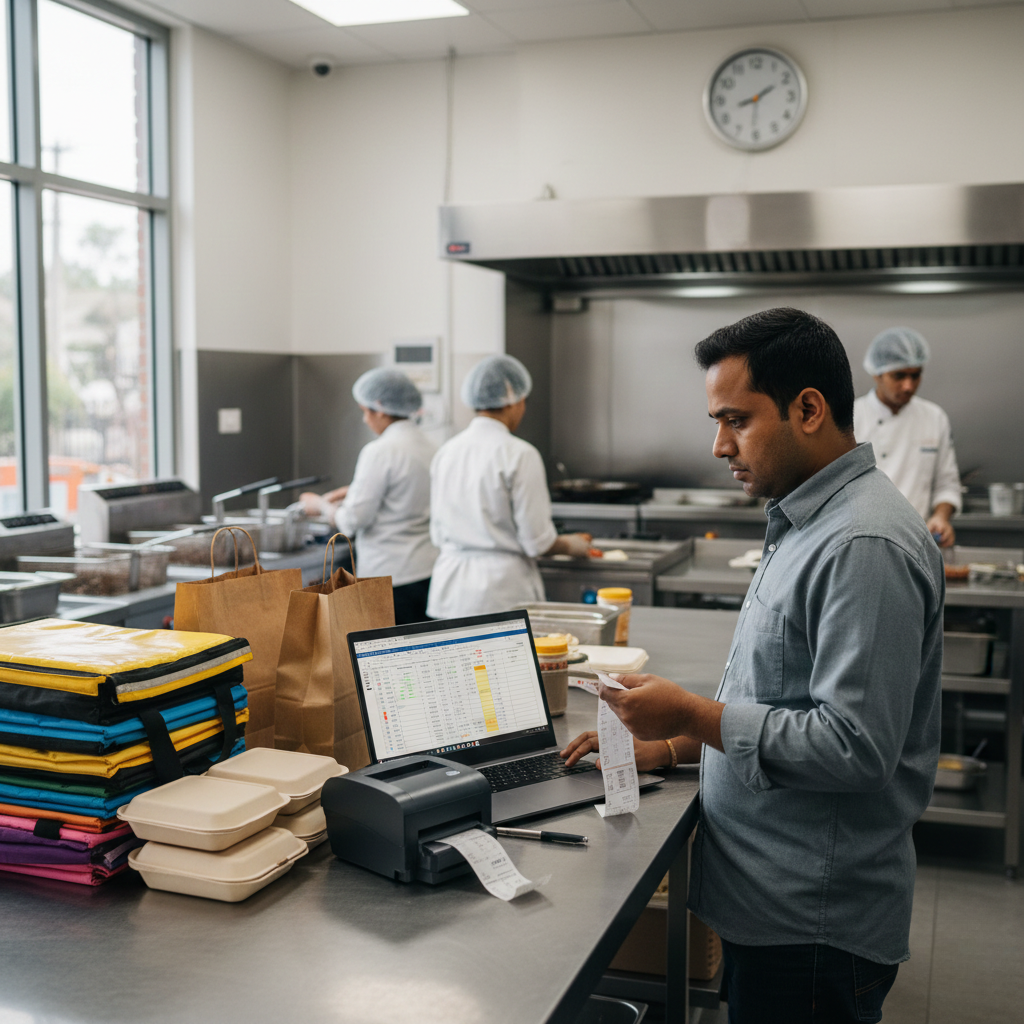
Daily shift-level reviews were introduced to reinforce SOP compliance and identify deviations early.
These practices aligned closely with frameworks outlined in Daily Shift Planning for Cloud Kitchens.
As execution stabilised, reliance on ads reduced naturally without a sharp drop in orders.
Outcome and Results
Within ninety days, ad spend was reduced significantly while maintaining consistent daily order volume. Refunds, wastage, and stress levels dropped, and margins stabilised.
The kitchen transitioned from growth powered by spending to growth supported by systems-creating predictable monthly performance instead of volatile results.
Key Case Study Takeaways
This case study proves that ads cannot compensate for weak operations. Sustainable growth comes from systems first, marketing second. CKaaS enables kitchens to grow without burning profit on inefficiencies.
Related Case Studies and Reads
Readers exploring system-led growth also read
Have Questions?
If you want to understand how to reduce ad dependency and build stable cloud kitchen systems, detailed guidance is available in the Grow Kitchen FAQs.
External References
To explore more insights on cloud kitchen systems and execution, visit