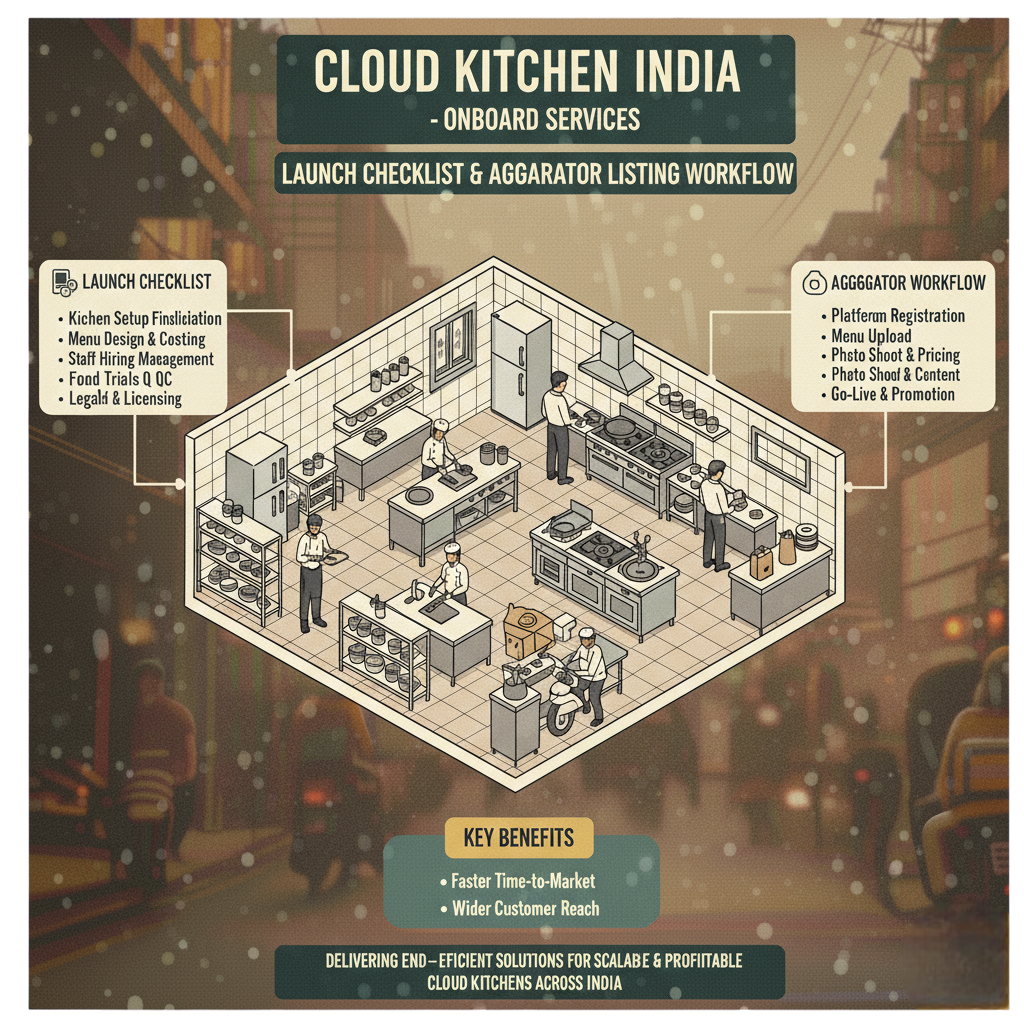
Cloud kitchen onboard services in India are the difference between launching “a kitchen” and launching a repeatable, scalable business. Most founders lose weeks (and money) because onboarding is treated like paperwork, not a launch system. This guide explains what cloud kitchen onboarding actually includes, how the process works end-to-end, what it costs, and how to go live faster on Swiggy and Zomato with clean menus, SOPs, and margin-protected unit economics.
Start Here Before Hiring Cloud Kitchen Onboard Services
This article is part of GrowKitchen’s launch systems and operational readiness series. If you want the foundational model first, read: Cloud Kitchen As A Service and learn Cloud Kitchen Business in India.
For legal compliance and onboarding readiness, verify requirements on FSSAI, GST Network, and Udyam MSME. For business entity basics, refer to MCA resources: Ministry of Corporate Affairs.
What Are Cloud Kitchen Onboard Services in India?
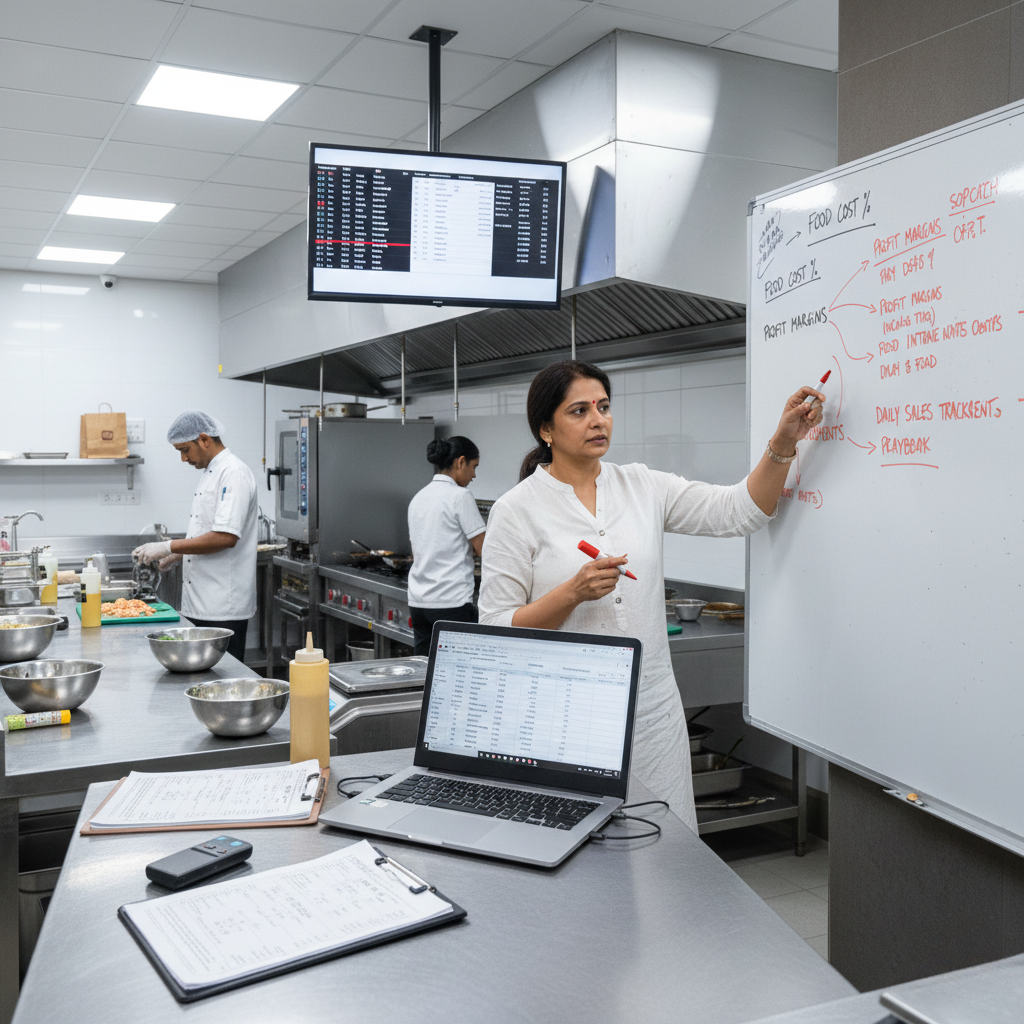
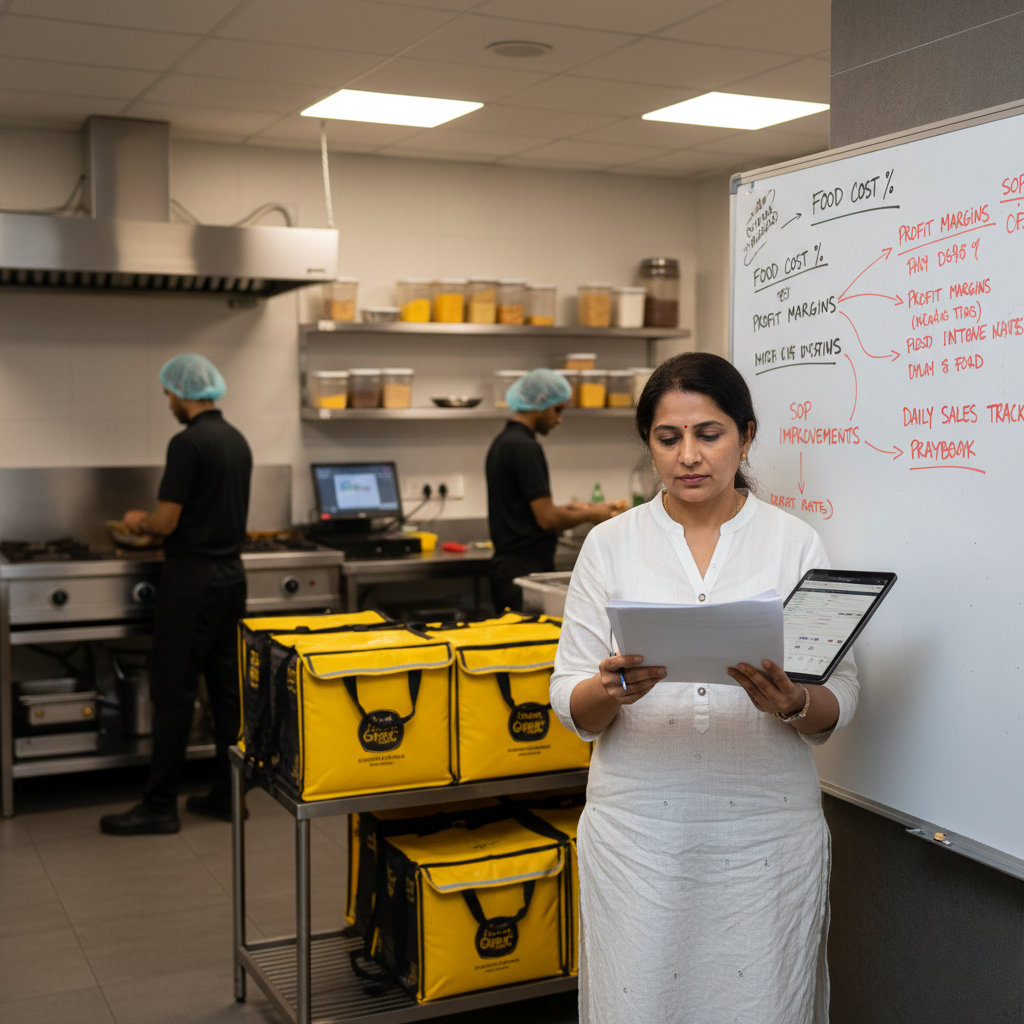
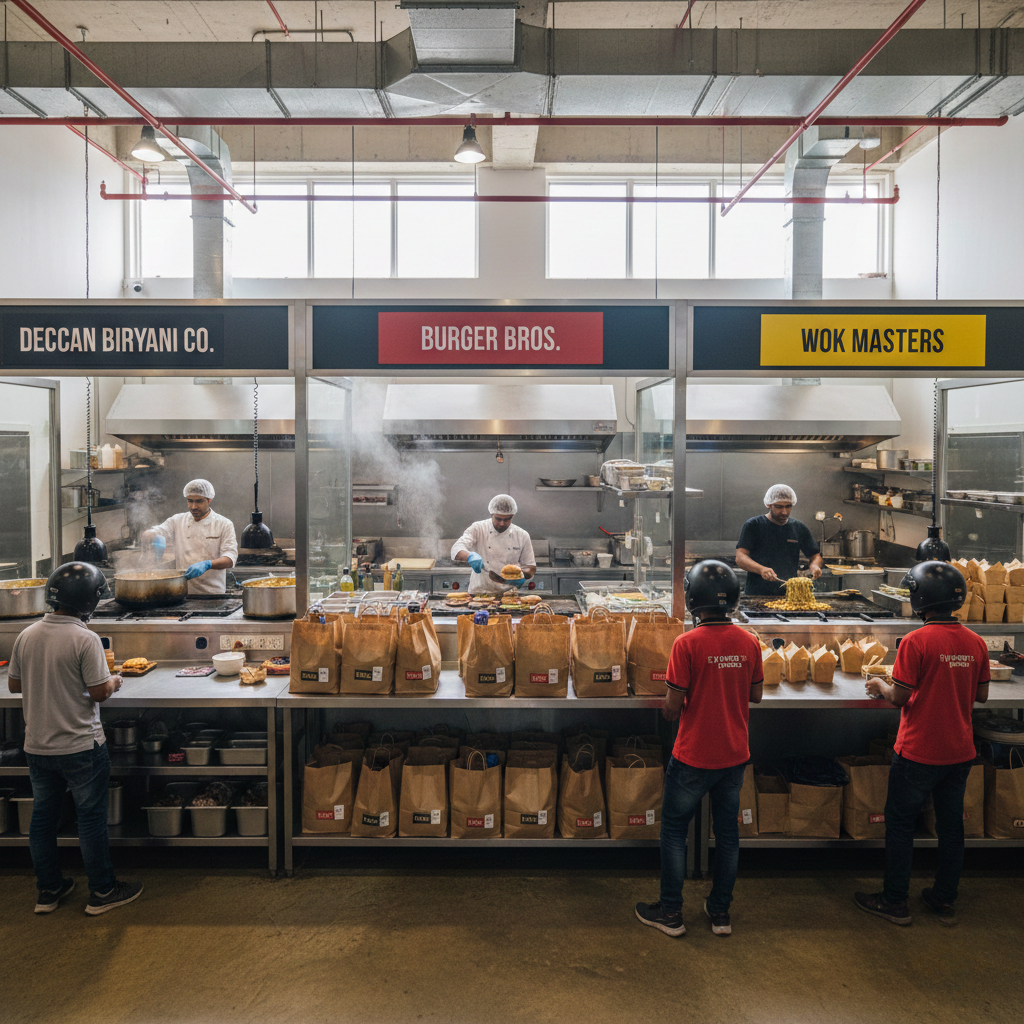
Cloud kitchen onboard services help founders launch a delivery-first kitchen with all operational, compliance, menu, and aggregator requirements completed in a structured way. This typically includes licensing readiness, kitchen setup validation, vendor onboarding, SOP implementation, menu engineering, packaging trials, and aggregator go-live support.
The goal is simple: reduce launch friction, avoid costly mistakes, and ensure your first 30 days don’t become a ratings and refund disaster.
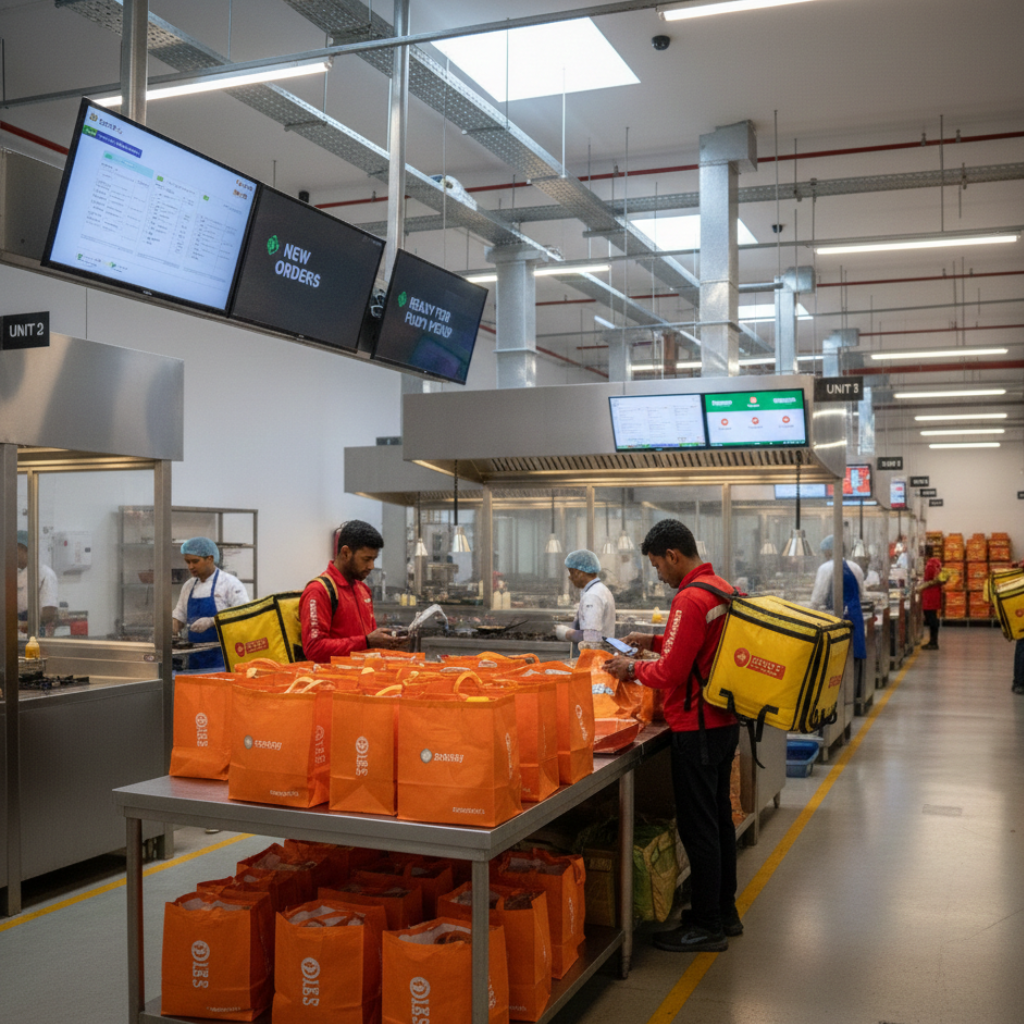
Why Onboarding Matters More Than the Kitchen Itself
Many kitchens fail even with good food because onboarding is rushed. The most common early failures happen due to: inconsistent taste, delayed dispatch, wrong packaging, weak menu pricing, and sloppy aggregator setup.
If you’re serious about a predictable launch, you need onboarding that covers operations, not just documentation. If you want to see why most launches collapse, read: Why Cloud Kitchens Fail in India.
What’s Included in Cloud Kitchen Onboard Services
Good onboarding services are modular but structured. These are the core deliverables you should expect:
- Kitchen readiness audit (layout, workflow, safety, storage, dispatch zone)
- FSSAI/GST/MSME readiness checklist + documentation support
- Menu engineering for delivery (AOV, margin buffers, combos, top sellers)
- SOP implementation for prep, packing, handover, and closing checks
- Vendor onboarding (raw material, packaging, hygiene consumables)
- Swiggy/Zomato listing support (catalogue, photos, pricing, taxes, timings)
- Packaging trials for spillage control + temperature retention
- Staff onboarding and training (roles, speed drills, escalation rules)
If you want a ready SOP base, use: Cloud Kitchen SOP Checklist.
Step-by-Step Process: Cloud Kitchen Onboarding Workflow
A structured onboarding process typically runs in phases. The exact timeline depends on licenses, kitchen readiness, and how fast vendors and aggregator approvals move.
- Phase 1: Kitchen audit + onboarding plan (layout, equipment, staff structure)
- Phase 2: Compliance readiness + vendor shortlist + packaging plan
- Phase 3: Menu engineering + pricing + SKU shortlist + production SOP
- Phase 4: Aggregator listing prep (catalogue, images, taxes, timings, dispatch SLA)
- Phase 5: Mock service days (speed drills, order simulation, QC checks)
- Phase 6: Launch week monitoring (ratings, refunds, prep time, cancellations)
Swiggy & Zomato Onboarding: What Founders Get Wrong
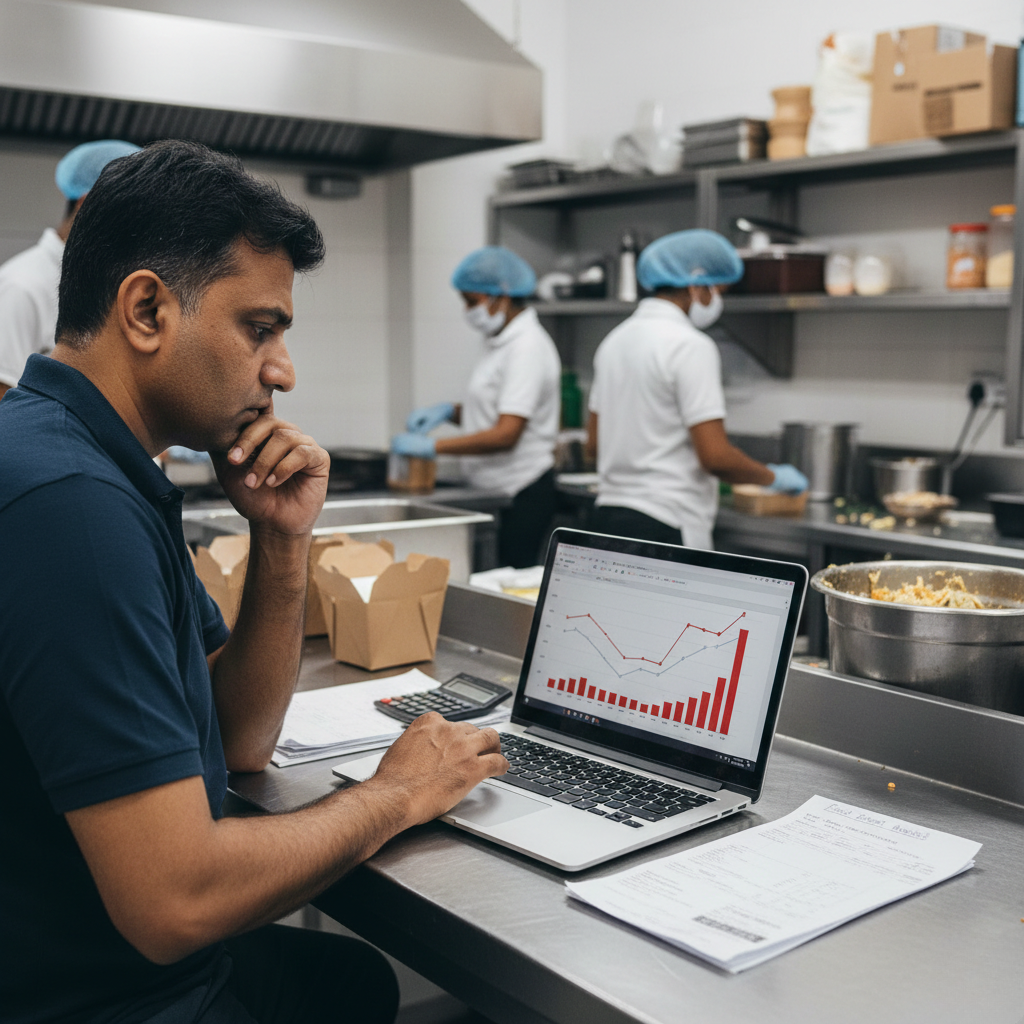
Aggregator onboarding is where most founders get trapped. They over-list items, underprice to “get orders,” and ignore contribution margin per order. The result is fast ratings damage and cash burn.
The onboarding should include commission-aware pricing, discount boundaries, packaging cost inclusion, and “first 100 orders” rating protection. If you want to build commission defense into your model, see: How to Reduce Swiggy Commission.
Staff Onboarding and Training Systems
Even a strong menu fails if staff routines are weak. Onboarding services should include a simple training plan: station roles, ladle rules, packing standards, dispatch priority, and escalation when delays happen.
A high-quality onboarding setup also defines basic metrics: average prep time, packing time, cancellation reasons, and top complaint categories.
How Much Do Cloud Kitchen Onboard Services Cost in India?
Costs vary based on scope. Some services only help with aggregator listing, while end-to-end onboarding includes SOPs, menu engineering, training, and launch monitoring.
- Listing-only onboarding: lower cost, limited scope, high founder dependency
- Operational onboarding: includes SOPs + packaging + menu structure
- End-to-end launch onboarding: includes training + mock service days + launch week support
If you’re building a full setup budget, start here: Cloud Kitchen Setup Cost in India.
Who Should Use Cloud Kitchen Onboard Services?
Cloud kitchen onboarding is especially useful for:
- First-time founders launching their first delivery kitchen
- Restaurants converting to delivery-first models
- Multi-brand kitchens struggling with SOP and consistency
- Teams expanding to new locations and needing replication systems
If your goal is multi-location replication, see: How to Scale Cloud Kitchens.
Common Mistakes to Avoid During Cloud Kitchen Onboarding
The most expensive onboarding mistakes are usually invisible in week one, and deadly by week four.
- Launching with too many SKUs and inconsistent prep systems
- Pricing without commission, packaging, and discount buffers
- Skipping packaging trials and suffering spillage/temperature drops
- No speed drills before going live
- Ignoring contribution margin and chasing “orders”
Final Thoughts: Cloud Kitchen Onboard Services in India
Cloud kitchen onboarding is not a formality. It’s your launch foundation. The right onboarding system reduces mistakes, speeds up go-live, and protects the two things that matter most in the first month: ratings and margins.
If you treat onboarding seriously, you don’t just launch faster-you launch cleaner, with repeat-ready operations and a scalable playbook.
FAQs: Cloud Kitchen Onboard Services in India
What do cloud kitchen onboard services include?
Typically: kitchen audit, compliance readiness, menu engineering, SOPs, packaging trials, staff training, and Swiggy/Zomato go-live support.
How long does onboarding take in India?
Timelines vary by compliance and aggregator approvals, but structured onboarding typically takes a few weeks depending on readiness.
Do I need onboarding if I already have a kitchen?
Yes-if your systems are weak. Onboarding helps standardise operations, improve ratings, and make the kitchen scalable across brands or locations.
What is the biggest benefit of onboarding?
Faster, cleaner launch with fewer refunds, better ratings, stable prep time, and contribution-margin protection.
- Cloud Kitchen Business in India
- Cloud Kitchen Business Cost in India
- How to Reduce Swiggy Commission
- How to Scale Cloud Kitchens