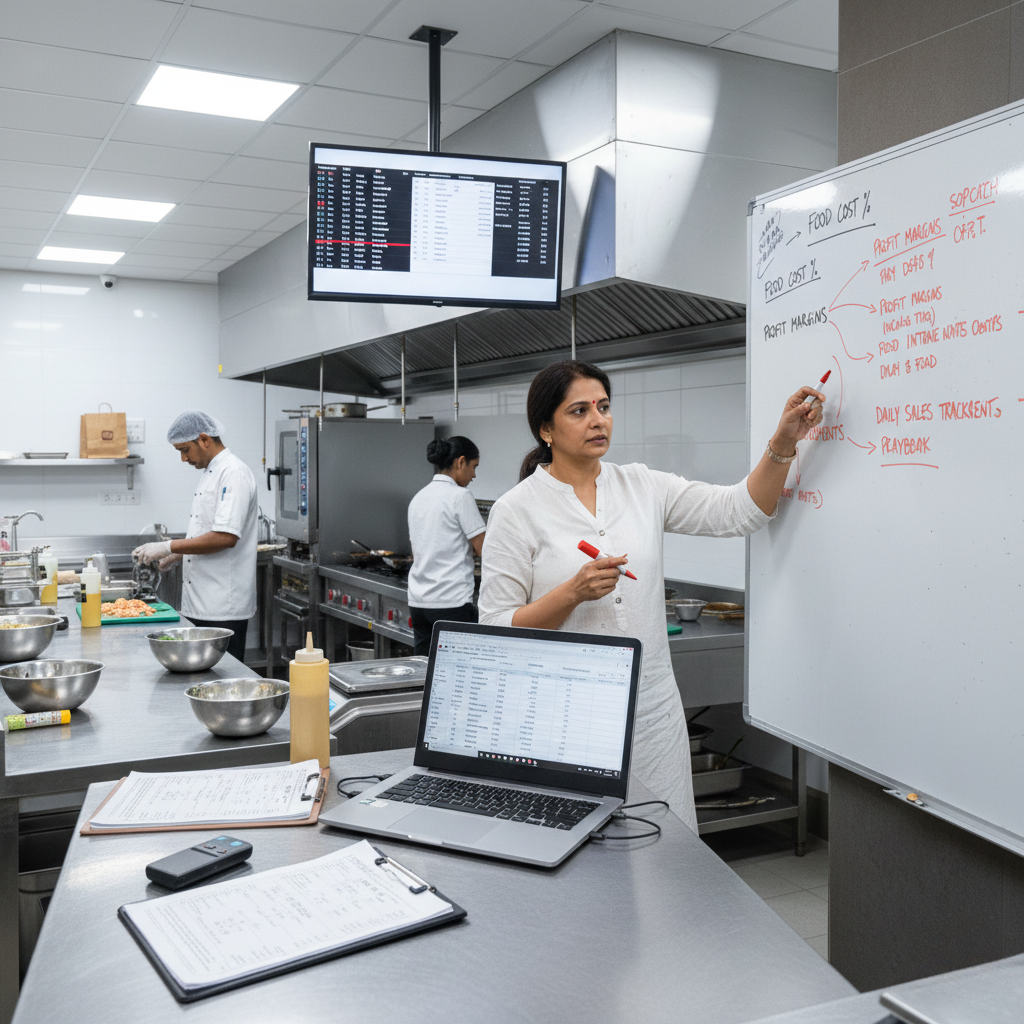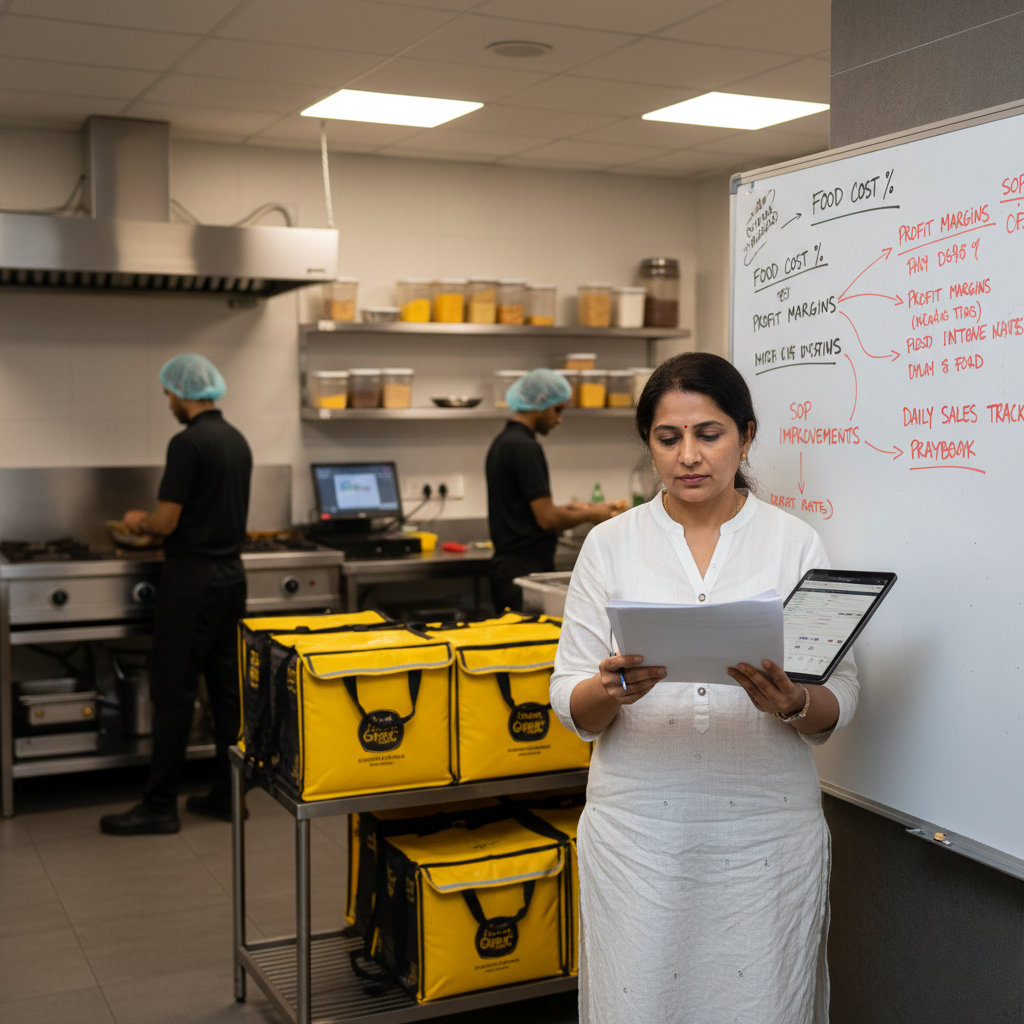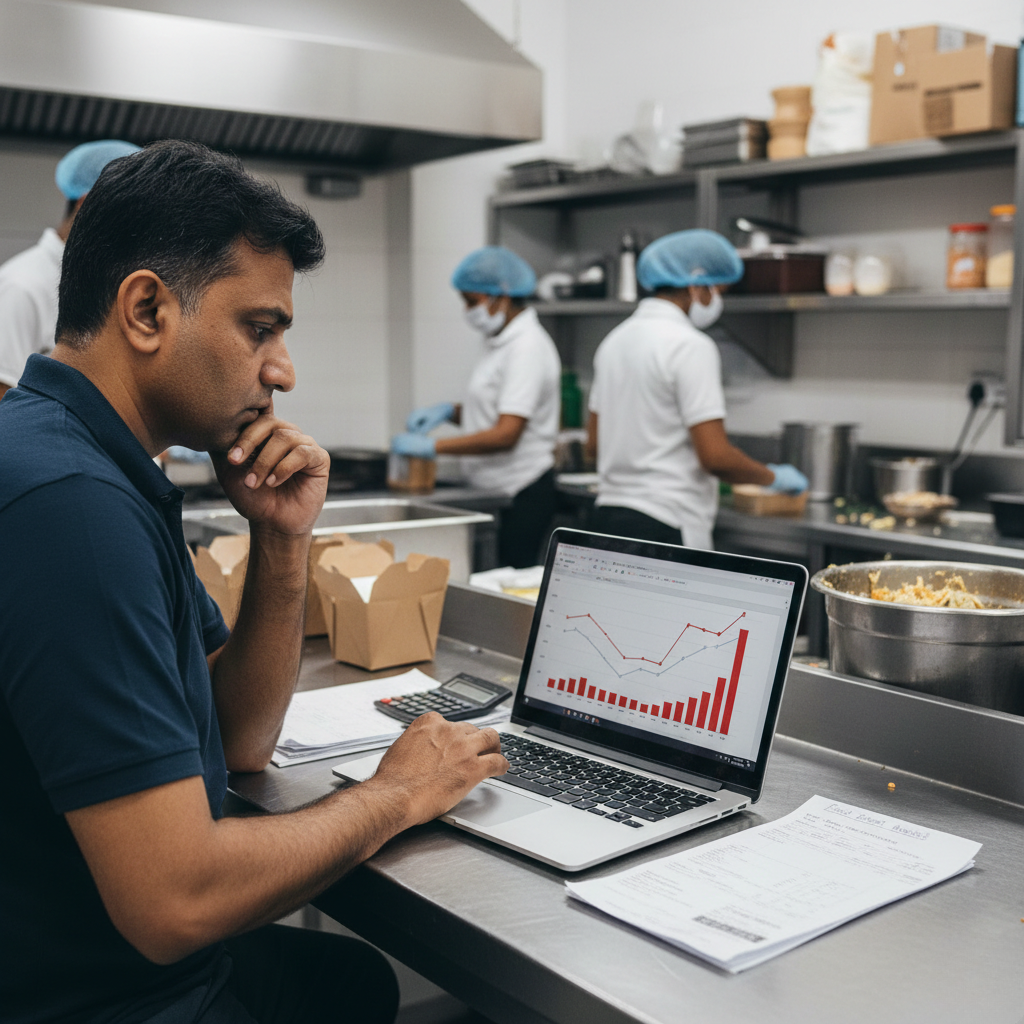
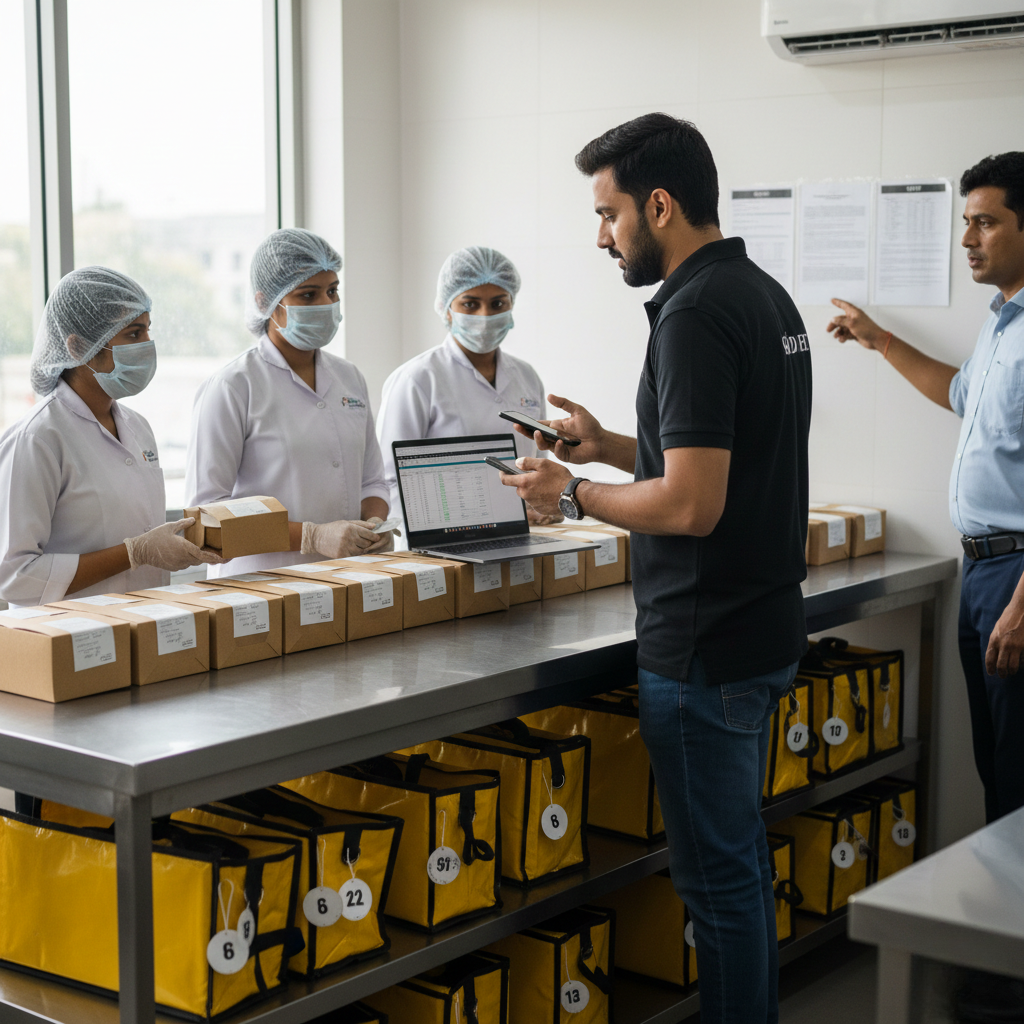
Cloud Kitchen Founder Dependency Case Study begins with a common but dangerous reality: the business grows, orders increase, but everything still depends on the founder. This case study documents how a cloud kitchen removed daily founder involvement without sacrificing control, quality, or profitability. Despite steady order flow, the business remained highly founder-dependent, a hidden risk discussed in Why My Cloud Kitchen Profits Are Declining.
Over a ninety-day period, the kitchen transitioned from manual supervision to system-led execution. No new hires were added, no software was introduced, and no menu changes were made. Stability was achieved purely through operational systemisation, similar to outcomes seen when Fixing Cloud Kitchen Delays, Refunds, and Complaints.
Cloud Kitchen Founder Dependency Case Study: Background
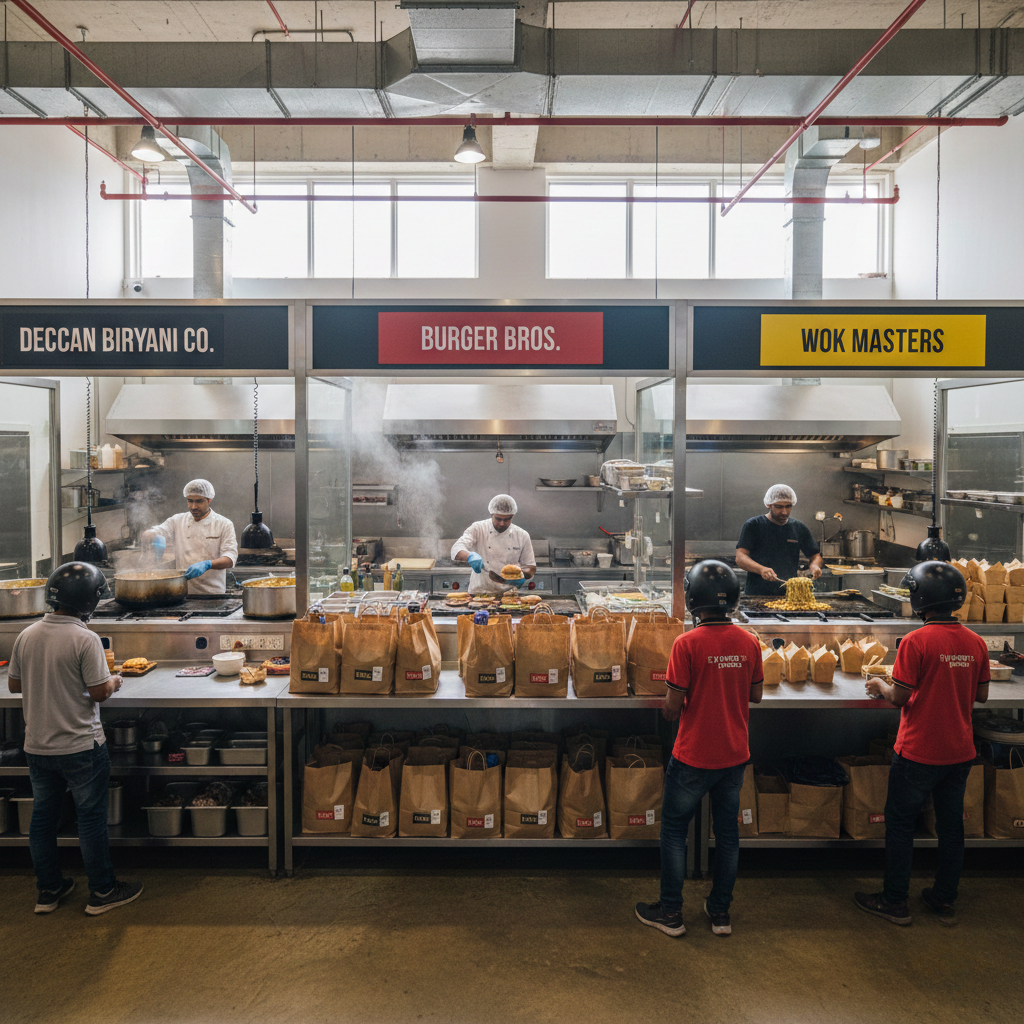
The kitchen operated two delivery-only brands from a single location, processing between one hundred fifty and two hundred orders daily. The founder was personally involved in shift supervision, escalation handling, and daily decision-making.
While performance appeared stable, operations slowed noticeably whenever the founder was unavailable. This pattern is common in early-stage kitchens that grow without systems, as explained in How to Stabilise Profits Before Scaling.
Execution quality varied by shift, and errors increased during peak hours. These are classic symptoms seen in a Cloud Kitchen Founder Dependency Case Study where systems are missing.
Cloud Kitchen Founder Dependency Case Study: The Core Problem
The founder believed constant oversight was necessary to maintain standards. In reality, this created bottlenecks, burnout, and limited scalability.
Instead of building systems, the founder became the system. This realisation mirrors challenges described in When Growth Is Hurting Your Cloud Kitchen Operations.
Cloud Kitchen Founder Dependency Case Study: Founder Dependency Audit
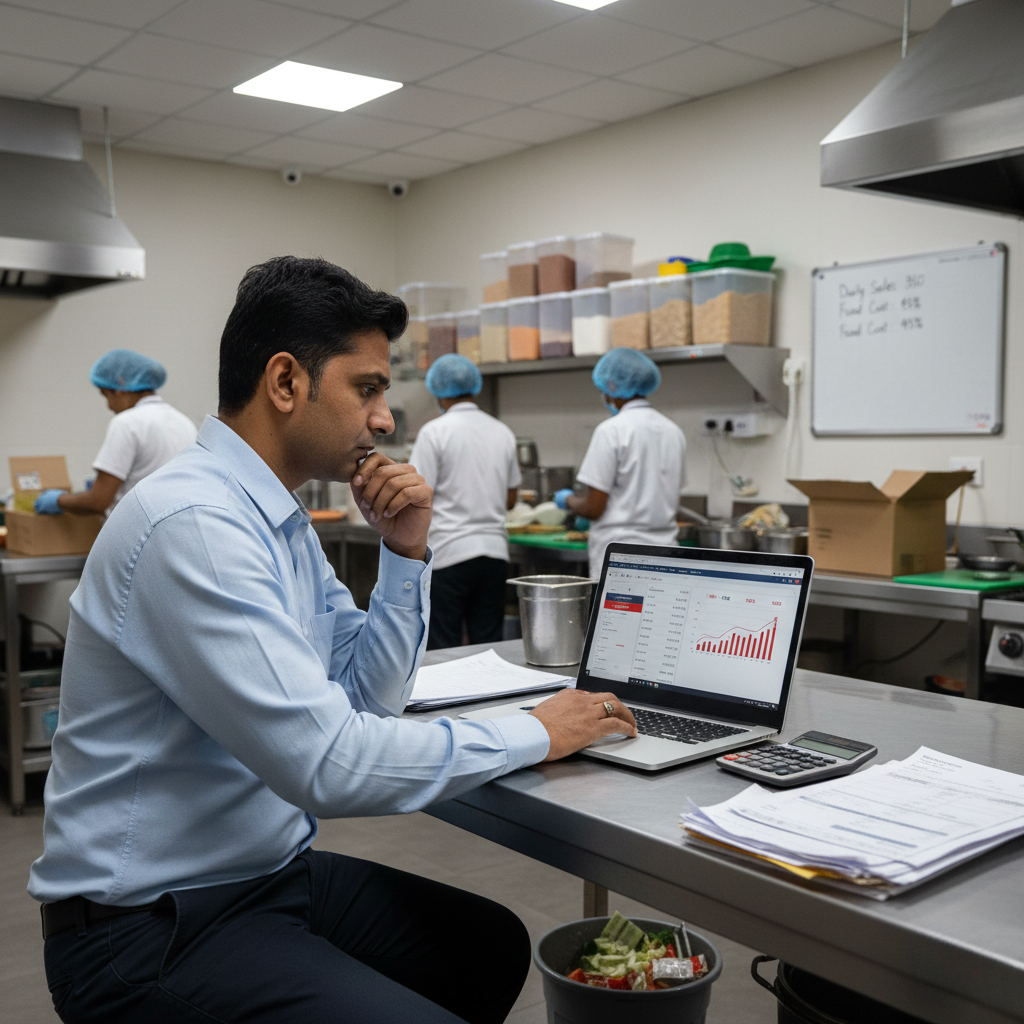
A detailed audit mapped every decision handled by the founder over thirty days. Each action was classified into judgment-based decisions vs repeatable execution tasks.
The audit revealed that over seventy percent of founder involvement was operational, not strategic. This is a defining insight in any Cloud Kitchen Founder Dependency Case Study.
Cloud Kitchen Founder Dependency Case Study: Identifying Dependency Points
Key dependency areas included: packing approval, shift handovers, escalation handling, and inventory decisions.
These patterns are typical in founder-led kitchens before systems are introduced, as explained in Founder-Dependent Kitchen Converted Into System-Driven Operations.
Cloud Kitchen Founder Dependency Case Study: CKaaS System Implementation
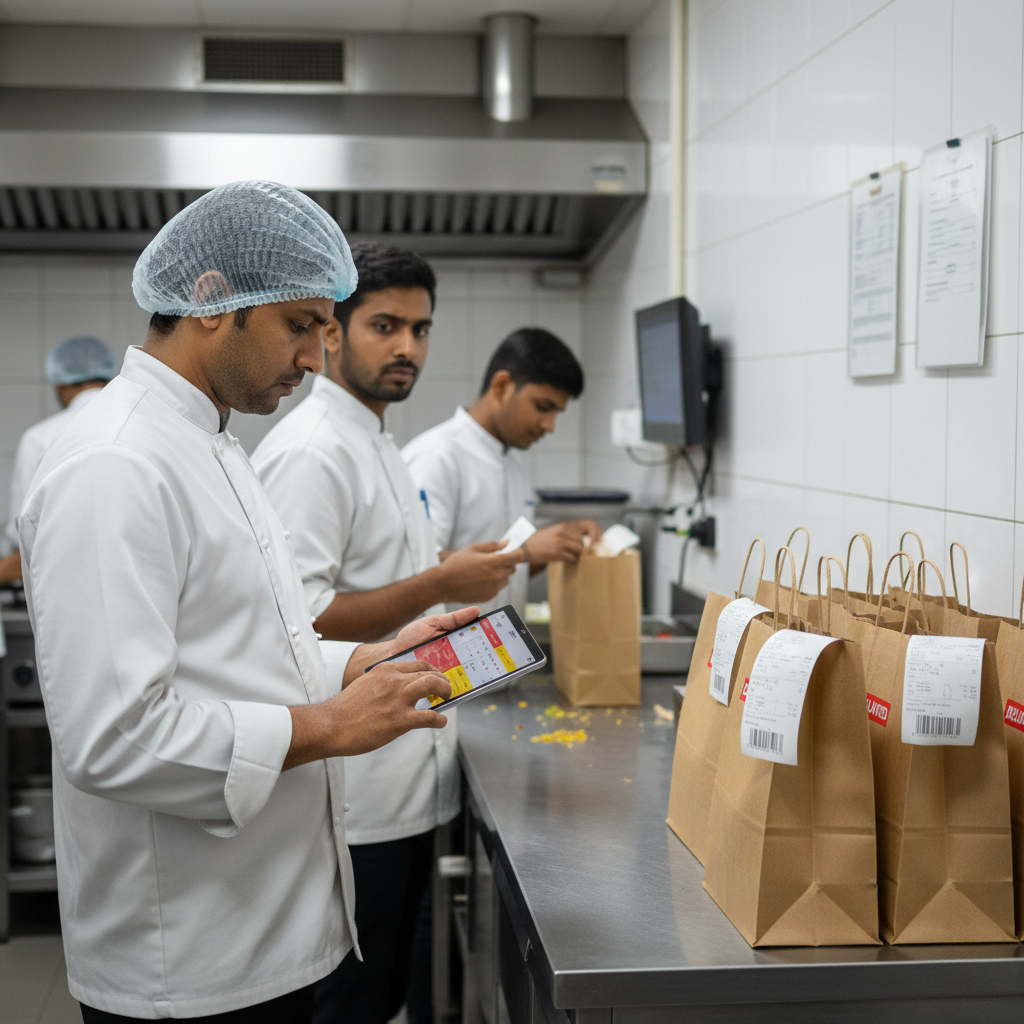
CKaaS replaced founder oversight with structured systems. SOPs were introduced across prep, cooking, packing, and dispatch.
Visual SOPs replaced verbal instructions, ensuring consistent execution. This follows the same principles explained in How SOPs Improve Cloud Kitchen Profitability.
Ownership shifted from the founder to defined roles, removing dependency.
Cloud Kitchen Founder Dependency Case Study: Shift-Level Ownership
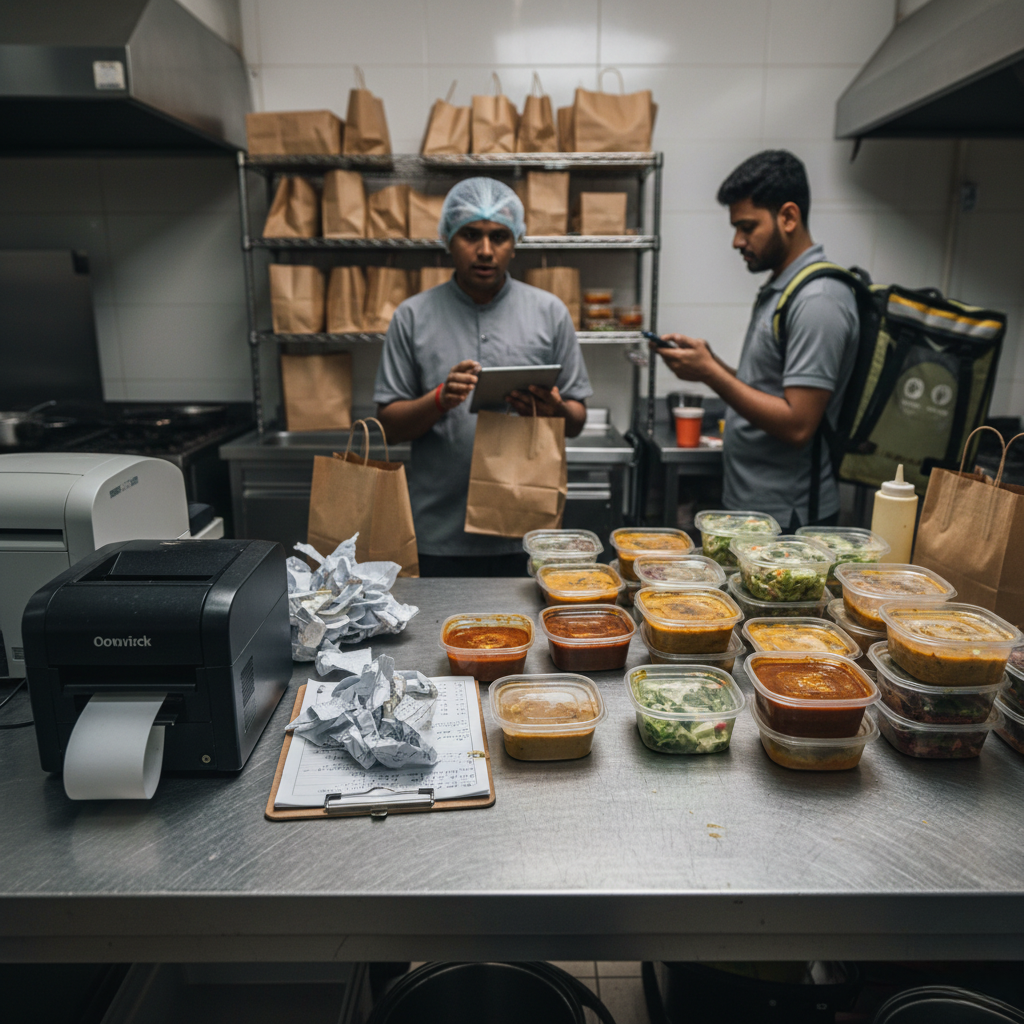
Shift leads were trained to execute SOPs independently. Daily operations no longer required founder intervention.
This model followed structured execution frameworks outlined in Daily Shift Planning for Cloud Kitchens.
As clarity improved, escalation dependency reduced significantly.
Cloud Kitchen Founder Dependency Case Study: Outcome and Results
Within ninety days, founder involvement reduced by over eighty percent. Operational consistency improved, errors declined, and execution became predictable.
The kitchen transitioned from founder-driven to system-driven operations. This is the ultimate transformation shown in this Cloud Kitchen Founder Dependency Case Study.
Key Takeaways From This Cloud Kitchen Founder Dependency Case Study
Founder oversight is not a scalable system. Sustainable kitchens replace supervision with SOPs, roles, and structured execution.
The real shift is not operational. It is structural: from dependency to repeatability.
Related Case Studies and Reads
- How to Fix a Loss-Making Cloud Kitchen
- Why Discounts Are Not Solving Your Profit Problem
- From 50 Orders to 300 Orders: Operations Scaling Guide
- Standardizing Kitchen Execution Across Shifts
Have Questions?
If you want to remove founder dependency and build a self-running cloud kitchen, refer to the Grow Kitchen FAQs.