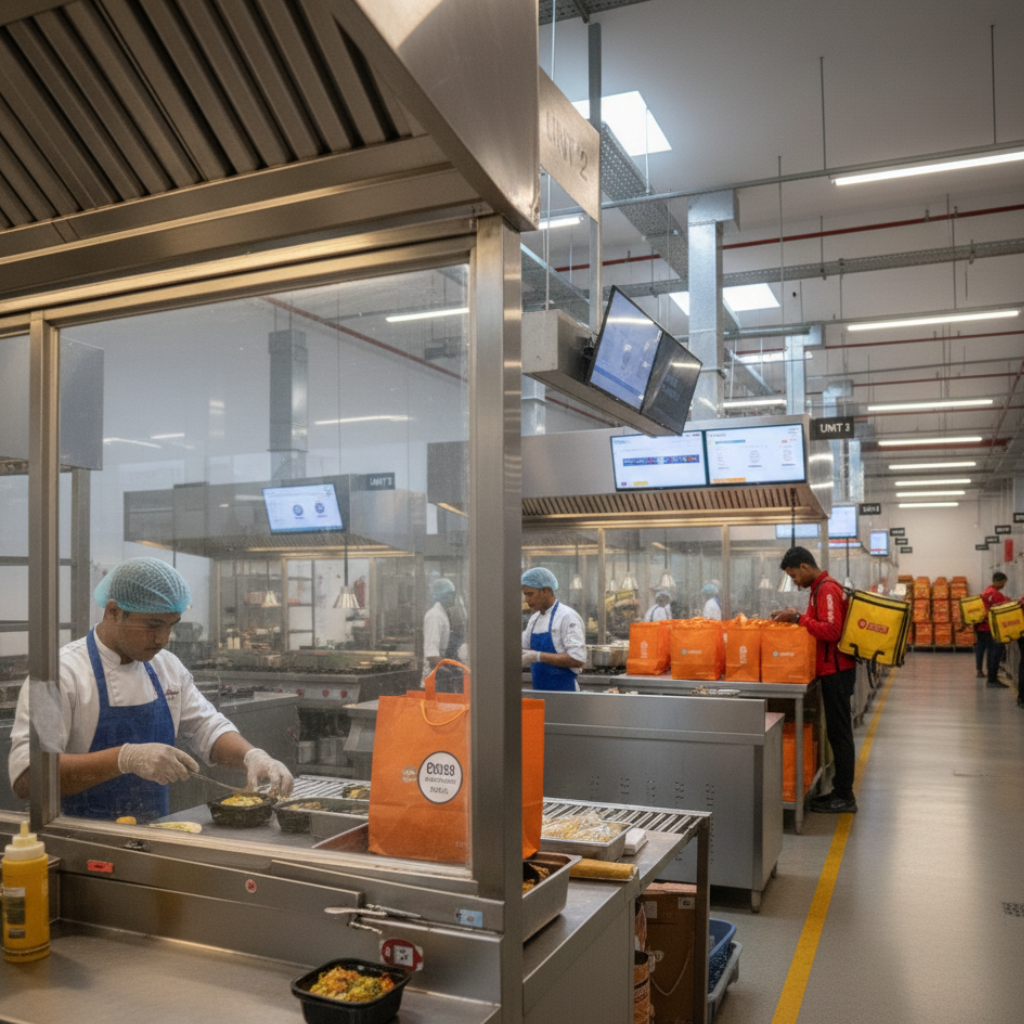
The cloud kitchen business explained in simple terms is not just about selling food online. It is about building a delivery-first food operation driven by systems, speed, and consistency. In India, cloud kitchens have emerged as one of the most scalable food business models for founders who prioritise efficiency over ambience.
Start Here If You’re Learning How Cloud Kitchens Actually Work
This article is part of GrowKitchen’s structured cloud kitchen knowledge hub. If you want a complete breakdown covering business models, setup costs, SOPs, unit economics, and scaling strategies, start with our pillar guide: Cloud Kitchen as a Service (CKaaS).
For compliance and registration clarity, always verify details on FSSAI, GST Portal, and Udyam MSME.
Cloud Kitchen Business Explained: What It Really Means
A cloud kitchen business is a delivery-only food operation that does not rely on dine-in customers. Instead of investing in ambience, seating, and front-of-house staff, the entire focus is on kitchen efficiency, packaging quality, and fast delivery.
Orders are placed through food delivery platforms, websites, or WhatsApp, and food is prepared in a professional kitchen designed purely for production and dispatch.
How a Cloud Kitchen Business Works Step by Step
The cloud kitchen model works on a tightly controlled operational flow. Every step from order placement to dispatch is optimised for consistency rather than customer experience at the outlet.
- Orders arrive via Swiggy, Zomato, websites, or WhatsApp
- Kitchen staff follow SOP-based prep and portioning
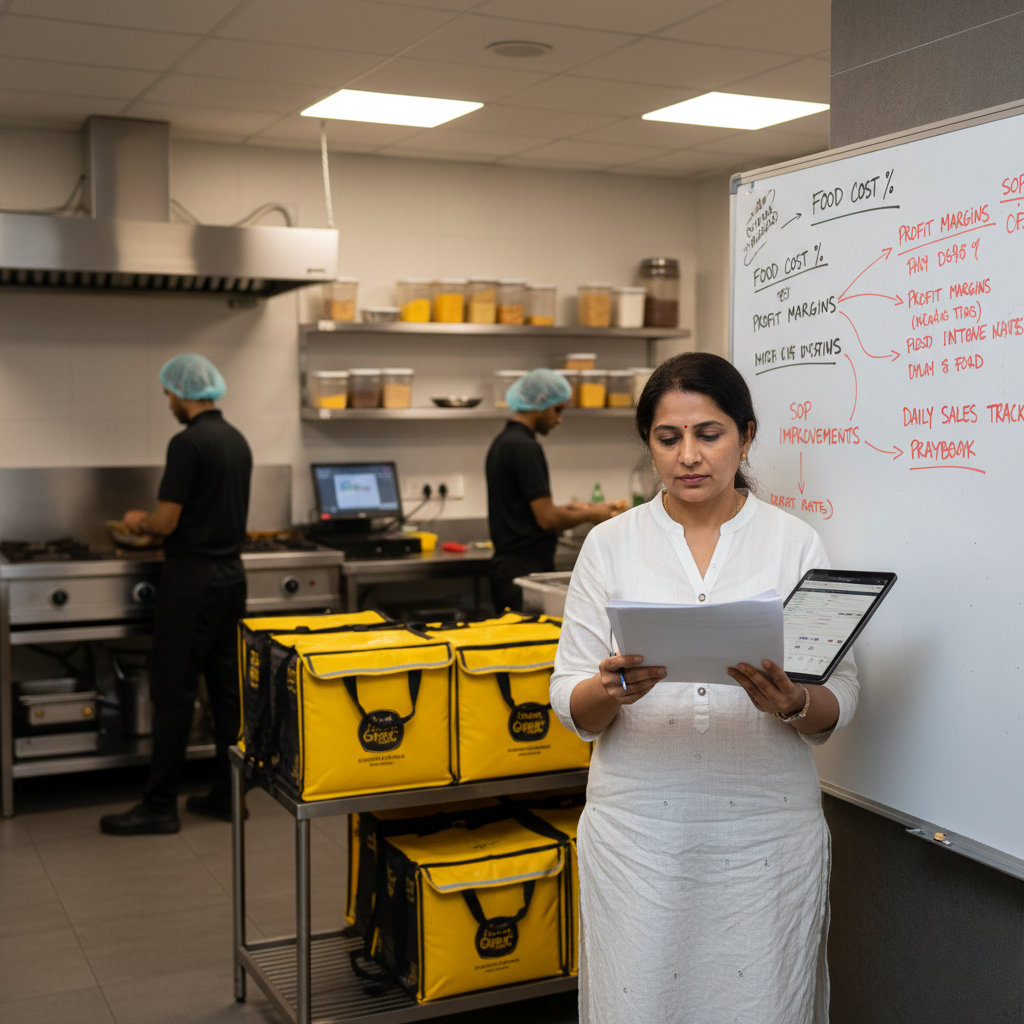
- Food is packed using delivery-optimised containers
- Delivery partners handle last-mile fulfilment
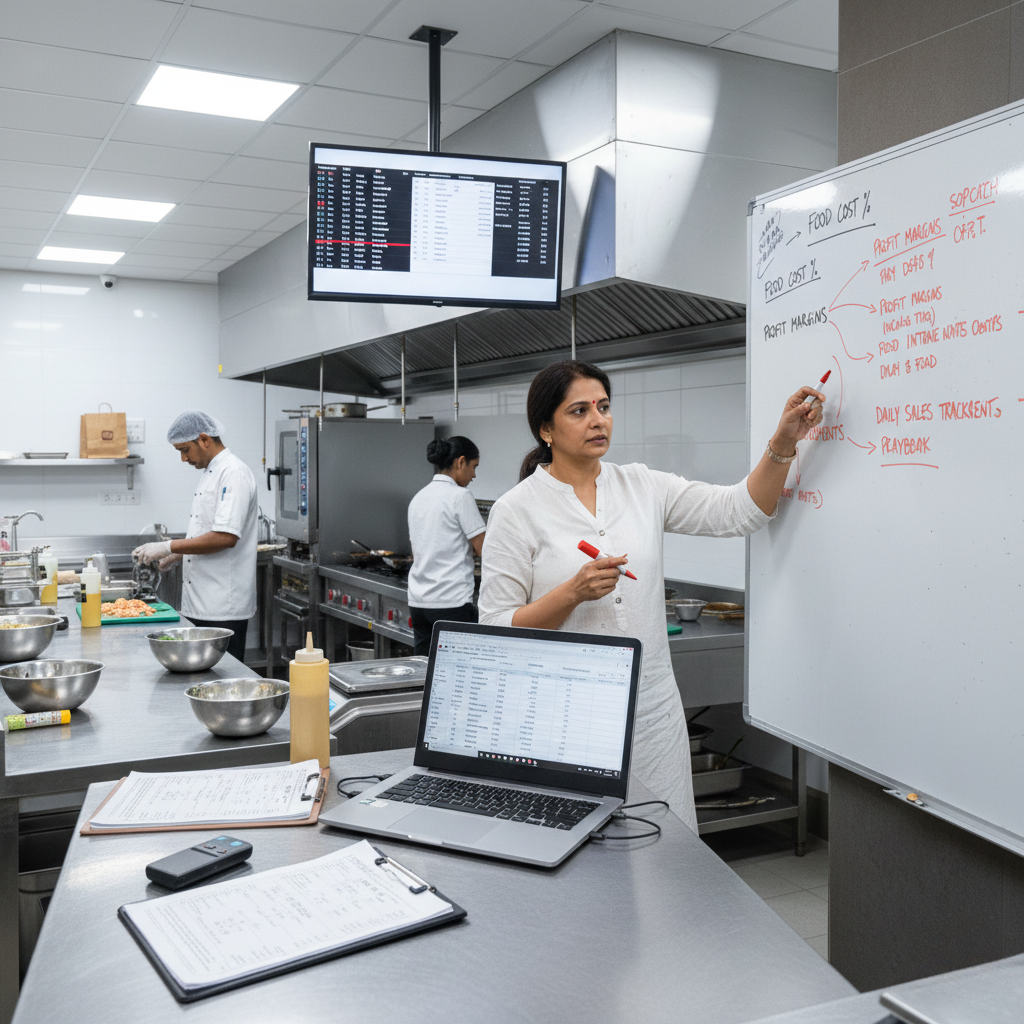
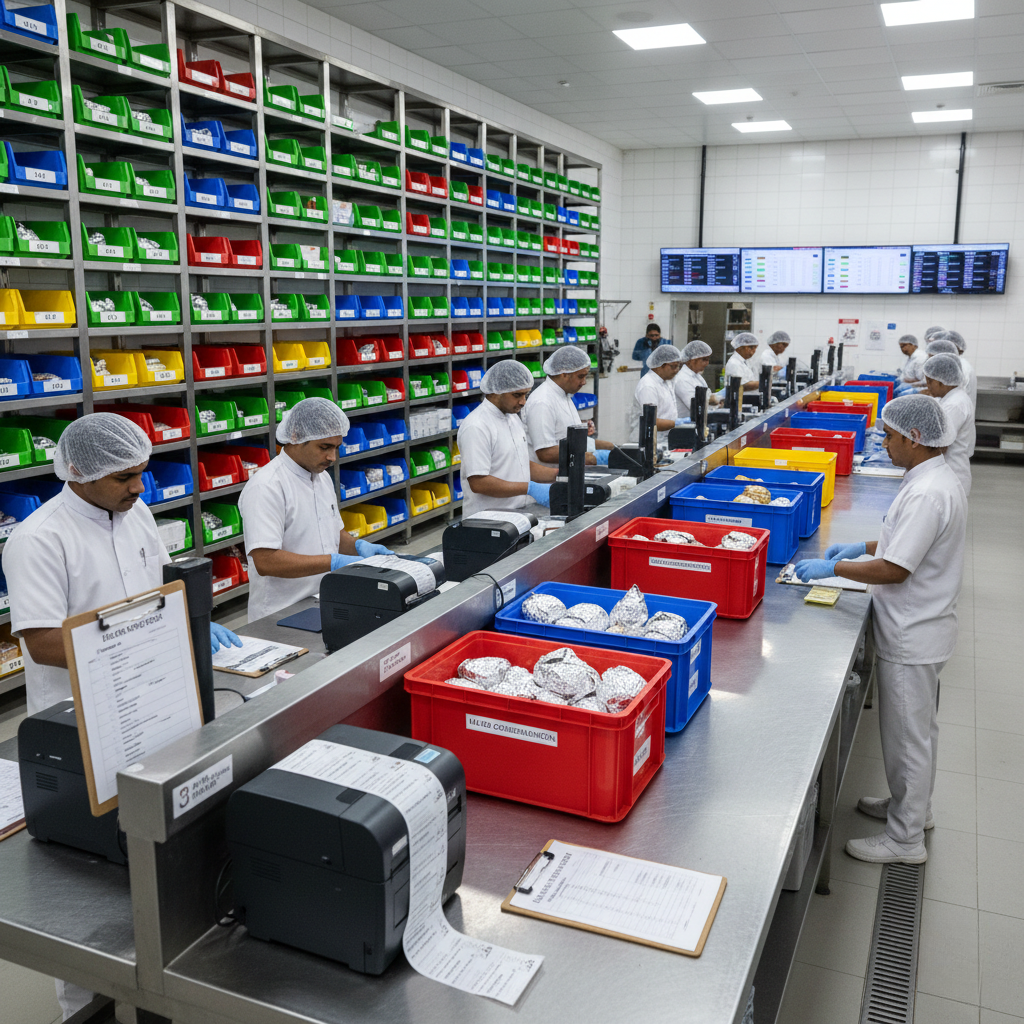
Successful cloud kitchens rely heavily on documentation. SOPs, portion charts, and costing sheets ensure that food quality remains consistent even as order volume increases. A practical reference: Cloud Kitchen SOP Checklist.
Why Cloud Kitchen Businesses Are Growing Rapidly in India
The rapid growth of cloud kitchens in India is driven by a combination of rising real estate costs, changing consumer behaviour, and increased dependence on food delivery apps.
Traditional restaurants require high upfront investment and long break-even periods. Cloud kitchens reduce this risk by lowering fixed costs and allowing founders to test demand without committing to expensive locations.
Cities like Mumbai, Bengaluru, Pune, and Delhi NCR offer dense delivery clusters where a single kitchen can serve thousands of customers within a limited radius.
Different Types of Cloud Kitchen Business Models
Cloud kitchens are not a single format. There are multiple operating models depending on ownership, scale, and brand strategy.
- Single-brand cloud kitchens
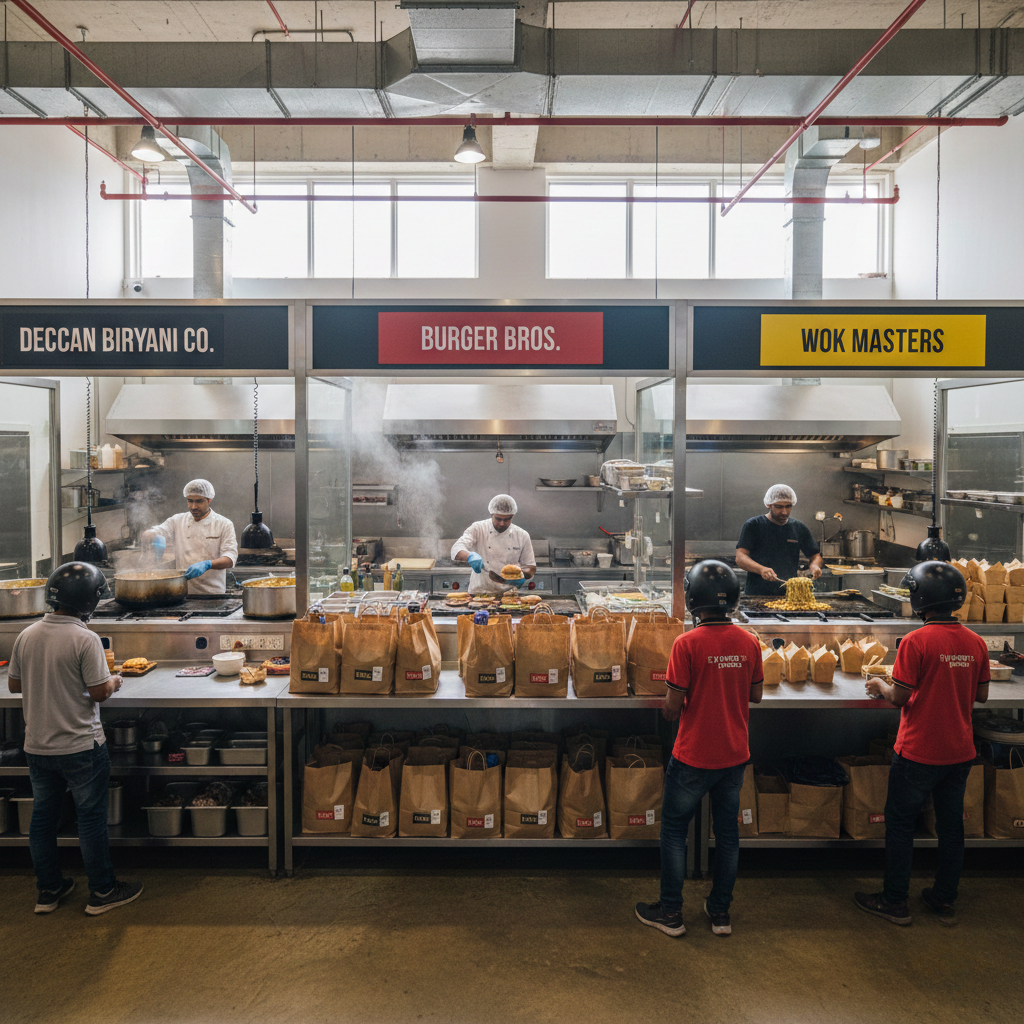
- Multi-brand kitchens operating from one location
- Aggregator-owned kitchens
- Managed kitchen and shared kitchen models
Each model has different cost structures and control levels. Understanding the right fit is critical before scaling.
Who Should Start a Cloud Kitchen Business?
Cloud kitchens are best suited for founders who prefer systems, data, and repeatability over hospitality-led operations.
- First-time food entrepreneurs with limited capital
- Restaurant owners expanding delivery-only brands
- Operators building multiple brands from one kitchen
- Subscription and meal-plan focused food businesses
If long-term growth is your goal, review: How to Scale Cloud Kitchens.
Common Mistakes When Starting a Cloud Kitchen
Many founders assume cloud kitchens are simple because there is no dine-in component. In reality, operational errors show up faster due to ratings and platform algorithms.
Common mistakes include poor SOPs, inconsistent portioning, weak packaging, and uncontrolled discounting. These issues directly impact margins and visibility.
To understand why many kitchens shut down within a year, read: Why Cloud Kitchens Fail in India.
Final Take: Cloud Kitchen Business Explained Simply
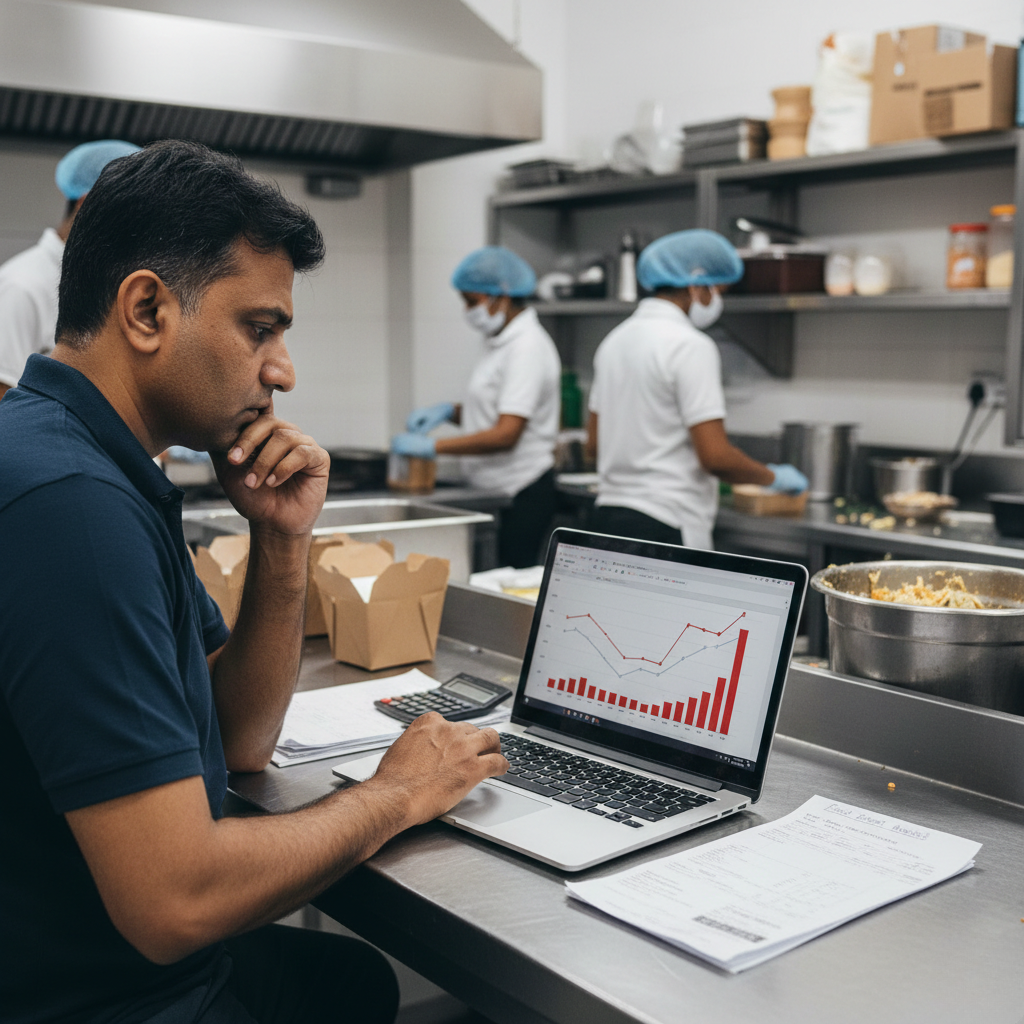
A cloud kitchen business is not an “easy restaurant alternative.” It is a system-led food operation where discipline determines success. Founders who document processes, track numbers, and optimise continuously tend to scale faster and more profitably.
When executed correctly, cloud kitchens offer one of the most scalable food business opportunities in India.
FAQs: Cloud Kitchen Business Explained
What is a cloud kitchen business?
A cloud kitchen business is a delivery-only food operation that focuses on efficiency, SOPs, and repeat orders rather than dine-in.
Is a cloud kitchen different from a restaurant?
Yes. Restaurants focus on ambience and walk-ins, while cloud kitchens focus on delivery performance and systems.
Are cloud kitchens profitable in India?
They can be profitable if food cost, packaging, ratings, and repeat orders are tightly controlled.
What food works best in a cloud kitchen?
Food that travels well and assembles fast-bowls, biryani, wraps, burgers, fried chicken, and meals.
- Cloud Kitchen Business in India
- How to Start a Cloud Kitchen
- Cloud Kitchen SOP Checklist
- Why Cloud Kitchens Fail