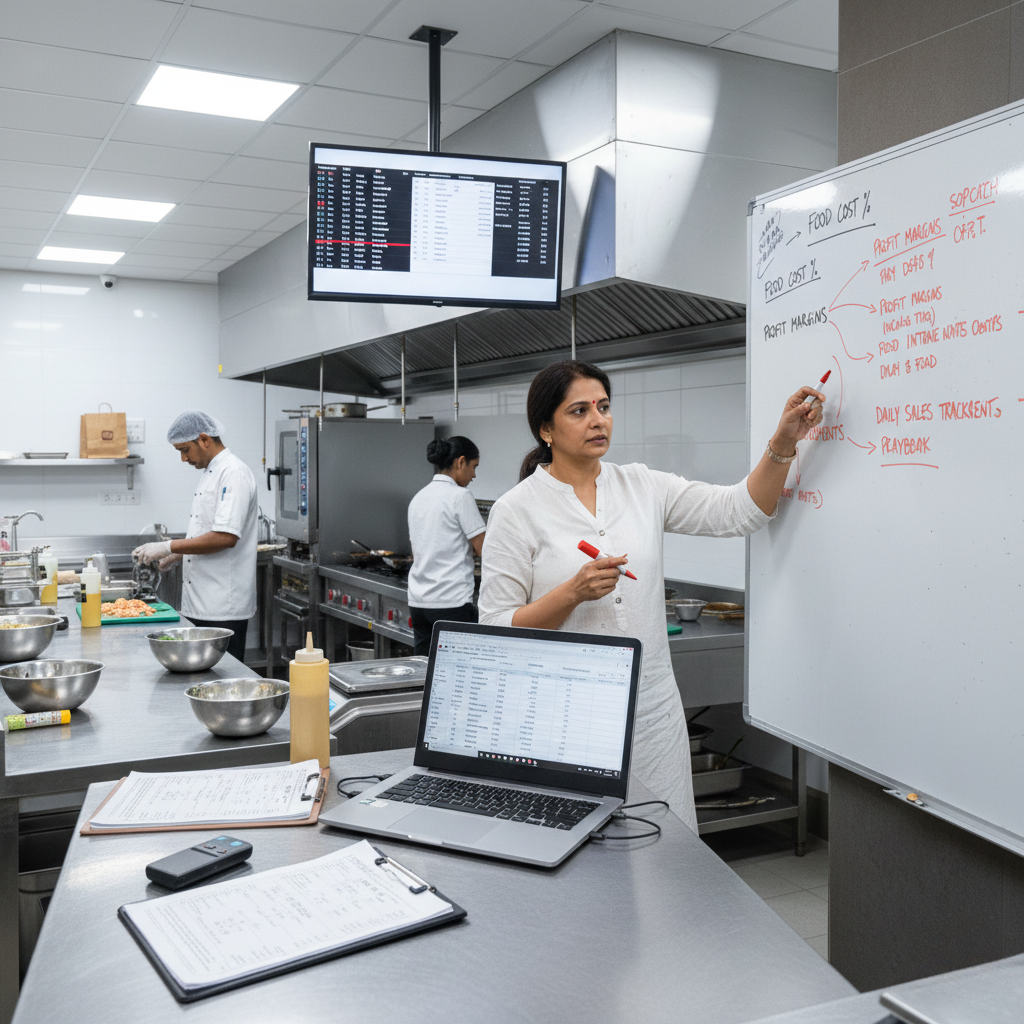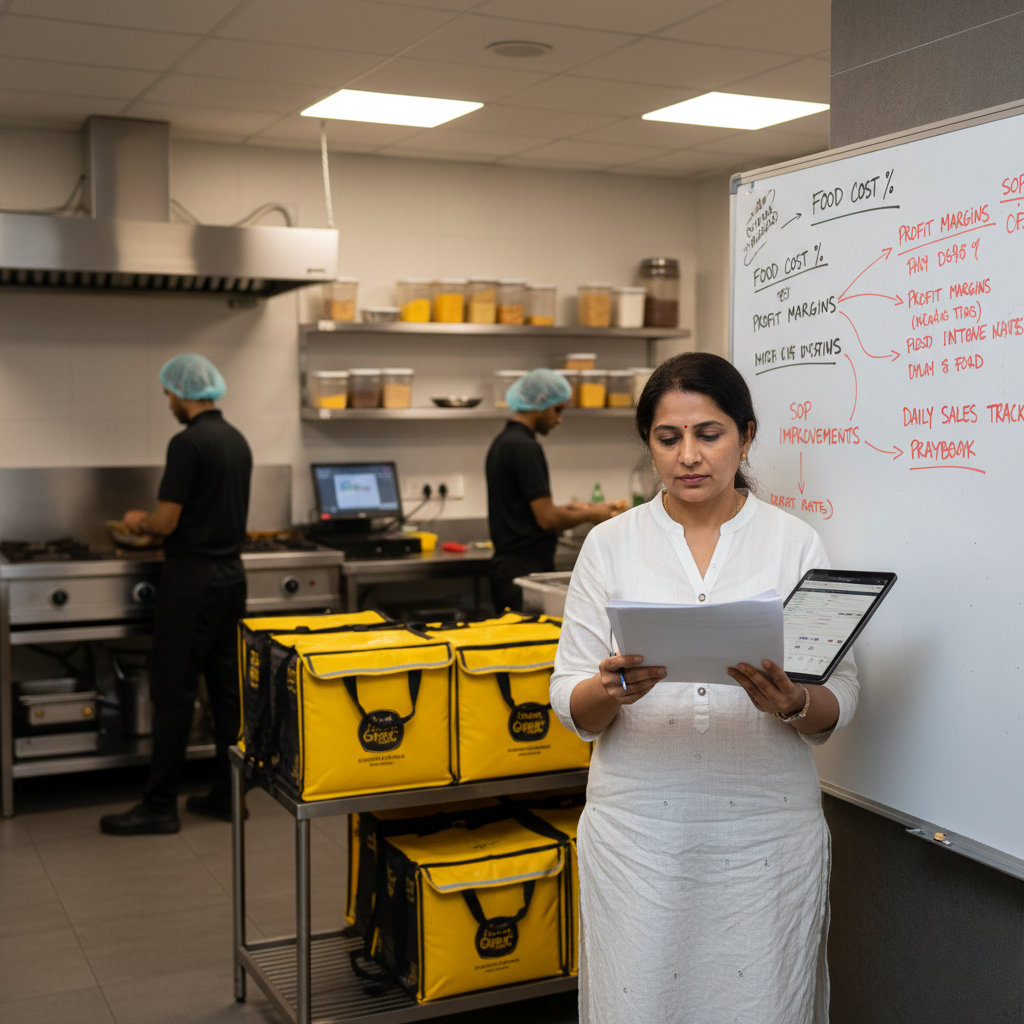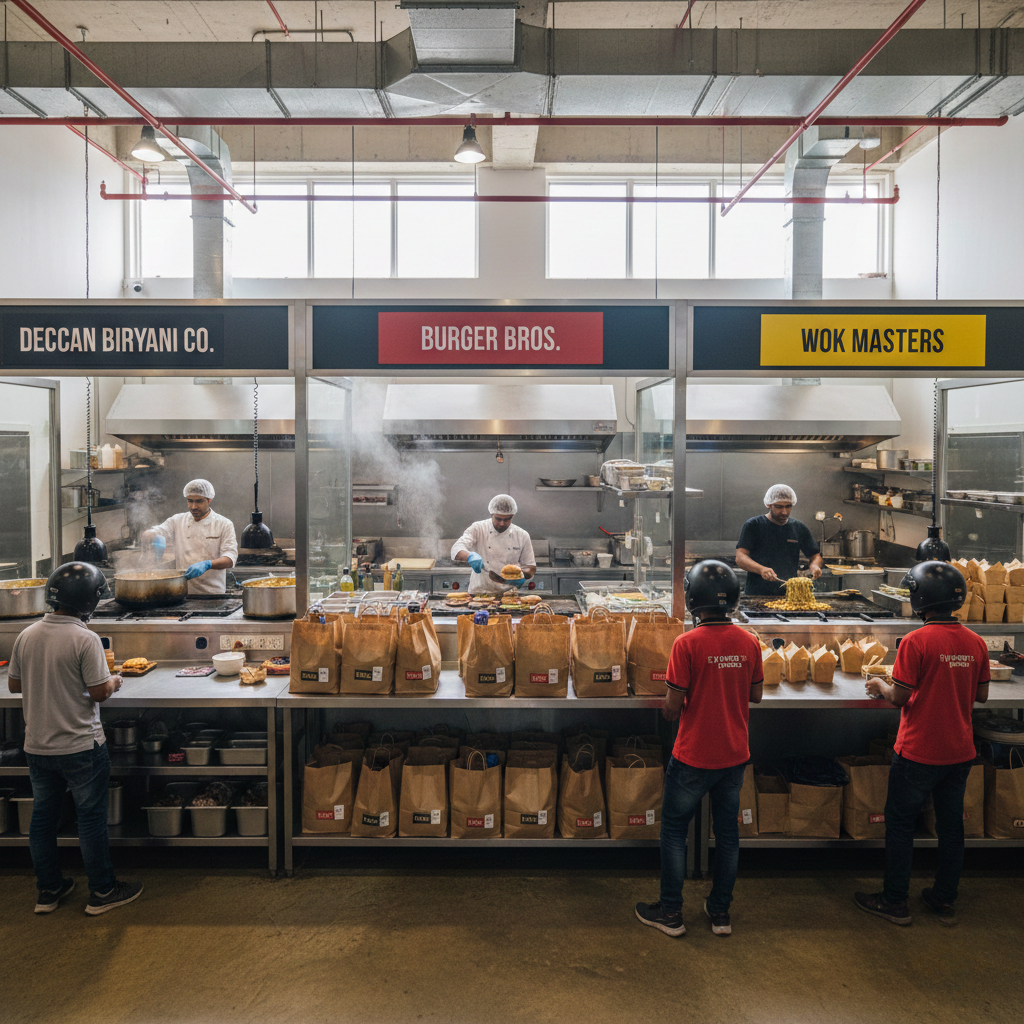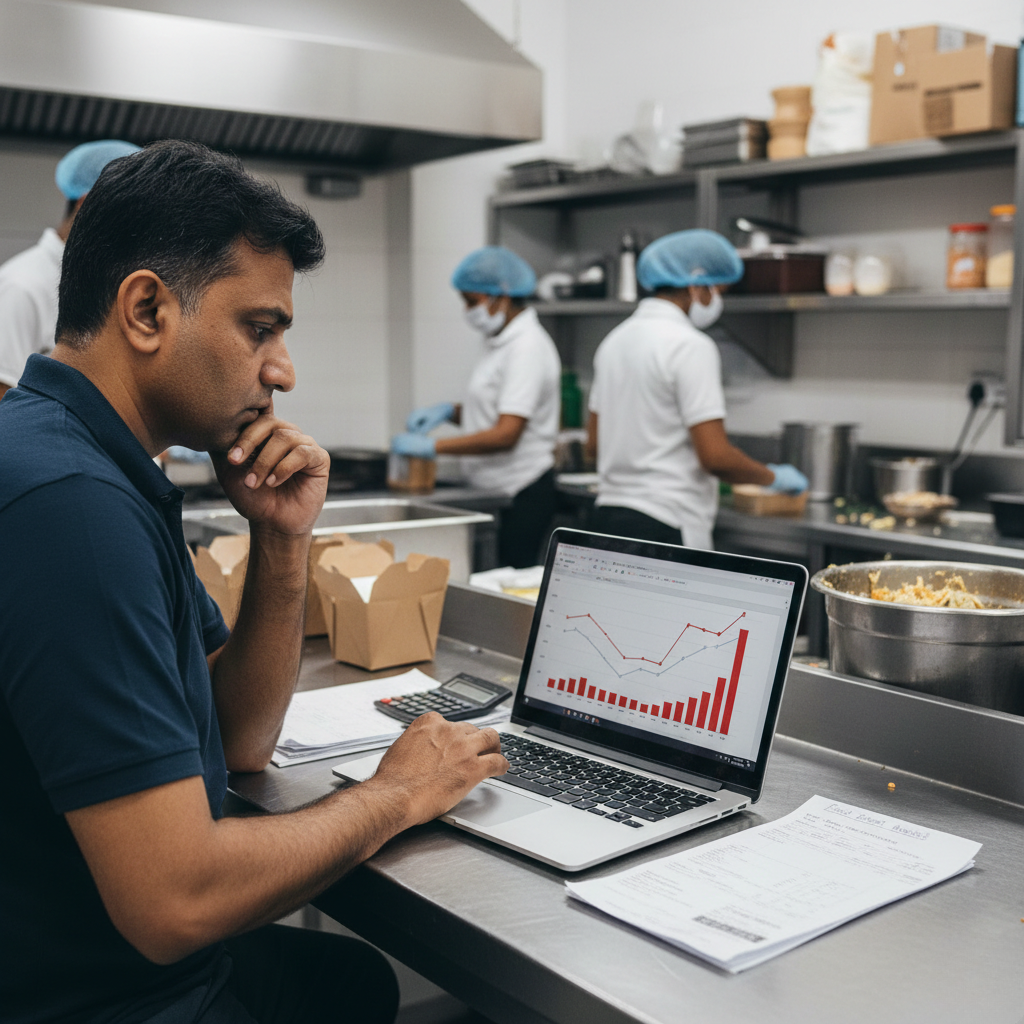
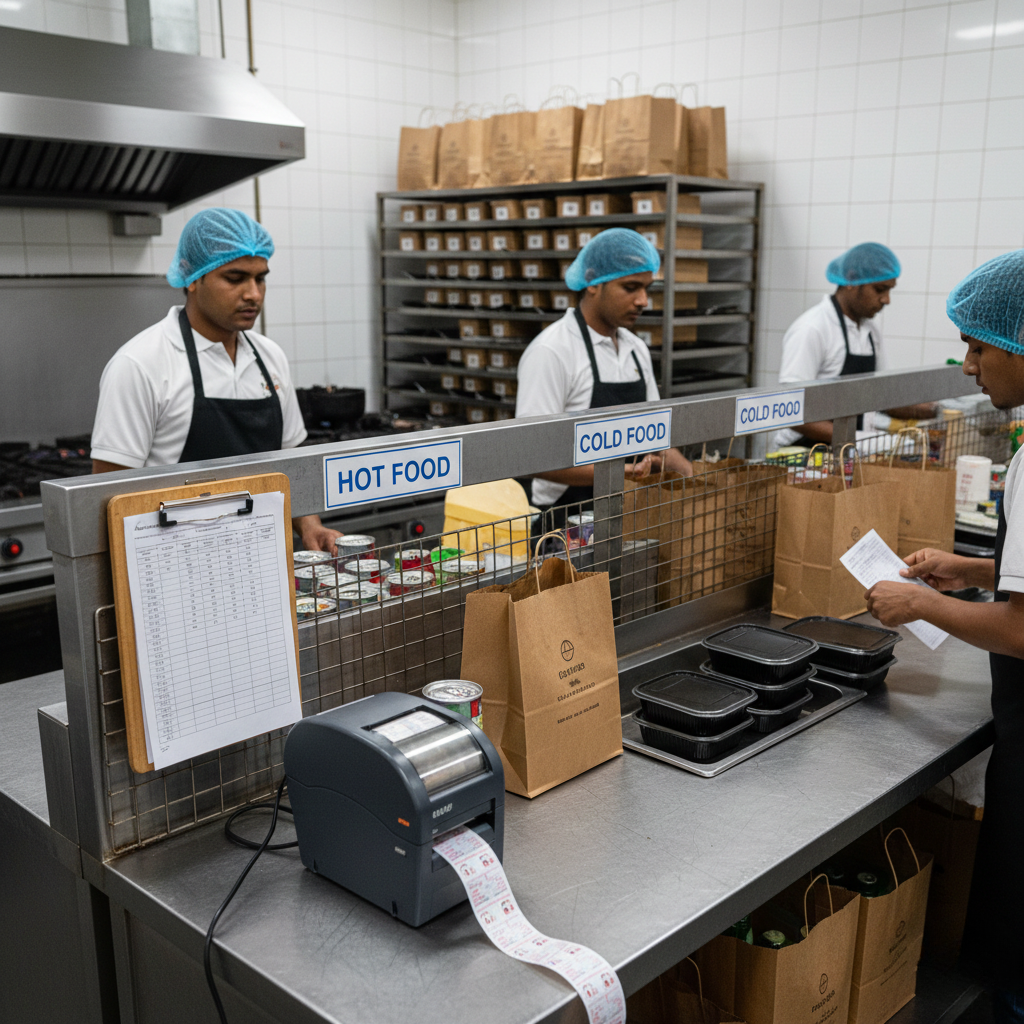
Why does my cloud kitchen break even late? is not just a “sales will pick up with time” problem. Late break-even happens when your fixed-cost base is high, your contribution margin per order is thin, and daily leakage keeps resetting whatever progress you make. Many delivery kitchens stay stuck because revenue grows, but payouts stay weak due to discounts, refunds, portion drift, high packaging cost, menu complexity, and unstable operational throughput. This guide explains why cloud kitchens in India often take longer than expected to break even and how to shorten the timeline end-to-end from unit economics to station SOPs to payout control using systems, not hope.
Why Does My Cloud Kitchen Break Even So Late? The Truth Behind Slow ROI in Delivery Kitchens
Most founders start with a simple expectation: “If we do enough orders, we’ll break even soon.” The kitchen launches, sales begins, the team gets busy, and yet month after month the business stays in the red. Rent and salaries feel constant. Vendor payments keep coming. Payouts feel lower than expected. And break-even keeps moving further away.
This happens because break-even in a cloud kitchen is not driven by orders alone. It is driven by contribution margin consistency. If your per-order contribution is thin or unstable, your kitchen can grow revenue and still fail to cover fixed costs reliably. Many kitchens break even late because they grow volume before controlling leakage. They become “active” but not “profitable”.
Late break-even is rarely one big mistake. It is a stack of small, repeatable drifts: discount burn to drive conversion, food cost drift through portioning and yield loss, refunds and remakes due to packing errors, high packaging spend, menu complexity causing slower throughput, and payout deductions that founders don’t model correctly.
If you want the profitability foundation lens first, start with Cloud Kitchen Profitability Consultant in India and identify recurring leak patterns via Common Operational Mistakes in Cloud Kitchens.

What “Late Break-Even” Actually Means in a Cloud Kitchen
Break-even is the point where your monthly contribution covers your monthly fixed costs. In a delivery-first kitchen, the real break-even equation is simple: (Contribution per order × number of orders) ≥ monthly fixed costs. The problem is that many founders estimate contribution using assumptions instead of payout reality.
In practice, “late break-even” usually means one of these is true: your contribution per order is thinner than you think, your discounting strategy is permanently reducing payout, food cost is drifting through portioning and wastage, refunds/remakes are consuming hidden cost, or your fixed costs are too high for your current AOV and order volume.
The fastest diagnostic shift is this: stop asking “How many orders do we need?” and start asking: “What is our real contribution per order after commission, packaging, and deductions?” Once you know that number, break-even becomes controllable.
The Real Break-Even Math: Why Sales Growth Doesn’t Always Reduce Losses
Many cloud kitchens break even late because founders model profit like a restaurant: revenue minus food cost minus rent minus salaries. But a delivery kitchen has more moving parts: platform commission, GST/TCS/TDS effects, packaging and cutlery, discount burn, refunds and cancellations, late dispatch penalties, and complaint-driven remakes.
Here’s why break-even keeps slipping: when contribution is thin, every extra operational mistake becomes meaningful. A ₹10 portion drift on a high-selling SKU feels small. But at 60 orders/day, that’s ₹600/day. Add ₹15 of discount burn, ₹8 of packaging overspend, and a few refunds per week, and your “growth” stops translating into cash.
If you want a leakage checklist that directly impacts break-even speed, use Common Operational Mistakes in Cloud Kitchens and map it against your top-selling SKUs and daily process.

The 8 Reasons Cloud Kitchens Break Even Late (And How Each One Delays ROI)
Late break-even is usually predictable. Below are the most common reasons cloud kitchens in India take longer than expected to break even, and what each one looks like inside the operation.
1) Contribution margin is thinner than your spreadsheet assumes. Many founders calculate profit using “menu price minus food cost” and forget the payout reality. Once commission, discount burn, packaging, and deductions hit, the true contribution per order becomes very small. When contribution is thin, fixed costs take longer to cover.
2) Discounts became permanent, not strategic. Kitchens often discount to drive conversion, recover ratings, or fight competition. The issue is not discounting. The issue is discounting without controlling food cost and refunds. That creates a trap: you need discounts to stay visible, but discounts remove the margin needed for break-even.
3) Food cost drift makes “high sales” items low-margin. Portion drift, yield loss, over-prep expiry, and substitutions quietly increase cost per order. If your top-selling SKUs drift by ₹8–₹15 each, break-even delays by months. If you want the SOP-led fix, read How SOPs Reduce Food Cost & Complaints.
4) Refunds + remakes consume cash you never see in dashboards. A remake is raw material + packaging + time that often does not earn full revenue back. Refunds reduce payout quality. Late break-even kitchens usually underestimate how expensive “a few wrong orders” are.
5) Packaging is overbuilt or inconsistent. Packaging can delay break-even in two ways: direct cost (heavy containers, extra sachets, unnecessary cutlery), and indirect cost (spillage leading to replacements and refunds). Packaging should be engineered by item type, not by “one container for all”.
6) Menu complexity reduces throughput and increases errors. When the menu has too many variants, unique ingredients, and station dependencies, service slows down, mistakes rise, and rework increases. This reduces output per person and increases labor cost per order. The kitchen stays busy, but profitability stays far.
7) Fixed costs are too heavy for your current AOV + volume. Some kitchens take longer to break even because the fixed base is high: rent, salaries, utilities, minimum guarantees, and overhead. If AOV is low and contribution is thin, you simply need more orders than expected to cover fixed costs. This is not a motivation issue. It’s a unit economics alignment issue.
8) Growth is happening before systems are stable. When you scale marketing and volume before stabilizing SOPs, you amplify drift: more portion inconsistency, more wastage, more dispatch chaos, more refunds, more discount dependency. If growth is hurting operations, read When Growth Is Hurting Your Cloud Kitchen Operations.
Platform Economics: Why Payout Reality Often Delays Break-Even
Many kitchens break even late because they model platform costs incorrectly. Commission is not the only platform impact. Performance deductions matter: refunds, cancellations, wrong items, late dispatch, and complaint patterns. These reduce payout quality and increase the “effective cost” of operating on aggregators.
For a complete margin lens, read Aggregator Commission Impact in India.
External reference links (policy context): Swiggy Refund & Cancellation Policy and Zomato Online Ordering Terms.
Dispatch + Accuracy: The Fastest Break-Even Killer
Late break-even kitchens almost always have dispatch instability. Dispatch mistakes create a chain: refunds, replacements, rating drops, conversion loss, and discount burn to recover. That chain removes the margin you need to cover fixed costs.
The simplest break-even accelerator is to reduce rework: implement packing checklists, enforce dual verification, standardize packaging, and define stage-wise time control from acceptance to handover.
Use Cloud Kitchen Dispatch SOP to implement a dispatch-ready workflow.
Role Ownership: Why Break-Even Delays When the Founder Becomes the System
A kitchen breaks even late when it cannot run predictably without the founder. Founder dependency creates hidden cost: constant supervision, interrupted prep, inconsistent portions, rushed packing, and reactive dispatch. This increases errors and reduces throughput.
Break-even accelerates when roles are clear:
Prep ownership: demand-based targets, labeling, holding times, discard rules.
Cook ownership: fixed station sequence, yield checks, portion tools always in place.
Pack ownership: checklist-driven packing, seals, labels, add-on verification.
Dispatch ownership: SLA checks, rider handover, escalation rules.
Implement the role model using Role-Based Kitchen Operations Explained.
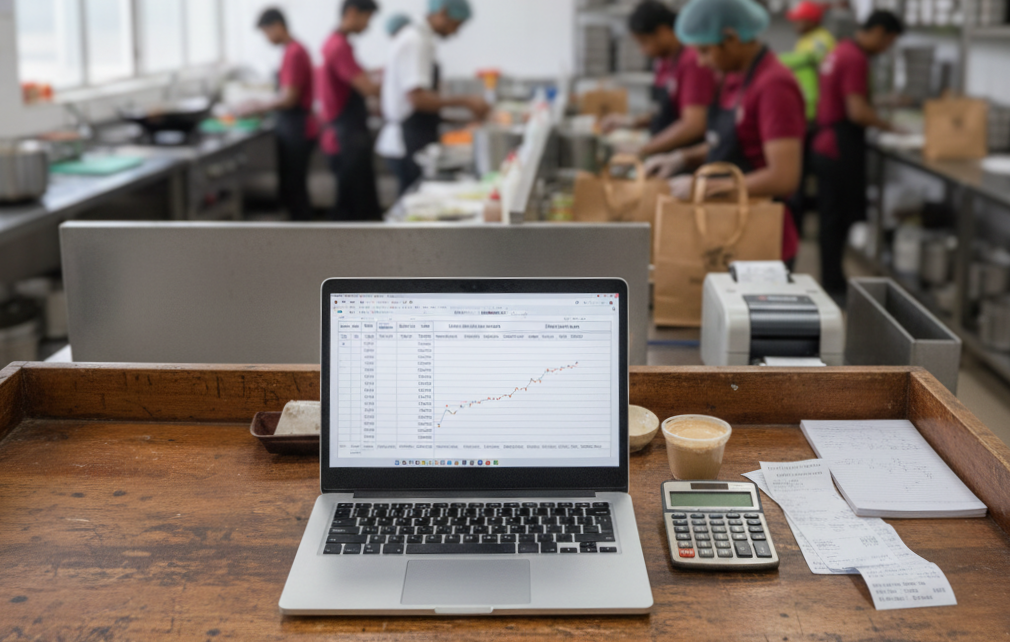
How to Break Even Faster: A Practical 7-Day to 30-Day Fix Sequence
The biggest mistake founders make is trying to shorten break-even with random moves: adding more items, spending more on ads, discounting harder, hiring more staff, or expanding before stabilizing unit economics. Break-even accelerates when you increase contribution margin stability and remove daily leakage.
Step 1 (Day 1–2): Calculate real contribution margin from 30 recent orders. Selling price minus commission minus packaging minus food cost minus refunds/penalties share. Sort by lowest contribution. This shows exactly why break-even is late.
Step 2 (Day 1–7): Run a “leakage log” tied to money. Track daily: remakes, refunds, wrong items, spillage, late dispatch, wastage, stockouts, discount usage. The goal is not recording. The goal is identifying the top 3 repeat leaks.
Step 3 (Day 3–7): Lock portions on top-selling SKUs. Define grams/ml for gravy, protein, rice/noodles, toppings, sauces. Assign portion tools and enforce a shift-start check. Portion drift is a break-even delay machine.
Step 4 (Week 2): Fix dispatch accuracy with dual verification. Packer checklist AND dispatch checklist. Reduce wrong orders, missing add-ons, and spillage replacements. This usually improves payout quality immediately.
Step 5 (Week 2): Make prep demand-based to reduce expiry and stockouts. Set prep targets, holding times, labeling rules, and discard rules. Over-prep delays break-even through wastage. Under-prep delays break-even through substitutions and refunds.
Step 6 (Week 3): Simplify menu where it creates low margin and high errors. Remove low-contribution items with high rework risk. Push hero items with stable execution. Engineer add-ons that are profitable and easy to pack correctly.
Step 7 (Week 3–4): Stabilize purchasing + inventory for top cost drivers. Lock vendor specs, pack sizes, and receiving checks. Do weekly variance review for critical items (oil, cheese, mayo, sauces, proteins, packaging add-ons). Variance control is break-even control.
If you want the discipline lens that connects operational repeatability to profitability, read How Process Discipline Improves EBITDA.
External hygiene + process standards (useful while standardising SOPs and storage discipline): FSSAI Hygiene Requirements (Schedule 4 reference), ISO 22000 overview, and Standardized Work (Lean lexicon).
Final Takeaway: Break-Even Comes Faster When Contribution Margin Becomes Stable
If your cloud kitchen breaks even late, it does not automatically mean demand is low. Most of the time it means your unit economics are thin and daily leakage is compounding: discount burn reduces payout, food cost drifts through portions and yield loss, refunds and remakes consume invisible cost, packaging is inconsistent, menu complexity reduces throughput, and fixed costs stay heavy.
Break-even accelerates when variation reduces: contribution margin becomes measurable, portions become controlled, prep becomes demand-based, dispatch becomes checklist-driven, refunds reduce, discounts become strategic, and the menu becomes engineered for throughput and margin.
Operational frameworks from GrowKitchen, and operating partner brands like Fruut and GreenSalad are designed to convert “slow break-even kitchens” into “repeatable, cash-positive kitchen networks.”
FAQs: Why Does My Cloud Kitchen Break Even So Late?
What is the most common reason cloud kitchens break even late?
Thin or unstable contribution margin per order caused by discount burn, food cost drift, and refunds/remakes.
Can break-even be delayed even with good sales?
Yes. If contribution per order is weak or daily leakage is high, sales volume can increase losses instead of reducing them.
What is the fastest lever to improve break-even timeline?
Improve payout quality by reducing refunds/remakes (dispatch accuracy) and locking portions on top-selling SKUs.
Should I increase prices to break even faster?
Price changes help only when coupled with leakage control. Otherwise higher prices can reduce conversion without improving true margin stability.
- Cloud Kitchen Profitability Consultant in India
- Common Operational Mistakes in Cloud Kitchens
- How SOPs Reduce Food Cost & Complaints
- Aggregator Commission Impact in India
- Cloud Kitchen Dispatch SOP
- Role-Based Kitchen Operations Explained
- When Growth Is Hurting Your Cloud Kitchen Operations
- How Process Discipline Improves EBITDA
- Grow Kitchen on X