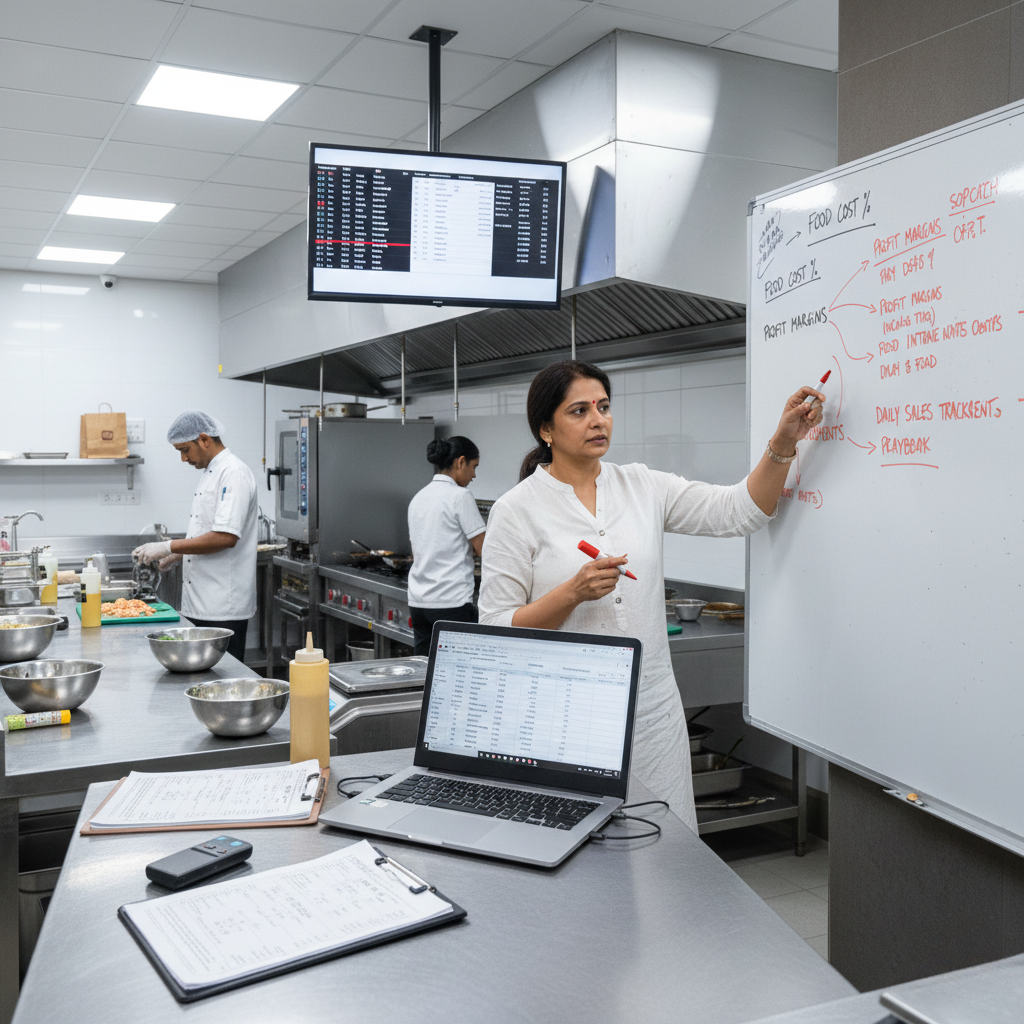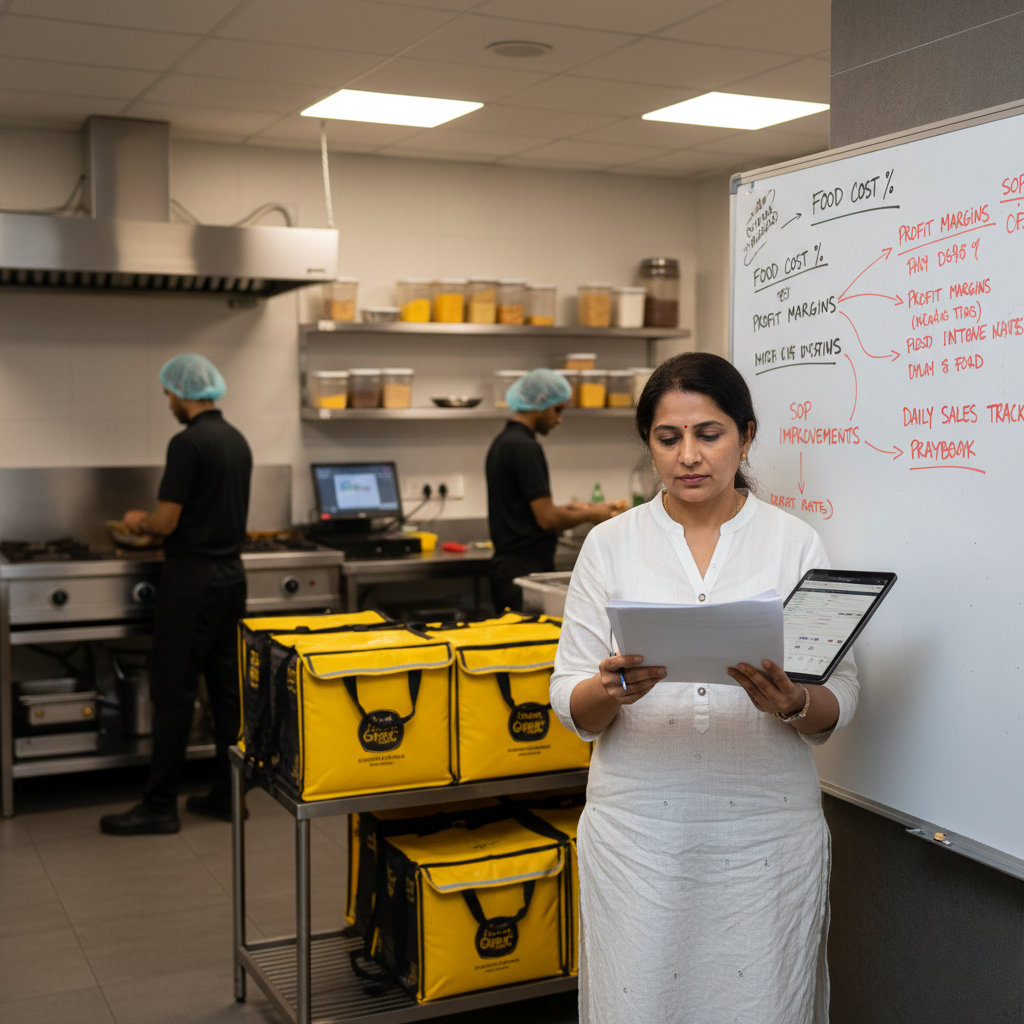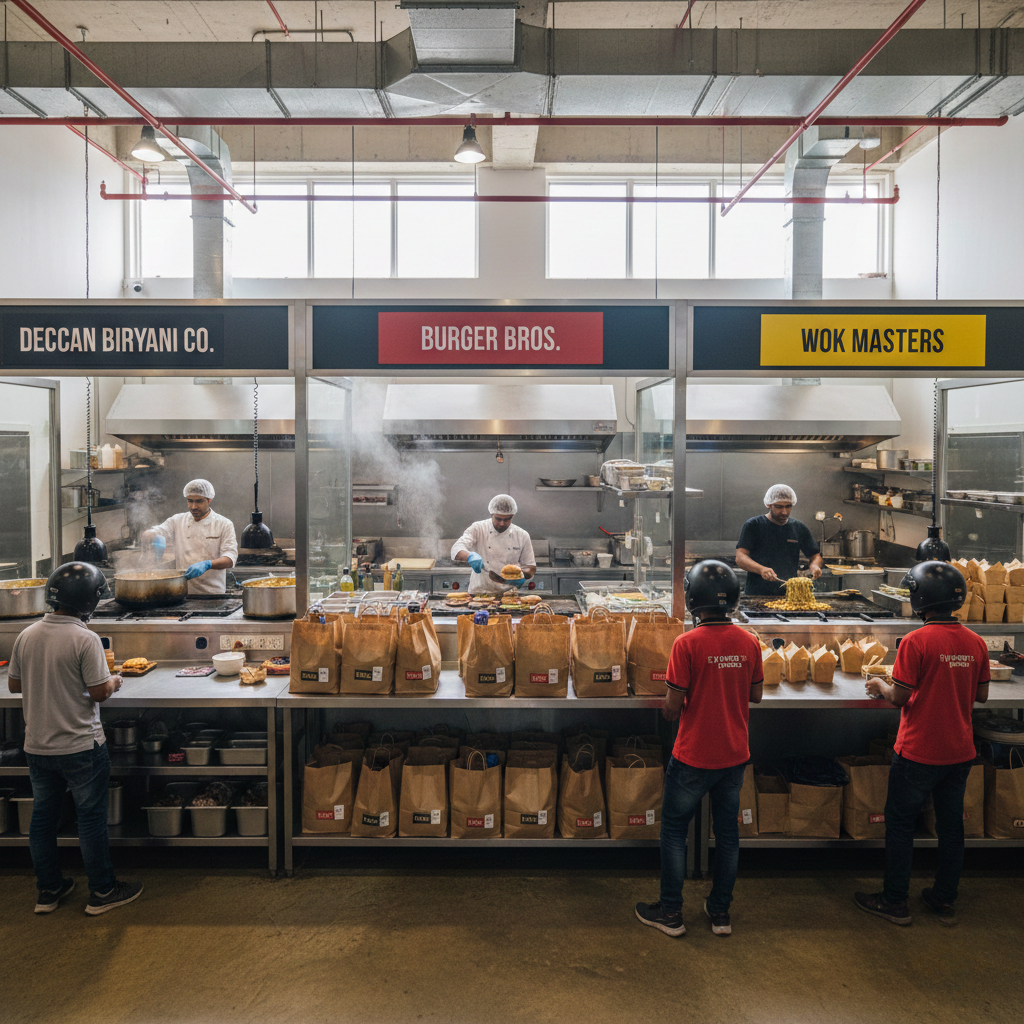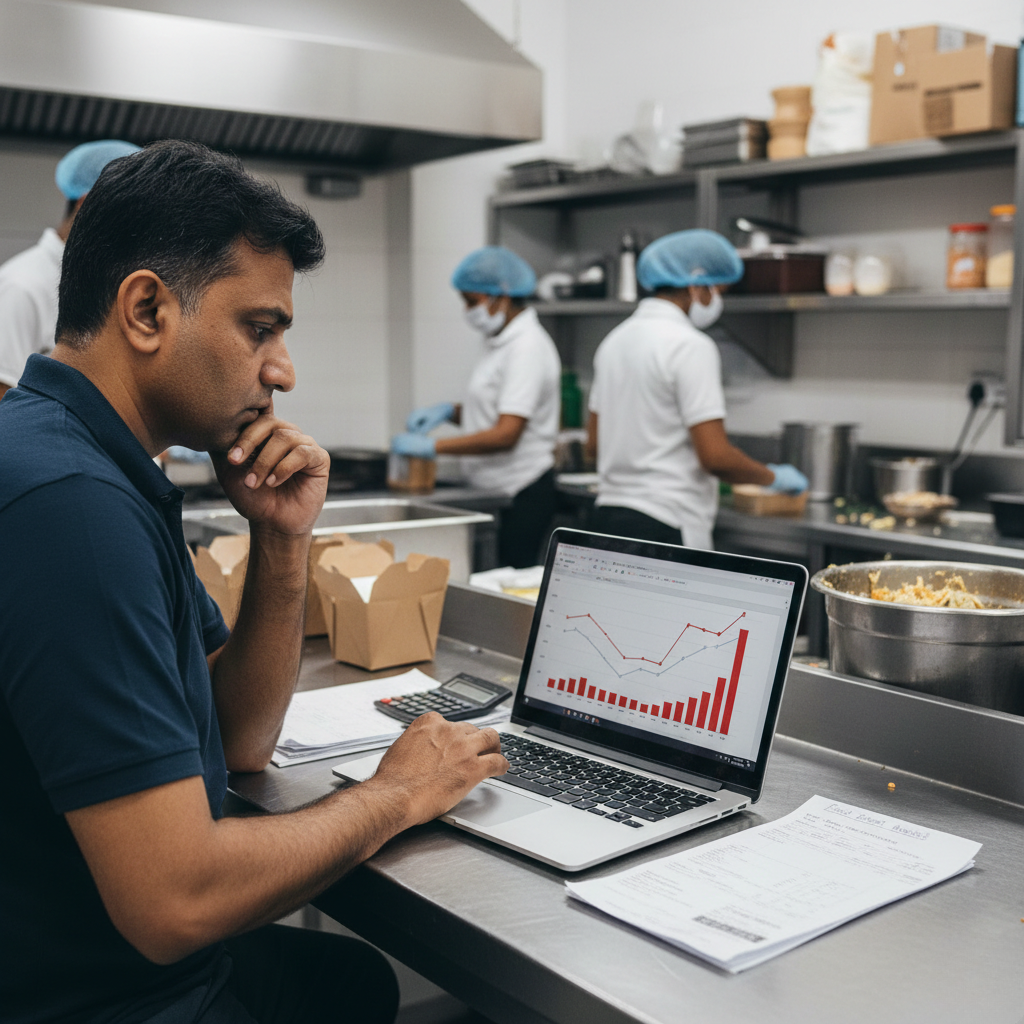
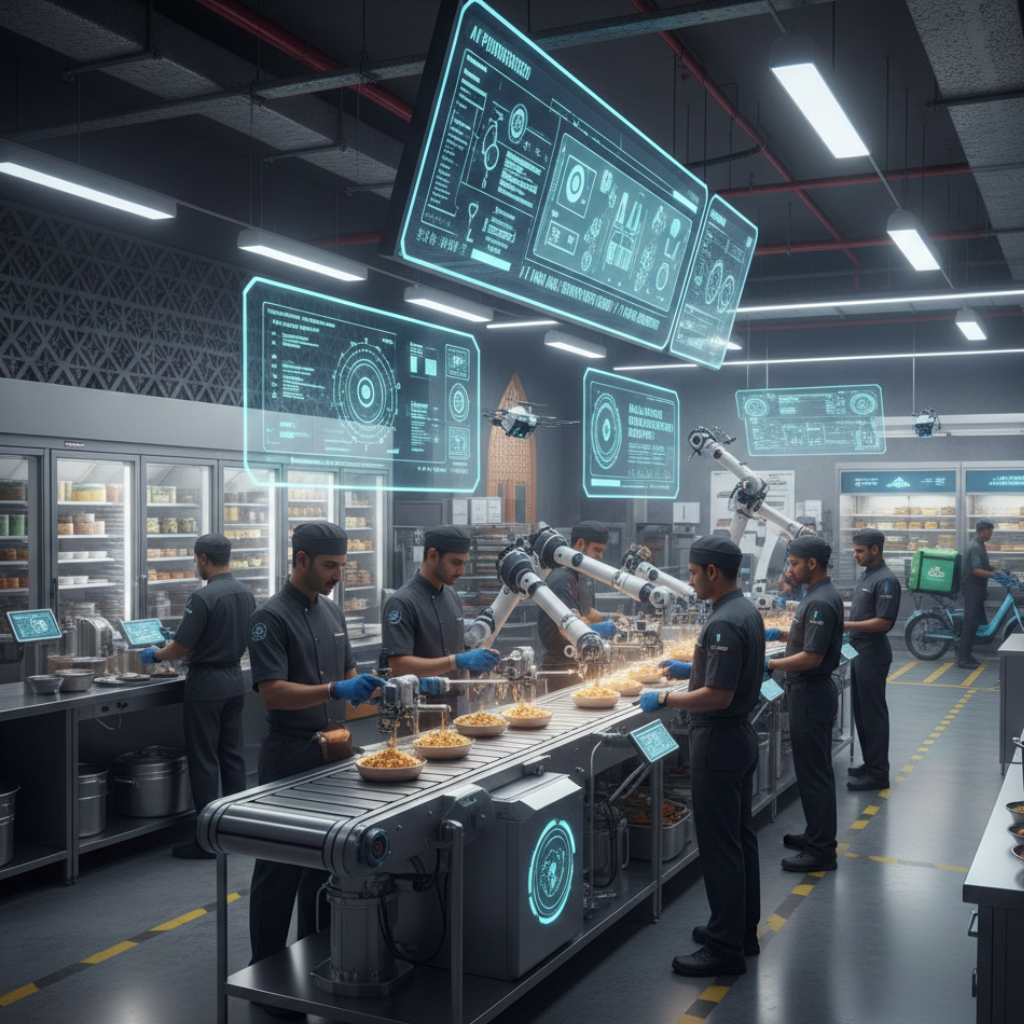
AI in Cloud Kitchen Operations is no longer limited to tech companies or global enterprises. In India’s rapidly evolving food delivery ecosystem, AI is quietly reshaping how cloud kitchens operate, compete, and scale. From predicting customer demand to reducing food wastage and improving delivery efficiency, AI is becoming a powerful advantage for modern cloud kitchens. Cloud Kitchen Business in India
As competition intensifies and margins remain thin, cloud kitchens that leverage AI-driven operations are better positioned to survive and grow. In this in-depth guide, we explore how AI in cloud kitchen operations is transforming the industry in India, the key use cases, benefits, challenges, and what the future holds.

1. Evolution of Cloud Kitchen Operations in India
In the early days, most cloud kitchens in India operated manually. Decisions were based on intuition, spreadsheets, and daily experience. While this approach worked during low competition, it quickly became inefficient as order volumes increased.
Challenges faced by traditional cloud kitchen operations included:
- Inaccurate demand estimation
- High food wastage
- Inconsistent preparation time
- Poor inventory planning
- Delayed decision-making
AI has emerged as a solution to these operational bottlenecks by converting raw data into actionable insights.
2. What AI Means for Cloud Kitchens
Artificial Intelligence in cloud kitchens refers to the use of machine learning algorithms, data analytics, and automation systems to improve operational efficiency, customer experience, and profitability.
AI systems analyze large volumes of data such as:
- Order history
- Customer preferences
- Peak-hour trends
- Weather and seasonal patterns
- Inventory consumption
Based on this analysis, AI tools help kitchen owners make faster and smarter decisions.
3. AI-Powered Demand Forecasting
One of the most impactful applications of AI in cloud kitchen operations is demand forecasting.
3.1 Predicting Daily & Hourly Orders
AI models can predict order volumes by analyzing historical sales data, weekdays vs weekends, festivals, and even local events. This allows kitchens to prepare ingredients in the right quantity.
3.2 Reducing Over-Preparation
Accurate forecasting reduces overproduction, which directly lowers food wastage and improves margins.
According to industry analysis shared by Statista, food delivery demand in India shows predictable patterns that AI can effectively optimize.
4. Smart Inventory Management Using AI
Inventory management is one of the biggest cost centers for cloud kitchens. AI-driven inventory systems help optimize stock levels automatically.
4.1 Real-Time Inventory Tracking
AI-integrated POS systems update inventory in real time as orders are processed.
4.2 Automated Reordering
Based on consumption patterns, AI can trigger purchase orders before stock runs out, preventing last-minute procurement.
4.3 Waste Reduction
By aligning inventory with demand, kitchens can reduce food wastage by up to 15–25%.
5. AI in Menu Engineering & Pricing
Menu design has a direct impact on profitability. AI helps cloud kitchens engineer menus scientifically.
5.1 Identifying High-Performing Dishes
AI tools analyze order frequency, preparation time, and margins to identify best-selling and most profitable items.
5.2 Dynamic Pricing Strategies
Some advanced systems adjust pricing based on demand, time of day, or order volume to maximize revenue.
Low-margin items can be removed or bundled strategically based on AI insights.
6. Kitchen Automation & Workflow Optimization
AI-driven automation is transforming how cloud kitchens function internally.
- Automated order sequencing
- Optimized cooking workflows
- Reduced preparation bottlenecks
Smart kitchen dashboards guide staff on what to prepare next, reducing delays and human errors.
7. AI in Delivery & Order Fulfillment
Delivery efficiency directly impacts customer satisfaction.
7.1 Optimized Dispatch Timing
AI predicts preparation time accurately and syncs dispatch timing with delivery partners.
7.2 Reduced Order Cancellations
Accurate ETAs reduce cancellations caused by delayed deliveries.
Operational improvements like these are frequently discussed by Restaurant India.
8. Personalized Customer Experience with AI
AI enables cloud kitchens to personalize the customer experience.
- Personalized dish recommendations
- Targeted offers and promotions
- Improved repeat order rates
AI-driven personalization increases customer lifetime value without excessive discounting.
9. Quality Control & Fraud Detection
AI can identify operational anomalies such as:
- Sudden ingredient misuse
- Unusual order cancellations
- Staff performance issues
Early detection helps prevent losses and maintain quality standards.
10. Cost Control & Profitability Enhancement
AI helps cloud kitchens achieve sustainable profitability by:
- Reducing food wastage
- Optimizing manpower scheduling
- Improving supplier negotiations
Kitchens using AI-driven operations often see margin improvements of 3–6%.
11. Challenges of Implementing AI in Cloud Kitchens
Despite its benefits, AI adoption comes with challenges:
- Initial setup costs
- Data accuracy dependency
- Staff training requirements
- Integration with existing systems
However, these challenges are outweighed by long-term operational gains.
12. Future of AI in Cloud Kitchens in India

Over the next few years, AI adoption will accelerate across cloud kitchens in India.
Future advancements include:
- AI-powered robotic cooking assistants
- Voice-based kitchen management
- Hyper-personalized food offerings
- Fully autonomous inventory systems
AI will become a necessity rather than a luxury.
13. Final Thoughts: AI as a Competitive Advantage
AI in cloud kitchen operations is transforming the industry from intuition-driven businesses into data-driven food brands. In a market where margins are thin and competition is fierce, AI provides the efficiency, visibility, and control needed to survive and scale.
Cloud kitchens that adopt AI early will gain a long-term competitive advantage in India’s evolving food delivery ecosystem.
Frequently Asked Questions (FAQs)
Q1. How is AI used in cloud kitchens?
AI is used for demand forecasting, inventory management, menu optimization, delivery efficiency, and customer personalization.
Q2. Is AI expensive for small cloud kitchens?
Many AI-powered tools are now affordable and scalable, making them accessible even for small cloud kitchens.
Q3. Can AI improve cloud kitchen profitability?
Yes, AI reduces wastage, optimizes costs, and improves decision-making, leading to higher margins.
Q4. Will AI replace kitchen staff?
AI will assist staff, not replace them, by automating repetitive tasks and improving efficiency.
People Also Read
- Cloud Kitchen Trends 2025
- Future of Cloud Kitchens in India
- Cloud Kitchen Survival Strategies
- Cloud Kitchen Profitability Case Study