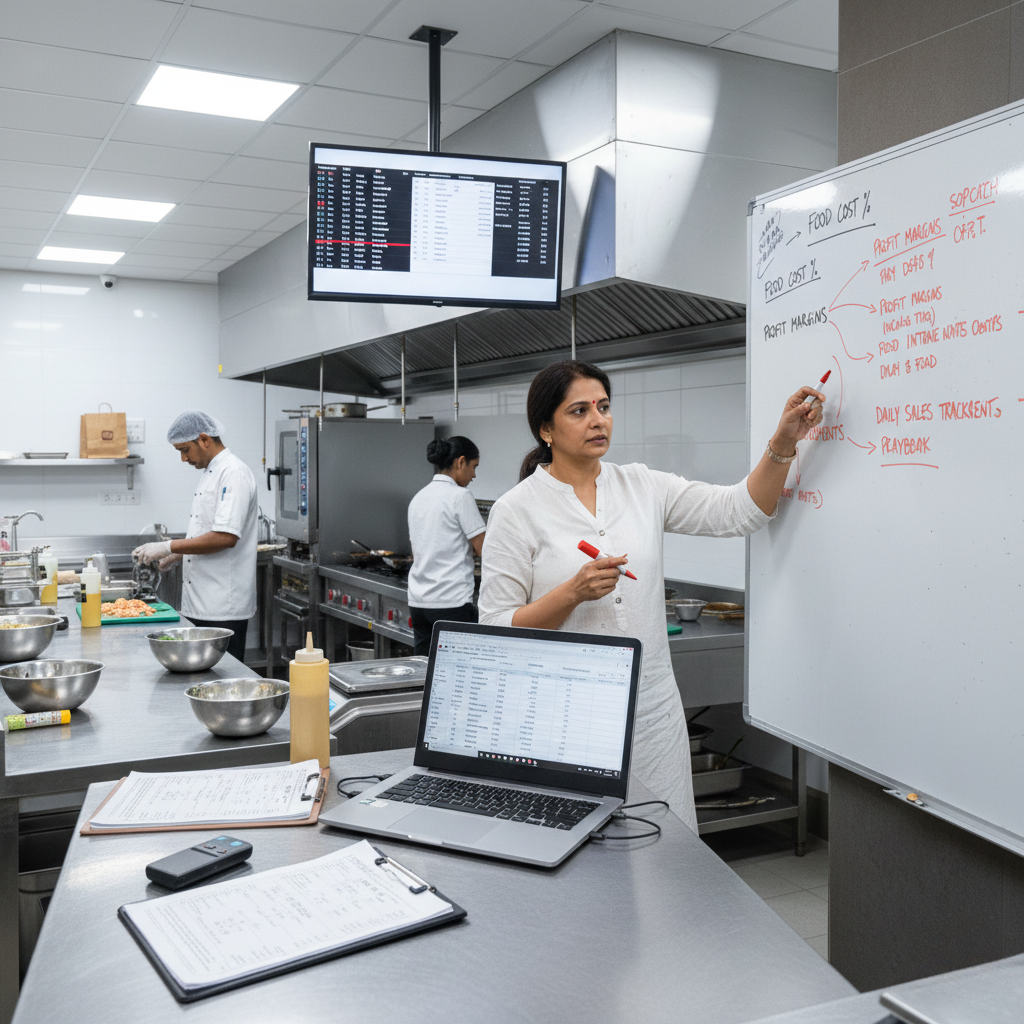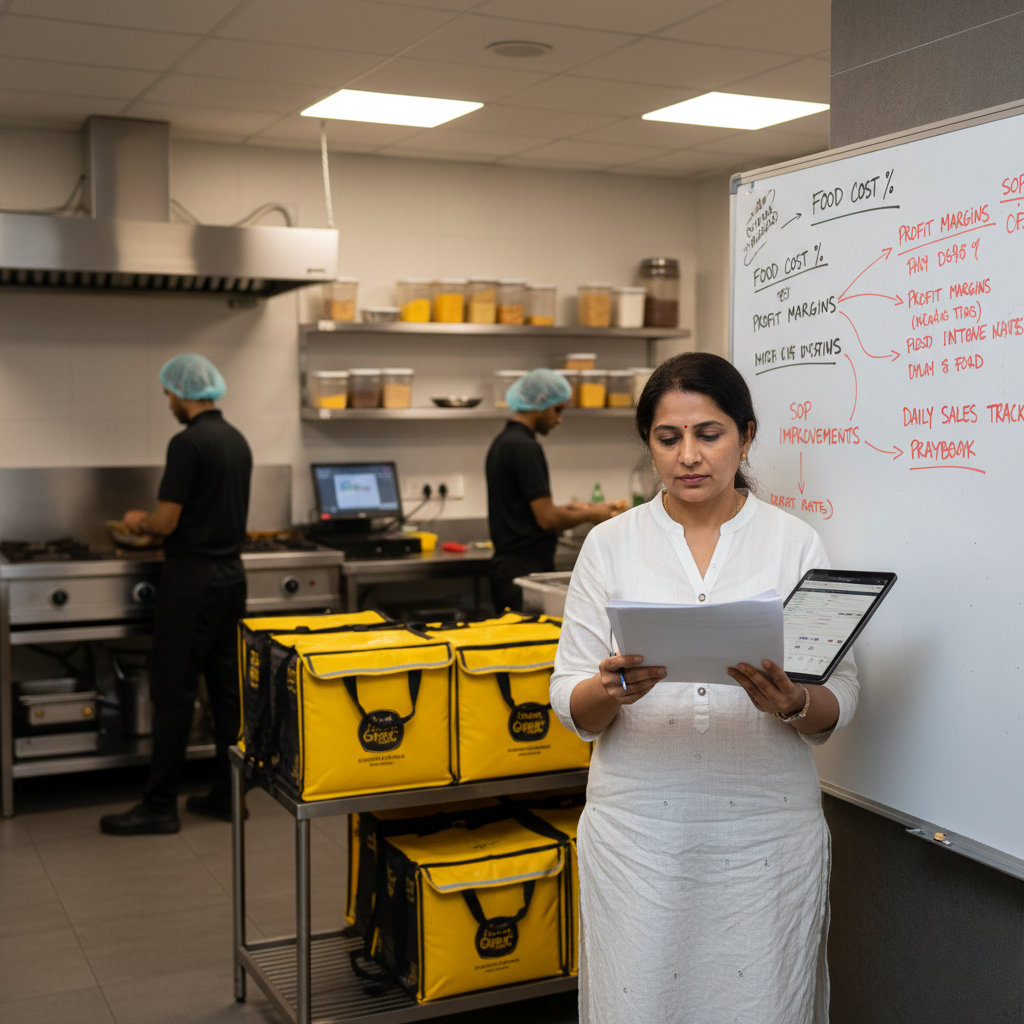
Cloud kitchen manpower planning in India is one of the most critical factors that decides profitability. While food quality and marketing drive orders, manpower cost often determines whether a cloud kitchen survives or bleeds cash. This guide explains how to build the right cloud kitchen team without killing margins, using structured staffing, role clarity, and operational discipline.
Why Manpower Planning Matters in Cloud Kitchens
This article is part of GrowKitchen’s cloud kitchen operations and profitability series. To understand the overall business model, start with: Cloud Kitchen Business in India .
For delivery-side operations and demand flow, cloud kitchens typically rely on Swiggy and Zomato.
What Is Cloud Kitchen Manpower Planning?
Cloud kitchen manpower planning is the process of deciding how many people are required, what roles they perform, and how shifts are structured to meet order demand at the lowest possible cost.
Unlike traditional restaurants, cloud kitchens do not need front-of-house staff. However, poor manpower planning can still inflate costs and destroy margins silently.
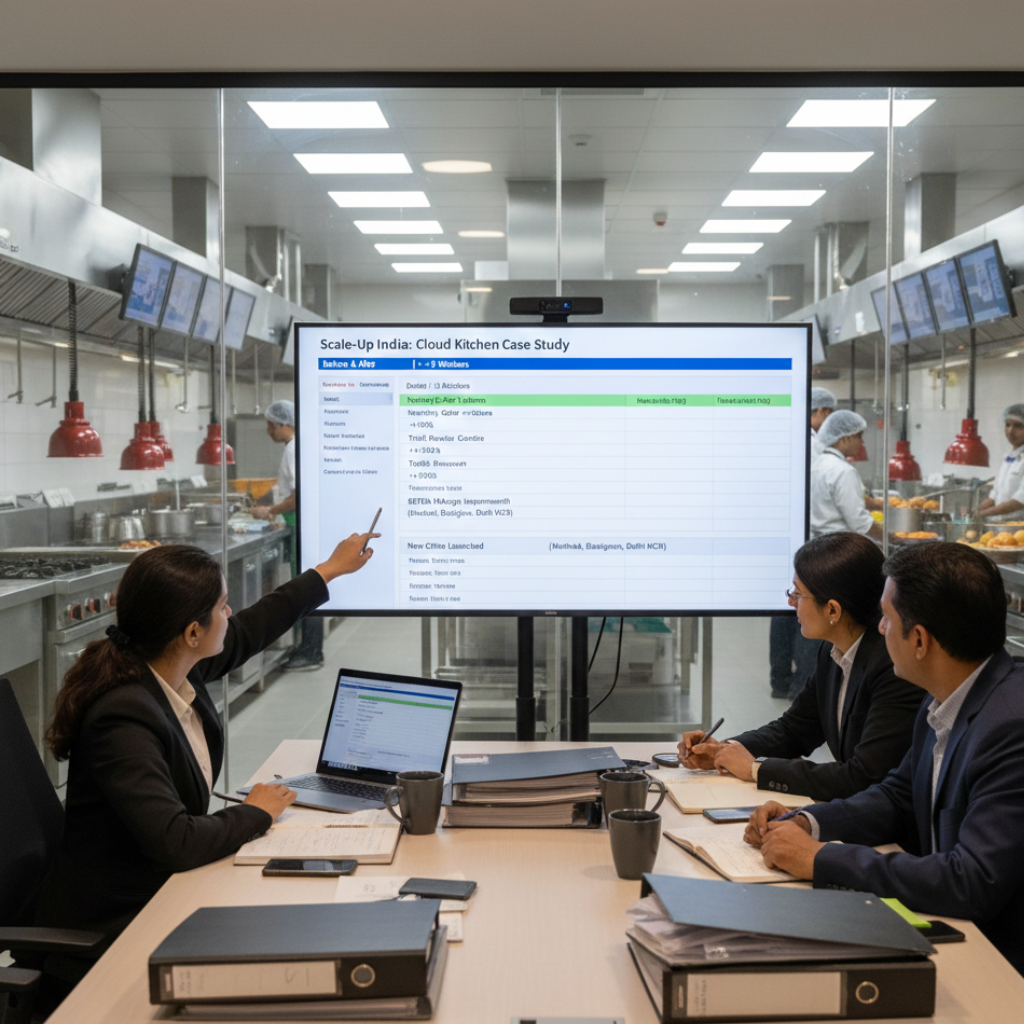
Why Manpower Cost Is a Margin Killer
Manpower is one of the largest fixed costs in a cloud kitchen. Unlike raw material, staff salaries do not reduce when orders are low.
Many cloud kitchens fail because they hire too many people too early or assign overlapping roles that add no value. Manpower planning must align with realistic order volumes, not optimistic projections.
Ideal Team Structure for a Small Cloud Kitchen
A small cloud kitchen in India can operate efficiently with a lean team of 3-6 people per shift.
- 1 Head Cook / Kitchen Lead
- 1-2 Line Cooks
- 1 Helper / Prep Staff
- 1 Packing & Dispatch Executive
Founders often make the mistake of hiring separate staff for every function. Cross-trained staff improves flexibility and lowers cost.
Shift Planning Based on Order Demand
Cloud kitchen demand is not uniform throughout the day. Lunch and dinner peaks require higher manpower, while off-peak hours do not.
Smart kitchens plan staggered shifts instead of running full staff all day. This significantly reduces idle salary cost.
Why SOPs Reduce Manpower Dependency
Standard Operating Procedures (SOPs) reduce reliance on highly skilled staff. When processes are standardized, average-skilled workers can perform consistently.
SOP-driven kitchens require fewer supervisors and experience lower staff churn: Cloud Kitchen SOP Checklist .
Manpower Cost as a Percentage of Revenue
In a healthy cloud kitchen, manpower cost should ideally remain within 15-22% of monthly revenue.
If manpower exceeds this range, either pricing, staffing levels, or productivity needs correction.
Common Manpower Planning Mistakes
The most common mistakes include hiring based on future growth, duplicating roles, lack of shift planning, and no performance tracking.
Emotional hiring decisions often result in long-term financial stress.
Using Daily Metrics to Optimize Manpower
Daily order count, preparation time, and staff productivity must be tracked. This allows founders to adjust staffing before costs spiral out of control.
Learn how daily tracking protects margins: Cloud Kitchen Daily Sales Tracker .
Final Thoughts: Build Lean Before You Scale
Cloud kitchen manpower planning in India is about balance, not minimalism. Understaffing hurts ratings, overstaffing kills margins.
Kitchens that grow sustainably start lean, standardize operations, and scale manpower only when numbers justify it.
FAQs: Cloud Kitchen Manpower Planning in India
How many staff are required for a cloud kitchen in India?
A small cloud kitchen typically operates with 3-6 staff members per shift, depending on order volume and cuisine complexity.
What is the ideal manpower cost percentage?
Manpower cost should ideally be between 15% and 22% of monthly revenue for healthy margins.
Can one person handle multiple roles in a cloud kitchen?
Yes, cross-training staff to handle prep, cooking, and packing is common and helps reduce overall manpower cost.
Why do many cloud kitchens overspend on manpower?
Overspending usually happens due to poor shift planning, emotional hiring, lack of SOPs, and hiring for future demand instead of current orders.
How can manpower planning improve profitability?
Efficient manpower planning reduces fixed costs, improves productivity, and protects margins even during low-demand periods.