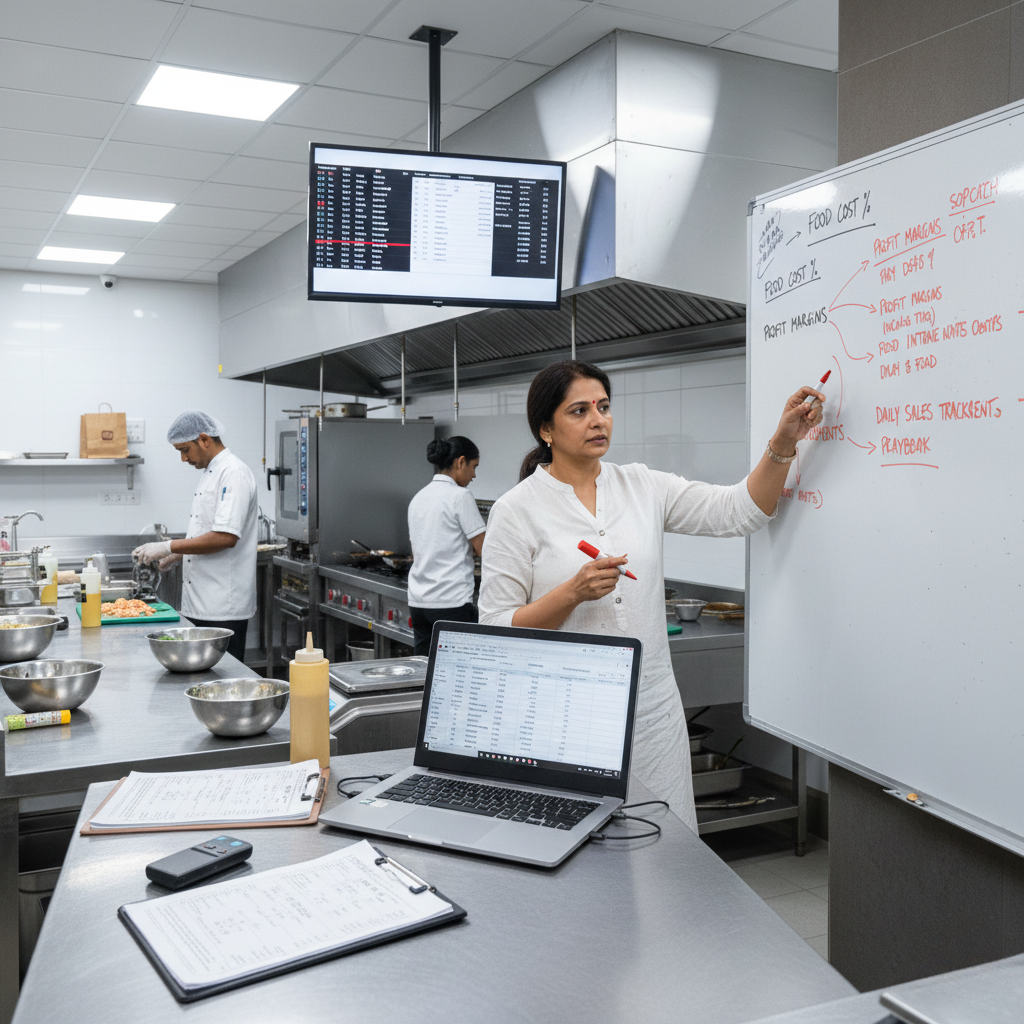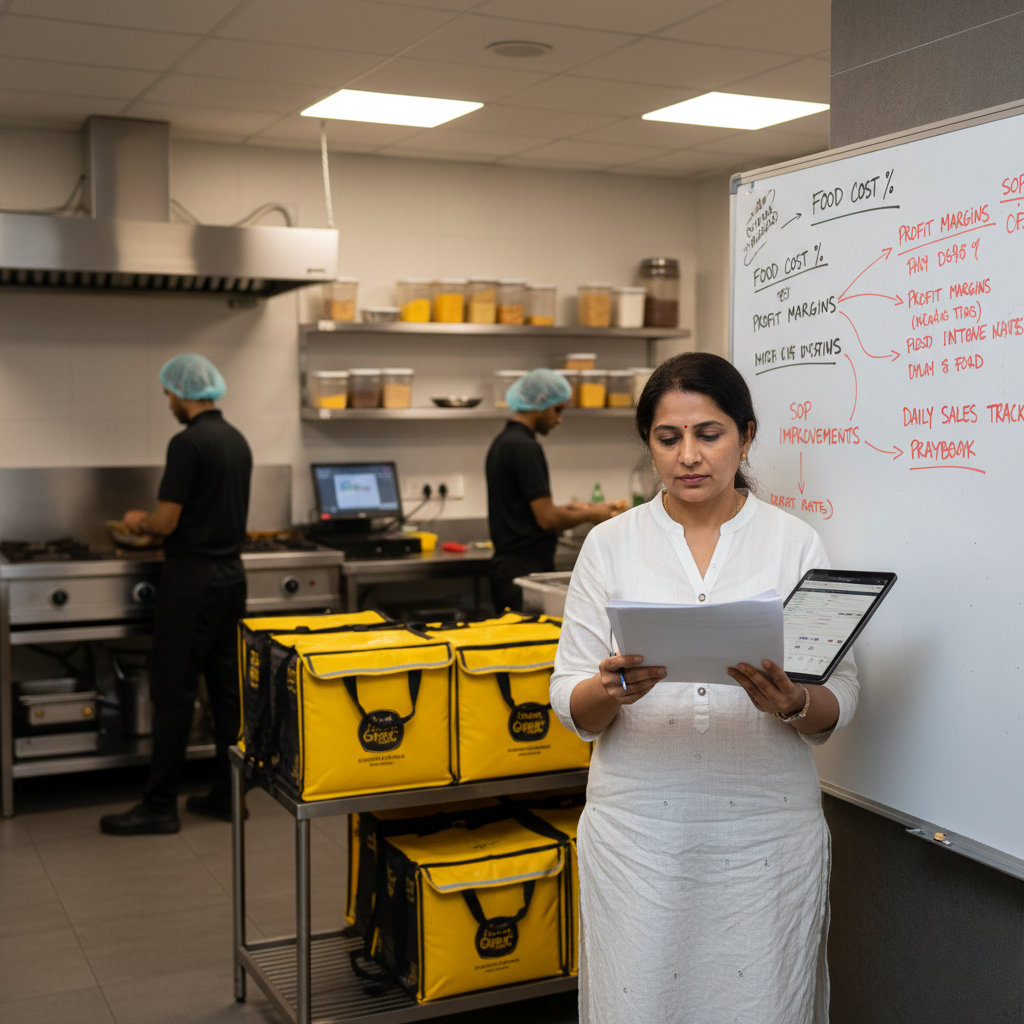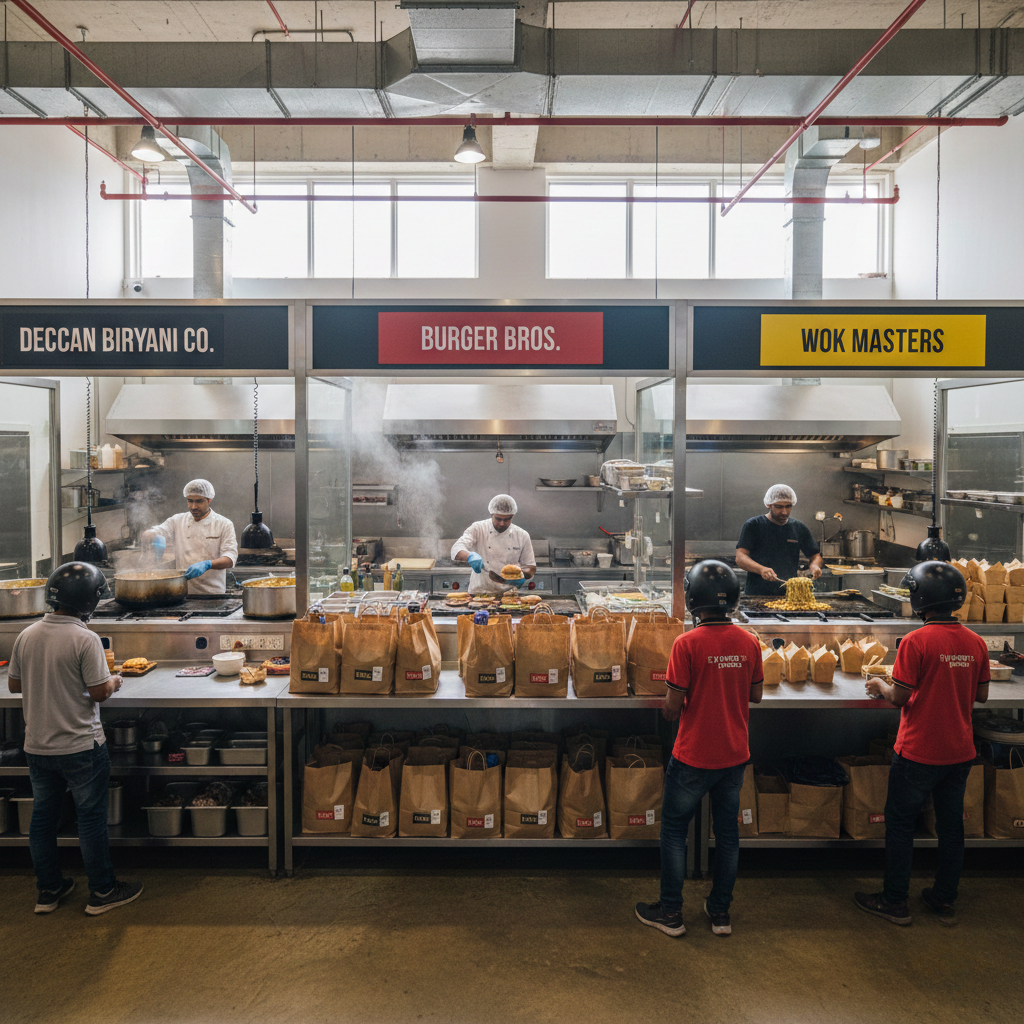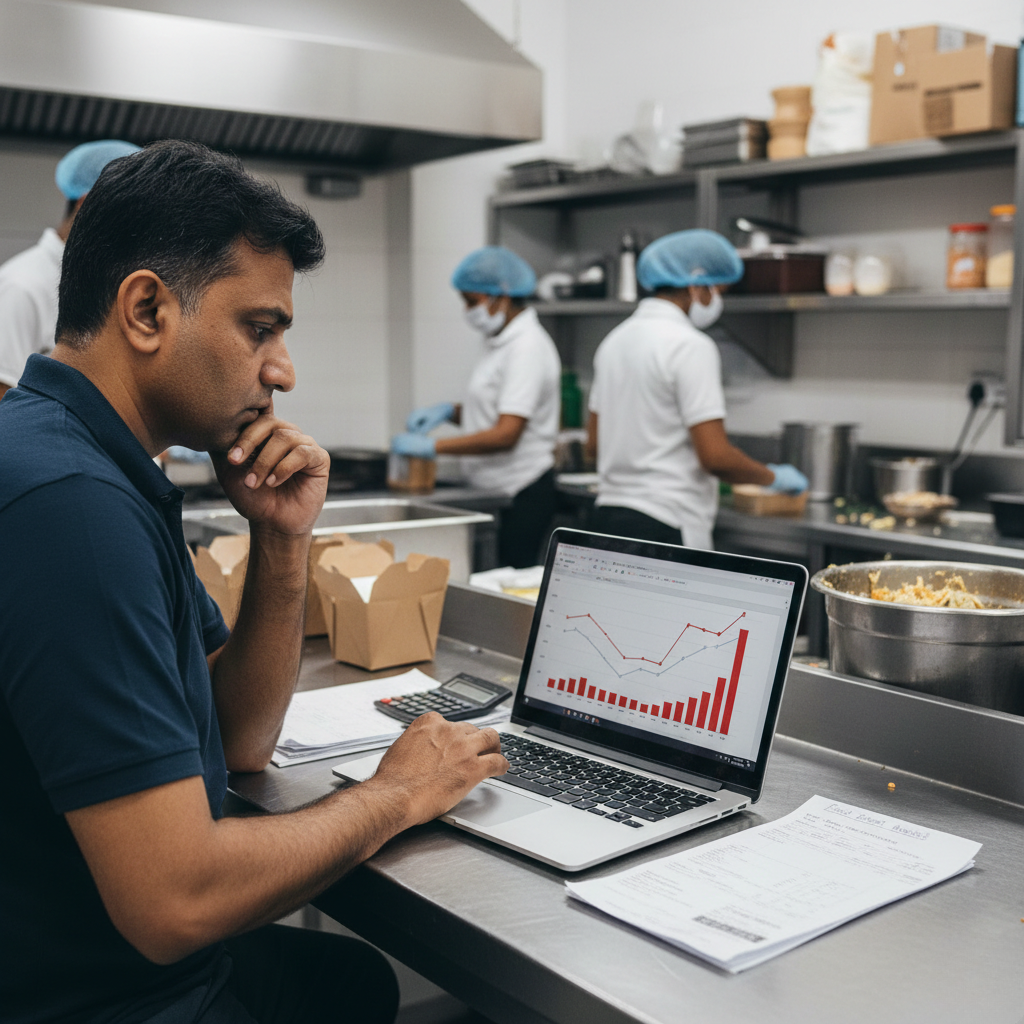
Cloud kitchens are often promoted as a low-investment, high-return food business. But many aspiring entrepreneurs still ask a critical question: Is a cloud kitchen actually profitable in India?
The short answer is yes—but not by default. Profitability depends on numbers, execution, and discipline. In this article, we break down real profit figures, risks involved, and what truly works in the Indian cloud kitchen ecosystem.
What Does Profitability Mean in a Cloud Kitchen?
Profitability is not about revenue—it’s about what remains after all expenses:
- Food cost
- Aggregator commissions (Swiggy/Zomato)
- Rent and utilities
- Staff salaries
- Packaging and marketing
Many cloud kitchens generate good revenue but still struggle to make profits due to weak unit economics.
Real Cloud Kitchen Profit Margins in India
Based on industry benchmarks and operator data, typical net profit margins are:
- Early-stage kitchens: 5% – 8%
- Stabilized kitchens: 10% – 15%
- Well-optimized kitchens: 18% – 25%
These numbers assume disciplined cost control and stable order volume. You can explore this in more detail in cloud kitchen profit margin in India.
Monthly Profit Example: Realistic Scenario
Let’s look at a realistic single-brand cloud kitchen example:
- Monthly revenue: ₹6,00,000
- Net profit margin: 15%
Monthly profit calculation:
₹6,00,000 × 15% = ₹90,000
This level of profit is achievable only when costs are tightly controlled.
Cost Structure That Determines Profitability
A profitable cloud kitchen usually follows this cost structure:
- Food cost: 25% – 30%
- Aggregator commission: 18% – 25%
- Rent & utilities: ₹30,000 – ₹80,000
- Staff salaries: ₹40,000 – ₹1,00,000
- Packaging & marketing: 5% – 8%
Food cost is the most critical variable. Benchmarks are explained in cloud kitchen food cost percentage in India .
Is Cloud Kitchen More Profitable Than Restaurants?
In many cases, yes. Cloud kitchens avoid:
- High interior and setup costs
- Front-of-house staff expenses
- Prime high-rent locations
This allows cloud kitchens to reach breakeven faster than traditional restaurants. Learn more in cloud kitchen breakeven period in India .
Major Risks That Reduce Profitability
Despite the potential, cloud kitchens carry real risks:
1. High Aggregator Dependence
Swiggy and Zomato commissions directly impact margins. Any algorithm or commission change affects profitability.
2. Poor Menu Design
Low-margin items and oversized menus increase wastage and food cost. Menu optimization is explained in cloud kitchen menu engineering in India .
3. Discount Addiction
Heavy discounts increase revenue but reduce profits. Once discounts stop, orders drop.
4. Operational Inefficiency
Lack of SOPs leads to quality issues, delays, and bad reviews.
5. Unrealistic Expectations
Many founders expect fast profits without understanding the learning curve.
These challenges are covered in detail in why cloud kitchens fail in India .
What Actually Works for Profitable Cloud Kitchens?
- Simple, high-margin menus
- Strong portion and recipe control
- Focus on repeat customers
- Limited but well-positioned brands
- Operational discipline
Kitchens that treat this as a systems-driven business—not a passion project— are the ones that stay profitable.
Does Consulting Improve Profitability?
Yes. Professional guidance helps founders avoid costly trial-and-error. According to Restaurant India , kitchens with structured planning reach profitability faster.
Learn more in cloud kitchen consulting services in India .
Conclusion
So, is cloud kitchen profitable in India? Yes—but only when done right.
Cloud kitchens with strong cost control, smart menus, and operational discipline can achieve 10%–25% net profit margins. Those that chase revenue without systems often struggle or shut down.
Profitability is not accidental—it’s designed.
Frequently Asked Questions (FAQs)
Is cloud kitchen profitable for beginners?
Yes, if beginners start small, control costs, and follow proven models.
How much profit can a cloud kitchen make per month?
Profitable kitchens typically earn ₹50,000 to ₹2 lakhs per month per brand.
Is cloud kitchen risky in India?
Yes. High competition and commissions make execution critical.
Can cloud kitchens be scaled profitably?
Yes, if scalability is planned through systems and standardization.
Is consulting necessary?
Not mandatory, but it significantly improves the chances of profitability.
People Also Read
- Cloud Kitchen Profit Margin in India: Real Numbers Explained
- Cloud Kitchen Monthly Revenue in India: Benchmarks & Growth
- Cloud Kitchen Breakeven Period in India
- Why Cloud Kitchens Fail in India