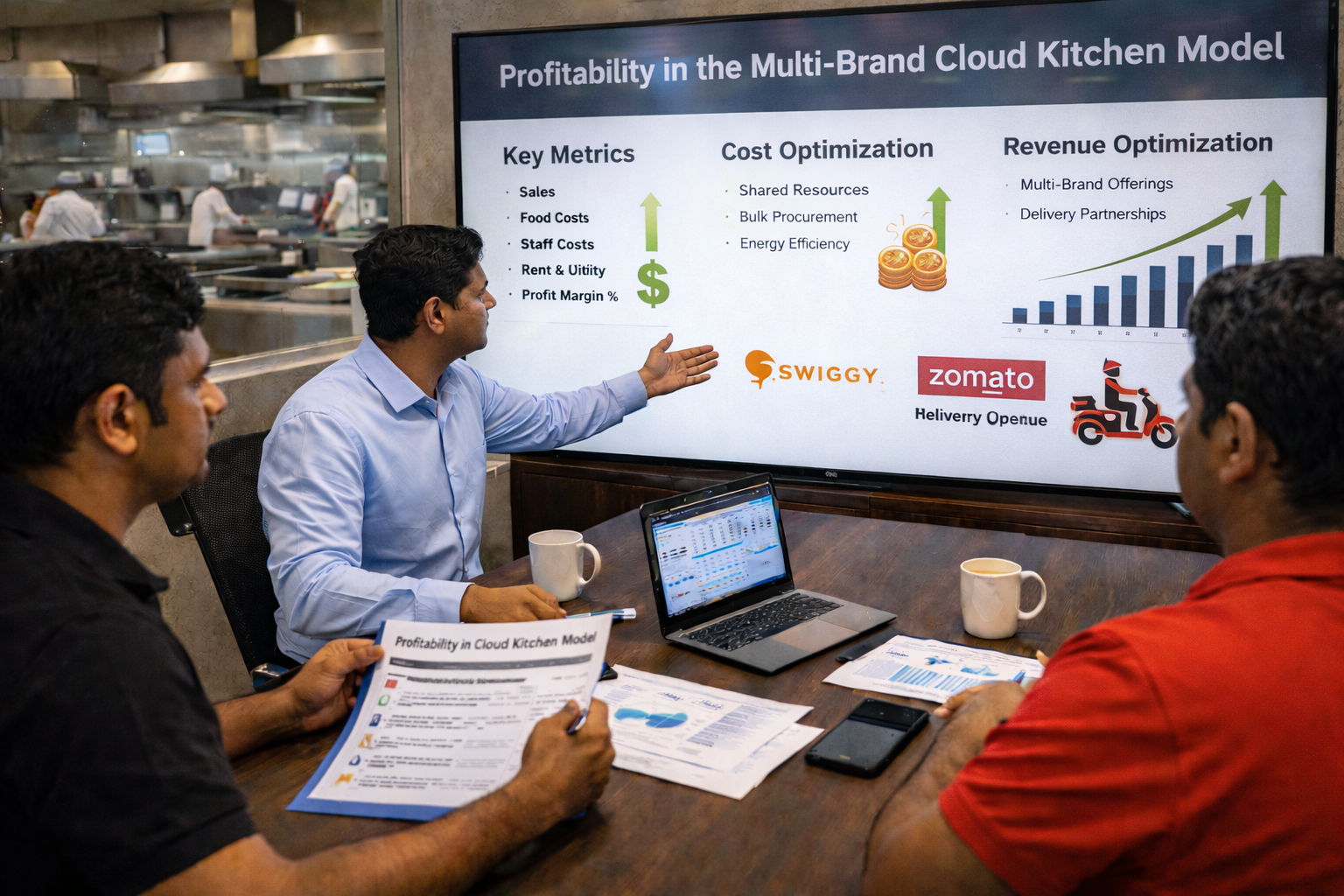
As cloud kitchens evolve from single-location setups into multi-city food brands, operators face a critical challenge: how to scale without losing control over cost, quality, and consistency.
This is where the centralized kitchen model in India-also known as the commissary kitchen model-comes into play. Most large cloud kitchen brands and QSR-style delivery businesses rely on centralized kitchens to power rapid, controlled expansion. Cloud Kitchen Business in India
What Is a Centralized Kitchen Model?
A centralized kitchen model involves a single large kitchen (or a few regional hubs) that handles bulk food preparation, sourcing, and semi-processing.
This central kitchen supplies:
- Pre-prepared ingredients
- Sauces, gravies, and bases
- Marinated or portioned items
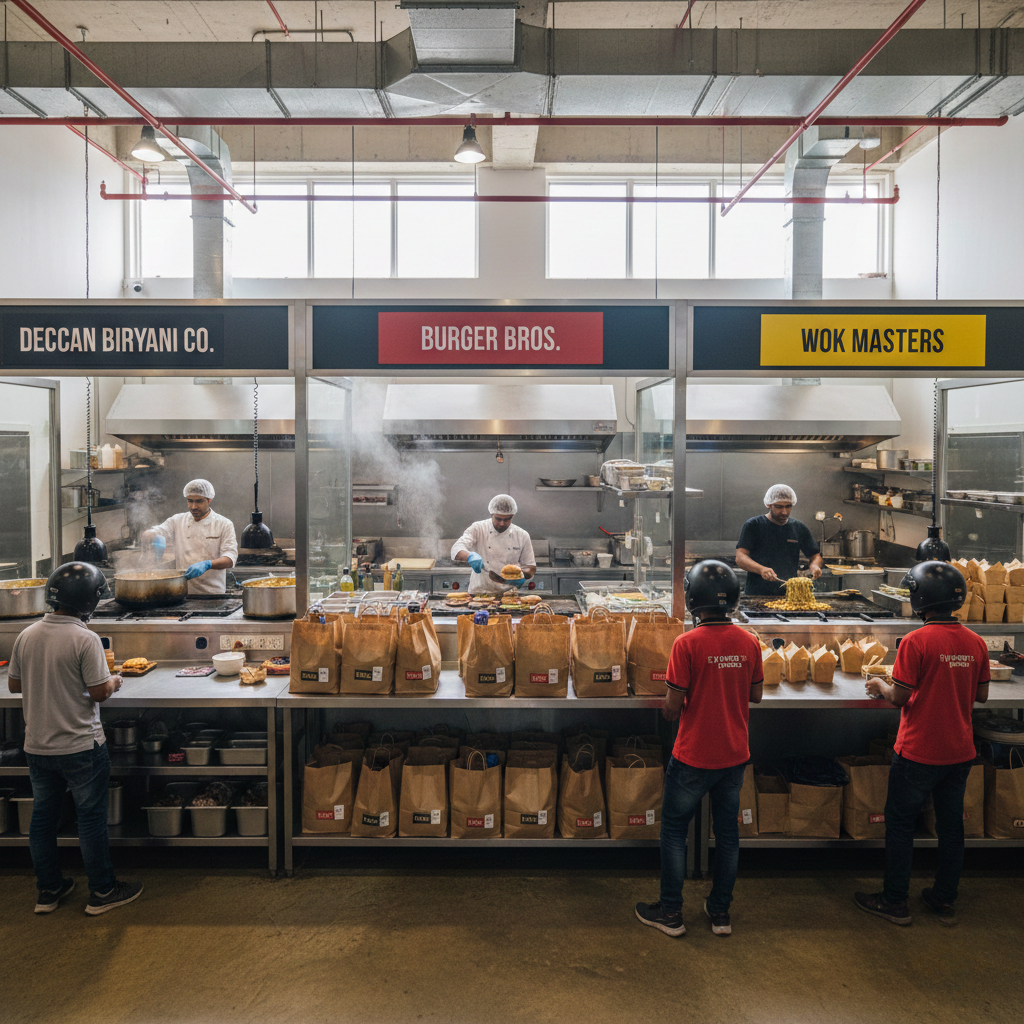
These are then sent to multiple satellite kitchens (delivery kitchens), which focus only on final cooking, assembly, and dispatch.
Why Centralized Kitchens Are Critical for Scaling in India
India’s cloud kitchen market is highly competitive and margin-sensitive. Centralized kitchens solve several scaling problems at once:
- Inconsistent taste across locations
- High raw material costs
- Training challenges at scale
- Operational inefficiency
This model is a core pillar of the cloud kitchen scaling framework in India .
How the Centralized Kitchen Model Works
Step 1: Central Procurement
Raw materials are purchased in bulk at the central kitchen level. This improves vendor negotiation power and reduces per-unit cost.
Step 2: Standardized Prep
Recipes are executed in a controlled environment with strict SOPs. This ensures uniform taste and portioning across all locations.
Step 3: Cold Chain or Controlled Distribution
Prepared items are transported daily or weekly to satellite kitchens using cold storage or insulated logistics.
Step 4: Final Cooking & Dispatch
Satellite kitchens focus only on last-mile cooking and order fulfillment, reducing skill dependency at each outlet.

Cost Advantages of a Centralized Kitchen Model
While a centralized kitchen requires higher upfront investment, it significantly reduces long-term operational costs.
- Lower food cost through bulk sourcing
- Reduced wastage
- Smaller satellite kitchens
- Lower staffing cost per outlet
Food cost benchmarks are explained in cloud kitchen food cost percentage in India .
Impact on Profit Margins & Unit Economics
Centralized kitchens dramatically improve unit economics by:
- Increasing contribution margin per order
- Spreading fixed costs across multiple outlets
- Reducing per-order preparation time
Well-run centralized models often achieve higher margins than independent kitchens. See real numbers in cloud kitchen profit margin in India .
Centralized Kitchen vs Independent Cloud Kitchens
| Factor | Centralized Model | Independent Kitchens |
|---|---|---|
| Consistency | Very High | Low to Medium |
| Food Cost | Lower | Higher |
| Scalability | High | Limited |
| Initial Investment | Higher | Lower |
Which Brands Should Use a Centralized Kitchen?
The centralized kitchen model is ideal for:
- Brands with 3+ locations
- Multi-city expansion plans
- Standardized menus (QSR-style)
- High daily order volumes
It is usually not recommended for first-time founders starting with a single kitchen.
Common Challenges in Centralized Kitchens
Despite its benefits, the model has challenges:
- Higher capital requirement
- Complex logistics management
- Dependency on cold-chain reliability
- Need for strict quality control
Without proper planning, these challenges can offset benefits. Many failures are discussed in why cloud kitchens fail in India .
Investment Required for a Centralized Kitchen
A basic centralized kitchen setup in India may require:
- Central kitchen setup: ₹15 – ₹40 lakhs
- Cold storage & logistics: ₹5 – ₹15 lakhs
- Technology & SOP development: ₹2 – ₹5 lakhs
Investment planning is explained in detail in cloud kitchen investment cost in India .
Role of Technology & SOPs
Technology is non-negotiable for centralized kitchens:
- Central inventory tracking
- Batch-wise quality control
- Production forecasting
- Outlet-wise consumption analysis
Operational discipline is covered in cloud kitchen operations management .
Industry Outlook in India
According to Restaurant India , large food brands increasingly prefer centralized models to maintain consistency and profitability while expanding rapidly.
Conclusion
The centralized kitchen model in India is not just an operational choice-it is a strategic advantage for food brands aiming to scale.
By controlling cost, quality, and consistency at the core, centralized kitchens enable brands to grow from a few outlets to dozens-without losing control.
Frequently Asked Questions (FAQs)
What is a centralized kitchen model?
It is a model where bulk food preparation is done at one central kitchen and supplied to multiple delivery outlets.
Is centralized kitchen better for cloud kitchens?
Yes, especially for brands with multiple locations and scaling plans.
Is centralized kitchen expensive?
Initial investment is higher, but long-term operating costs are lower.
Can small brands use centralized kitchens?
Small brands usually adopt this model after reaching 3–5 locations.
Does centralized kitchen improve profit margins?
Yes. Bulk sourcing and standardization significantly improve margins.
People Also Read
- Cloud Kitchen Scaling Framework in India
- Scalable Cloud Kitchen Model in India
- Cloud Kitchen Profit Margin in India
- Cloud Kitchen Investment Cost in India
- Why Cloud Kitchens Fail in India