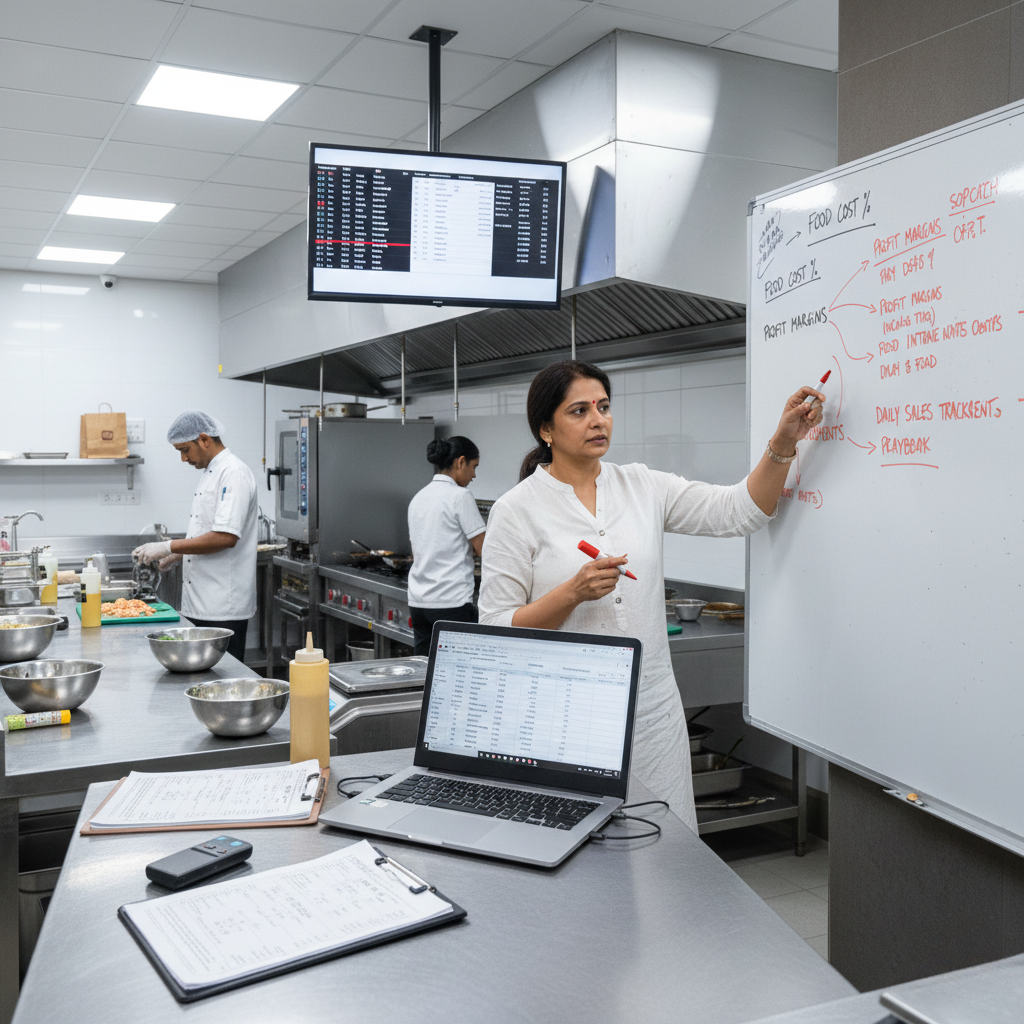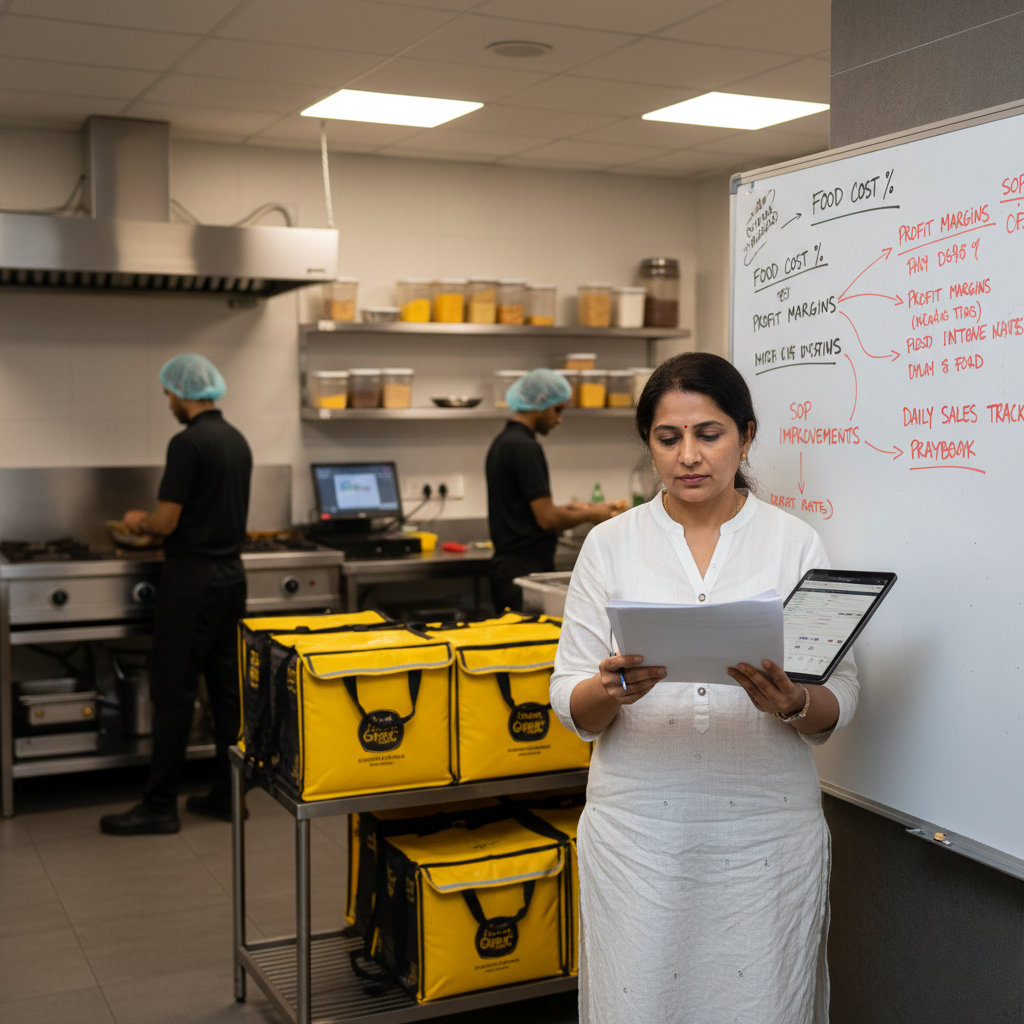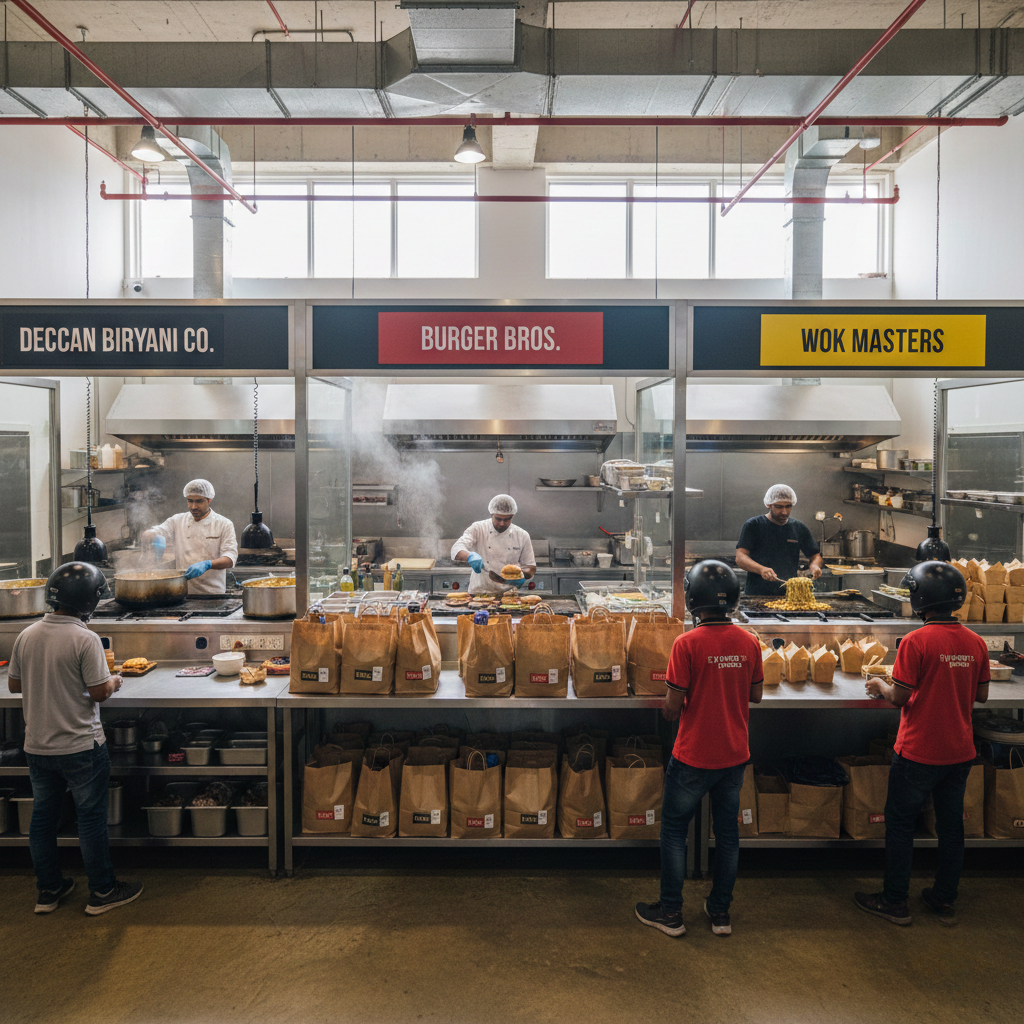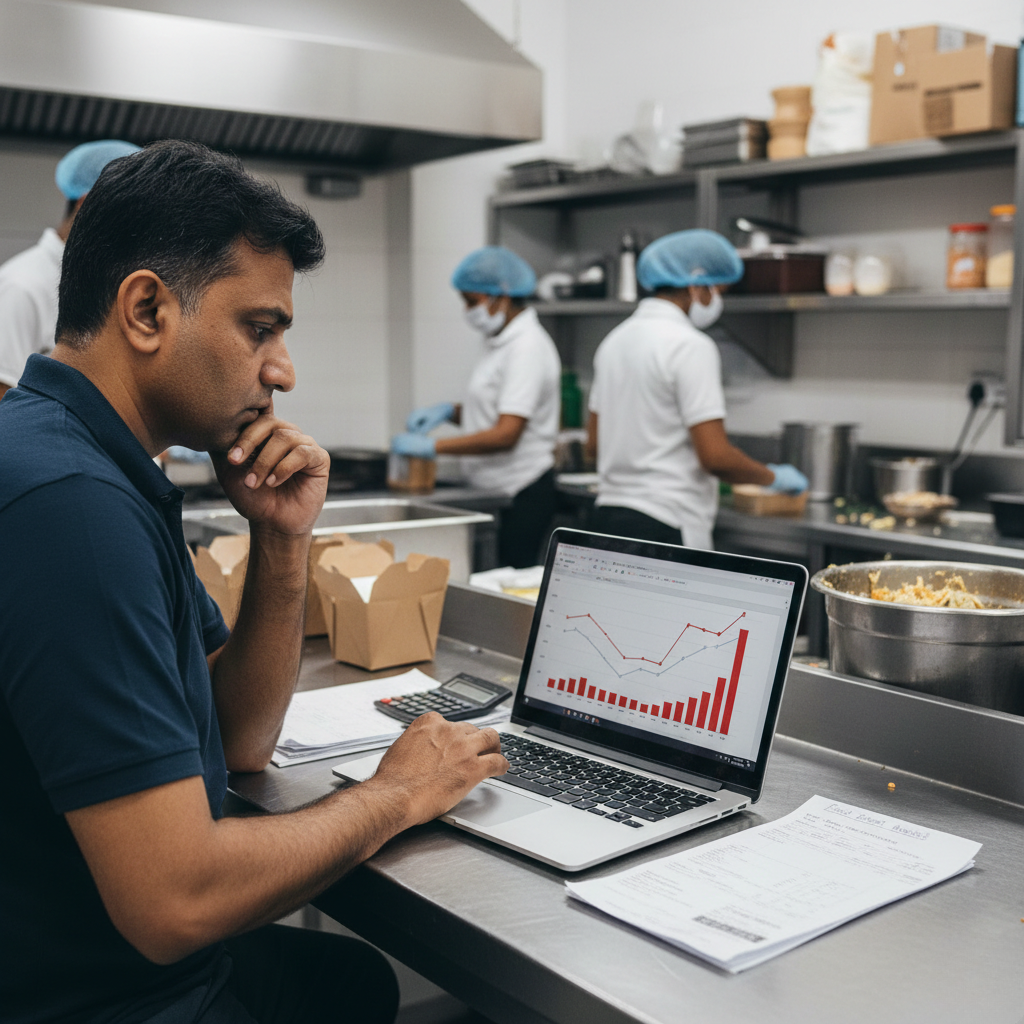
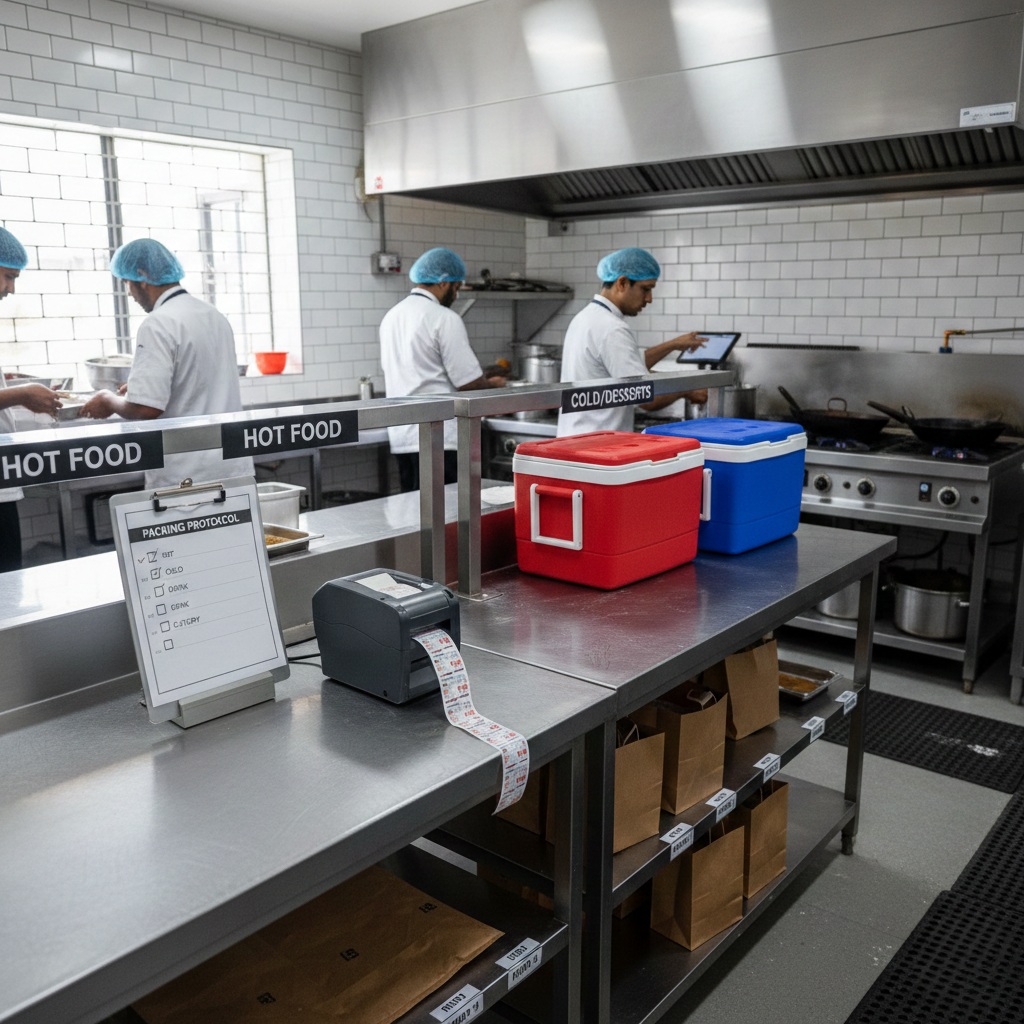
Most cloud kitchens don’t fail because the idea was bad. They fail because scaling amplifies operational weakness. Refund leakage increases. Ratings drop. Margins shrink. Visibility declines. Growth stalls. This guide explains the real reasons cloud kitchens fail to scale and how to avoid those mistakes using structured execution systems.
Why Most Cloud Kitchens Fail to Scale: A Hard Reality Check
India has seen an explosion of delivery-first brands across platforms like Swiggy and Zomato. Entry barriers appear low. Rent a kitchen. List your menu. Start selling.
But scaling beyond ₹3–5 lakh monthly revenue is where most founders hit a ceiling. Orders increase but profits don’t. Complexity rises but control drops.
Before scaling, understand foundational profitability via Cloud Kitchen Profitability Consultant in India .
Scaling is not a marketing event. It is an operational transformation.
The biggest misconception in the cloud kitchen industry is that demand automatically translates to profit. Platforms like Swiggy and Zomato make order acquisition easier, but they also introduce algorithm-based distribution systems that reward operational reliability over short-term promotions. Kitchens that do not understand this dynamic mistake visibility for sustainability.
Scaling is a compounding exercise. Every operational gap becomes more expensive as volume increases. What was a small ₹5 food cost variance per order becomes a ₹1 lakh monthly loss at higher scale. What was a minor dispatch delay becomes a measurable rating decline that reduces impressions.
The reality is simple: cloud kitchen scaling is a systems engineering challenge. If your systems are weak, growth becomes unstable.
Mistake 1: Ignoring Unit Economics Until It Is Too Late
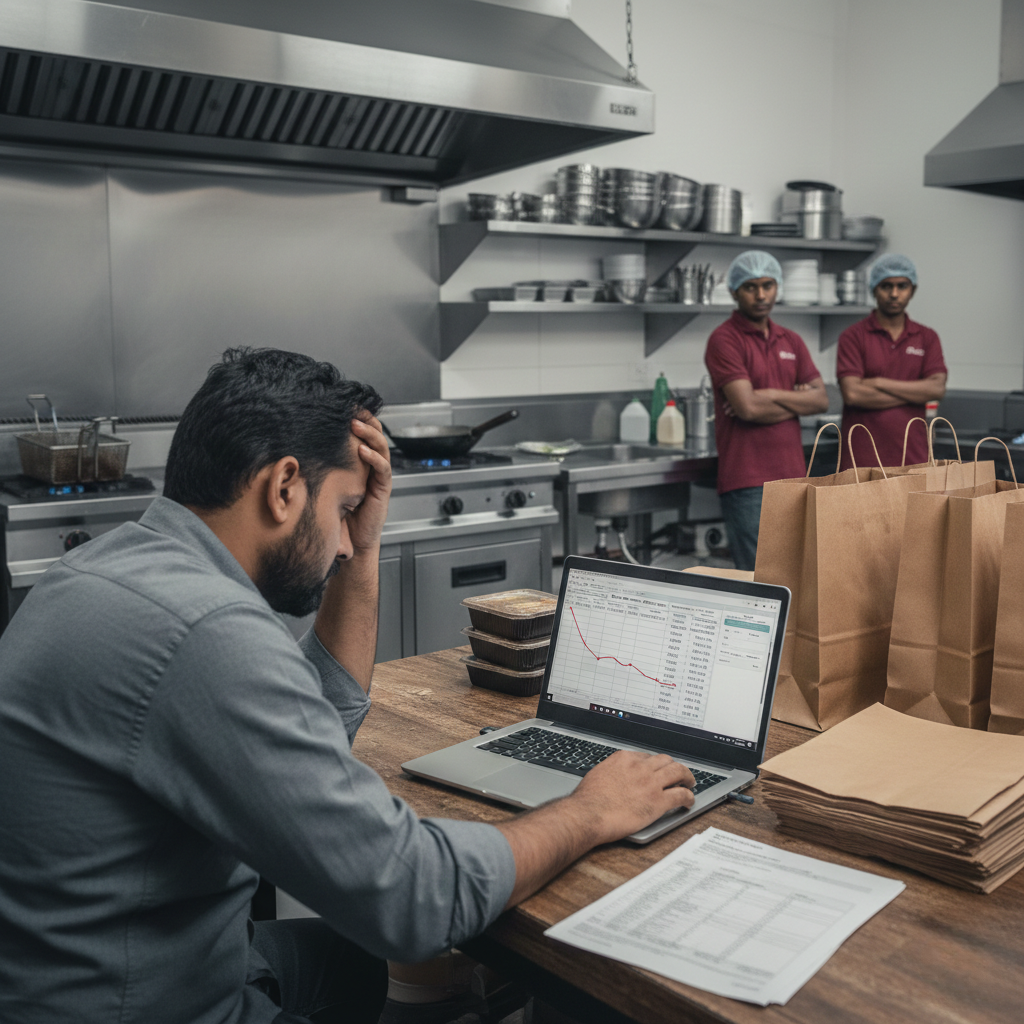
Most founders focus on gross revenue instead of contribution margin. A ₹400 order does not mean ₹400 income.
Deduct: Commission + GST + Packaging + Food Cost + Discounts + Refunds.
Without stable contribution margin, scaling multiplies losses.
Detailed breakdown: Aggregator Commission Impact in India .
Scaling without margin clarity is financial self-sabotage.
Many founders track revenue dashboards daily but ignore per-order profitability. Revenue growth can psychologically mask structural leakage. If commission rates average 22–30%, and food cost fluctuates between 35–45%, the remaining contribution margin becomes extremely sensitive to operational mistakes.
Refunds, especially partial refunds triggered by missing items or incorrect customization, silently erode profitability. Aggregators rarely compensate kitchens for operational errors. This means that operational discipline directly protects margin.
Before scaling marketing spend, calculate stable contribution margin for at least 30 consecutive days. If variance exceeds predictable range, scaling demand will increase financial instability.
Mistake 2: Letting Ratings Fall Below 4.2
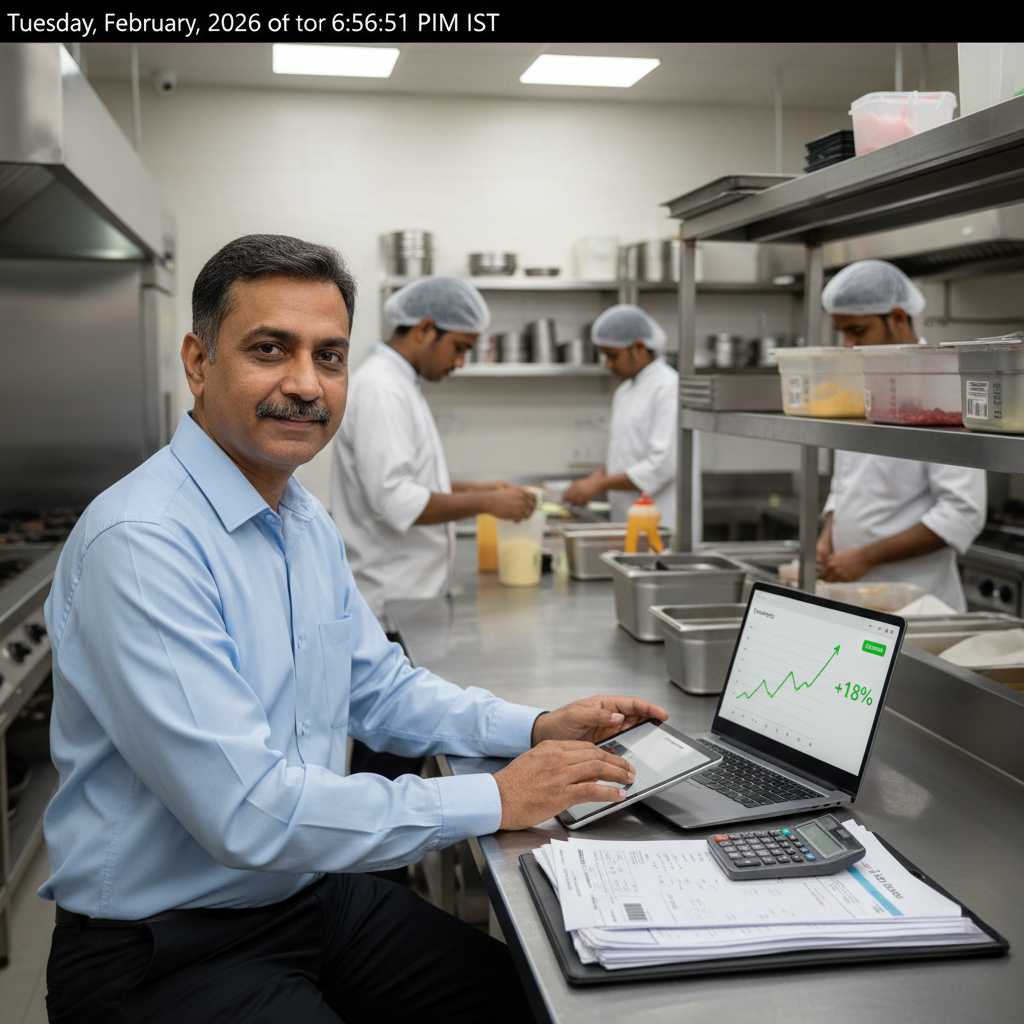
Visibility on aggregators depends heavily on reliability signals. Ratings below 4.0 drastically reduce impressions.
Refund rate, cancellation %, and late dispatch % directly impact platform distribution weight.
Refer platform guidelines: Swiggy Refund Policy and Zomato Ordering Terms.
Implement dispatch gates using: Cloud Kitchen Dispatch SOP .
Ratings are not branding metrics. They are distribution metrics.
Aggregator algorithms are built on performance indicators. High ratings, low refund rates, and stable dispatch times increase listing priority. When ratings decline below 4.2, distribution weight typically drops, resulting in fewer organic impressions.
Many founders try to compensate for declining visibility by increasing discount depth. This creates a destructive loop: lower margin, higher dependency on paid visibility, and further rating instability due to operational stress.
Ratings are not cosmetic branding metrics. They are core distribution drivers. Protecting ratings is equivalent to protecting revenue flow.
Mistake 4: Running Ads Before Operational Stability
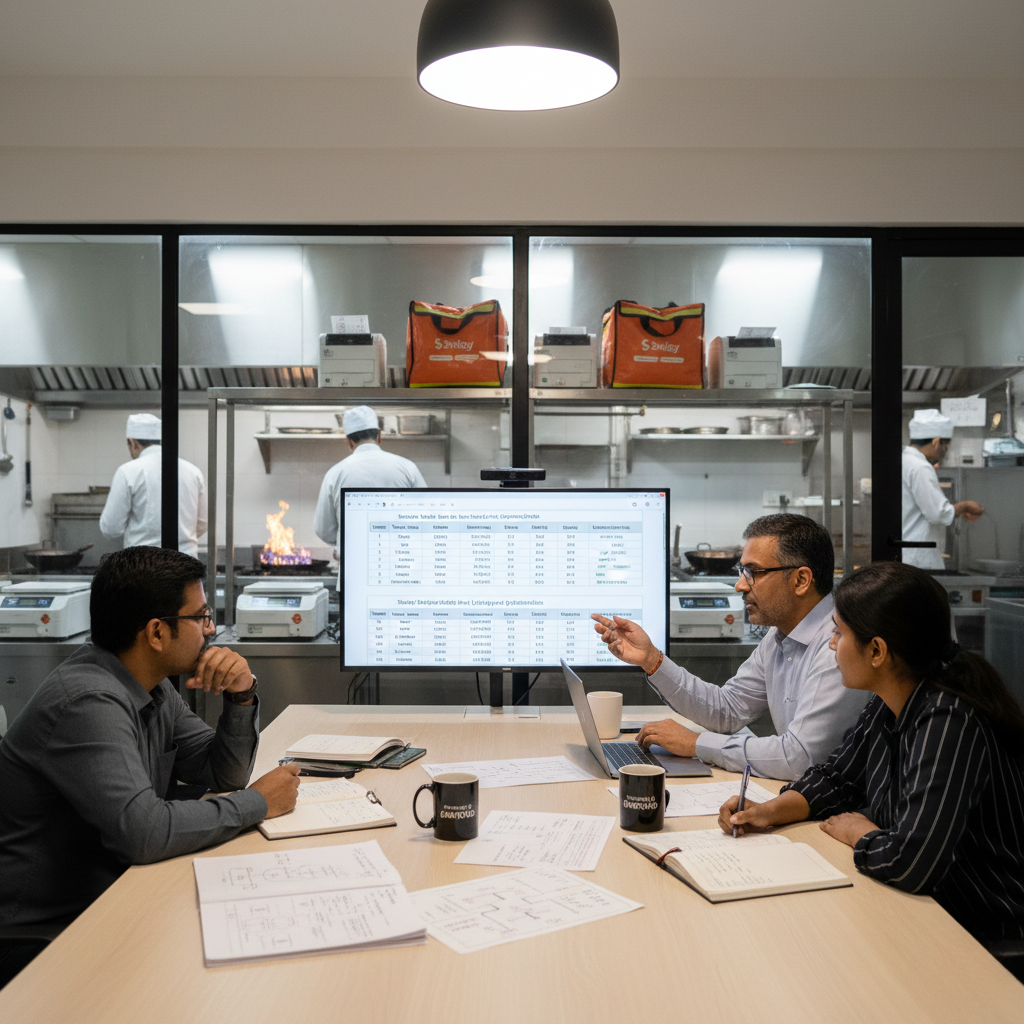
Ads amplify existing systems. If your dispatch time fluctuates, ads increase refund volume.
Only scale ads when:
- Contribution margin positive
- Ratings stable 4.2+
- Refund rate predictable
- Prep time standardized
Understand ROI framework: Marketing Spend vs ROI in Cloud Kitchens .
Marketing cannot fix operational instability.
Paid visibility works best when the backend system is stable. If dispatch times fluctuate or refund rates spike, advertising increases customer exposure to operational weaknesses.
Before increasing ad budgets, evaluate dispatch consistency, kitchen prep accuracy, packaging reliability, and complaint trends.
Scaling demand should follow operational maturity — not precede it.
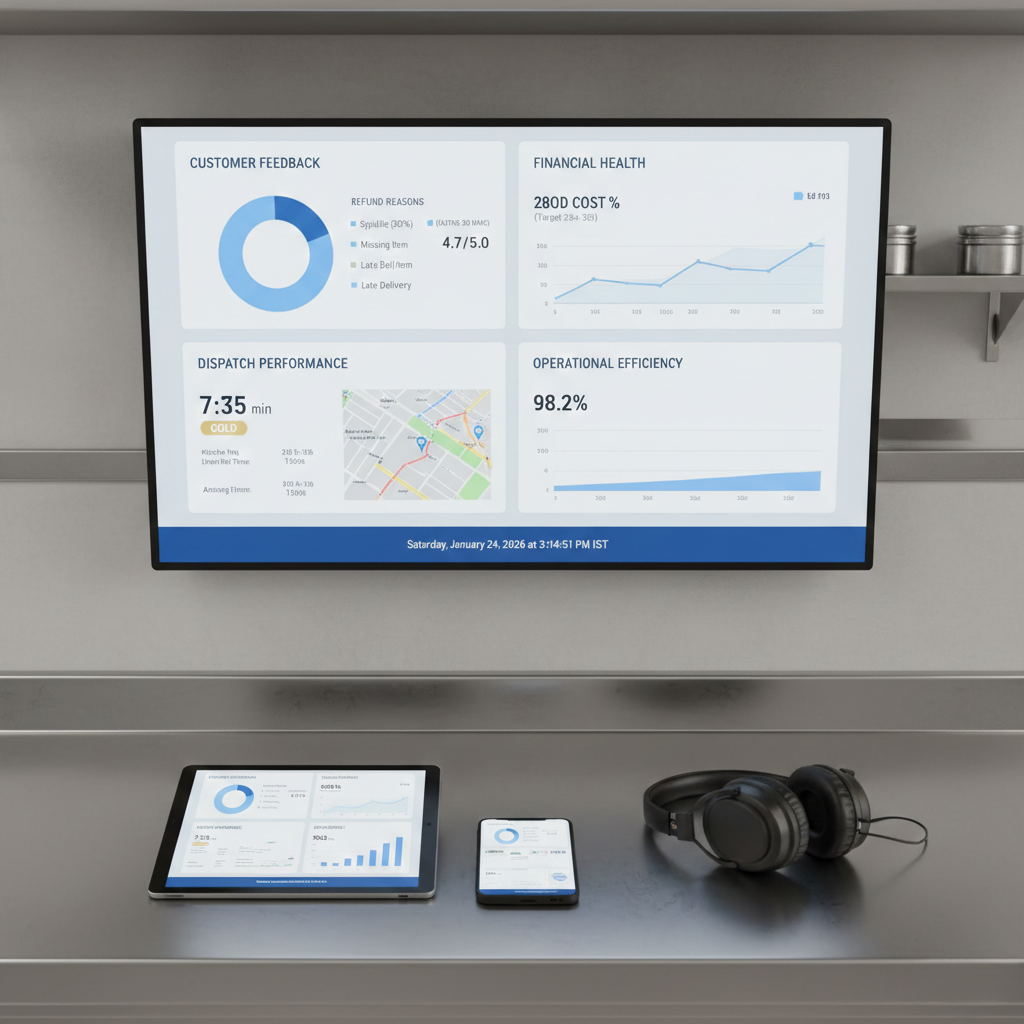
Mistake 5: No Weekly Data Review System
Scaling requires structured feedback loops.
- Refund reason mapping
- Cancellation heatmap
- SKU-level margin drift
- Ad ROI tracking
- Dispatch performance trend
Data without corrective SOP updates is useless.
Process discipline framework: How Process Discipline Improves EBITDA .
Data collection without structured review meetings has limited value. Weekly operational reviews should lead to specific SOP adjustments. Every data insight should result in a system correction.
Mistake 6: Expanding Locations Without Systems
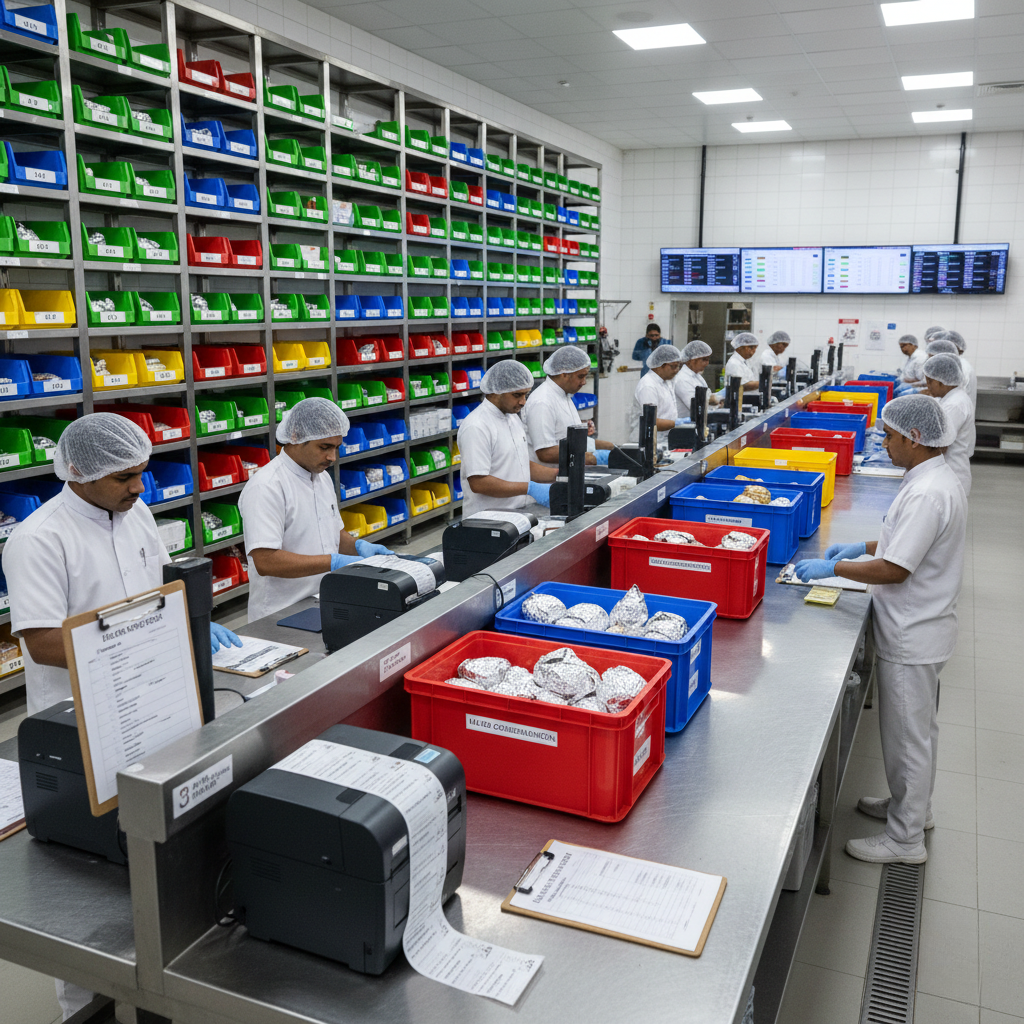
Opening second and third kitchens without SOP depth multiplies quality inconsistency.
Use hub-and-spoke procurement. Centralize recipes. Standardize portion weights.
Expansion blueprint: Cloud Kitchen Expansion Strategy in India .
Replicate systems, not chaos.
Expansion multiplies variability. Different staff, different vendors, and different neighborhood demand patterns create execution divergence.
Without documented recipe weights, standardized procurement contracts, and centralized quality audits, brand consistency weakens. Once ratings fragment across locations, brand equity declines rapidly.
Multi-location growth requires replication fidelity. If one outlet is unstable, expansion will only multiply instability.
Final Takeaway: Scaling Fails Without Operational Engineering
Cloud kitchens fail to scale not because demand is weak, but because systems are fragile.
Scaling exposes hidden inefficiencies: food cost drift, inconsistent packing, delayed dispatch, unstructured procurement, and poor feedback loops.
Sustainable growth requires structured execution.
The cloud kitchen model is scalable by design, but only when operational engineering precedes expansion.
Founders who treat scaling as a marketing campaign often face plateauing growth. Those who treat scaling as a systems problem build predictable, profitable brands.
Long-term success on Swiggy and Zomato depends on operational reliability, not short-term discount intensity.
Explore system-led models via GrowKitchen.
Operating partner brands like Fruut and GreenSalad scale using repeatable SOP frameworks.
If you want to scale profitably on Swiggy and Zomato, build systems before visibility.
- Cloud Kitchen Profitability Consultant
- Common Operational Mistakes in Cloud Kitchens
- Cloud Kitchen Dispatch SOP
- Aggregator Commission Impact in India
- How to Fix a Loss-Making Cloud Kitchen
- Marketing Spend vs ROI in Cloud Kitchens
- How Process Discipline Improves EBITDA
- Cloud Kitchen Expansion Strategy
- When Growth Is Hurting Operations
- CKaaS vs Own Kitchen ROI Comparison