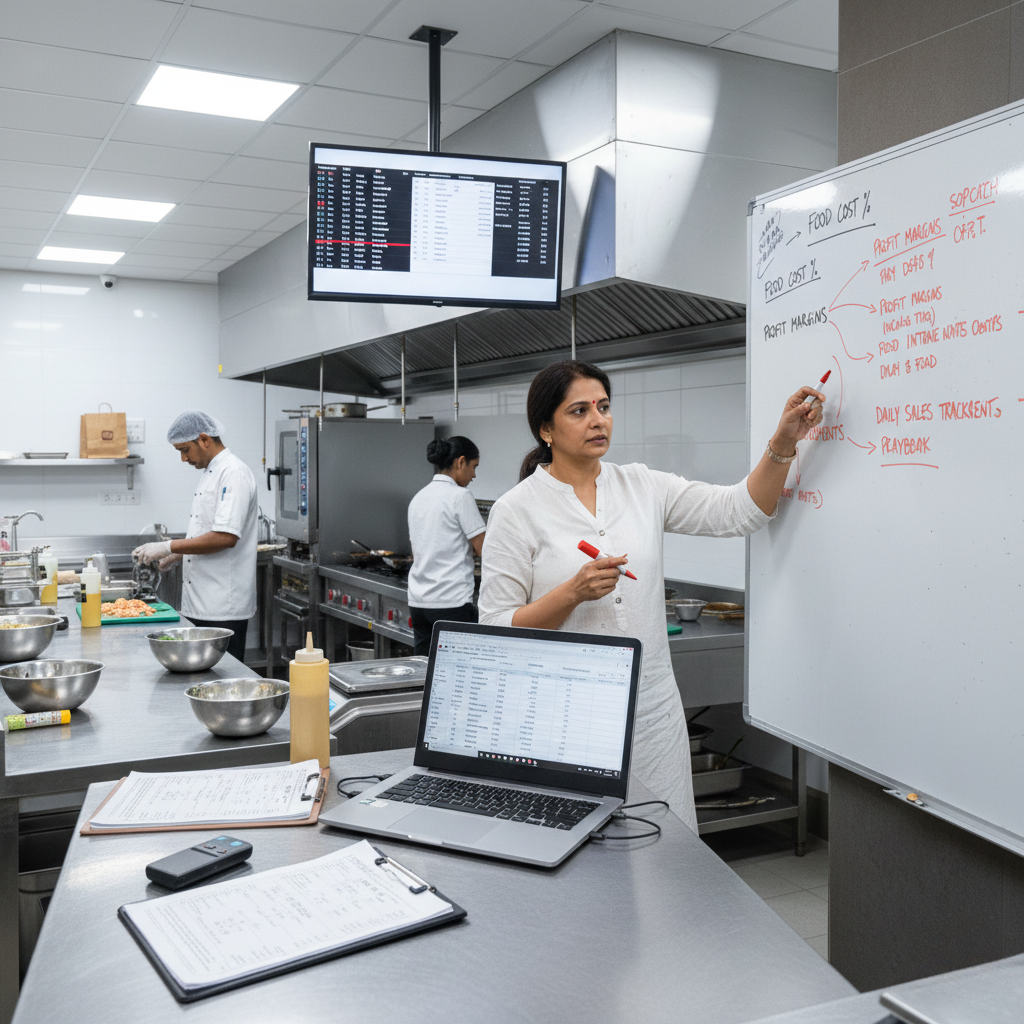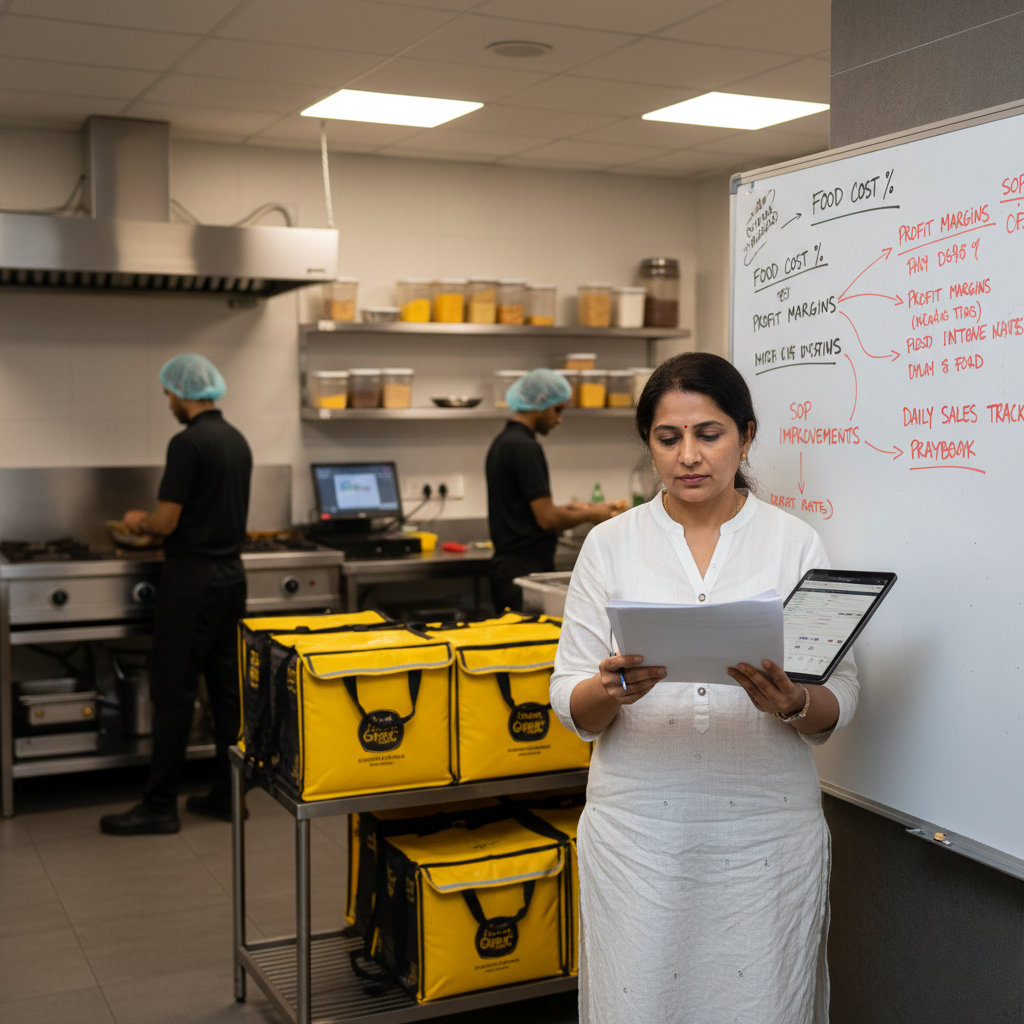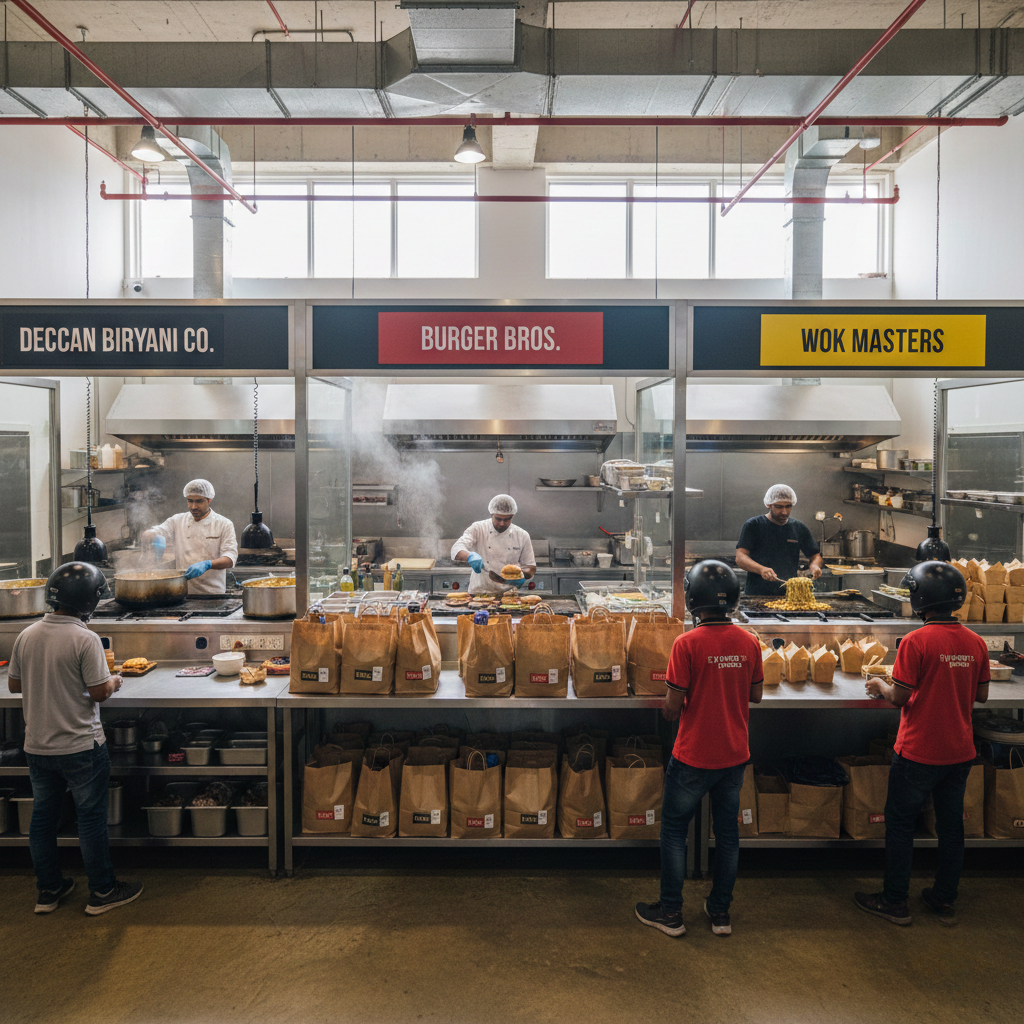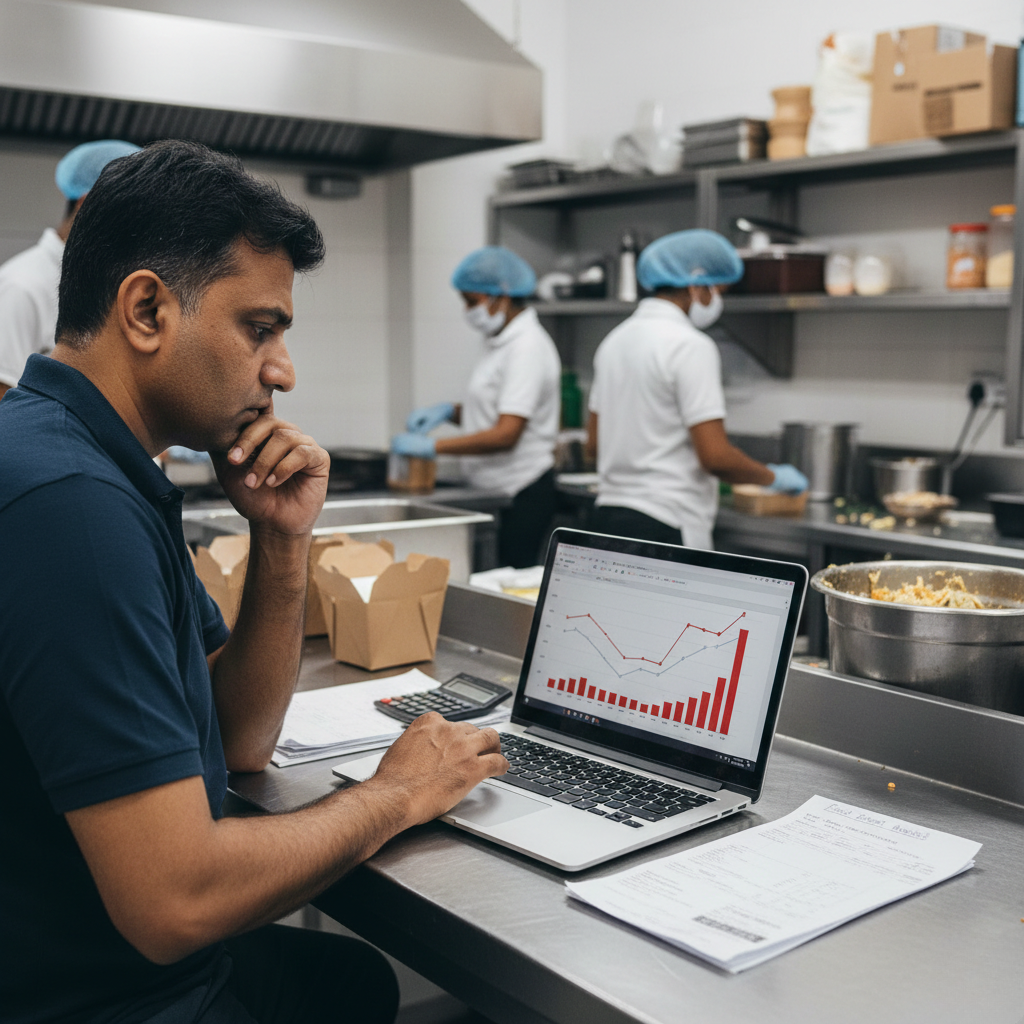

Why Food Consultants Fail to Deliver Real Results Food consulting sounds like the shortcut to growth. Founders expect better margins, smoother operations, and faster scale. But in reality, many food brands walk away disappointed, having spent time and money with little to show for it. The problem is not consulting itself it’s how most food consultants operate. This guide explains why most food consultants fail, the common traps founders fall into, and how serious operators choose consultants that actually deliver outcomes.
Read This Before Hiring a Food Consultant
This article is part of GrowKitchen’s profitability and operations clarity series. If you are still understanding how cloud kitchens work at the unit level, start with Cloud Kitchen Business in India before evaluating consulting support.
Consulting only works when hygiene, compliance, and reporting discipline exist. Ensure your kitchen follows FSSAI standards, staff training via FoSTaC, and compliant accounting through the GST Network.
The Uncomfortable Truth About Food Consulting
Most food founders hire consultants when things feel out of control rising refunds, poor ratings, margin pressure, or stalled growth. Consulting is expected to bring clarity and structure.
Yet in most cases, founders receive presentations, generic frameworks, and high-level advice while day-to-day chaos continues unchanged.

Reason #1: Most Food Consultants Are Theory-Heavy
Many consultants come from presentation, hospitality education, or single-brand exposure. They understand concepts but lack operator-level experience.
- Advice copied from global case studies
- No understanding of Indian aggregator economics
- Frameworks not adapted to cloud kitchens
Why this fails: Food businesses don’t fail because founders lack ideas. They fail because systems break under pressure.
Operator-led thinking is explained in Cloud Kitchen Operations Framework.
Reason #2: Consultants Don’t Own Outcomes
Most consulting engagements end with a handover. Once recommendations are shared, the consultant exits responsibility.
- No accountability for margin improvement
- No refund reduction targets
- No post-implementation tracking
Reality: Founders are left executing complex changes alone, often without internal capability.
Reason #3: One-Size-Fits-All Solutions
Many consultants sell the same playbook to every brand regardless of cuisine, order volume, or maturity stage.
- Same menu engineering logic for all brands
- No SKU-level contribution analysis
- Ignoring founder bandwidth and team skill
Solution: Consulting must adapt to kitchen stage validation, stabilization, or scale.
Reason #4: Lack of Data Discipline
Most consultants rely on assumptions instead of real operational data.
- No SKU-wise margin tracking
- No food cost variance logs
- No refund reason classification
Without data, advice becomes opinion and opinions don’t survive scale.
Reason #5: Founders Expect Consulting to Replace Ownership
Consulting fails when founders expect consultants to magically fix execution problems.
- Unwillingness to enforce SOPs
- Ignoring uncomfortable data
- Resistance to changing pet SKUs
Consulting works only when founders are willing to change how they operate.
What Actually Works in Food Consulting
Successful consulting engagements look very different.
- Operator-led, not advisor-led
- Implementation-first, not presentation-first
- Metrics-driven decision making
- Founder involvement in enforcement
Brands like Green Salad and Fruut focused on repeatability before growth not cosmetic strategy.
Final Thoughts: Consulting Is Not a Shortcut
Most food consultants fail because they sell clarity without control.
Real results come from systems, discipline, and uncomfortable execution.
GrowKitchen works with founders who want operational truth not motivational advice.
FAQs: Food Consulting Failures
Is food consulting worth it?
Yes but only when consultants are accountable for execution.
Why do most consulting engagements disappoint?
Because advice is given without implementation ownership.
When should I hire a food consultant?
When you’re ready to change systems, not just seek validation.
What should I expect from good consulting?
Measurable margin improvement, reduced refunds, and operational clarity.