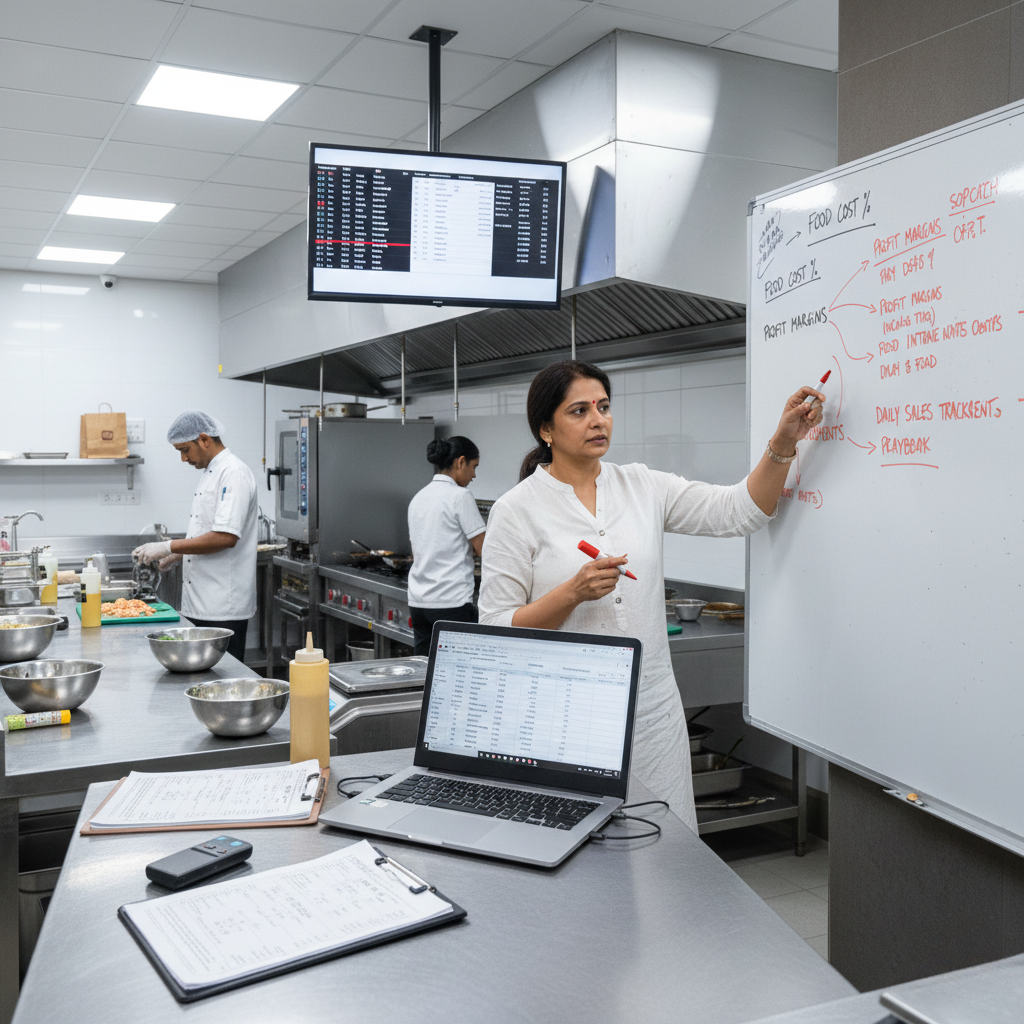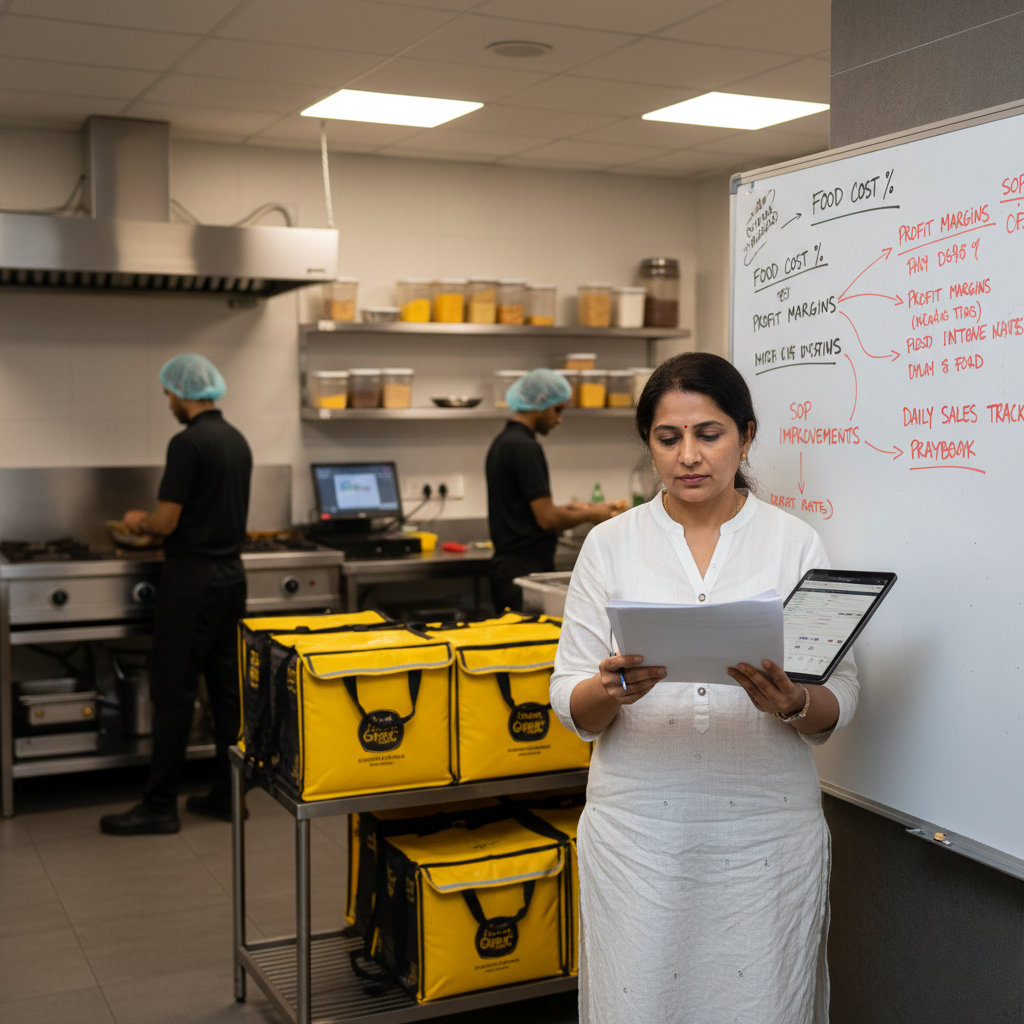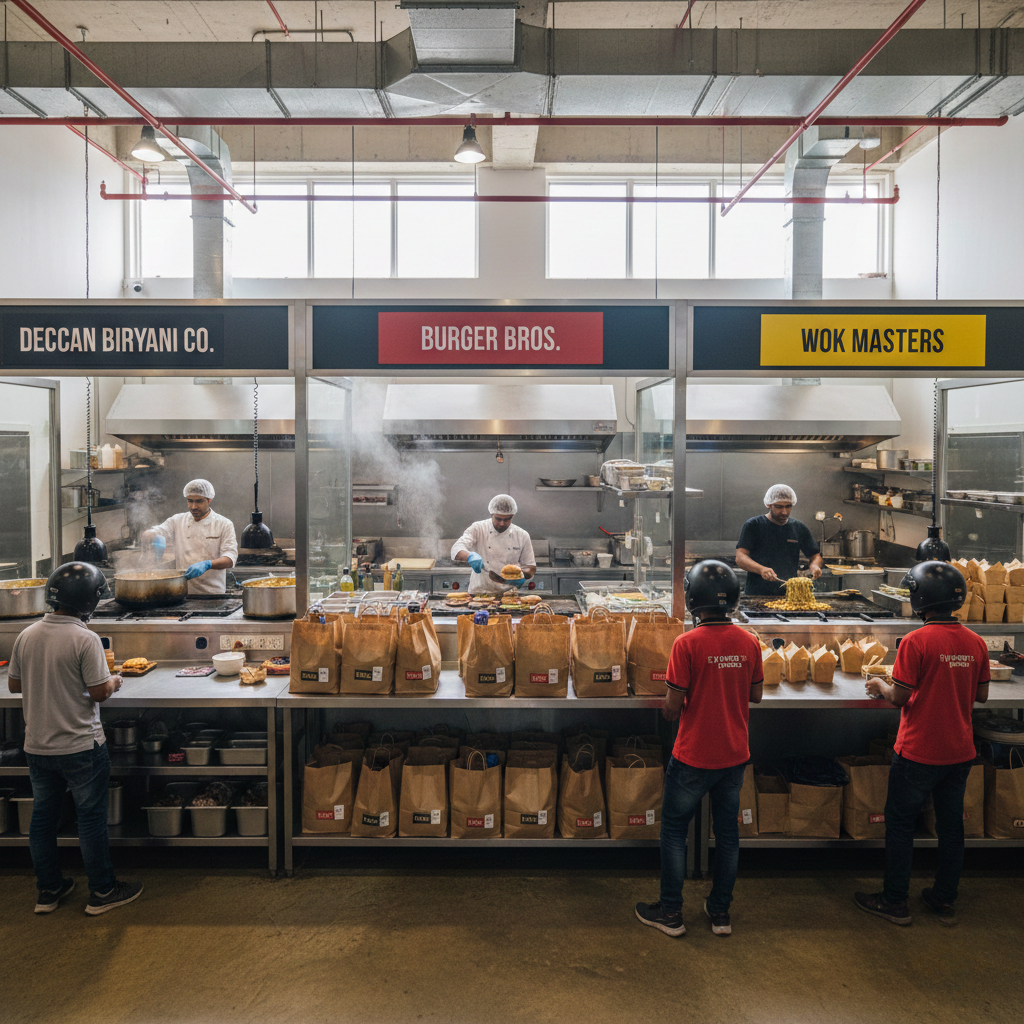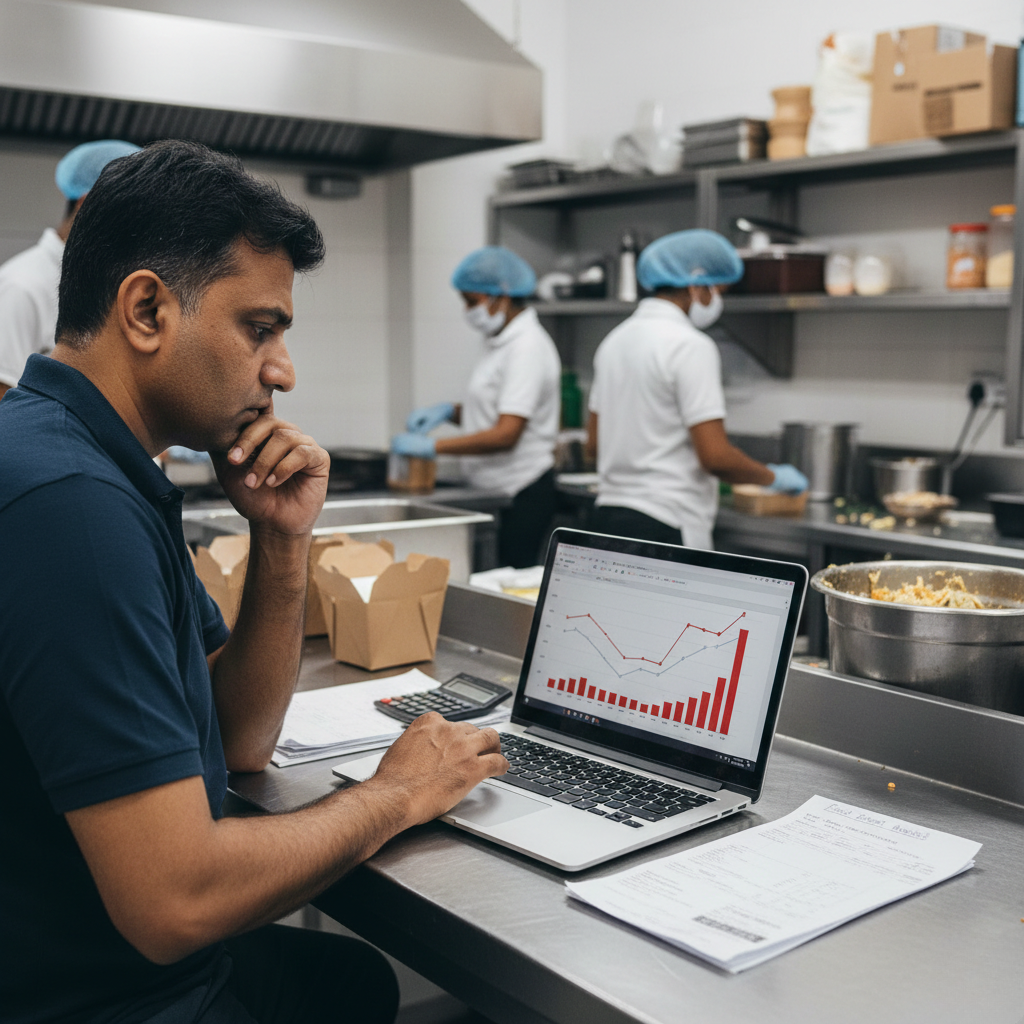
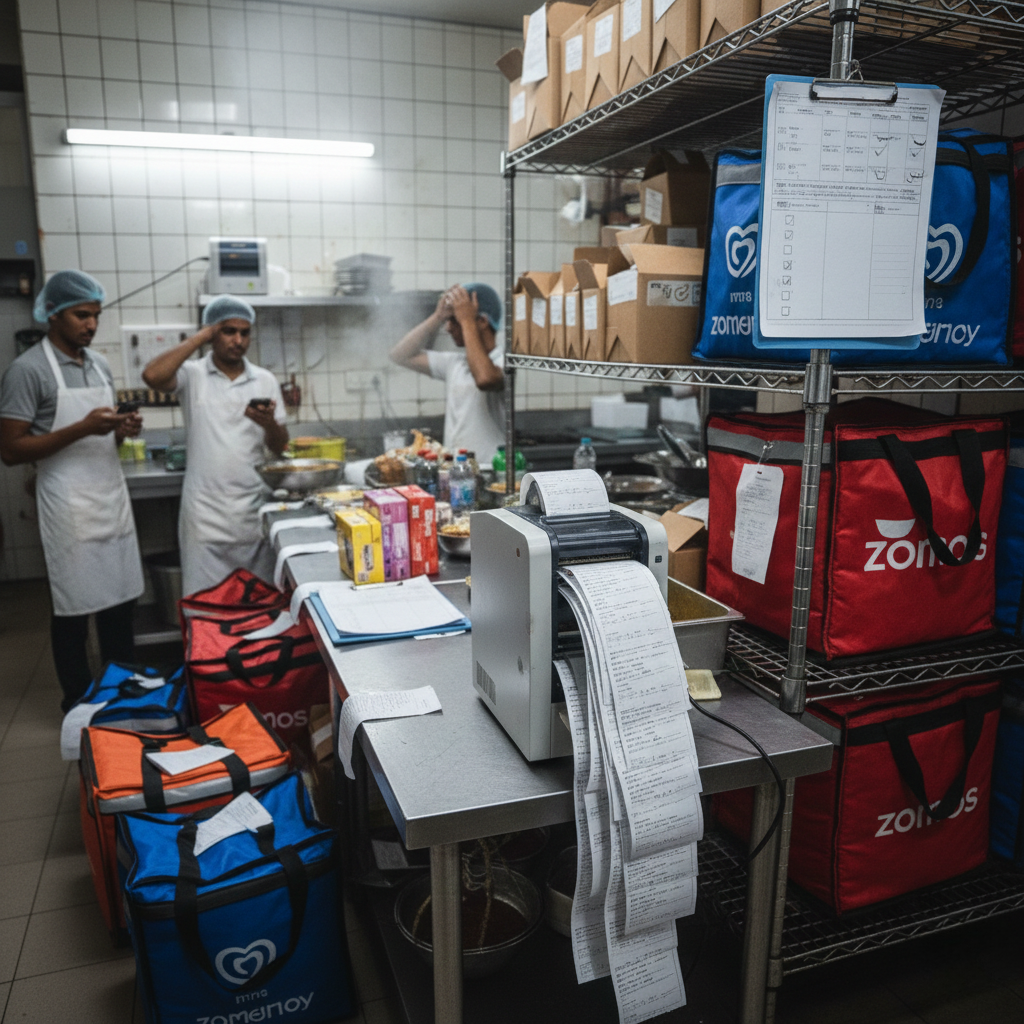
Why do staff mistakes in cloud kitchens increase every month? is not a “bad staff” topic. It is an operational system topic. Cloud kitchens run on speed, volume, and repeatability. When execution depends on memory, verbal instructions, and founder intervention, small errors compound into daily leakage: missed add-ons, wrong packing, wrong portions, delayed dispatch, and refunds. This guide explains why staff mistakes increase over time in cloud kitchens in India and how to build a mistake-resistant operating system end-to-end using SOPs, tools, role clarity, and audits using systems, not supervision.
Why Do Staff Mistakes Increase Every Month? The Real Reason Errors Don’t Reduce With Experience
Every cloud kitchen founder has felt this pattern: the team is the same, they have more experience than last month, orders are coming in, but mistakes keep increasing.
The same issues repeat: add-ons missed, sauces forgotten, wrong boxes used, portions drifting, instructions ignored, riders waiting, and customer complaints rising.
This feels illogical because in most businesses, experience reduces errors. But delivery kitchens are different. In delivery kitchens, volume multiplies everything. If systems don’t improve alongside volume, mistakes become more frequent even if staff becomes more skilled.
If you want the profitability foundation lens first, start with Cloud Kitchen Profitability Consultant in India and map recurring execution leaks using Common Operational Mistakes in Cloud Kitchens.
What Staff Mistakes Actually Mean in a Delivery Kitchen (Not Just “Carelessness”)
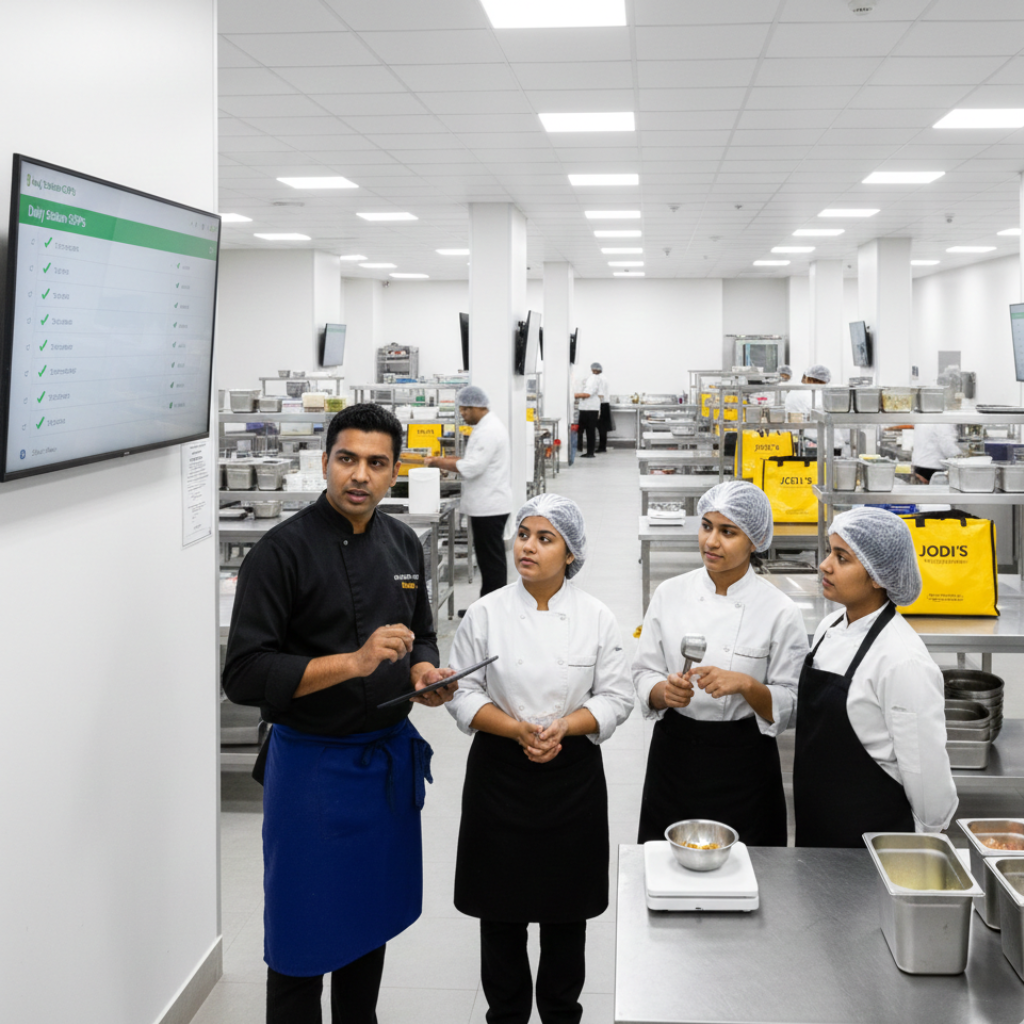
Staff mistakes in cloud kitchens are rarely about “not caring.” They are mostly failures of execution design under pressure. When 20 orders come in together and the kitchen is moving fast, staff follows defaults. If the default is unclear, errors become predictable.
In delivery-first kitchens, mistakes usually fall into five buckets: dispatch mistakes (wrong item, missing item), add-on mistakes (forgotten paid extras), packing mistakes (spillage, incorrect sealing, wrong container), portion mistakes (extra grams, missing grams), and timing mistakes (delayed handover, long rider wait).
The key point: mistakes increase over time when execution relies on memory. Memory-based kitchens degrade, especially during peak. System-based kitchens improve, even with average staff.
A powerful way to think about it: a kitchen is not a classroom. It is a production floor. If the system is not visible at the station, execution will drift.
The Unit Economics Lens: Staff Mistakes Are Contribution Margin Leakage
Cloud kitchen profitability is decided per order. Your contribution margin is: selling price minus commission minus packaging minus food cost minus refunds and penalty impact.
Most founders think staff mistakes are “service issues.” In reality, they are margin killers. A missed add-on becomes a refund or replacement. A packing mistake becomes spillage and rework. A portioning mistake increases food cost.
Here’s what founders miss: staff mistakes don’t only create direct costs. They create rating volatility. Rating volatility reduces conversion. Reduced conversion forces discounts. Discounts reduce contribution margin further.
If you want to see how operational drift destroys profitability beyond mistakes, audit using Common Operational Mistakes in Cloud Kitchens.
The 10 Reasons Staff Mistakes Increase Every Month (And What Each One Looks Like)
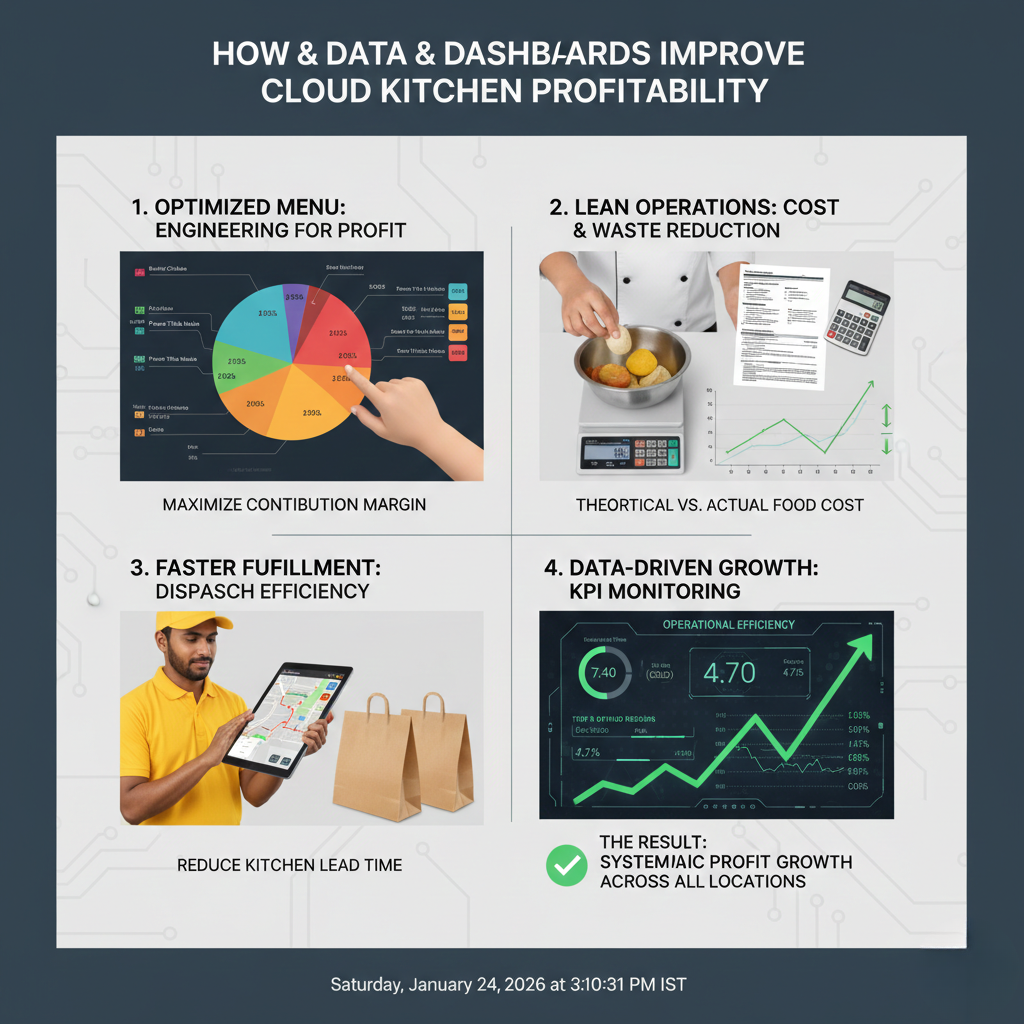
Staff mistakes feel like “people problems.” In delivery kitchens, they are mostly “process problems.” Here are the core reasons mistakes increase over time and what each one looks like on the floor.
1) Verbal SOPs become broken SOPs. If the process lives in spoken instructions, it changes every shift. Staff starts guessing, and guesswork creates errors.
2) Peak-hour shortcuts become permanent habits. During peak, staff finds faster ways. Without audits, those shortcuts become the default. Default shortcuts increase mistakes over time.
3) Add-ons are not systemized. Paid add-ons are the most forgotten items in cloud kitchens. If add-ons are not visually flagged and checklist-verified, misses increase every month.
4) Packing is treated as “easy work.” Packing is not easy work. It is the final quality gate. When packing has no checklist and no station discipline, errors rise even if cooking is perfect.
5) Role clarity collapses during busy shifts. When cooks pack and packers cook, responsibility disappears. Mistakes rise because no one owns the output.
6) Tools and placement are inconsistent. When sealing tapes, labels, sauces, and staples are not in fixed spots, staff wastes seconds searching. Searching increases stress. Stress increases errors.
7) There is no daily error scoreboard. Kitchens improve what they track. If no one tracks “mistakes by type,” staff assumes errors are normal.
8) Founder absorbs the cost silently. When founders refund without teaching the system, staff never learns the true cost of mistakes. So the same mistakes repeat.
9) Menu complexity increases but training stays the same. As you add combos, variants, and new SKUs, the number of possible errors rises. Without updated SOPs, mistakes increase monthly.
10) No feedback loop converts complaints into SOP updates. Complaints are data. If complaints don’t update the system, complaints repeat. Repetition becomes monthly growth in mistakes.
If you want the SOP-led link between cost control and fewer complaints, read How SOPs Reduce Food Cost & Complaints.
Swiggy/Zomato Reality: Staff Mistakes Also Destroy Payout Quality
Many founders treat staff mistakes as “service issues.” In delivery kitchens, mistakes directly affect payout quality.
Wrong or missing items trigger complaints. Complaints trigger refunds and replacements. Refunds reduce payouts. Replacements increase food cost and packaging cost.
Mistakes also create inconsistent perceived value. Some customers get perfect orders, some get broken orders. The broken-order customers rate lower. Rating volatility reduces conversion, and founders respond with heavier discounts. That discount burn further reduces contribution margin.
To understand the payout lens in detail, read Aggregator Commission Impact in India.
External reference links (policy context): Swiggy Refund & Cancellation Policy and Zomato Online Ordering Terms.
Packing + Dispatch: Why Most Staff Mistakes Start at the Final Station
Most founders assume mistakes happen in cooking. In reality, most mistakes happen at packing and dispatch.
A perfect product can still become a bad customer experience if: the wrong box is used, the seal is weak, sauces leak, cutlery is missing, add-ons are missed, or labels are incorrect.
A strong system includes: packing checklist, add-on verification, seal rules, container fill limits, and a final dispatch confirmation.
Implement dispatch predictability using Cloud Kitchen Dispatch SOP.
Why Reducing Staff Mistakes Must Be Role-Based (Not “Team, Please Be Careful”)
Mistakes don’t reduce with motivational instructions. Saying “be careful” does not work during peak. Mistakes reduce when roles, tools, and checks are built into the system.
Here is what role-based error reduction looks like:
Prep role:
batch recipes with yield targets, labeled holding times, and pre-portioned components.
Cook role:
fixed tools, assembly sequence, and defined “no distraction” rules during peak.
Pack role:
checklist verification, add-on confirmation, seal checks, and label checks.
Store role:
weekly mistake review, root-cause mapping, and SOP updates for repeating errors.
If you want the full role-based operations model, use Role-Based Kitchen Operations Explained.

How to Reduce Staff Mistakes in 7 to 30 Days: A Practical System That Works
Mistakes don’t reduce with one-time training. They reduce when station systems and review loops are installed. Below is a rollout sequence that works in running cloud kitchens.
Step 1 (Day 1–2): List your top 10 mistake types from the last 30 days. Don’t write “staff careless.” Write mistake types: missed add-on, missing cutlery, wrong container, spillage, portion drift, delayed dispatch.
Step 2 (Day 1–3): Create station checklists for the top 5 repeating mistakes. If your top mistakes happen at packing, create a packing checklist. If they happen at cooking, create assembly checklists. If it is not visible, it will not stick.
Step 3 (Day 2–4): Add add-on verification as a hard gate. Paid add-ons must never be “remembered.” Use a check method: sticker, marker highlight, or packing tray segregation.
Step 4 (Day 3–7): Introduce random checks, not constant policing. You don’t need to check every order. You need to prove predictability. Check 5 orders in peak and 5 in non-peak and log errors.
Step 5 (Week 2): Create a daily mistake board. Track: mistake type, time, station, cost impact, and root cause. Kitchens improve what they see daily.
Step 6 (Week 2): Fix station layout and tool placement. Missing tools create searching. Searching creates stress. Stress creates mistakes. Fix tool parking and item placements.
Step 7 (Week 3): Convert complaint patterns into SOP updates. Every repeating complaint must create a new rule or a new checklist line. If complaints don’t update SOPs, complaints repeat.
Step 8 (Week 3–4): Run weekly review and close the loop. Compare mistake frequency week-on-week. Assign ownership. Update SOPs. Re-train only where the system changed.
If you want the broader discipline-led profitability link, map this with How Process Discipline Improves EBITDA.
External hygiene + process standards (useful while standardising): FSSAI Hygiene Requirements (Schedule 4 reference), ISO 22000 overview, and Standardized Work (Lean lexicon).
Final Takeaway: Staff Mistakes Increase When Systems Don’t Scale
Staff mistakes increase every month because delivery kitchens amplify variability. When systems remain manual, memory-based, and founder-dependent, errors become more frequent as volume grows.
Kitchens with strong systems become predictable: fewer missed add-ons, fewer packing failures, fewer complaints, fewer refunds, and more stable contribution margins. That predictability is what creates scalable operations.
Operational frameworks from GrowKitchen, and operating partner brands like Fruut and GreenSalad are built to convert “error kitchens” into “controlled, profitable kitchen networks.”
FAQs: Why Do Staff Mistakes Increase Every Month?
What is the biggest reason staff mistakes increase over time?
Because volume increases and systems don’t. Memory-based execution collapses under peak pressure.
Do I need to monitor every order to reduce mistakes?
No. Use checklists and random peak-time audits. The goal is repeatability, not constant supervision.
Which mistakes should I fix first?
Fix repeat mistakes that cause refunds: missed add-ons, packing spills, wrong items, and delayed dispatch.
Where do most mistakes happen in cloud kitchens?
Most mistakes happen in packing and dispatch, not cooking because that station has the most variables.
- Cloud Kitchen Profitability Consultant in India
- Common Operational Mistakes in Cloud Kitchens
- How SOPs Reduce Food Cost & Complaints
- Aggregator Commission Impact in India
- Cloud Kitchen Dispatch SOP
- Role-Based Kitchen Operations Explained
- When Growth Is Hurting Your Cloud Kitchen Operations
- How Process Discipline Improves EBITDA
- Grow Kitchen on Twitter