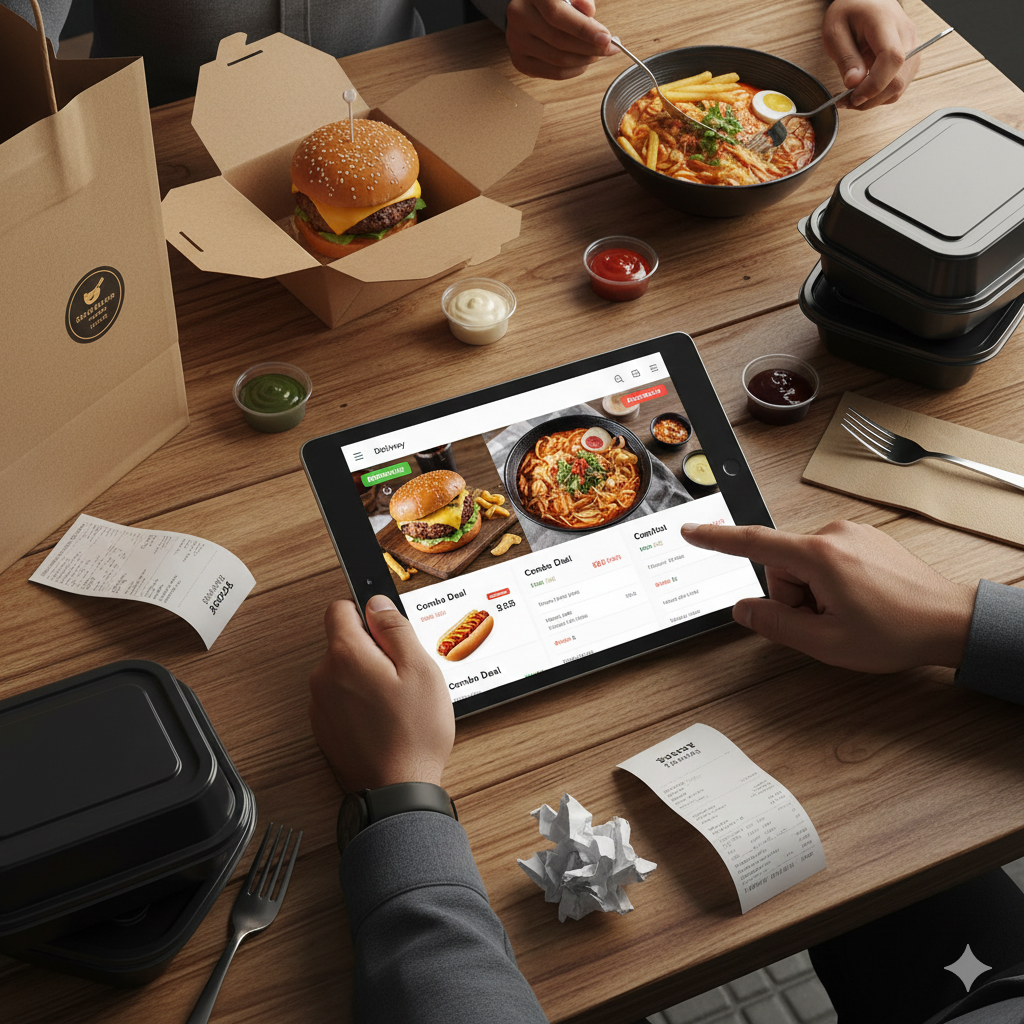
Swiggy & Zomato vs Own Website Sales: Which Channel Is Better for Cloud Kitchens in India? (2025 Guide)
For cloud kitchen owners in India, one of the most important strategic decisions is choosing the right sales channel. Should you depend on Swiggy and Zomato, or should you invest in your own website and direct ordering system?
In 2025, with rising platform commissions and increasing customer acquisition costs, this decision directly impacts profitability, brand control, and long-term scalability. This guide compares Swiggy & Zomato vs Own Website Sales to help cloud kitchens choose the best channel.
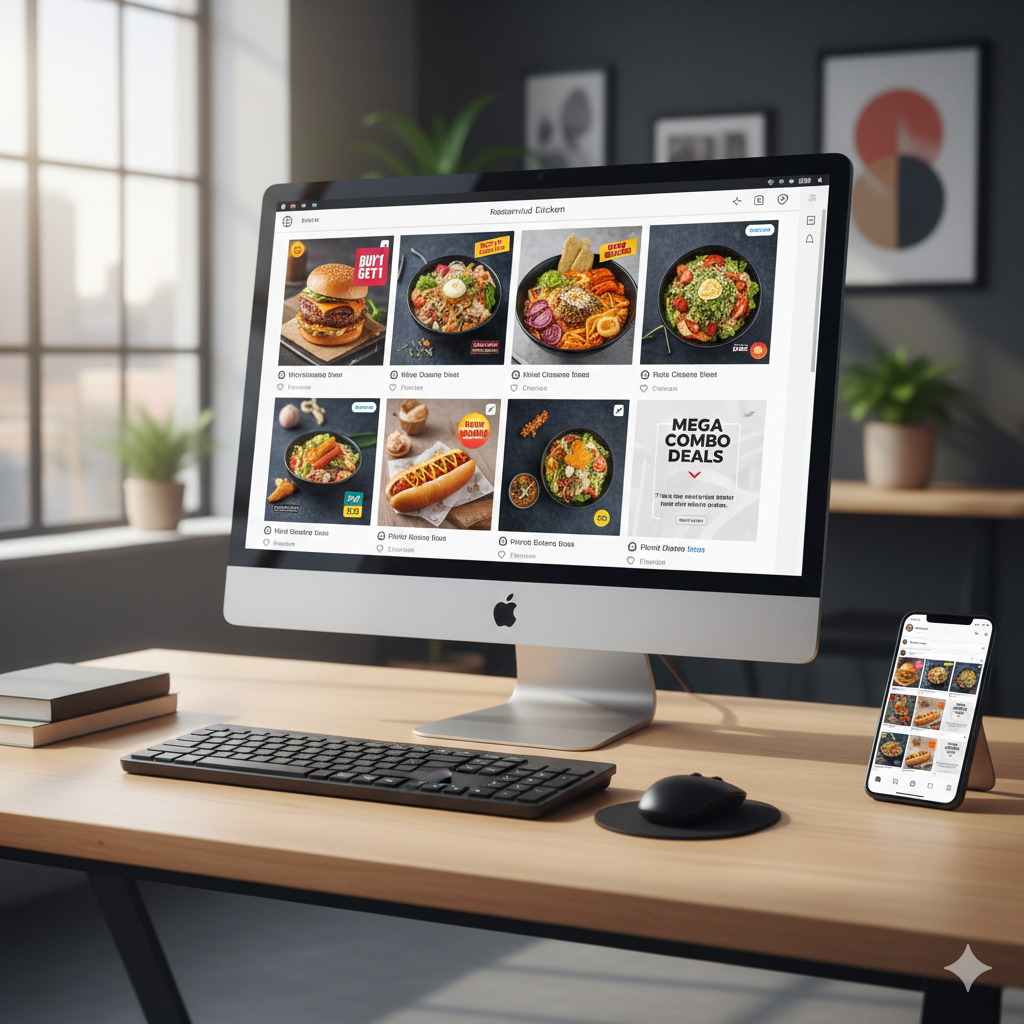
Understanding Swiggy & Zomato for Cloud Kitchens
Swiggy and Zomato dominate India’s online food delivery ecosystem. For most cloud kitchens, these platforms are the fastest way to acquire customers and generate orders from day one.
Advantages of Swiggy & Zomato
- Instant access to millions of users
- No need for marketing at the start
- Logistics and delivery handled by platform
- High order volume potential
Disadvantages of Swiggy & Zomato
- High commissions (18%–30%)
- Limited customer data access
- Heavy discount pressure
- Low brand loyalty
While these platforms drive volume, they significantly reduce profit margins and make cloud kitchens dependent on third-party algorithms.
What Are Own Website Sales for Cloud Kitchens?
Own website sales refer to customers placing orders directly through a cloud kitchen’s website or mobile app. Payments are processed via payment gateways, and delivery is managed through in-house riders or third-party logistics partners.
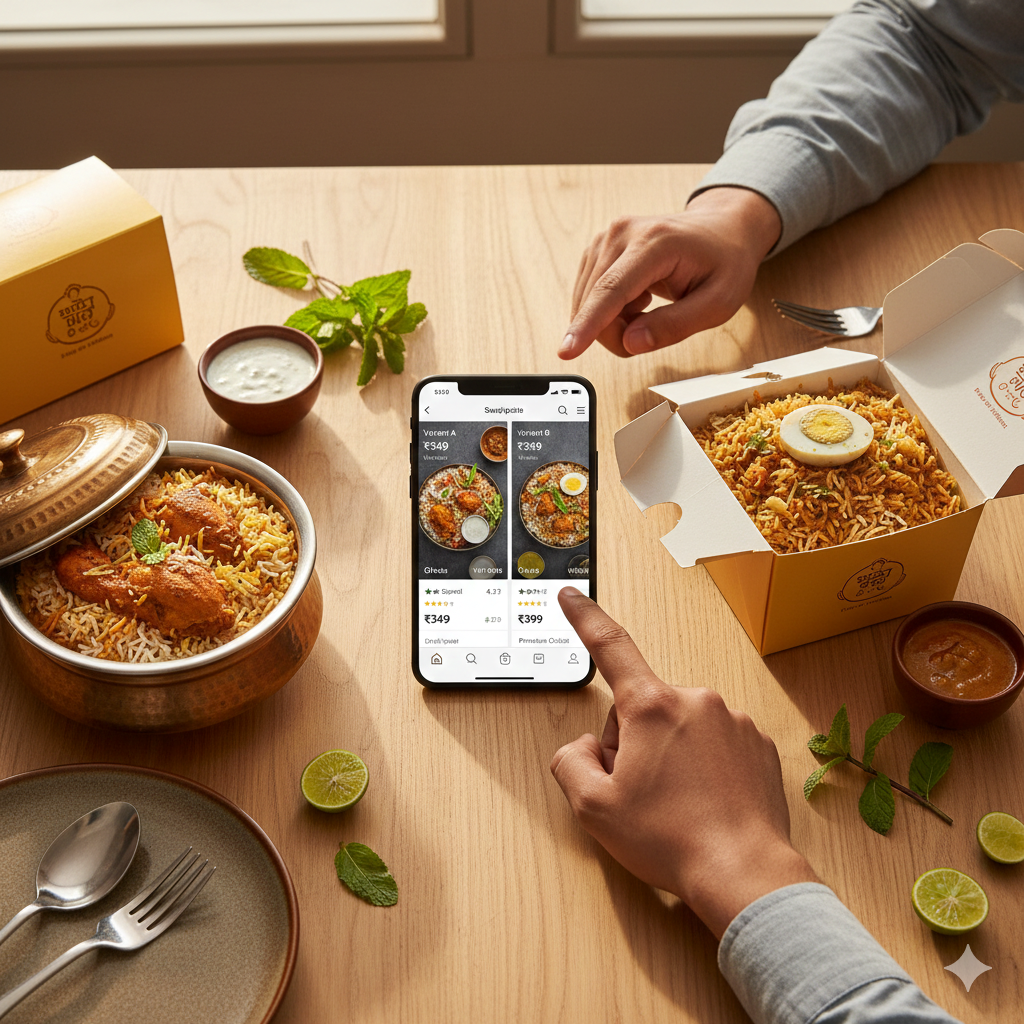
Benefits of Own Website Sales
- Zero or minimal commission
- Full customer data ownership
- Higher profit margins
- Better brand recall and loyalty
Challenges of Own Website Sales
- Marketing and traffic generation required
- Higher initial setup effort
- Delivery coordination responsibility
Commission & Profitability Comparison
| Factor | Swiggy & Zomato | Own Website |
|---|---|---|
| Commission | 18%–30% | 0%–3% (payment gateway) |
| Customer Data | Limited | 100% ownership |
| Brand Visibility | Platform-driven | Brand-driven |
| Profit Margin | Low to Medium | High |
From a purely financial standpoint, own website sales are far more profitable. However, traffic acquisition remains the biggest hurdle.
Which Channel Scales Better in 2025?
Swiggy and Zomato help cloud kitchens scale quickly in the short term, especially during the launch phase. They provide instant demand and geographical reach without heavy marketing investments.
Own website sales scale more slowly but offer sustainable long-term growth. Brands that invest in SEO, social media, WhatsApp marketing, and repeat customer programs achieve better lifetime value per customer.
The Best Strategy: Hybrid Sales Model
In 2025, the most successful cloud kitchens in India follow a hybrid sales strategy.
- Use Swiggy & Zomato for discovery and new customers
- Shift repeat customers to own website
- Offer exclusive discounts on direct orders
- Use QR codes and packaging inserts for website promotion
This approach balances volume, profitability, and brand control.
For industry insights on online food delivery growth, refer to IBEF Indian Food Industry Report .
Final Verdict: Which Channel Is Better?
Swiggy and Zomato are essential for initial traction and visibility, but relying solely on them limits profitability and brand growth.
Own website sales are the key to long-term success, higher margins, and customer loyalty. Cloud kitchens that gradually move customers to direct ordering will dominate in 2025 and beyond.
Frequently Asked Questions (FAQs)
Is it possible to run a cloud kitchen without Swiggy and Zomato?
Yes, but it is challenging initially. Most cloud kitchens start with platforms and slowly build direct ordering channels.
How can cloud kitchens increase website orders?
By offering lower prices than platforms, running local ads, using WhatsApp marketing, and encouraging repeat customers.
Which channel is more profitable?
Own website sales are significantly more profitable due to lower commissions and better customer retention.
What percentage of orders should come from own website?
Mature cloud kitchen brands aim for 30%–50% of orders from direct channels.