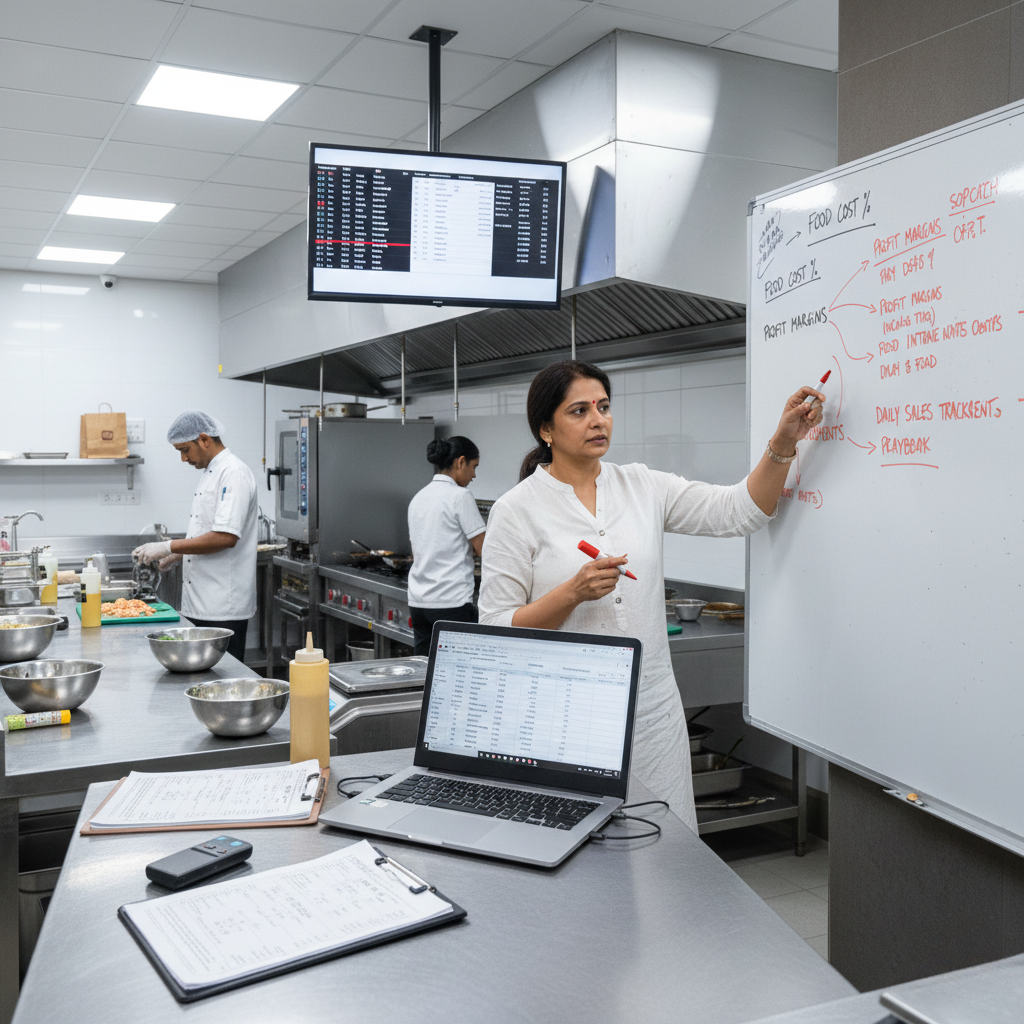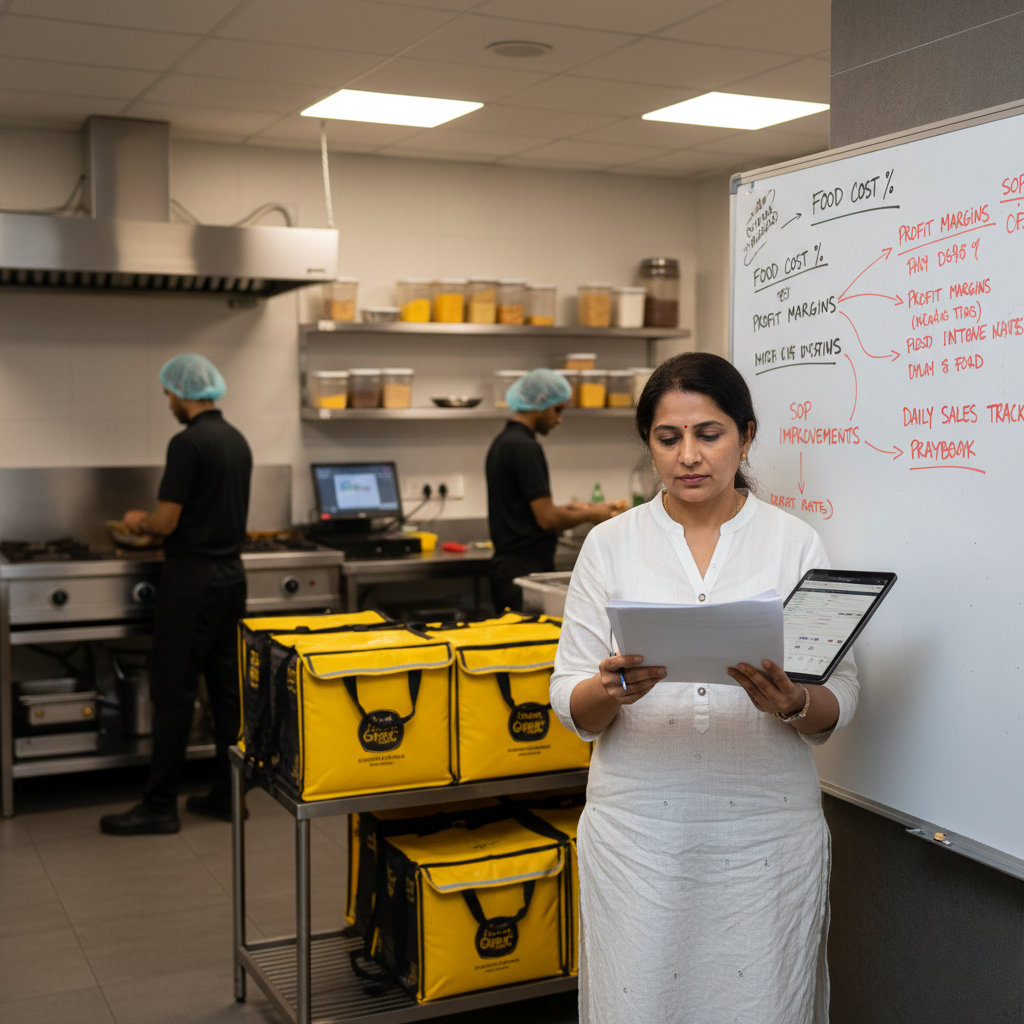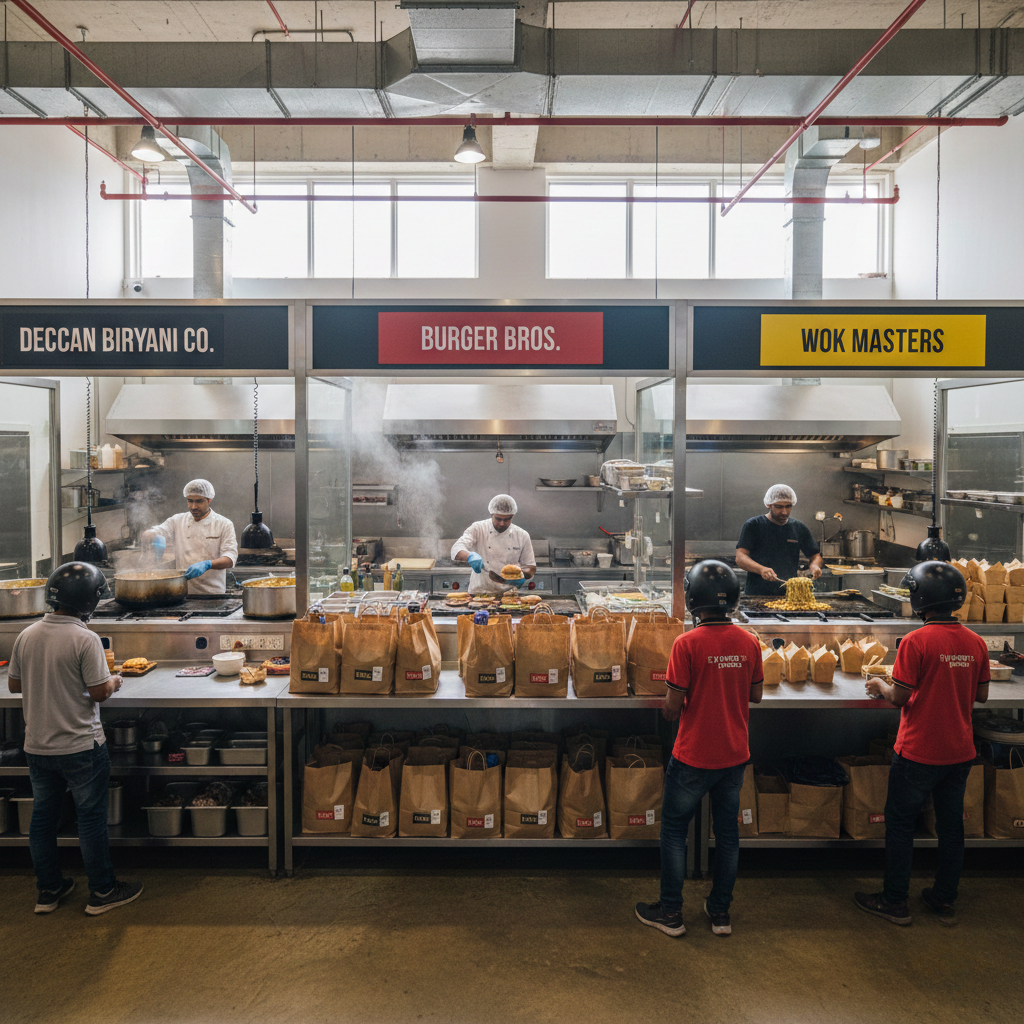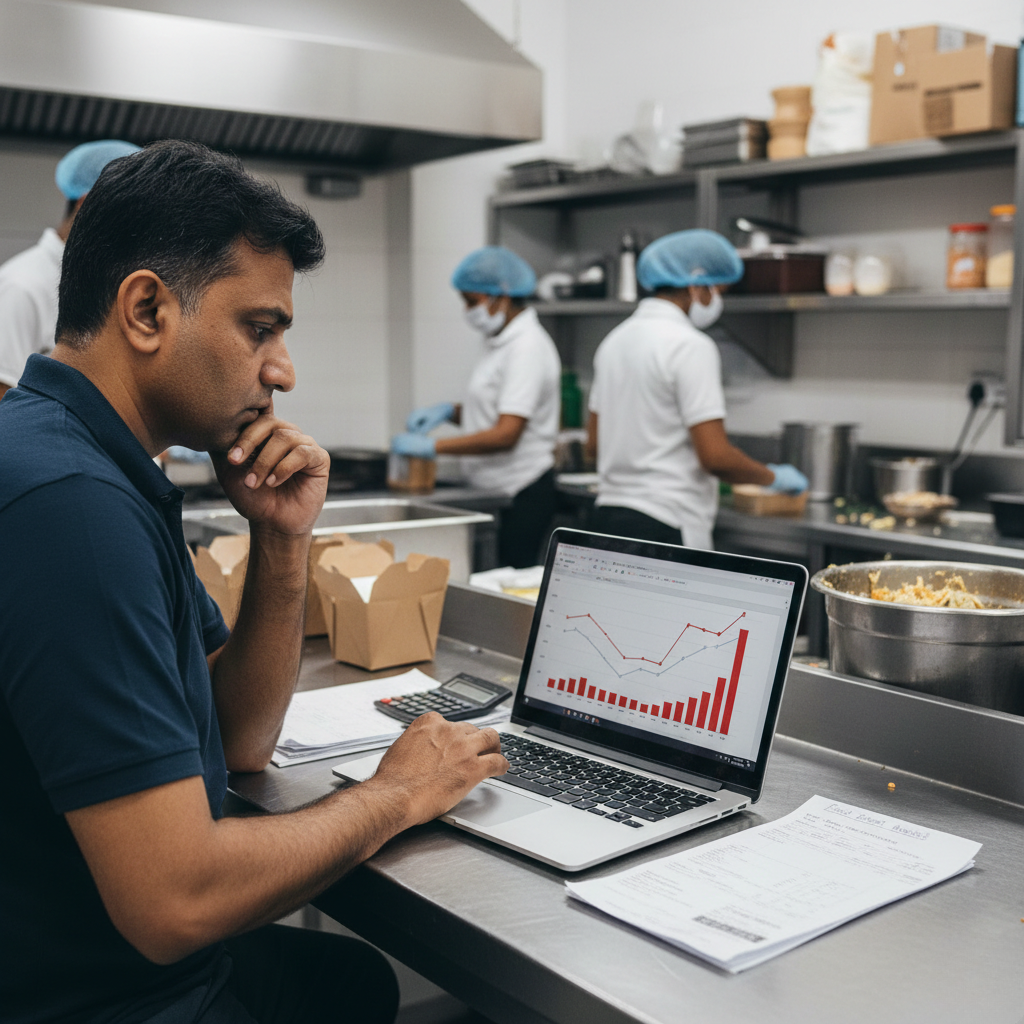
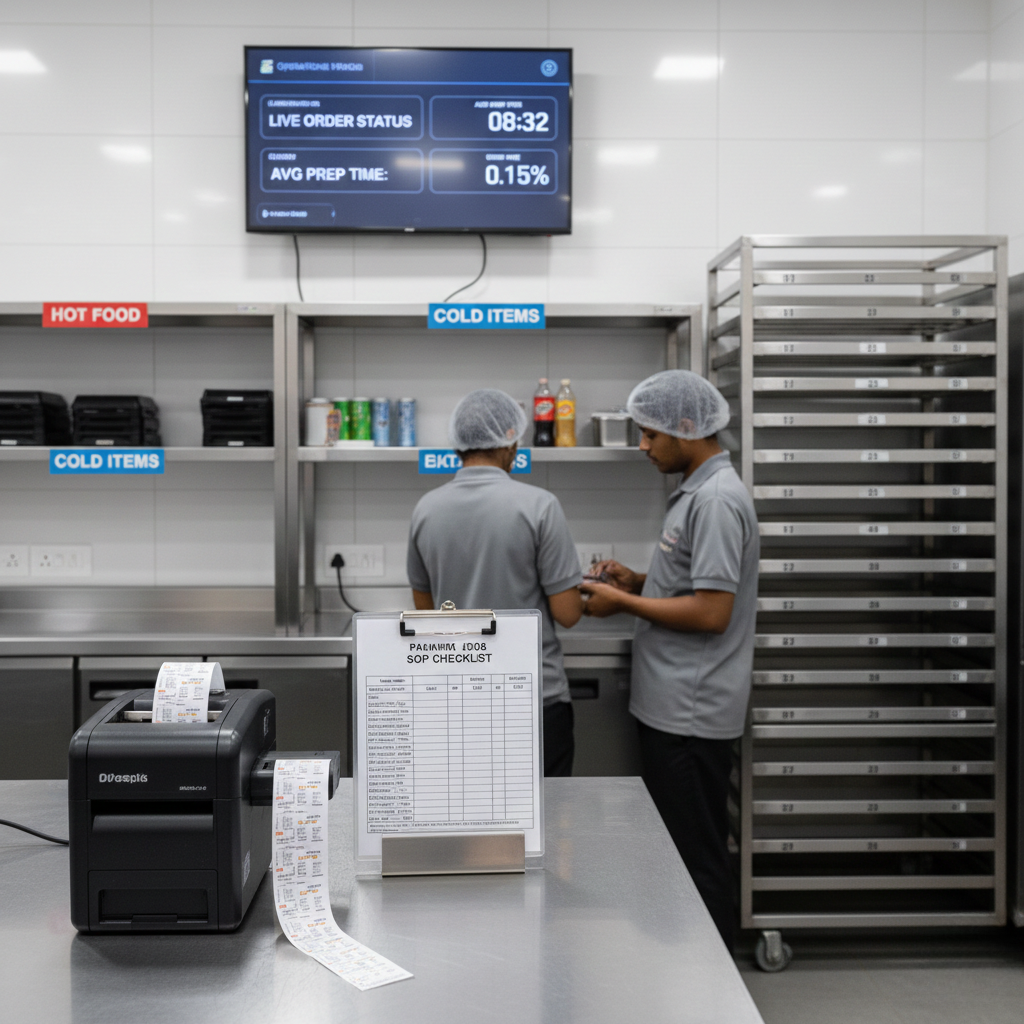
The Role of SOPs, Dashboards, and Controls in CKaaS is not a “more documentation” exercise or a “fancy reporting” upgrade. It is the difference between kitchens that repeat outcomes and kitchens that repeat mistakes. In delivery-first operations, profits don’t improve because the team works harder. Profits improve because leakage becomes hard to repeat: portions don’t drift, stock-outs don’t spike, packing errors don’t slip, dispatch doesn’t delay, refunds don’t become routine, and margins don’t vanish quietly. CKaaS works when SOPs define the standard, dashboards expose the truth, and controls make it difficult to break the standard. This guide explains how SOPs, dashboards, and operational controls work together inside CKaaS in India to convert chaotic kitchens into system-driven kitchen networks using systems, not supervision.
The Role of SOPs, Dashboards, and Controls in CKaaS: Why “Busy Kitchens” Still Feel Unstable
Most founders underestimate how much of their kitchen is running on invisible decisions. Someone “adds a little extra sauce.” Someone “adjusts the portion because the customer complained once.” Someone “buys what’s available because the vendor didn’t respond.” Someone “packs quickly” because riders are waiting. None of these choices feel dangerous in isolation. But when they repeat across shifts, the kitchen stops being a business and becomes a daily gamble.
CKaaS (Cloud Kitchen as a Service) exists to reduce that gamble. Not by motivation. Not by threats. Not by founder presence. But by installing three system layers that work together: SOPs (the standard), Dashboards (the truth), and Controls (the gates that enforce the standard).
This is why many kitchens “look active” but remain financially unclear. Activity is not control. Without SOPs, every person invents their own method. Without dashboards, founders guess what’s breaking. Without controls, standards exist on paper but fail at peak.
If you want the profitability foundation lens first, start with Cloud Kitchen Profitability Consultant in India and map recurring leakage using Common Operational Mistakes in Cloud Kitchens.
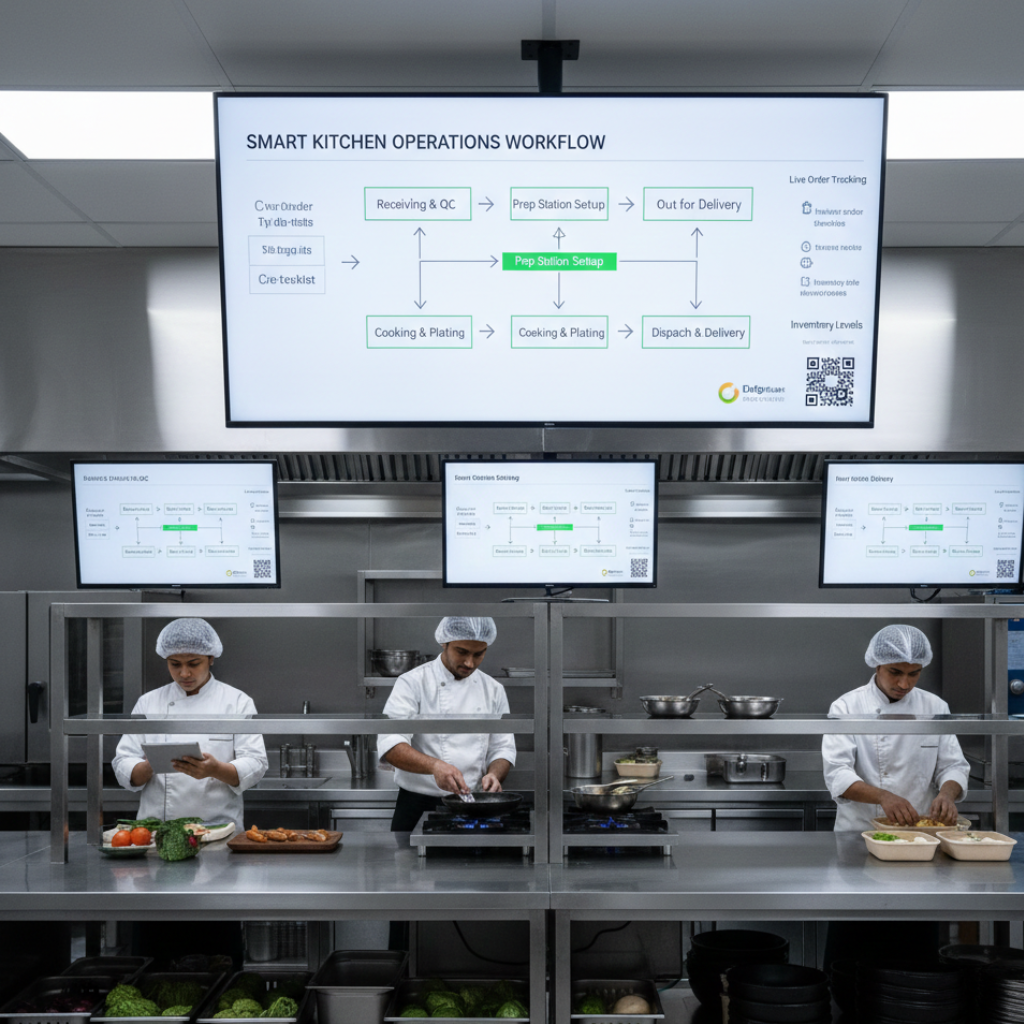
What “System Control” Means in CKaaS (Not Micromanagement)
In cloud kitchens, founders often confuse control with constant presence. They believe control means: shouting, checking every order, or staying inside the kitchen for 12 hours. That is not control. That is survival mode.
Real control means outcomes repeat even when the founder is not present: same portion, same taste, same packaging, same dispatch speed, and predictable unit economics. CKaaS achieves that repetition by designing workflows where the “right way” becomes the easiest way.
That is why SOPs, dashboards, and controls must work together. An SOP without a control is a suggestion. A dashboard without an SOP is just bad news. A control without a dashboard becomes policing. CKaaS works when all three reinforce each other.
If you are choosing a CKaaS partner, you are not only choosing “a kitchen.” You are choosing whether this system trio exists and how deep it goes. The deeper the SOPs, the clearer the dashboards, and the stronger the controls, the more predictable your execution and contribution margin becomes.
The Unit Economics Lens: Why SOPs + Dashboards + Controls Protect Contribution Margin
Many operators track revenue and assume profit will follow. But profit is not a monthly feeling. It is an order-level outcome. And SOPs, dashboards, and controls exist to protect that outcome repeatedly.
The unit economics equation still decides everything:
Order Value minus Aggregator commission & charges minus CKaaS fee / revenue share minus Packaging cost minus Food cost (COGS) minus Discount burn minus Refund/penalty leakage equals Contribution Margin.
SOPs protect the variables you can control: portions, yields, prep timing, packing accuracy, and dispatch discipline. Dashboards show where you are losing money: which SKUs have higher refunds, where food cost is drifting, which shift has more errors, and when availability drops. Controls make sure the fixes stick: checklists, gates, sign-offs, reorder triggers, and audit routines.
If you want platform cost clarity, read Aggregator Commission Impact in India and map refund leakage using Refunds and Cancellations Impact on Cloud Kitchen Profitability.
The 15 Roles SOPs, Dashboards, and Controls Play Inside CKaaS (And What Each One Fixes)
CKaaS becomes powerful when it stops treating problems as random. In reality, most cloud kitchen failures are repeated patterns. The job of SOPs is to define the correct pattern, the job of dashboards is to expose the wrong pattern, and the job of controls is to prevent the wrong pattern from continuing. Below are the most important roles these three system layers play inside a strong CKaaS model.
1) SOPs convert founder memory into repeatable training. When recipes live in someone’s head, outcomes vary by shift. SOPs convert “how we do it” into measurable steps: grams, ml, cooking times, holding rules, and packing standards. The moment an SOP is measurable, it becomes teachable and auditable.
2) SOPs reduce decision fatigue during peak. Peak hours are where teams improvise. Improvisation creates mistakes. SOPs remove micro-decisions by setting defaults: portion tools, packing order, labeling rules, and dispatch flow.
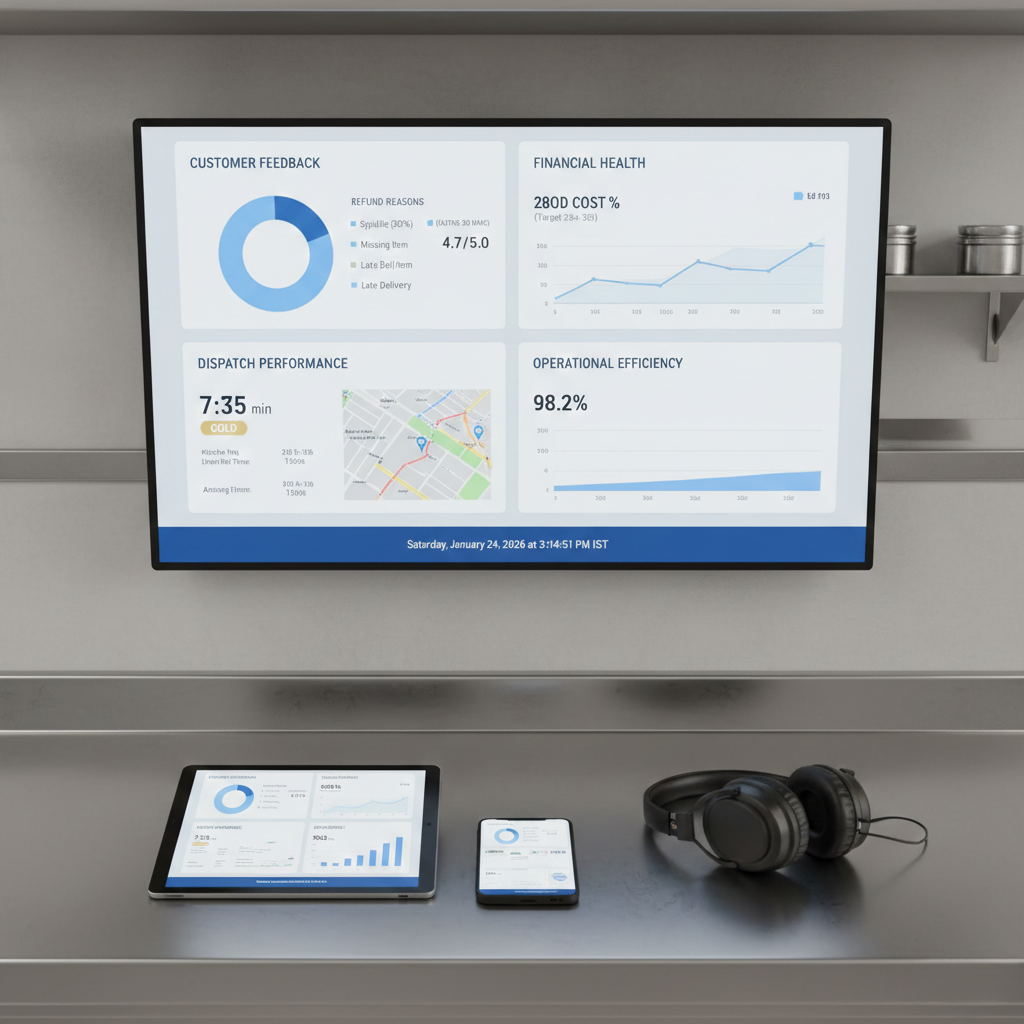
3) Dashboards stop “vibes-based operations.” Many kitchens operate on feelings: “I think refunds increased.” “I feel food cost is high.” Dashboards show the truth: refund rate, cancellation reasons, late dispatch counts, and SKU-wise performance.
4) Dashboards make leakage visible before it becomes fatal. The dangerous leaks are small and repeated: extra grams, missed add-ons, recurring stock-outs, packaging failures. Dashboards help you spot patterns early so the team fixes causes, not symptoms.
5) Controls make SOP compliance non-negotiable. This is where most kitchens fail. They create SOPs. Everyone nods. Then peak hits and the SOP disappears. Controls are the gates that force compliance: packing checklists, dispatch scans, portion tools, and sign-offs.
6) Portion controls protect food cost without policing. Food cost drift rarely comes from theft. It comes from inconsistency. Controls like scoops, ladles, fill lines, and weighing routines protect margins silently.
7) Procurement controls stabilize cost and taste. SOPs define RM specs (brand, cut size, fat %, pack size). Dashboards track variance (rate changes, substitutions, stock-outs). Controls enforce purchase discipline (approved vendors, reorder triggers, minimum buffer). This stops “whatever is available” purchasing.
8) Prep controls prevent stock-outs and late dispatch together. Prep planning SOPs define batch yields and par levels. Dashboards show when availability drops or cancellations spike. Controls enforce prep readiness: buffer checks before peak and labeling rules.
9) Packing controls reduce refunds faster than any ad spend. Most refunds come from missing items, wrong items, and poor packaging. A packing checklist is a control system. A “final bag check” is a control system. A labeled add-on verification step is a control system. If you want the model, use Cloud Kitchen Dispatch SOP.
10) Dispatch controls protect ratings and distribution. Dispatch is where errors become customer reality. Controls like final scan, label verification, sealing check, and rider handover discipline prevent wrong bags and cold deliveries.
11) Dashboards connect operations to growth outcomes. When kitchens lose visibility, founders assume marketing failed. Often, distribution dropped due to refunds, cancellations, or late dispatch. Dashboards connect reliability signals to sales outcomes so teams fix the real cause. Use: Marketing Spend vs ROI in Cloud Kitchens.
12) Controls create role ownership (instead of “everyone does everything”). SOPs define who owns what. Dashboards show where ownership is failing. Controls make accountability visible: who signed off packing, who owned dispatch, who checked prep readiness. Framework: Role-Based Kitchen Operations Explained.
13) Weekly review controls stop repeat mistakes. A mature CKaaS model runs a weekly loop: review refund reasons, cancellation causes, late dispatch counts, availability gaps, then update SOPs and retrain. Without a weekly loop, your kitchen repeats the same mistakes forever.
14) Audit controls replace supervision with verification. Founders think they need to “watch staff.” Strong systems replace watching with verification: random order audits, station checks, portion compliance checks, packaging compliance checks. This is how systems scale.
15) SOPs + dashboards + controls create transferability across outlets. The ultimate goal is not “one perfect kitchen.” It is a replicable system you can install into multiple outlets. This is how CKaaS supports multi-brand and multi-outlet scaling without chaos.
If you want to map common failure patterns SOPs must solve, start with Common Operational Mistakes in Cloud Kitchens and the discipline mindset via How Process Discipline Improves EBITDA.
Swiggy/Zomato Reality: Dashboards Matter Because Platforms Respond to Risk Signals
Aggregators don’t evaluate your effort. They evaluate your reliability. Late dispatch, cancellations, refunds, complaints, and low ratings signal risk. Risk reduces distribution. Reduced distribution pushes founders into discount dependence. Discount dependence kills contribution margin.
Dashboards matter because they reveal these risk signals early. SOPs matter because they define how to prevent them. Controls matter because they keep prevention alive during peak.
External policy context: Swiggy Refund Policy and Zomato Online Ordering Terms.
To understand how refunds and cancellations directly distort profitability, reference Refunds and Cancellations Impact on Cloud Kitchen Profitability.
The 3 Non-Negotiable Control Zones in CKaaS: Prep + Packing + Dispatch
If you want stable outcomes, don’t try to control everything. Control the three zones that decide customer experience and margin daily: prep readiness, packing accuracy, and dispatch discipline.
Prep controls protect availability and speed. Packing controls prevent refunds and complaints. Dispatch controls protect ratings, on-time performance, and platform trust.
Implement dispatch predictability using Cloud Kitchen Dispatch SOP and reduce repeated operational failures via Common Operational Mistakes in Cloud Kitchens.
How CKaaS Uses Roles + Dashboards (So Standards Don’t Depend on “Good Staff”)
Many founders think the solution is “finding better staff.” In reality, staff quality helps, but systems decide stability. CKaaS becomes reliable when it uses role ownership with visible controls and dashboard accountability.
Here is what role-based control looks like inside a mature CKaaS model:
Prep role:
owns batch prep schedules, par levels, labeling rules, and buffer checks before peak.
Cook role:
owns recipe cards, portion tools, holding-time rules, and consistency checks.
Pack role:
owns packing checklist, add-on verification, sealing rules, and presentation standards.
Dispatch role:
owns final scan, rider handover speed, label verification, and bag stability.
Manager role:
owns dashboard review weekly: refunds, cancellations, late dispatch, stock-outs, and SOP updates.
If you want the operating framework in depth, use Role-Based Kitchen Operations Explained.
A Practical 7 to 30 Day SOP + Dashboard + Control Rollout (What CKaaS Should Install First)
A strong CKaaS implementation doesn’t start with expansion. It starts with control installation. Below is a practical sequence to install SOPs, dashboards, and controls in a way that actually sticks.
Step 1 (Day 1–2): Identify the top 20% SKUs that create 80% of volume. Don’t SOP everything at once. Stabilize bestsellers first. This is where most refunds and food cost drift originate.
Step 2 (Day 1–3): Write measurable SOPs (grams, ml, time, tools). Convert “cook like this” into measurable steps: portion size, sauce quantity, holding time, packing sequence, sealing rule. If it can’t be measured, it can’t be audited.
Step 3 (Day 2–5): Install two controls immediately: packing checklist + dispatch gate. This single move reduces refunds and late outcomes quickly. Implement using Cloud Kitchen Dispatch SOP.
Step 4 (Day 3–7): Build prep planning SOPs with par levels and batch yields. Protect availability, reduce cancellations, and stabilize peak readiness. This also reduces last-minute procurement chaos.
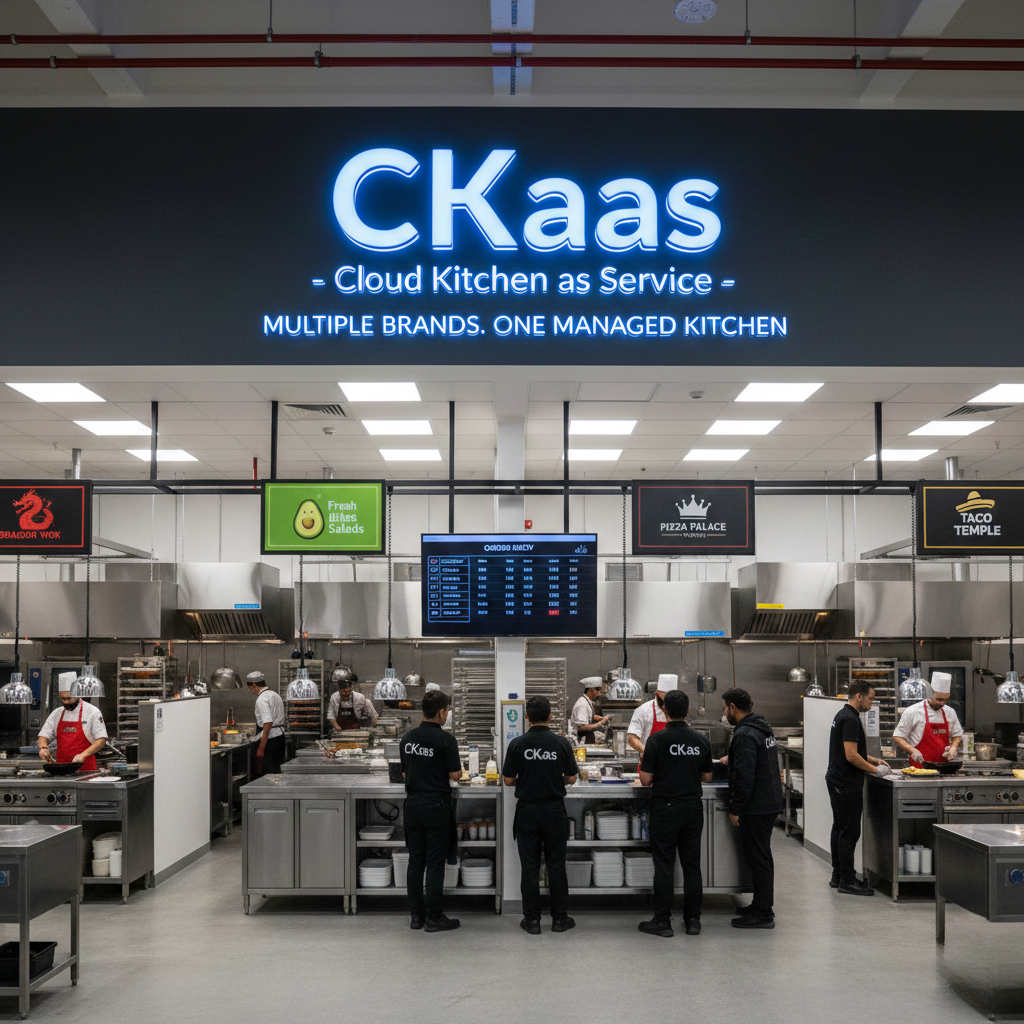
Step 5 (Week 2): Create a simple dashboard (daily + weekly views). Track the few metrics that matter: food cost % (top SKUs), refund rate, cancellation reasons, late dispatch count, stock-outs/unavailable items, and discount burn.
Step 6 (Week 2): Install role ownership + sign-off controls. Assign owners for prep, cook, pack, dispatch. Use sign-offs for packing and dispatch gates. Ownership makes failures traceable, not emotional.
Step 7 (Week 3–4): Run weekly review meetings and update SOPs. Review dashboard patterns. Choose top 2 repeat failures. Fix root cause. Update SOP. Retrain. Repeat weekly. This loop is what makes CKaaS a system, not a staffing service.
If you want the discipline lens, use How Process Discipline Improves EBITDA and if you’re spending for growth, map ROI properly: Marketing Spend vs ROI in Cloud Kitchens.
External process references (useful for standardisation thinking): Standardized Work (Lean lexicon), ISO 22000 overview, and FSSAI Hygiene Requirements (Schedule 4 reference).
Final Takeaway: CKaaS Works When SOPs Create Standards, Dashboards Create Truth, and Controls Create Compliance
SOPs, dashboards, and controls are not “corporate process.” They are survival infrastructure for delivery-first brands. SOPs turn knowledge into repeatability. Dashboards turn chaos into visibility. Controls turn visibility into consistent execution.
When these three work together, the kitchen stops being founder-dependent. Refunds become preventable. Food cost becomes measurable. Cancellations become reducible. And contribution margin becomes predictable.
Operating frameworks from GrowKitchen, and operating partner brands like Fruut and GreenSalad are built to convert “busy kitchens” into “system-driven kitchen networks.”
FAQs: The Role of SOPs, Dashboards, and Controls in CKaaS
What is the difference between SOPs and controls?
SOPs define the correct method. Controls are gates (checklists, scans, sign-offs) that enforce the method during peak.
Why do dashboards matter if the kitchen already has SOPs?
SOPs define the standard, but dashboards reveal where the standard is breaking (refund patterns, late dispatch spikes, stock-outs).
What are the fastest controls to install in any CKaaS setup?
Packing checklist + dispatch scan + portion tools for top SKUs. These reduce refunds and food cost drift quickly.
Why do some CKaaS partnerships still feel chaotic?
Because the setup is staffing-heavy but control-light: SOPs aren’t measurable, dashboards aren’t reviewed weekly, and gates aren’t enforced.
- Cloud Kitchen Profitability Consultant in India
- Common Operational Mistakes in Cloud Kitchens
- Cloud Kitchen Dispatch SOP
- Role-Based Kitchen Operations Explained
- Refunds and Cancellations Impact on Cloud Kitchen Profitability
- Aggregator Commission Impact in India
- Marketing Spend vs ROI in Cloud Kitchens
- How Process Discipline Improves EBITDA
- Grow Kitchen on Twitter