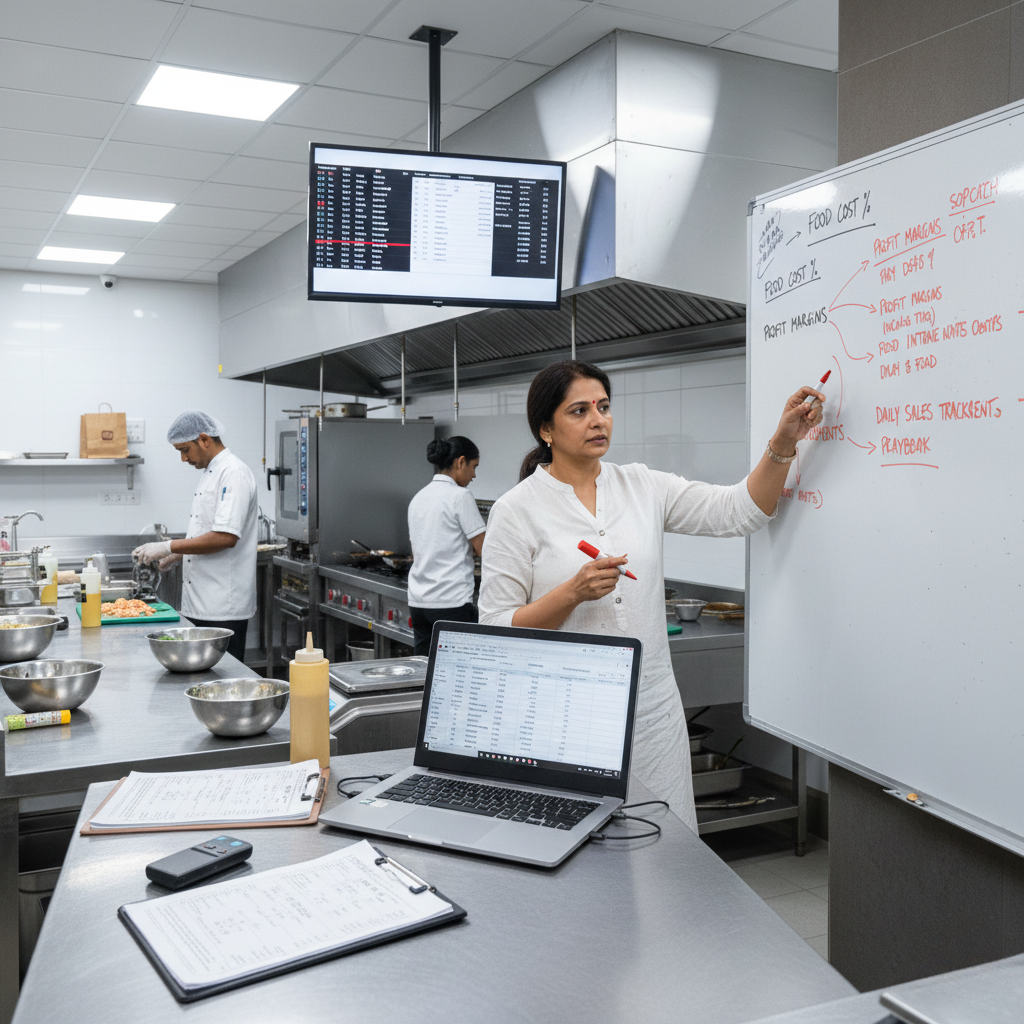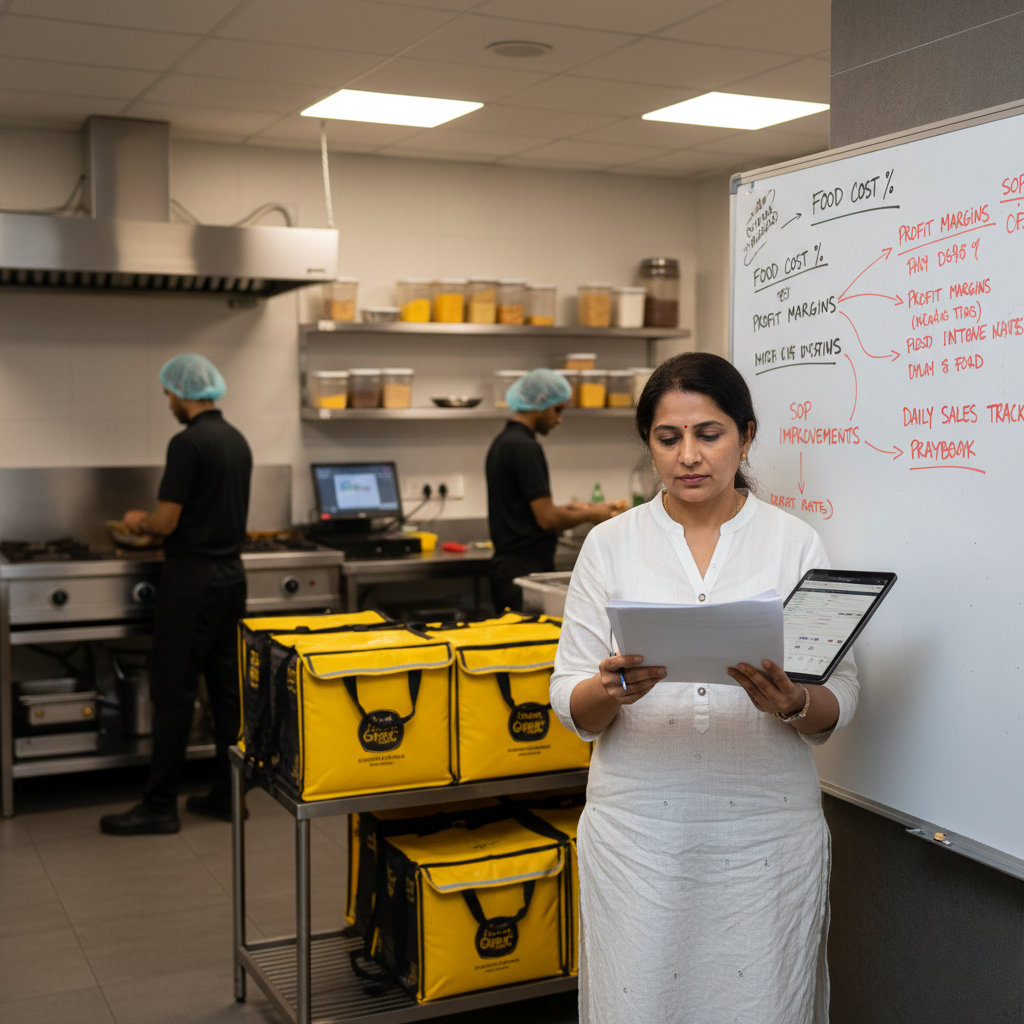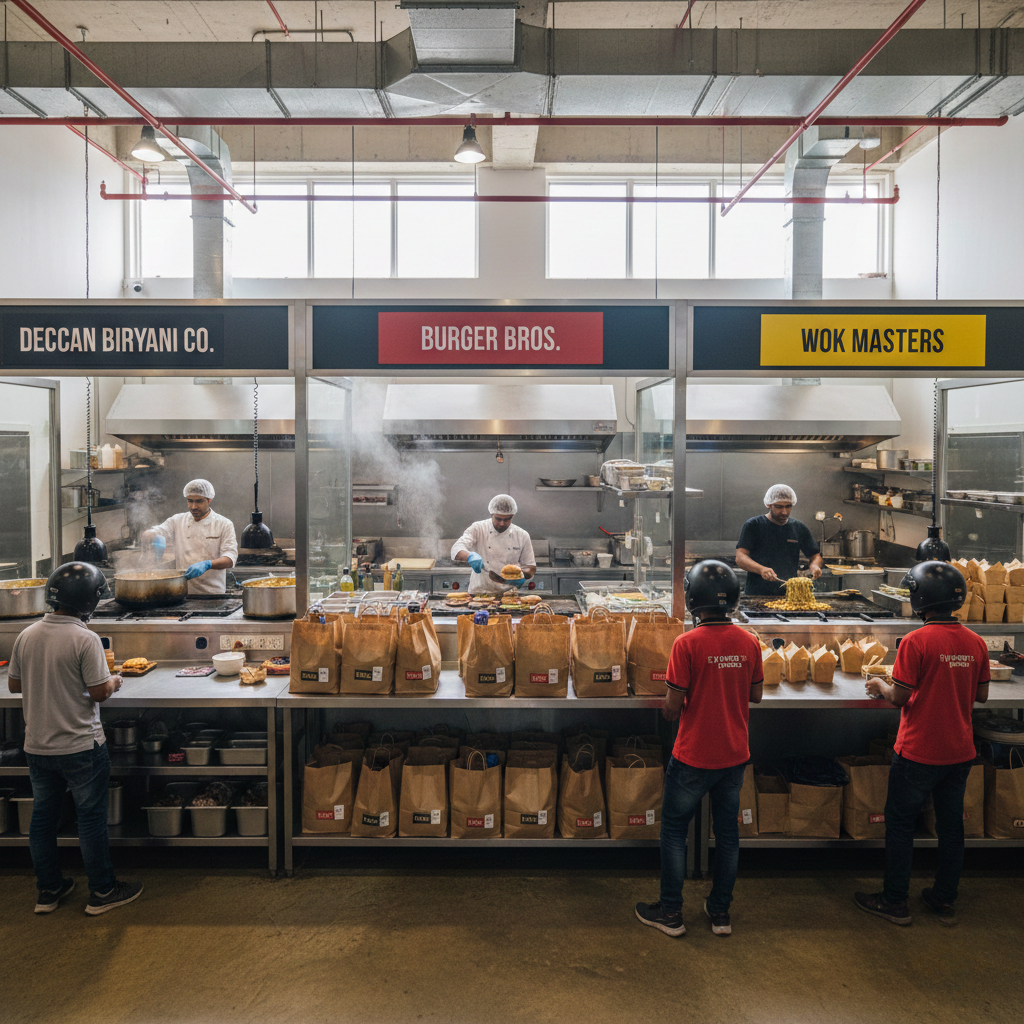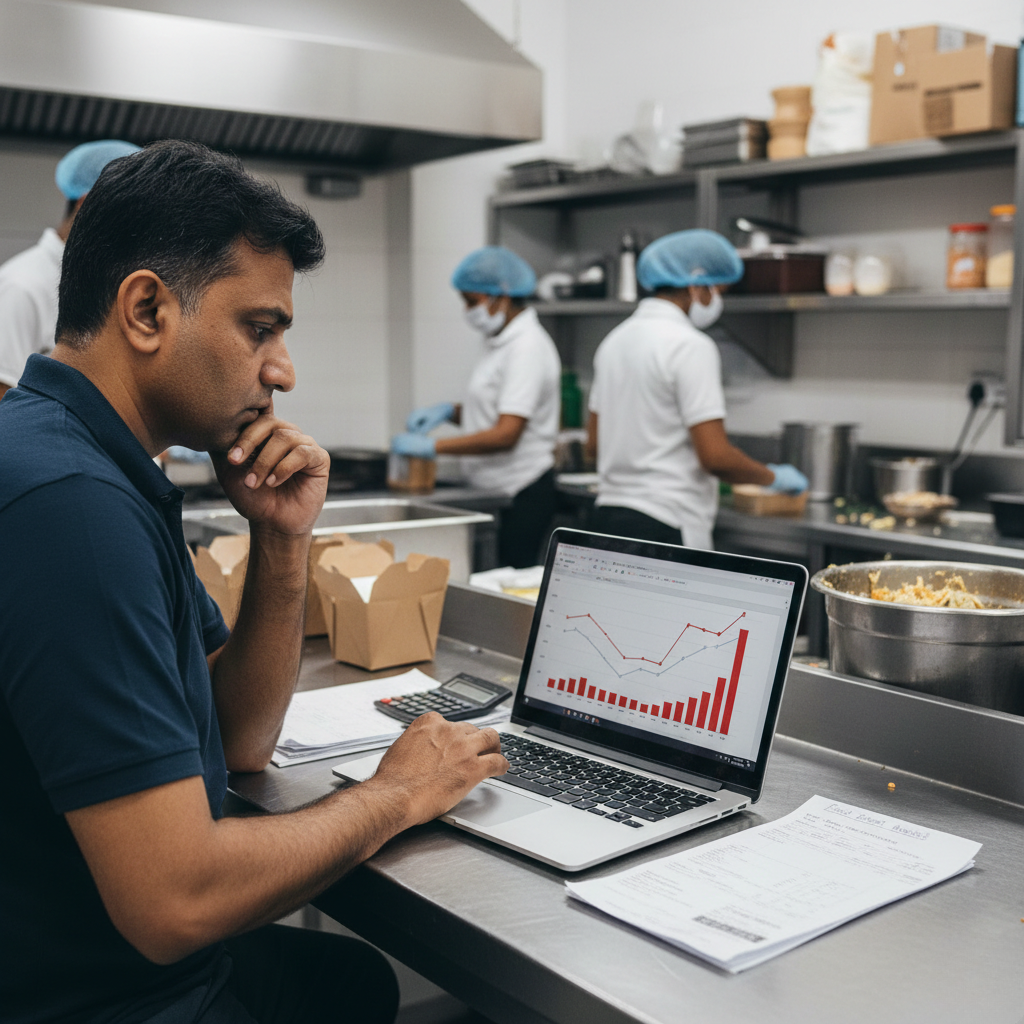
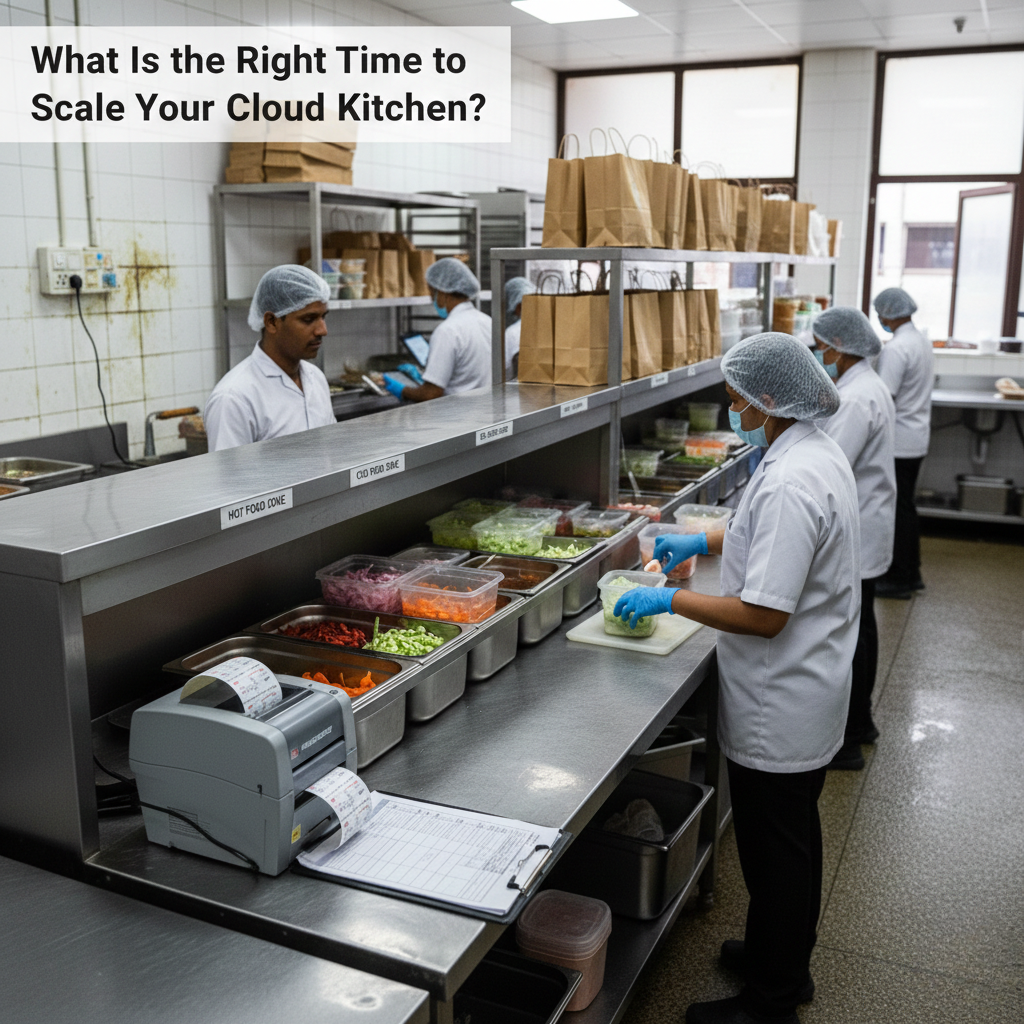
Scaling a cloud kitchen is a strategic decision, not a reaction to rising demand. Many founders assume that increasing order volume automatically signals readiness for expansion. However, scaling too early can magnify operational weaknesses, destabilize margins, and damage ratings. The right time to scale a cloud kitchen depends on operational maturity, contribution margin stability, dispatch consistency, vendor control, and data-driven decision-making. This guide explains how to determine whether your kitchen is truly ready to scale or still needs structural strengthening.
What Is the Right Time to Scale Your Cloud Kitchen?
The decision to scale a cloud kitchen should never be based purely on excitement, investor pressure, or temporary sales spikes. In delivery-first businesses, expansion multiplies both strengths and weaknesses. If operational systems are stable, scaling increases profitability. If systems are unstable, scaling accelerates chaos.
Many cloud kitchens experience strong early traction. Orders increase, ratings look healthy, and revenue appears promising. This often creates the illusion that expansion is the natural next step. However, the right time to scale is not when revenue rises, but when outcomes become predictable. Predictability across margins, dispatch performance, food quality, and customer satisfaction indicates operational maturity.
Before evaluating expansion readiness, founders should understand profitability fundamentals through Cloud Kitchen Profitability Consultant in India and assess structural gaps via Common Operational Mistakes in Cloud Kitchens .
Contribution Margin Stability Comes First
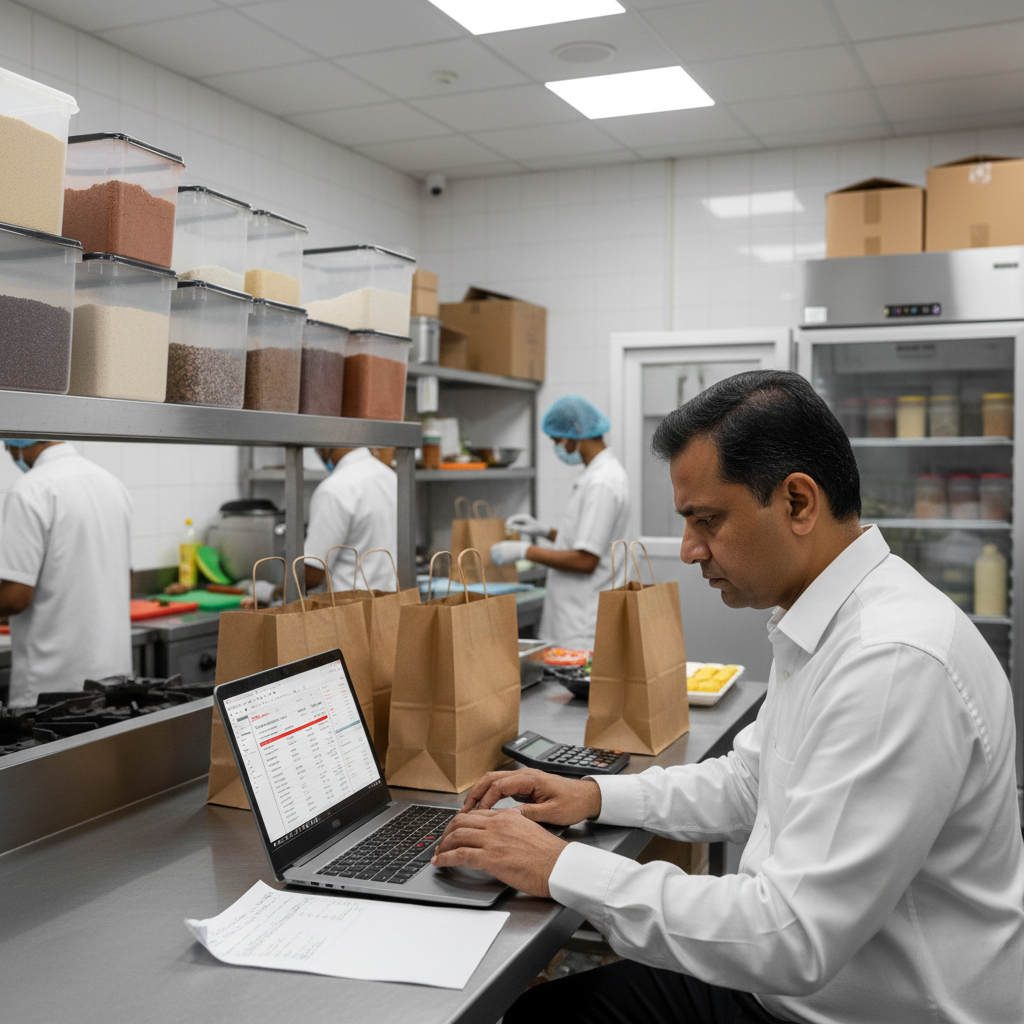
The first and most important indicator that a cloud kitchen is ready to scale is stable contribution margin per order. If margins fluctuate weekly, expansion will only amplify financial volatility. Scaling without margin clarity creates the illusion of growth while masking underlying leakage.
Contribution margin stability means that food cost percentages remain controlled, packaging costs are predictable, commissions are accounted for, and refunds are consistently within acceptable thresholds. If minor operational inefficiencies are still impacting margins at moderate volume, increasing order count will accelerate losses.
Aggregator commission impact must also be clearly understood before scaling. Founders should analyze commission structures in detail using Aggregator Commission Impact in India , and review policy references such as Swiggy Refund Policy and Zomato Online Ordering Terms.
Only when margins remain stable for several consecutive months under increasing order volume should expansion be considered.
Dispatch Accuracy and Refund Control
Another critical indicator of readiness to scale is dispatch consistency. If dispatch errors, late handovers, and refund spikes are still common, expansion will magnify these problems across locations.
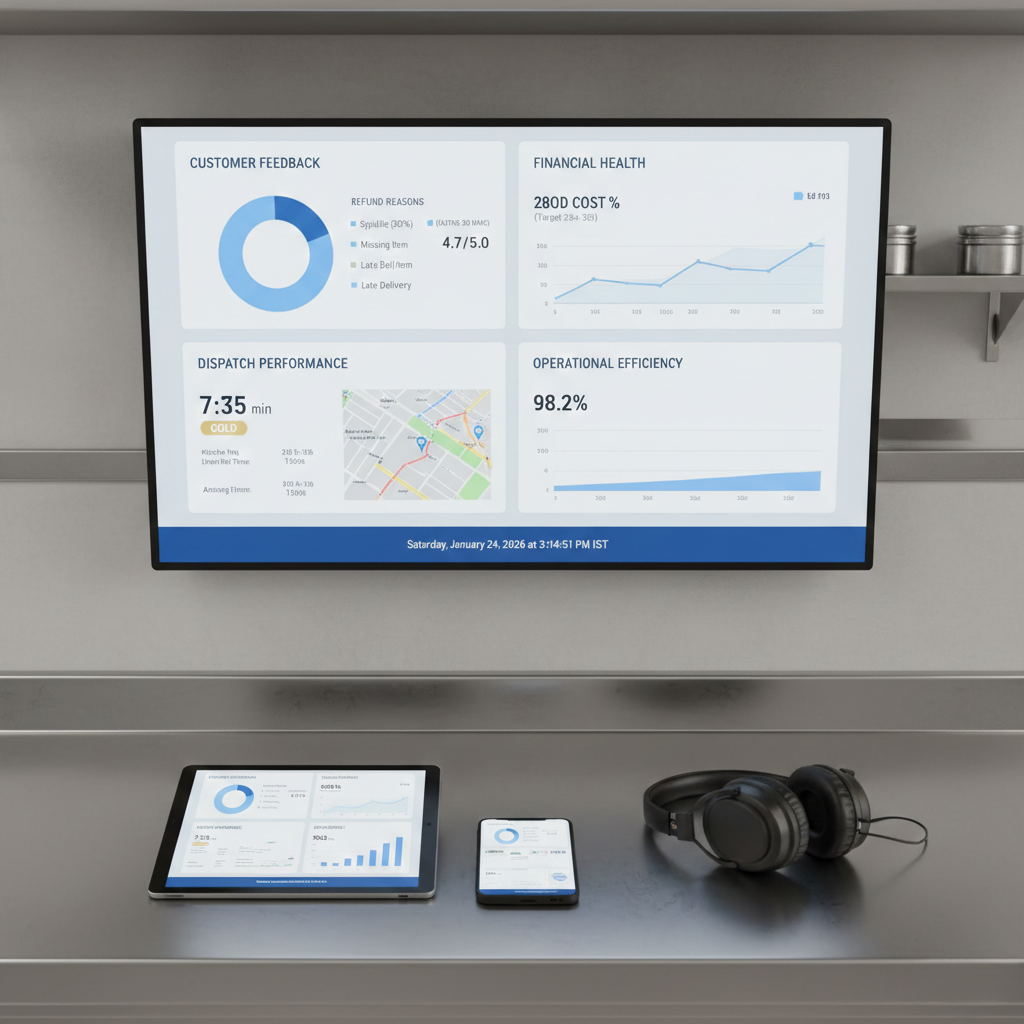
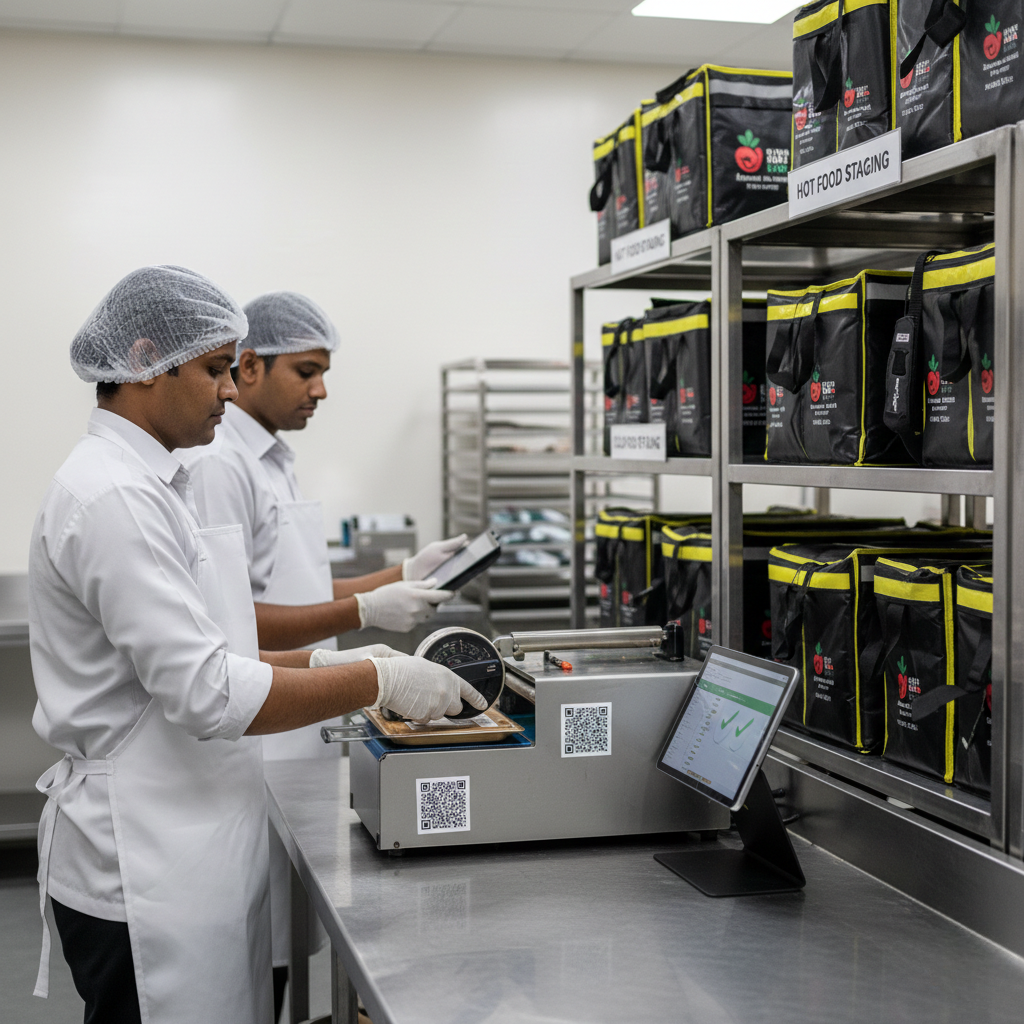
A kitchen is ready to scale when packing accuracy is standardized, dispatch gates are installed, and refund reasons are mapped weekly. Consistently low refund rates over a sustained period indicate that execution reliability has matured.
Founders should implement structured dispatch systems as outlined in Cloud Kitchen Dispatch SOP before expanding into additional outlets.
Rating Stability Across Increasing Volume
Ratings are not just customer feedback metrics; they are distribution signals. Platforms prioritize kitchens with stable ratings. If ratings fluctuate with volume spikes, it indicates operational stress.
The right time to scale is when ratings remain consistently strong even during peak order periods. This demonstrates that SOP discipline is resilient under pressure. If rating drops correlate directly with order increases, expansion should be paused until systems are reinforced.
Team Maturity and Role Clarity
Expansion requires replication of execution quality across teams. If performance depends heavily on the founder’s daily presence, the kitchen is not yet ready to scale.
Role-based operational clarity must be installed before scaling. Prep owners, station cooks, packing leads, and dispatch supervisors should function independently of constant supervision. Structured team ownership is explained in detail in Role-Based Kitchen Operations Explained .
A cloud kitchen is ready to scale when performance remains stable even during periods when the founder is not physically present.
Procurement and Vendor Standardization
Multi-location scaling introduces procurement complexity. If ingredient quality or vendor pricing is unstable at one location, expansion will multiply inconsistency.
Kitchens should only scale once procurement specifications, vendor agreements, and receiving audits are standardized. Without this discipline, food cost variance across cities can significantly impact profitability.
For a deeper understanding of process discipline and financial control, review How Process Discipline Improves EBITDA .
Data-Driven Weekly Review Systems
Scaling should never begin without structured weekly review systems. If refund reasons, cancellation causes, dispatch delays, and SKU margins are not analyzed consistently, decision-making becomes reactive.
The right time to scale is when data insights drive operational improvements regularly. Kitchens that review metrics weekly and implement system upgrades demonstrate readiness for controlled expansion.
If growth is currently creating operational stress, founders should study When Growth Is Hurting Your Cloud Kitchen Operations .
Conclusion: Scale When Systems Are Strong, Not When Sales Spike
The right time to scale a cloud kitchen is when systems have matured beyond founder dependency. Margin stability, dispatch accuracy, rating consistency, team clarity, procurement discipline, and structured data reviews must be established first.
Expansion should be the result of operational strength, not the cause of it. When outcomes become predictable, scaling multiplies success. When systems are weak, scaling multiplies instability.
To explore structured operating frameworks, visit GrowKitchen. Brands such as Fruut and GreenSalad operate using system-led expansion principles.
FAQs: Right Time to Scale a Cloud Kitchen
How long should a kitchen operate before scaling?
At least 3–6 months of stable margins and rating consistency under increasing order volume.
Is high revenue alone a sign to expand?
No. Revenue spikes without margin stability can be misleading.
Should founders be operationally independent before scaling?
Yes. Scaling should not depend on constant founder supervision.