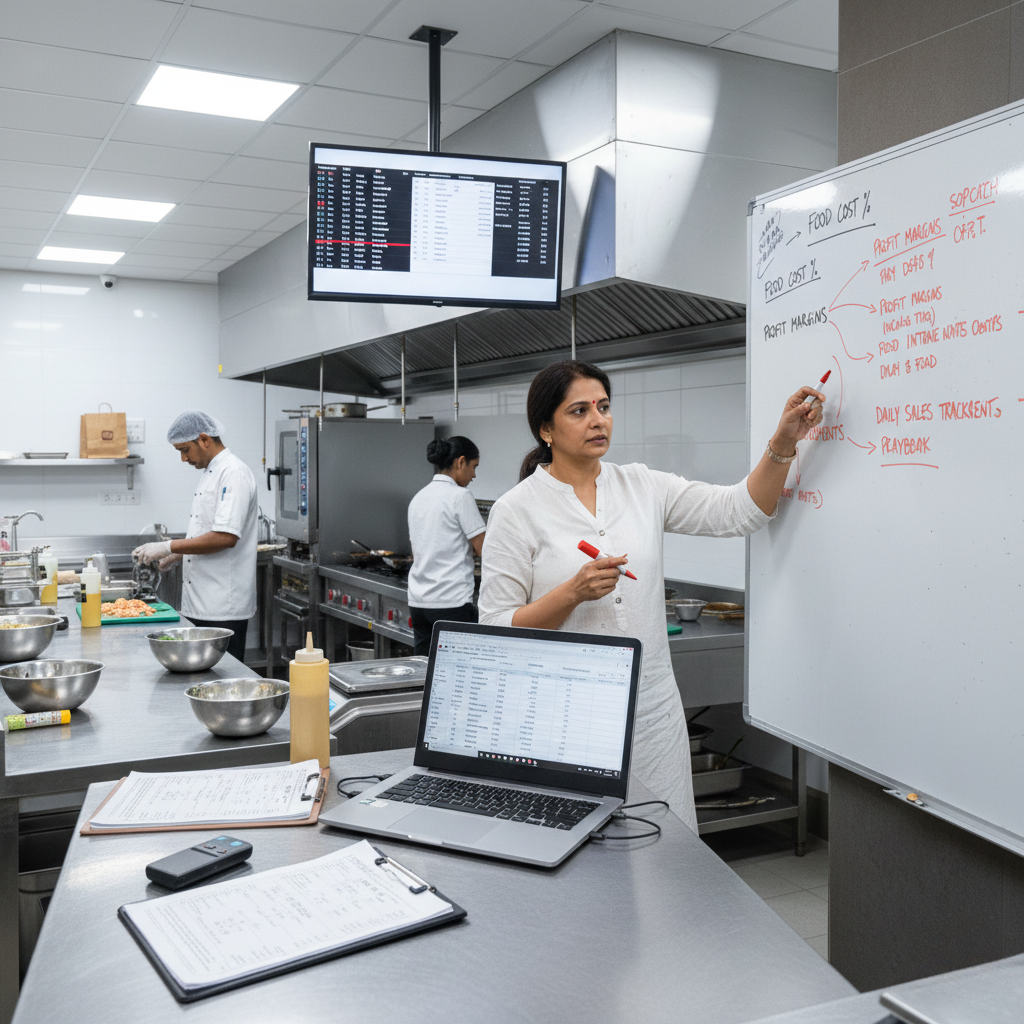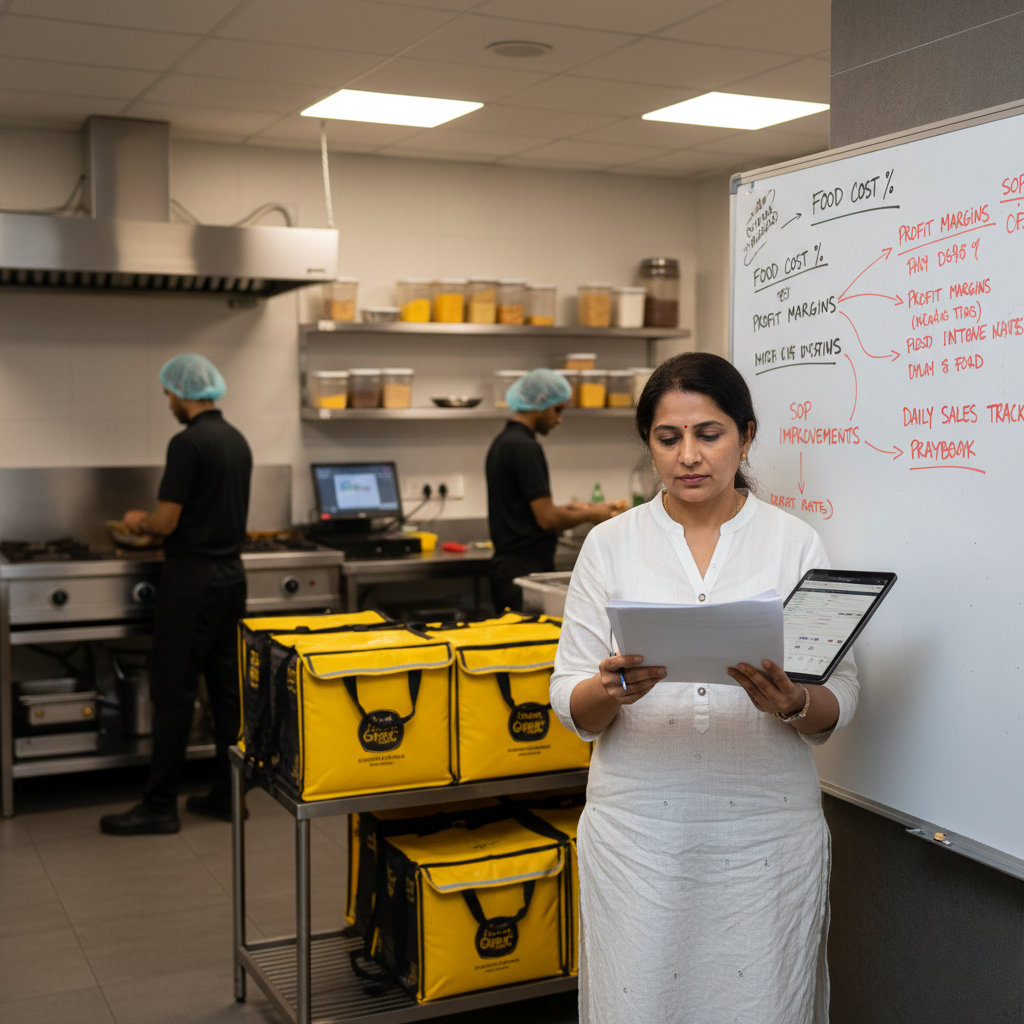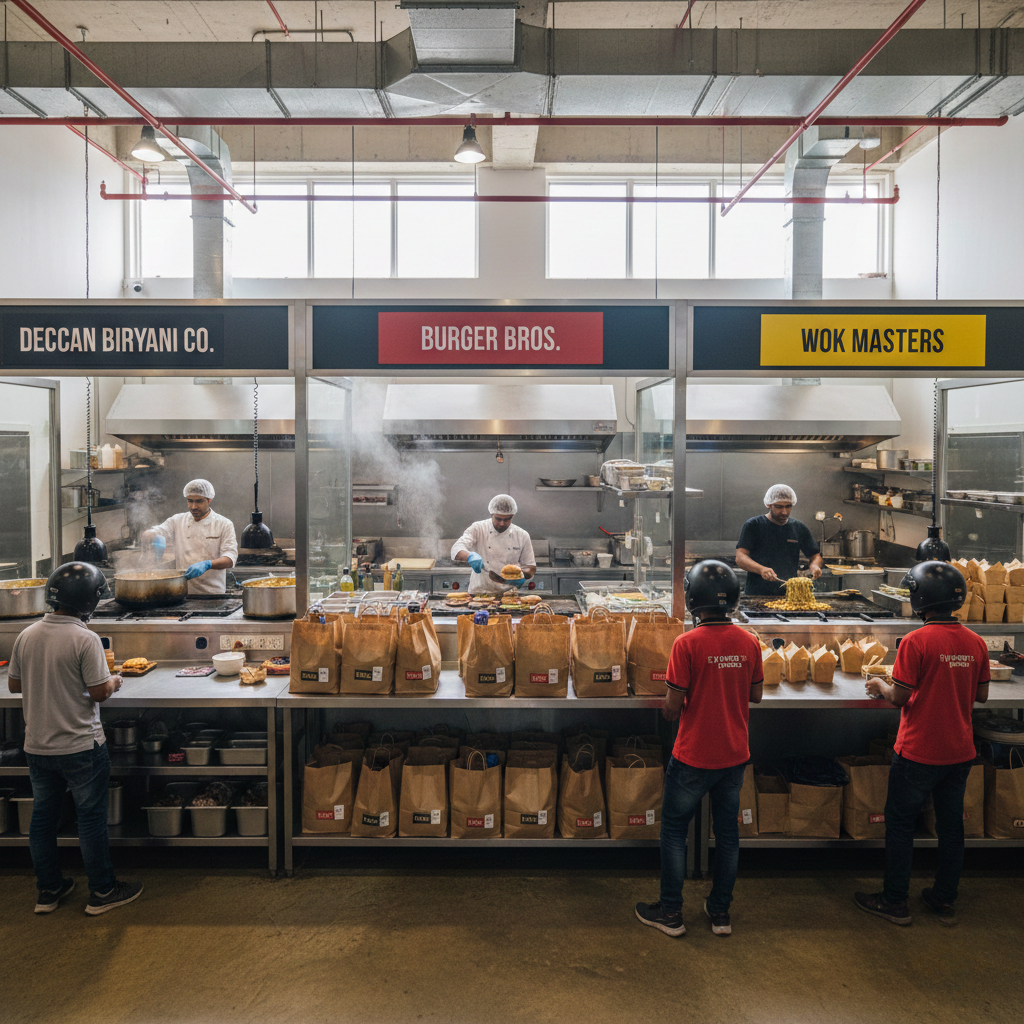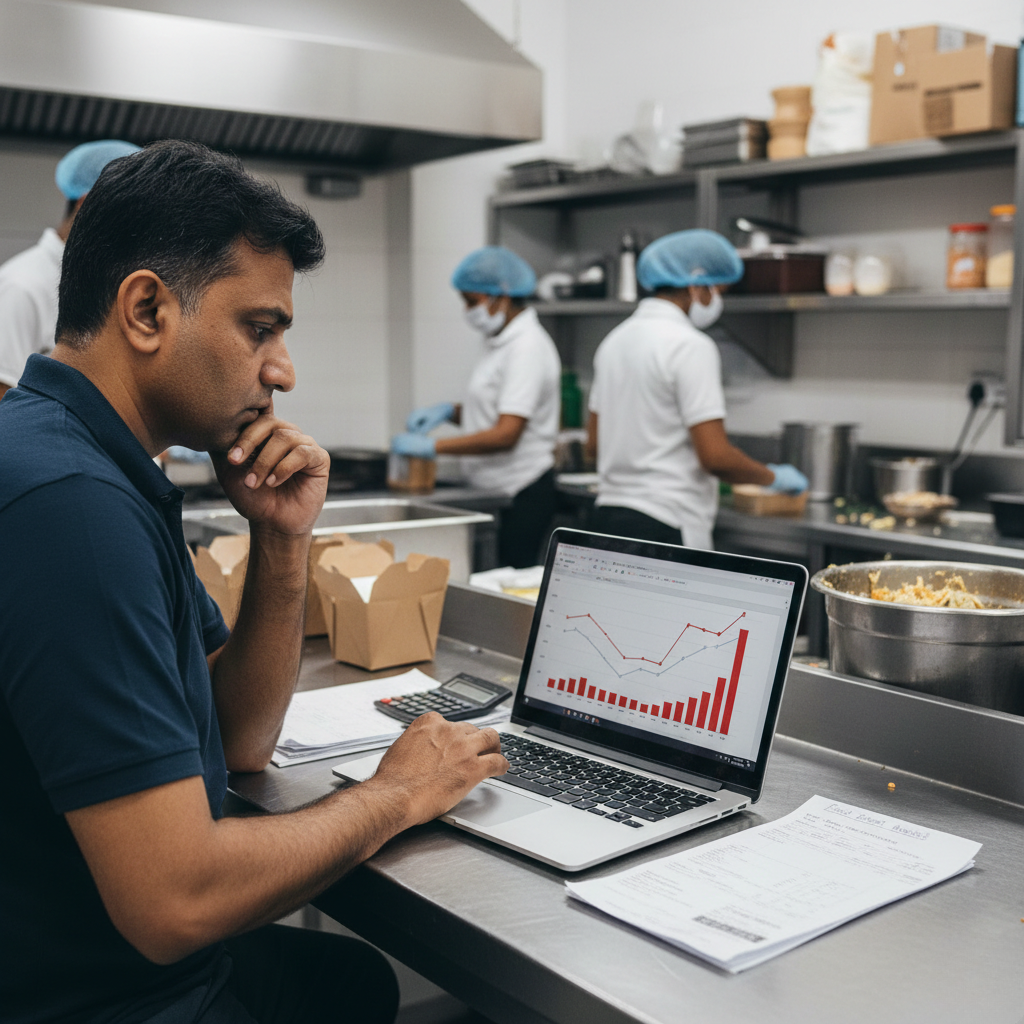
How Multi-Brand Kitchens Improve Profitability is not a hype concept. It’s a practical way to increase utilization, reduce fixed-cost pressure, and stop depending on a single menu to keep the kitchen alive. A single-brand cloud kitchen often looks busy but stays fragile. A multi-brand kitchen becomes profitable when brands share the same staff, the same raw material base, the same prep infrastructure, and the same dispatch workflow, while multiplying order opportunities across dayparts. This guide explains how multi-brand kitchens improve profitability, where founders go wrong, and how to build the model without operational chaos.
How Multi-Brand Kitchens Improve Profitability: The Real Economics Behind “One Kitchen, Many Brands”
Most cloud kitchens don’t fail because demand is zero. They fail because their fixed costs don’t get absorbed. Rent, salaries, electricity, packaging, wastage, and platform fees keep running daily, while a single menu struggles to stay relevant across lunch, snacks, dinner, and late night. As a result, founders chase discounts to keep orders flowing, margins compress, ratings fluctuate, and the kitchen becomes “busy but broke.”
A multi-brand kitchen improves profitability by changing the economics: it spreads fixed costs across multiple demand pools, improves kitchen utilization, increases order frequency, and reduces dependency on one category’s seasonality. But the model only works when operations are system-driven. Without SOPs and controls, multi-brand kitchens become a complexity trap.
If you want to build the profitability foundation first, start with Cloud Kitchen Profitability Consultant in India and audit common leakage points using Common Operational Mistakes in Cloud Kitchens.
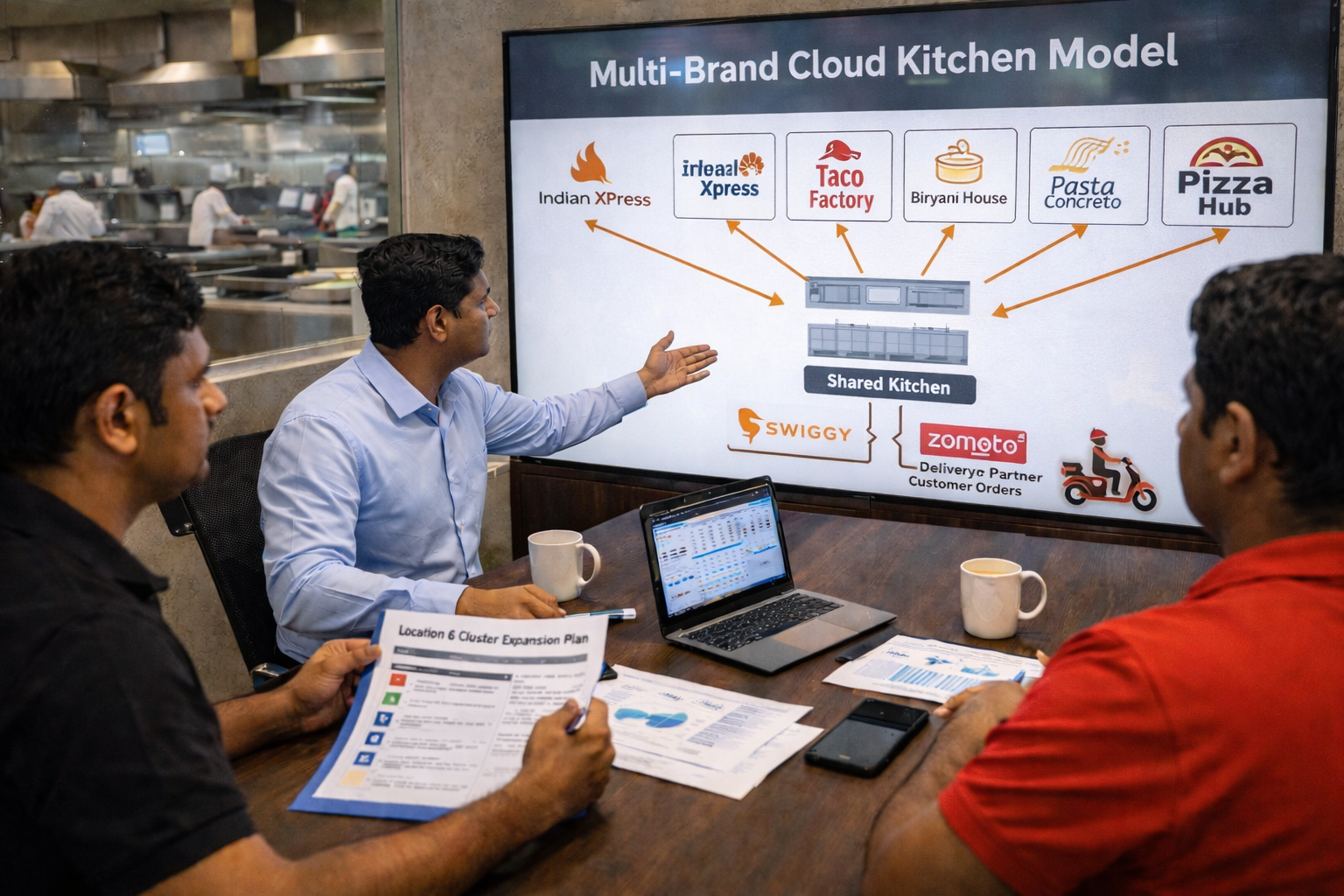
What “Multi-Brand” Really Means in Cloud Kitchens
Multi-brand does not mean launching random menus under different names. It means building a structured brand portfolio that shares: raw materials, prep components, production stations, staffing, packaging standards, and dispatch workflow. The objective is simple: increase sales opportunities without multiplying operational cost linearly.
In a profitable multi-brand kitchen, each brand plays a defined role: one brand drives lunch volume, one drives dinner AOV, one drives snacks or late-night conversion, and one stabilizes weekdays with repeat-friendly comfort food. The kitchen becomes an engine, not a single product.
The model works best when brands are designed around shared building blocks. If every brand requires unique equipment, unique staff skills, and unique raw materials, your complexity explodes and your margins collapse.
Why Multi-Brand Kitchens Improve Profitability by Absorbing Fixed Costs Faster
The fastest path to profitability in delivery kitchens is not only “more orders.” It’s better fixed-cost absorption. Every kitchen has costs that don’t scale down when orders reduce: rent, base salaries, minimum electricity usage, admin overhead, software/tools, and basic packaging inventory.
A single-brand kitchen often has dead hours. Staff is present, but output is low. Equipment sits idle. Prep gets overdone “just in case,” and wastage increases. A multi-brand kitchen reduces dead hours by widening demand windows. More dayparts get covered with relevant food. More search terms get captured on aggregators. More customers discover you through different cravings.
The result is improved cost distribution: the same fixed cost is spread over a larger order base, reducing overhead per order and improving contribution margin. This is why portfolio kitchens can look similar in effort, but vastly different in profitability.
Food Cost Control in Multi-Brand Kitchens: Why Portfolio Kitchens Can Win (or Bleed)
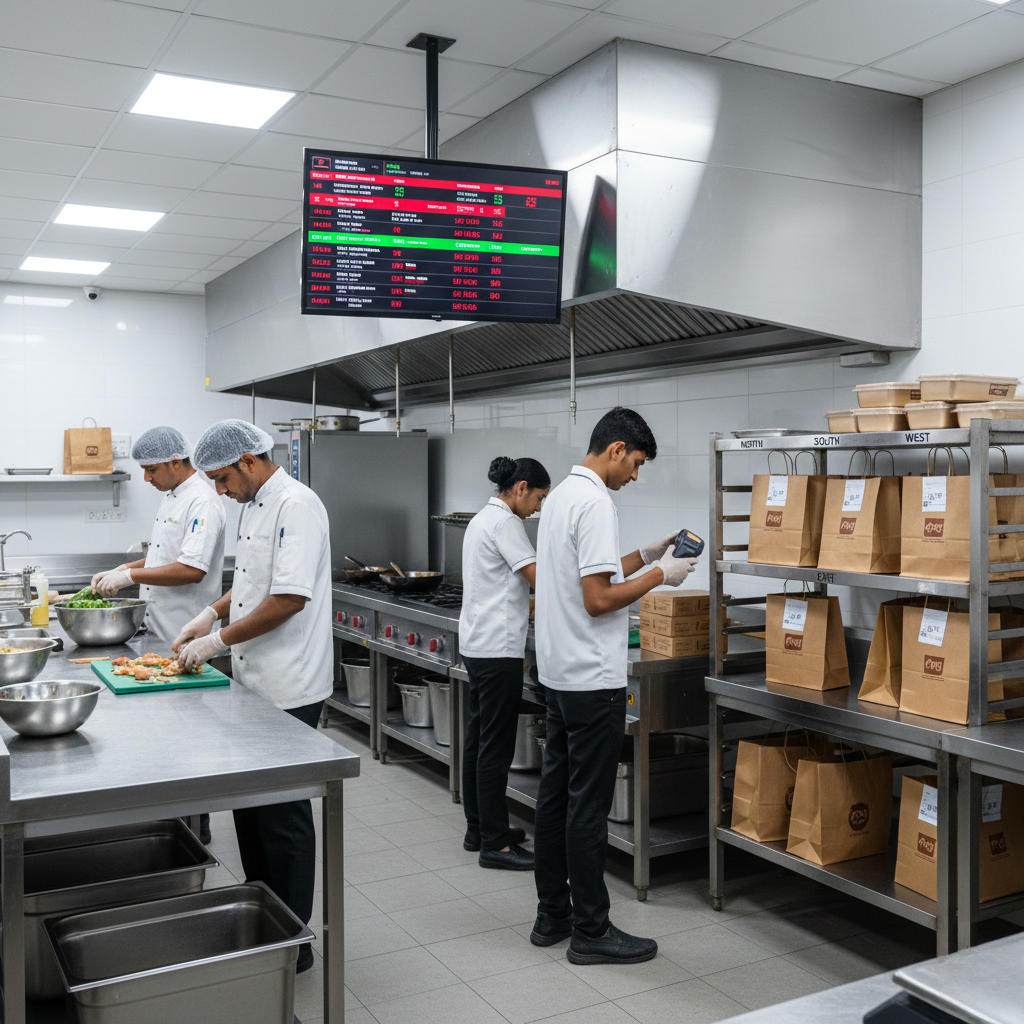
Food cost is where multi-brand kitchens either become powerful or dangerous. When designed correctly, a portfolio kitchen creates procurement leverage: higher volume for shared raw materials lowers per-unit cost, reduces stockouts, and improves negotiation with vendors. When designed poorly, food cost becomes untrackable due to ingredient sprawl and portion drift.
A profitable multi-brand kitchen uses a “shared base” strategy: common vegetables, sauces, grains, and core proteins are shared, while differentiation happens through: spice mixes, finishing sauces, toppings, and plating/packing style.
Here’s how multi-brand kitchens improve food cost if done right:
1) Shared RM basket: fewer unique SKUs, higher buying volume, better wastage control.
2) Shared prep components: mother gravies, base marinades, cooked grains, chopped veg standards, reducing prep duplication and variance.
3) Portion discipline across brands: the same ladles, scoops, and packing bowls standardized, so staff doesn’t “freestyle” under pressure.
4) Inventory visibility: shared ingredients make stock movement easier to track, if your systems are set up correctly.
If you want to connect SOP discipline directly to food cost stability, use How SOPs Reduce Food Cost & Complaints.
Staff Productivity: Multi-Brand Kitchens Increase Output per Staff Hour
Most founders underestimate the biggest profitability lever: output per staff hour. In a single-brand kitchen, staff productivity is often capped by demand. During off-peak windows, staff is idle. During peak windows, staff panics and multitasks. Both scenarios reduce consistency and increase errors.
Multi-brand kitchens improve productivity by smoothing demand across dayparts. If one brand peaks at lunch and another peaks at dinner, the same team stays productive across longer windows. Instead of “idle then chaos,” you move closer to “steady output.”
But this only works when roles are defined. Multi-brand kitchens require station ownership: prep, hot line, cold line, packing, and dispatch. If everyone touches everything, speed collapses and quality drops.
For role clarity and execution structure, use: Role-Based Kitchen Operations Explained.
Aggregator Visibility: Multi-Brand Kitchens Win More Search Real Estate
On Swiggy and Zomato, discovery is not only brand love. It’s keyword capture, category presence, and conversion performance. A single brand might rank for limited categories. A multi-brand portfolio can appear in multiple buyer intents: bowls, wraps, salads, ramen, biryani, snacks, desserts, beverages.
This improves profitability in two ways:
1) Lower dependency on discounting: when you appear in more searches, you can rely less on heavy offers to drive impressions.
2) Higher repeat probability: the same customer can order from your ecosystem across different cravings, increasing lifetime value without additional CAC.
The catch: multi-brand visibility collapses if operations are inconsistent. One brand’s delays can affect ratings, and ratings affect conversion. That is why operational stability is the foundation.
For payout + margin impact, read: Aggregator Commission Impact in India.
External references for platform policy context: Swiggy Refund & Cancellation Policy and Zomato Online Ordering Terms.
Dispatch + Packing: Multi-Brand Kitchens Must Standardize or They Will Bleed
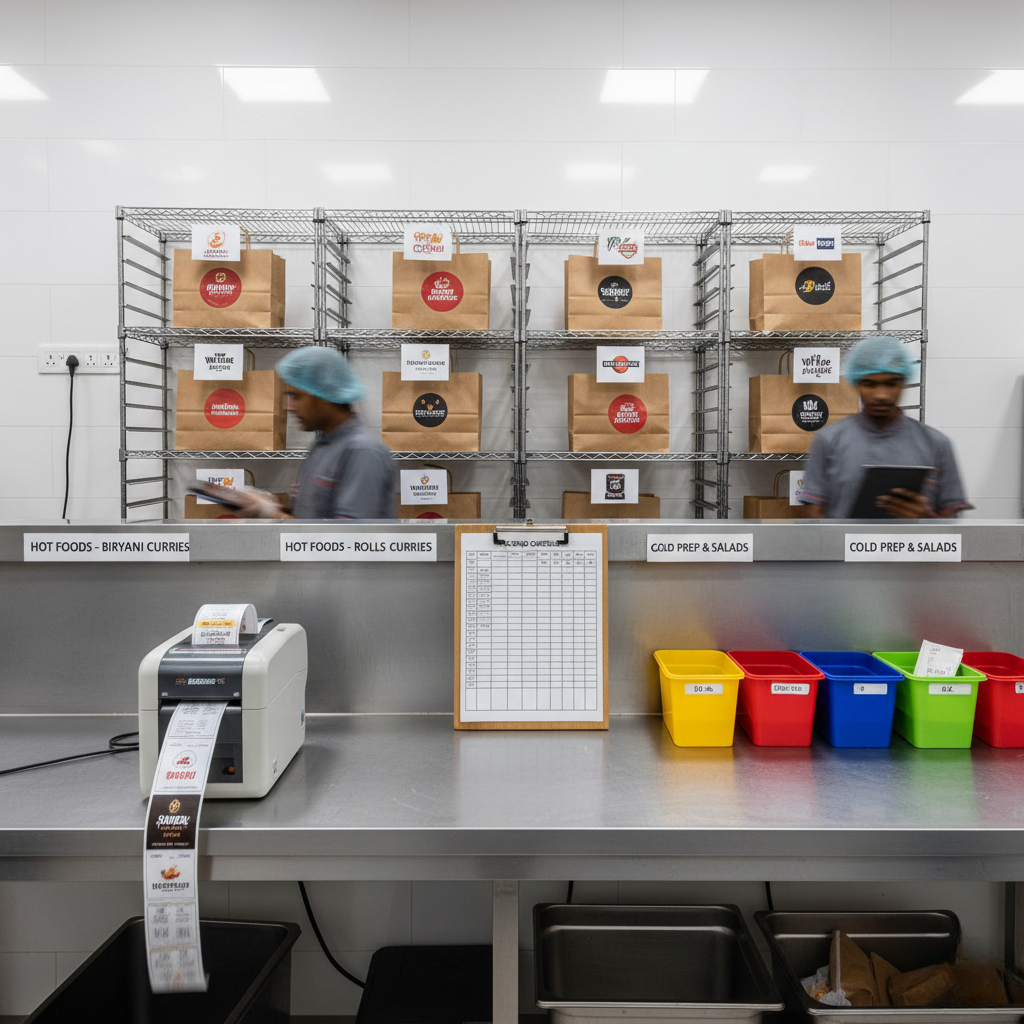
Multi-brand kitchens increase order complexity. Different items, different packaging needs, different add-ons. If packing and dispatch are not standardized, errors multiply: missing items, swapped products, wrong brand labeling, spills, and incorrect cutlery/add-ons. Each error becomes a profit leak through refunds, re-cooks, and rating damage.
The solution is not “more careful staff.” The solution is a packing + dispatch system: a checklist-driven packing sequence, standardized containers where possible, brand-wise labeling rules, and a two-step verification before handover.
To implement a disciplined workflow, use: Cloud Kitchen Dispatch SOP.
A profitable multi-brand kitchen treats dispatch like a production line: predictable, repeatable, and measurable.
The Biggest Myth: “More Brands = More Profit” (Not Always)
Multi-brand kitchens improve profitability only when they reduce cost per order and increase contribution margin stability. Many founders launch brands as a panic response: one brand slows down, so they add another menu. That usually creates chaos, not profit.
More brands become a problem when: raw material SKUs explode, training time increases, packing errors rise, prep becomes fragmented, inventory tracking becomes blind, and staff loses station discipline. At that point, revenue can increase while profit falls further.
If you’re already scaling and feeling operations get worse, read: When Growth Is Hurting Your Cloud Kitchen Operations.
How to Build a Profitable Multi-Brand Kitchen Without Operational Chaos
If you want to build multi-brand profitability the right way, treat it like portfolio design, not menu expansion. The goal is shared execution with controlled differentiation.
Here is a practical implementation sequence:
Step 1: Define your kitchen’s shared base. List your top 25 raw materials that you want 70–80% of the kitchen to run on. These become your procurement and prep foundation.
Step 2: Create 3–5 common prep components. Examples: base gravies, base marinades, cooked grains, chopped veg standards, signature spice mixes, and finishing sauces. Brands should be built around these components, not around new ingredient baskets.
Step 3: Design brands by daypart, not by ego. Lunch brand, dinner brand, snack brand, late-night brand. If two brands target the same window with similar price points, you create internal cannibalization without improving utilization.
Step 4: Standardize packing and dispatch across brands. Common container sizes where possible, brand labels, add-on checklist, sealing SOP, and dispatch verification.
Step 5: Lock SOPs before adding the next brand. Multi-brand kitchens scale on SOP discipline. If SOPs are weak, every new brand multiplies mistakes. Use an SOP-first approach and keep execution predictable.
Step 6: Track brand-wise contribution, not only sales. Your dashboard must show: brand-wise food cost, refunds, avg prep time, dispatch delays, and net contribution after commissions. Otherwise, you keep “busy brands” that are actually loss-makers.
External standards that help while structuring hygiene + repeatability: FSSAI Hygiene Requirements (Schedule 4), ISO 22000 overview, and FAO/Codex General Principles of Food Hygiene.
Final Takeaway: Multi-Brand Kitchens Improve Profitability When They Improve Utilization Without Increasing Chaos
Multi-brand kitchens can be a profitability cheat code, but only when built as a system. The advantage is clear: more demand windows, higher kitchen utilization, improved fixed-cost absorption, better procurement leverage, and broader aggregator visibility.
The risk is also clear: if operations are not standardized, multi-brand becomes complexity, errors rise, refunds increase, ratings fall, and profit leaks faster.
The winning model is simple: shared base + controlled differentiation + SOP discipline + measurable tracking. That’s how portfolio kitchens scale profitably.
Operational frameworks from GrowKitchen, and partner brands like Fruut and GreenSalad help founders move from “more brands” to “more profit.”
FAQs: How Multi-Brand Kitchens Improve Profitability
How many brands should a cloud kitchen run?
Start with 2–3 brands max. Add brands only after SOPs, prep planning, and dispatch systems become stable.
Do multi-brand kitchens reduce food cost?
They can. If brands share the same raw material basket and prep components, procurement becomes more efficient and wastage reduces.
What is the biggest risk of multi-brand kitchens?
Complexity. Too many unique ingredients and processes lead to errors, refunds, and training failures.
How do I know if a brand is profitable or just “busy”?
Track brand-wise contribution margin after commissions, refunds, packaging, and food cost not only sales volume.
- How SOPs Reduce Food Cost & Complaints
- Cloud Kitchen Profitability Consultant in India
- CKaaS Explained
- Cloud Kitchen Profitability Consultant in India
- CKaaS Explained
- Fixing Cloud Kitchen Delays, Refunds & Complaints
- Why High Staff Turnover Kills Cloud Kitchens
- How Many Staff Does a Cloud Kitchen Really Need?
- Cloud Kitchen Scaling Strategy
- Grow Kitchen on X