
Menu Engineering Strategy for Cloud Kitchens
A strong menu engineering strategy for cloud kitchens helps you sell more, waste less, improve contribution margin, and reduce prep chaos. We design delivery-first menus built for Swiggy, Zomato, better AOV, and smoother kitchen execution.
Why Most Cloud Kitchen Menus Lose Money
Most founders design menus like dine-in restaurants. That fails on aggregators. Cloud kitchen menu engineering requires a menu built for speed, margins, delivery performance, and repeat behaviour.
Too Many SKUs
More items create more inventory pressure, more wastage, and more staff confusion during peak demand.
No Ingredient Overlap
Too many unique raw materials create dead stock and silently damage contribution margins.
Wrong Bestseller
Your most ordered item may be the least profitable one. Volume grows, but profits do not.
No AOV Ladder
Without combos, add-ons, or premium anchors, you stay stuck in low basket sizes and discounting.
No Aggregator SEO
Swiggy and Zomato behave like search engines. Naming, category placement, and pricing influence visibility.
Rating Leakage
Items that travel badly create refunds and complaints, which eventually hurt rankings and conversion.
Menu Engineering Strategy for Cloud Kitchens: The GrowKitchen Framework
This menu engineering framework helps cloud kitchens improve contribution margin, reduce prep friction, and increase aggregator conversion without creating operational chaos.
Contribution Mapping
Food cost, packaging, and commission impact are mapped to find true net contribution per SKU.
Ingredient Consolidation
Mother sauces, shared prep, and multi-use components reduce waste and dead stock.
AOV Ladder Design
Entry, core, premium, add-ons, and combos are engineered to improve basket size.
Aggregator Visibility Layer
Naming, keyword usage, categories, and pricing psychology improve discovery and click-through rate.
Prep Efficiency Mapping
Peak bottlenecks, batching logic, and station dependencies are cleaned up for speed.
Rating Protection Layer
Travel-tested menu items reduce refunds, complaints, and review damage.
What a High-Performance Cloud Kitchen Menu Looks Like
A strong cloud kitchen menu is not about variety. It is about engineered profitability, better travel performance, and smoother execution on delivery platforms.
- ✔ 18–28 SKUs maximum
- ✔ 60–70% ingredient overlap
- ✔ 3–4 hero items drive ~60% revenue
- ✔ Add-ons designed for fast decisions
- ✔ Combo ladder that increases basket size
- ✔ Food cost controlled under 35–40%
- ✔ Category duplication for visibility boost
- ✔ Travel-tested items to protect ratings
What Happens When Your Menu is Engineered
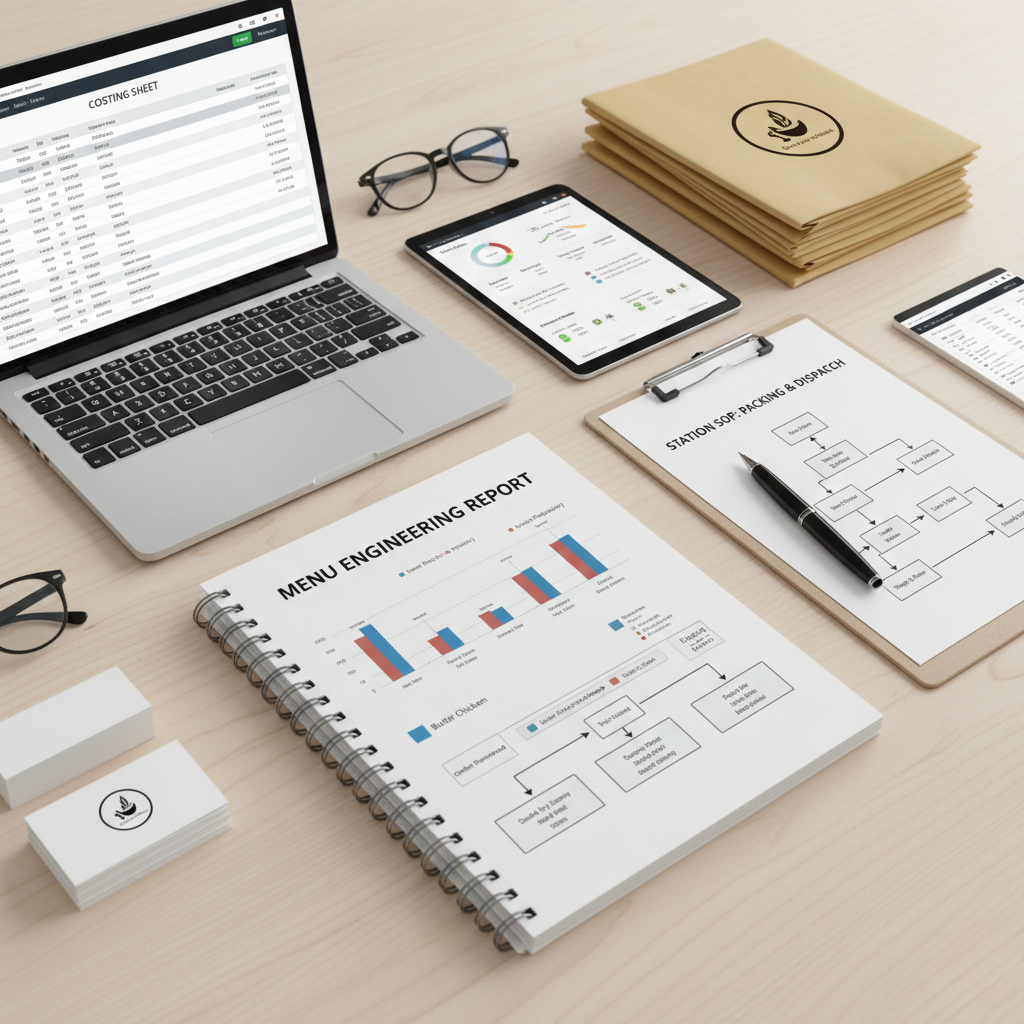
Menu engineering improves marketing and operations at the same time because your kitchen stops fighting your menu structure.
Ingredient overlap and SKU pruning reduce leakage and dead stock.
Combos, add-ons, and premium anchors lift basket size naturally.
Less station chaos and better batching make execution faster during peak loads.
Travel-tested items reduce complaints, which helps ranking and conversion stay healthy.
Want Your Cloud Kitchen Menu Audited?
Share your menu, food cost percentage, top 10 items, target city, and current daily orders. We’ll build a profit-first menu plan that improves AOV, prep speed, and aggregator conversion.
Get a Custom Cloud Kitchen Plan for Your Brand
Not sure how to start or scale your cloud kitchen in India? Share a few details about your brand and we’ll send you a personalised setup and growth roadmap.
- City-wise kitchen and location suggestions
- Approximate investment & profit estimates
- Menu and positioning recommendations
- Whether CKaaS or own kitchen suits you better
Fill the form and our team will get in touch within one working day.
About Us
Ckaas Sloutions
Contact
Follow On
© 2025 Grow Kitchen. All rights reserved.
WhatsApp us