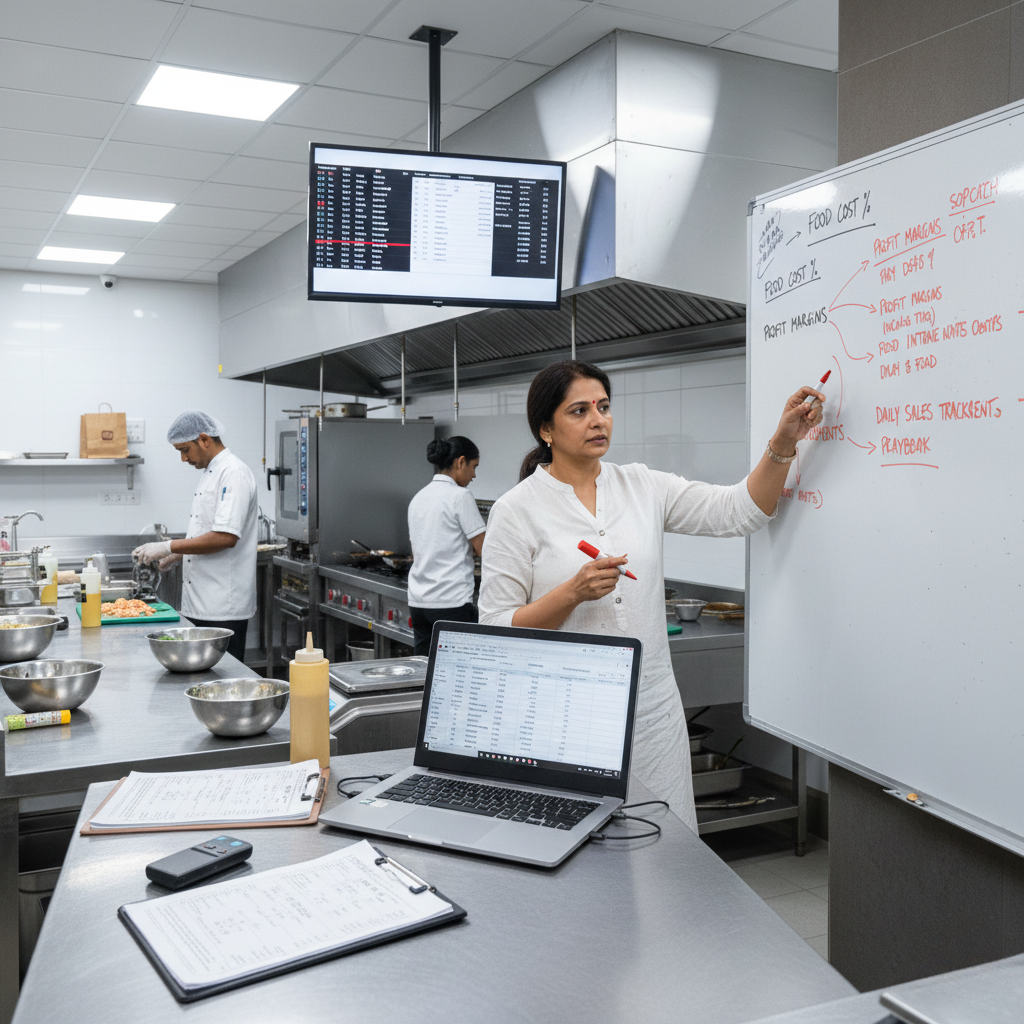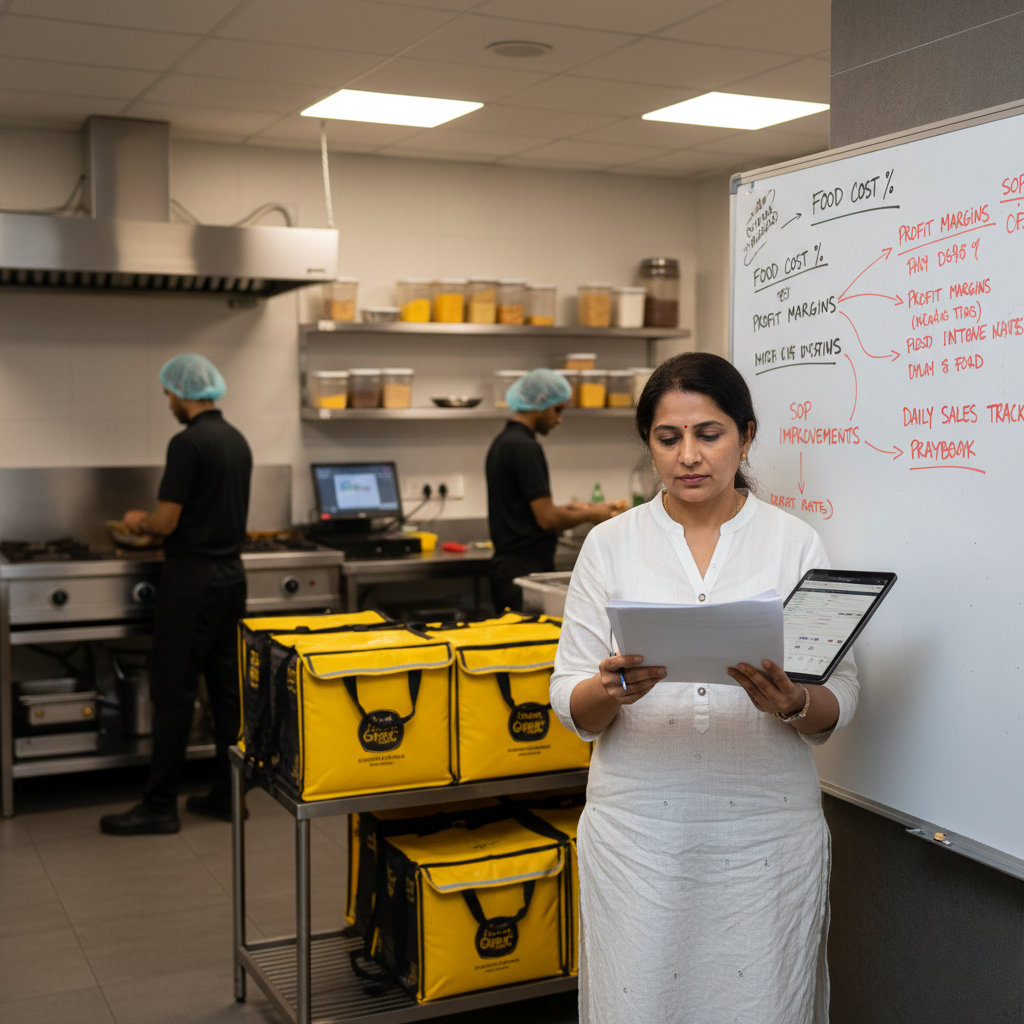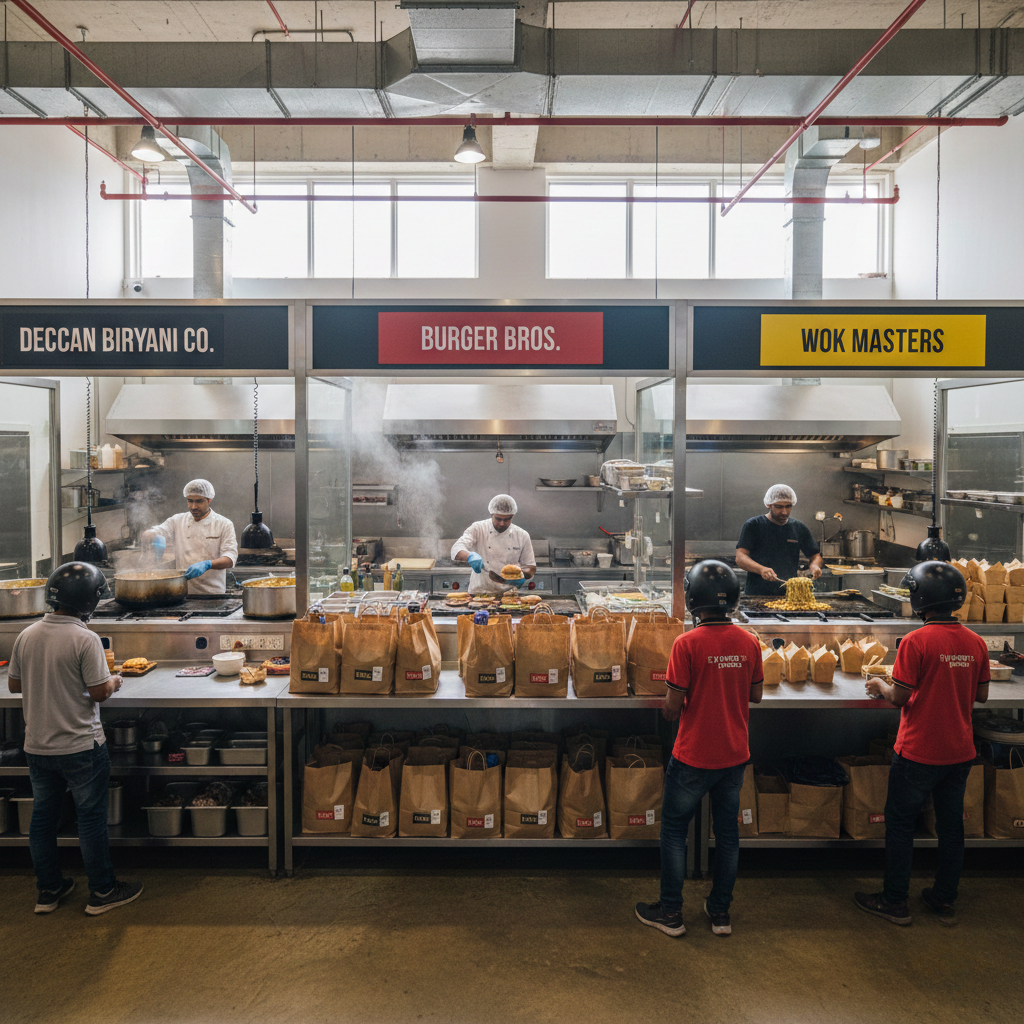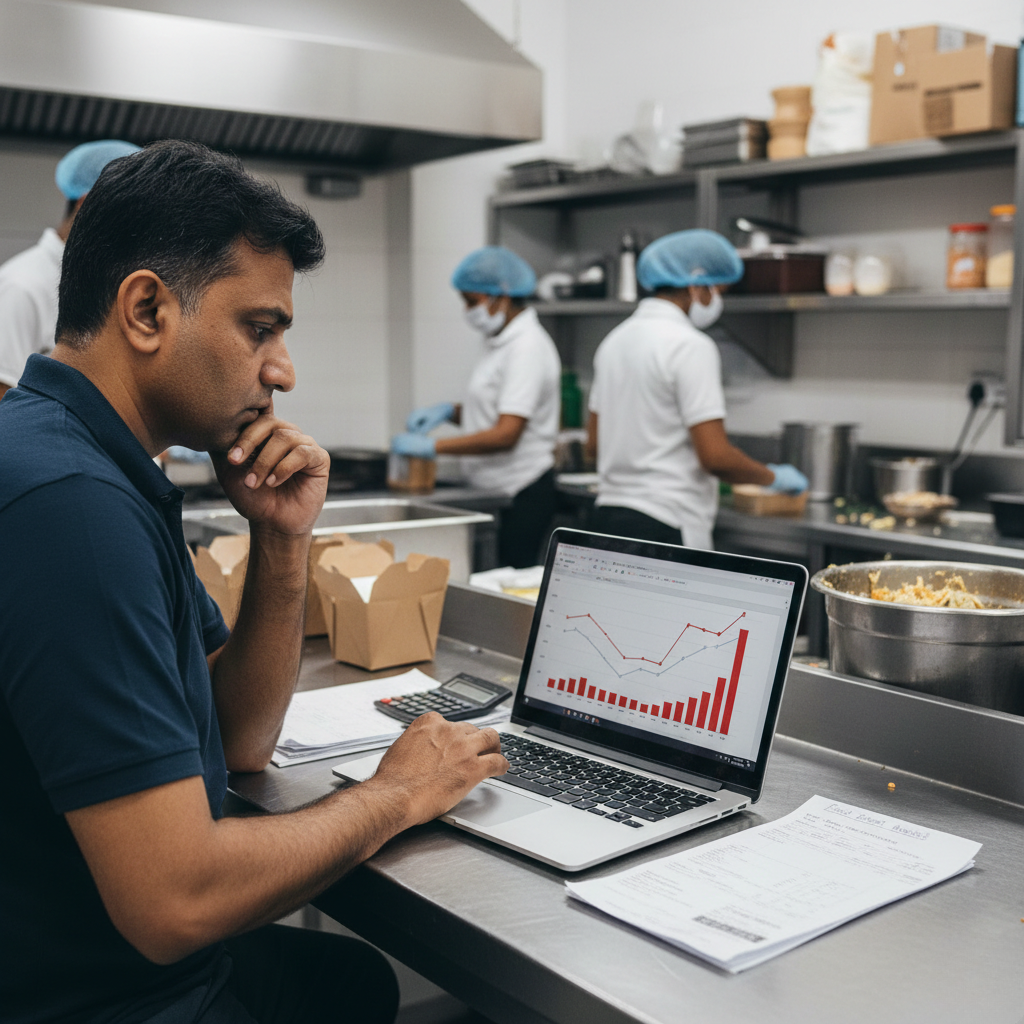
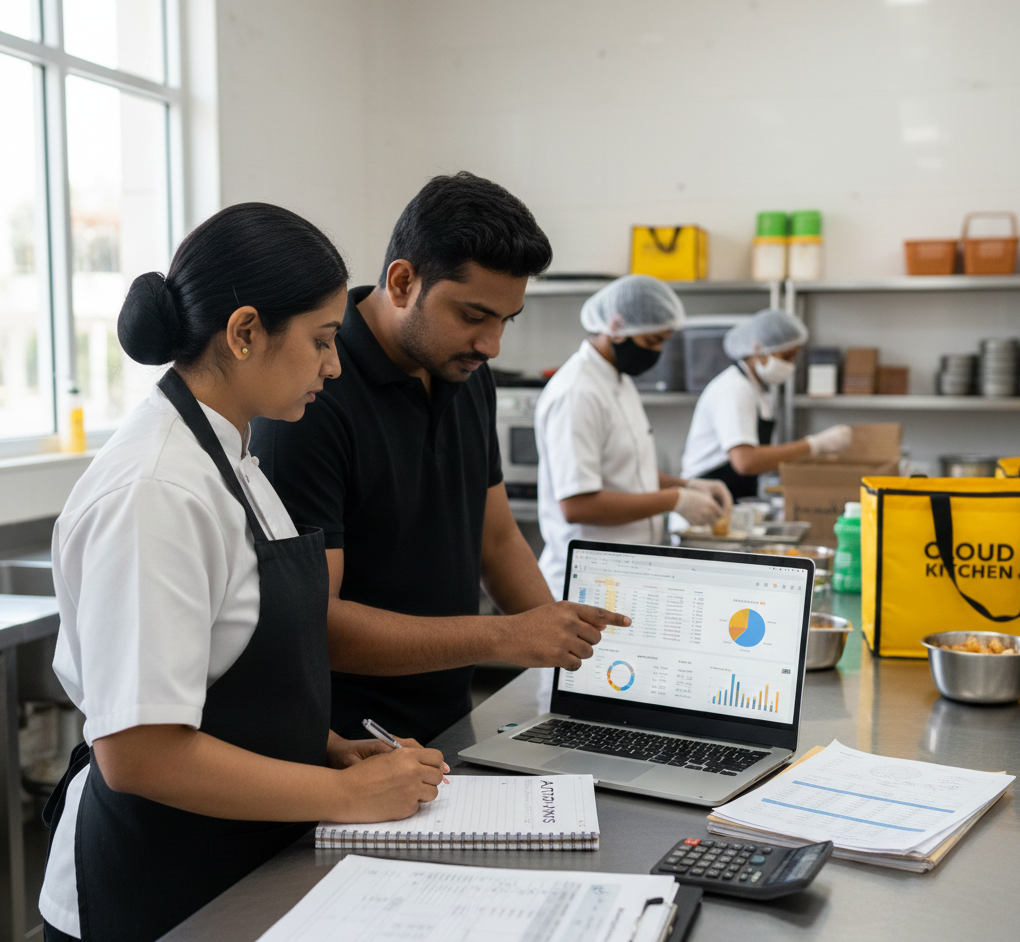
Maximize Cloud Kitchen Profit Data Driven strategies go beyond increasing daily orders or expanding delivery radius. Many kitchens operate with impressive revenue figures yet experience inconsistent margins and rising operational pressure. To truly Maximize Cloud Kitchen Profit Data Driven performance, financial insights must be translated into disciplined action plans.
Data-driven insights provide clarity into where margins are strengthening and where inefficiencies are silently eroding profit. When structured action plans follow those insights, operational stability improves and sustainable growth becomes achievable.
Why Revenue Growth Alone Does Not Maximize Cloud Kitchen Profit Data Driven
Revenue reflects market demand, but it does not guarantee margin strength. As discussed in Cloud Kitchen Profitability Data Driven and why cloud kitchen profits decline despite good sales , scaling without structured margin control can increase financial instability.
To Maximize Cloud Kitchen Profit Data Driven results, operators must focus on contribution margin, food cost control, labor efficiency, discount impact, and inventory discipline.
Using Contribution Margin to Maximize Cloud Kitchen Profit Data Driven
Contribution margin reveals the real profitability of each order. It measures how much revenue remains after deducting variable costs such as ingredients, packaging, aggregator commissions, discounts, and paid promotions.
Contribution Margin = Selling Price − Variable Costs
A structured review of SKU-level contribution is essential to Maximize Cloud Kitchen Profit Data Driven growth sustainably.
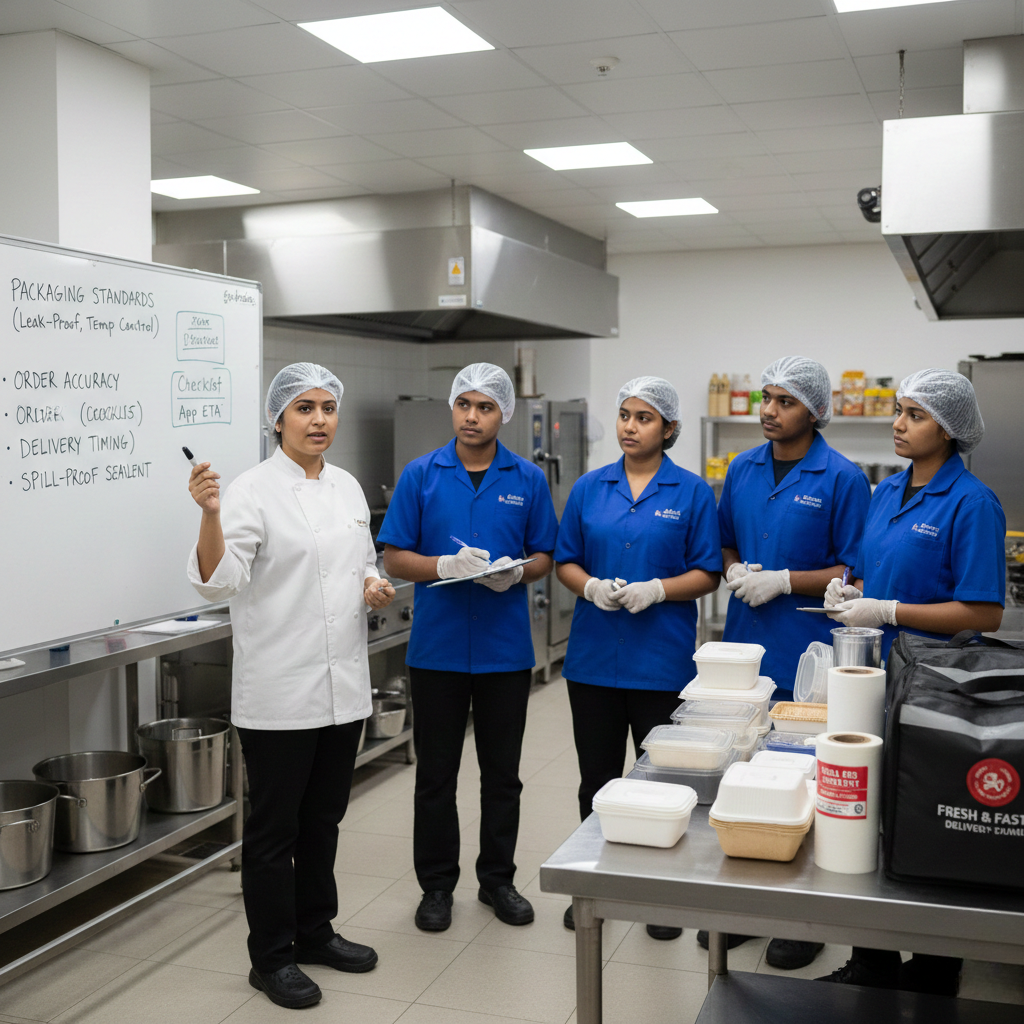
Strategic menu engineering based on contribution insights ensures that scaling strengthens margins instead of increasing workload without return.
Stabilizing Food Cost to Maximize Cloud Kitchen Profit Data Driven
Food cost drift is often gradual but financially significant. Small portion inconsistencies, yield miscalculations, and procurement inefficiencies accumulate into substantial monthly impact.
Food Cost % = (Total Ingredient Cost / Total Sales) × 100
To Maximize Cloud Kitchen Profit Data Driven outcomes, kitchens must implement variance tracking and waste monitoring systems.
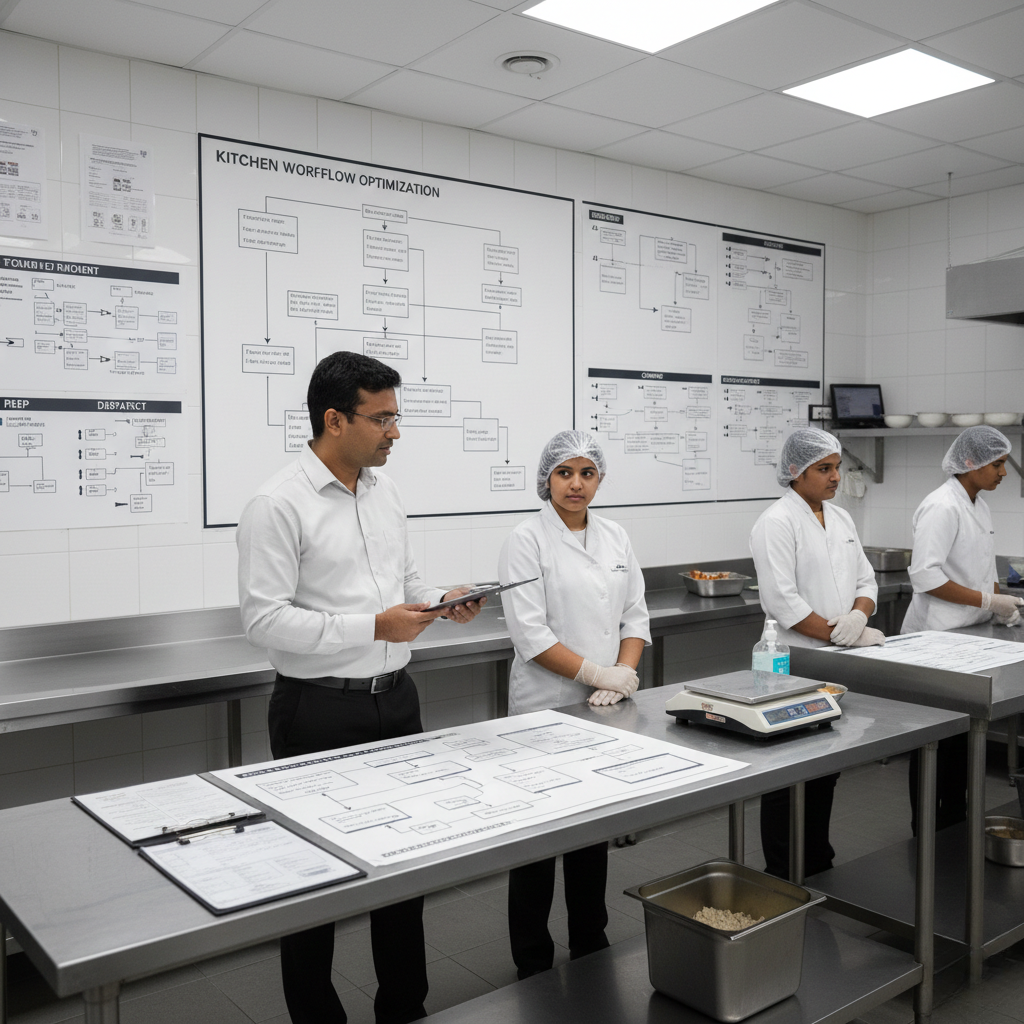
When food cost control is integrated into daily monitoring systems, margin stability improves significantly.
Aligning Labor Efficiency to Maximize Cloud Kitchen Profit Data Driven
Labor costs must reflect actual order flow patterns. Overstaffing during slow hours and understaffing during peak periods both reduce profitability and increase stress.
Labor Cost % = (Total Staff Cost / Total Revenue) × 100
Data-driven shift planning helps Maximize Cloud Kitchen Profit Data Driven efficiency by improving productivity per team member.
Transforming Discount Strategy to Maximize Cloud Kitchen Profit Data Driven
Discounting can increase visibility and order volume, but without structured evaluation, it compresses margins. Insight into discount-to-sales ratios and post-discount contribution margins is critical to Maximize Cloud Kitchen Profit Data Driven sustainability.
Operational signals that indicate the need for structured correction are explored in How to Increase Cloud Kitchen Profitability .
Protecting Inventory to Maximize Cloud Kitchen Profit Data Driven
Inventory inefficiency affects both food cost and working capital. Monitoring stock turnover and procurement alignment ensures that kitchens Maximize Cloud Kitchen Profit Data Driven capital efficiency.
Measured inventory control prevents capital lock-in and reduces spoilage.
From Insight to Action: How to Maximize Cloud Kitchen Profit Data Driven
Data-driven insights alone do not maximize profit. They must be translated into structured operational changes, including recipe standardization, role clarity, shift alignment, and procurement discipline.
When execution aligns with insight, operators successfully Maximize Cloud Kitchen Profit Data Driven results consistently.
Continuous Monitoring to Sustain Maximize Cloud Kitchen Profit Data Driven Growth
Daily tracking of contribution, food cost movement, labor alignment, discount performance, and inventory trends creates a feedback loop for continuous improvement.
Consistency in monitoring ensures that kitchens continue to Maximize Cloud Kitchen Profit Data Driven performance over time.
Final Thoughts on Maximize Cloud Kitchen Profit Data Driven Strategy
Maximize Cloud Kitchen Profit Data Driven success is not driven by effort alone-it is driven by clarity.
With disciplined execution and structured monitoring, cloud kitchens can Maximize Cloud Kitchen Profit Data Driven performance while maintaining operational stability.
Frequently Asked Questions About Maximize Cloud Kitchen Profit Data Driven
What are the most important metrics to Maximize Cloud Kitchen Profit Data Driven?
Contribution margin, food cost percentage, labor cost ratio, discount impact, and inventory turnover are essential to maximize profitability.
How quickly can kitchens Maximize Cloud Kitchen Profit Data Driven?
Initial clarity appears immediately after structured analysis. Sustainable improvement follows disciplined implementation.
Is revenue growth always beneficial to Maximize Cloud Kitchen Profit Data Driven?
Revenue growth benefits profitability only when margins remain stable and cost discipline is maintained.
Can smaller kitchens Maximize Cloud Kitchen Profit Data Driven effectively?
Yes. Structured insight and disciplined execution are scalable practices.
Still Have Questions?
For operational and profitability guidance, read the Grow Kitchen FAQs .
You may also explore:
- Scaling Your Cloud Kitchen for Profit
- Top Data Points for Cloud Kitchen Profitability
- Use Data to Reduce Wastage in Cloud Kitchens
- Best Tools for Cloud Kitchens to Track Profitability
- How Do I Know If My Cloud Kitchen Is Profitable?