
Managed cloud kitchen in India are transforming how food businesses launch and scale. Instead of handling infrastructure, staffing, procurement, and daily operations independently, founders partner with managed cloud kitchen operators who provide end-to-end support. This guide explains what managed cloud kitchens are, how they work, their benefits, risks, and whether this model is right for you.
Start Here to Understand Managed Cloud Kitchens
This article is part of GrowKitchen’s cloud kitchen ecosystem and operations series. Before evaluating managed models, understand the core business structure: Cloud Kitchen as a Service and Cloud Kitchen Business in India.
For food business compliance in India, always verify details on FSSAI, GST Portal, and Udyam MSME.
Managed Cloud Kitchen in India Explained
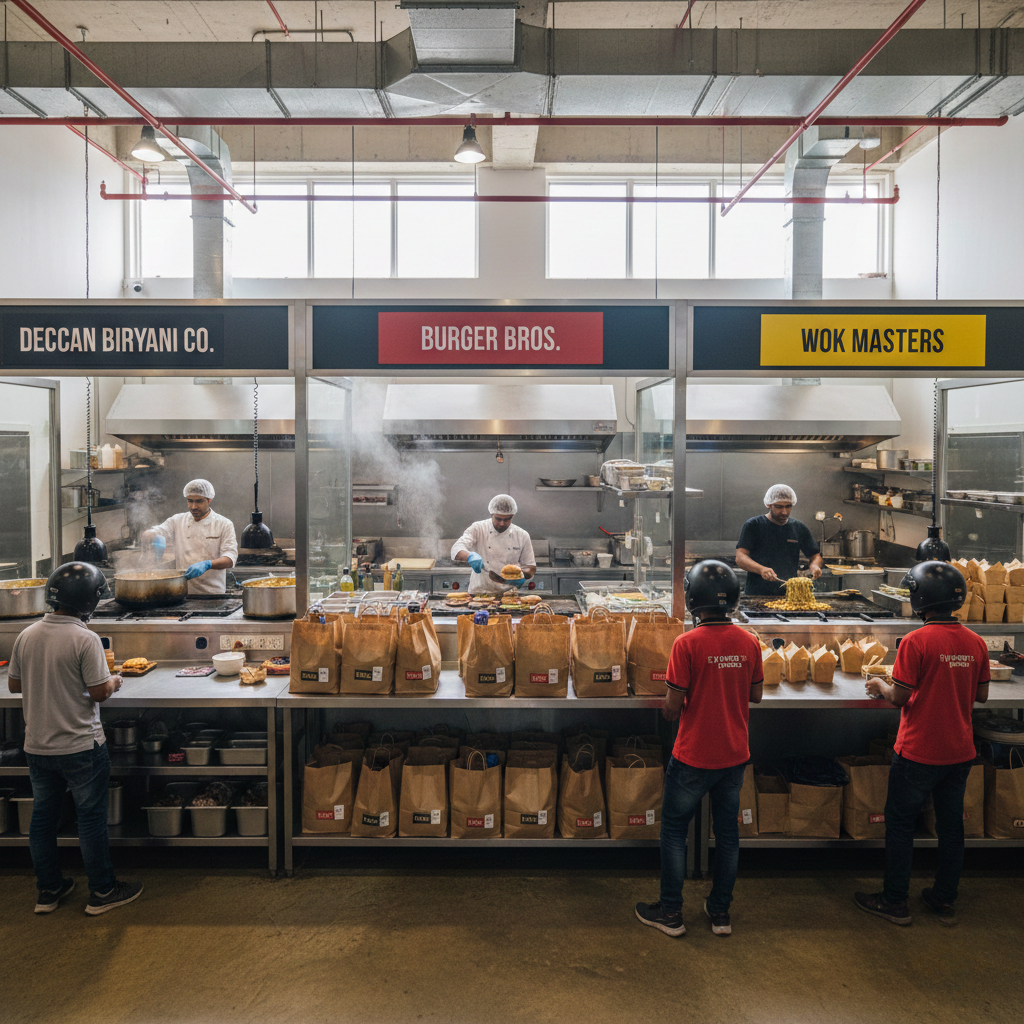
A managed cloud kitchen is a delivery-only food business model where a third-party operator manages kitchen infrastructure, staffing, SOPs, and sometimes procurement and technology.
Instead of building everything from scratch, founders focus on brand, menu, and growth while the managed operator handles daily execution.
How Managed Cloud Kitchens Work
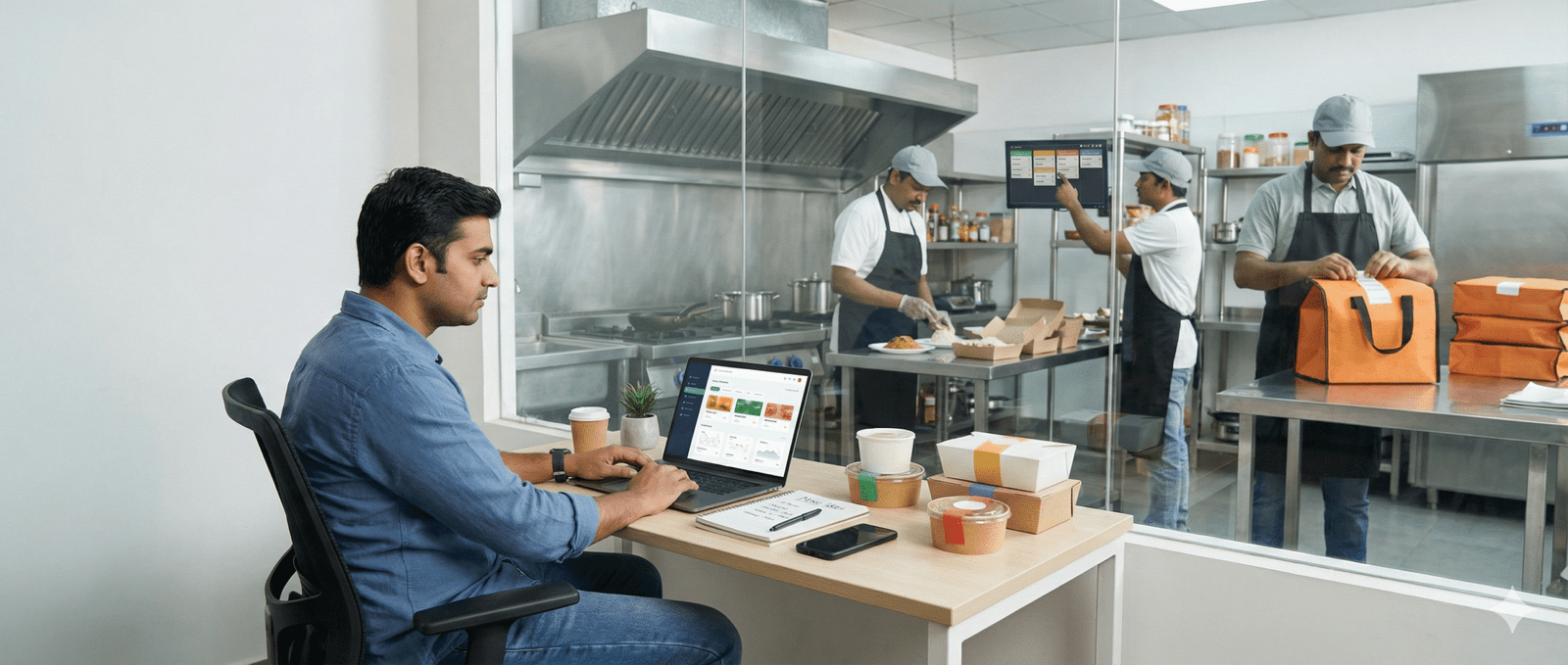
In a managed cloud kitchen setup, the operator provides ready-to-use kitchen infrastructure along with trained staff.
The brand partner typically pays a fixed monthly fee, revenue share, or a hybrid model depending on the agreement. Day-to-day cooking, dispatch, hygiene, and platform handling are managed centrally.
Services Offered by Managed Cloud Kitchen Operators
Managed cloud kitchen providers in India usually offer:
- Fully equipped kitchen infrastructure
- Staff hiring, payroll, and training
- SOP implementation and quality checks
- Procurement and vendor coordination
- POS systems and reporting dashboards
- Platform onboarding and compliance support
However, inclusions vary widely across providers, making contract clarity critical.
Benefits of Managed Cloud Kitchens in India
Managed cloud kitchens significantly lower the execution barrier for founders.
- Faster launch timelines
- Lower operational complexity
- Access to experienced kitchen teams
- Standardised processes from day one
- Easier multi-city expansion
This makes them attractive for first-time founders and multi-brand operators.
Challenges of Managed Cloud Kitchen Model
While convenient, managed cloud kitchens also introduce certain risks.
Founders often face limited control over staff, rigid contracts, higher long-term costs, and dependency on third-party execution quality.
Without oversight, margins can silently erode.
Why SOP Discipline Still Matters
A common misconception is that managed kitchens automatically guarantee profitability.
In reality, SOP adherence, portion control, and daily monitoring remain essential: Cloud Kitchen SOP Checklist.
Are Managed Cloud Kitchens Profitable?
Managed cloud kitchens can be profitable if unit economics are designed correctly.
High management fees, revenue shares, and platform commissions must be balanced against contribution margins.
Who Should Choose Managed Cloud Kitchens?
Managed cloud kitchens are suitable for:
- First-time food entrepreneurs
- Brands expanding to new cities
- Influencer-led food brands
- Operators prioritising speed over control
Scaling Through Managed Cloud Kitchens
Managed kitchens can accelerate expansion, but scaling without strong internal controls leads to failure.
Sustainable growth requires replication discipline: How to Scale Cloud Kitchens.
Why Some Managed Cloud Kitchens Fail
Many managed cloud kitchen brands fail due to blind trust in operators, weak financial visibility, and lack of founder involvement.
A deeper analysis: Why Cloud Kitchens Fail in India.
Final Thoughts on Managed Cloud Kitchens in India
Managed cloud kitchens in India offer speed, structure, and scalability for founders willing to trade some control.
Success depends on clarity of contracts, unit economics, and continuous oversight. Managed does not mean hands-off.
FAQs: Managed Cloud Kitchen in India
What is a managed cloud kitchen?
A model where a third party manages kitchen operations for food brands.
Are managed cloud kitchens expensive?
They reduce setup effort but may cost more in the long term if margins are weak.
Can beginners start with managed kitchens?
Yes, if they actively monitor costs and performance.
Do managed kitchens reduce failure risk?
They reduce execution friction, not business risk.
- Cloud Kitchen Business in India
- How to Start a Cloud Kitchen
- Cloud Kitchen SOP Checklist
- Why Cloud Kitchens Fail