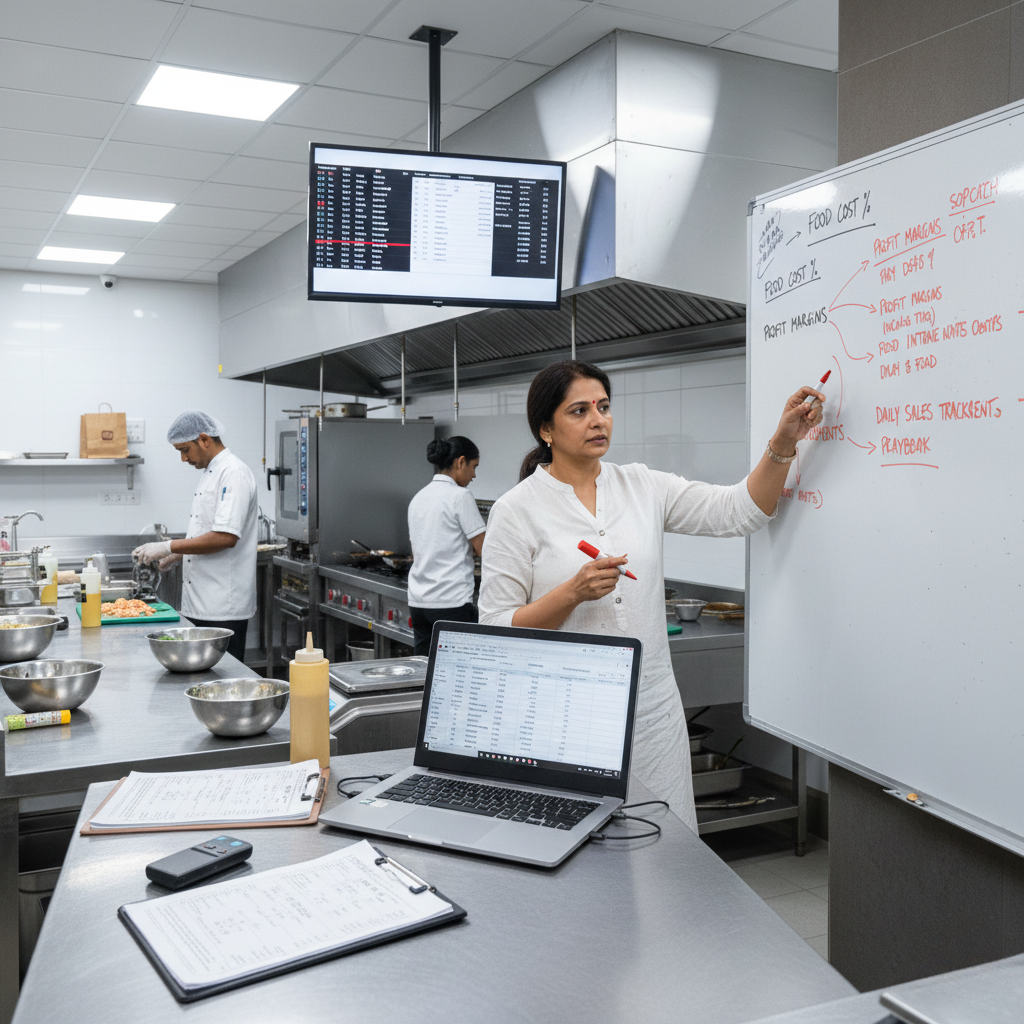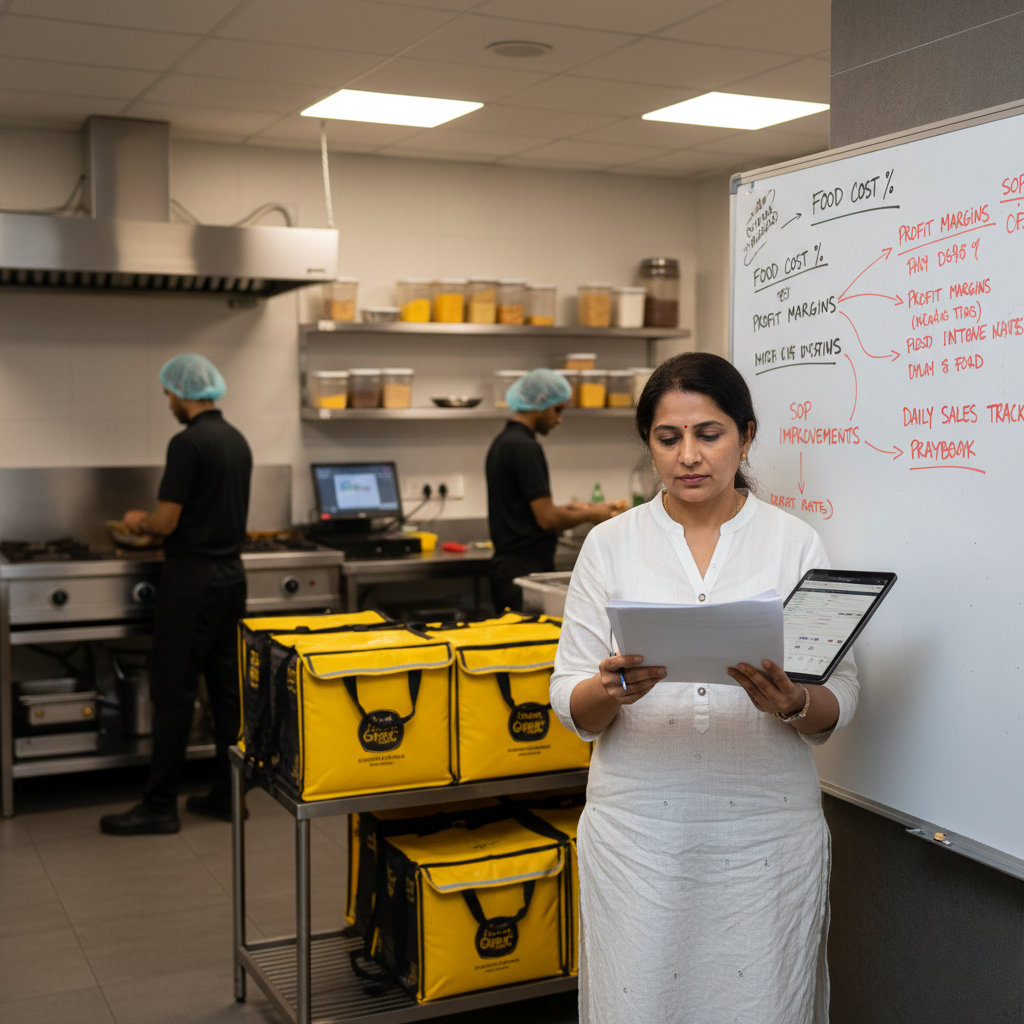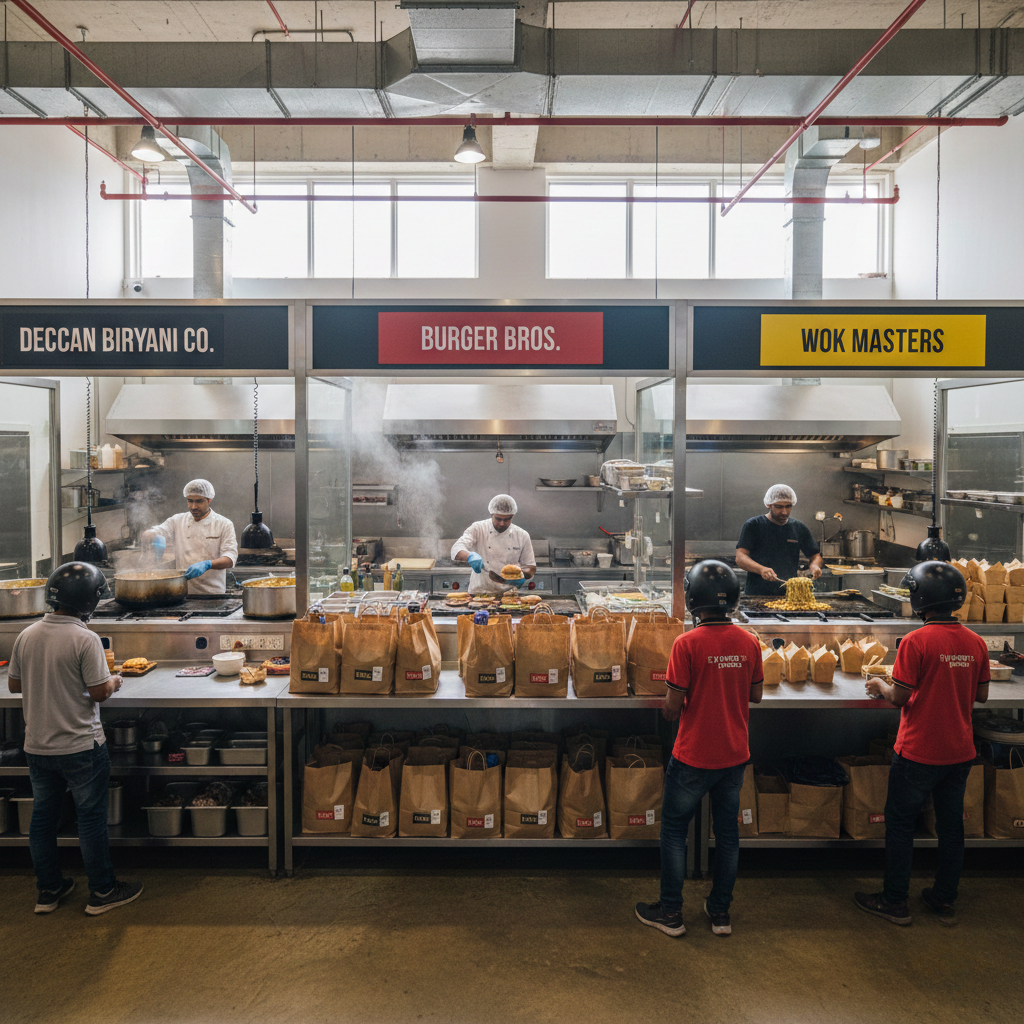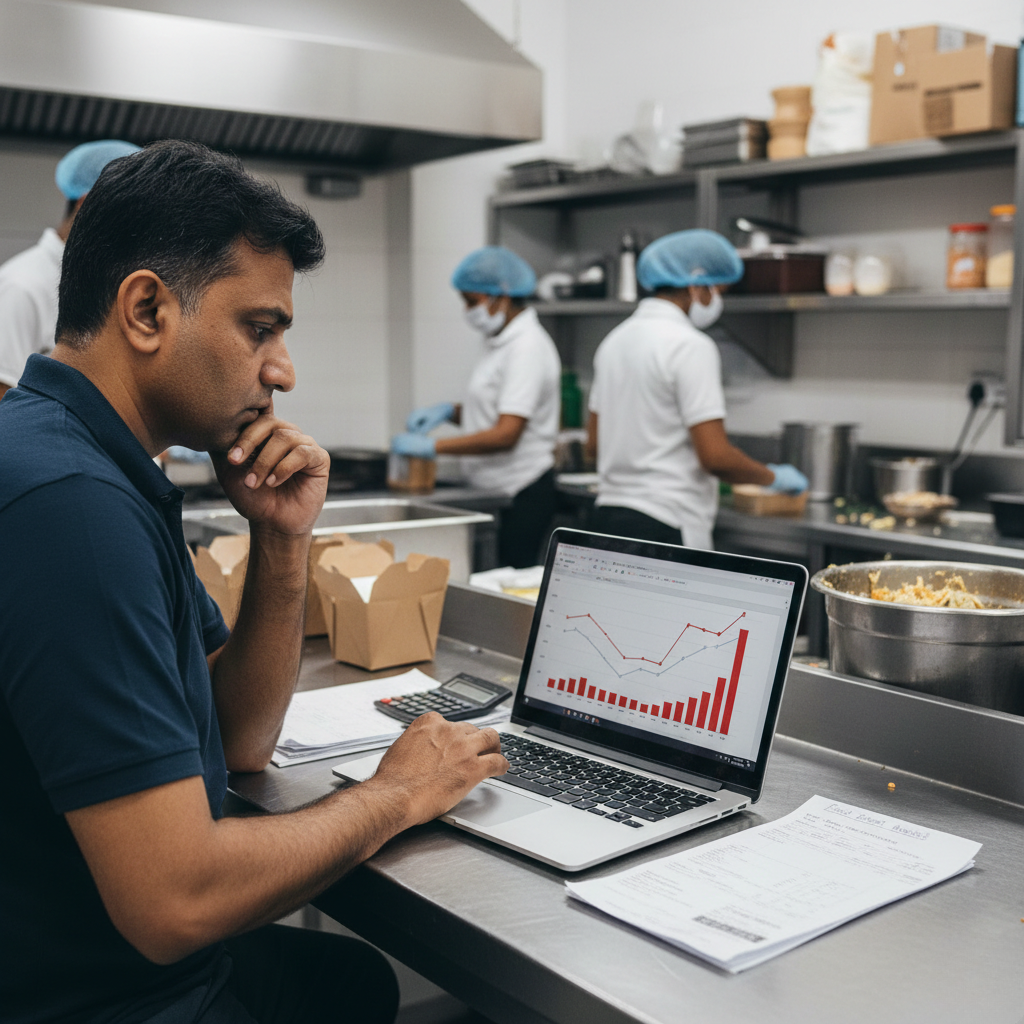
Why can’t I manage multiple cloud kitchen brands smoothly? is not a “my staff is useless” problem or a “I need a better manager” problem. It is a complexity + handoff + standardization + decision overload problem. Multi-brand cloud kitchens don’t break because you added brands. They break because each brand adds SKU variance, prep variance, packaging variance, procurement variance, and station confusion without a shared operating system to absorb complexity. When multi-brand operations feel chaotic, it usually means you scaled variety without scaling controls: weak SOPs, unclear role ownership, missing prep planning, poor menu architecture, inventory leakage, and no weekly feedback loop. This guide explains why managing multiple brands becomes messy in Indian cloud kitchens and how to build a multi-brand operating system end-to-end using menu engineering, SOP standardization, station gates, prep planning, procurement discipline, dashboards, and feedback loops using systems, not supervision.
Why Can’t I manage multiple cloud kitchen brands smoothly? The Real Reason “More Brands” Creates “More Chaos”
The multi-brand model looks powerful on paper: more cuisines, more customer segments, more searches, and more orders across the day.
Then reality hits: the kitchen feels like a traffic junction. Staff keep asking questions. Prep keeps falling short. Packing mistakes rise. Stock-outs become normal. Refunds creep up. Ratings fluctuate. And you feel like you’re running a crisis center, not a business.
The hard truth: multi-brand doesn’t fail because the idea is wrong. It fails because your kitchen is trying to run complexity without a shared system. In a multi-brand kitchen, chaos is not caused by volume alone. Chaos is caused by switching costs: switching recipes, switching portions, switching packaging, switching labels, switching stations.
If you want the profitability foundation lens first, start with Cloud Kitchen Profitability Consultant in India and map recurring execution leaks using Common Operational Mistakes in Cloud Kitchens.
What “Can’t Manage Multiple Brands Smoothly” Actually Means (Not Just “Too Much Work”)
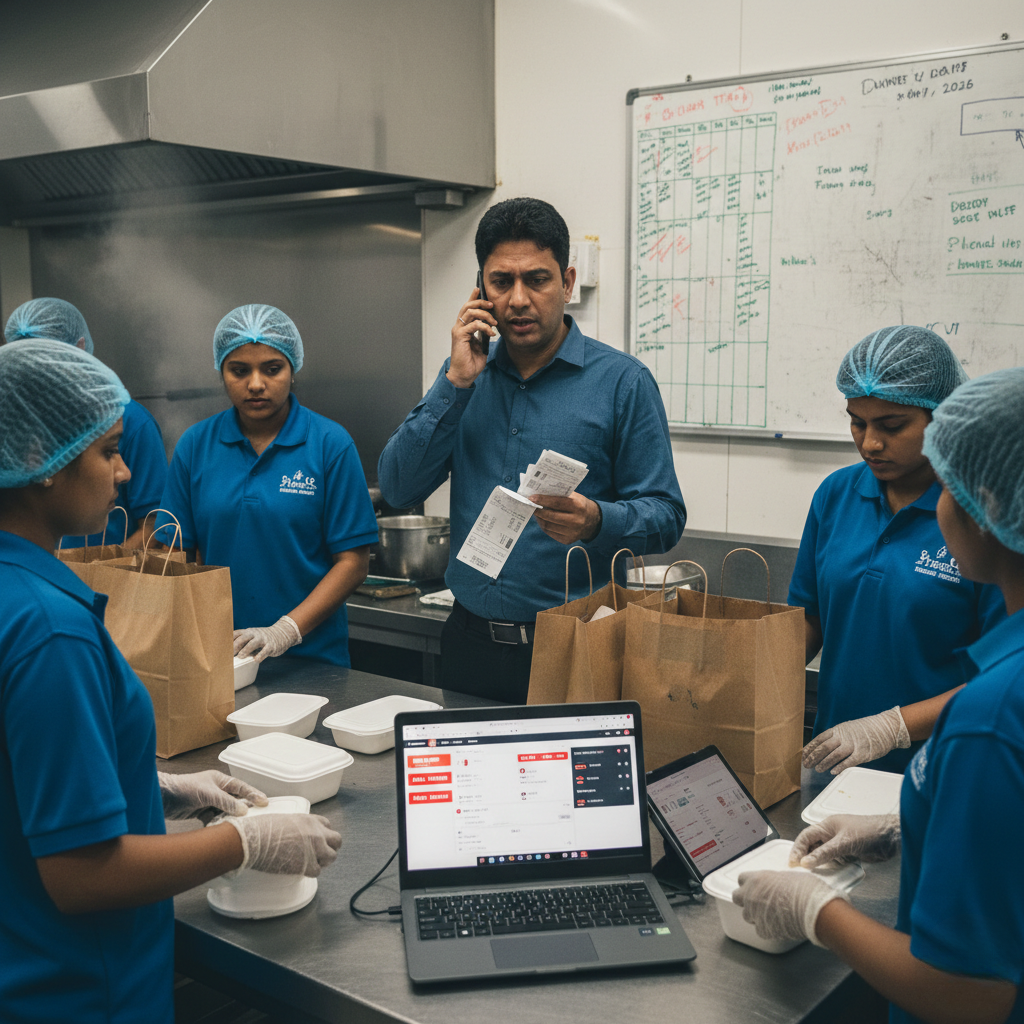
When founders say “I can’t manage multiple brands smoothly,” they usually mean: everything feels reactive. The kitchen is always catching up. You’re not sure what’s happening until something breaks.
Multi-brand friction shows up in five daily symptoms: (1) staff confusion (constant questions, wrong build), (2) stock-outs (no par levels, wrong forecasting), (3) packing errors (wrong branding, missing add-ons), (4) time overruns (late dispatch, higher ETA), and (5) profit leakage (portion drift, waste, refunds).
A key mindset shift: multi-brand success is not about “hustling harder.” It’s about running one kitchen OS with multiple brand skins. If each brand runs like a separate restaurant, you collapse. If brands share components, SOPs, station design, and controls, you scale smoothly.
So the real question is not “how do I manage more brands?” The real question is “how do I reduce switching cost and error probability per order?”
The Unit Economics Lens: Multi-Brand Kitchens Leak Profit Through Switching Costs
Multi-brand kitchens often look profitable on revenue but leak money through hidden operational costs: remakes, wastage, stock-outs, emergency buying, wrong packaging, and slower throughput.
Even if sales are rising, the unit economics can silently worsen because multi-brand complexity increases the chance of failure per order. A practical per-order lens still applies:
Order Value minus Aggregator commission & charges minus Packaging cost minus Food cost (COGS) minus Discount burn minus Refund/penalty leakage equals Contribution Margin.
Multi-brand becomes painful when: contribution margin is already thin, and your switching costs (time + errors + waste) rise with every additional brand/SKU.
If you want the payout and commission layer in detail, read Aggregator Commission Impact in India. If refunds rise because packing confusion increases, map it using Refunds and Cancellations Impact on Cloud Kitchen Profitability.
The goal is not “more brands.” The goal is “more brands with shared components and controlled execution.”
The 16 Reasons You Can’t Manage Multiple Brands Smoothly (And What Each One Looks Like)
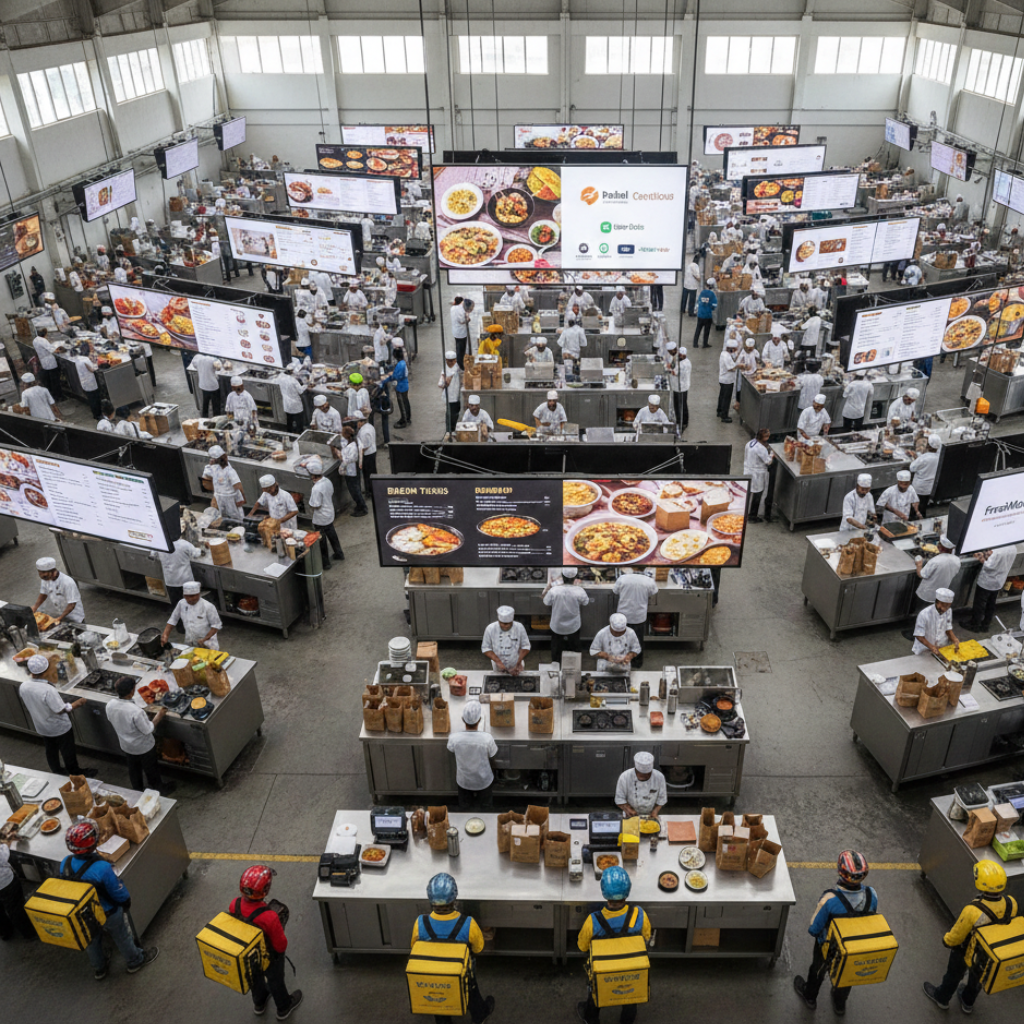
Multi-brand chaos is predictable. It comes from a few repeatable failure points that get worse as SKUs and switching increase. Below are the most common reasons multi-brand kitchens become unmanageable in India.
1) You created multiple menus, but not a single operating system. Each brand has its own ways of prepping, portioning, packing, and dispatching. Staff switch methods constantly. Error probability spikes.
2) Too many SKUs are “unique,” so prep cannot be shared. Multi-brand works when 60–80% components are shared: base gravies, sauces, marinades, rice, noodles, proteins, toppings. If every brand is unique, you multiply prep load and stock complexity.
3) Station flow is not designed for switching. Switching kills speed. If your layout forces staff to walk, fetch, search, and think, throughput collapses and late dispatch rises.
4) Recipe cards and portion tools aren’t standardized. In multi-brand kitchens, “memory cooking” breaks quickly. Without recipe cards, scoops, ladles, weights, and fill lines, portions drift and taste varies across shifts.
5) Brand packaging is not modular, so packing becomes a minefield. Different bags, stickers, containers, seals, labels, and cutlery rules. Under volume, staff mix packaging. Customers notice. Complaints rise.
6) Add-ons and variants multiply packing misses. Multi-brand menus typically have more customisation: spice levels, toppings, extra sauces, beverages, sides. Without a packing checklist gate, misses become routine. Implement discipline using Cloud Kitchen Dispatch SOP.
7) Prep planning is not mapped to time-windows. Different brands spike at different times: breakfast bowls, lunch thalis, evening snacks, late-night comfort food. If you don’t plan prep by time window, you’ll always be “out” of something.
8) Stock-outs increase because par levels are missing per component. Multi-brand kitchens should track par levels by shared components, not only by SKUs. If sauce base runs out, 12 items go unavailable. That triggers cancellations and visibility drops.
9) The menu architecture is not engineered, so staff face decision overload. If menus have near-duplicate items, unclear naming, and too many variants, both staff and customers struggle. Confusion increases errors and reduces conversion.
10) You are scaling brands that have weak contribution margin. Multi-brand scaling is painful when your highest-volume brands are low-margin. You become busier, not richer. Fix using SKU-level margin ranking and menu engineering.
11) Procurement becomes reactive because vendors vary across ingredients. Each brand adds more raw materials. Without approved brand lists, spec sheets, and reorder routines, purchases become panic-driven and expensive.
12) Labor cost rises because roles aren’t defined. “Everyone does everything” seems flexible but kills repeatability. Prep, cook, pack, dispatch need owners and gates, especially in multi-brand kitchens.
13) Quality control becomes invisible without audits. You only notice problems when ratings drop or refunds spike. Without daily micro-audits (5 orders/day), errors become habits.
14) You don’t have a single dashboard that connects ops + profit. Multi-brand kitchens need a single weekly review: refunds by brand and reason, cancellations by time window, stock-outs by component, CM by SKU, dispatch SLA breaches. Without it, you fix symptoms, not causes.
15) Founder bandwidth is being used as “integration glue.” If you are personally coordinating between brands, stations, vendors, and staff, you have not built a system. You are the system. Systems scale. Founders burn out.
16) You don’t have feedback loops that force SOP upgrades. Multi-brand kitchens must evolve weekly. If refund reasons repeat and SOPs don’t change, nothing improves.
For the leak map and operational root causes, use Common Operational Mistakes in Cloud Kitchens and the control mindset in How Process Discipline Improves EBITDA.
Swiggy/Zomato Reality: Multi-Brand Kitchens Are Judged on Reliability, Not Variety
Aggregators don’t reward you for “running many brands.” They reward successful orders per impression. If multi-brand complexity increases: late dispatch, cancellations, refunds, and inconsistent ratings, the platform sees your outlet as risk.
That risk can reduce visibility and force more discounting to maintain volume. This is why multi-brand kitchens often become discount-dependent even when demand exists.
External policy context for mapping refunds and cancellations mechanics: Swiggy Refund & Cancellation Policy and Zomato Online Ordering Terms.
The takeaway: multi-brand is not a marketing game. It’s a reliability engineering game.
Multi-Brand Smoothness Comes From Two Fixes: Component Standardization + Packing/Dispatch Gates
Multi-brand operations become smooth when you reduce switching costs. Two fixes do most of the heavy lifting: (1) component standardization (shared bases, sauces, toppings, proteins), and (2) packing/dispatch gates that prevent errors under speed.
Component standardization reduces prep load. It makes training easier. It stabilizes taste. And it makes procurement disciplined. Packing and dispatch gates reduce refunds and complaints even when volume spikes.
Implement packing/dispatch predictability using Cloud Kitchen Dispatch SOP and audit repeat failure patterns using Common Operational Mistakes in Cloud Kitchens.
Why Multi-Brand Kitchens Need Role Ownership (Not “More Coordination”)
Multi-brand chaos happens because everyone is coordinating with everyone. Coordination does not scale. Ownership scales. Roles with gates reduce questions, reduce switching errors, and stabilize output.
Here is what role-based multi-brand control looks like:
Prep role:
owns shared component prep, batch yields, labeling, and par levels so multiple brands stay available.
Cook role:
owns recipe cards + portion tools so output stays consistent even when switching brands.
Pack role:
owns packing checklist, add-on verification, sealing rules, and correct brand labeling to prevent refunds.
Dispatch role:
owns final scan, queue discipline, and rider handover speed so SLA stays stable.
Manager role:
owns weekly review: refunds, cancellations, stock-outs, CM by SKU, and SOP upgrades.
If you want the full framework, use Role-Based Kitchen Operations Explained.
How to Manage Multiple Brands Smoothly in 7 to 30 Days (A Practical System That Works)
You don’t need to shut down brands to regain control. You need to remove complexity from the kitchen floor and move it into systems. Below is a rollout sequence used in kitchens that run multiple brands without chaos.
Step 1 (Day 1–2): List every SKU and map which components can be shared. Build a component map: bases, gravies, sauces, proteins, toppings, rice/noodles, spice mixes. The goal is to reduce unique prep by increasing shared components.
Step 2 (Day 1–3): Cut menu clutter and remove near-duplicate variants. Multi-brand smoothness improves immediately when you remove confusing duplicates. Keep hero items. Keep margin-friendly items. Remove everything that creates switching confusion without meaningful sales.
Step 3 (Day 2–5): Standardize recipe cards + portion tools for top sellers. Create top-20% SOP cards. Define weights, scoops, ladles, fill lines, and build sequence. This reduces staff questions and stabilizes cost.
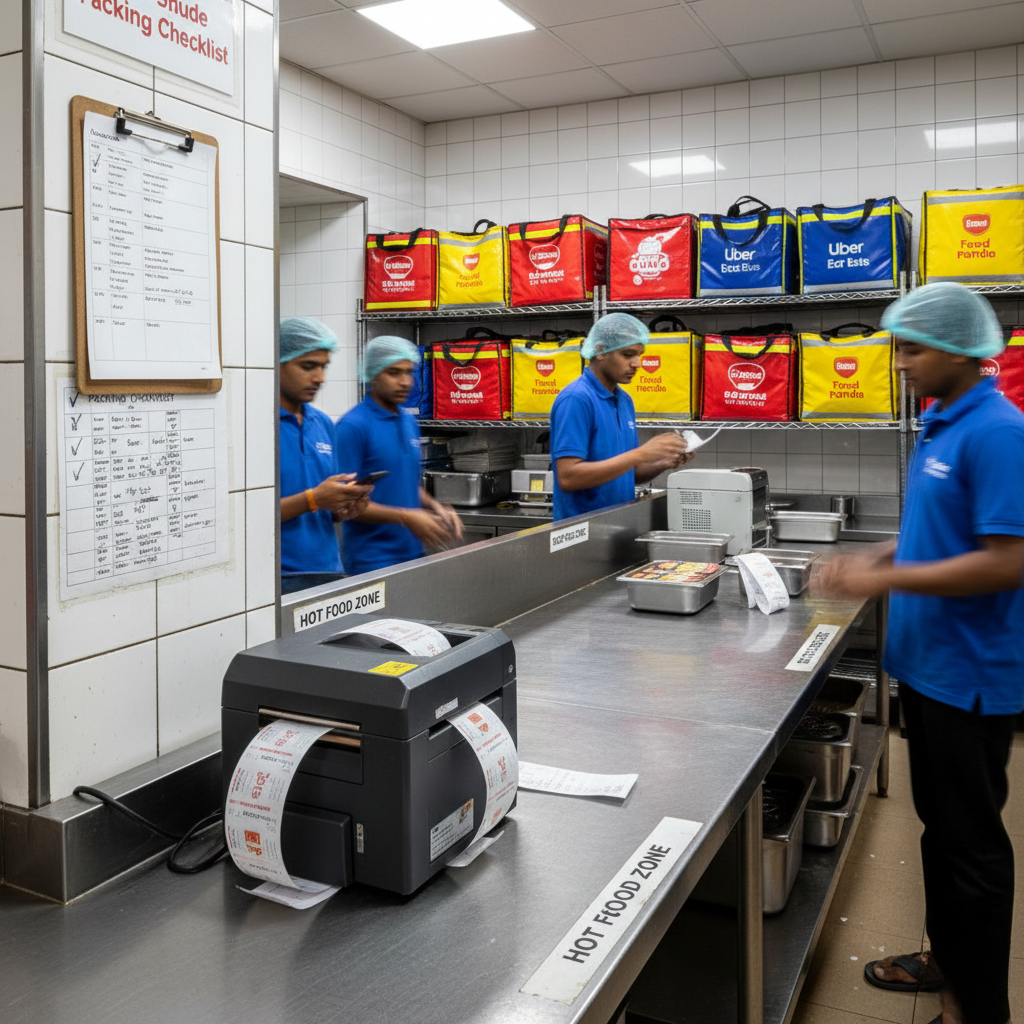
Step 4 (Day 3–7): Install packing checklist + brand labeling gates. Make packing non-negotiable. One checklist for: add-ons, correct brand bag, correct label, seals, cutlery, napkins, condiments. Implement via Cloud Kitchen Dispatch SOP.
Step 5 (Week 2): Create par levels and a prep plan by time window. Breakfast, lunch, evening, late night. Multi-brand smoothness comes from timing-based readiness. Build a peak checklist and minimum buffers for shared components.
Step 6 (Week 2): Standardize procurement with approved brands and reorder routines. Define RM specs and approved vendors. Reduce emergency buying. Emergency buying is why multi-brand kitchens become expensive.
Step 7 (Week 3): Run daily micro-audits and weekly root-cause reviews. Audit 5 orders/day. Track top errors: wrong brand packaging, missing add-ons, late dispatch, stock-outs, portion drift. Fix top 2 errors weekly.
Step 8 (Week 3–4): Build one dashboard that connects ops + profit. Review weekly: refunds by brand and reason, cancellations by time, stock-outs by component, CM by SKU, discount burn %, packaging %, late dispatch count. This is how chaos becomes control.
If you want the discipline-led profitability lens, map this with How Process Discipline Improves EBITDA and the leakage trap in When Growth Is Hurting Your Cloud Kitchen Operations.
External process references (useful for standardisation thinking): Standardized Work (Lean lexicon), ISO 22000 overview, and FSSAI Hygiene Requirements (Schedule 4 reference).
Final Takeaway: Multi-Brand Smoothness Comes From Standardization, Not Supervision
If you can’t manage multiple brands smoothly, it usually means you scaled variety without scaling controls. Multi-brand kitchens break when switching costs rise and nobody owns standards through systems.
Smooth multi-brand kitchens become predictable: shared components reduce unique prep, menu architecture reduces decision load, portion tools stabilize cost, packing is checklist-driven, dispatch is gated, and weekly reviews force SOP upgrades. That is what turns “many brands” into “one calm kitchen OS.”
Operational frameworks from GrowKitchen, and operating partner brands like Fruut and GreenSalad are built to help kitchens run multiple brands with clarity, speed, and margin control.
FAQs: Why Can’t I Manage Multiple Brands Smoothly?
What is the biggest reason multi-brand kitchens become chaotic?
Switching cost. Too many unique SKUs/components without shared SOPs and station gates increases errors and delays.
Should I reduce the number of brands?
Not always. First reduce complexity: cut duplicate SKUs, standardize components, and install packing/dispatch gates. If chaos continues, then reduce brands temporarily.
Which fix improves smoothness fastest?
Packing checklist + correct brand labeling gate, and menu simplification for top sellers. These reduce refunds and confusion immediately.
How do I standardize across brands without losing uniqueness?
Standardize backstage components (bases, sauces, prep, SOPs) and keep uniqueness in naming, toppings, and final assembly.
- Cloud Kitchen Profitability Consultant in India
- Common Operational Mistakes in Cloud Kitchens
- Cloud Kitchen Dispatch SOP
- Role-Based Kitchen Operations Explained
- When Growth Is Hurting Your Cloud Kitchen Operations
- Marketing Spend vs ROI in Cloud Kitchens
- Aggregator Commission Impact in India
- Refunds and Cancellations Impact on Cloud Kitchen Profitability
- How SOPs Reduce Food Cost & Complaints
- How Process Discipline Improves EBITDA
- Grow Kitchen on Twitter