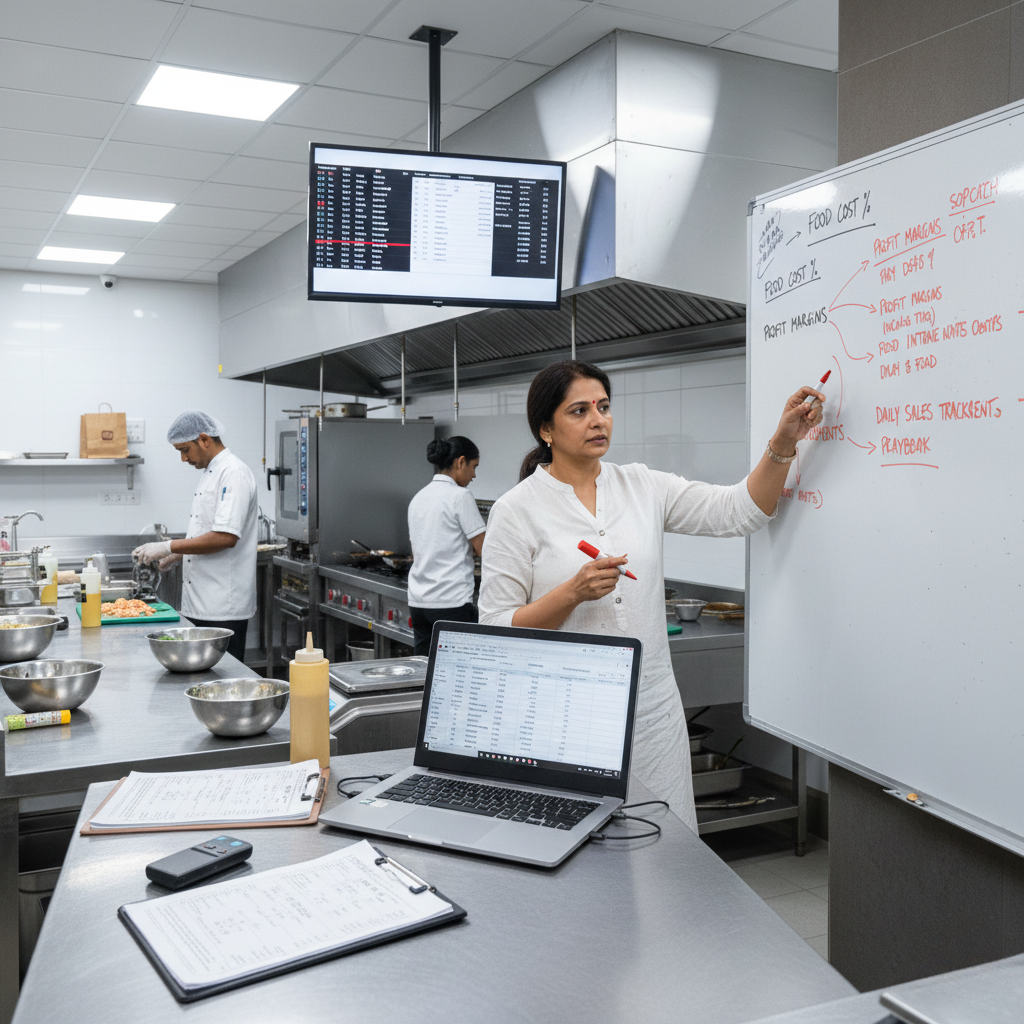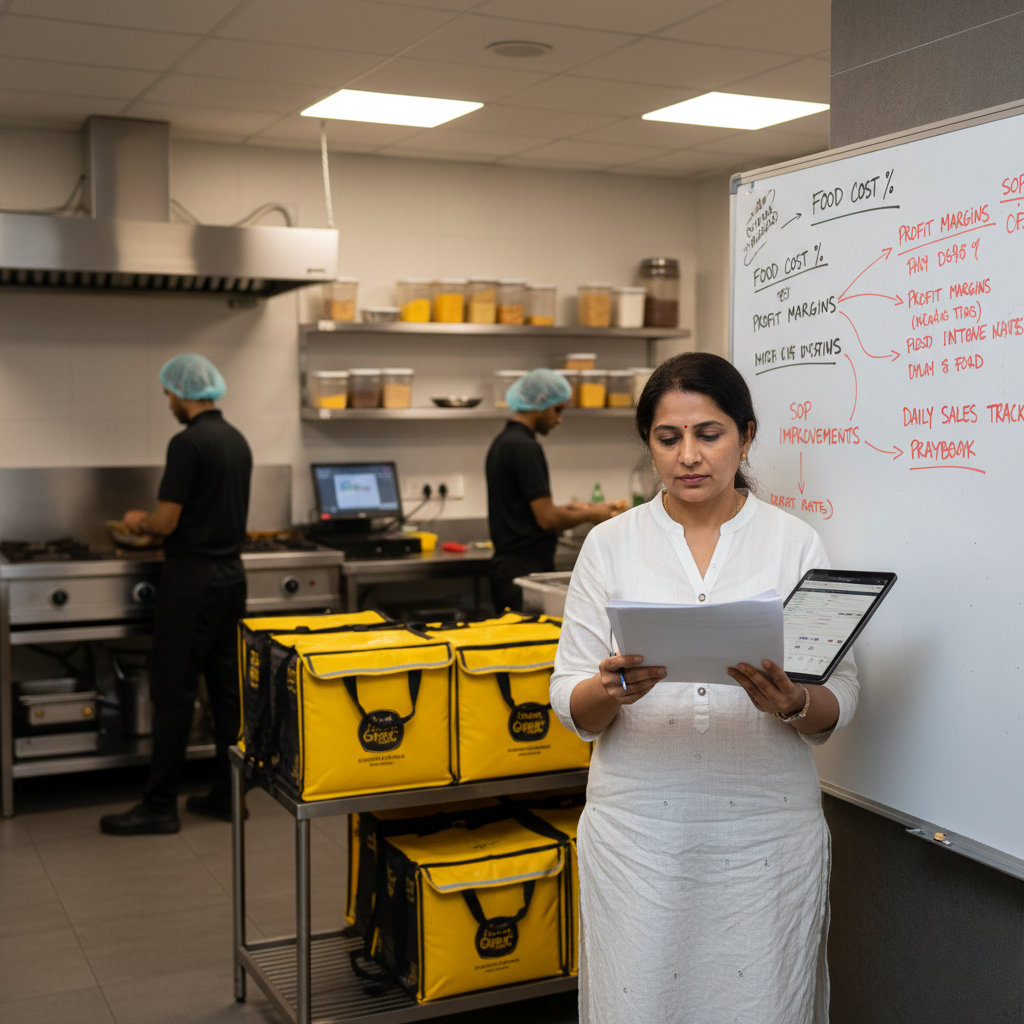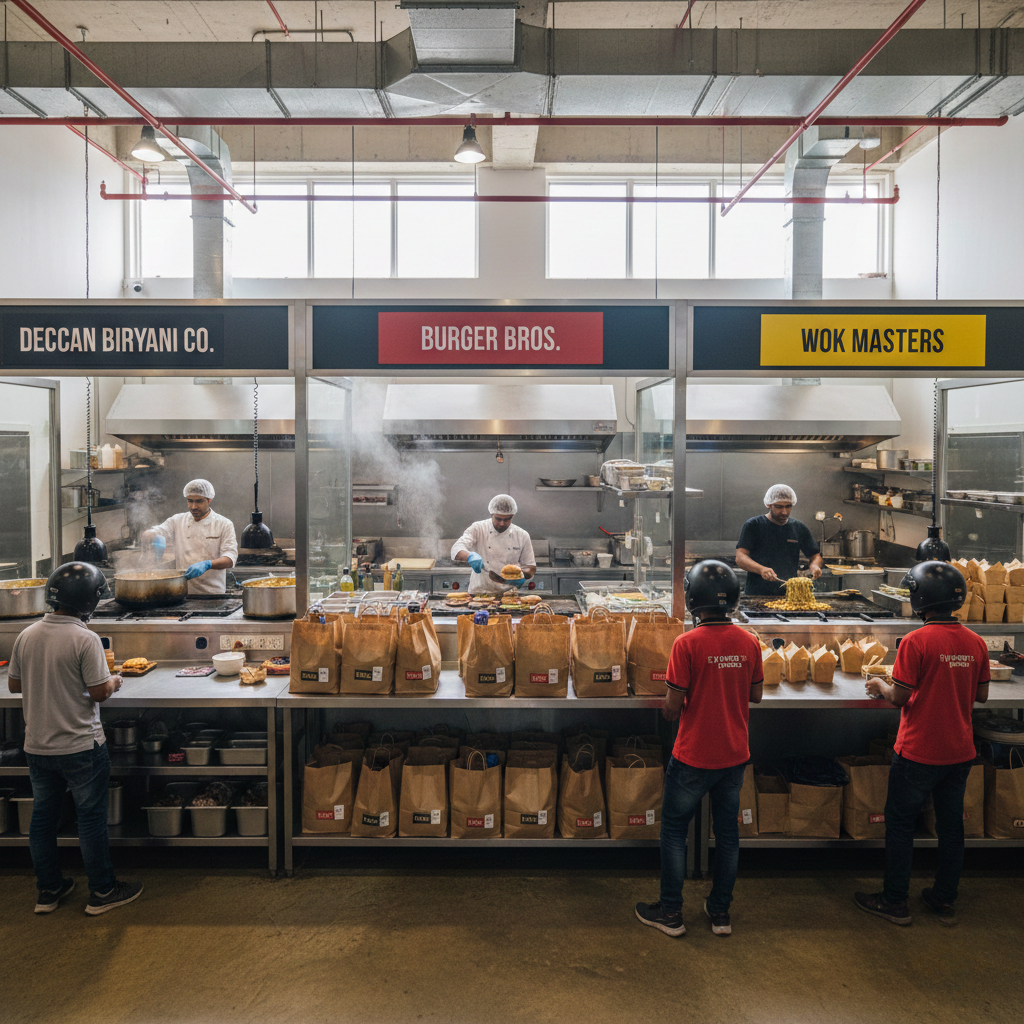
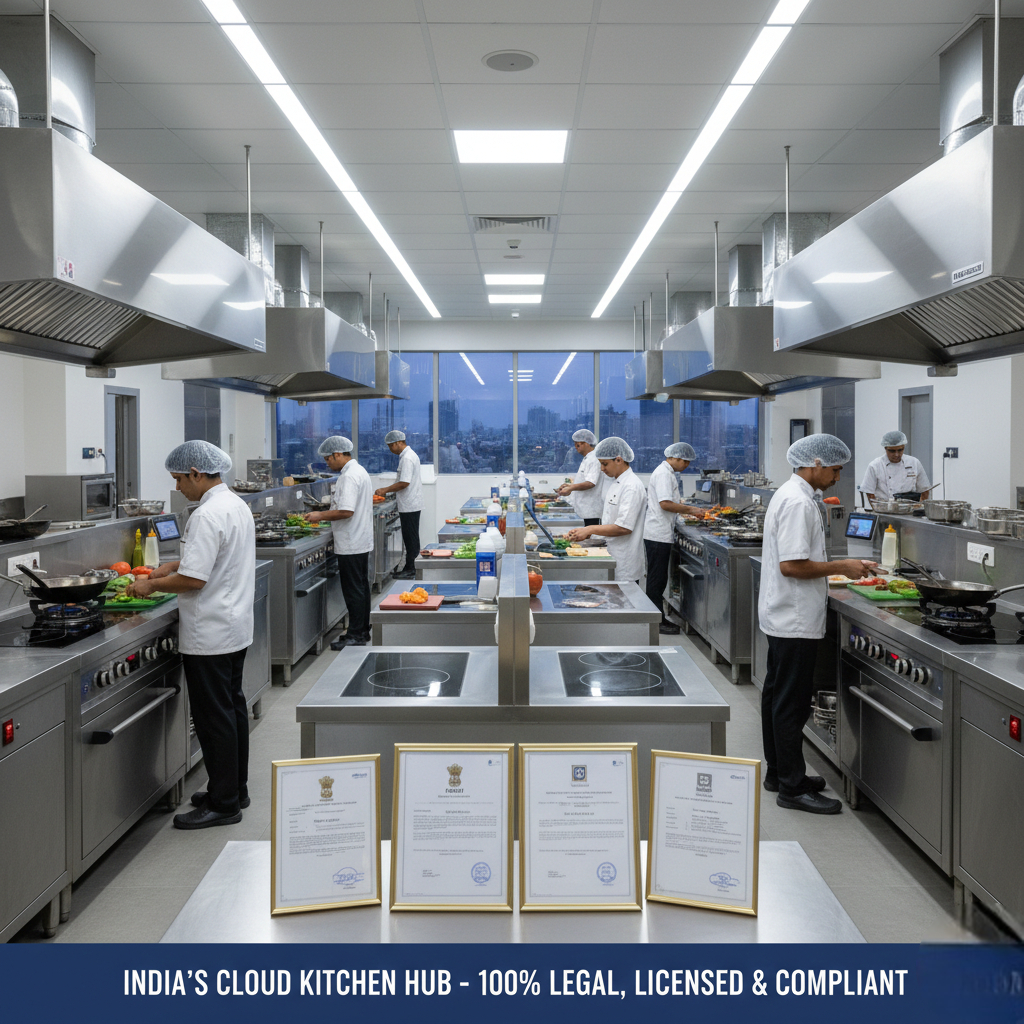
Is cloud kitchen business legal in India? Yes-but only if you follow the correct licenses, registrations, and compliance processes. Many cloud kitchens fail not because of food or demand, but because founders misunderstand legal requirements around FSSAI, GST, local municipal permissions, labor laws, and aggregator compliance. This guide explains whether cloud kitchens are legal in India, which licenses are mandatory, how compliance differs for home kitchens vs commercial kitchens, and how to stay legally safe while scaling to multiple locations. Cloud kitchen as a service providers can help with compliance, but you must understand the legal framework to choose the right partner and avoid costly mistakes.
Start Here Before Registering a Cloud Kitchen in India
This article is part of GrowKitchen’s legal + compliance learning series. If you’re still understanding the business model, read: Cloud Kitchen Business in India. If you want to estimate setup and compliance costs, see: Cloud Kitchen Setup Cost in India.
Cloud kitchens must comply with food safety laws governed by FSSAI, taxation under the GST Network, and local municipal regulations depending on city and state.
Is Cloud Kitchen Business Legal in India?
Yes, a cloud kitchen business is completely legal in India. There is no law that restricts operating a food business without dine-in. Cloud kitchens fall under the same legal framework as restaurants, food manufacturers, and catering businesses-provided they follow prescribed food safety and business regulations.
The confusion usually arises because cloud kitchens operate without storefronts. However, legality depends on compliance, not visibility.
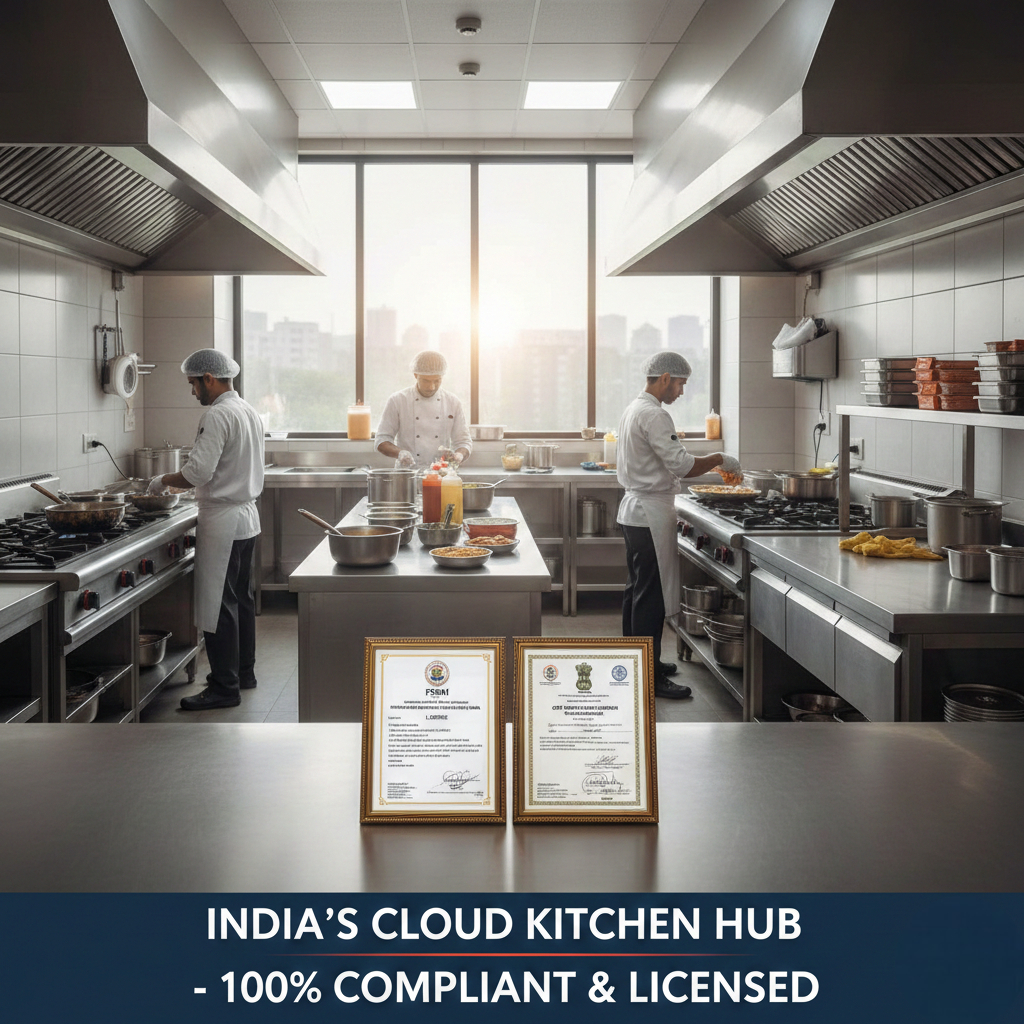
FSSAI License: Mandatory for All Cloud Kitchens
Every cloud kitchen in India must obtain an FSSAI license or registration. This applies to home kitchens, shared kitchens, and large commercial setups.
- FSSAI Registration: small kitchens with turnover below ₹12 lakh
- State FSSAI License: kitchens operating within one state
- Central FSSAI License: multi-state or large-scale operations
You can apply directly via the official portal: FoSCoS – FSSAI Licensing.
GST Registration for Cloud Kitchens
GST registration is mandatory if your cloud kitchen:
- Registers on Swiggy, Zomato, or any aggregator
- Crosses the turnover threshold (₹20 lakh in most states)
- Operates as a private limited or LLP entity
Most aggregators require GST registration before onboarding. Food delivery services typically attract 5% GST (without ITC), but this may vary based on structure.
Learn more at: GST Portal India.
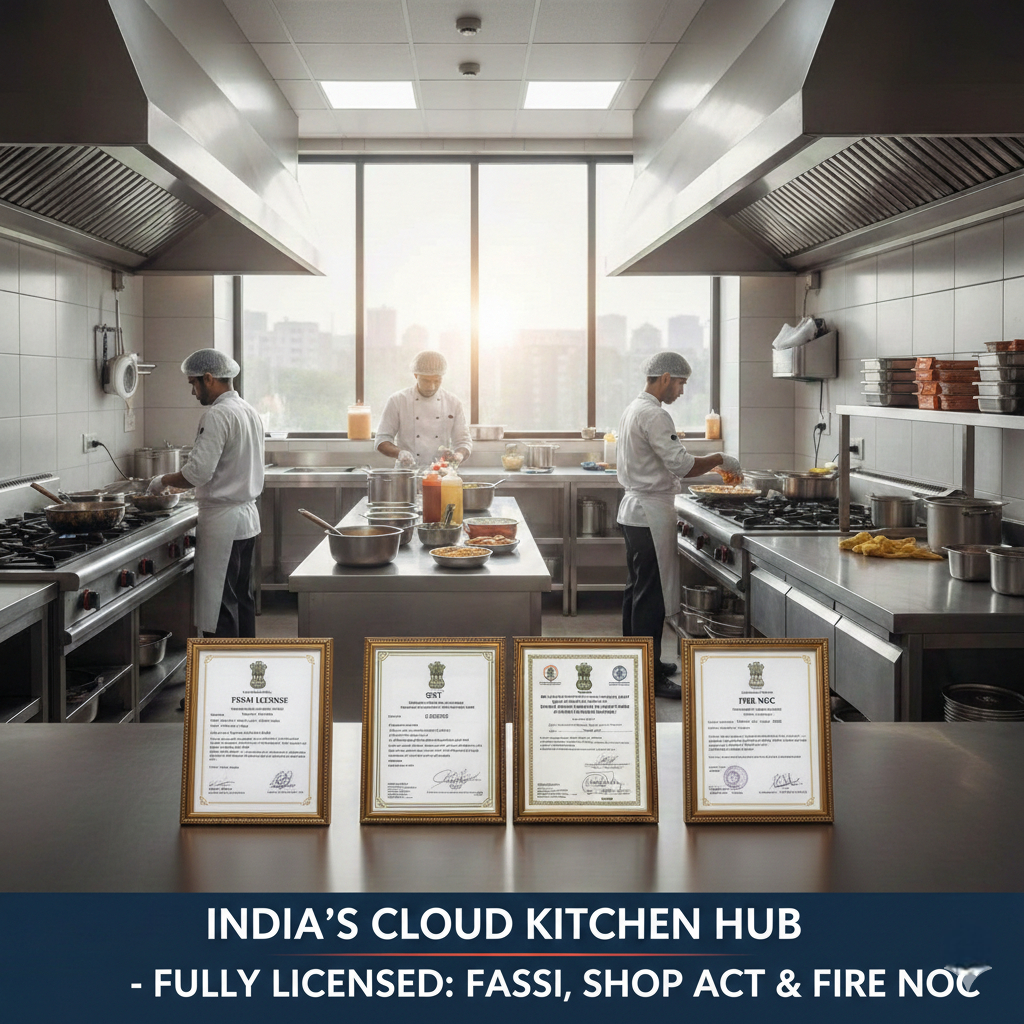
Local Municipal Licenses and Shop Act
Apart from central registrations, cloud kitchens must comply with local municipal laws. These vary by city but commonly include:
- Shop & Establishment Act registration
- Trade license from local municipality
- Fire safety NOC (for commercial kitchens)
- Water and waste disposal permissions
Requirements differ across Mumbai, Pune, Bangalore, Delhi, and other cities, so local consultation is advised before launch.
Are Home-Based Cloud Kitchens Legal?
Yes, home kitchens are legal in India-but with restrictions. You still need FSSAI registration and must follow hygiene standards. Some housing societies and municipal bodies may restrict commercial cooking at residential premises.
Home kitchens are best suited for:
- Small-scale food businesses
- Limited menus and order volumes
- No heavy frying or large equipment
Aggregator Compliance: Swiggy & Zomato Rules
Even if your kitchen is legally registered, aggregators impose additional compliance requirements:
- Valid FSSAI license uploaded
- GST registration
- Kitchen address verification
- Food safety audit readiness
Aggregators may suspend listings if documents expire or if repeated hygiene complaints are received.
Labor Laws and Staff Compliance
Cloud kitchens employing staff must comply with basic labor laws:
- Minimum wage regulations
- ESI and PF (where applicable)
- Safe working conditions
- Defined working hours and weekly offs
Ignoring labor compliance creates long-term legal risk, especially during scaling or audits.
Common Legal Mistakes Cloud Kitchen Founders Make
- Operating without FSSAI or using expired licenses
- Running multiple brands under one license incorrectly
- Ignoring local municipal approvals
- Assuming aggregators handle compliance
- Scaling to new cities without fresh registrations
These mistakes often explain sudden shutdowns and penalties: Why Cloud Kitchens Fail in India.
Final Verdict: Is Cloud Kitchen Business Legal in India?
Yes, cloud kitchen businesses are fully legal in India. But legality is conditional on compliance-licenses, registrations, hygiene standards, and proper documentation.
Treat compliance as part of your operating system, not a one-time task. A legally compliant kitchen scales faster, attracts better partners, and avoids costly shutdowns.
FAQs: Cloud Kitchen Legal Status in India
Is cloud kitchen business legal in India?
Yes. Cloud kitchens are legal if they comply with FSSAI, GST, and local municipal regulations.
Do cloud kitchens need FSSAI license?
Yes. Every cloud kitchen-home-based or commercial-must have a valid FSSAI registration or license.
Can I run a cloud kitchen from home?
Yes, but you still need FSSAI registration and must follow hygiene rules and local housing regulations.
Is GST mandatory for cloud kitchens?
GST is mandatory for aggregator onboarding and businesses crossing turnover limits.