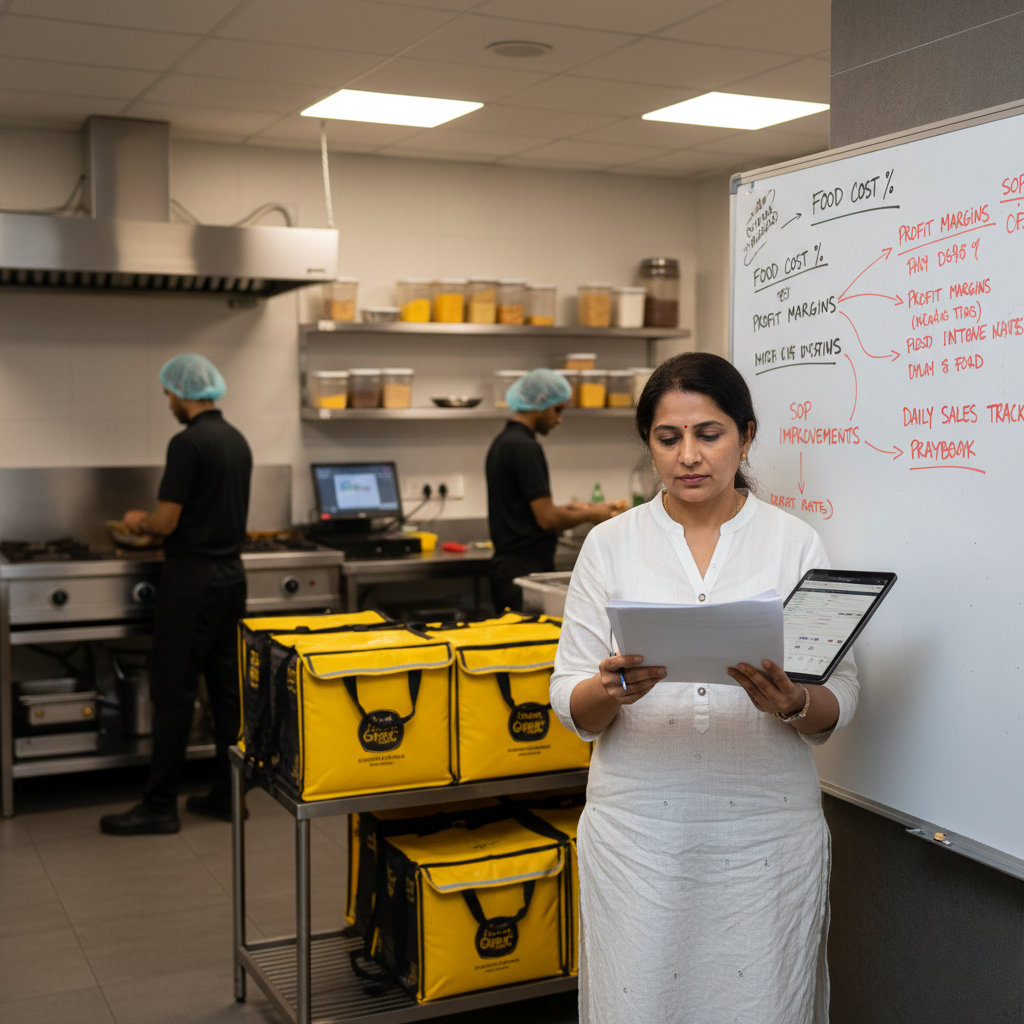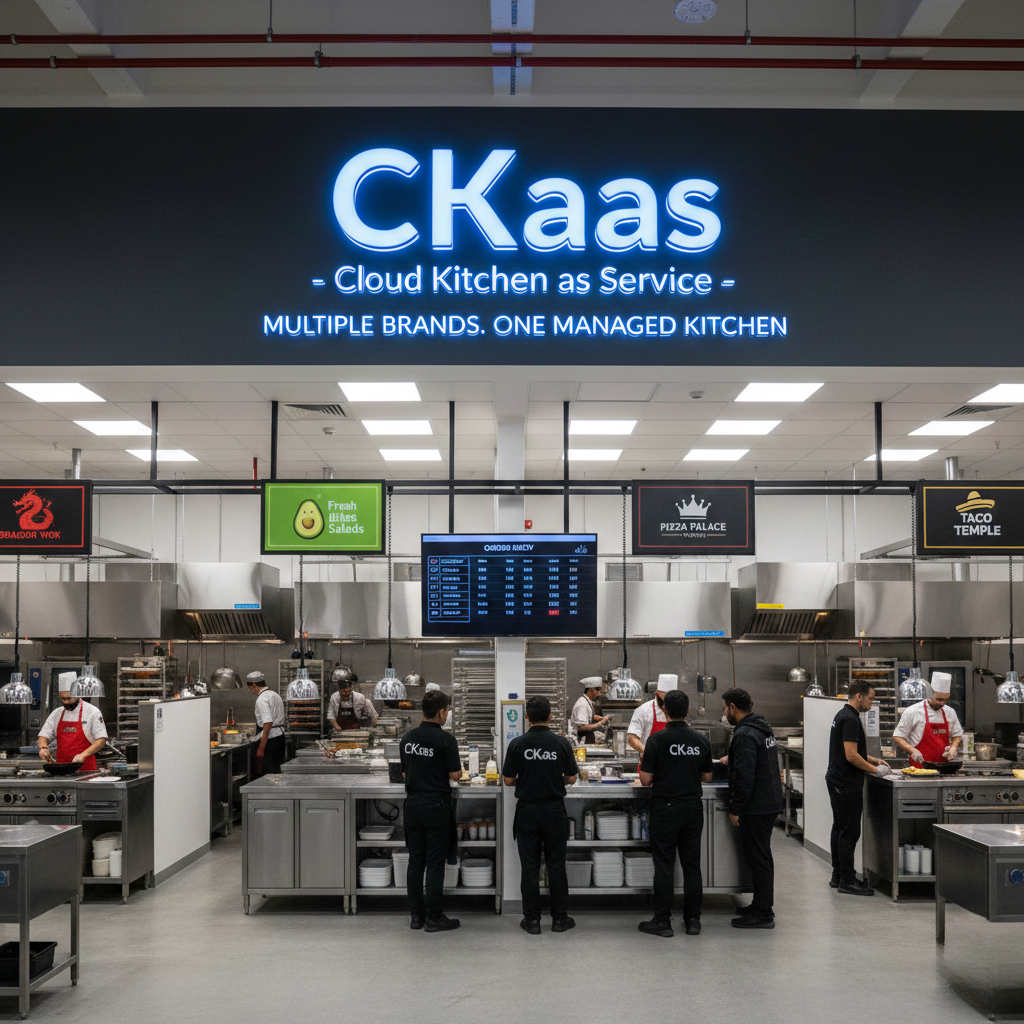
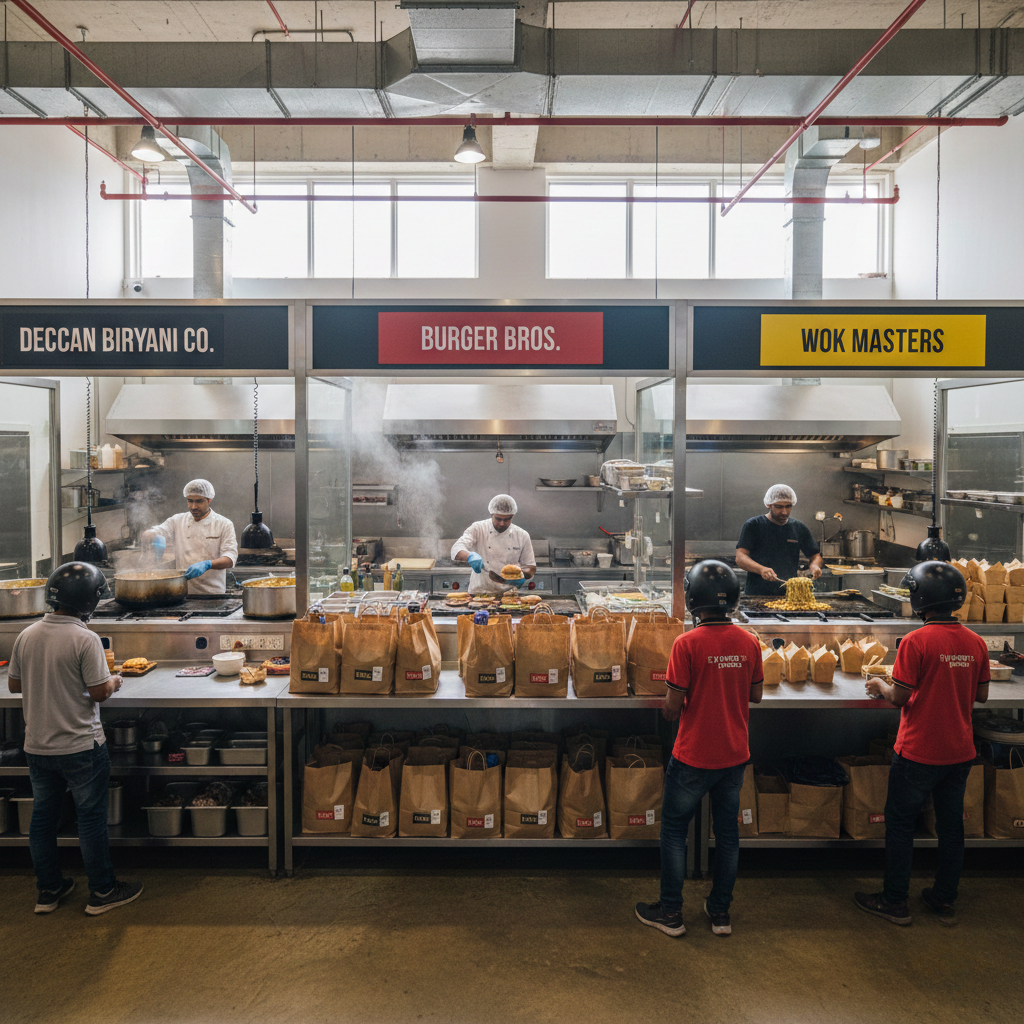
How to scale cloud kitchens sounds exciting when you look at it from the outside. More locations, more orders, more visibility on Swiggy and Zomato, and a bigger brand footprint across the city. But inside operations, scaling is rarely that simple. Most cloud kitchens do not struggle because demand disappears. They struggle because growth exposes everything that was already weak: menu sprawl, food-cost leakage, prep confusion, staff dependency, poor dispatch discipline, refund issues, and inconsistent customer experience.
That is why scaling a cloud kitchen is not about opening outlet number two, three, or five as fast as possible. It is about building a system that can repeat quality, speed, profitability, and customer satisfaction without the founder firefighting every day. If the first kitchen is unstable, the second kitchen multiplies chaos. If the first kitchen is disciplined, the second kitchen becomes easier to launch and control.
In this complete guide, we will break down what cloud kitchen scaling really means, when a kitchen is ready to scale, the systems you must build before expansion, the metrics that matter, the most common mistakes founders make, and how to scale across locations without losing control. If you are building a delivery-first food brand, this guide will help you think beyond revenue and focus on repeatable growth.
How to Scale Cloud Kitchens Really Means
Most founders think scaling means increasing orders. In reality, scaling means increasing orders, locations, and brand visibility without increasing confusion, waste, and inconsistency at the same speed. A kitchen that does 40 orders a day with manual coordination may survive. A kitchen doing 150 orders a day across multiple meal periods with the same loose structure usually starts leaking money very quickly.
True scale means that your recipes are standardized, your prep system is predictable, your staff can execute without constant intervention, your packaging process is controlled, your procurement logic is stable, and your dashboard tells you where margins are slipping before the damage becomes permanent. This is why many fast-growing kitchens feel busy but stay unprofitable. Revenue grows, but system maturity does not.
If you want a broader understanding of the operating model behind structured expansion, read Cloud Kitchen as a Service (CKaaS) and How CKaaS Works. Both help explain why scalable cloud kitchen growth is built on repeatable backend systems, not just a good menu idea.
When Is a Cloud Kitchen Ready to Scale?
A cloud kitchen is ready to scale only when the first unit is stable enough to be copied. Stability does not mean perfection. It means the business has reached a point where the core variables are under control. You know your top-selling SKUs, your recipe yields are predictable, your food cost is measured, your packing flow is disciplined, and your customer complaints are not random mysteries.
Founders often try to scale because one month looked strong on the dashboard or because one aggregator category started moving well. But one good month does not mean the business is scalable. A kitchen becomes scalable when the output is repeatable. If sales increase and the team immediately loses quality, delays orders, mispacks items, or sees refunds go up, then the business is not yet ready for expansion.
Before you scale, ask hard questions. Can another kitchen replicate your top 10 dishes exactly? Can you train a new team in days instead of weeks? Can your procurement system support more volume without stock-outs? Can you track location-wise contribution margin? Can your brand survive when the founder is not physically present? If the answer is no, scale will only multiply operating stress.
For a deeper look at this phase, explore Scale Your Cloud Kitchen to Multiple Locations and Most Common Challenges When Scaling a Cloud Kitchen.
The Foundation You Need Before Growth
Every cloud kitchen that scales well has a strong first-layer foundation. This includes recipe sheets, portion control, prep plans, dispatch SOPs, vendor mapping, packaging discipline, and financial visibility. These are not glamorous topics, but they determine whether the kitchen grows cleanly or collapses under its own volume.
The first foundation block is consistency. Customers ordering from a delivery brand expect the same taste, portion, temperature, and packaging experience every time. Once a cloud kitchen expands to another location, variation becomes the biggest hidden risk. If one outlet sends a stronger sauce, another sends a smaller portion, and the third packs poorly, the brand reputation starts breaking in the background.
The second block is control. Control means you are not guessing where profit is leaking. You can identify which SKU is profitable, which one only creates ticket size but no margin, which shift sees the most delays, and which station causes the most bottlenecks. Without that control, scaling becomes expensive trial and error.
The third block is transferability. A founder-led kitchen is not a scalable kitchen. A scalable kitchen is one that can be handed to trained staff, monitored through dashboards, and audited through SOPs. That is where structured systems make the difference.
Menu Standardization and SKU Control
One of the biggest reasons cloud kitchens fail during scaling is menu bloat. At one location, a large menu may seem harmless because the founder is around to coordinate exceptions. But when you replicate that same menu across two or three kitchens, complexity increases sharply. More SKUs mean more raw materials, more prep variations, more holding issues, more training load, and more chances of mistakes.
That is why serious scaling starts with menu engineering. You need to identify hero items, supporting items, low-margin distractions, and slow-moving SKUs that consume operational bandwidth. A smart cloud kitchen menu is not the one with the most options. It is the one with the strongest repeatability, the cleanest procurement logic, and the best contribution margin.
Standardization also means documented yields, portion sizes, plating or packing sequence, and substitute rules. If a product depends on “experience” more than process, it will break during scale. Your kitchen should be able to tell a new cook exactly how many grams, how many minutes, what sequence, and what final output is expected.
Related reads on this topic include Multi-Brand Cloud Kitchen Model in 2026, Why You Can’t Manage Multiple Cloud Kitchen Brands Smoothly, and Why Multi-Brand Cloud Kitchens Collapse.
Operations, SOPs, and Training Systems
SOPs are what convert a founder’s know-how into a repeatable kitchen system. Without SOPs, every new staff member learns through memory, speed pressure, and habit. That produces inconsistency. With SOPs, training becomes structured, shift handoffs become cleaner, and every station becomes easier to audit.
SOPs should cover prep, batch sizes, storage, thawing, marination, sauce holding, cooking sequence, assembly, dispatch checks, packaging checks, hygiene practices, and end-of-day closure. When you scale, these documents become the backbone of operations. They allow you to open a second unit faster because you are not rebuilding the kitchen logic from scratch.
Just as important, SOPs reduce profitability leakage. A poorly trained kitchen rarely leaks money in one dramatic event. It leaks slowly through over-portioning, re-cooking, stock mismanagement, late dispatch, mispacked orders, and waste. Those daily leakages become huge when multiplied across locations.
For more on this, read How SOPs Improve Cloud Kitchen Profitability. It is one of the clearest ways to understand why scaling starts with operational discipline, not excitement.
Profitability and Unit Economics
Many cloud kitchens scale revenue before they scale profit. That is dangerous. A business that is barely surviving at one location will not magically become healthier at three locations. In fact, expansion often makes a weak margin structure worse because more orders increase team pressure, refund risk, procurement complexity, and discount dependency.
Before scaling, you need clarity on food cost percentage, packaging cost, aggregator commission impact, discount burden, average order value, repeat order behavior, contribution margin, and daily cash leakage. You should know which dishes actually build the business and which ones only create vanity sales.
This is where many founders make the wrong move. They see top-line growth and assume the kitchen is strong. But top line without contribution discipline is not scale. It is motion. The goal is to build a kitchen that stays profitable as volume rises, not one that becomes more stressed every time demand increases.
To understand this layer better, read Cloud Kitchen Profitability: Myths vs. Reality, Cloud Kitchen Profitability Consultant in India, Cloud Kitchen Profit India, and How Data & Dashboards Improve Cloud Kitchen Profitability.
Scaling on Swiggy and Zomato
A large part of cloud kitchen growth in India still depends on aggregators. But scaling on Swiggy and Zomato is not only about ads, visibility boosts, or discounts. Platforms reward kitchens that maintain service reliability. Late dispatch, cancellations, low ratings, wrong orders, and refund patterns quietly damage long-term performance.
When a kitchen is small, founders can manually correct many issues. When the kitchen scales, the same issues become platform-level performance problems. This is why aggregator scaling must be supported by packaging discipline, ready-to-fire prep planning, category positioning, menu naming logic, photo quality, and strong service metrics.
Growth on marketplaces should follow operational readiness. If you push more orders into a weak dispatch system, customer complaints will increase faster than revenue. Scale on platforms should be systematic, not emotional.
You can dive deeper into that here: Scaling Your Cloud Kitchen on Swiggy and Zomato. For official platform information, you can also review Swiggy Partner and Zomato for Business.
How to Expand to Multiple Locations
Multi-location scaling should happen in phases, not in a rush. The best model is usually simple: stabilize one kitchen, document what works, identify the non-negotiables, launch the second location with tighter controls, then compare performance across both kitchens before expanding further.
The first thing to replicate is not menu size. It is system quality. That includes the same kitchen flow, same prep discipline, same packing rules, same vendor logic where possible, same reporting cadence, and same escalation mechanism. If every location starts improvising, the brand becomes impossible to manage.
Location choice also matters. Some areas support premium AOV, while others are more price-sensitive. Some micro-markets give stronger dinner demand, while others work better for lunch and office orders. Scaling is not only about opening nearby. It is about opening where the unit economics still make sense.
If you want a location-based starting point, see Cloud Kitchen in Mumbai and Cloud Kitchen Space for Rent in Mumbai. If your focus is structured expansion, read Scale Cloud Kitchen to Multiple Locations and How to Enable Safe Cloud Kitchen Scaling With CKaaS.
Should You Run a Multi-Brand Model?
Multi-brand cloud kitchens can be highly profitable when executed properly. They allow one kitchen to tap into multiple demand occasions, cuisines, or customer segments while sharing rent, staff, utilities, and backend operations. But the model is only powerful when the brands are system-compatible.
Founders often add more brands too early because they want more catalog visibility. The problem is that every extra brand adds operational weight. New sauces, new prep logic, new packaging styles, new menu combinations, and new training requirements all increase complexity. If the kitchen is not system-driven, multi-brand quickly becomes multi-chaos.
The right way to approach the multi-brand model is to look for ingredient overlap, station compatibility, demand diversity, and margin improvement. If the additional brand strengthens utilization without overwhelming operations, it can be a smart move. If it only increases SKU count and staff confusion, it will hurt more than help.
You can study this in detail through Multi-Brand Cloud Kitchen Model and How Multi-Brand Kitchens Improve Profitability.
Technology, Dashboards, and Daily Control
Scaling without dashboards is like driving fast without a dashboard in the car. You may move, but you do not know what is overheating. Every serious cloud kitchen needs daily visibility into sales, prep planning, food cost, dispatch time, refunds, cancellations, ratings, stock movement, and location-wise performance.
Dashboards do not have to be fancy to be useful. What matters is clarity and daily usage. If your team updates reports only to “review later,” the dashboard becomes decoration. A good scaling dashboard helps you spot operational drift early. You can see when one location’s food cost starts rising, when one shift begins underperforming, or when one aggregator menu is producing weak AOV.
Along with internal dashboards, make sure your compliance and business basics stay clean as you grow. Food businesses in India should keep licensing and food safety practices updated through the FSSAI FoSCoS portal. If you are exploring new digital commerce channels, you may also want to understand the ONDC ecosystem as part of long-term distribution thinking.
Common Scaling Mistakes to Avoid
The first mistake is scaling based on excitement instead of metrics. A founder sees strong orders for a few weeks and decides to open another location. But without stable contribution margin, clean SOPs, and strong dispatch discipline, that decision can damage both outlets.
The second mistake is copying the menu instead of copying the system. Founders often assume that duplicating the product lineup is enough. It is not. The real asset is the operating method behind the menu.
The third mistake is overestimating staff memory. Scale needs training systems, not verbal instructions. What worked with one experienced cook will not work across multiple shifts and locations.
The fourth mistake is ignoring hidden leakage. Wrong packaging, wastage, refunds, penalties, and stock variance rarely look dramatic individually, but together they kill scaling potential.
The fifth mistake is trying to do too much at once: new location, new cuisine, bigger menu, more ads, and discount-led growth all together. Good scaling is staged. It protects control before pushing speed.
Final Thoughts
Scaling a cloud kitchen is not about becoming bigger as quickly as possible. It is about becoming more repeatable, more profitable, and more controllable with every stage of growth. A kitchen that scales well has clarity in menu engineering, discipline in SOPs, visibility in dashboards, and patience in expansion. That is what separates brands that build 5–10 profitable kitchens from brands that get stuck managing chaos.
If you are at the stage where one location is working and you want to expand without losing consistency, focus on the foundation first. Lock your hero SKUs. Tighten your prep and dispatch systems. Audit your food cost and contribution margin. Build location-ready SOPs. Then scale with intent.
GrowKitchen’s blog library has several useful next reads if you want to continue exploring this space: Best Cloud Kitchen Business Models in India, Steps to Launch Your Food Brand with Cloud Kitchen as a Service, and Cloud Kitchen Growth & Scaling.
In the end, the rule is simple: do not scale chaos. Scale systems. That is how cloud kitchens grow without losing their margin, ratings, speed, and brand trust.