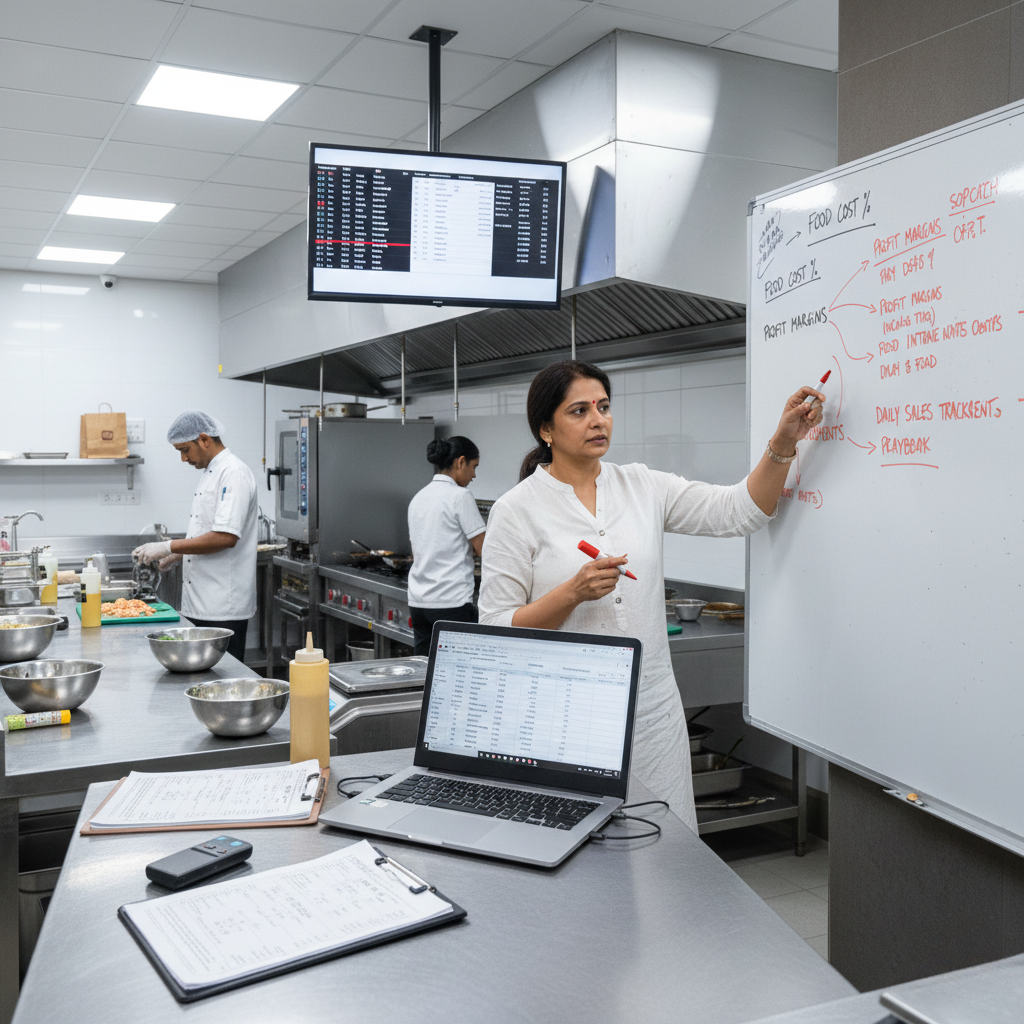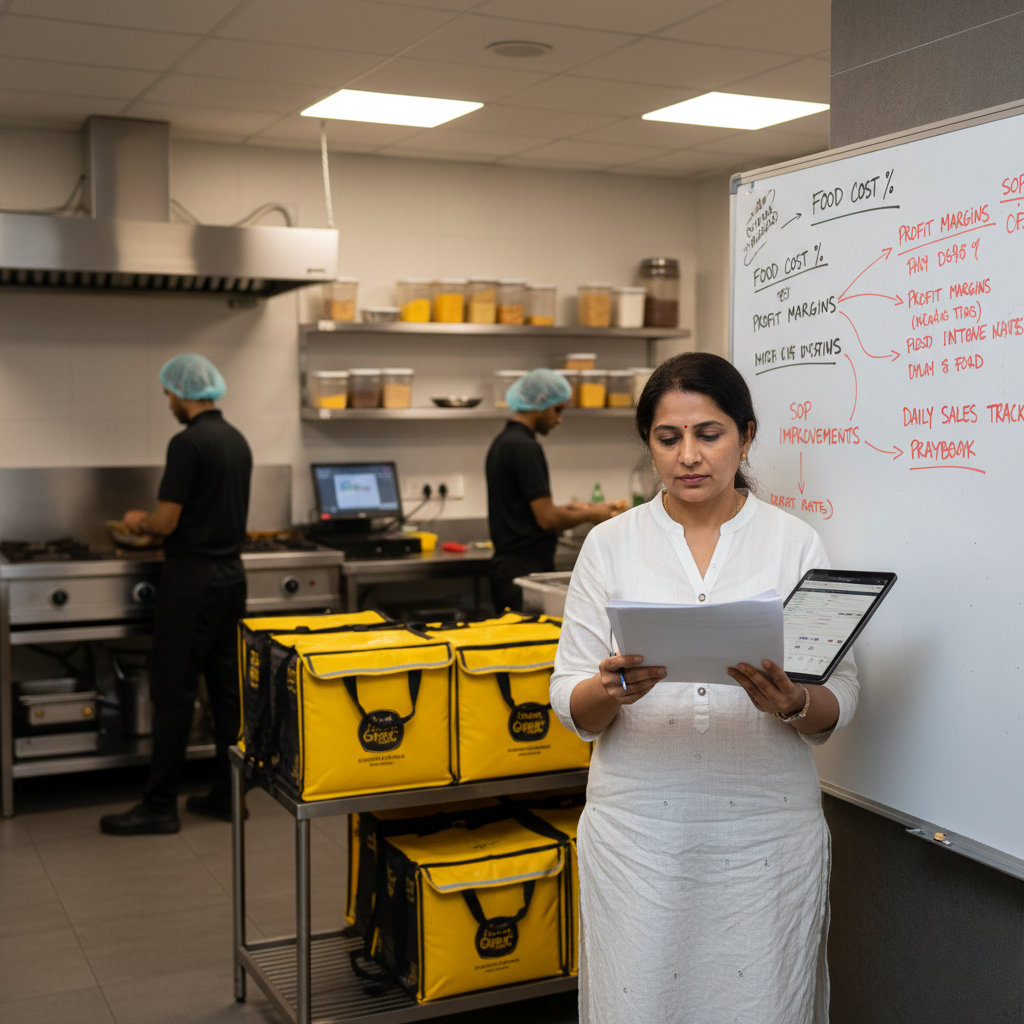
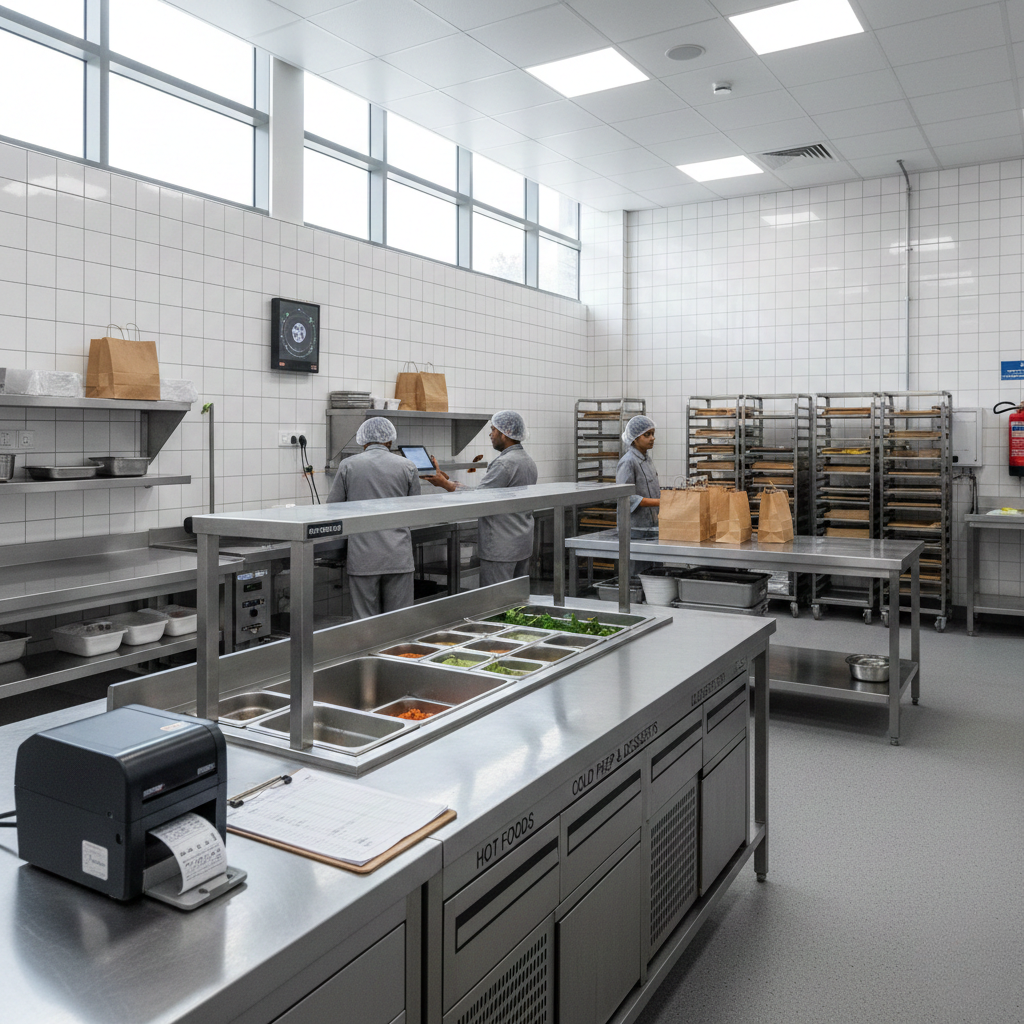
How to Calculate Net Profit in Cloud Kitchens is one of the most misunderstood problems in the delivery-first food business. Many founders look at dashboard revenue, payout summaries, or bank balances and assume they are profitable. Orders feel busy. Ads seem to work. Yet cash remains tight. This guide explains what “real net profit” actually means for cloud kitchens, why most founders miscalculate it, and how disciplined operators measure profit only after every hidden cost is accounted for not before.
How to Calculate Net Profit in Cloud Kitchens
Most cloud kitchen founders believe profit is simple: revenue minus expenses.
In reality, cloud kitchens operate on layered costs, delayed payouts, platform deductions, and invisible leakages that distort profitability.
To build clarity, start with Cloud Kitchen Unit Economics Explained, Understanding Contribution Margin in Cloud Kitchens, and Cloud Kitchen Break-Even Explained Simply.

What “Net Profit” Actually Means for a Cloud Kitchen
Net profit is not what remains in your bank account at the end of the month.
It is what remains after every variable cost, every fixed cost, every platform deduction, and every operational leakage is fully absorbed.
The Biggest Myth: “If Sales Are Growing, Profit Will Follow”
Many founders assume higher order volume automatically leads to profit.
In cloud kitchens, scale magnifies inefficiency. Weak unit economics grow losses faster than revenue.
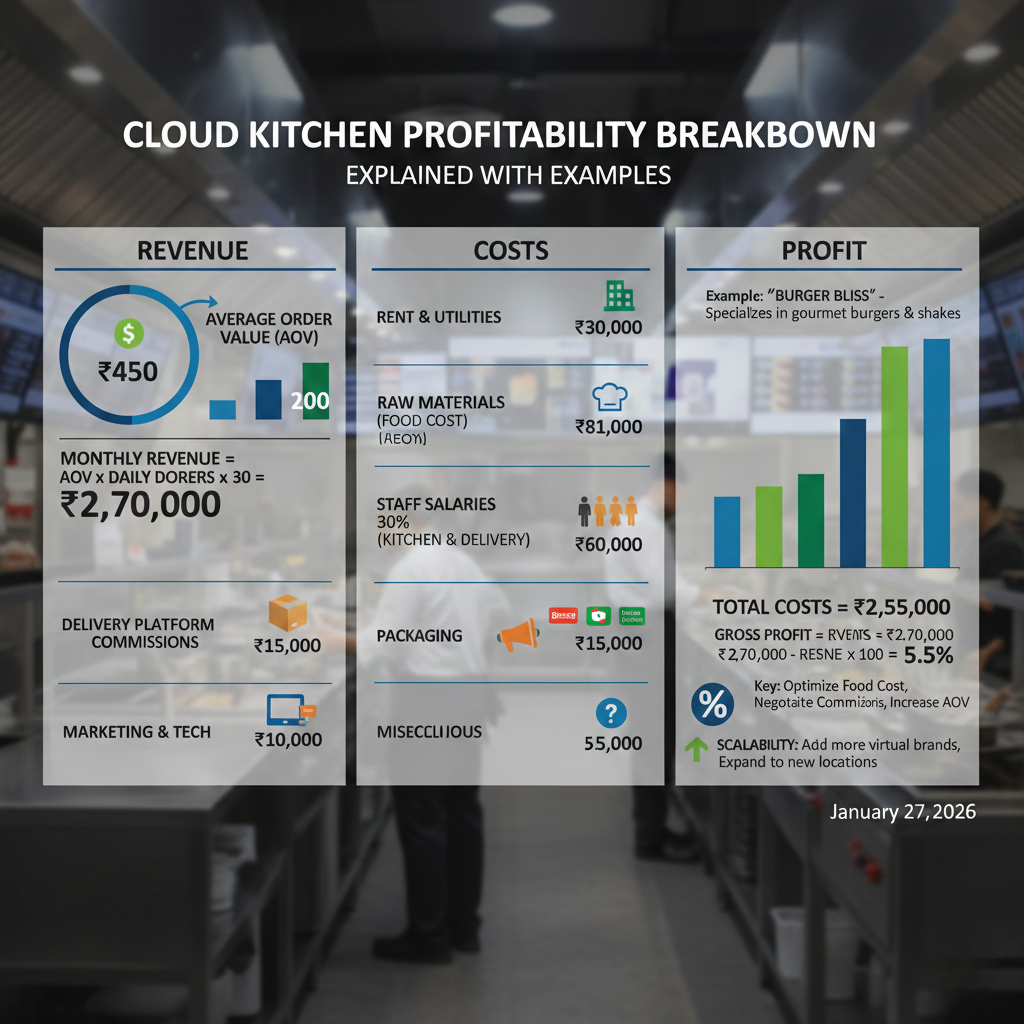
Step 1: Calculate Realized Revenue (Not Order Value)
Gross order value is not revenue.
Realized revenue equals: order value minus discounts, refunds, cancellations, and non-recovered charges.
Refund-heavy kitchens often overstate revenue by 5–15%.
Step 2: Deduct All Variable Costs Per Order
Variable costs scale with every order. These include: food cost, packaging, platform commission, payment gateway fees, and delivery-linked charges.
Learn ideal benchmarks in Ideal Food Cost Percentage for Cloud Kitchens and Packaging Cost: The Silent Profit Killer.
Step 3: Understand Contribution Margin First
Contribution margin is what remains after variable costs are deducted from realized revenue.
This is the only money available to pay fixed costs.
If contribution margin is weak, net profit is impossible regardless of sales volume.
Step 4: Account for All Fixed Costs Honestly
Fixed costs include: kitchen rent, staff salaries, utilities, software, internet, licenses, and admin overhead.
Many founders exclude founder salary, management time, or shared expenses artificially inflating profit.
Step 5: Subtract Refunds as Full Losses
A refunded order carries full cost with zero contribution.
Refunds must be deducted after contribution not adjusted casually.
Learn why in Refunds and Cancellations: Profitability Impact.
Step 6: Factor Customer Acquisition Cost
Paid ads, discounts, and offers are acquisition expenses.
If CAC is not recovered through repeat orders, profit remains temporary.
Understand CAC properly in Why CAC Matters Even for Delivery Brands.
This aligns with Harvard Business Review’s explanation of real profitability , where long-term cash flow matters more than surface margins.
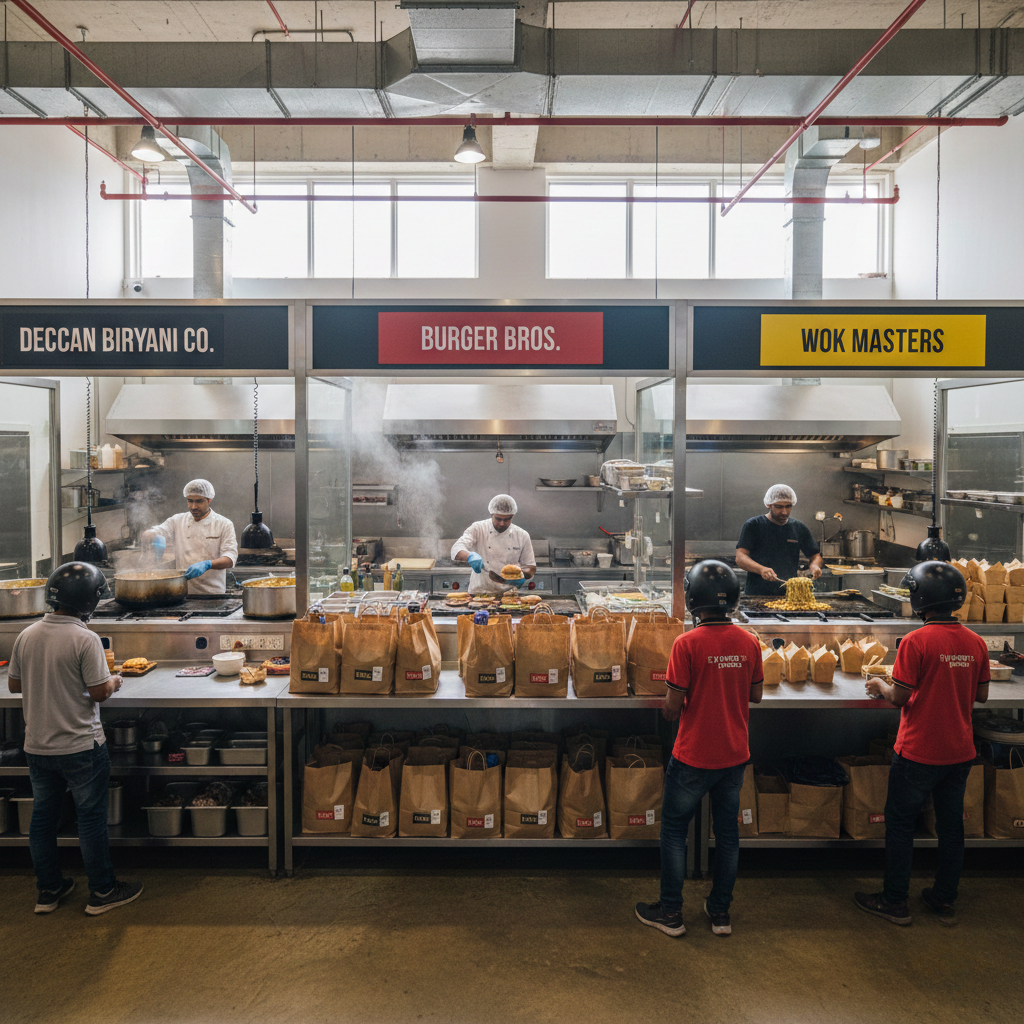
Why Multi-Brand Kitchens Miscalculate Profit
Shared kitchens often misallocate: staff cost, utilities, wastage, and packaging.
Without brand-wise P&L, net profit becomes blended and misleading.
Why Net Profit Must Be Clear Before Scaling
Scaling multiplies: good systems or bad economics.
Kitchens that scale without net profit clarity amplify losses at speed.
How to Calculate Real Net Profit in Cloud Kitchens: Final Clarity
Net profit is not a feeling. It is a calculation.
Kitchens that measure profit honestly build stability, investor confidence, and scalable growth.
GrowKitchen helps founders design systems where profit is engineered not guessed.
FAQs: Net Profit in Cloud Kitchens
Is dashboard payout equal to profit?
No. Payouts exclude multiple costs and leakages.
How often should profit be calculated?
Monthly for stability, weekly during scaling phases.
Can a kitchen be cash-positive but loss-making?
Yes. Delayed liabilities hide losses temporarily.