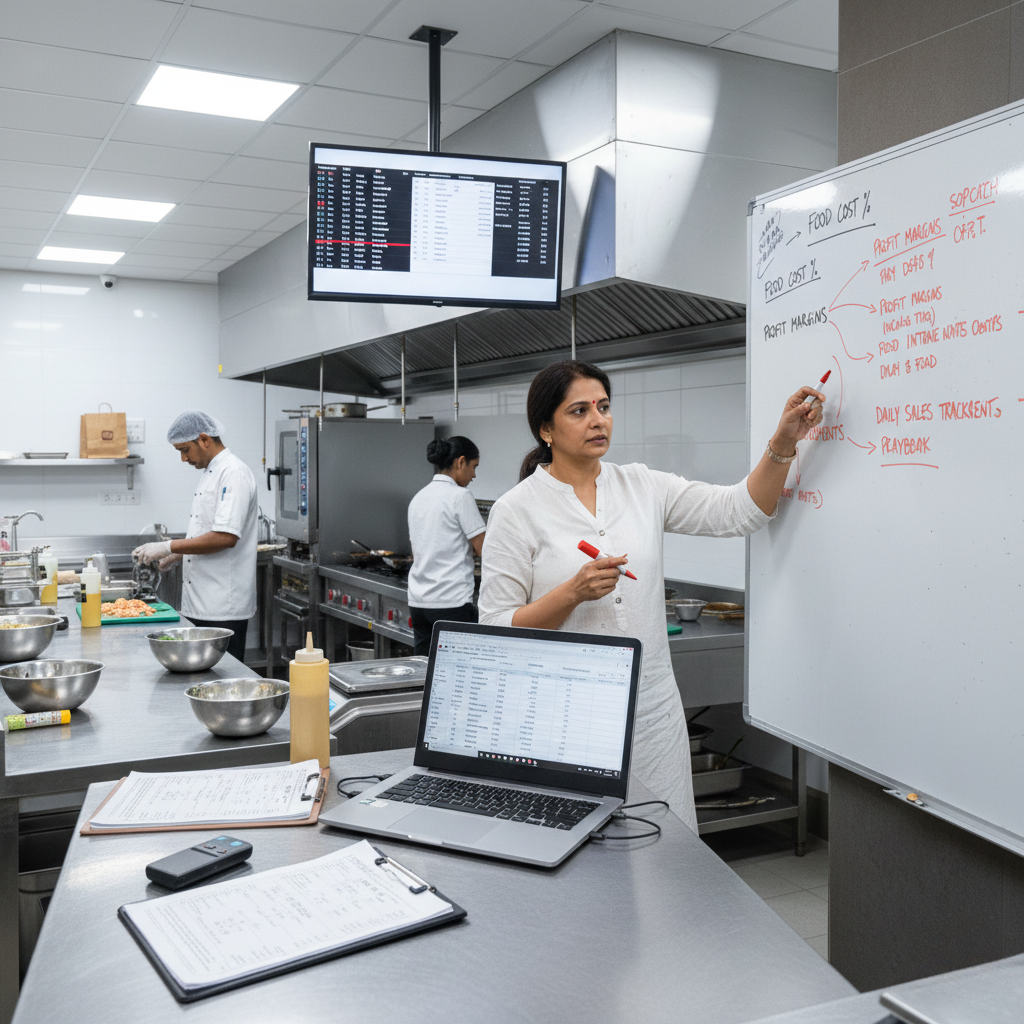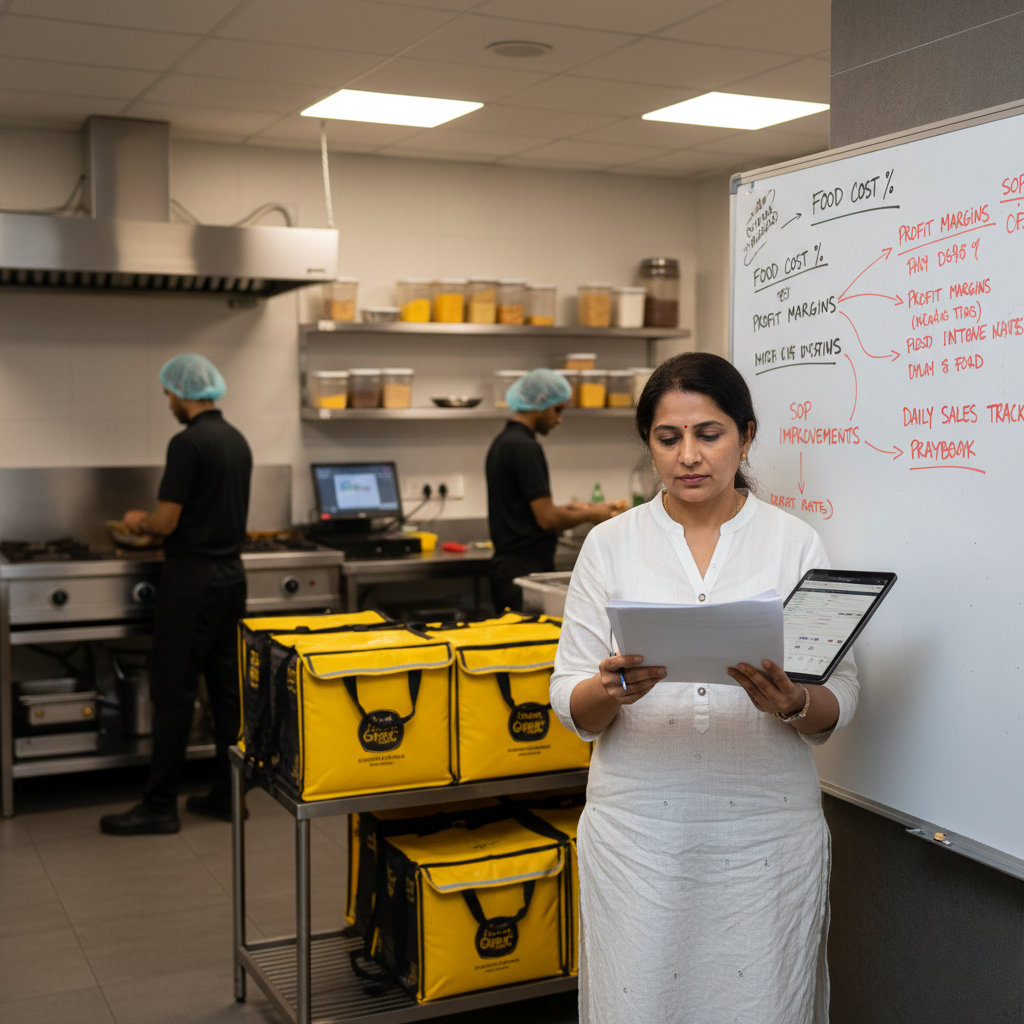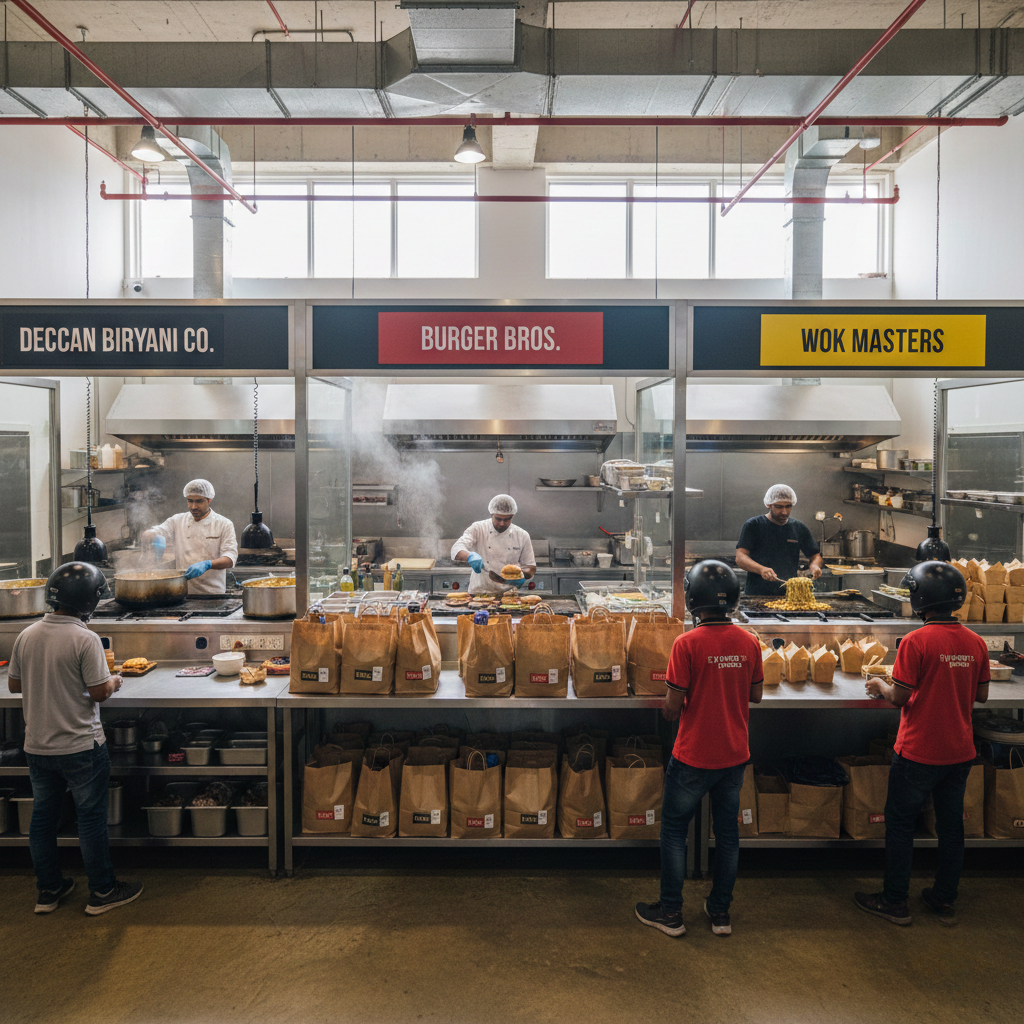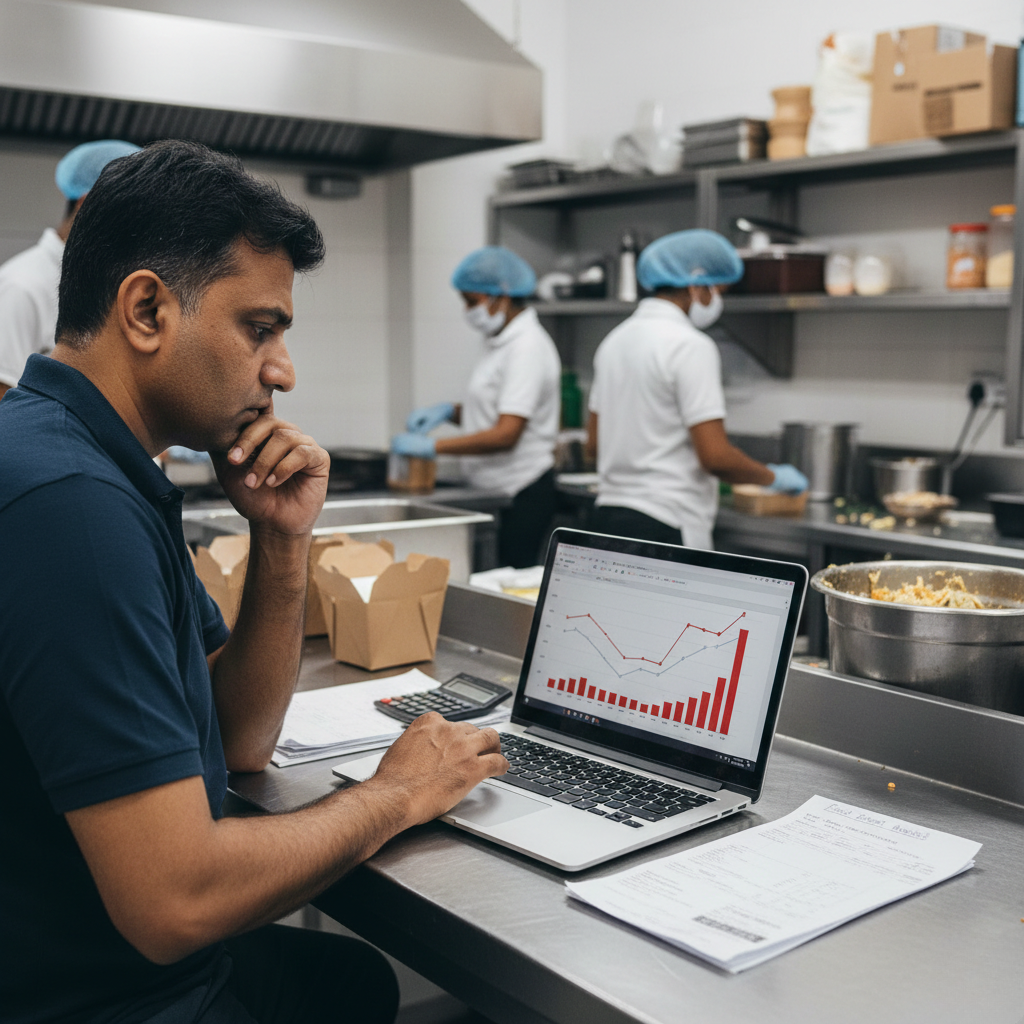
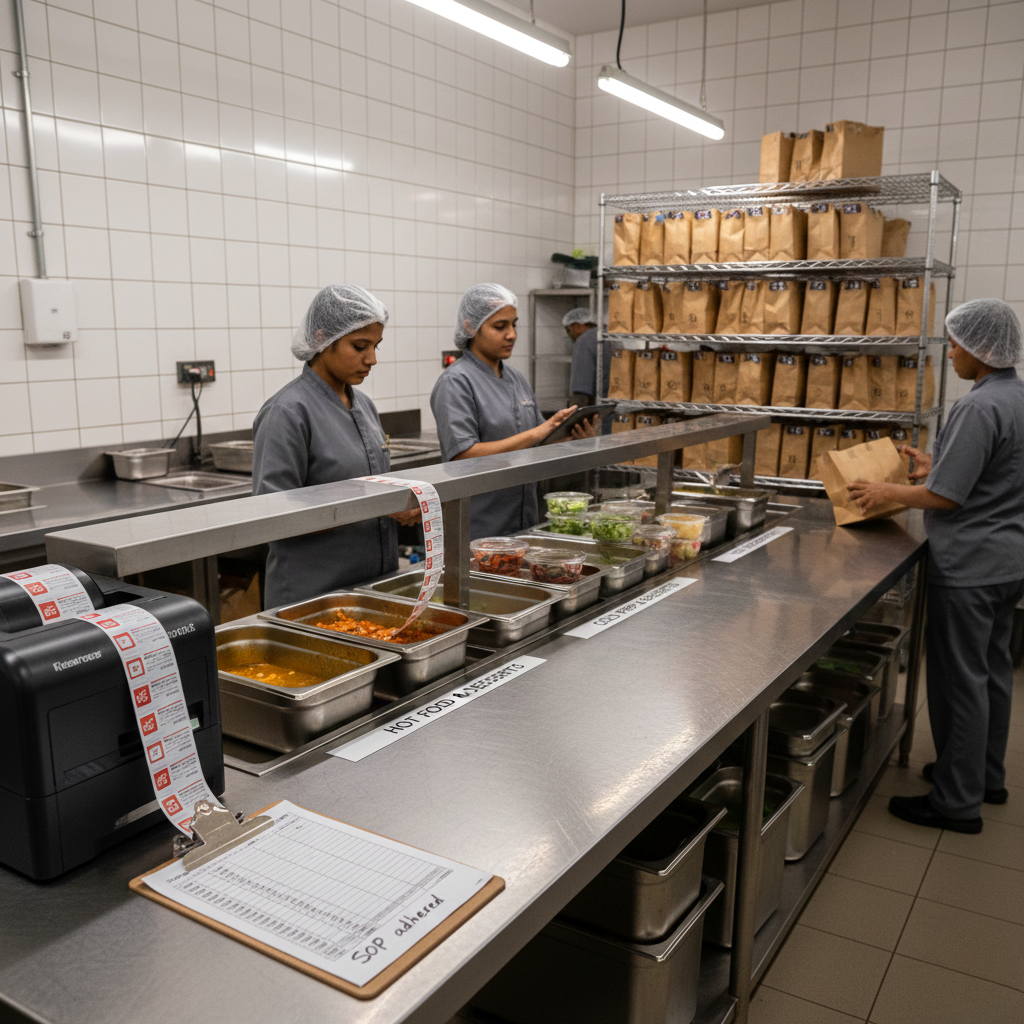
How SOPs Improve Cloud Kitchen Profitability is not a theoretical topic. It is the difference between a kitchen that looks busy and a kitchen that keeps cash. Most cloud kitchens don’t collapse because orders stop. They collapse because execution stays inconsistent while volume increases. SOPs (Standard Operating Procedures) are not “paperwork.” They are the operational system that locks food cost, stabilizes staff output, reduces refunds and penalties, and makes profitability predictable. This guide explains how SOPs protect margins at every step of the delivery workflow from prep to packing to payout.
How SOPs Improve Cloud Kitchen Profitability: The Real Reason Kitchens Bleed Money
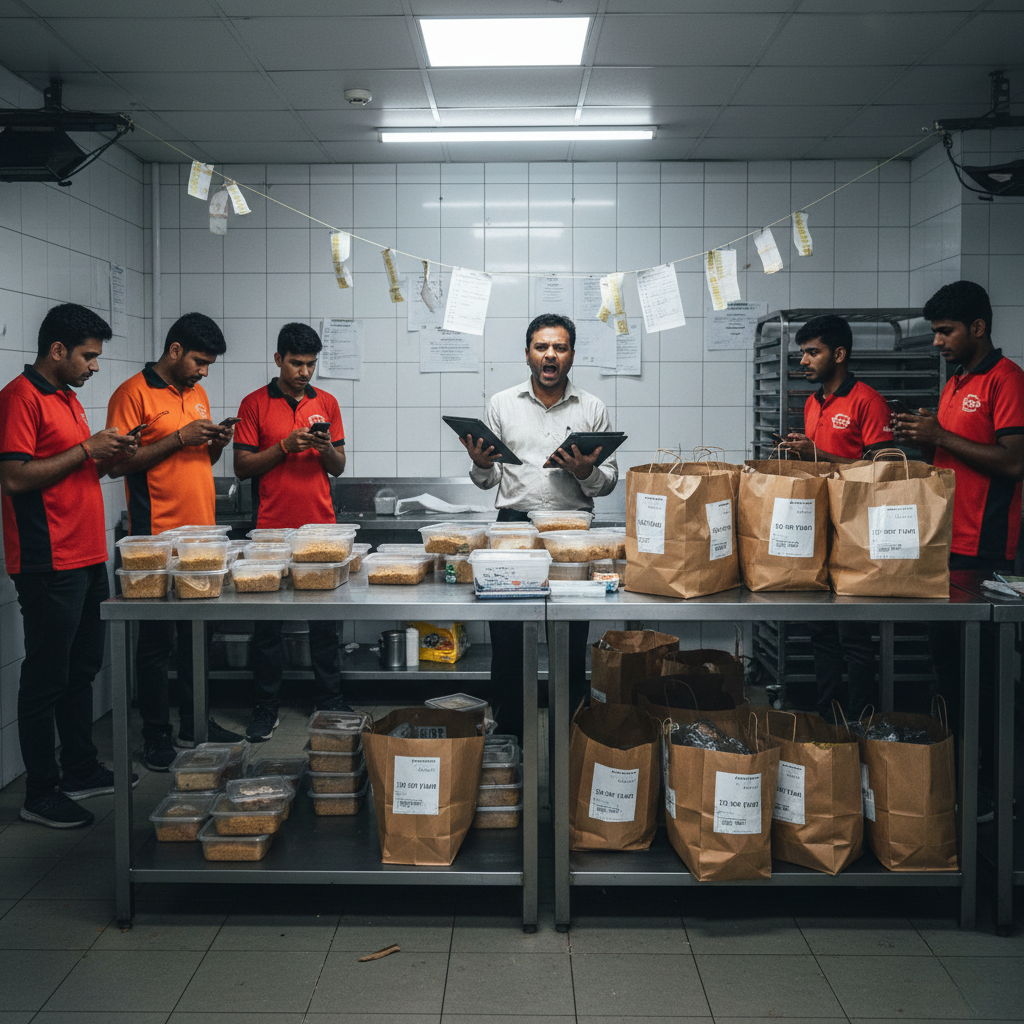
Many cloud kitchen founders reach a confusing stage: orders are coming in, staff is working every day, aggregator dashboards show movement, but profitability stays negative. This happens because sales volume hides operational leakage. The kitchen feels active, but margins leak through portion drift, wastage, re-cooking, packing errors, refunds, late dispatch penalties, and inconsistent prep discipline.
SOPs fix profitability because they reduce variation. When outcomes become repeatable, costs become controllable. When costs are controllable, profit becomes predictable.
If you want the profitability foundation first, start with Cloud Kitchen Profitability Consultant in India and identify the hidden leakage points via Common Operational Mistakes in Cloud Kitchens.
What SOPs Actually Mean in a Cloud Kitchen
In a cloud kitchen, SOPs are not “guidelines.” They are step-by-step execution rules that define: who does what, when it is done, how it is verified, and what happens if it is missed. The goal is not perfection. The goal is consistency at scale.
Most founders think SOPs are only for big brands. That is backwards. Small kitchens need SOPs more because margins are thinner and one week of bad execution can wipe out a month of profit.
Without SOPs, every day becomes “founder-managed quality control.” With SOPs, quality control becomes the default behavior of the system, not a daily fight.
Why SOPs Improve Profitability by Controlling the Silent Cost Structure
Most founders track visible fixed costs like rent and salary. The real damage happens in invisible variable costs that compound daily: wastage from over-prep, portion inconsistency, remakes due to errors, refunds due to missing items, cancellations due to delay, packaging failures, and promotional burn used to “cover” rating drops.
SOPs reduce these costs by standardizing decisions. Instead of staff “estimating” what to do, SOPs specify exactly what must happen at each step: prep quantities, holding times, batch timing, reheating rules, packing sequence, dispatch verification, and cleaning cycles.
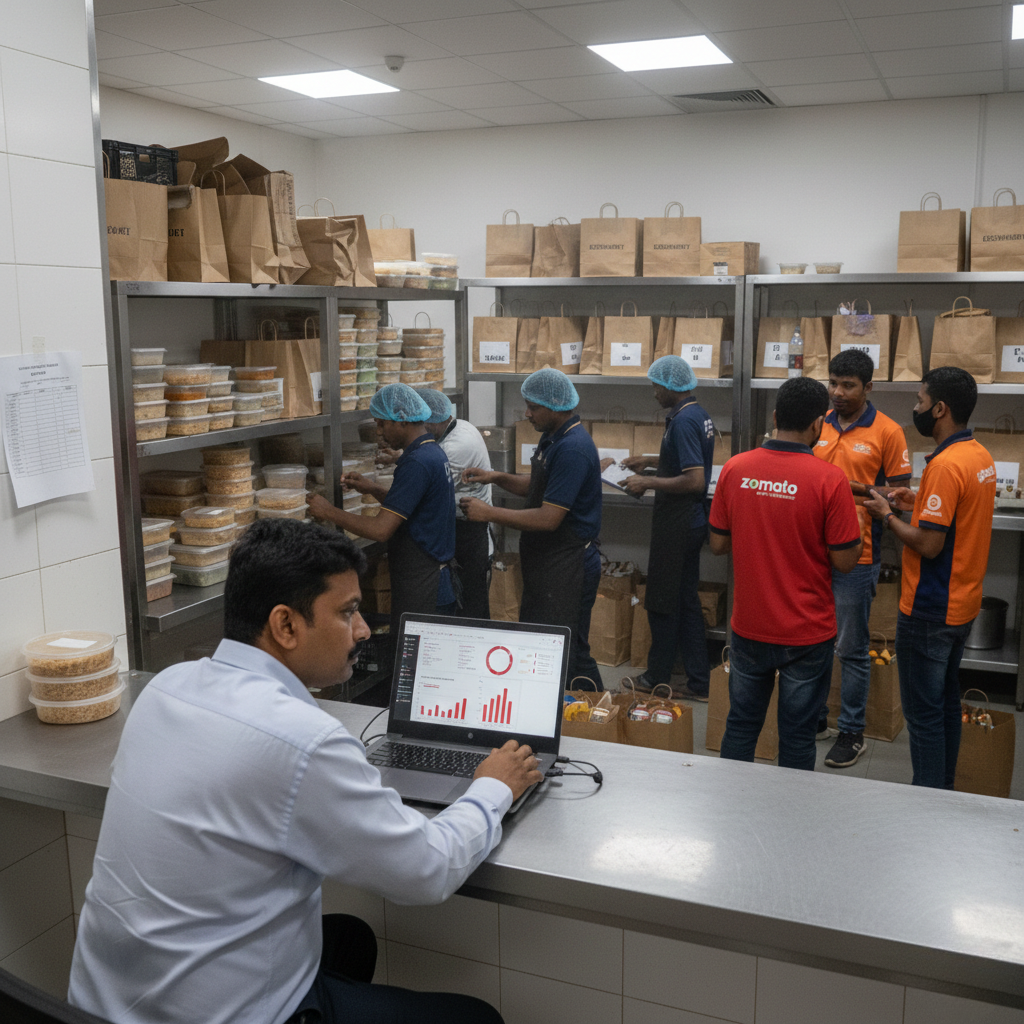
The result is simple: fewer mistakes, fewer refunds, lower wastage, faster dispatch, better ratings, and a more stable payout. That is what profitability actually looks like in delivery kitchens.
Food Cost: SOPs Lock the Biggest Variable That Destroys Margins
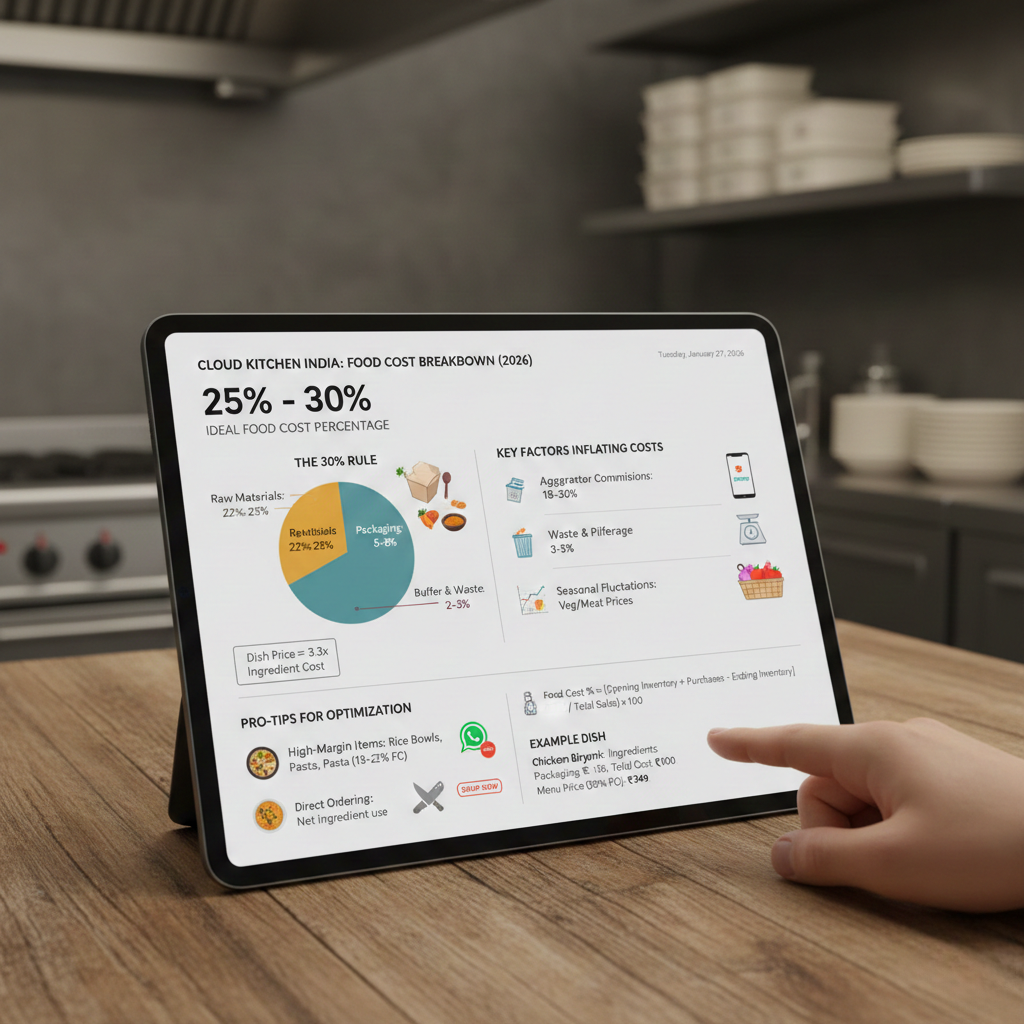
If your kitchen is running but not profitable, the first diagnosis is almost always food cost drift. Not because raw material prices increased, but because portioning became inconsistent. In delivery kitchens, a small over-portion per order becomes a massive monthly leakage when multiplied across hundreds of orders.
SOPs fix food cost in five practical ways:
1) Standardized portion sizes: The SOP defines exact grams/ml for every component gravy, protein, rice/noodles, toppings, garnish. Staff stops “eye-balling” portions.
2) Prep batch rules: The SOP defines how much prep is allowed per time window (example: 2-hour prep cycles instead of full-day over-prep). This reduces spoilage and dead stock.
3) Storage + holding time discipline: The SOP defines where each item is stored and how long it can be held before discard. This prevents “keep it for tomorrow” wastage and customer complaints.
4) Recipe integrity: The SOP protects the recipe from casual changes. Every “small adjustment” adds hidden cost. SOPs stop recipe drift.
5) Audit checkpoints: SOPs include daily checks like: portion ladle size, number of servings per batch, and end-of-day variance review.
If you want a direct link between SOPs, food cost, and complaints, read How SOPs Reduce Food Cost & Complaints.
Staff Productivity: SOPs Convert Presence into Output
One of the most expensive myths in cloud kitchens is: “We have staff, so operations should be fine.” Staff presence does not equal productivity. Productivity comes from role clarity and workflow design.
Without SOPs, staff multitasks randomly. Prep gets abandoned during peak. Packing becomes chaotic. Orders become late. Quality drops. Refunds increase. Founders step in. Everyone becomes “busy,” but output per person stays low.
SOPs improve productivity by defining roles and handoffs:
Prep SOP: who cuts, who marinates, who batches, who labels, who stores.
Cook SOP: cooking sequence, pan allocation, batch timing, reheat rules.
Pack SOP: packing order, sealing standard, add-ons checklist, labeling.
Dispatch SOP: verification, rider handover timing, escalation rules.
This reduces idle time and confusion. When roles are clean, peak-hour stress reduces and output per staff member increases directly improving profit per order.
For a deeper breakdown of role-based systems, use Role-Based Kitchen Operations Explained.
Aggregator Penalties: SOPs Protect Your Payout, Not Just Your Kitchen
Founders often calculate profitability using only commissions. But aggregator payouts are impacted by operational performance: cancellations, customer complaints, wrong items, poor packaging, delays, and refund patterns. These don’t always show clearly in “daily sales,” but they show brutally in weekly payout reality.
SOPs reduce penalty exposure by eliminating repeat mistakes: order verification checklists, packing standards, sealing standards, delivery-safe packaging rules, and time-bound dispatch systems.
The moment your kitchen becomes predictable, the platform experience becomes predictable too: fewer escalations, fewer refunds, fewer negative ratings, and more stable visibility.
If you want to understand the margin impact of platforms, read Aggregator Commission Impact in India.
External reference links (for policy context): Swiggy Refund & Cancellation Policy and Zomato Online Ordering Terms.
Dispatch SOPs: The Most Underrated Profit Lever in Cloud Kitchens
Dispatch is where profit dies silently. A kitchen can cook great food and still lose money if dispatch is inconsistent. One wrong order triggers: refund, complaint, rating drop, and future conversion loss.
SOP-led dispatch improves profitability through four mechanisms:
1) Time control: dispatch SOPs define a maximum acceptable time at each stage: ticket acceptance, cooking start, packing, handover. This reduces late deliveries and cancellation risk.
2) Accuracy control: SOPs mandate a two-point verification: kitchen packer check + dispatch checker check. This dramatically reduces wrong/missing items.
3) Packaging control: SOPs define sealing, labeling, and spill-proof handling. Better packaging reduces spillage complaints and replacements.
4) Escalation control: SOPs define what to do when a rider is delayed, an item is unavailable, or a substitution is needed. Without escalation SOPs, staff panics and founders intervene.
For a dispatch-ready workflow, implement Cloud Kitchen Dispatch SOP.
Scaling Without SOPs Multiplies Losses, Not Profit
Many founders assume: “Once we do more orders, we’ll become profitable.” That is only true if the kitchen is already controlled. If your kitchen leaks money at 50 orders/day, it will leak faster at 150 orders/day.
Scaling amplifies: portion drift, staff confusion, dispatch chaos, customer complaints, and cash burn. That’s why many kitchens grow revenue and still die.
SOPs allow safe scaling because they create replicability. When SOPs exist, you can: train faster, reduce dependency on “star cooks,” monitor compliance, and replicate output across shifts and locations.
If growth is currently hurting your kitchen, read When Growth Is Hurting Your Cloud Kitchen Operations.
How to Build SOPs That Actually Improve Profitability
The biggest SOP mistake founders make is writing generic SOPs. A profitable SOP is not a paragraph. It is a checklist with measurable standards. If it can’t be verified, it won’t be followed.
Here is a practical implementation sequence that works in running kitchens:
Step 1: Identify leakage points. Track 7 days of refunds, re-cooks, delays, and wastage. Your SOP priorities should match the biggest leaks.
Step 2: Start with the “profit SOP stack.” Build SOPs in this order: Recipe SOPs → Prep SOPs → Packing SOPs → Dispatch SOPs. These deliver the highest ROI quickly.
Step 3: Make SOPs visual and station-based. Each station should have its SOP visible: prep table, cooking station, packing station, dispatch desk. If SOPs live only in Google Drive, they don’t exist during peak hours.
Step 4: Train with “do + repeat,” not “read + sign.” Staff learns SOPs by executing them repeatedly with supervision. SOP adoption comes from muscle memory, not theory.
Step 5: Add daily compliance checks. Simple checks create discipline: portion ladle check, label check, sealing check, dispatch time check. What gets checked gets followed.
Step 6: SOPs must evolve. Any menu change, packaging change, or staffing change should trigger SOP updates. SOPs are living systems, not one-time documents.
External hygiene + safety standards (useful while building SOPs): FSSAI Hygiene Requirements (Schedule 4 reference), ISO 22000 overview, and FAO/Codex General Principles of Food Hygiene.
Final Takeaway: SOPs Don’t Create Profit. They Stop Profit From Leaking
Cloud kitchen profitability is not a motivation problem. It is a system problem. Your staff may work hard, your sales may look stable, but without SOPs, margins leak in small ways every day.
SOPs improve profitability because they reduce variation: portion sizes become consistent, prep becomes disciplined, packing becomes accurate, dispatch becomes predictable, refunds reduce, and payouts stabilize.
A kitchen that runs without SOPs is founder-dependent. A kitchen that runs with SOPs is system-dependent and system-dependent kitchens are the ones that scale profitably.
Operational frameworks from GrowKitchen, and operating partner brands like Fruut and GreenSalad help founders turn “running kitchens” into “controlled kitchens.”
FAQs: How SOPs Improve Cloud Kitchen Profitability
Do SOPs matter if my kitchen is small?
Yes. Small kitchens have tighter margins. SOPs prevent small daily leaks from becoming monthly losses.
Which SOP improves profitability the fastest?
Recipe + portion SOPs and packing/dispatch SOPs. They directly reduce food cost drift, refunds, and penalties.
Will SOPs reduce speed during peak hours?
Initially, training takes effort. But once adopted, SOPs increase speed because roles and steps become predictable.
What if staff doesn’t follow SOPs?
SOPs must be station-based, visual, and verified daily. Compliance comes from checks, not from “instructions.”