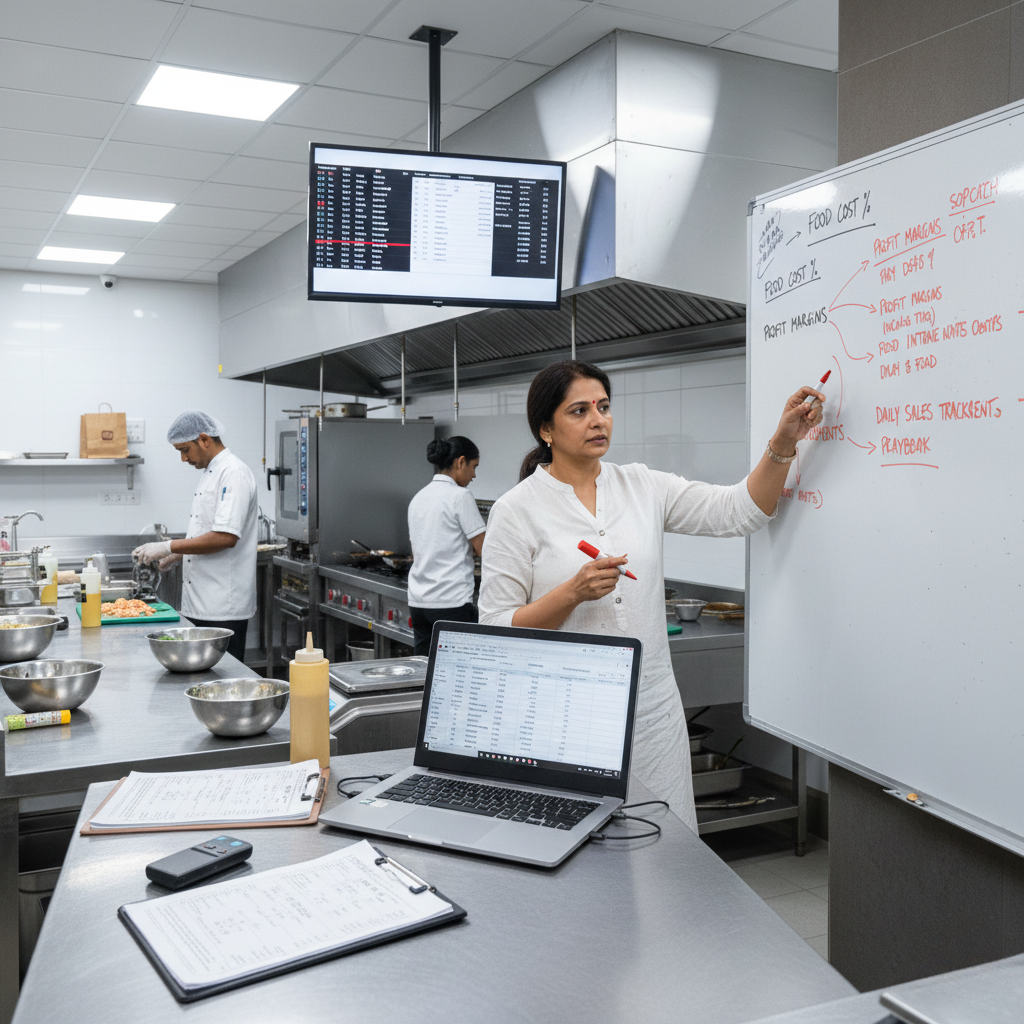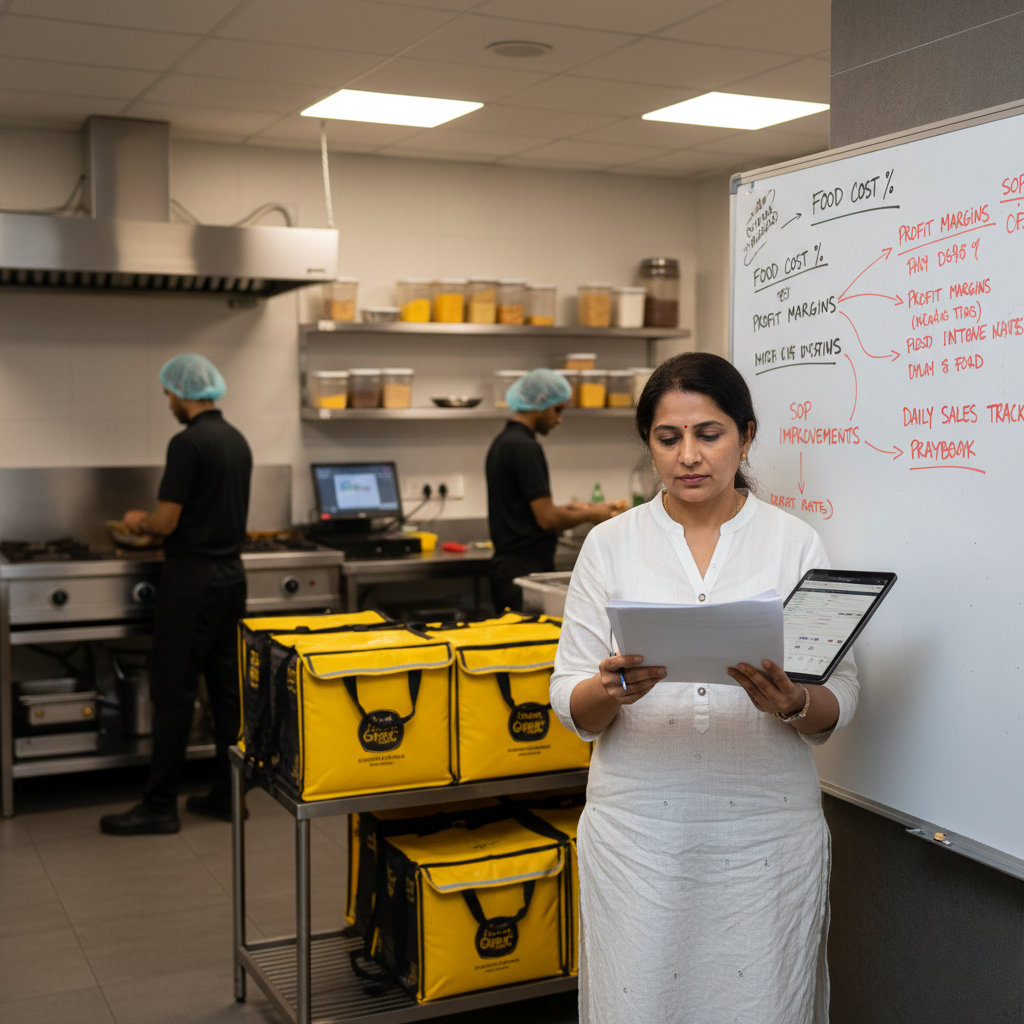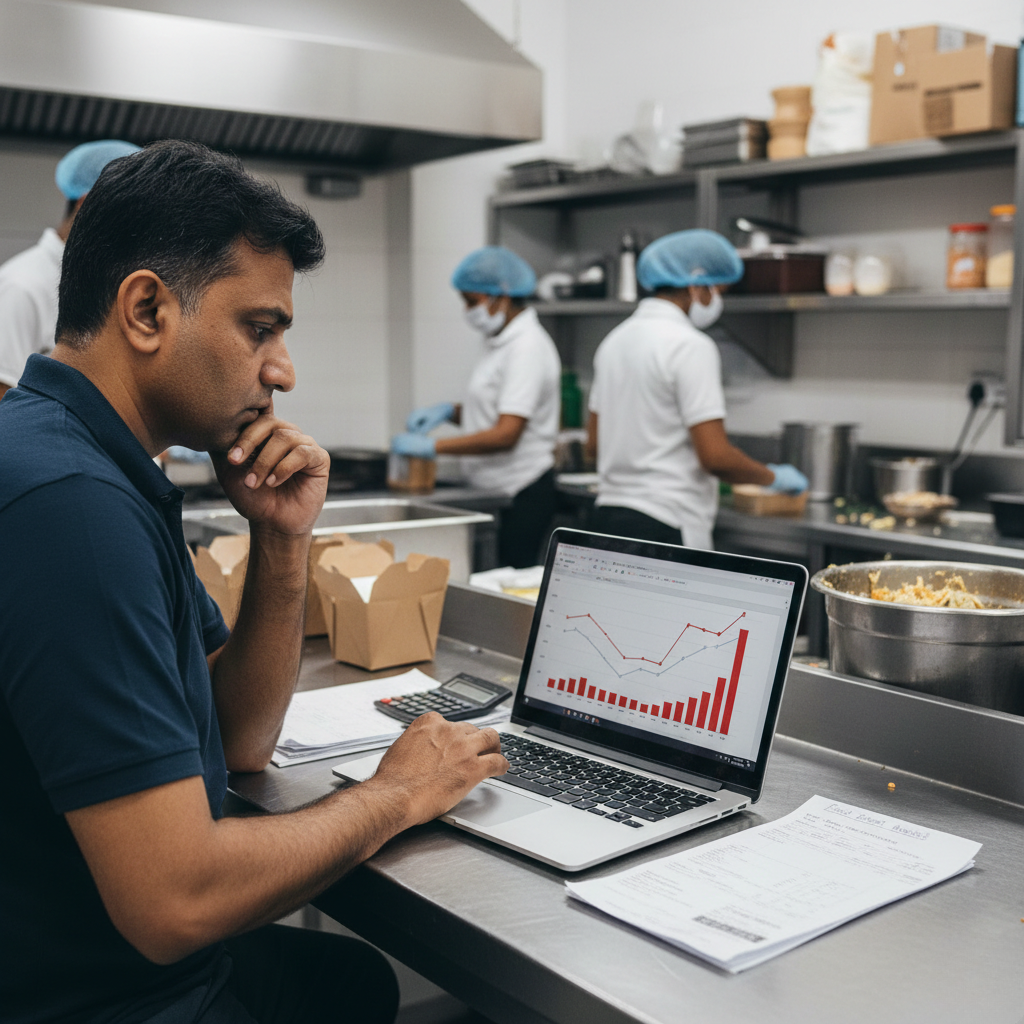
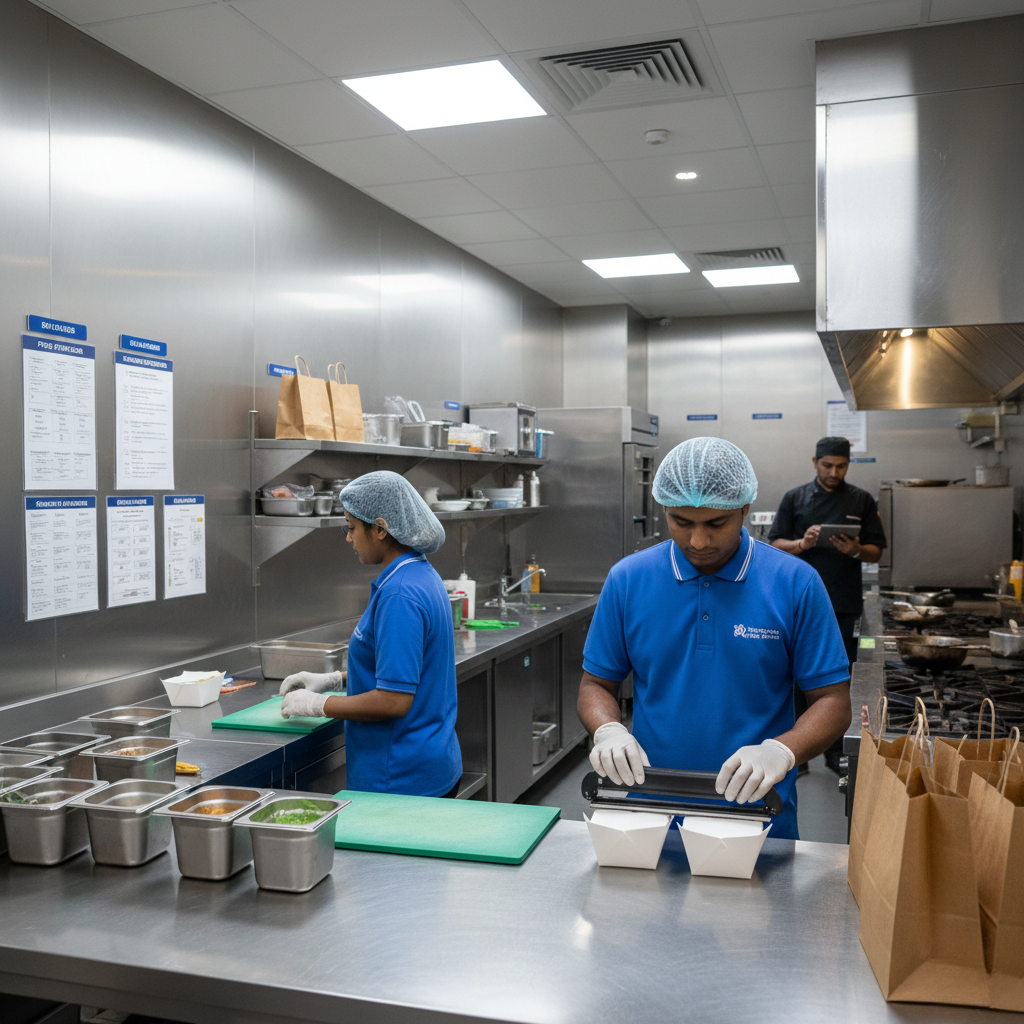
How Operations Systems Reduce Dependency on Founders explains why most cloud kitchens in India remain fragile even after achieving sales. In the early stage, founder involvement feels necessary. Orders are few, teams are small, and decisions are quick. But as volume grows, founder-driven execution becomes the biggest bottleneck. This article explains how structured operations systems gradually replace founder dependency, stabilize performance, and allow cloud kitchens to scale without constant firefighting.
Why Founder Dependency Becomes a Growth Risk in Cloud Kitchens
Most cloud kitchens in India begin as founder-operated businesses. Founders handle menu decisions, staff coordination, inventory calls, platform issues, and even customer complaints. Initially, this hands-on control creates speed. Decisions are fast and accountability is clear. However, as daily orders increase, the same involvement turns into dependency. Operations stall when the founder is unavailable. This pattern explains why many kitchens grow revenue but fail to scale sustainably. The root cause is not lack of effort, but absence of systems.
To understand early-stage mistakes, read Cloud Kitchen Operation Consultant and Why High Staff Turnover Kills Cloud Kitchens.
What Founder Dependency Actually Looks Like on the Ground
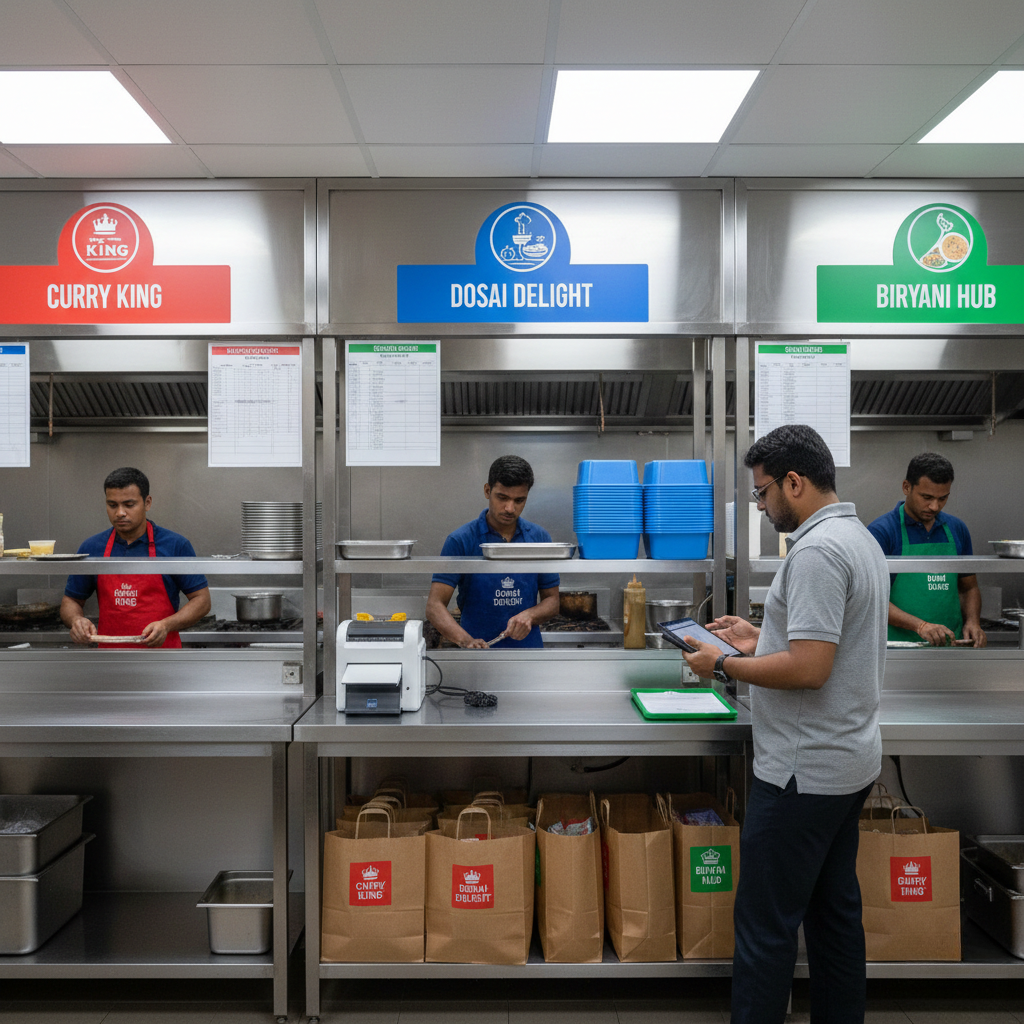
Founder dependency is rarely documented. It shows up in everyday behavior. Staff wait for approval before acting. Escalations pause operations. Small issues turn into phone calls. Decisions depend on presence, not process. The kitchen runs smoothly only when the founder is watching.
The Real Reason Founders Stay Involved Too Long
Founders do not stay involved because they want control. They stay involved because systems are missing. Without documented SOPs, clear role ownership, and predictable workflows, delegation feels risky. When mistakes happen, founders step back in, reinforcing dependency. Over time, this cycle exhausts leadership and limits expansion.
What Operations Systems Actually Mean in Cloud Kitchens
Operations systems are not software alone. They include SOPs, checklists, shift structures, escalation paths, performance tracking, and accountability mechanisms. Systems define how work happens regardless of who is present. When systems exist, people execute. When they do not, founders intervene.
How SOPs Replace Founder Decision-Making
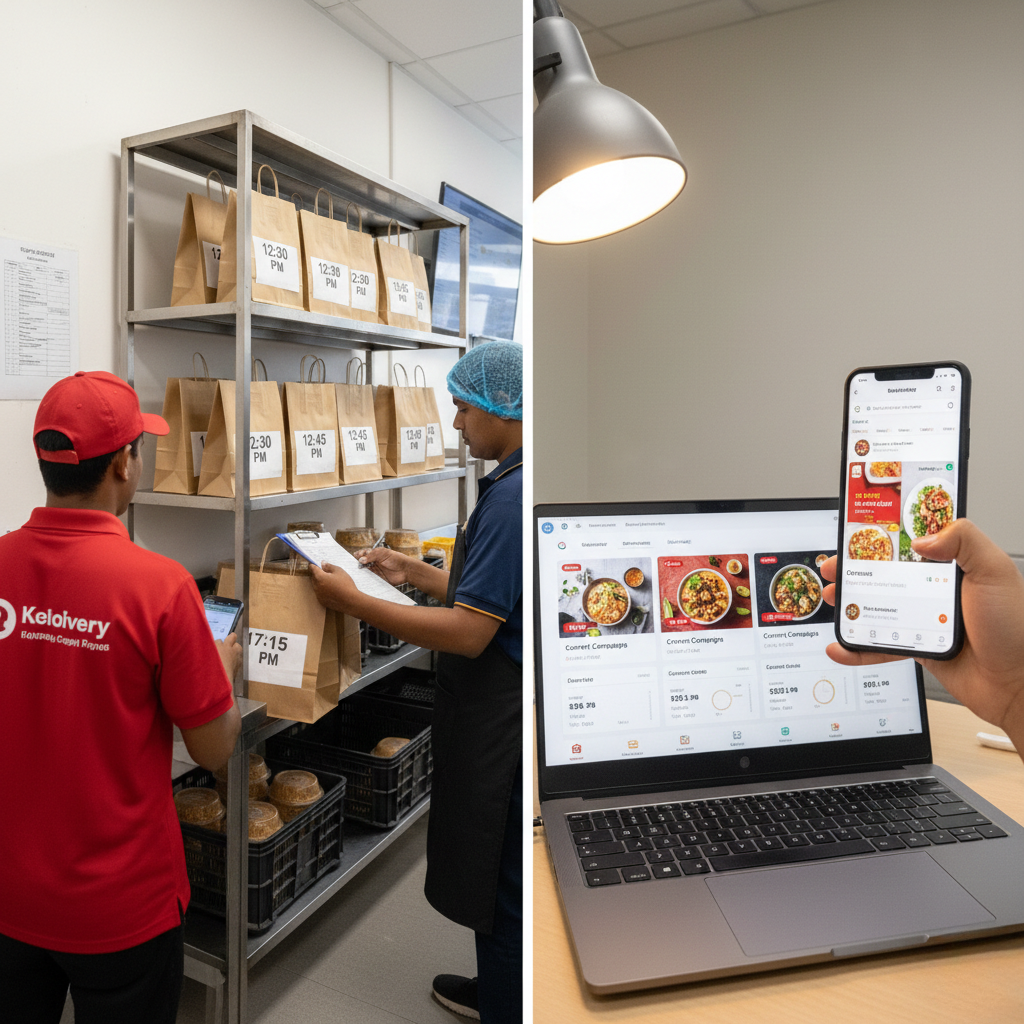
SOPs convert experience into documentation. Instead of asking the founder, staff refer to defined steps. SOPs handle prep routines, cooking standards, packing checks, dispatch flow, and hygiene controls. This removes ambiguity and reduces decision fatigue.
Learn the foundation in Kitchen SOPs Every Cloud Kitchen Must Have.
Role Clarity: The First Step Away from Founder Control
Founder dependency increases when everyone does everything. Role-based operations assign ownership for outcomes, not just tasks. When staff know what they own, fewer decisions travel upward. This structure reduces interruptions and builds operational confidence.
Why Supervisors Protect Founders from Daily Chaos
Supervisors are not replacements for founders. They protect systems, enforce discipline, and handle first-level escalation. Without supervisors, every issue climbs to the top. With them, founders regain strategic focus.
How Discipline Systems Reduce Emotional Dependency
Many founders solve problems emotionally. Systems introduce consistency. Checklists, audits, and reporting remove the need for constant monitoring. Discipline replaces supervision-by-presence.
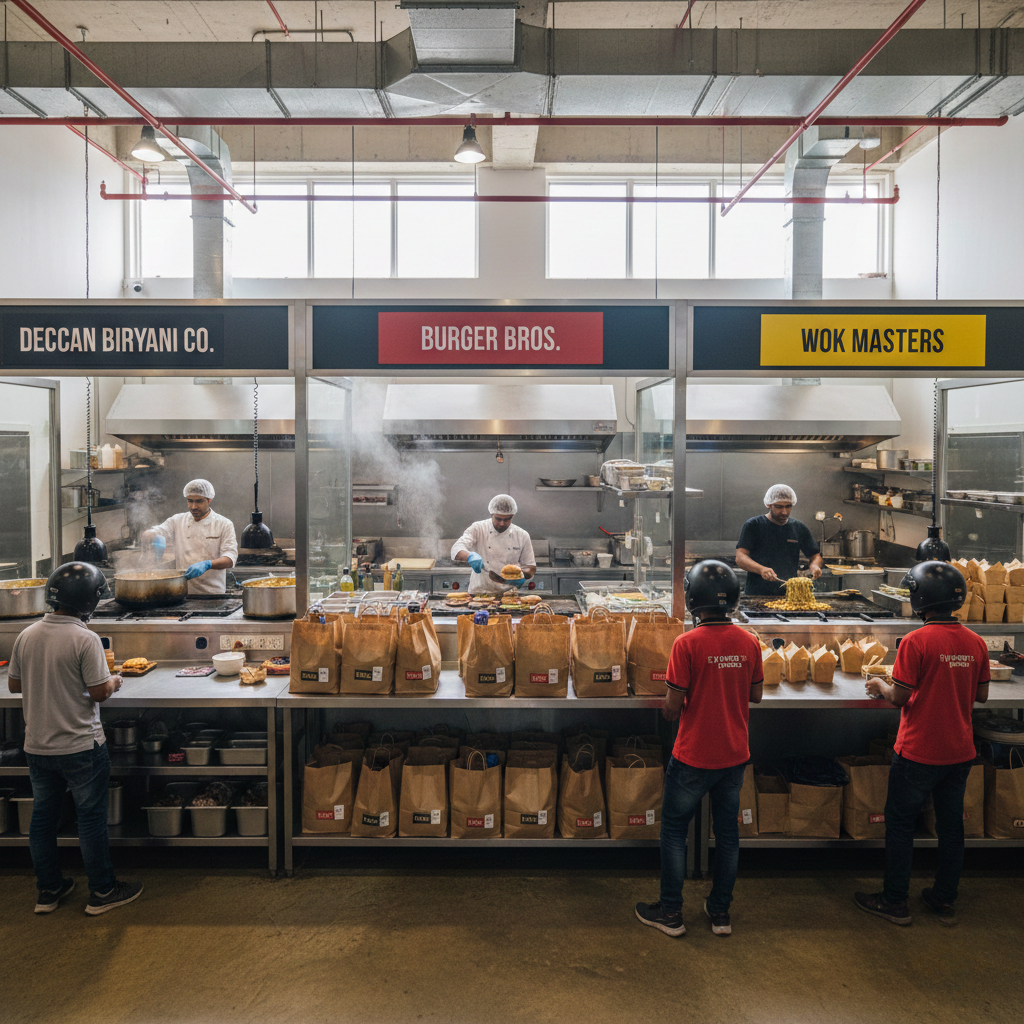
Operations Systems in Multi-Brand Cloud Kitchens
Multi-brand kitchens magnify dependency risks. Without systems, founders become the only point of clarity. Structured SOPs and brand-wise workflows allow teams to operate independently.
Learn framework design in How to Build SOPs for Multi-Brand Cloud Kitchens.
Why Scaling Is Impossible Without Systemized Operations
Scaling is replication. Founder-led execution cannot be replicated. Systems allow new kitchens to mirror performance without direct oversight. This is the difference between growth and expansion.
Related insights in Cloud Kitchen Scaling Strategy.
How Operations Systems Reduce Dependency on Founders: Final Takeaway
Founder involvement builds businesses. Founder dependency limits them. Operations systems convert effort into structure. They protect consistency, enable delegation, and allow founders to think long-term. Cloud kitchens that systemize early grow calmer, faster, and stronger.
Proven frameworks from GrowKitchen help founders exit daily operations without losing control.
FAQs: Operations Systems & Founder Dependency
Do systems reduce founder control?
No. They increase control through predictability.
Can small kitchens build systems?
Small kitchens benefit the most from early systems.
How long does systemization take?
Core systems can be built within weeks.
Are systems expensive to implement?
No. Lack of systems is far more expensive.