

How Do I Know if My Cloud Kitchen Is Profitable is a question many founders ask when sales look strong but financial clarity feels uncertain. Revenue growth and rising order volumes can create the illusion of success. However, understanding How Do I Know if My Cloud Kitchen Is Profitable requires deeper visibility into cost structure and contribution margins.
Profitability becomes measurable only when structured financial and operational metrics are reviewed consistently.
How Do I Know if My Cloud Kitchen Is Profitable Beyond Revenue?
Revenue reflects activity, but profitability reflects efficiency. As explained in Cloud Kitchen Profitability Data-Driven Approach and in why cloud kitchen profits decline despite good sales , strong order volume can coexist with weak contribution margins if costs are not controlled.
To answer How Do I Know if My Cloud Kitchen Is Profitable, operators must evaluate revenue alongside variable and fixed costs.
Contribution Margin: How Do I Know if My Cloud Kitchen Is Profitable Per Order?
Contribution margin is the clearest measure when asking, How Do I Know if My Cloud Kitchen Is Profitable.
Contribution Margin = Selling Price − Variable Costs
If contribution margins are stable or improving, the kitchen generates sufficient surplus to cover fixed costs and build net profit.
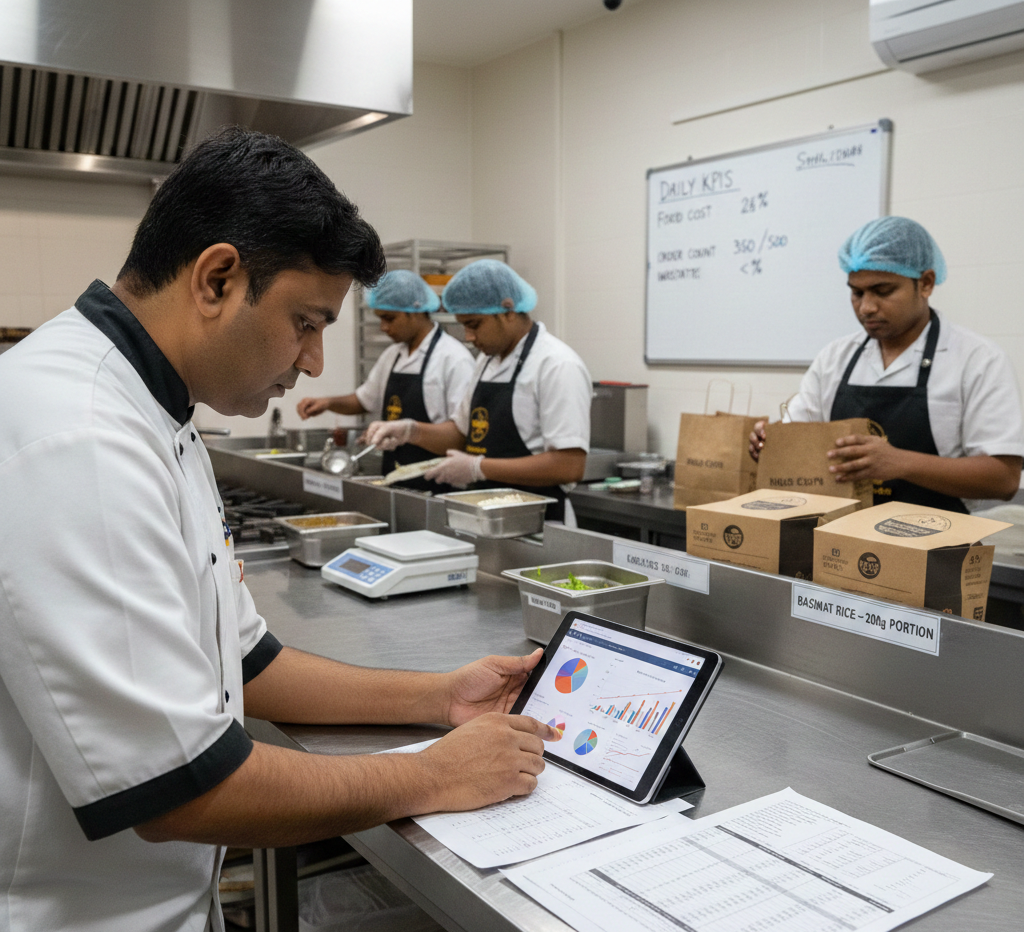
Declining contribution despite steady revenue often signals hidden inefficiencies.
Food Cost Percentage and How Do I Know if My Cloud Kitchen Is Profitable
Food cost percentage directly influences profitability consistency.
Food Cost % = (Total Ingredient Cost / Total Sales) × 100
If food cost gradually increases without supplier price changes, it becomes harder to confidently answer How Do I Know if My Cloud Kitchen Is Profitable.
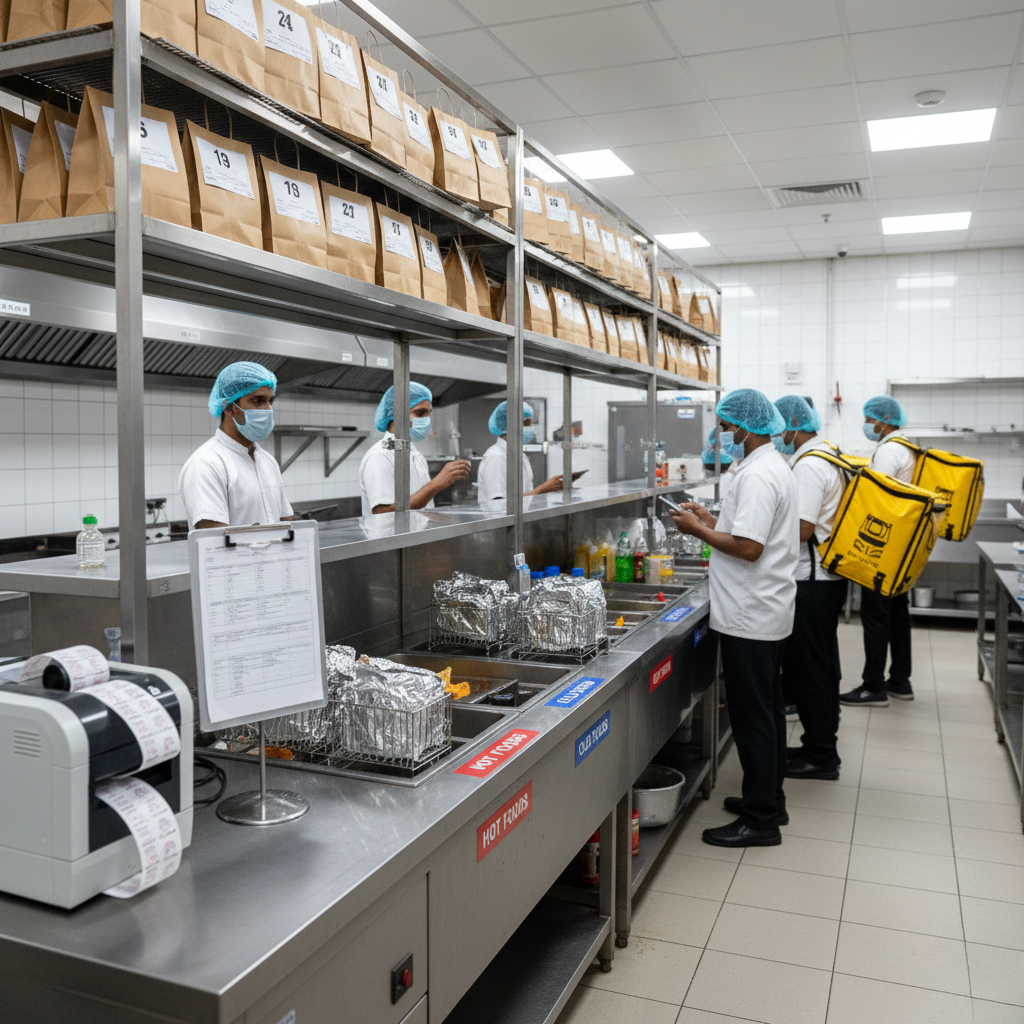
Labor Efficiency and How Do I Know if My Cloud Kitchen Is Profitable
Labor cost must align with revenue performance.
Labor Cost % = (Total Staff Cost / Total Revenue) × 100
If labor expenses rise faster than revenue, profitability weakens even if sales remain strong.
Average Order Value and How Do I Know if My Cloud Kitchen Is Profitable
Average Order Value (AOV) measures revenue generated per transaction.
AOV = Total Revenue / Total Orders
Declining AOV increases operational strain and makes it more difficult to maintain profit margins.
Discount Strategy and How Do I Know if My Cloud Kitchen Is Profitable
Excessive promotional activity can create revenue illusion while reducing actual contribution.
Tracking discount-to-sales ratio and post-discount margins is essential when evaluating How Do I Know if My Cloud Kitchen Is Profitable.
Operational warning signs are discussed further in Cloud Kitchen Profitability Dropping When Orders Increase .
Inventory Turnover and How Do I Know if My Cloud Kitchen Is Profitable
Inventory turnover reflects how efficiently stock converts into revenue.
Slow-moving inventory increases spoilage risk and ties up capital, indirectly weakening margins.
Fixed Costs and How Do I Know if My Cloud Kitchen Is Profitable Overall?
True profitability becomes clear after deducting fixed expenses such as rent, utilities, salaries, and software subscriptions.
If contribution margins consistently cover both variable and fixed costs while generating surplus, the answer to How Do I Know if My Cloud Kitchen Is Profitable becomes clear.
Using a Dashboard to Answer How Do I Know if My Cloud Kitchen Is Profitable
The most reliable way to evaluate How Do I Know if My Cloud Kitchen Is Profitable is through a unified dashboard integrating contribution margin, food cost, labor efficiency, AOV, discount impact, and inventory turnover.
Daily visibility into these metrics ensures early detection of margin drift.
Final Thoughts on How Do I Know if My Cloud Kitchen Is Profitable
How Do I Know if My Cloud Kitchen Is Profitable is ultimately answered through measurable indicators, not intuition.
Stable contribution margins, controlled food cost, aligned labor expenses, disciplined discount usage, efficient inventory turnover, and positive surplus after fixed costs confirm financial health.
Frequently Asked Questions About How Do I Know if My Cloud Kitchen Is Profitable
How Do I Know if My Cloud Kitchen Is Profitable quickly?
Calculate contribution margin and ensure it consistently covers fixed costs. If surplus remains, the kitchen is profitable.
Is high revenue proof that my cloud kitchen is profitable?
No. Revenue without cost discipline can create operational pressure without generating sustainable profit.
How often should I check if my cloud kitchen is profitable?
Operational metrics should be reviewed daily, while net profitability can be evaluated weekly or monthly.
What is the strongest indicator when asking How Do I Know if My Cloud Kitchen Is Profitable?
Contribution margin is typically the most direct indicator of real earning power.
Still Have Questions?
For operational and profitability guidance, read the Grow Kitchen FAQs .
You may also explore:
- Key Profitability Metrics for Cloud Kitchens
- Use Data to Optimize Cloud Kitchen Profitability
- Data-Driven Decisions for Cloud Kitchen Profitability
- Building Profitable Cloud Kitchen Data-Backed Roadmap
- Cloud Kitchen Profitability Dashboard