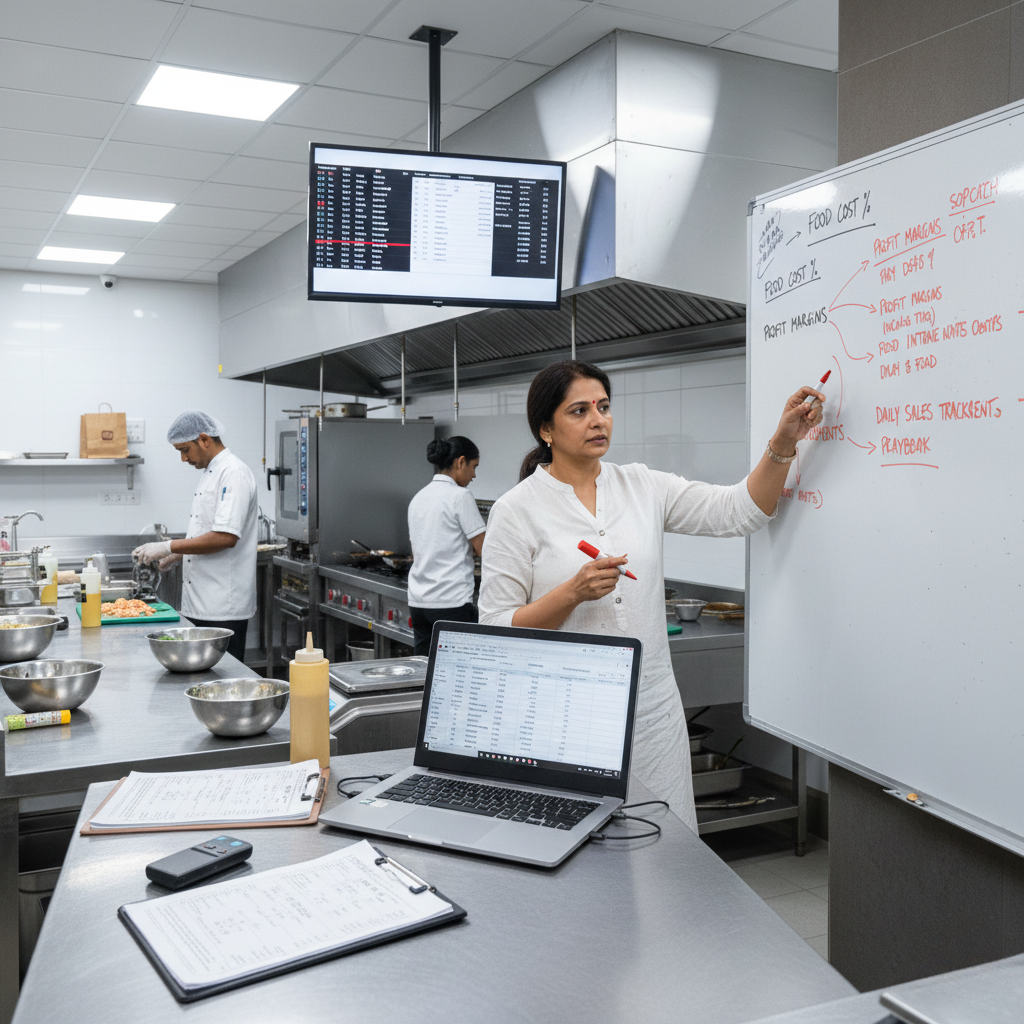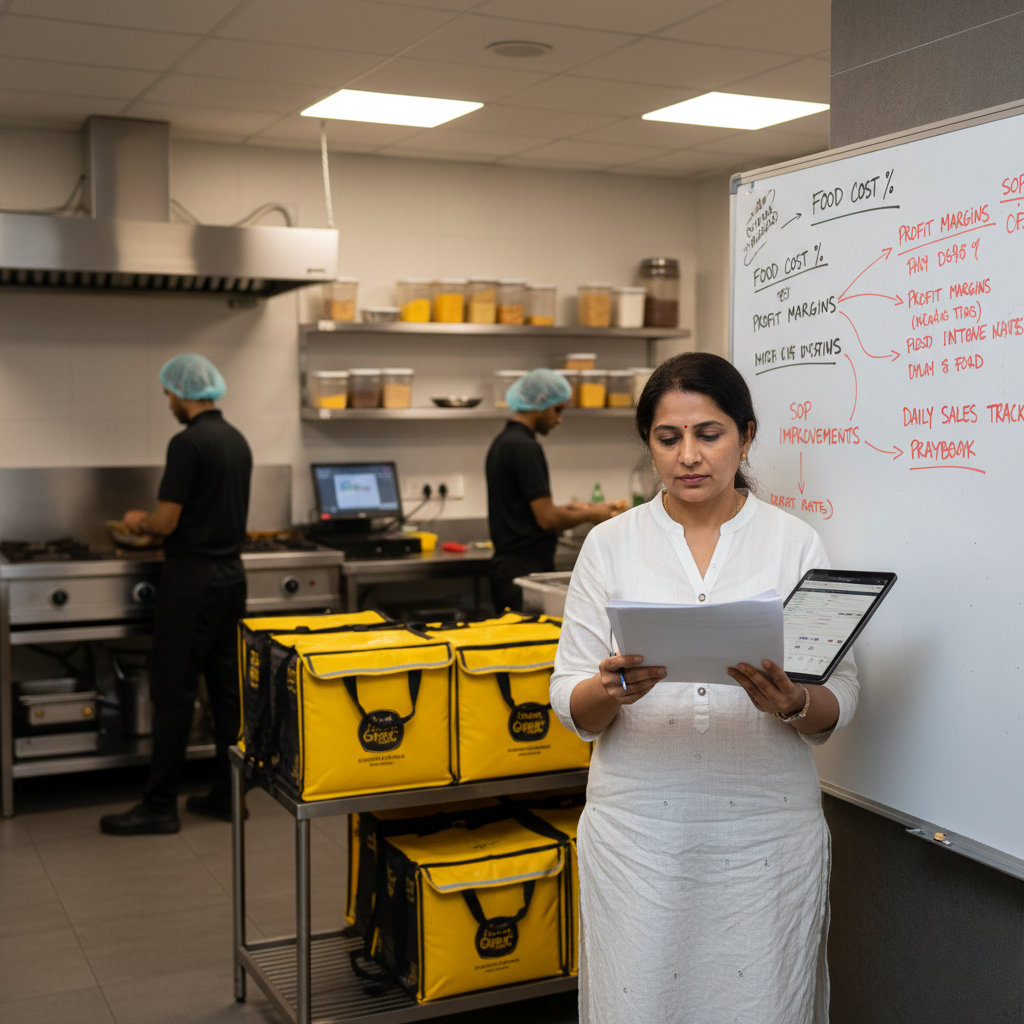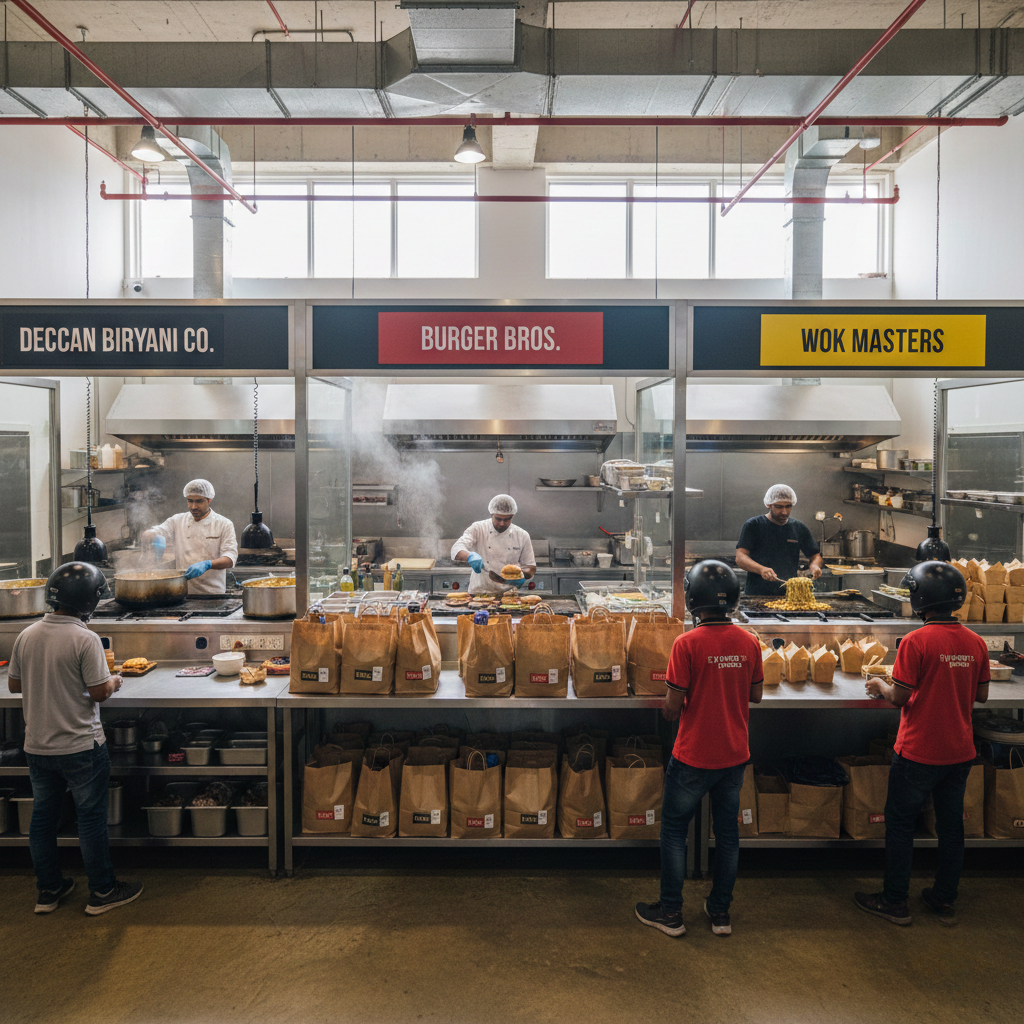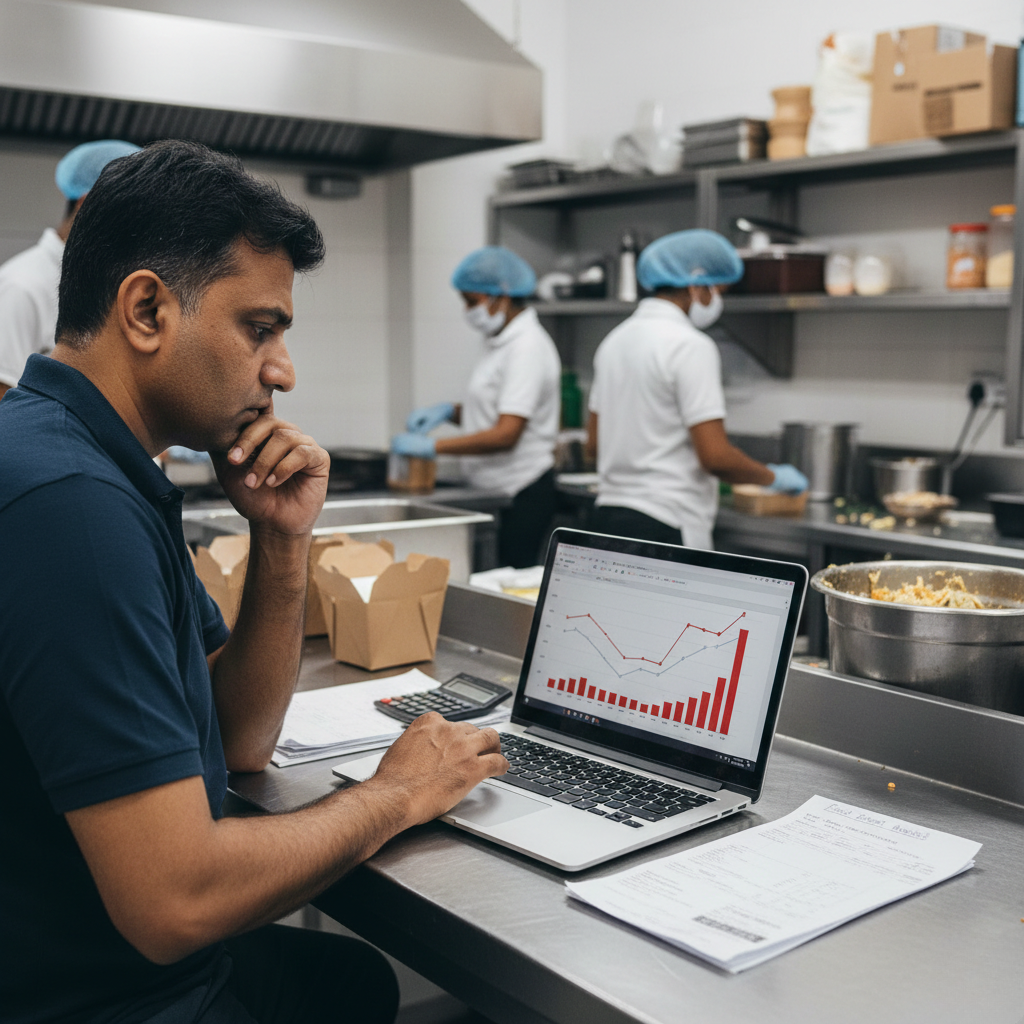
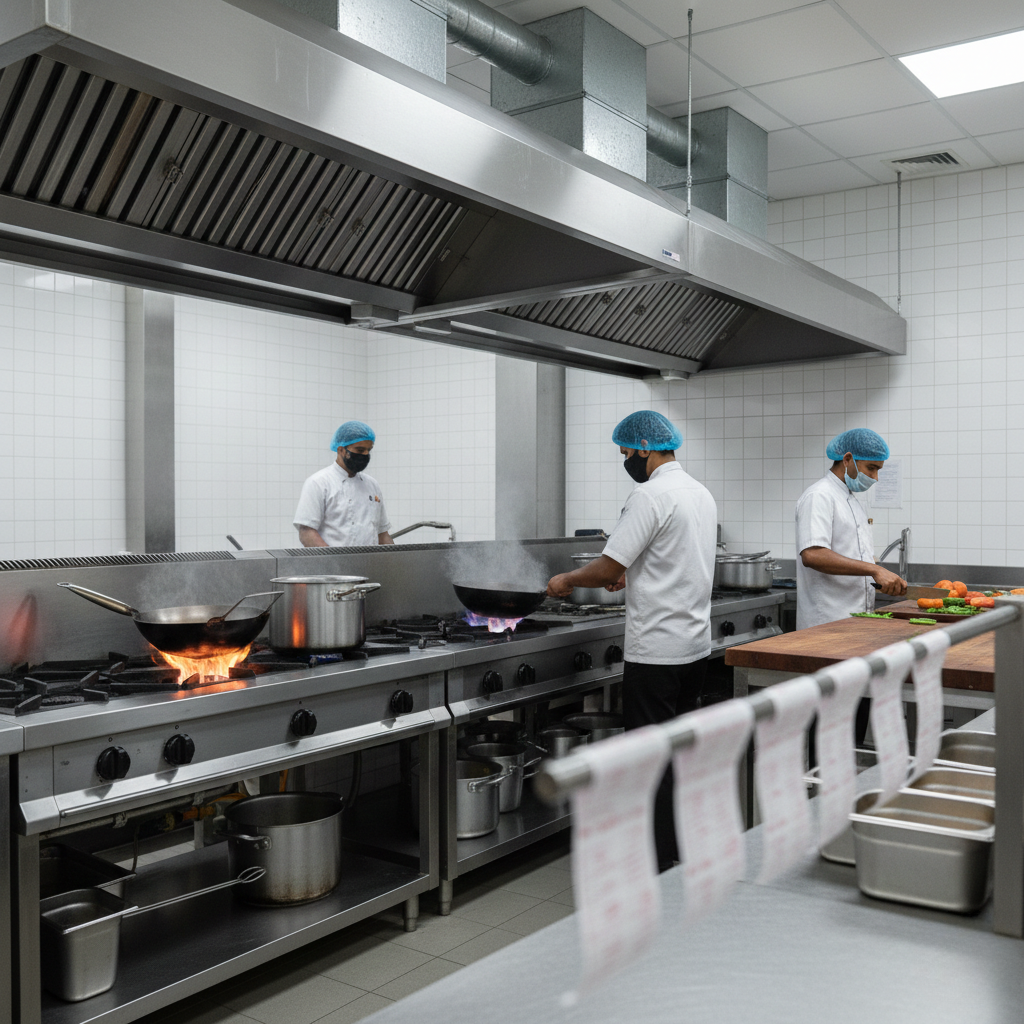
How CKaaS solves the real problems of cloud kitchens is not a “more orders” story or a “rent a kitchen and grow” shortcut. It is a control + repeatability + execution reliability + unit-economics protection story. Most cloud kitchens don’t fail because founders are lazy. They fail because outcomes are not systemized: portions drift, refunds repeat, dispatch breaks, procurement becomes reactive, staff churn resets standards, and founders become the operating system. CKaaS works when it replaces fragile founder-dependent operations with repeatable SOPs, trained roles, prep planning routines, dispatch gates, procurement discipline, audits, and feedback loops. This guide explains what CKaaS actually fixes in Indian cloud kitchens, what it does not fix, and how to evaluate a CKaaS partner using systems, not promises.
How CKaaS solves the real problems of cloud kitchens: The Difference Between Outsourcing Chaos and Installing Control
Most founders discover the “real problems” of cloud kitchens only after the launch. Not on Day 1. Not in the first 50 orders. They discover it when volume starts increasing and the business becomes fragile.
Orders come in. The aggregator dashboard looks active. But cash stays tight. Refunds increase. Dispatch becomes stressful. Staff makes repeated mistakes. Stock-outs trigger cancellations. Ratings fluctuate. And the founder starts doing everything to keep the kitchen alive.
At that stage, founders search for “solutions” and often find two types: marketing fixes (get more orders) and operational fixes (make orders profitable and repeatable). CKaaS belongs to the second category.
If you want the profitability foundation lens first, start with Cloud Kitchen Profitability Consultant in India and map recurring leak patterns using Common Operational Mistakes in Cloud Kitchens.
What “Real Problems” of Cloud Kitchens Actually Are (Not Just Marketing or Location)
Most founders misdiagnose cloud kitchen problems because they are visible only on the surface. Low orders feel like the problem. High competition feels like the problem. Discounts feel like the solution.
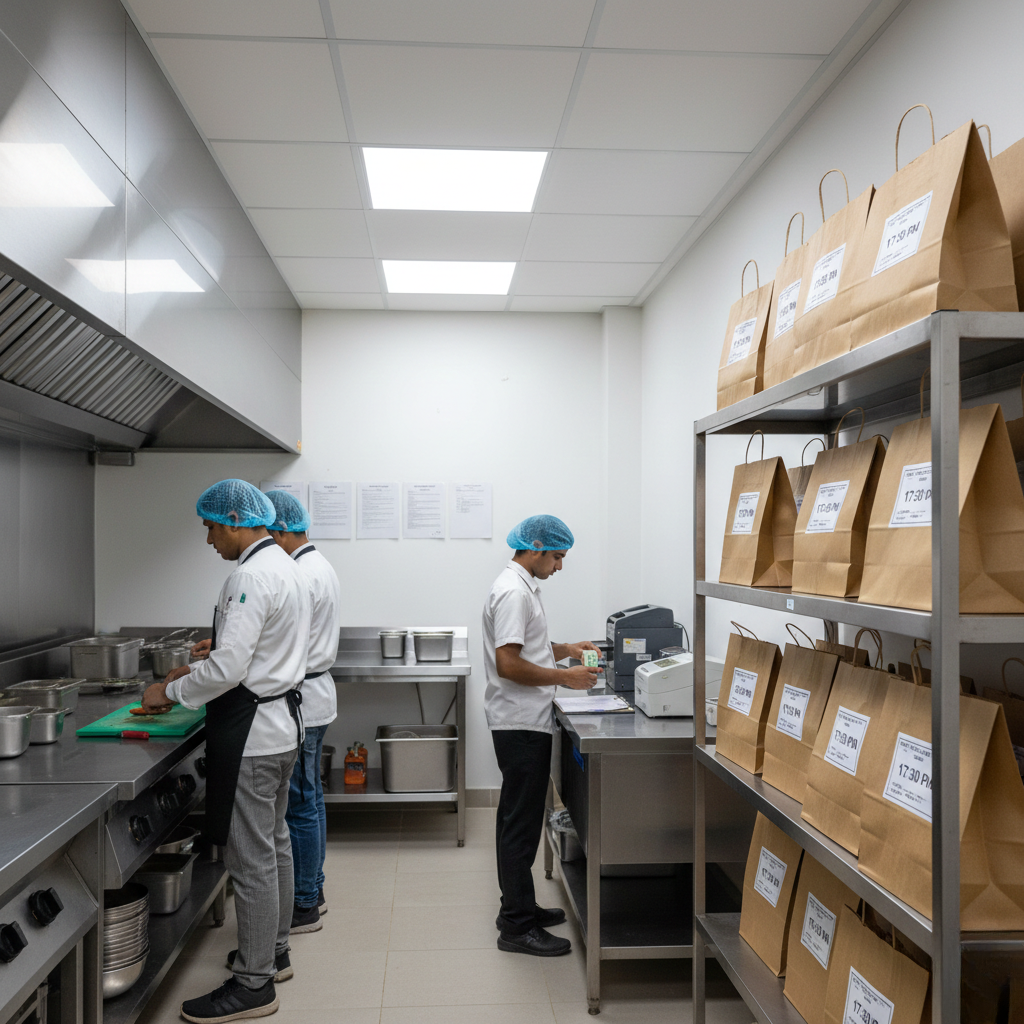
But the real problems are structural and repeat every day: inconsistent execution, uncontrolled costs, unpredictable dispatch, high refunds, staff churn, weak accountability, and lack of systems that make outcomes repeatable.
When a cloud kitchen is founder-driven, it can survive for a while. The founder corrects mistakes, chases vendors, checks packing, and handles escalations. But founder-driven kitchens don’t scale. They burn out. And they bleed cash quietly.
CKaaS is valuable only when it solves the structural problems: it replaces informal control with documented SOPs, replaces founder supervision with role-based gates, and replaces reactive operations with routines.
The Unit Economics Lens: CKaaS Solves Problems Only If It Protects Contribution Margin
Cloud kitchen profit is not decided by how busy your kitchen looks. It is decided per order. If a kitchen is not profitable per order, scaling will multiply loss.
A practical order-level truth still applies:
Order Value minus Aggregator commission & charges minus CKaaS service fee / revenue share minus Packaging cost minus Food cost (COGS) minus Discount burn minus Refund/penalty leakage equals Contribution Margin.
The “real problems” show up as leakage inside this equation: food cost drifting, discounts increasing, refunds repeating, and penalties growing.
CKaaS solves these problems when it installs: portion control tools, standardized recipes, procurement discipline, packing checklists, dispatch gates, and weekly audits that reduce repeat errors.
If you want platform cost clarity, read Aggregator Commission Impact in India and map refund leakage via Refunds and Cancellations Impact on Cloud Kitchen Profitability.
The 14 Real Problems of Cloud Kitchens (And How CKaaS Solves Each One)
The most important way to understand CKaaS is this: CKaaS is not a kitchen rental model. It is an operating system model. It solves the recurring failures that destroy margin and reliability. Below are the real problems that kill cloud kitchens and the system-layer fixes that CKaaS can provide.
1) Portion drift that silently increases food cost. Cloud kitchens lose money when portion sizes vary by staff, shift, or mood. CKaaS solves this by standardizing portion tools, fill lines, ladle sizes, and recipe cards so output is repeatable.
2) Recipe inconsistency that breaks ratings. The same SKU tastes different across days because “taste is in the cook’s head.” CKaaS solves this through standardized SOPs, batch bases, holding-time rules, and taste check routines.
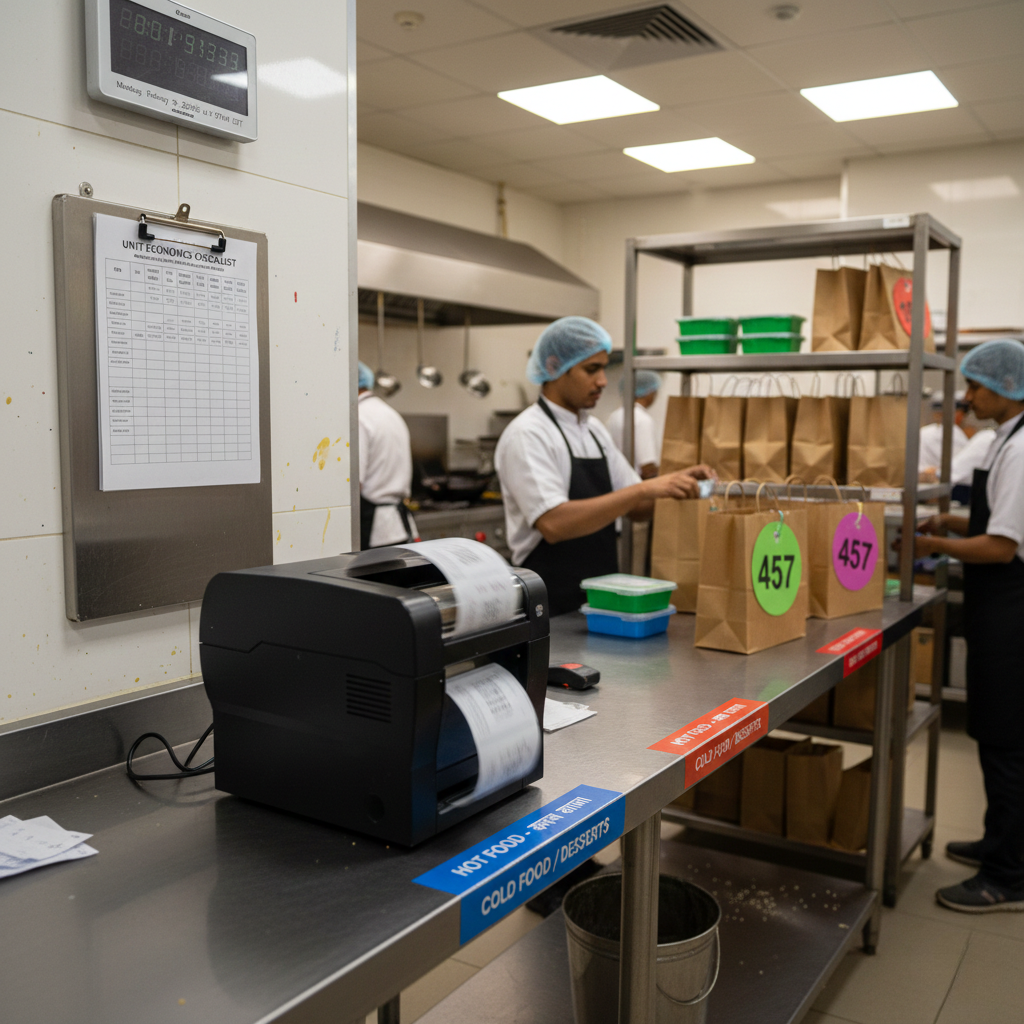
3) Packing mistakes that create refunds and customer distrust. Missing items, wrong items, wrong add-ons, and poor presentation create repeat refunds. CKaaS solves this with packing checklists, add-on verification, sealing standards, and labeling protocols.
4) Dispatch delays that reduce platform distribution. Platforms treat late dispatch as a reliability risk. CKaaS solves this by designing station workflow and dispatch gates. Implement the discipline via Cloud Kitchen Dispatch SOP.
5) Stock-outs that trigger cancellations and ranking decline. Most kitchens do not run par levels or prep planning. CKaaS solves this with prep schedules, par-level buffers, and batch-yield planning so availability is stable at peak.
6) Procurement chaos that creates cost drift and quality variation. Reactive buying increases COGS and changes taste. CKaaS solves this through RM specs, approved vendor lists, reorder routines, and purchase discipline.
7) Discount dependence that hides weak economics. Discounts generate orders but destroy contribution margin. CKaaS solves this by engineering pricing, controlling leakages, and stabilizing operations so discounts are optional, not required. Map discount logic using Marketing Spend vs ROI in Cloud Kitchens.
8) High refunds and cancellations that multiply losses. Refunds are not “small leaks.” They distort unit economics and reduce distribution. CKaaS solves this by reducing the root causes: packing errors, dispatch delays, and availability failures. Use Refunds and Cancellations Impact on Cloud Kitchen Profitability.
9) Staff churn that resets standards every month. Founder-driven kitchens collapse when trained people leave. CKaaS solves this with training systems, checklists, shadow shifts, role sign-offs, and onboarding routines.
10) Weak role ownership that creates “everyone does everything” confusion. Role confusion creates errors and delays. CKaaS solves this through role-based station responsibilities and gates. Learn the model via Role-Based Kitchen Operations Explained.
11) Founders becoming the operating system. If the founder is the only person who knows what “good” looks like, outcomes are fragile. CKaaS solves this by building documentation, SOP compliance routines, and measurable standards that do not depend on the founder.
12) No feedback loop, so mistakes repeat forever. Complaints are data. Refund reasons are data. Late dispatch counts are data. CKaaS solves this by installing weekly reviews, root-cause mapping, and SOP updates. This discipline is explained in How Process Discipline Improves EBITDA.
13) Expansion failure because systems don’t transfer. Kitchens often scale by copying menu and branding but not SOPs and roles. CKaaS solves this by making operations transferable across locations. If you faced scale pain, map it using When Growth Is Hurting Your Cloud Kitchen Operations.
14) Hygiene and compliance inconsistency that damages trust. Delivery customers judge packaging hygiene and sealing as trust signals. CKaaS solves this through cleaning routines, storage standards, sealing protocols, and audit checklists.
For a broader leak map, use Common Operational Mistakes in Cloud Kitchens and for unit economics clarity, start with Cloud Kitchen Profitability Consultant in India.
Swiggy/Zomato Reality: Platforms Reward Reliability, Not Effort
Aggregators do not care how hard you work. They care about risk signals: late dispatch, cancellations, refunds, ratings, complaints, and availability.
CKaaS solves real problems only if it improves those signals. If reliability improves, distribution improves. If reliability worsens, the platform suppresses you, and you discount to survive.
External policy context: Swiggy Refund Policy and Zomato Online Ordering Terms.
Where CKaaS Creates the Fastest Visible Improvement: Prep Planning + Packing + Dispatch
Most cloud kitchens fail in the same three operational engines: prep planning (stock-outs, slow throughput), packing (missing items, leakage, wrong labels), and dispatch (late handover, queue chaos, cold food).
CKaaS creates the fastest improvement when it installs gates for these engines: prep schedules with par levels, packing checklist discipline, and dispatch scan routines.
Install dispatch predictability using Cloud Kitchen Dispatch SOP and stabilize errors through Common Operational Mistakes in Cloud Kitchens.
The Real CKaaS Advantage: Role-Based Operations That Hold Standards Without Supervision
The biggest operational difference between fragile kitchens and scalable kitchens is role ownership. Founder-driven kitchens rely on supervision. System-driven kitchens rely on gates.
CKaaS solves the real problems of cloud kitchens when it enforces role-based stability:
Prep role:
owns batch schedules, labeling, and par levels.
Cook role:
owns portion tools, recipe cards, and holding-time rules.
Pack role:
owns packing checklist, add-on verification, sealing, and presentation.
Dispatch role:
owns final scan, rider handover speed, and order accuracy.
Manager role:
owns weekly review and SOP updates.
If you want the full framework, use Role-Based Kitchen Operations Explained.
How to Evaluate a CKaaS Partner: A Simple Checklist That Filters Marketing Claims
Most founders choose CKaaS based on promises: “we have kitchens,” “we have staff,” “we will manage operations.”
That is not how you evaluate a system. You evaluate a system by checking whether it prevents repeat failure. Use the checklist below.
Step 1: Ask for SOP depth, not brand deck. Does the partner have station SOPs for prep, cooking, packing, dispatch, hygiene, and escalation handling? If SOPs are vague, outcomes will be vague.
Step 2: Ask how they control portion drift. Do they use portion tools, fill lines, recipe cards, and batch yields? If they cannot explain controls, they cannot protect food cost.
Step 3: Ask how refunds are reduced. Do they track refund reasons weekly? Do they map root causes? Do they update SOPs? Use Refunds and Cancellations Impact on Cloud Kitchen Profitability as your lens.
Step 4: Ask how dispatch reliability is enforced. Do they have a dispatch scan and checklist gate? If dispatch is informal, your rating and distribution will suffer. Implement logic via Cloud Kitchen Dispatch SOP.
Step 5: Ask how procurement is standardized. RM specs, vendor approvals, reorder routines, and substitutions must be defined. Reactive buying destroys both quality and margin.
Step 6: Ask how performance is reviewed weekly. If there is no weekly review loop, problems repeat forever. Process discipline is explained in How Process Discipline Improves EBITDA.
External process references (useful for standardisation thinking): Standardized Work (Lean lexicon), ISO 22000 overview, and FSSAI Hygiene Requirements.
Final Takeaway: CKaaS Solves Cloud Kitchen Problems Only When It Builds a System That Prevents Repeat Failure
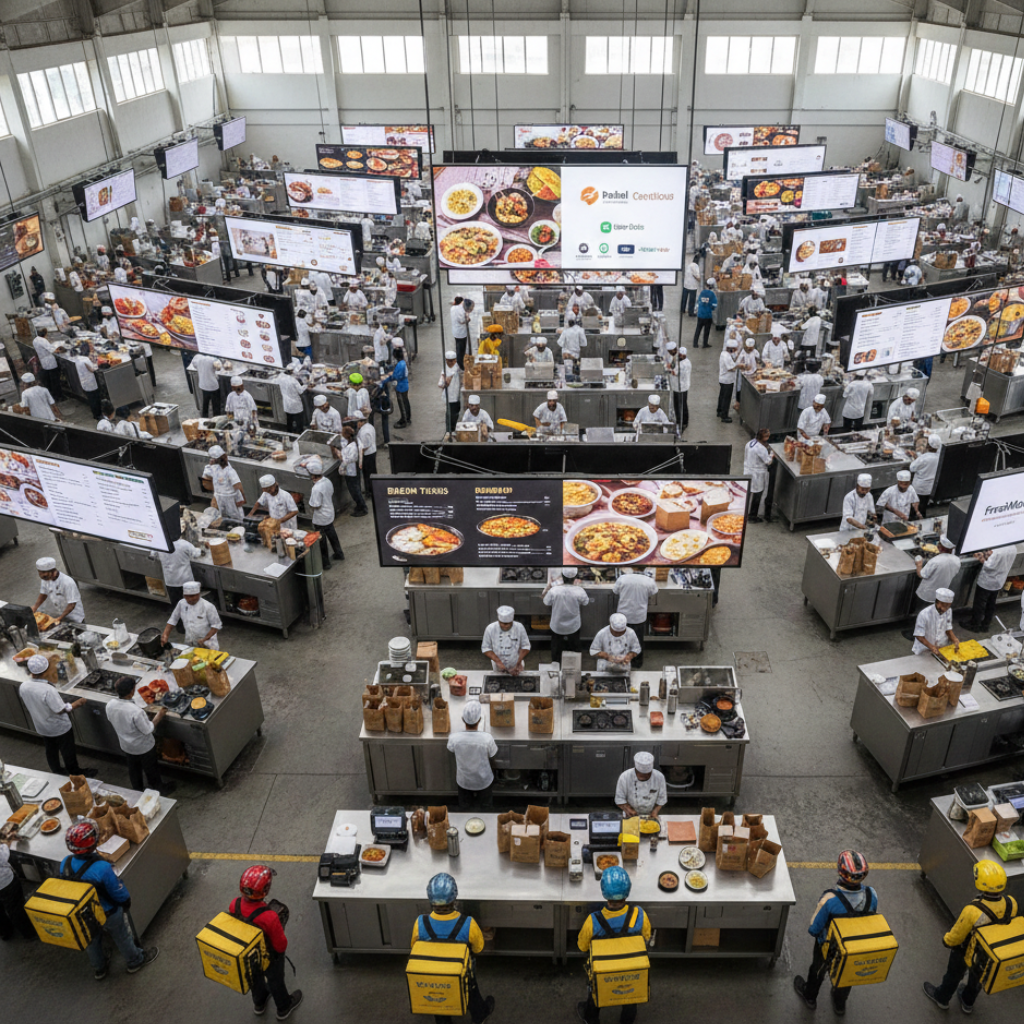
CKaaS is not a magic model. It is a systems model. It solves the real problems of cloud kitchens when it converts chaos into repeatability: portion control, SOP-led execution, packing discipline, dispatch gates, procurement routines, role ownership, and weekly feedback loops.
If you choose CKaaS as a shortcut, it becomes expensive chaos. If you choose CKaaS as an operating system, it becomes leverage.
Frameworks from GrowKitchen, and operating partner brands like Fruut and GreenSalad help founders move from founder-driven kitchens to system-driven kitchen networks.
FAQs: How CKaaS Solves Real Cloud Kitchen Problems
Does CKaaS solve low orders?
Not directly. It solves execution reliability and margin control so growth becomes sustainable and not loss-making.
What is the biggest problem CKaaS solves?
Repeatability. It installs SOPs, roles, gates and weekly reviews so outcomes don’t depend on founder supervision.
Can CKaaS reduce refunds?
Yes, if it improves packing accuracy, dispatch gates, and availability discipline using documented systems.
How do I know a CKaaS partner is real and not just “kitchen rental”?
Ask for SOP depth, portion control tools, dispatch gates, weekly review routines, and refund root-cause process.
- Cloud Kitchen Business in India
- Cloud Kitchen Profitability Consultant in India
- Common Operational Mistakes in Cloud Kitchens
- Cloud Kitchen Dispatch SOP
- Role-Based Kitchen Operations Explained
- Aggregator Commission Impact in India
- Refunds and Cancellations Impact on Cloud Kitchen Profitability
- Marketing Spend vs ROI in Cloud Kitchens
- How Process Discipline Improves EBITDA
- When Growth Is Hurting Your Cloud Kitchen Operations
- Grow Kitchen on Twitter