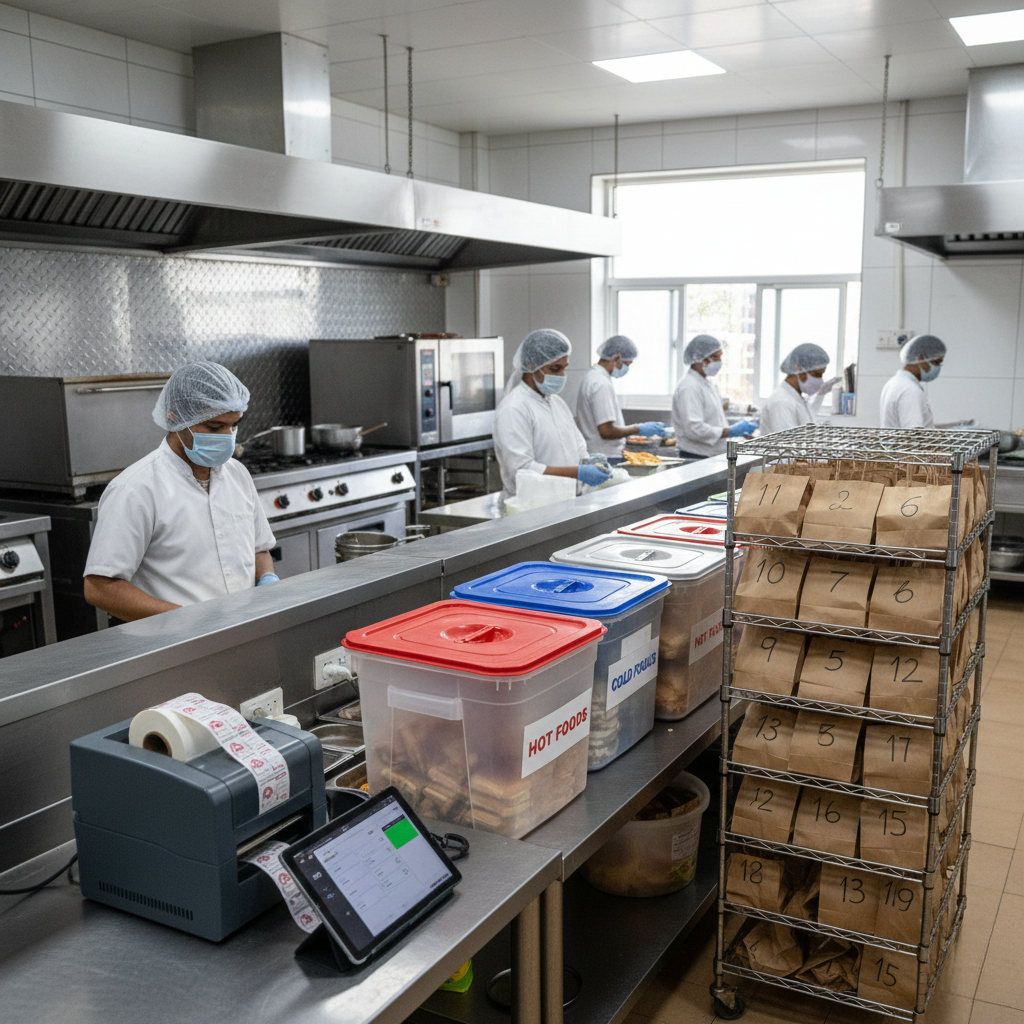
Frequently asked questions about scaling cloud kitchens usually focus on growth: “How do I increase orders?” “How do I open more locations?” “How do I improve ratings?” But real scaling questions are deeper. How do you protect margin when volume increases? How do you prevent refund spikes across multiple kitchens? How do you replicate execution without founder dependency? This detailed FAQ-style guide answers the most important operational, financial, and structural questions founders ask when scaling from 30–50 orders per day to 200+ orders per day across locations.
Frequently Asked Questions About Scaling Cloud Kitchens
Scaling a cloud kitchen is not just about marketing. It is about operational repeatability. As order volume increases, variability increases. More staff, more SKUs, more peak pressure, more customer expectations.
Many founders expand too quickly without stabilizing fundamentals. Before scaling aggressively, review Cloud Kitchen Profitability Consultant in India and audit structural gaps via Common Operational Mistakes in Cloud Kitchens .
The following FAQs address real operational questions asked by multi-location founders across India.
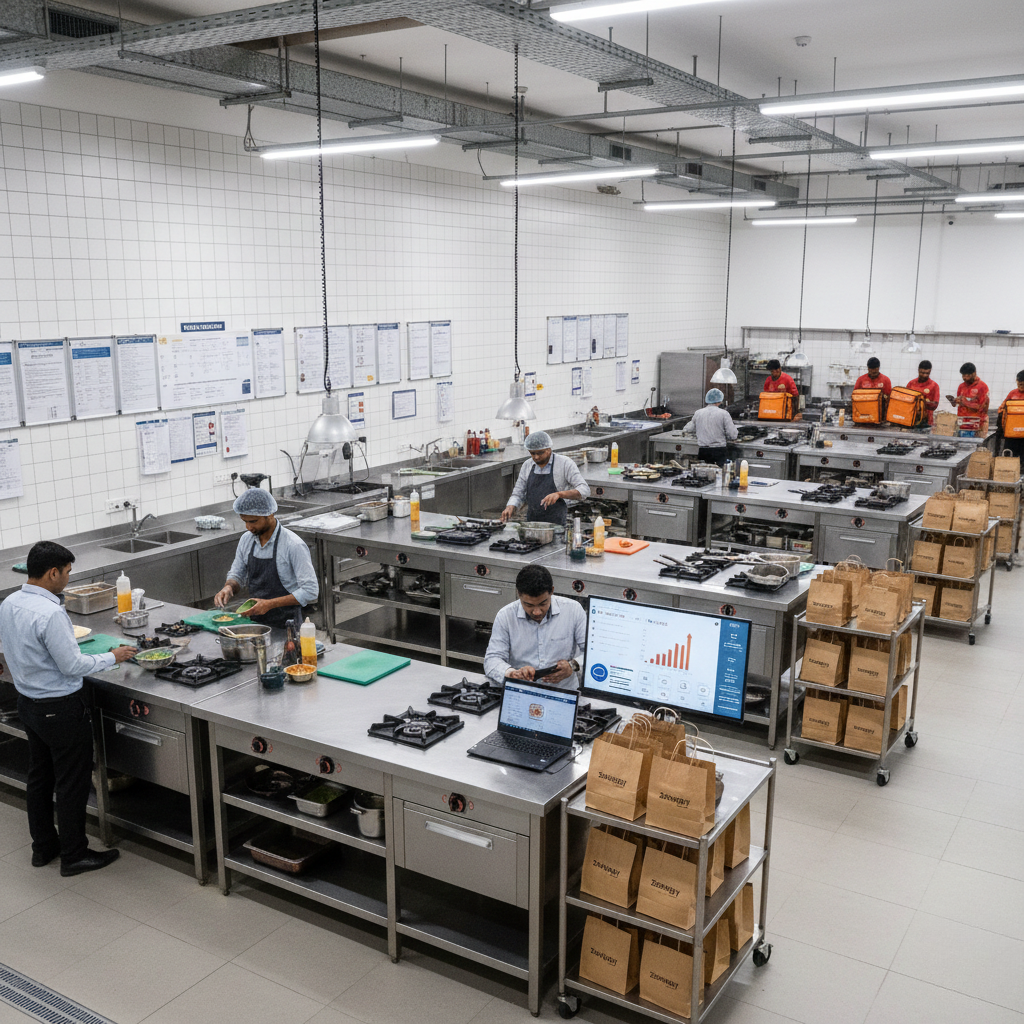
Operational & Financial FAQs About Scaling Cloud Kitchens
1. When is the right time to scale a cloud kitchen?
The right time to scale is when your contribution margin per order is stable, refund rates are controlled, dispatch performance is predictable, and ratings remain above 4.2 consistently. If these metrics fluctuate weekly, scaling will multiply instability.
2. Should I scale orders first or margin first?
Always margin first. Increasing orders without stable unit economics accelerates losses. Detailed commission economics are explained in Aggregator Commission Impact in India .
3. How many orders per day indicate readiness for expansion?
There is no fixed number. Typically, once a kitchen handles 100–150 daily orders without operational strain, it signals structural maturity.
4. What causes refund spikes during scaling?
Common causes include packing errors, SKU confusion, delayed dispatch, and yield variation. Review dispatch frameworks here: Cloud Kitchen Dispatch SOP .
5. How do aggregator platforms impact scaling?
Platforms like Swiggy and Zomato prioritize operational stability. Late dispatch and refund patterns directly impact visibility. Platform refund policies: Swiggy Refund Policy .
6. Should I expand menu variety while scaling?
Expanding menu variety increases operational complexity. Instead, engineer higher AOV through smart combos and add-ons. If struggling with SKU complexity, read How to Fix a Loss-Making Cloud Kitchen .
7. What is the hub-and-spoke model in cloud kitchens?
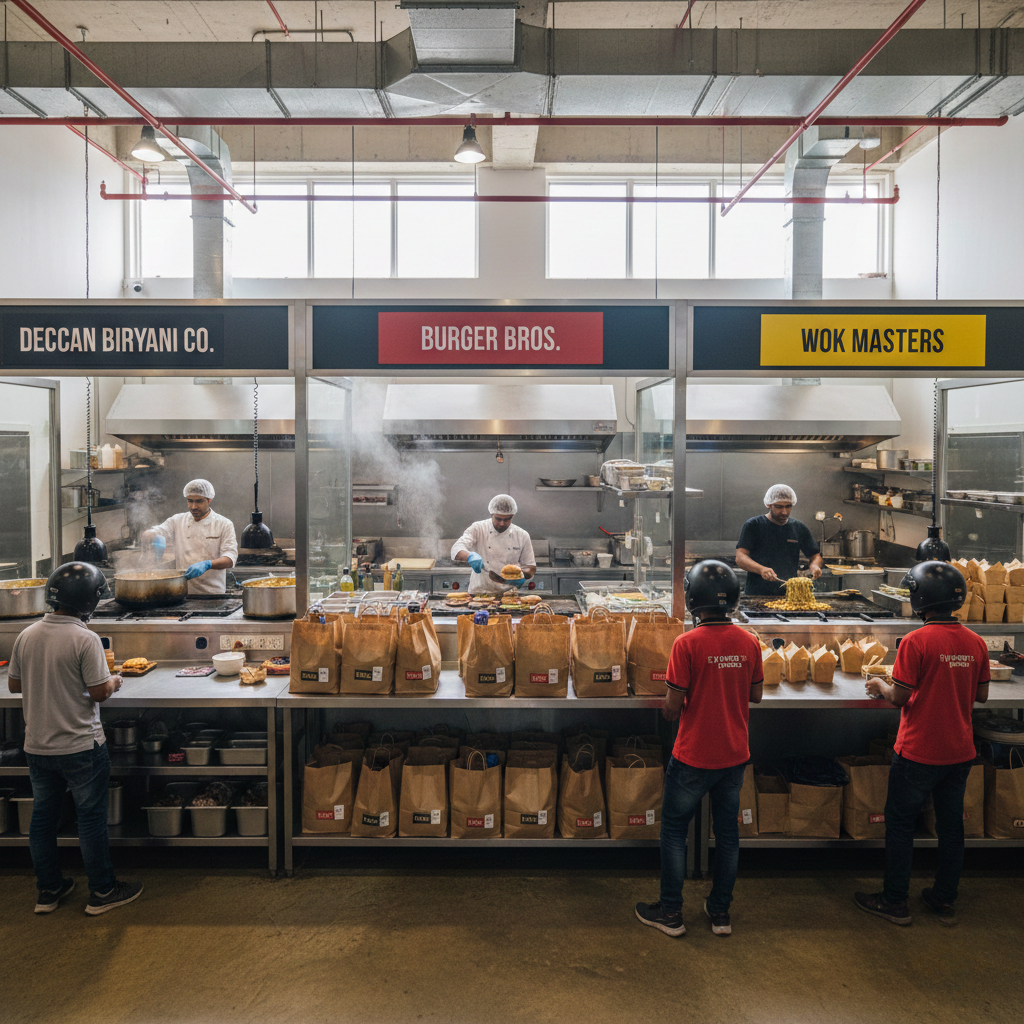
Hub-and-spoke means centralizing procurement and prep, while satellite kitchens focus on final assembly and dispatch. Structural explanation: Cloud Kitchen Expansion Strategy in India .
8. How do I control food cost drift at scale?
Through yield discipline. Daily portion checks, weekly variance audits, and SKU-level contribution tracking prevent silent margin erosion.
9. How often should I review operational data?
Dispatch and refunds: daily. Margin and SKU drift: weekly. System upgrade decision: once per week minimum. Learn structured review systems in How Process Discipline Improves EBITDA .
10. Can I scale without a consultant?
Yes, but structured frameworks reduce experimentation cost. Operating systems reduce founder dependency and increase predictability.

Advanced Scaling Questions Founders Ask
11. Why do ratings drop after expansion?
Because new teams lack execution repetition. Training without structured SOP depth leads to variation. Review role clarity: Role-Based Kitchen Operations Explained .
12. What are leading indicators of operational collapse?
Rising late dispatch percentage, growing refund frequency, increasing complaint density, and SKU margin inconsistency.
13. Should I increase marketing spend during early expansion?
Only if operational stability is proven. Otherwise marketing amplifies system weaknesses. Related reading: Marketing Spend vs ROI .
14. How do I reduce founder dependency?
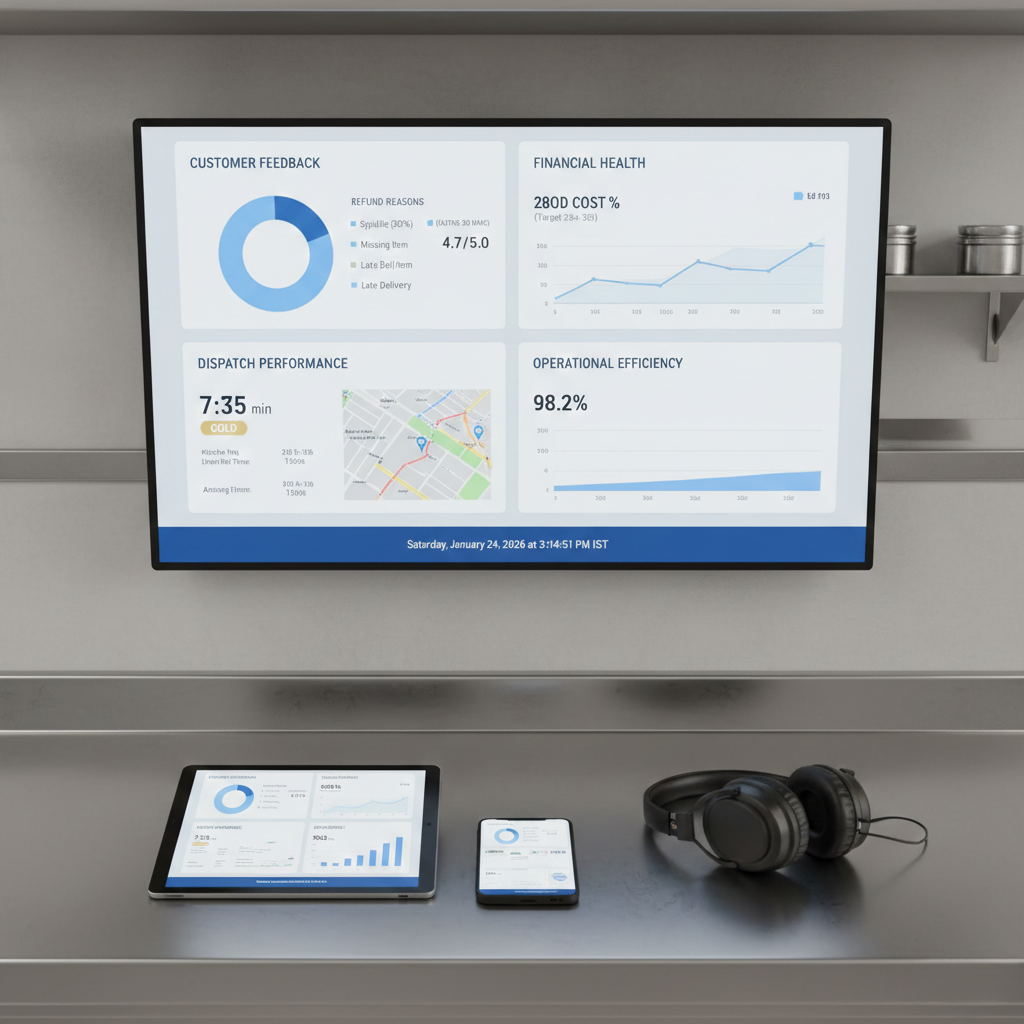
Install dashboards, assign role ownership, and implement weekly feedback loops.
15. What does successful scaling look like?
Stable margins across kitchens, predictable throughput, consistent ratings, and minimal reactive firefighting.
Final Insight: Scaling is a Systems Problem, Not a Location Problem
The most common misconception about scaling cloud kitchens is that expansion equals growth. In reality, expansion multiplies both strengths and weaknesses.
Founders who scale safely focus on: margin stability, dispatch discipline, procurement control, SKU simplification, and structured weekly reviews.
Explore operating frameworks at GrowKitchen. System-led brands like Fruut and GreenSalad scale using disciplined operating systems across cities.
- Cloud Kitchen Profitability Consultant in India
- Common Operational Mistakes in Cloud Kitchens
- Cloud Kitchen Dispatch SOP
- Role-Based Kitchen Operations Explained
- Cloud Kitchen Expansion Strategy in India
- Aggregator Commission Impact in India
- Process Discipline Improves EBITDA
- How to Fix a Loss-Making Cloud Kitchen
- When Growth Hurts Operations
- CKaaS vs Own Kitchen ROI Comparison
- Grow Kitchen on Twitter