Cloud Kitchen Profitability Myths in Cloud Kitchens Cloud kitchen failures rarely happen because food is bad. They happen because founders believe the wrong things about profitability. This guide breaks down the most common profitability myths in Indian cloud kitchens, explains why they sound logical but fail in reality, and replaces assumptions with how professional operators actually think.
Read This Before Judging Your Kitchen’s Financial Health
This article is part of GrowKitchen’s profitability and operations clarity series. If you are still learning how delivery kitchens function structurally, start with Cloud Kitchen Business in India before interpreting profit numbers.
Profit clarity only works when compliance and reporting discipline exist. Ensure alignment with FSSAI, operational hygiene via FoSTaC, and financial reporting through the GST Network.
Why Cloud Kitchen Profitability Myths Are So Dangerous
Most cloud kitchen founders do not fail because they are careless. They fail because early success creates false confidence.
Orders come in. Cash hits the bank. Aggregator dashboards show growth. Everything feels like it is working.
But profitability myths quietly distort decision-making. They delay corrective action until losses become structural.
Myth 1: High Revenue Means a Profitable Cloud Kitchen
This is the most common and most dangerous belief.
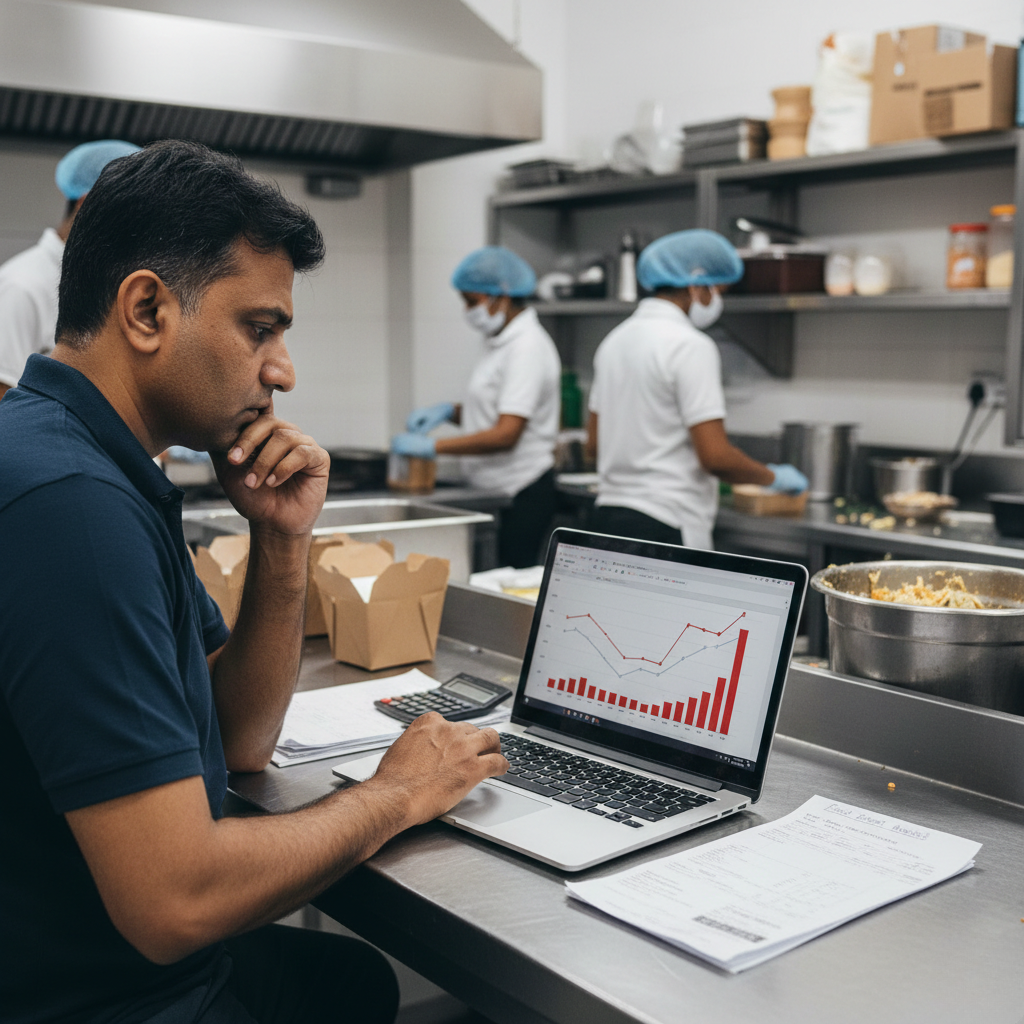
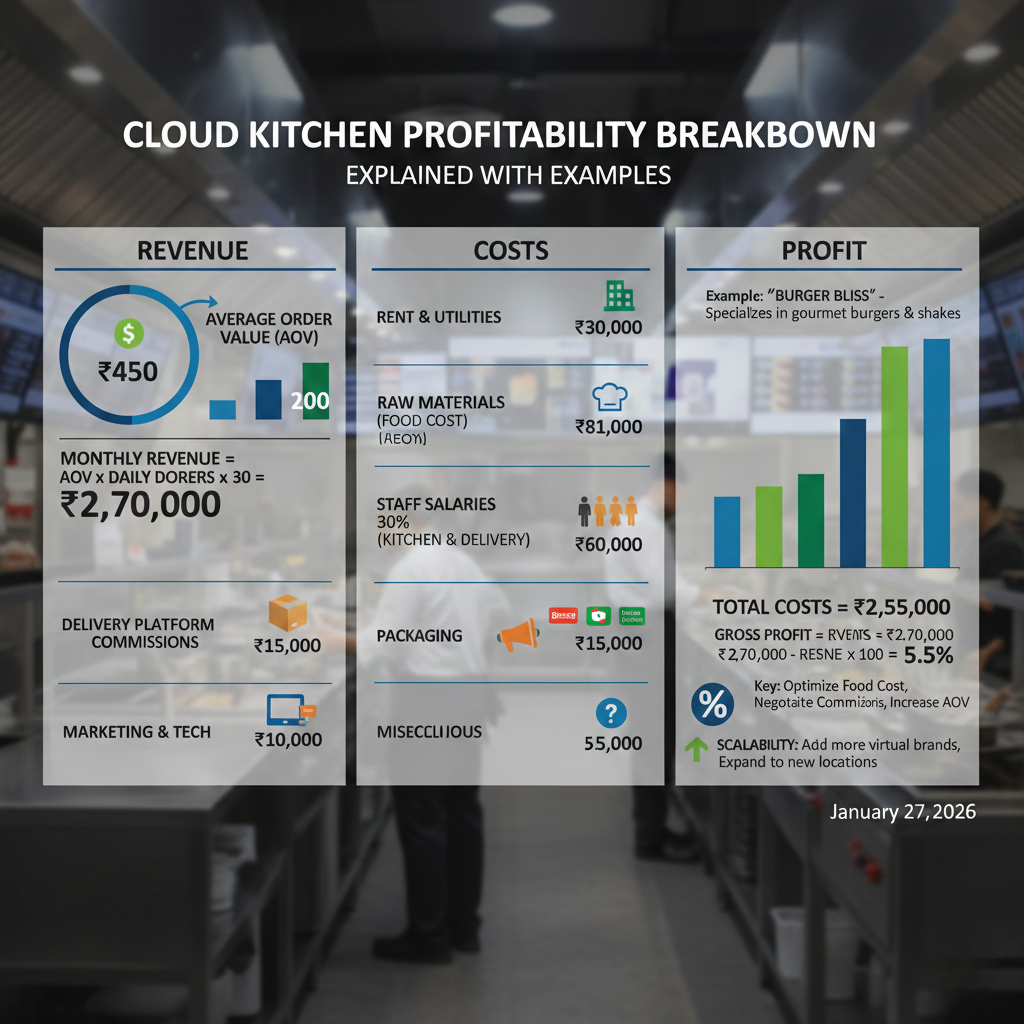
Revenue only shows money entering the system. It says nothing about what survives after commissions, discounts, refunds, food cost, and manpower.
Many kitchens doing ₹20–30 lakh monthly revenue are quietly loss-making.
Profitability must be measured at the order level, not the monthly topline.
Learn the correct distinction in Cloud Kitchen Profit Margin in India.
Myth 2: Discounts Are Necessary to Stay Competitive
Discounts do not create demand. They borrow it.
Discount-led growth hides weak menus, poor pricing ladders, and low repeat behavior.
When discounts are reduced, orders collapse not because customers left, but because they were never loyal.
Sustainable kitchens design menus that convert without permanent discount dependency.
Myth 3: Food Cost Is Fixed Once Recipes Are Set
Food cost never stays fixed. It drifts.
Portion creep, staff shortcuts, vendor price variation, and recipe inconsistency push food cost upward silently.
Most founders realize this only when margins disappear.
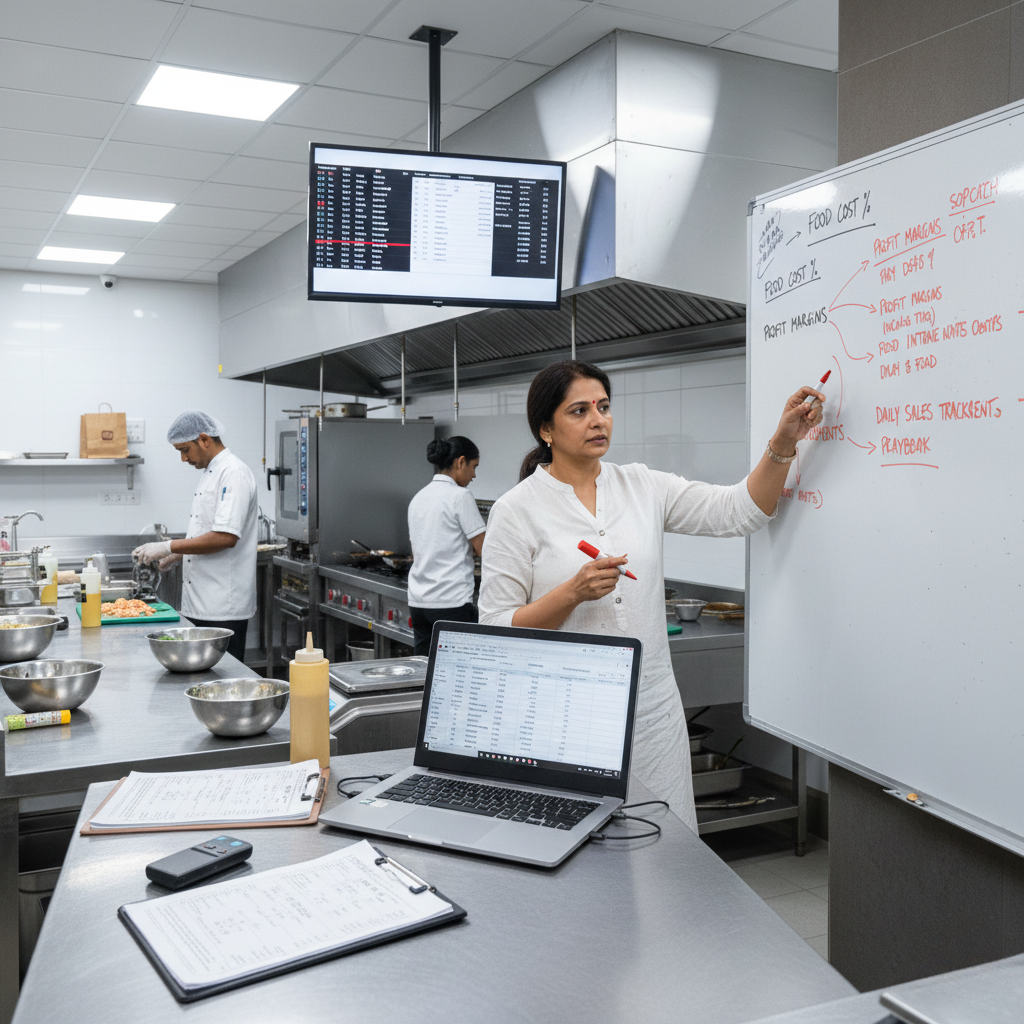
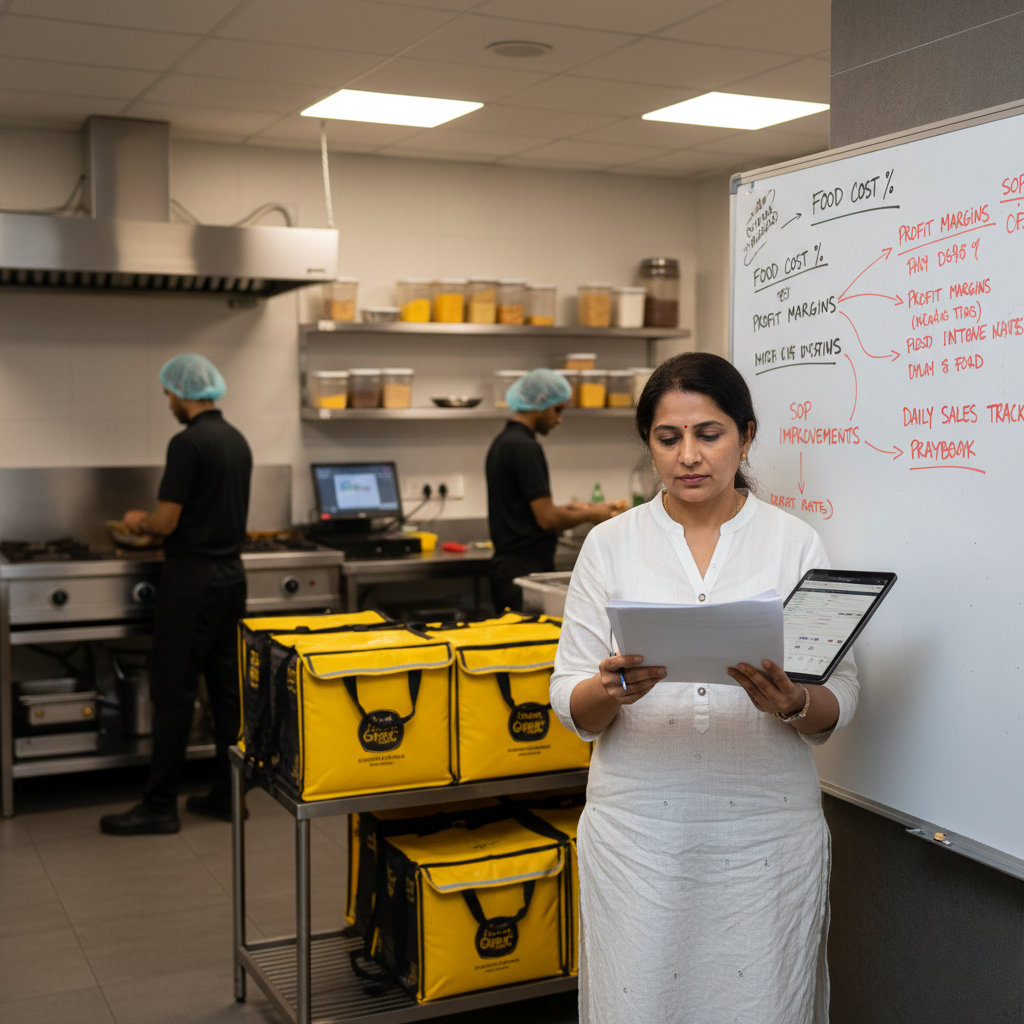
Professionals control food cost through SOPs, audits, and daily tracking — not assumptions.
Explore benchmarks in Ideal Food Cost Percentage for Cloud Kitchens.
Myth 4: Reducing Rent Will Fix Profitability
Rent feels like the biggest enemy because it is visible.
But rent is a fixed cost. Weak unit economics kill kitchens far faster than slightly higher rent.
Strong contribution margins absorb rent naturally. Weak margins make even cheap locations unsustainable.
Fix the order. Not just the address.
Myth 5: Refunds Are Platform Problems
Refunds are operational signals.
They reveal issues in packing, SKU accuracy, quality consistency, and dispatch control.
Every refund damages:
- Net revenue
- Commission efficiency
- Customer ratings
- Algorithm visibility
Ignoring refunds is equivalent to ignoring profit leaks.

Myth 6: Scaling Will Automatically Improve Margins
Scale does not fix broken economics. It multiplies them.
If one kitchen leaks profit, five kitchens leak faster.
Scaling only works when systems, SOPs, and reporting are already stable.
Learn the right approach in How to Scale Cloud Kitchens.
Myth 7: Founder Effort Can Replace Systems
Hard work feels heroic. It is also temporary.
Founder-led execution hides weak systems. Once attention splits, profitability collapses.
Profitable kitchens run on:
- Recipe SOPs
- Portion discipline
- Prep planning
- Inventory tracking
- Daily dashboards
Systems scale. Effort burns out.
Final Thoughts: Profitability Myths Delay Reality
Cloud kitchens fail slowly. Not dramatically.
Profitability myths create false comfort while margins erode quietly.
Real profitability is structural, measurable, and repeatable.
GrowKitchen exists to replace assumptions with operating clarity.
FAQs: Cloud Kitchen Profitability Myths
Can a high-rating kitchen still be unprofitable?
Yes. Ratings do not guarantee healthy unit economics.
Are discounts ever useful?
Yes, but only as controlled levers, not permanent crutches.
What should founders track daily?
Contribution margin, refunds, food cost drift, and dispatch accuracy.