Cloud Kitchen Profitability Consultant: Turn Orders into Real Margin (Not Just Sales)
Many kitchens hit a frustrating phase: orders are coming in, but profits feel invisible. That’s not a marketing problem it’s a unit economics + execution problem. A profitability consultant helps you fix food cost leaks, portion drift, discount chaos, packaging creep, and dispatch delays so your kitchen becomes predictably profitable.
Why Cloud Kitchens Struggle to Stay Profitable
In delivery-first kitchens, profit doesn’t disappear in one big place it leaks in small places every day. One extra spoon of sauce, one overfilled protein portion, one duplicate refund, one wrong packaging cup, one late dispatch that triggers a bad rating and your “good sales day” becomes a low-margin day.
The reason this is so common is simple: most kitchens measure success using the easiest metric to see orders and revenue. But profitability is built on harder metrics: contribution margin, food cost drift, prep-to-pack time, refunds, and wastage.
If you want the full operations foundation first, start here: Cloud Kitchen Operations Management.
What a Cloud Kitchen Profitability Consultant in India Does
A cloud kitchen profitability consultant is not a “tips & motivation” advisor. This role is operator-first: it combines unit economics, SOP engineering, menu strategy, and execution control. The objective is clear: increase contribution margin and stabilize it even as orders scale.
In most kitchens, profit gets attacked from multiple angles at once: cost drift, discounting, wastage, and ratings issues. A consultant’s job is to build a system that blocks these leaks by design, not by constant firefighting.
Unit Economics Setup
Contribution margin per SKU, pricing guardrails, and target food cost bands.
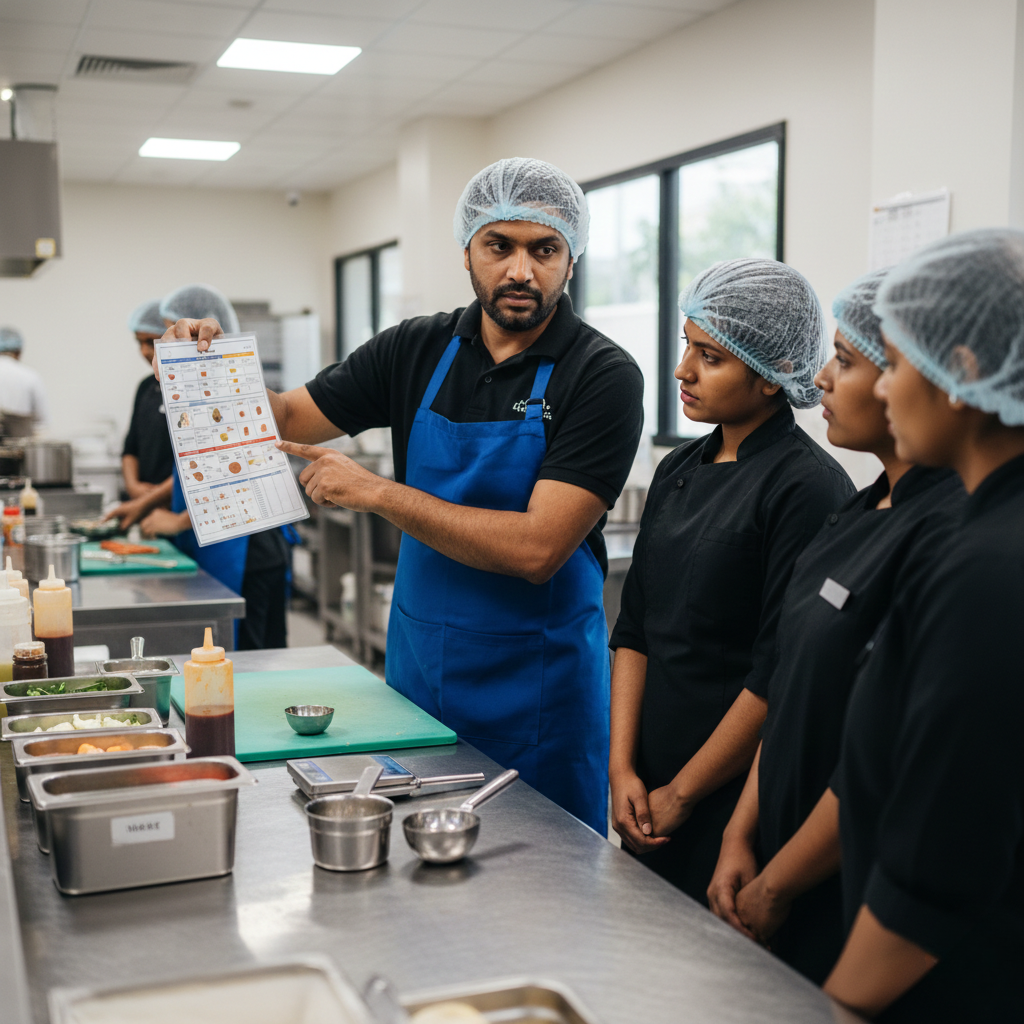
SOP + Portion Control
Standard recipes, tools mapping, yields, and “no estimation” cooking.
Menu Engineering
High-margin hero items, bundles, add-ons, and category structure that converts.
Profit Dashboard
Daily KPIs + weekly review loop to stop drift before it becomes loss.
For SOP formats that support profitability, reference: Cloud Kitchen SOPs.
The Profitability Diagnosis: Where Money Leaks
Before changing pricing or running more ads, you need a quick diagnosis. Most kitchens have the same core leak areas they just show up differently by cuisine and team quality.
Leak #1: Food cost drift
Your recipe may say 120g chicken, but your kitchen serves 150g when the rush hits. That “small” difference destroys contribution margin more than most people realise.
Leak #2: Discount chaos
Discounts are often applied without guardrails. You end up discounting items that already have thin margins, and your best sellers become your worst profit drivers.
Leak #3: Wastage and expiry
Over-prep, bad par levels, and inconsistent demand forecasting create the biggest monthly leak: items thrown away, reworked, or given free as “staff food”.
Leak #4: Packing errors + refunds
Missing dips, wrong variants, or spilled bowls create refunds and rating drops. Refunds are not just refund cost they kill your future conversion too.
Unit Economics That Actually Matter
“Profit” is a broad word. The kitchen needs a small set of metrics that can be tracked daily and improved weekly. The most useful profitability model is contribution margin per order and per SKU.
Core profitability metrics (simple, practical)
- Contribution Margin (CM): Selling price minus food cost, packaging, and platform fees/discounts
- Food Cost %: Total food cost divided by net sales (after discounts)
- Packaging/Order: Average packaging spend per delivered order
- Refund/Cancellation %: The invisible tax on growth
- Prep-to-Pack Time: A speed metric that impacts ratings and reorders
Want the cost baseline first? Cloud Kitchen Setup Cost in India.
Food Cost Control: Portioning + Yield Discipline
Food cost control is not only “buy cheaper”. It’s mostly about portioning, yield tracking, and preventing drift. Great kitchens run recipes like manufacturing: every step measured, repeatable, and auditable.
1) Tool mapping removes estimation
- Fixed ladles for gravies/sauces
- Fixed scoops for rice/noodles
- Standard portion cups for dips
- Weighing scale for proteins (especially during peak)
2) Yield tracking makes leakage visible
If you cook 10kg base and only get “less than expected” output, leakage happened somewhere: over-evaporation, spillage, over-serving, or incorrect recipe steps. Tracking input-to-output yield quickly exposes the drift.
3) Prep discipline reduces wastage
Batch prep should follow par levels, not gut feeling. When par levels are defined, your kitchen stops over-prepping. If your par isn’t defined yet, start with a 7-day sales average and build buffers only for peak days.
If you operate multiple brands from one kitchen, this guide helps: Multi-Brand Cloud Kitchen Model.
Menu Engineering for Higher Contribution Margin
Your menu is a profitability machine or a profitability trap. Most kitchens list too many low-margin items and push them through discounts. The fix is not reducing variety blindly; it’s building a menu that naturally sells better-margin combinations.
Step 1: Categorize items by CM and demand
- Stars: High demand + high CM (protect and scale)
- Workhorses: High demand + low CM (fix via portion/price/packaging)
- Puzzles: Low demand + high CM (positioning and naming can fix)
- Dogs: Low demand + low CM (remove or redesign)
Step 2: Build margin-friendly combos
Bundles should not be random. Build combos with high perceived value and controlled cost: one hero item + one controlled-cost side + one beverage with strong margin.
Step 3: Add-ons that increase AOV without killing operations
- Extra protein (pre-portioned)
- Dip upgrades (low cost, high value)
- Meal upgrades (add beverage/side)
Need a full operator system around this? Operations Management Guide.
Pricing, Discounts & Offers Without Killing Margin
Discounting becomes dangerous when it’s not controlled by CM. A profitability consultant sets “discount guardrails” so you never discount below safe contribution.
Guardrail rules that work
- Never discount your low-CM workhorses heavily
- Prefer bundles over flat discounts (value feels higher)
- Set a minimum contribution margin floor per order
- Use “add-on incentives” instead of “price cuts”
If you need demand spikes, use time-bound offers with clear exit rules. Permanent discounts train customers to wait and shrink your long-term margins.
Packaging Cost Optimization (Hidden Profit Leak)
Packaging is where many profitable kitchens quietly become average. Costs increase slowly: a better bowl here, an extra seal there, a bigger bag for comfort and suddenly packaging/ order becomes a major percentage of CM.
Packaging optimization checklist
- Use SKU-wise packaging standards (no “whatever is available”)
- Reduce “double packing” unless it prevents refunds
- Standardize dip cups and lids across the menu
- Build packaging kits to reduce packing errors
- Track packaging/ order weekly (not monthly)
If you’re building SOP discipline, use:
Cloud Kitchen SOPs
See this - linkedIn.
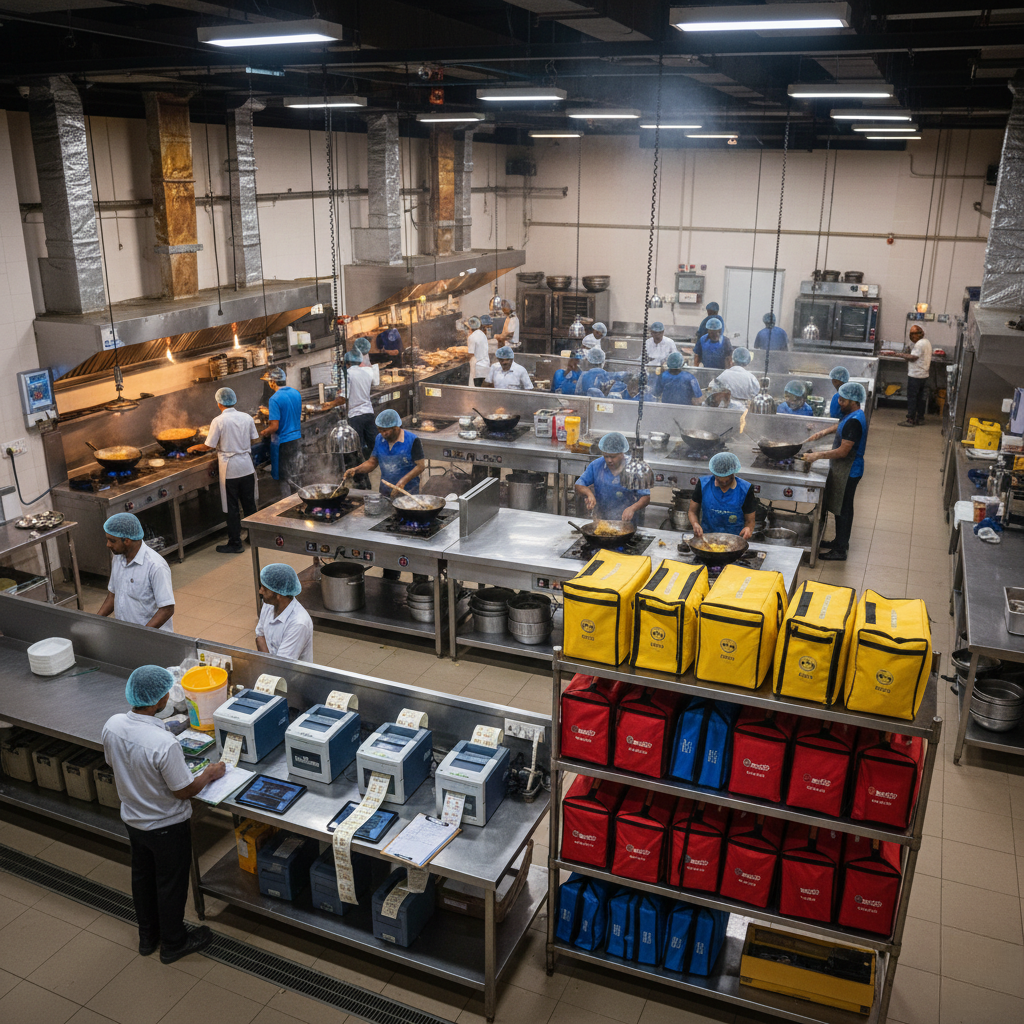
Ops Speed: Prep-to-Pack Time & Dispatch Flow
Speed is not just a customer experience metric it’s a profitability metric. Faster kitchens reduce cancellations, reduce rider waiting, and protect ratings. Better ratings mean higher conversion and higher conversion reduces the need for discounts.
What improves speed without adding staff
- Prep rhythm: define what is prepped and when
- Station SOPs: each person knows the exact sequence
- Packing flow: checklist + label printing + hot/cold separation
- Batch-friendly components: bases and portion packs prepared earlier
For execution systems, read: Cloud Kitchen Operations Management.
Ratings & Refunds: The Silent Profit Killer
Founders treat ratings like “branding”. Operators treat ratings like economics. A drop in rating increases CAC indirectly: you spend more on offers to maintain volumes, and low ratings reduce repeat orders.
Common rating drivers you can control
- Spillage and sogginess (packaging + hot/cold segregation)
- Inconsistent spice levels (standard recipe + ladle tools)
- Missing components (packing checklist)
- Late dispatch (dispatch shelf discipline + pre-portioning)
When refunds and replacements reduce, your net sales increase without any new marketing. This is one of the fastest “profit boosts” possible.
Inventory + Wastage Control (Hub/Spoke Friendly)
Wastage is not only spoiled food it includes over-serving, rework, and expiry due to wrong par levels. Profitability consulting sets inventory rules that make wastage hard to hide.
Controls that work in Indian kitchens
- Daily opening/closing log for critical SKUs
- Weekly theoretical vs actual usage for top items
- Par levels for high-risk perishables
- Expiry-first placement rule (FIFO discipline)
- Wastage reason codes (expiry, spill, over-prep, error)
Scaling across locations? Read: How to Scale to Multiple Locations.
KPI Dashboard & Weekly Profit Review Loop
Systems fail when there is no weekly review loop. A profitability consultant builds a dashboard that the team actually uses not a fancy sheet nobody opens.
Daily KPIs
- Orders, net sales, refunds
- Prep-to-pack time (peak)
- Top complaints and reasons
Weekly KPIs
- Food cost % trend
- Packaging/ order trend
- Top 10 SKU CM view
Monthly KPIs
- Contribution margin total
- Fixed cost coverage
- EBITDA / cash buffer
Weekly Review Loop
- Pick top 3 issues only
- Assign owner + deadline
- Update SOP, not just WhatsApp
30-Day Profitability Setup Playbook
Days 1–7: Profit audit
- Pull SKU-wise sales, discounts, refunds, and ratings signals
- Create contribution margin view for top sellers
- Identify 5 biggest leakage sources (not 25)
Days 8–15: Portion control + SOP reset
- Tool mapping (ladles, scoops, scales)
- Standard recipe cards for top 15–20 SKUs
- Packing checklist + label discipline
Days 16–23: Menu engineering + offers
- Adjust pricing on low-CM high-volume items
- Launch 2–3 bundles that improve AOV and CM
- Introduce add-ons with portion packs
Days 24–30: Dashboard + weekly rhythm
- Daily KPI log for speed/refunds/complaints
- Weekly review meeting with owners and SOP updates
- Lock the “one improvement per week” rule
If you also need a full setup roadmap, start here: End-to-End Cloud Kitchen Setup.
FAQ: Cloud Kitchen Profitability Consultant
When should I hire a profitability consultant in India?
When orders are coming but profits are unclear, when food cost is drifting, when discounts are constant, or when refunds/ratings are hurting repeat orders. If you feel you’re working harder but not saving more, it’s time to build a system.
Will profitability improve without increasing prices?
Often yes. Portion control, packaging optimization, reduced refunds, and better menu engineering can improve CM even before a major price change. Pricing changes become safer once your execution stabilizes.
What is the fastest profitability win in most kitchens?
Portion control + packing error reduction. Fixing these two typically improves both CM and ratings quickly.
Do you also help with SOPs and training?
Yes. Profitability is not a spreadsheet project it needs SOPs, station roles, packing flow, and training loops so the team executes consistently.
Can GrowKitchen help me become profitable across multiple locations?
Yes. GrowKitchen builds profitability systems across single and multi-location kitchens using SOPs, costing, menu engineering, inventory control, and dashboard-based weekly improvement loops.
Want a Profitability Plan Built for Your Cloud Kitchen?
Share your city, current monthly sales, top 10 selling items, discount level, and current team structure. We’ll map your profit leaks, rebuild SOPs + portion control, engineer your menu for CM, and set a weekly KPI loop.
Book a Free Discovery CallGet a Custom Cloud Kitchen Plan for Your Brand
Not sure how to start or scale your cloud kitchen in India? Share a few details about your brand and we’ll send you a personalised setup and growth roadmap.
- City-wise kitchen and location suggestions
- Approximate investment & profit estimates
- Menu and positioning recommendations
- Whether CKaaS or own kitchen suits you better
Fill the form and our team will get in touch within one working day.
About Us
Ckaas Sloutions
Contact
Follow On
© 2025 Grow Kitchen. All rights reserved.
WhatsApp us