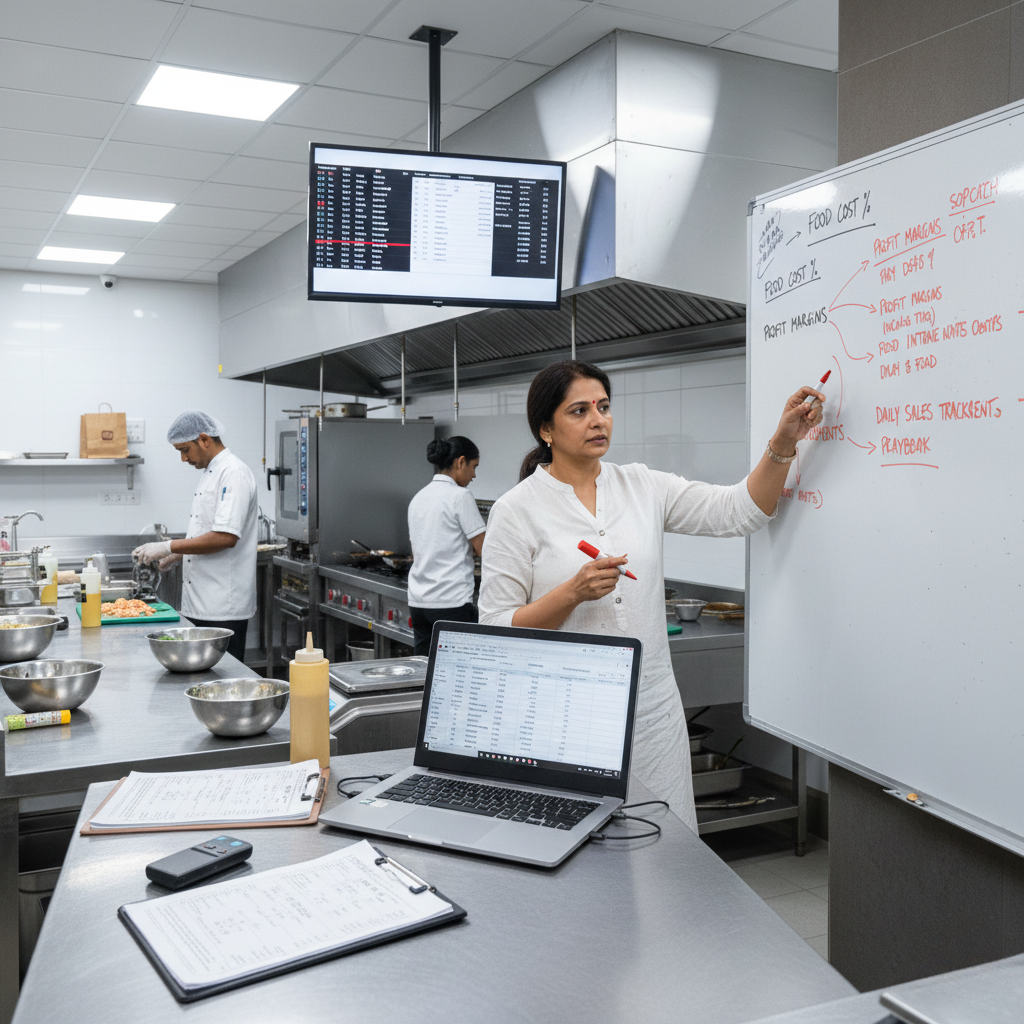
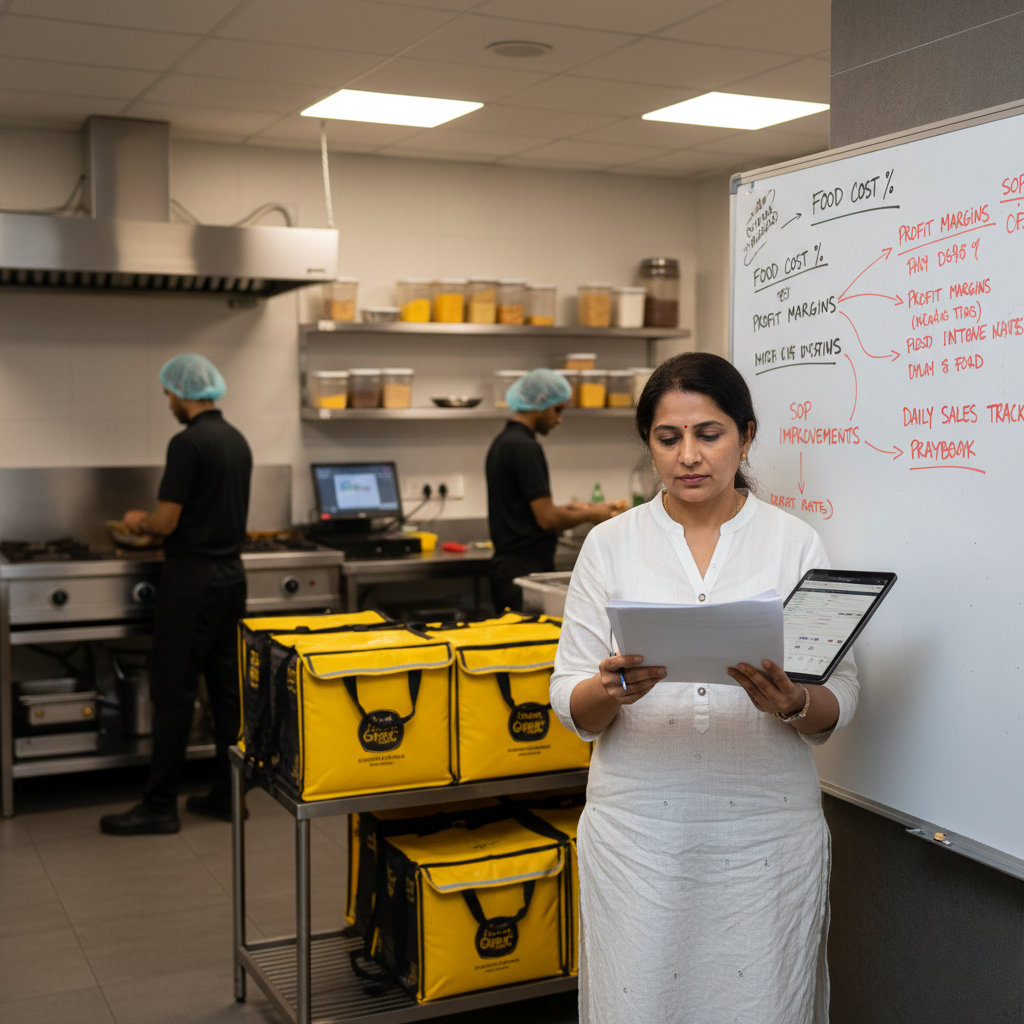
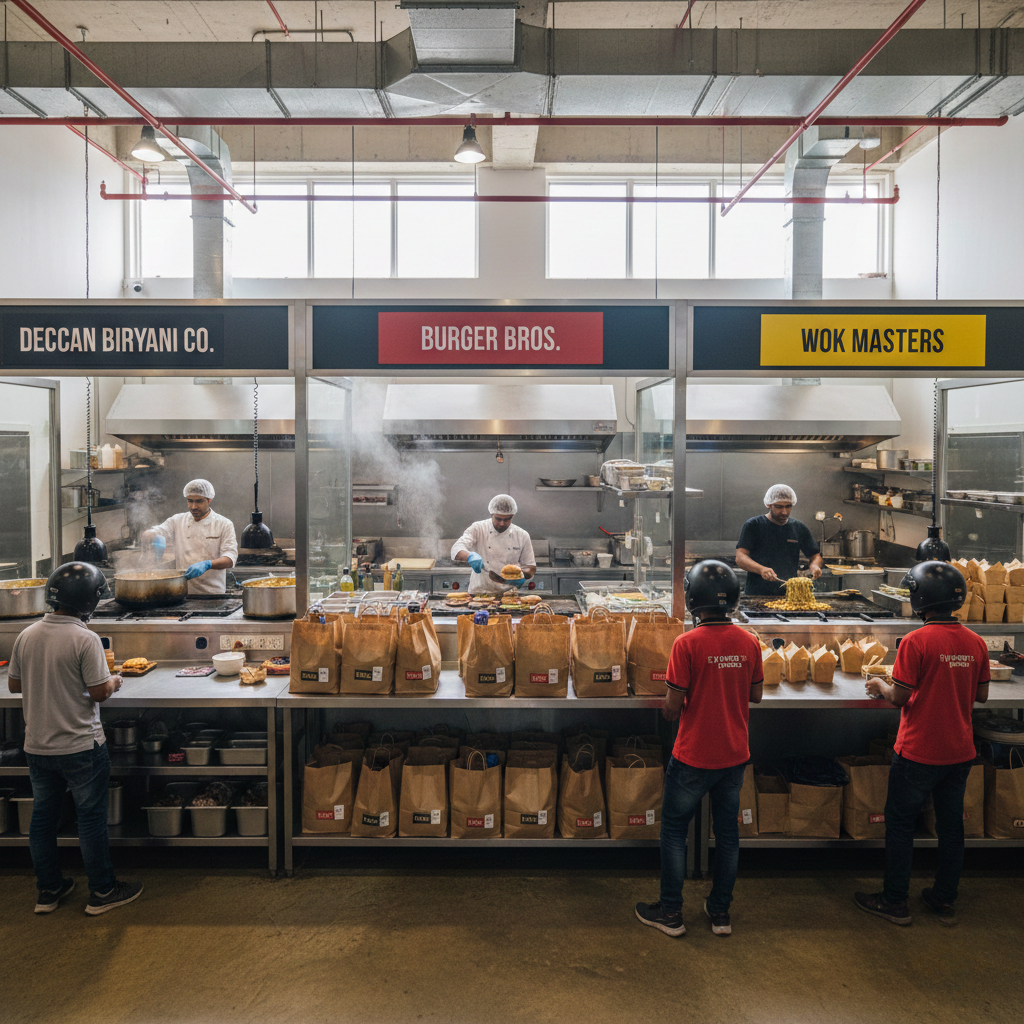
The cloud kitchen market size in India has grown rapidly over the last decade, driven by food delivery adoption, urban lifestyles, and lower entry barriers compared to traditional restaurants. What was once seen as an alternative model has now become a significant segment of India’s food services industry. This guide explains the cloud kitchen market size in India, growth drivers, segmentation, and future potential.
Start Here to Understand the Cloud Kitchen Market in India
This article is part of GrowKitchen’s cloud kitchen market and industry series. If you want a complete business-level breakdown covering models, setup cost, SOPs, and scaling frameworks, start with our pillar guide: Cloud Kitchen as a Service and for a comprehensive overview of the business model, read: Cloud Kitchen Business in India.
For regulatory and compliance references related to food businesses, always verify information on FSSAI, GST Portal, and Udyam MSME.
Overview of the Cloud Kitchen Market Size in India
The cloud kitchen market size in India represents the total value generated by delivery-only food businesses operating without dine-in infrastructure. These businesses rely on online ordering, platform-led discovery, and last-mile delivery to serve customers.
Over the years, cloud kitchens have moved from being a niche concept to a mainstream food business format, attracting first-time founders, restaurant chains, and investors alike.
Growth of the Cloud Kitchen Market in India
The growth of the cloud kitchen market in India has been fueled by rapid urbanisation, smartphone penetration, and the widespread use of food delivery platforms such as Swiggy and Zomato.
Consumers increasingly prefer convenience, variety, and fast delivery. This behavioural shift has expanded the addressable market for delivery-only food brands.
Metro cities like Mumbai, Bengaluru, Delhi NCR, Hyderabad, and Pune account for a significant share of the cloud kitchen market due to high order density and delivery feasibility.
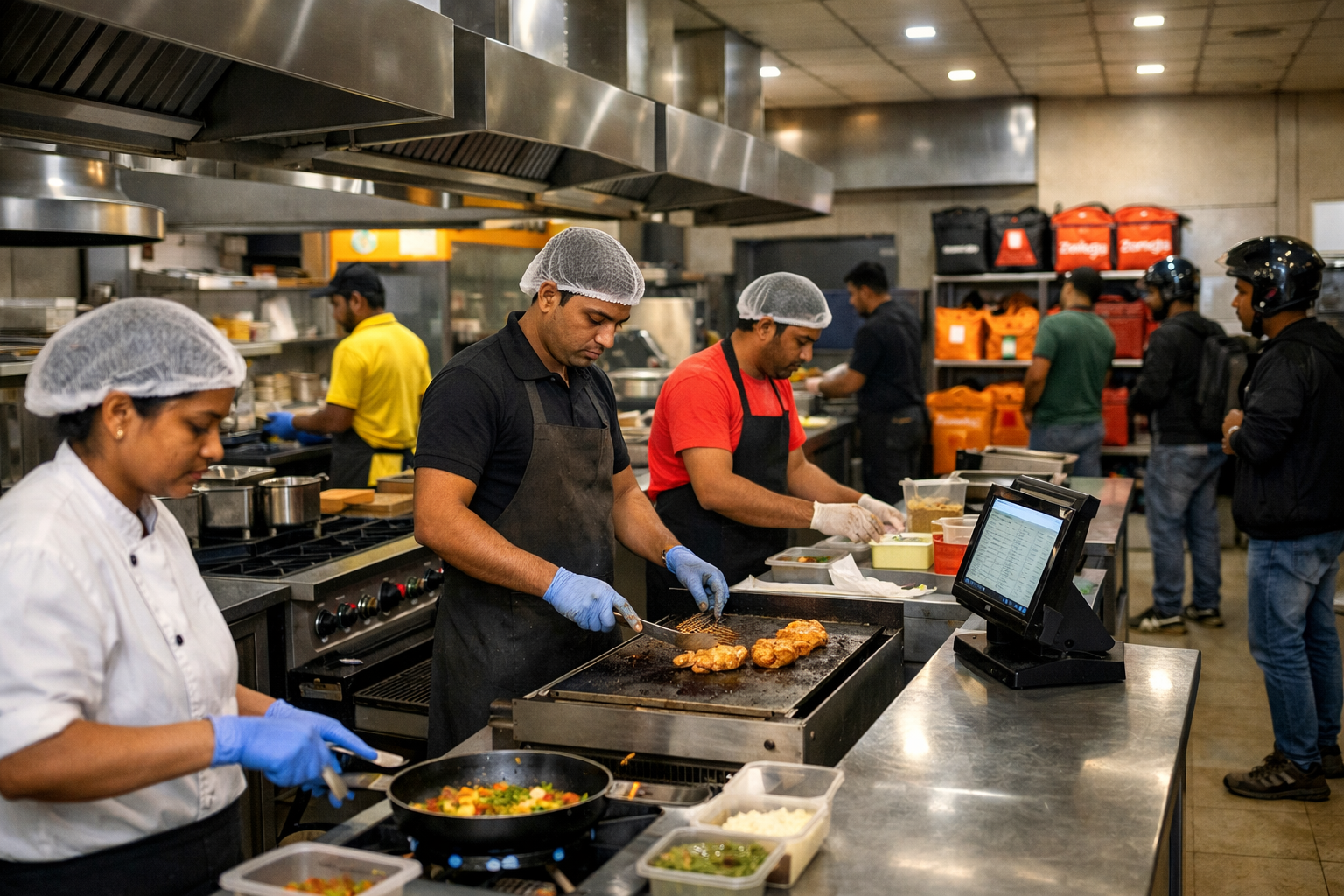
Key Drivers of the Cloud Kitchen Market Size in India
Several structural factors contribute to the expansion of the cloud kitchen market in India.
- High commercial real estate costs for dine-in restaurants
- Rising demand for online food delivery
- Lower startup investment compared to traditional restaurants
- Ability to run multiple brands from a single kitchen
- Data-driven decision-making using platform insights
These drivers make cloud kitchens attractive for both new entrepreneurs and established food brands.
Segmentation of the Cloud Kitchen Market in India
The cloud kitchen market in India can be segmented based on business model, cuisine type, and geography.
- Single-brand vs multi-brand cloud kitchens
- Independent kitchens vs aggregator-backed kitchens
- Metro cities vs tier-1 and tier-2 cities
Multi-brand kitchens often capture higher market share per location due to better asset utilisation and diversified demand.
How Operations Impact Cloud Kitchen Market Performance
While market size indicates opportunity, actual success depends on operational execution. SOP-driven kitchens are able to maintain consistent quality, control costs, and protect ratings.
Poor operations lead to refunds, low ratings, and reduced visibility on delivery platforms. This makes SOPs critical for sustainability: Cloud Kitchen SOP Checklist.
Challenges Limiting the Cloud Kitchen Market Size
Despite strong growth, the cloud kitchen market in India faces constraints. High competition, platform commission pressure, and fluctuating raw material costs can limit profitability.
Many operators exit the market not due to lack of demand, but because of weak systems and cost mismanagement. Read more: Why Cloud Kitchens Fail in India.
Future Outlook of the Cloud Kitchen Market in India
The future of the cloud kitchen market size in India is expected to expand steadily as food delivery penetration increases in tier-2 cities and semi-urban areas.
Direct ordering, subscriptions, and brand-led demand generation will play a key role in stabilising margins and reducing dependency on aggregators.
Final Thoughts on Cloud Kitchen Market Size in India
The cloud kitchen market size in India reflects a structural shift in how food businesses are built and scaled. While the opportunity is large, long-term success depends on execution discipline rather than market hype.
Founders who focus on systems, unit economics, and repeat behaviour can capture sustainable value in this growing market.
FAQs: Cloud Kitchen Market Size in India
What is the cloud kitchen market size in India?
It represents the total value generated by delivery-only food businesses operating without dine-in infrastructure.
Is the cloud kitchen market growing in India?
Yes. Growth is driven by food delivery adoption, urbanisation, and lower startup costs.
Which cities contribute most to the cloud kitchen market?
Metro cities such as Mumbai, Bengaluru, Delhi NCR, Hyderabad, and Pune.
What limits growth of the cloud kitchen market?
High competition, platform dependence, and poor operational execution.
- Cloud Kitchen Business in India
- How to Start a Cloud Kitchen
- Cloud Kitchen SOP Checklist
- Why Cloud Kitchens Fail