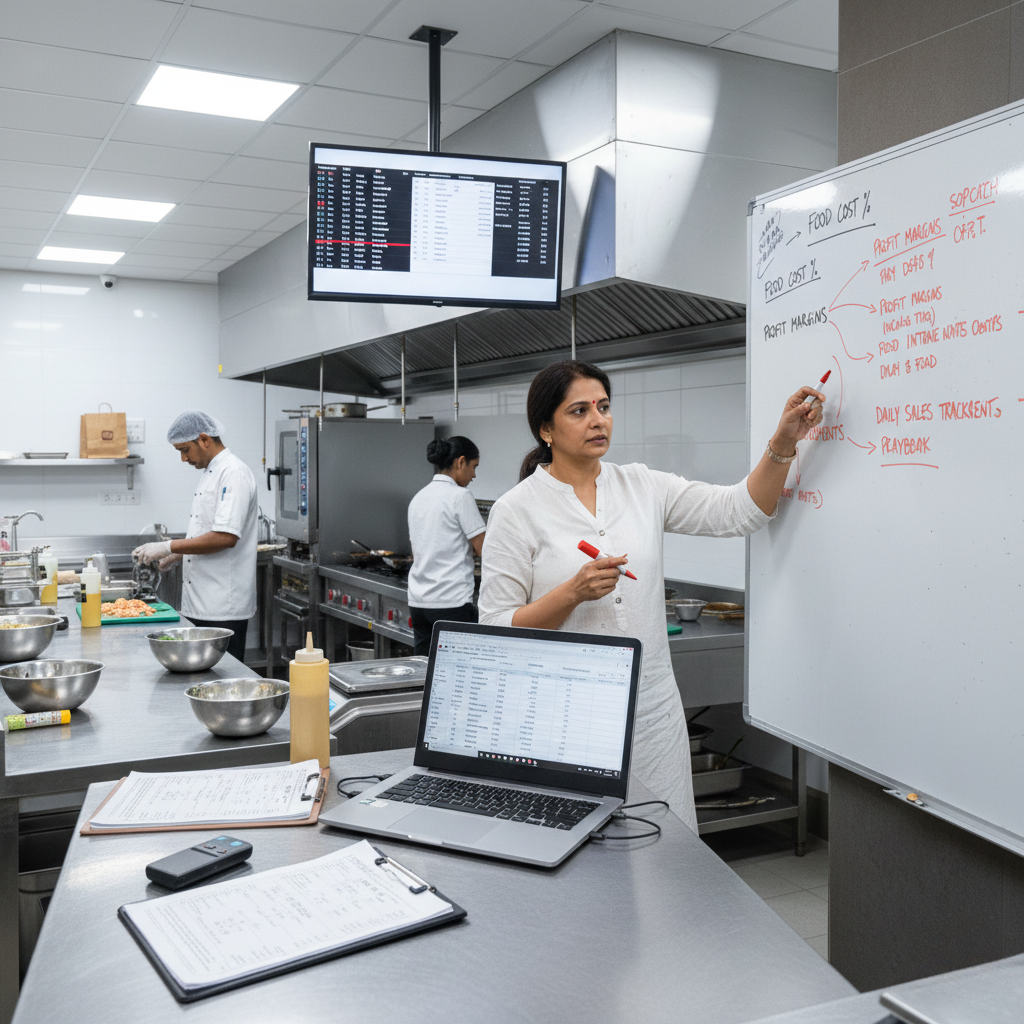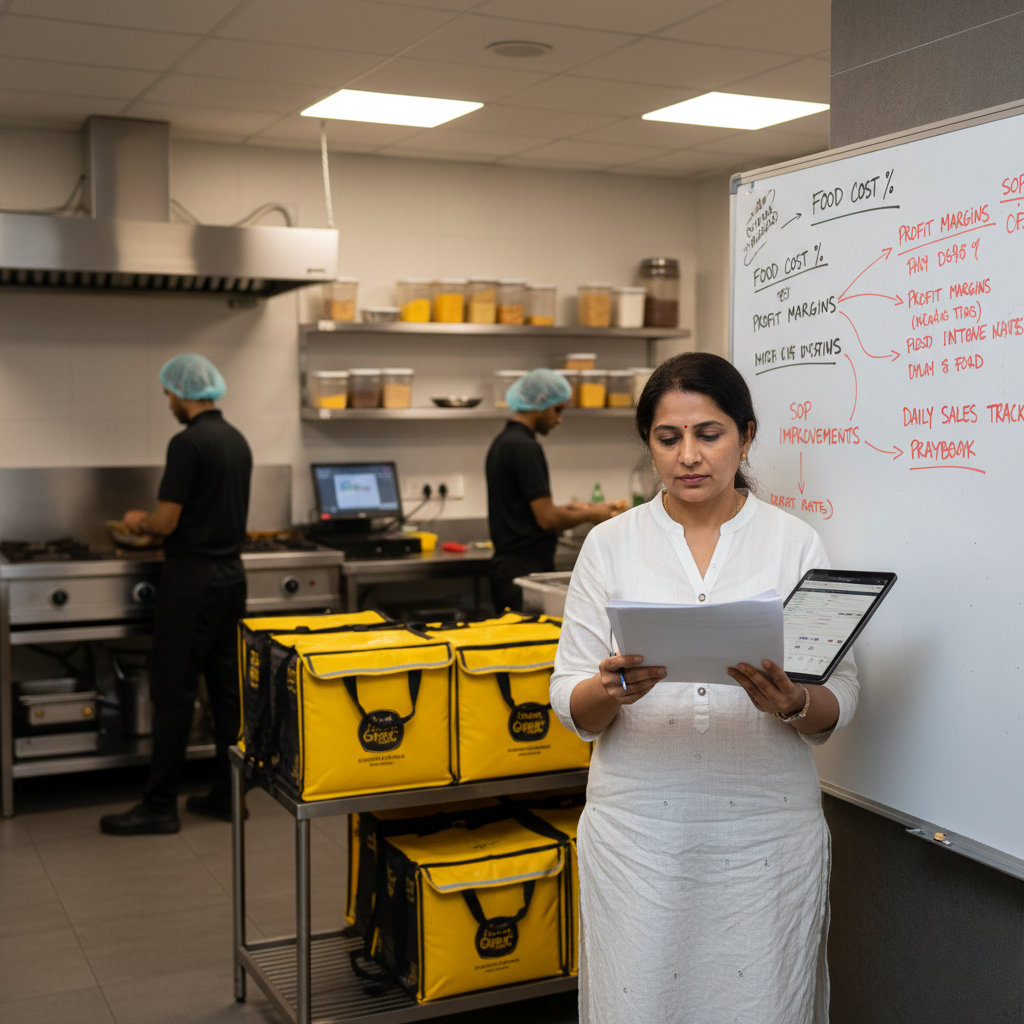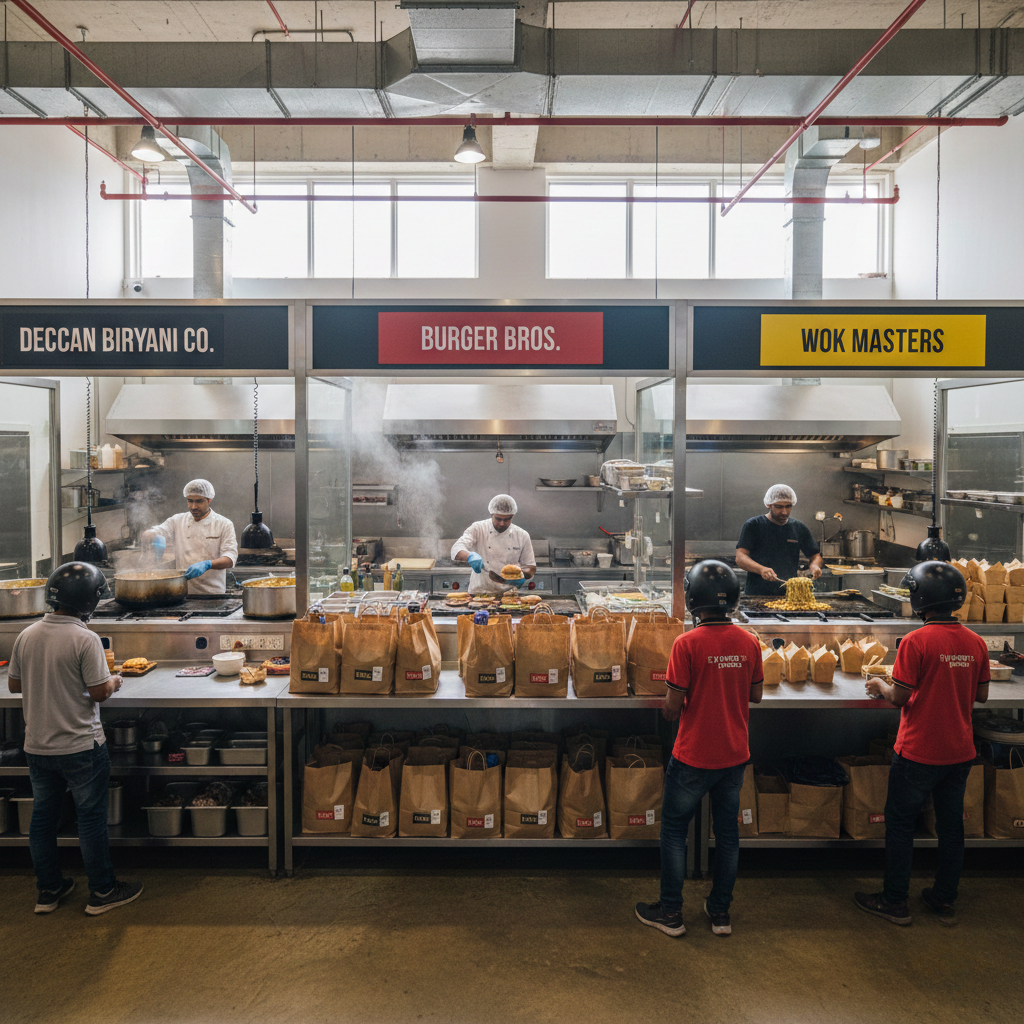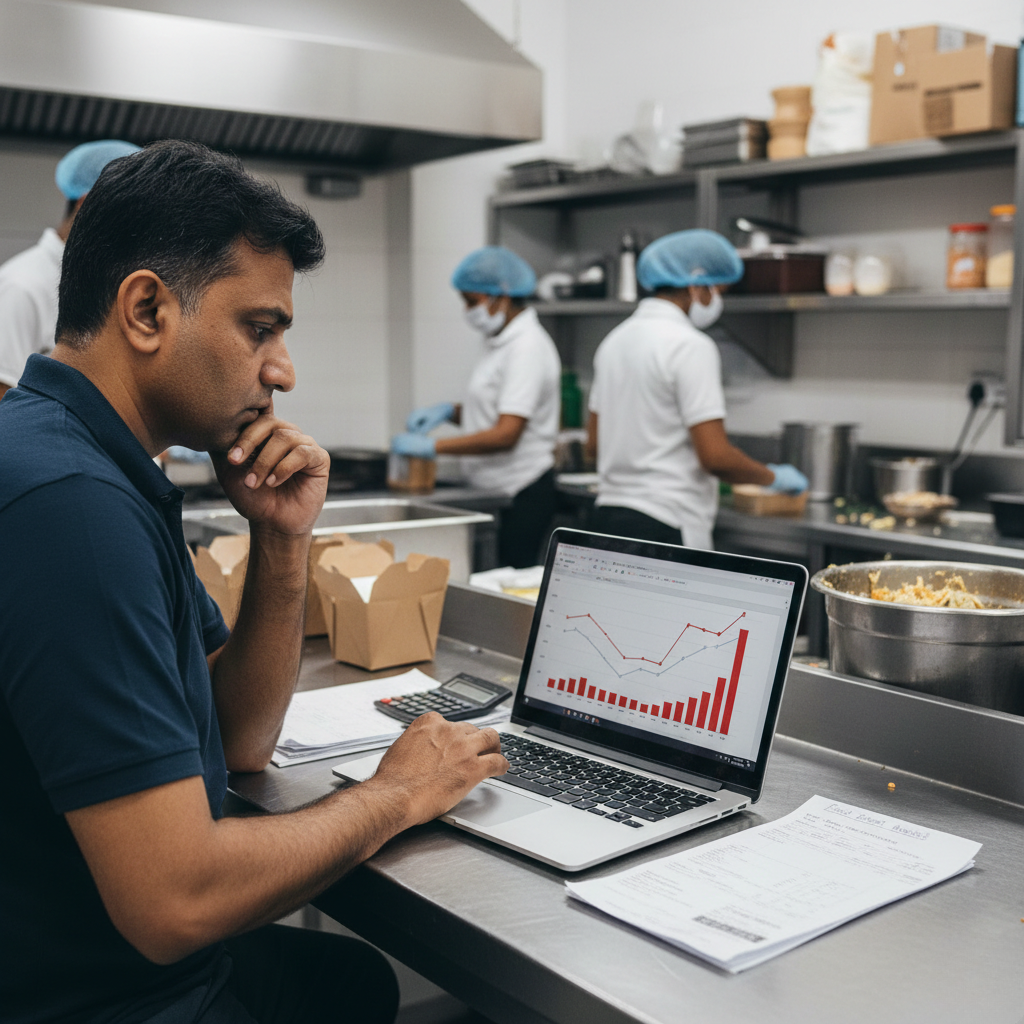
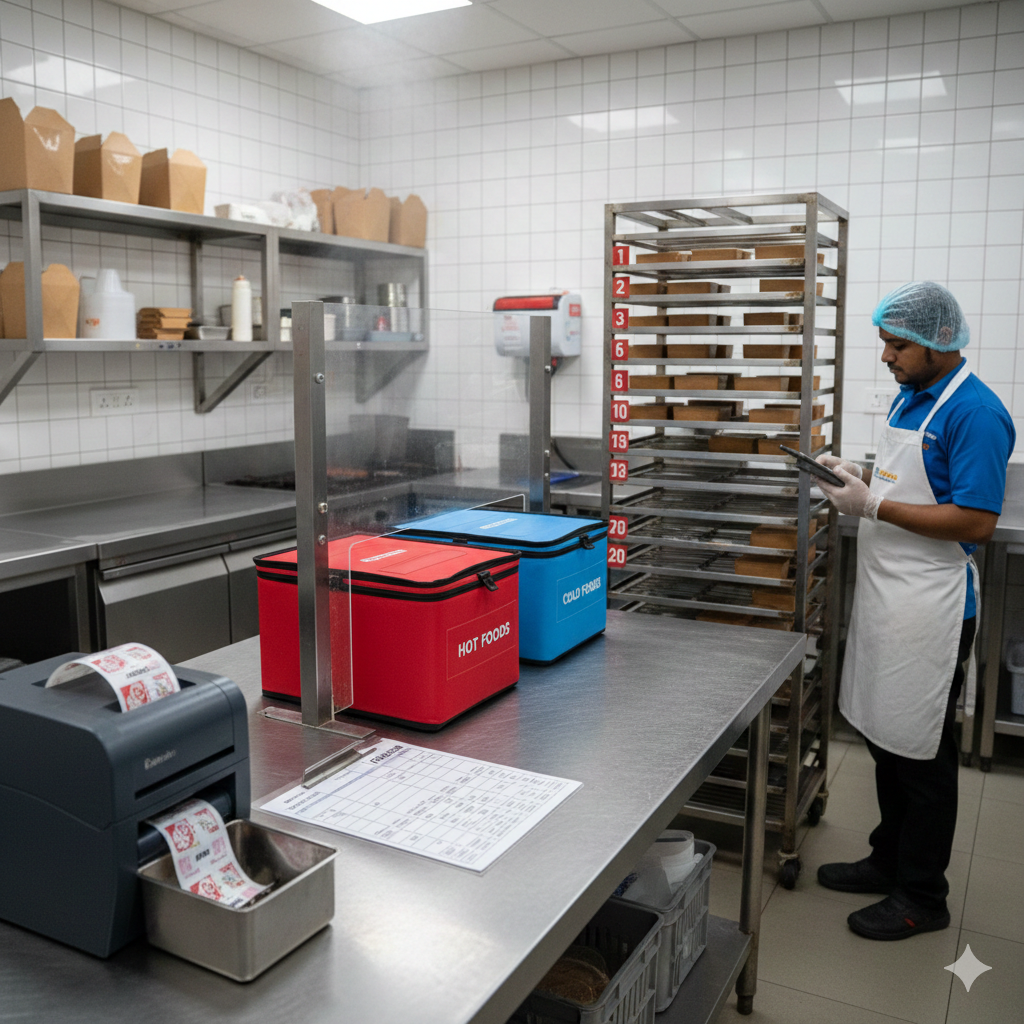
How do you know if your cloud kitchen is truly ready to scale? Not when orders spike for a weekend. Not when ads temporarily work. Not when revenue screenshots look exciting. A cloud kitchen is ready to scale only when outcomes are stable, margins are protected, systems are documented, and performance does not depend on the founder being present. This guide breaks down the exact readiness checklist GrowKitchen uses before expanding kitchens across cities so you scale systems, not stress.
How Do I Know if My Cloud Kitchen is Ready to Scale?
Most founders ask this question after growth starts. The smarter founders ask it before expansion. Because scaling a cloud kitchen multiplies everything: good systems multiply stability, weak systems multiply chaos.
Across India, many cloud kitchens attempt second or third locations without stabilizing unit economics, dispatch reliability, or role-based execution. The result? Ratings drop, refunds increase, team confusion rises, and profit quietly disappears.
If you have not first built a profitability foundation, start here: Then understand structural risks via Cloud Kitchen Profitability Consultant in India . Then understand structural risks via Common Operational Mistakes in Cloud Kitchens .
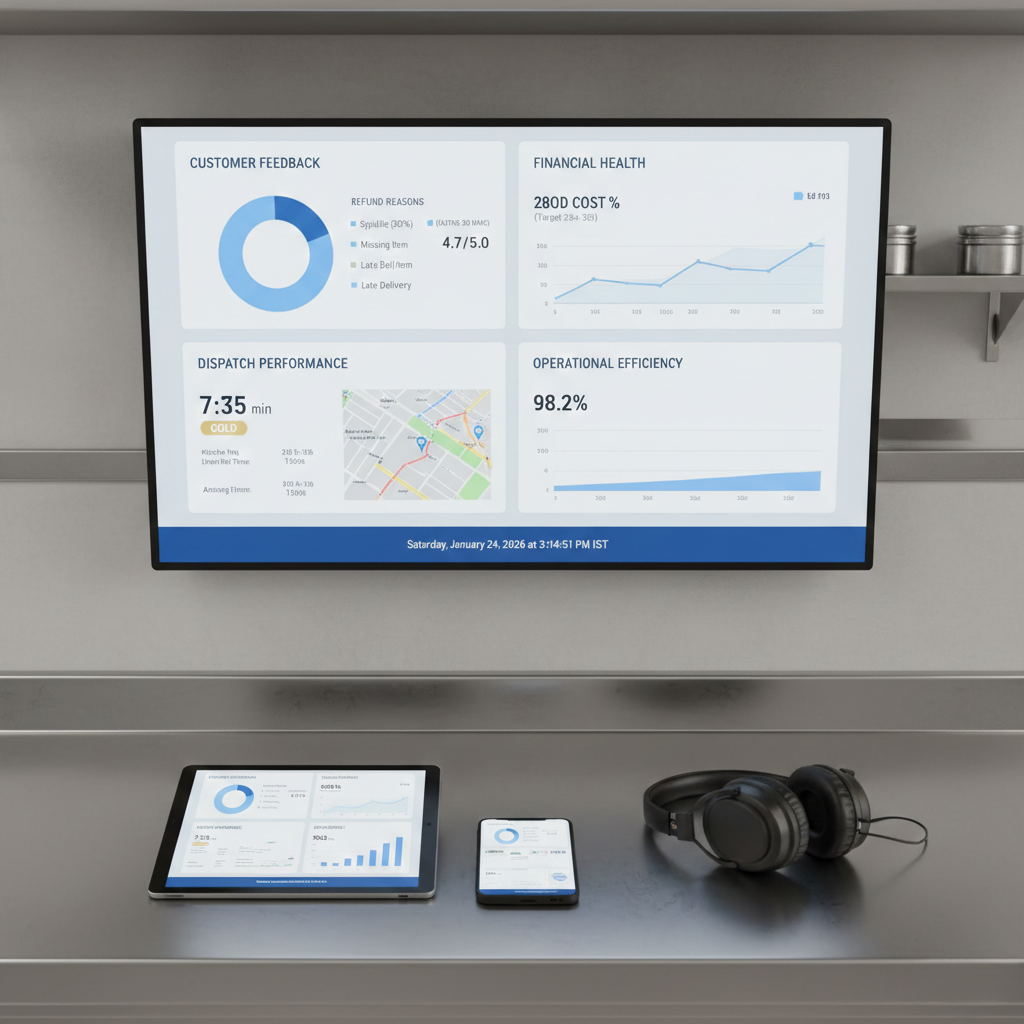
Scaling Is an Outcomes Test, Not a Revenue Test
Revenue growth does not equal readiness. Many kitchens can touch ₹8–10L revenue per month. Very few can hold stable contribution margins while maintaining 4.2+ ratings, predictable dispatch times, and low refund ratios.
Scaling should only happen when outcomes are stable without daily firefighting. If your kitchen improves only when you are physically present, you are not ready to scale.
Platform distribution also rewards reliability. Review aggregator policies to understand how instability hurts visibility: Swiggy Refund Policy and Zomato Online Ordering Policies .
Readiness Check 1: Is Your Contribution Margin Stable?
Before scaling, your contribution margin per order must be consistent. Not “good on average.” Stable weekly.
Contribution Margin = Order Value – Commission – Packaging – Food Cost – Discount Burn – Refund Leakage.
If this number fluctuates wildly, scaling will amplify losses. Read: Aggregator Commission Impact in India and Refunds and Cancellations Impact on Profitability .
Readiness indicator:
- Food cost within ±2–3% weekly variation
- Refund % mapped and trending downward
- No uncontrolled discounting to maintain orders
- Clear SKU-level margin tracking
If margin depends on heavy discount campaigns, you are not ready to scale.
Readiness Check 2: Is Dispatch Predictable?
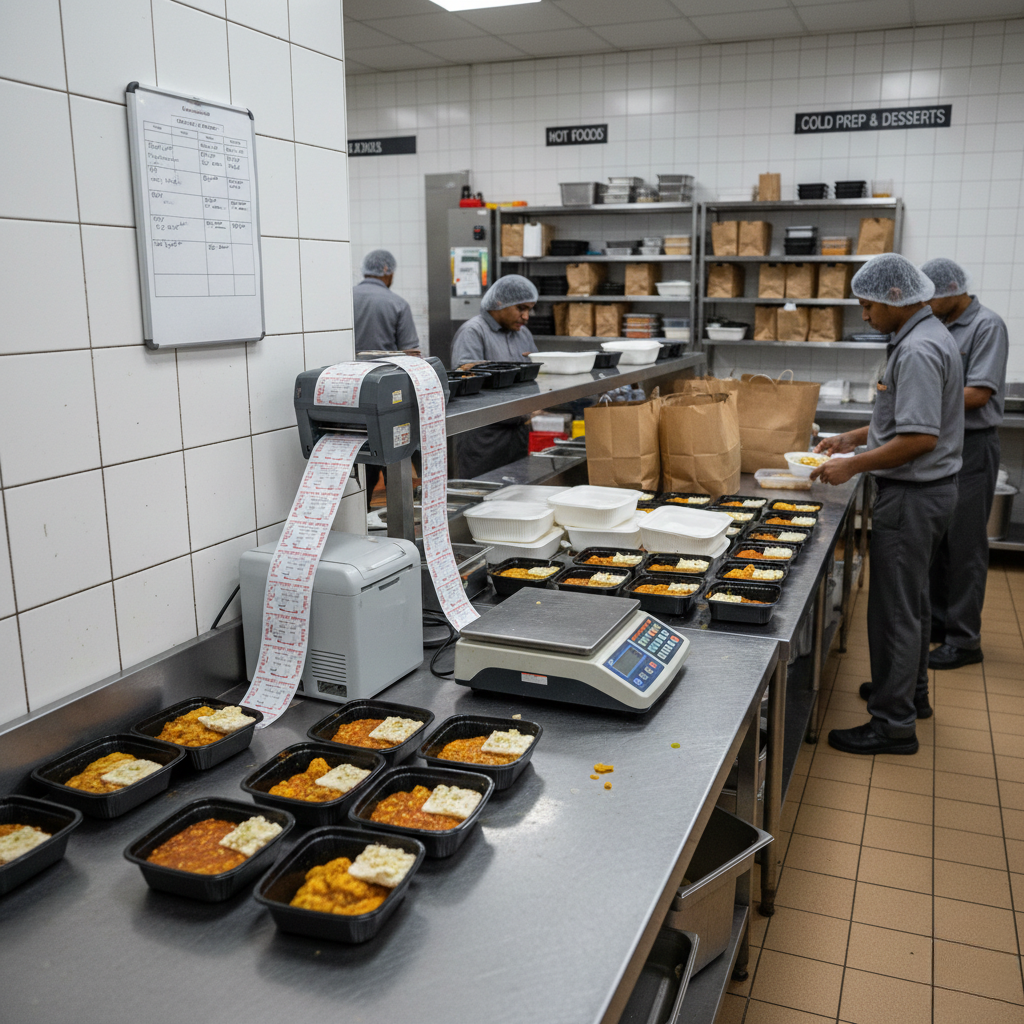
Dispatch instability is the fastest way to destroy ratings. Late orders, missing items, leakage, or packing errors trigger refund loops.
If you do not have a dispatch gate system, scaling will increase chaos. Reference: Cloud Kitchen Dispatch SOP .
You are ready to scale if:
- Packing checklist exists and is enforced
- Add-ons are verified before sealing
- Late dispatch % is tracked daily
- Refund reasons are categorized weekly
If packing depends on “experience” instead of checklist discipline, you are not ready.
Readiness Check 3: Are Roles Clearly Defined?
Kitchens collapse during scaling when everyone does everything. Role clarity prevents confusion during rush hours.
GrowKitchen enforces: prep owner, station cook owner, pack owner, dispatch owner, audit owner.
Framework: Role-Based Kitchen Operations Explained .
Scaling readiness means:
- Every shift has clear accountability
- No task ambiguity during rush
- Training process documented
- Performance measurable per role
If your kitchen becomes chaotic during 2x order spikes, scaling will break it.
Readiness Check 5: Do You Run Weekly Data Reviews?
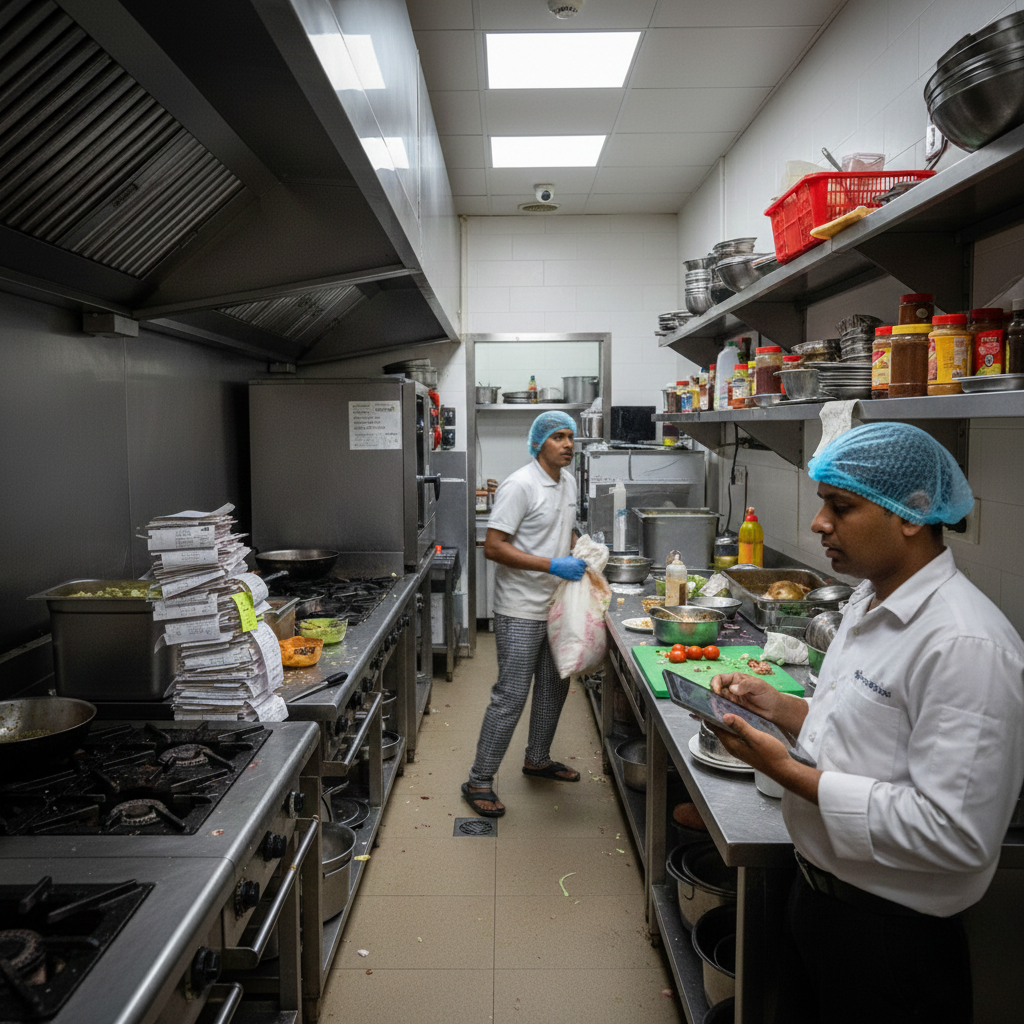
Data without action is noise. Scaling requires structured weekly reviews.
GrowKitchen’s weekly loop includes:
- Refund reason mapping
- Cancellation cause breakdown
- Late dispatch trend review
- SKU margin drift analysis
- One system improvement decision per week
Reference: How Process Discipline Improves EBITDA .
If you review data only when there is a crisis, you are not ready to scale.
The Expansion Simulation Test
Before opening a new location, simulate scaling internally:
- Run 1.5x–2x order capacity for 14 days
- Remove founder from daily supervision
- Measure margin stability
- Measure rating impact
- Measure dispatch predictability
If performance remains stable without stress spikes, your kitchen may be ready.
For structured scaling frameworks: Cloud Kitchen Expansion Strategy in India .
Final Takeaway: Scale Stability First, Locations Later
A cloud kitchen is ready to scale when:
- Margin is stable without discount dependency
- Dispatch errors are controlled
- Roles are documented and enforced
- Menu complexity is optimized
- Weekly data upgrades the system
- Founder presence is not required for stability
If any of these fail, scaling multiplies instability.
GrowKitchen helps founders move from chaos-driven growth to system-driven replication. Explore the operating model at GrowKitchen.
Operating partner brands like Fruut and GreenSalad follow system-first scaling principles across locations.
FAQs: Cloud Kitchen Scaling Readiness
How many orders per day indicate readiness?
Orders don’t define readiness. Stability of margin, dispatch, and ratings does.
Can I scale if my ratings are fluctuating?
No. Ratings volatility indicates unstable execution. Fix systems first.
Should I expand to multiple cities at once?
Only after replicating stability in one location and passing the simulation test.
What is the biggest scaling mistake?
Scaling revenue before stabilizing contribution margin and dispatch reliability.